
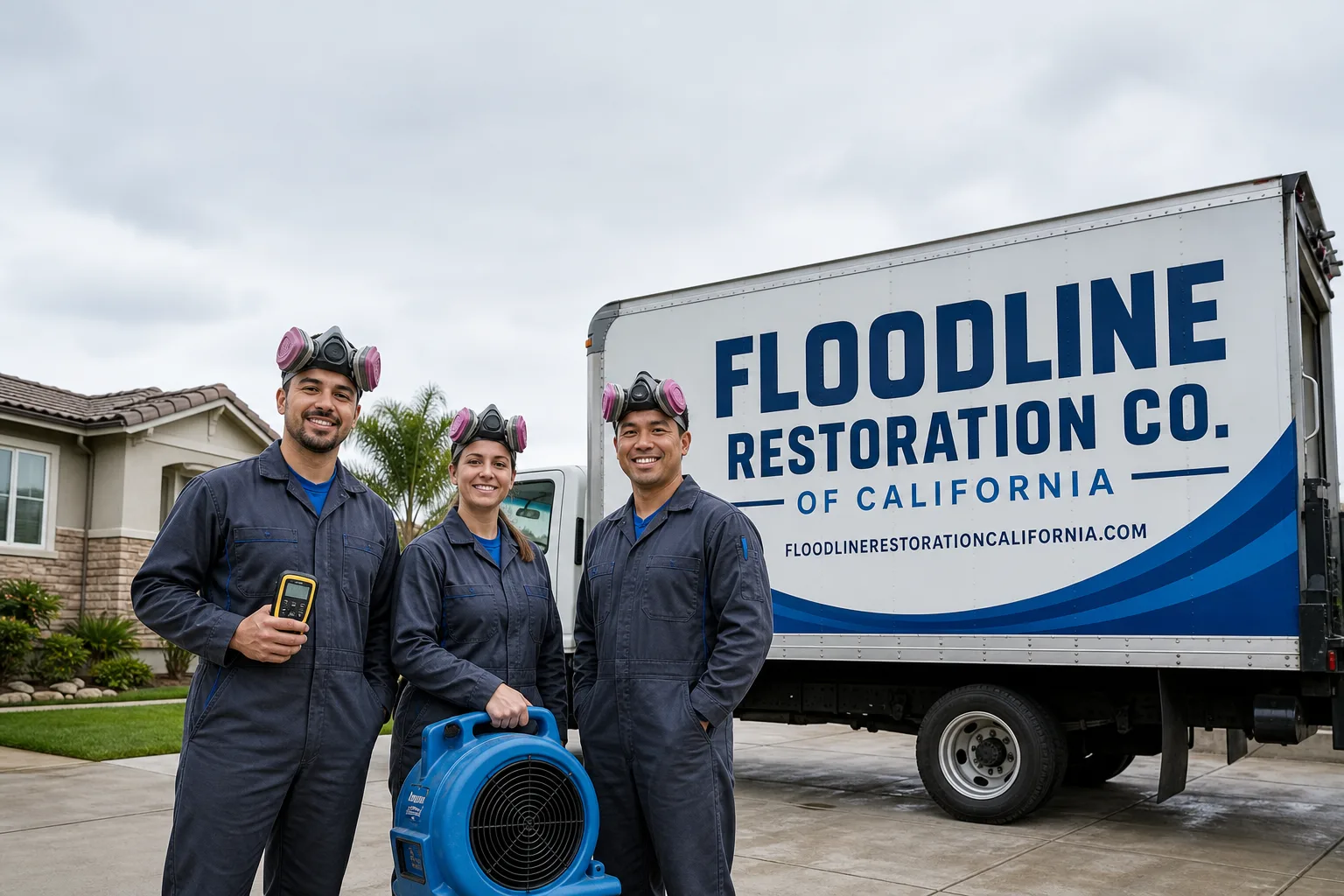
Fast, Reliable Mold Remediation Across Citrus
Mold remediation in Citrus typically costs $1,800-$4,200 for a standard crawl space or single-room job, and our crews are usually on site within 90 minutes for emergency calls. Citrus sits on porous alluvial fan soils at the base of the San Gabriel Mountains, so water moves differently here than it does on the flatland. Subsurface flow seeps under slab foundations and into crawl spaces long after the visible flooding recedes. That means mold work in this foothill community has to account for what’s happening beneath the floor, not just what’s growing on the walls. Call (888) 737-2439 and a live dispatcher answers, day or night.
Why Floodline Restoration Co. of California Is Citrus’s Preferred Mold Remediation Company
We’ve spent 42 years responding to water and mold calls across the San Gabriel foothills, and the pattern in Citrus is consistent. Homes built in the 1950s through 1970s on raised-wood foundations or original slab designs take on water from below, not just from above. Our background-checked, uniformed technicians know to look beneath the surface before fogging and wiping. We train to IICRC, RIA, and IFA standards, and we log moisture readings daily until the dry standard is met.
Citrus homeowners tell us the same thing: they want a square deal and a crew that actually shows up. Curt Bowman founded this company around a dispatch board, not a sales desk. When you call (888) 737-2439, a live person answers at 2 a.m. if that’s when you call. Every job, including mold remediation in Citrus, is backed by the 90-Day Done Right Promise in writing. If it’s not done right, we make it right. No paperwork battles, no arguing.
Our Mold Remediation Services in Citrus
Mold Inspection & Testing
A thorough inspection in Citrus starts with understanding the alluvial fan soils beneath your home. We test visible growth, but we also check vapor barriers, subfloor framing, and HVAC returns, since Santa Ana wind events drive ash and mold spores deep into ductwork and wall cavities. After post-wildfire rain events, we routinely find sediment infiltration that standard inspections miss. Our testing reports are specific enough to hand to your insurance adjuster without a fight.
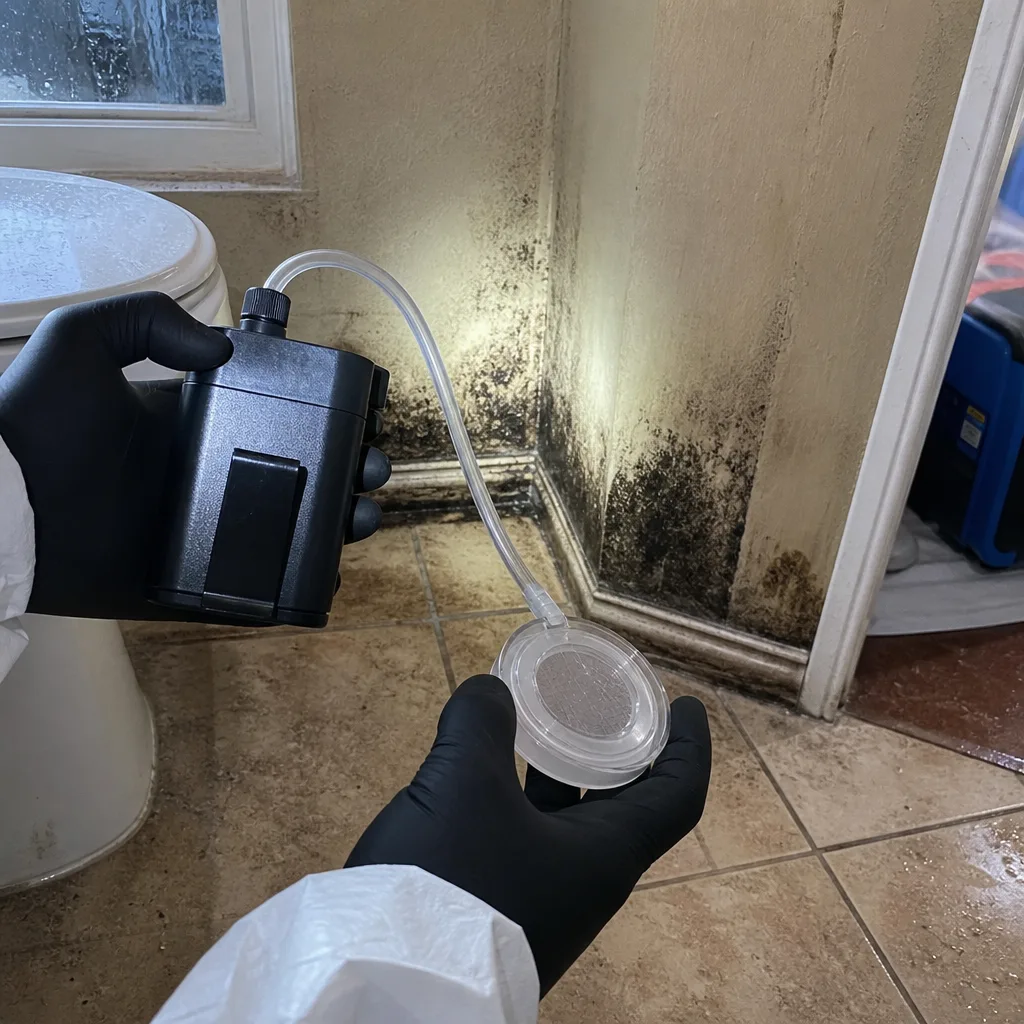
Mold Removal
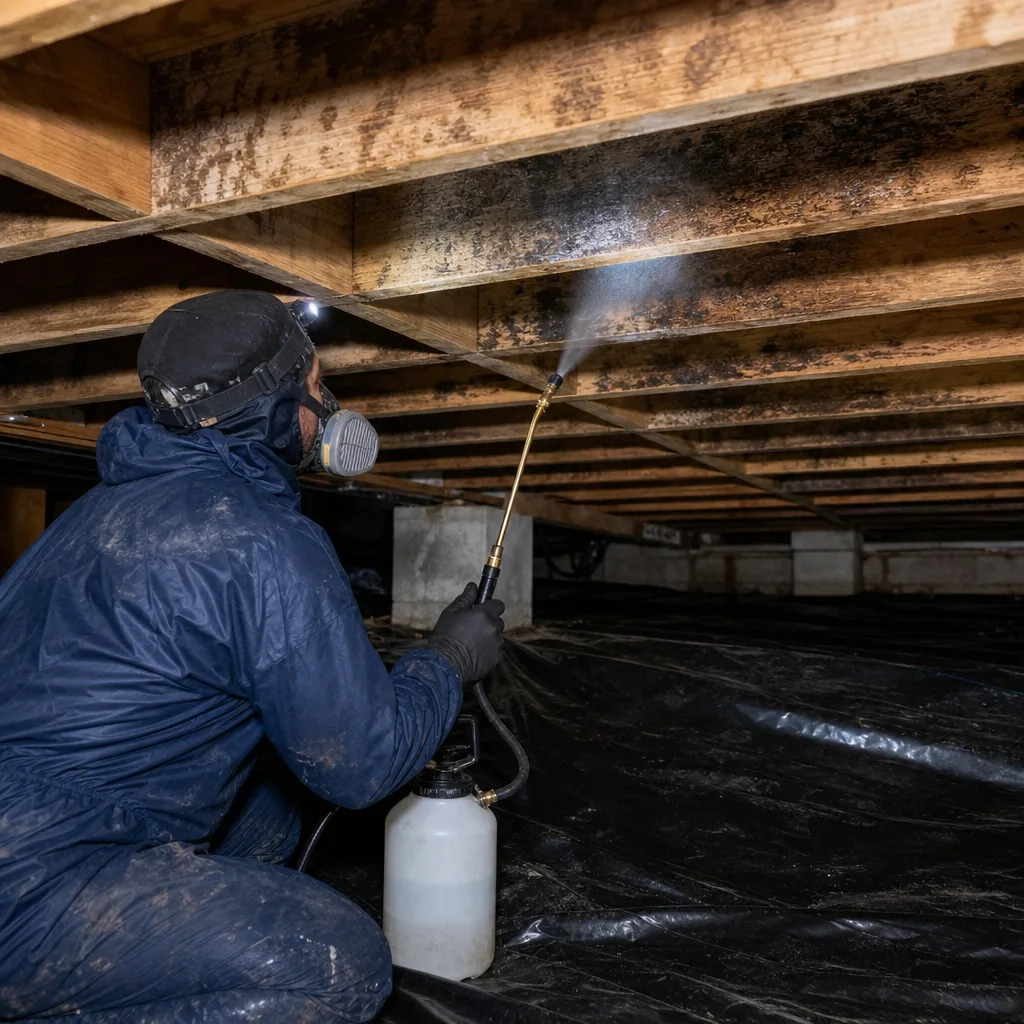
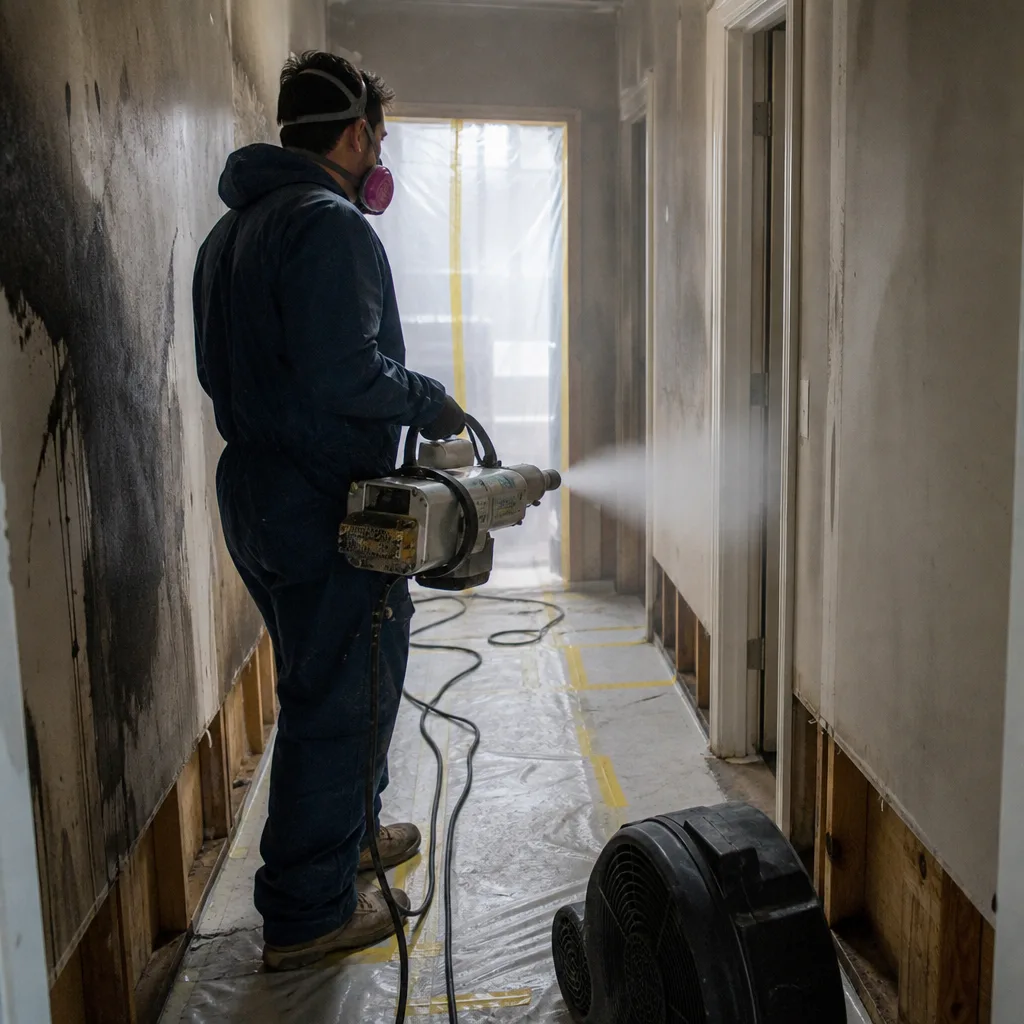
Mold removal in Citrus requires a soil-first approach. On raised-wood foundations, we remove contaminated insulation and vapor barrier, extract sediment from the crawl space, and dry the porous soil itself before treating surfaces. Failing to address the soil reservoir beneath the home is the number one reason mold returns within weeks. Our crews use Dri-Eaz dehumidifiers and HEPA-equipped Phoenix air scrubbers during removal so spores don’t migrate into living areas.
Black Mold Remediation
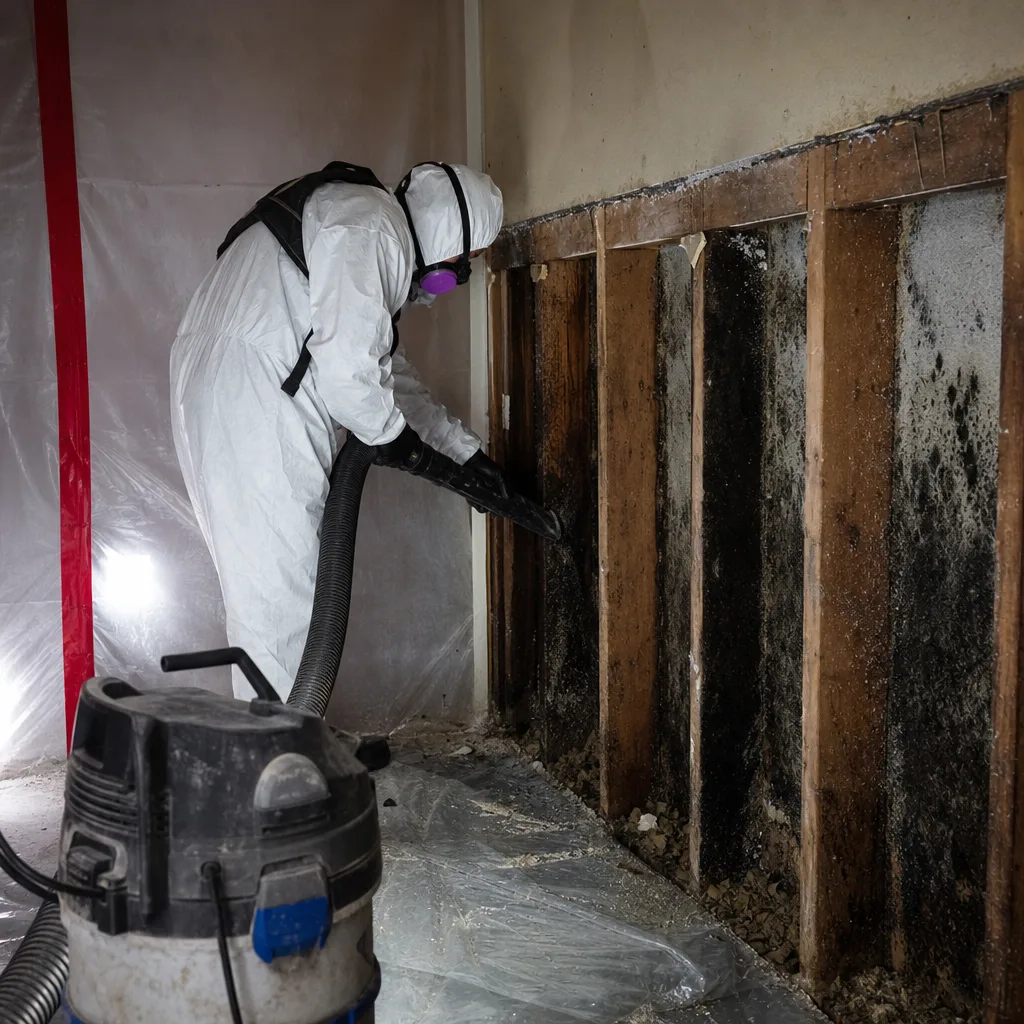
Black mold, or Stachybotrys, thrives in the slow, dark moisture conditions common beneath Citrus slab homes after subsurface water intrusion. Because the alluvial fan channels groundwater under foundations, black mold can establish itself without any visible water entry point. Our remediation protocol includes containment, HEPA air filtration, removal of affected building materials, and treatment with EPA-registered antimicrobials. We never paint over black mold. We remove it and correct the moisture source.
Air Quality Restoration
Santa Ana winds push fine ash and particulate into HVAC systems in Citrus homes, creating an ongoing air quality problem even after the visible mold is gone. We clean duct interiors, replace contaminated filtration, and run HEPA air scrubbers to drop spore counts to acceptable indoor levels. For homeowners with the original 1960s-era galvanized ductwork still in place, this step is critical. Mold spores cling to corroded metal surfaces and recirculate every time the system cycles on.
What happens when you call
- 1
A real person answersNo phone trees - you reach a local pro.
- 2
You get an upfront price rangeHonest numbers before anyone is dispatched.
- 3
A background-checked tech heads outLicensed & insured, dispatched right away.
- 4
You approve before work beginsNothing starts until you say go.
Crawl Space Treatment and Moisture Control in Citrus
This is where Citrus mold work differs from every neighboring city. Porous alluvial fan soils from San Gabriel Canyon transmit groundwater directly under slab foundations and into crawl spaces. Standard crawl space treatment that works in Azusa or Covina may fail in Citrus because the moisture reservoir is in the soil itself, not just in the air. We replace standard vapor barriers with 10-mil reinforced liners rated for foothill soil conditions. Then we re-grade and extract sediment as needed. Skipping this step means re-contamination within weeks, not months.
After a heavy winter storm, our crew responded to a 1960s ranch-style home in the Citrus Foothill Estates neighborhood where sediment had wicked under the door thresholds and into the crawl space, feeding mold growth on the original raised-wood foundation. We used our Dri-Eaz dehumidifiers and a HEPA-equipped Phoenix air scrubber to pull moisture from the porous soil, then removed the contaminated vapor barrier and replaced it with a 10-mil reinforced liner before treating the crawl space with an EPA-registered antimicrobial. The homeowner had already hired another company once. Their fogging and wiping approach lasted three weeks. The soil was the problem, and they never touched it.
Detached Workshops and Heavy Doors in Citrus
Many Citrus properties include detached workshops or garage structures with oversized, heavy rolling doors. These buildings often sit on slab foundations without vapor barriers, and sediment-laden rainwater channels directly beneath the door tracks during debris flows. We’ve found hidden mold growth behind door framing and along the floor-channel interface that owners never see until the musty smell becomes constant. Our approach includes pulling the door tracks where possible, inspecting the sill plate, and treating the hidden cavities behind the door jambs. This is the detail work that separates lasting remediation from a short-term fix.
Common Mold Remediation Problems We See in Citrus Homes
- Soil extraction skipped beneath slab foundations. On alluvial fan lots, groundwater moves laterally under the slab. Crews that skip soil extraction leave a permanent moisture reservoir that re-wets everything they just dried. We extract and re-grade before beginning surface treatment.
- Hidden growth behind heavy rolling doors. Detached workshops and garages in Citrus collect sediment along door tracks. Mold grows in the dark, damp channel between the track and the wall. We remove trim and inspect behind door jambs as part of every workshop remediation.
- Torn vapor barriers on porous soil. Standard 6-mil vapor barriers tear during installation over rocky foothill soil. Once torn, they allow capillary moisture to bypass the barrier entirely. We use reinforced liners specific to this soil profile.
- Original galvanized supply lines and slab penetrations. Mid-century ranch homes in Citrus often retain original plumbing. Slow leaks at slab penetrations feed mold colonies underneath flooring for months before any visible sign appears. We test moisture at slab penetrations during every inspection.
Pricing for Mold Remediation in Citrus, CA
A typical mold inspection with testing in Citrus runs $350-$600, depending on the number of samples. Crawl space mold removal on a standard raised-wood foundation home averages $2,200-$4,500. Black mold remediation in a single room starts around $1,500 and can reach $6,000 if framing and drywall removal are extensive. A full crawl space treatment with soil extraction and 10-mil reinforced vapor barrier replacement runs $3,800-$7,500, depending on square footage and access. Moisture and humidity control, including dehumidifier installation, typically costs $1,200-$3,200. These are honest Citrus ranges. The price changes based on the condition of your foundation, the age of your ductwork, and whether post-wildfire sediment has entered the building. We give you a written scope before work starts, and we bill your insurance carrier directly. Call (888) 737-2439 for a free estimate.
Trusted Brands We Service in Citrus
Our crews work with Dri-Eaz dehumidification systems and Phoenix HEPA air scrubbers on every Citrus mold job. These professional-grade units move more air and pull moisture from porous foothill soil faster than rental equipment. We keep replacement filters, antimicrobial treatments, and reinforced vapor barrier material on our trucks, so a Citrus mold remediation doesn’t stall waiting on parts. Our technicians train to RIA and IFA standards, and they know how to operate this equipment on alluvial fan soil where moisture behavior is different.
Service calls in Citrus cover the 91702 ZIP code, including homes off Route 66, Barranca Avenue, and the neighborhoods near Citrus Avenue and the foothill interface. No matter which part of Citrus you live in, our dispatch team coordinates from our Los Angeles office and a crew reaches you quickly.
We Also Serve Cities Near Citrus
Our Mold Remediation coverage extends to Azusa, Covina, Glendora, and Charter Oak. Each of these communities has its own drainage and soil profile. Citrus is unique because of the alluvial fan and the post-wildfire debris flow cycle. You can learn more about our work across the wider area on our Mold Remediation in Citrus page, but the short version is this: we treat the soil, not just the air, and we stand behind every job in writing.
Serving Citrus, CA - Our Local Coverage Area
We’re based in the Citrus area and know this community well. Use the map below to see our service coverage - if you’re nearby, we can almost certainly help.
FAQs - Mold Remediation in Citrus
Because the moisture source is beneath your home, not just in the air. Citrus sits on porous alluvial fan soil that channels subsurface water under slab foundations and into crawl spaces after heavy rain. Standard remediation dries the surfaces but leaves the soil reservoir intact. Within weeks, capillary action re-wets the framing and the mold returns. The fix is soil extraction and a reinforced vapor barrier, not another round of fogging. Call (888) 737-2439 if you’ve already paid for remediation once and the smell came back.
Debris flow deposits sediment, ash, and organic material directly against foundation walls and under thresholds. That sediment holds moisture against the structure and introduces new organic matter that feeds mold. After the Bobcat Fire burned the slopes above Citrus, the first winter rains carried scorched soil and ash into foothill neighborhoods. Homes that never had mold problems suddenly developed crawl space growth because sediment had sealed moisture against the wood. If the slopes above you have burned, your mold risk goes up for the next two to three rain seasons.
Yes. These older slab designs in Citrus were built before modern drainage and seismic retrofit standards. They often lack exterior footing drains, and the slab sits directly on alluvial fan soil that transmits groundwater laterally. After heavy rain, water moves under the slab and wicks upward through cracks and pipe penetrations. Mold grows in the flooring and bottom plate without any visible water entry. If you have a mid-century ranch home in the 91702 ZIP code, we recommend a moisture check at the first sign of a persistent musty smell.
We use Dri-Eaz dehumidifiers positioned inside the door cavity, HEPA-equipped Phoenix air scrubbers to control airborne spores during removal, and heated drying panels when the building is uninsulated. The heavy rolling doors create a channel where sediment and water collect. We pull the track or the trim where possible and dry that hidden channel directly. The equipment itself isn’t unusual. Knowing to run it behind the door frame is what makes the difference.
Yes. Santa Ana events drive fine ash and mold spores deep into HVAC ducts, wall cavities, and attic spaces. They also create negative pressure inside the home, pulling moisture-laden air up from crawl spaces through interior wall cavities. If you have mold in the crawl space, Santa Ana winds will push spores into your living areas faster than normal airflow would. After a severe wind event, we recommend checking your air filters and looking for new musty smells in rooms farthest from your HVAC return.
Free estimates for mold remediation in Citrus are available now. Call (888) 737-2439 and a live dispatcher will schedule your inspection. Current offers include $50 off any repair over $250, the $89 seasonal tune-up, and a 5% senior and veteran discount, always honored. Every job is backed by the 90-Day Done Right Promise. Done right, and backed in writing.
Written by Curt Bowman, Owner at Floodline Restoration Co. of California, serving Citrus since 2010.