
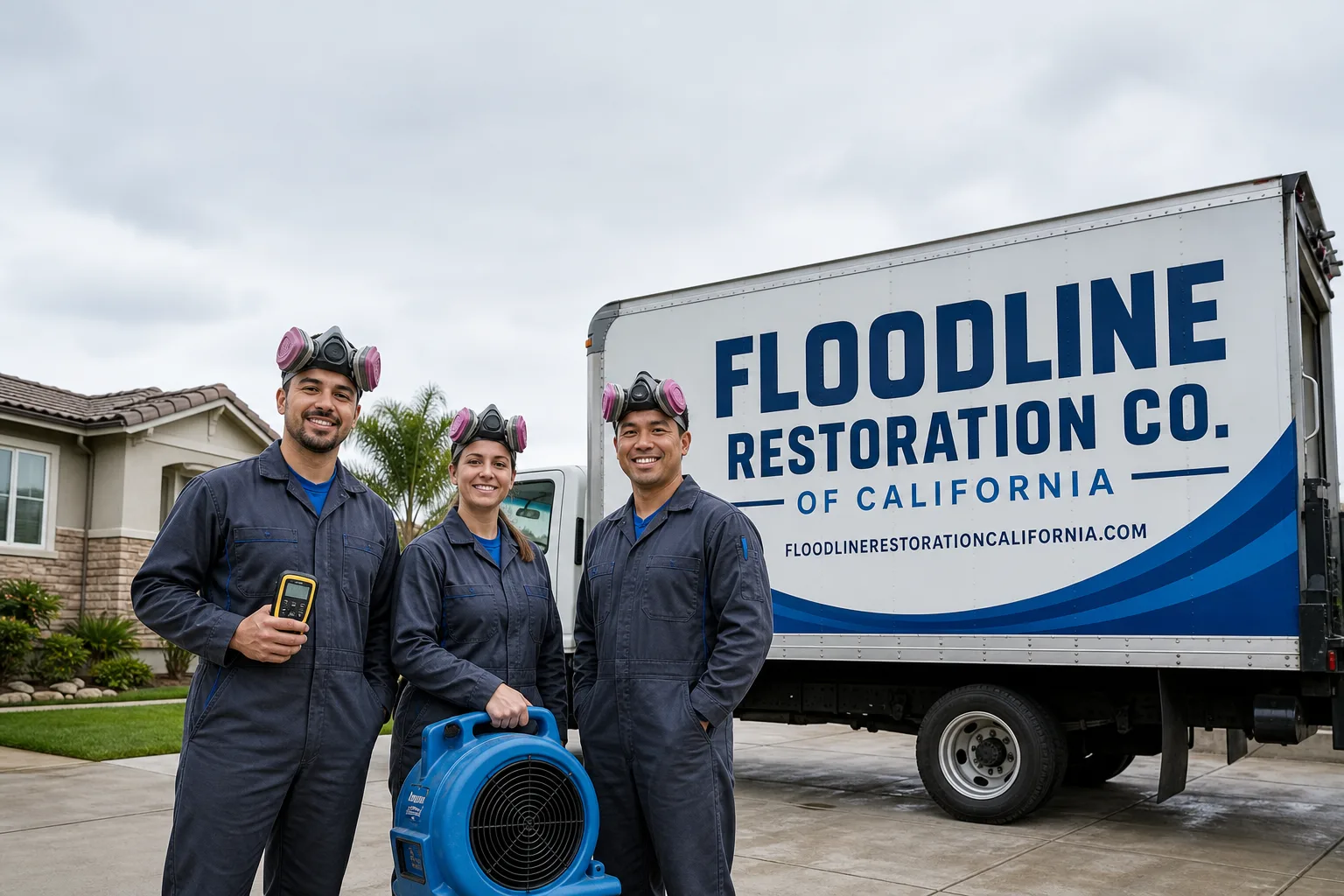
Fast, Reliable Mold Remediation Across Azusa
Mold remediation in Azusa typically costs $1,800-$4,200 for a contained removal job, and smaller spot treatments often run $600-$1,400. When you call (888) 737-2439, a live dispatcher answers, not a recording. Our crews know the streets north of Foothill Boulevard, the canyon wind patterns, and what hiding inside a 1950s stucco wall actually looks like.
Azusa’s position below the Angeles National Forest means your mold problem rarely starts the way it does in Glendora or Covina. Here, wildfire smoke settles into attics in October, winter rains pack debris against foundation walls by February, and by spring the moisture has found every opening your home’s old vapor barrier left exposed. That’s the cycle we work inside, and we’ve been answering Azusa calls long enough to know it starts with an honest inspection, not a sales pitch.
Why Floodline Restoration Co. of California Is Azusa’s Preferred Mold Remediation Company
We’re not the cheapest bid in Azusa, and we won’t pretend to be. What we are is the company that shows up with background-checked, uniformed technicians certified to IICRC, RIA, and IFA standards, and a written scope before any work starts. Homeowners in the 91702 ZIP have dealt with enough contractors who underbid the foothill mudflow jobs, then disappear when the real scope surfaces.
Our crews read moisture maps with Dri-Eaz and Phoenix equipment on day one, and the same certified team handles daily readings until the dry standard is met. Then and only then do we discuss rebuild. For Azusa homeowners above Foothill Boulevard especially, that matters: a “small” mold job in a pier-and-beam house can hide two feet of debris flow sediment underneath. We inspect the crawlspace and sub-floor framing before quoting. Always.
Floodline Restoration Co. handles the full cycle: Mold Remediation from containment through clearance testing, plus the water damage, fire damage, and reconstruction that often preceded it. We bill your carrier directly, document everything with photos, and stand behind the work with the 90-Day Done Right Promise in writing. No arguing. No passing the job to someone else.
Our Mold Remediation Services in Azusa
Mold Inspection & Testing
A proper mold inspection in Azusa starts with the question every flatland contractor skips: has this home seen wildfire ash infiltration? In the 1940s-1960s wood-frame stucco houses that dominate central and north Azusa, Santa Ana winds funnel through San Gabriel Canyon and push fine smoke particulate deep into attics and wall voids. That soot holds moisture. Our inspection includes air sampling, surface sampling where visible growth exists, and a moisture assessment of wall cavities using professional-grade meters, so you’re not guessing when the lab report comes back.
Mold Removal
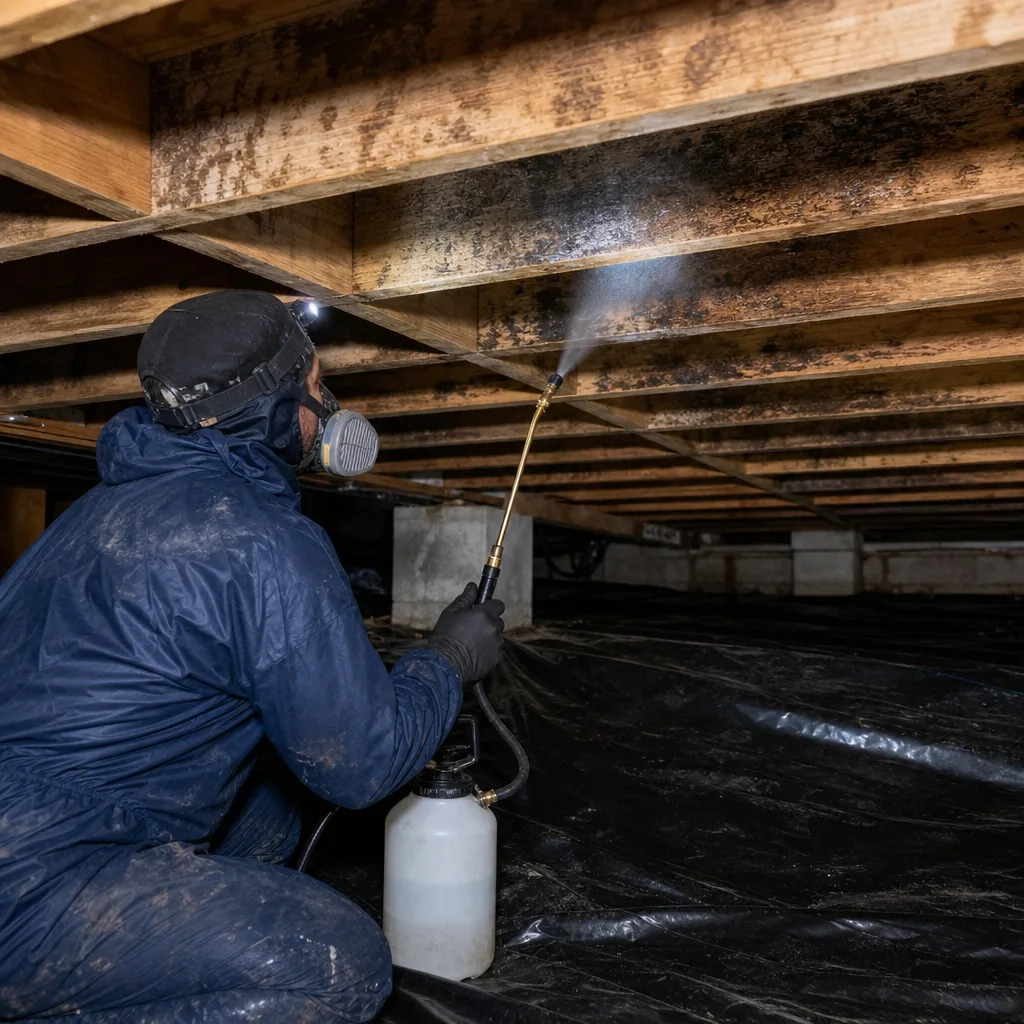
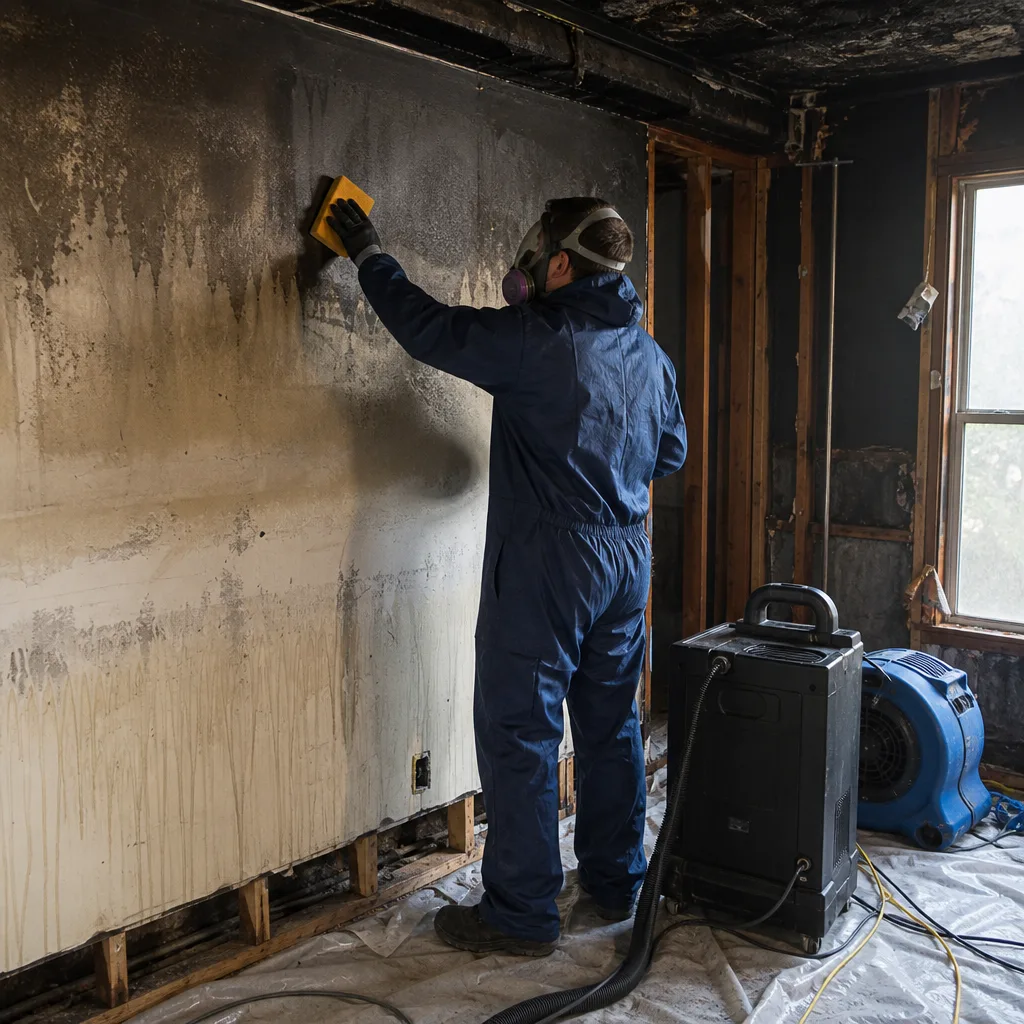
Removal in an older Azusa home means containment first: negative air pressure, HEPA filtration, and sealed work zones so spores don’t migrate into the living space. Our crews remove affected drywall, insulation, and framing members as needed, then treat remaining surfaces with antimicrobial agents. Each job ends with a clearance test and a written moisture log. If you’re in a 91702 home near the canyon mouth, we also check sub-floor and crawlspace conditions before we call the space dry, because those areas are where post-storm mold hides longest.
Black Mold Remediation
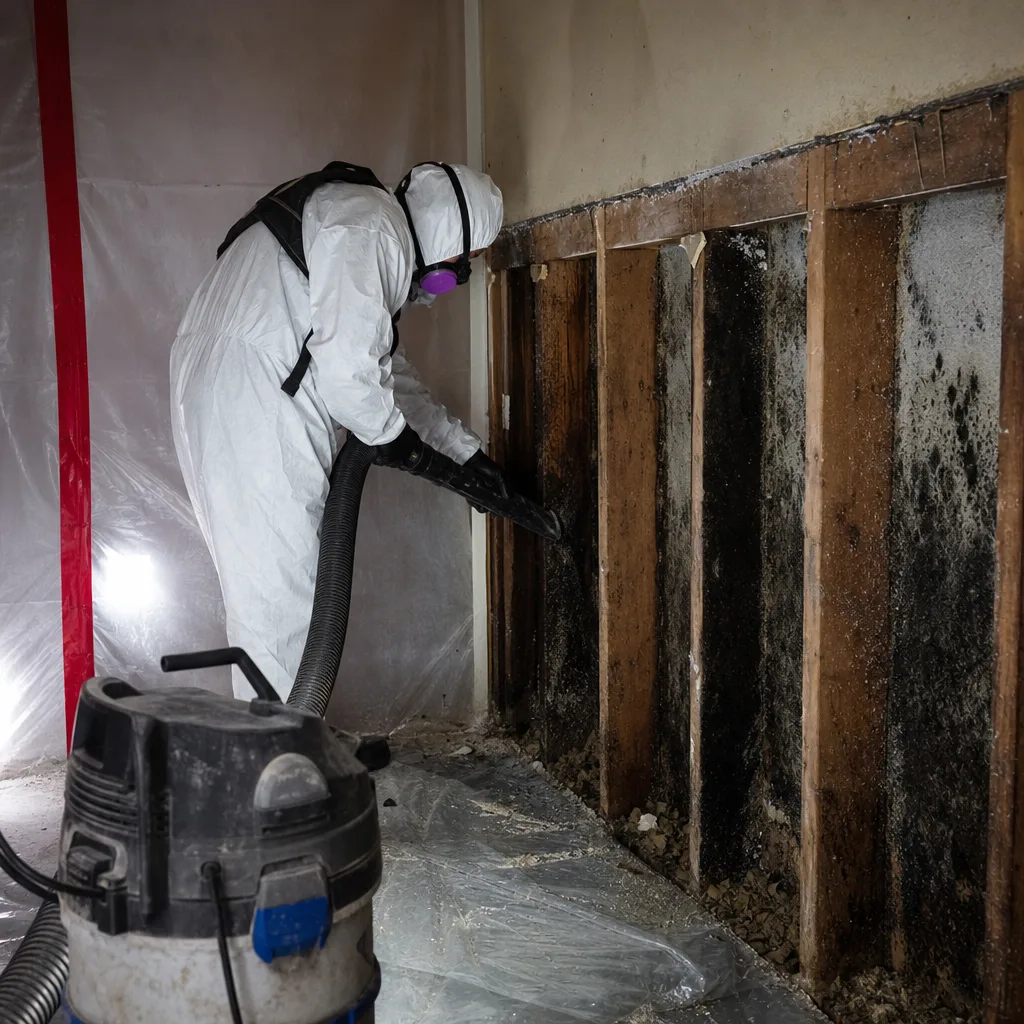
Toxic black mold, or Stachybotrys, grows where water has sat for days, not hours. In Azusa that means inside wall cavities after a hidden plumbing leak, under floors after mudflow intrusion, and inside attics where storm moisture met old smoke residue. We take black mold seriously: full PPE, controlled demolition, HEPA air scrubbing, and clearance testing before the containment comes down. If the source was a burst galvanized supply line, common in Azusa’s hard water, we coordinate the plumbing repair with our water damage team so you’re not juggling two contractors.
Air Quality Restoration
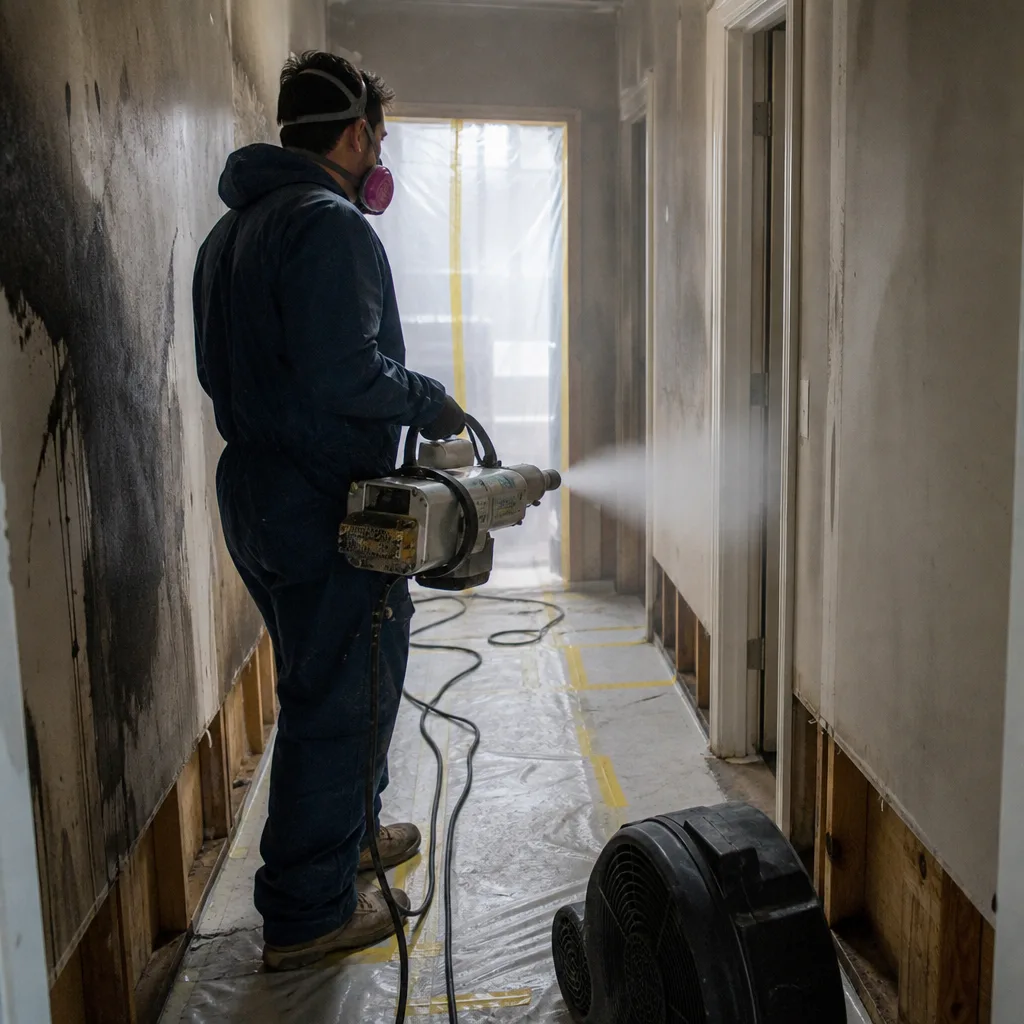
After mold is removed, the air in the house still carries spores, mycotoxins, and fine Particulate from the original source. Our air quality restoration uses HEPA air scrubbers and negative air machines to pull contaminated air through filtration, then we verify with post-remediation air sampling. For Azusa homes near the canyon, we also address the wildfire smoke component, since soot residue left in ducts and wall voids is a moisture trap that invites mold back after the next rain.
What happens when you call
- 1
A real person answersNo phone trees - you reach a local pro.
- 2
You get an upfront price rangeHonest numbers before anyone is dispatched.
- 3
A background-checked tech heads outLicensed & insured, dispatched right away.
- 4
You approve before work beginsNothing starts until you say go.
Trusted Brands We Service in Azusa
Our Azusa crews run Dri-Eaz and Phoenix equipment daily: dehumidifiers, air movers, HEPA scrubbers, and Injectidry drying systems for hard-to-reach wall cavities and sub-floors. That professional-grade gear matters here because the drying challenge is different when you’re working under a pier-and-beam home packed with old debris flow sediment. We keep the equipment on local trucks, not in a warehouse across town, so a crew can roll into an Azusa neighborhood with what the job needs on the first visit, not the third.
Common Mold Remediation Problems We See in Azusa Homes
- Post-storm crawlspace mold. Streets that back up to the alluvial fan north of Foothill Boulevard get debris flow sediment pushed under pier-and-beam floors. We find saturated insulation and active growth under homes where the owner only noticed “a little mud in the garage.”
- Hidden mold behind stucco after plumbing leaks. Older galv galvanized supply lines corrode in the San Gabriel Valley’s hard water. A slow leak inside a 1950s stucco wall can Bloom for weeks before anything shows on the interior paint.
- Smoke residue that traps moisture. Santa Ana winds push wildfire ash and soot into attic insulation and wall voids. When winter rain adds moisture, that smoke residue becomes a mold nursery behind the drywall.
- Vapor barrier failure in older builds. Most 1940s-1960s wood-frame homes in Azusa were built without modern vapor barriers. Post-storm moisture wicks into wall cavities and goes unnoticed until the musty smell arrives weeks later.
Pricing for Mold Remediation in Azusa, CA
Here’s what Azusa homeowners can expect, based on the jobs we quote most weeks in 91702:
- Mold inspection and testing: $300-$600 for a standard home, more if air sampling is added in multiple rooms.
- Contained mold removal (single room or closet): $1,200-$3,000, including air scrubbing and clearance testing.
- Crawlspace mold treatment and vapor barrier install: $2,500-$6,500 depending on access and debris removal.
- Full attic or multi-room remediation: $4,000-$9,000, with cost driven by containment size and demolition footprint.
- Post-mudflow crawlspace excavation and drying: $5,000-$12,000 when debris flow sediment must be removed before drying can begin.
Every quote includes a written scope before work starts. No surprises on the bill, no mid-job phone calls asking for more. We bill your insurance carrier directly and document the job with moisture logs and photos. Call (888) 737-2439 for an exact quote on your Azusa home.
We Also Serve Cities Near Azusa
Our crews work throughout the San Gabriel Valley from our Los Angeles dispatch office. If you’re in Citrus, Covina, Glendora, or Charter Oak, we handle Mold Remediation in Azusa and the surrounding foothill communities with the same written-scope approach and 90-Day Done Right Promise.
Serving Azusa, CA - Our Local Coverage Area
We’re based in the Azusa area and know this community well. Use the map below to see our service coverage - if you’re nearby, we can almost certainly help.
FAQs - Mold Remediation in Azusa
Because the moisture is coming from below, not from a leaking pipe. In Azusa homes north of Foothill Boulevard, winter storms move debris flow sediment against foundation walls and under pier-and-beam floors, saturating the ground around your house. Without a proper crawlspace inspection and vapor barrier, that ground moisture wicks upward into wall cavities and sub-floor framing, creating conditions where mold returns every season. We treat the moisture source, not just the visible growth. Call (888) 737-2439 for an inspection that looks under the house, not just at the walls.
Yes. Smoke and ash infiltration from canyon fires push fine particulate into attics, wall voids, and ductwork of older Azusa homes, especially 1940s-1960s wood-frame stucco builds without tight attic sealing. That soot residue is hygroscopic, meaning it attracts and holds moisture. When the next winter storm arrives, the trapped soot and moisture combine to support mold growth behind drywall. We address both the smoke residue and the resulting mold in one remediation, because treating one without the other just sets up another bloom.
Do not attempt to clean it yourself if the odor is strong, and do not let a contractor quote the job without checking beneath the floor. Mudflow debris in north Azusa often packs under pier-and-beam sub-floors, where saturated insulation and standing water create active mold far beyond what’s visible in the garage. Our field crew responded to a street off the alluvial fan where a homeowner reported “a little mud.” We found over two feet of sediment under the house, standing water, and mold in the insulation. The right response is professional extraction, structural drying, and moisture barrier installation. Call (888) 737-2439 for a crawlspace inspection before the smell spreads.
Watch for persistent musty odors in a specific room, staining or bubbling on interior drywall, peeling paint, or increased allergy symptoms that improve when you leave the house. In older Azusa homes with galvanized plumbing and hard water, slow leaks can saturate wall cavities for weeks before any visible stain appears on the stucco’s interior face. By the time you see it, the mold has usually been active behind the wall for some time. A moisture meter reading and a small inspection hole behind the suspected area gives us an honest answer without unnecessary demolition.
Black mold isn’t necessarily more common in Azusa by species, but the conditions that create it are more frequent here. The canyon-mouth dual-disaster cycle, wildfire smoke in fall followed by post-fire debris flows in winter, produces prolonged water saturation in crawlspaces and wall voids. Stachybotrys needs days, not hours, of standing moisture to establish. In flatland cities like Covina or Glendora, water events are more likely to dry out quickly. In Azusa’s foothill blocks, the debris packed against foundations keeps moisture in contact with wood for weeks, which is exactly when black mold takes hold.
If you see mold, smell it, or just want an honest read on your Azusa home after a storm, call (888) 737-2439. We answer live, every hour, every day. We’ll schedule an inspection, inspect the crawlspace and sub-floor where the problem often hides, and hand you a written scope before any work begins. Done right, and backed in writing.
Written by Curt Bowman, Owner at Floodline Restoration Co., serving Azusa and the San Gabriel Valley since 2010.