
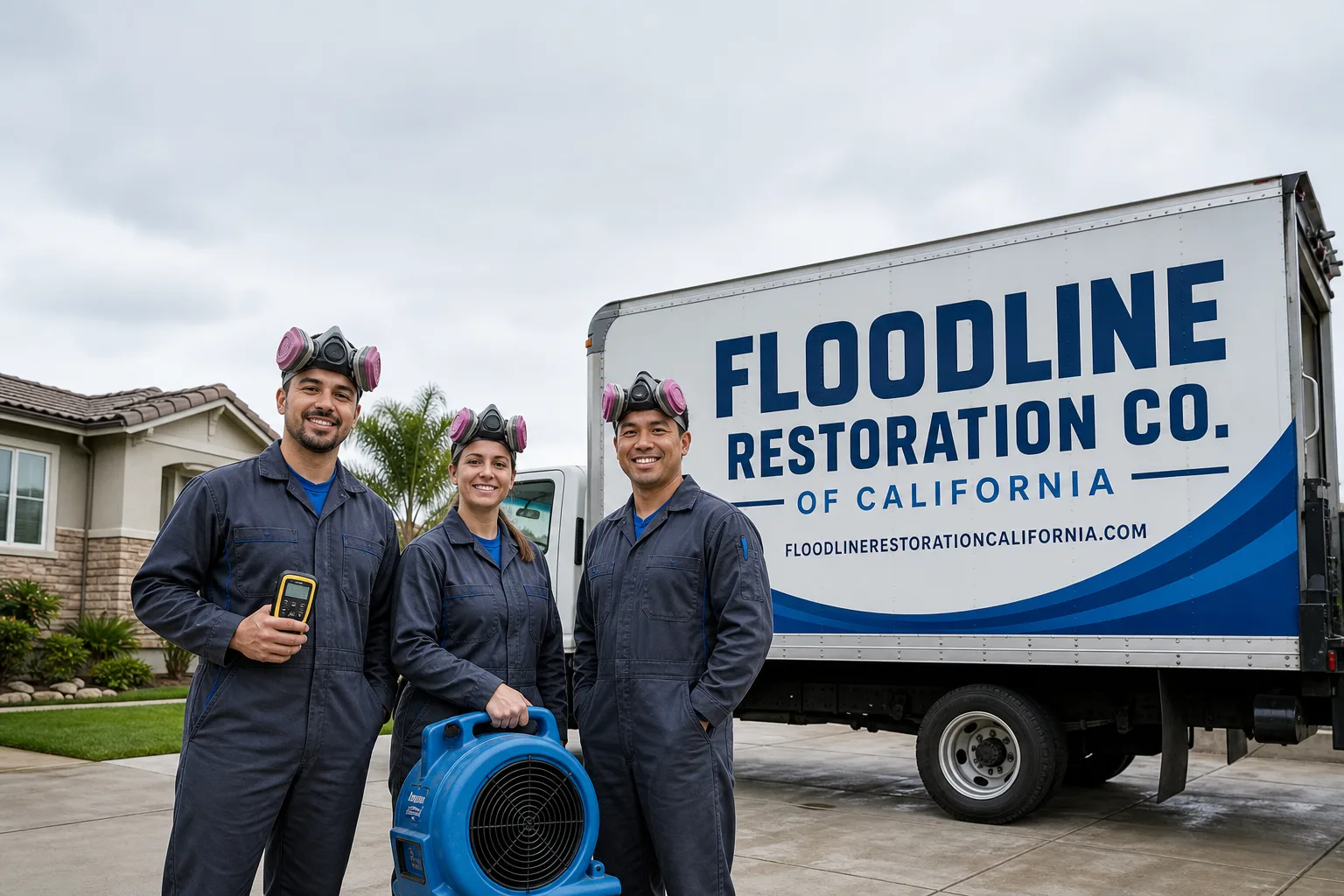
Fast, Reliable Mold Remediation Across Covina
Mold remediation in Covina typically costs $1,800-$4,200 for a contained removal of affected drywall and flooring in a single room, with whole-slab treatments running higher. Most jobs in Covina can be assessed within 24 hours and completed in 2-4 days once containment is set. If you’re seeing black spots along baseboards in a 1960s ranch or smelling must in a bedroom that never dries out, call (888) 737-2439 and a live person picks up, day or night.
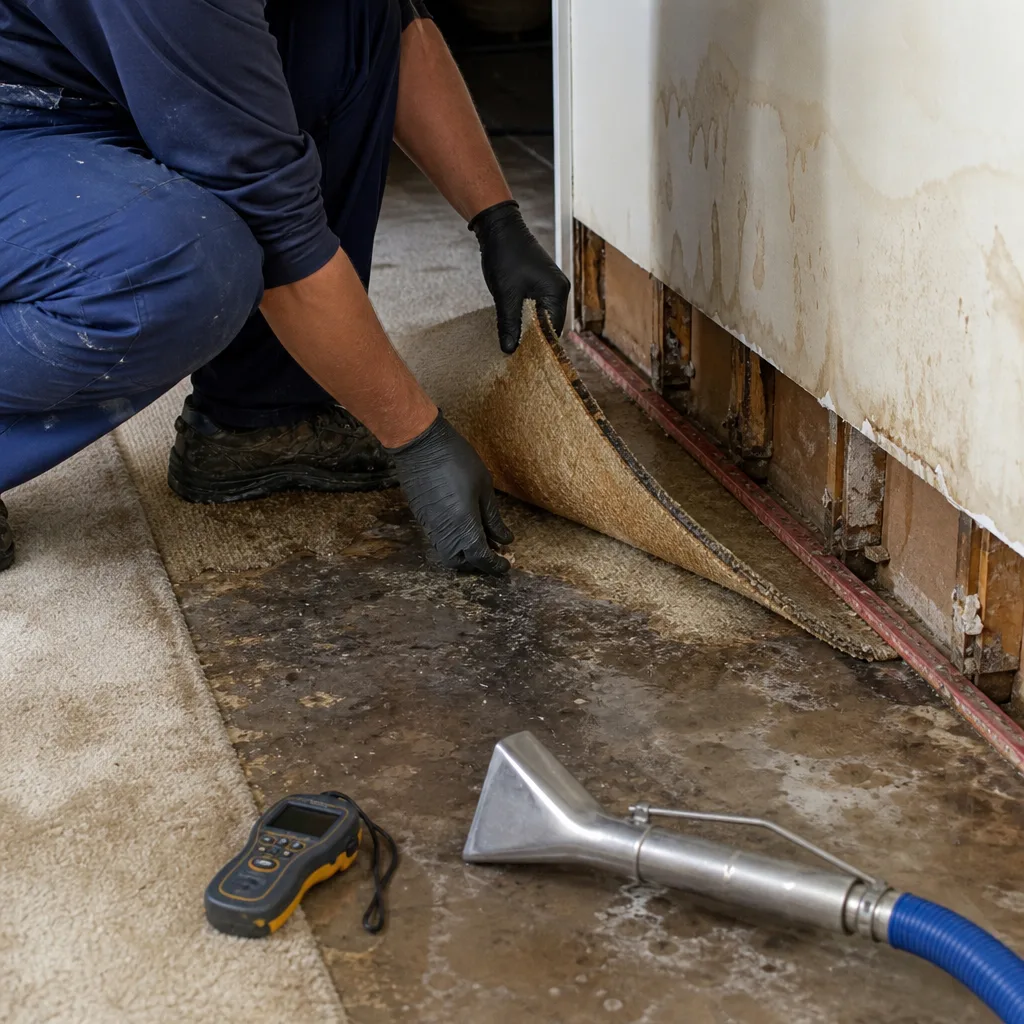
Covina’s slab-on-grade tract homes from the 1950s through 1970s have a mold problem most guides never mention: moisture wicking up through unsealed concrete, not just from leaks you can see. We know exactly where to look in 91722, 91723, and 91724 because we’ve pulled carpet padding from hundreds of these floors and watched the moisture meter tell the real story.
Why Floodline Restoration Co. of California Is Covina’s Preferred Mold Remediation Company
We’ve worked Covina’s postwar ranch houses long enough to know what’s behind the drywall before we open it. The homes off Badillo Street, Grand Avenue, and Citrus Avenue share a construction era, and that era has specific failure points: original galvanized supply lines, popcorn ceilings with asbestos content, and slabs poured without vapor barriers. That local knowledge changes how we scope every job.
Covina homeowners call us because we show up when we say we will, in uniform, with background-checked technicians trained to IICRC standards. We don’t send a salesperson first. A certified crew arrives, reads the moisture map, and starts work the same visit whenever containment is safe to establish. That matters when you’ve got mold spreading beneath baseboards and a family living upstairs.
Every job is backed by the 90-Day Done Right Promise, in writing. If mold returns within 90 days, we make it right, no paperwork battles. That guarantee is the Keystone Standard, and we’ve built Mold Remediation on it since day one.
Our Mold Remediation Services in Covina
We handle every phase of mold work in Covina, from first inspection to final air clearance. Here’s what that looks like for the homes we see most often in 91722, 91723, and 91724.
Mold Inspection & Testing
In Covina’s slab homes, the visible mold is rarely the whole story. We test air and surface samples, then correlate them with moisture readings across the slab, not just the stained area. In a 1962 ranch in the 91722 ZIP, a homeowner called about a small water heater leak. Moisture meters revealed contamination spanning the entire utility-room slab and adjacent subfloor. A corroded galvanized recirculation line, eaten from the inside by Covina’s hard water, often 350+ ppm TDS, had been silently wicking for months. That’s the kind of finding a visual-only inspection misses.
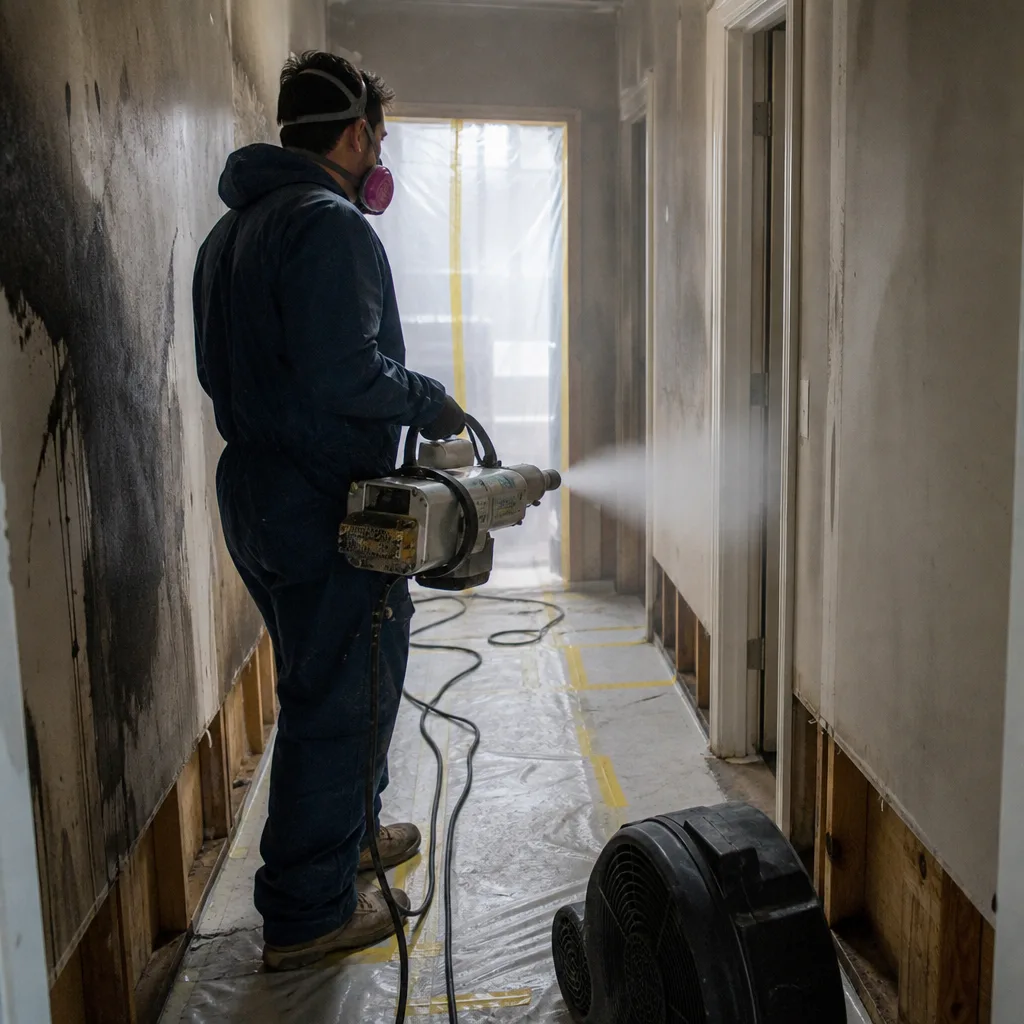
Mold Removal
We set containment with negative air pressure before disturbing any affected material. In Covina’s older homes, we often remove flooring, baseboards, and drywall, then dry the slab to IICRC standards before treating remaining surfaces with an EPA-registered antimicrobial. Skipping the slab drying step is the single biggest reason mold returns in these pre-vapor-barrier houses.
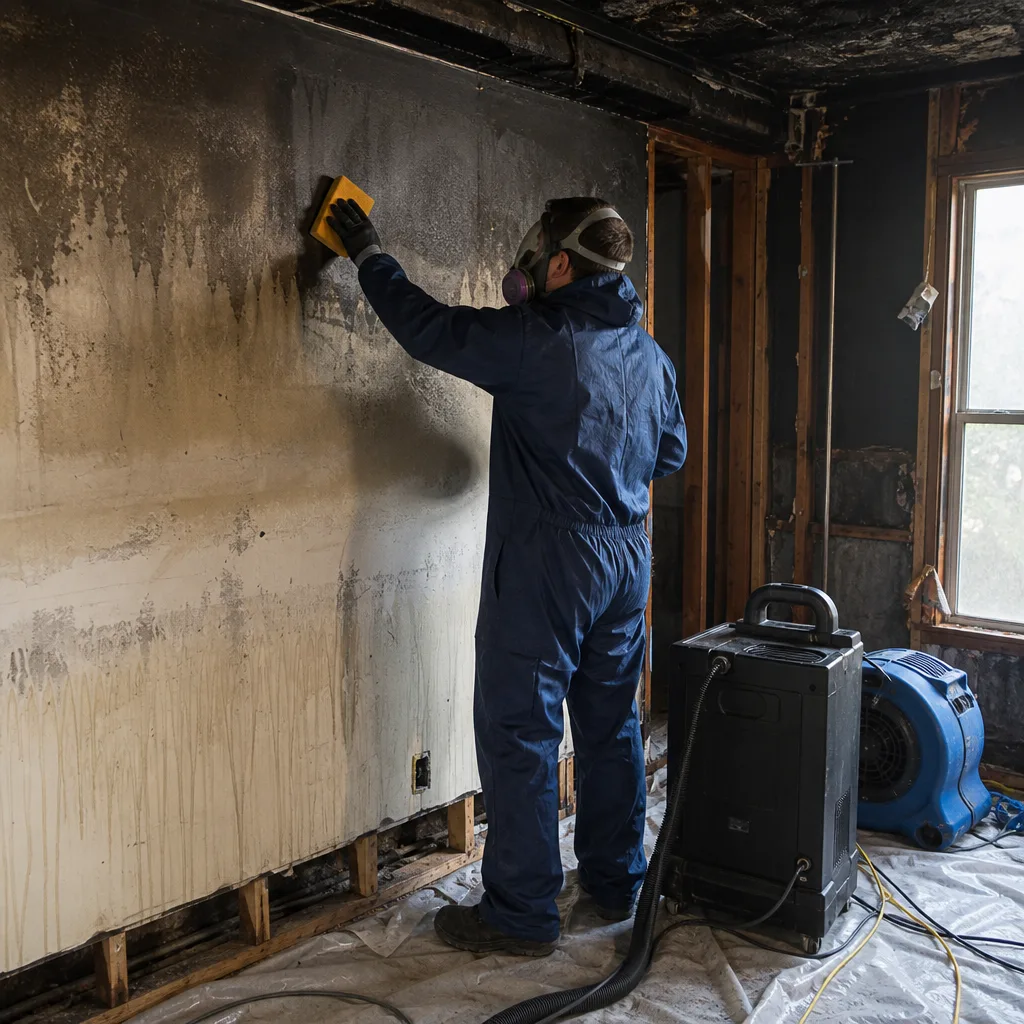
Black Mold Remediation
Stachybotrys, what people call black mold, shows up regularly in Covina homes with chronic moisture, especially where carpet sits directly on slab. We contain it, remove it, and verify clearance with post-remediation air testing. You get a written scope before anything opens, so there’s no surprise expansion of the job once walls come down.
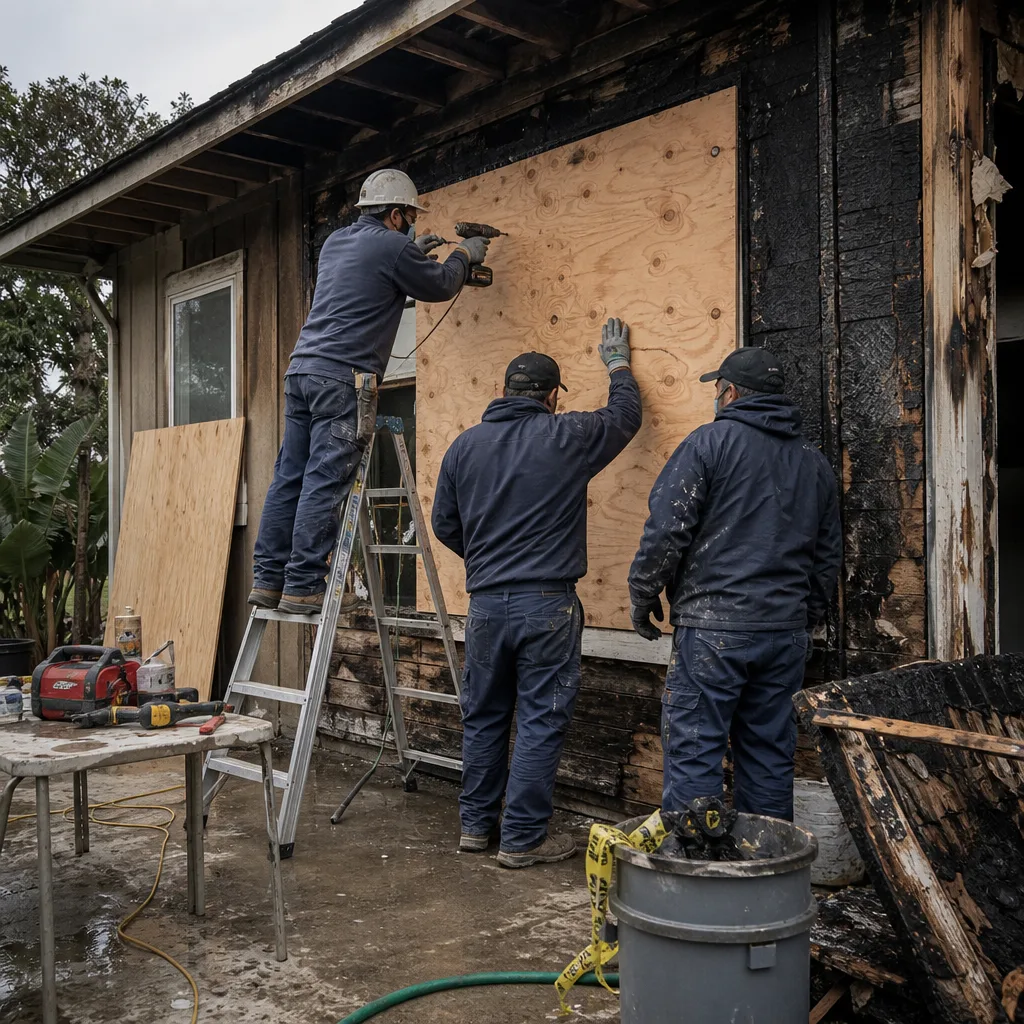
Air Quality Restoration
After physical removal, we run HEPA air scrubbers to pull remaining spores from living spaces. Covina’s inland heat means windows stay shut much of the summer, so indoor air can hold whatever the walls have been releasing for months. We don’t just clear the mold; we clear the air you’re breathing.
We also handle crawl space treatment and moisture and humidity control, both critical in Covina’s older bungalow stock near downtown 91722 where raised foundations and poor ventilation create a different mold pattern than the slab tracts.
What happens when you call
- 1
A real person answersNo phone trees - you reach a local pro.
- 2
You get an upfront price rangeHonest numbers before anyone is dispatched.
- 3
A background-checked tech heads outLicensed & insured, dispatched right away.
- 4
You approve before work beginsNothing starts until you say go.
Why Slab-Wicking Mold Is Covina’s Signature Problem
Here’s what makes mold work in Covina different from anywhere else in the San Gabriel Valley. The city’s residential core, ZIP codes 91722 through 91724, is dominated by ranch-style tract homes built between roughly 1948 and 1975. Those slabs were poured before modern vapor barriers became standard. When a pipe leaks, even slowly, water doesn’t pool visibly. It wicks through the concrete, distributes moisture beneath the flooring, and feeds mold growth under carpet padding and along baseboards where nobody sees it. By the time staining appears, the contamination is often months advanced and spans far more than the visible patch.
Add Covina’s hard water to that equation. The same 350+ ppm TDS water that leaves scale on your fixtures is eating original galvanized supply lines from the inside out. What starts as a pinhole leak behind a utility room wall becomes a slow, invisible drip that wets the slab for months. No puddle, no warning. Just mold that keeps returning after surface cleaning because the source was never found.
Our crew responded to that exact scenario last year in a 1962 ranch-style home off Puente Avenue. Homeowner reported a small water heater leak. We contained the area, removed affected flooring and drywall, and ran Dri-Eaz LGR 7000XLi dehumidifiers and Phoenix Axial air movers until the slab met IICRC drying standards. Then we treated remaining surfaces and rebuilt. The homeowner had lived with a musty smell for two years and two previous “cleanings” that never addressed the slab.
Trusted Brands We Service in Covina
We work on homes built in every era Covina has, and that means we’ve seen every mold pattern those construction methods produce. Our technicians carry IICRC and RIA training, and we run Dri-Eaz and Phoenix drying equipment sized for real slab work, not rental counter units that quit halfway through. For Covina homeowners, that means one visit from a crew that can actually finish the job, not a contractor who stages equipment and disappears until next week.
Common Mold Remediation Problems We See in Covina Homes
- Hidden slab-wicking growth returning after surface cleaning. Many Covina homes have had mold “cleaned” once already. But if the slab wasn’t dried and tested, the colony comes back. We find moisture under baseboards in homes where no leak is visible anywhere.
- Asbestos surprises during drywall removal. Covina’s 1950s-1970s homes frequently contain popcorn ceilings and 9×9 vinyl floor tiles. Disturbing those materials without testing triggers a legal shutdown and doubles the job cost. We test before we open anything, so the scope stays the scope.
- Undersized drying equipment in summer heat. When it’s 100°F in Covina and a contractor runs small dehumidifiers, condensation forms on cool slab edges and prolongs drying for days. We size equipment for the actual moisture load, not the service call budget.
- Wildfire ash drifting into wet materials. Covina sits directly south of the San Gabriel Mountains. When Angeles National Forest burns, smoke and ash settle across 91722, 91723, and 91724. Ash landing on damp drywall or carpet feeds mold and leaves odors that standard cleaning won’t remove.
Pricing for Mold Remediation in Covina, CA
What you’ll actually pay depends on what’s opened up, but Covina homeowners should expect these ranges. A contained room treatment with floor and baseboard removal, slab drying, and air scrubbing runs $1,800-$4,200. A full utility-room slab job like the one described above typically lands at $3,500-$6,000. Whole-home remediation with multiple affected rooms and HVAC cleaning runs $6,000-$12,000 or more. Inspection and testing alone, with a written lab report, starts around $350-$600.
We bill your carrier directly and document everything with photos and daily moisture readings for the adjuster. You never play messenger between Floodline and the insurance company. Call (888) 737-2439 for a free estimate; we’ll give you numbers before anything starts, not a vague “it depends” after the walls are open.
Current offers for Covina residents: $50 off any repair over $250, and a standing 5% discount for seniors and veterans. Ask about both when you call.
We Also Serve Cities Near Covina
Beyond Covina, our crews work regularly in Charter Oak, Azusa, Citrus, and West Covina. Same response times, same written guarantee, same crew from first reading to final rebuild. If you’re anywhere in the 91722-91724 corridor or the surrounding communities, you’re in our service area.
Serving Covina, CA - Our Local Coverage Area
We’re based in the Covina area and know this community well. Use the map below to see our service coverage - if you’re nearby, we can almost certainly help.
FAQs - Mold Remediation in Covina
Because the slab itself was likely never dried to IICRC standards after the visible mold was cleaned. In Covina’s pre-vapor-barrier tract homes, moisture wicks through concrete and keeps feeding the colony even after surface treatment. The fix is slab-level drying with moisture meters confirming the dry standard, not just wiping down what you can see. Call (888) 737-2439 and we’ll read the slab before anything else.
Yes, if the job touches materials that may contain asbestos, which includes most popcorn ceilings and 9×9 vinyl floor tiles in Covina’s 1948-1975 housing stock. Disturbing those without testing is a legal violation that stops work and adds significant cost. We include testing in our written scope whenever those materials may be involved.
Ash settles on damp surfaces and creates a nutrient layer that accelerates mold growth, plus it leaves a smoke odor that normal cleaning won’t lift. Covina’s position directly south of Angeles National Forest means every fire season, homes here get ash deposits that coastal LA cities rarely see. We treat that as part of the moisture and air quality problem, not a separate cosmetic issue.
Waiting for visible staining before calling. In slab homes with original galvanized plumbing, the mold has often been active under carpet padding and behind baseboards for months before any stain appears. If you smell must or notice warped baseboards in a 91722-era ranch, the clock is already running. Call (888) 737-2439 for an inspection before it spreads further.
Yes, and this is the pattern we see constantly in Covina homes built before 1980. The water’s mineral content, often 350+ ppm TDS, corrodes galvanized pipes from the inside and creates pinhole leaks that drip slowly and invisibly. No puddle forms. The slab absorbs the water, and mold grows beneath the flooring. Moisture meters and slab readings are the only way to find it.
Have a question that’s not answered here? Call (888) 737-2439. A live dispatcher answers, every hour, every day. We’ll walk through what you’re seeing and tell you honestly whether it needs a crew or a second look.
Written by Curt Bowman, Owner at Floodline Restoration Co., serving Covina and the San Gabriel Valley since 2010.