
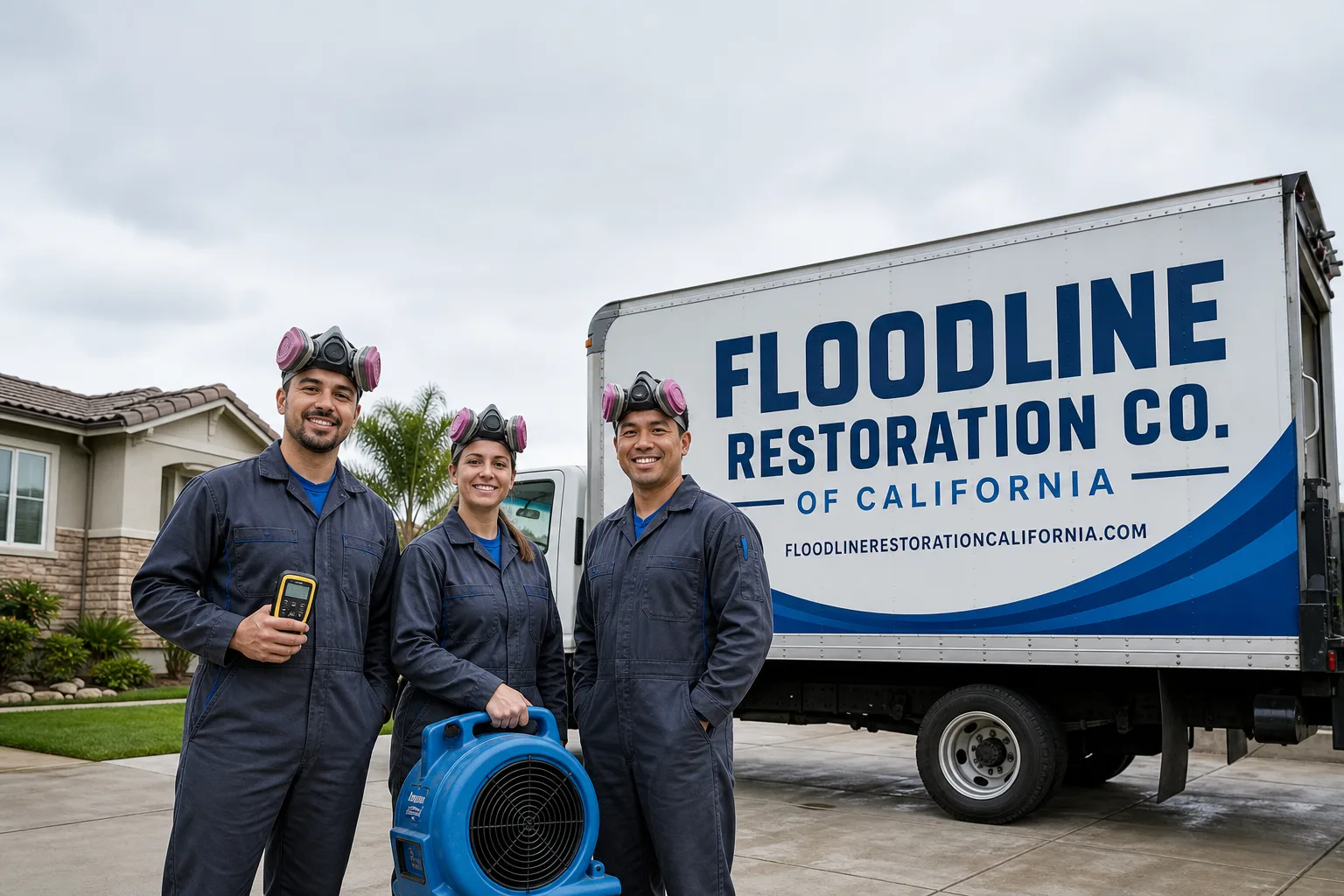
Fast, Reliable Storm & Disaster Restoration Across Stanford
Storm damage on the Stanford campus moves through a different approval process than anywhere else in the Bay Area. Almost all land here belongs to Stanford University, which means restoration work needs pre-approval from Stanford Real Estate & Facilities Management before a crew can even start mitigation. That’s the honest mark on the wall: get the paperwork right, or the work gets halted. Floodline Restoration Co. of California handles that institutional approval process as standard practice, not as a surprise. A live dispatcher answers at (888) 737-2439 any hour, any day, and we’ll have a background-checked, uniformed crew on campus faster than most contractors in Palo Alto can return a phone call.
Why Floodline Restoration Co. of California Is Stanford’s Preferred Storm & Disaster Restoration Company
We’ve spent over 42 years building a company people can hold accountable. For Stanford specifically, that means we know the difference between unincorporated Santa Clara County permit rules and the parallel review Stanford’s Capital Planning office requires on core campus buildings. That dual-track process catches out-of-town contractors constantly. We don’t get caught.
Stanford customers call us because a live person picks up at two in the morning. Not a recording. When a Diablo wind event tears through the western edge of campus near Jasper Ridge, someone here answers and dispatches. Our technicians carry IICRC, RIA, and IFA certifications, and they arrive in uniform with professional-grade Dri-Eaz, Phoenix, XPOWER, B-Air, and Injectidry equipment. We document everything with moisture mapping from day one and hand the daily readings log to you and your carrier.
The 90-Day Done Right Promise backs every job in writing. If it’s not done right, we make it right. No paperwork battles. No arguing. That’s the Keystone Standard, and it applies to every single restoration we perform in Stanford.
Our Storm & Disaster Restoration Services in Stanford
Emergency Board-Up
A broken window or torn roof section on a mid-century faculty home off Serra Street needs boarding fast, but not thoughtlessly. Stanford’s ground-lease system means the university has an interest in how that board-up looks and functions. We handle the pre-approval with Stanford Facilities Management, then secure the opening with materials that hold against the next wind event. Typical emergency board-up in Stanford runs $350 to $800 depending on opening count and accessibility.
Roof Tarping
Roof tarping after a storm buys you time while the dual-track approval process runs. A torn membrane over a 1950s faculty cottage near Escondido Road needs a tarp that won’t rip loose during a dry-season Diablo wind event, which can gust past 40 mph along the foothill interface. We use reinforced tarps and proper anchoring. Roof tarping in Stanford typically costs $450 to $1,100, more for steep pitch or multi-story access.
Debris Removal
Stanford’s wildland-urban interface means storm debris here is not just a few downed branches. When a 60-year-old oak limb comes down, you’re often dealing with hundreds of pounds of mixed material: limbs, manzanita, roof tiles from the damaged structure, sometimes sections of fencing. A standard 10-yard debris box fills in hours on acreage properties. Debris removal in Stanford runs $400 to $2,500 depending on volume and whether we’re hauling mixed construction debris versus organic only.
Wind Damage Repair
Wind damage on Stanford’s older housing stock takes specific forms. The 1940s through 1970s faculty housing near the main campus has roof systems and window assemblies that were not engineered for the gust loads that Diablo winds deliver. We assess the actual structural connection points, not just the visible damage. Wind damage repair in Stanford ranges from $600 for minor fascia and soffit work to $8,000 or more when roof decking has been compromised and moisture has entered the attic assembly.
Flood Damage Restoration
When storm water floods a below-grade room or a foundation at the base of the foothills, we start extraction the same visit. That matters in Stanford specifically because campus drain lines and older private laterals run through ground-lease easements the university controls. We know where those lines run and how storm surge behaves along the San Francisquito Creek watershed. Flood damage restoration in Stanford typically runs $1,800 to $6,500, with structural drying included.
Storm Damage Cleanup
We’re a Storm & Disaster Restoration crew, and cleanup is where it starts. But on Stanford property, cleanup is never just cleanup. The university’s risk management office wants documentation that the affected area is dry and stable before rebuild work proceeds. We provide that documentation in the format campus Capital Planning requires, so your job doesn’t stall waiting on paperwork.
What happens when you call
- 1
A real person answersNo phone trees - you reach a local pro.
- 2
You get an upfront price rangeHonest numbers before anyone is dispatched.
- 3
A background-checked tech heads outLicensed & insured, dispatched right away.
- 4
You approve before work beginsNothing starts until you say go.
Trusted Brands We Service in Stanford
Stanford’s storm damage calls involve a specific set of equipment manufacturers on the drying and extraction side, and we stock parts and consumables locally so Stanford customers are not waiting on a distributor in Fremont or San Jose. We run Dri-Eaz dehumidifiers and Phoenix axial air movers on structural drying jobs, and our technicians hold RIA and IFA certifications that Stanford’s risk management office recognizes. That matters in the approval chain, because unsupported moisture readings from uncalibrated equipment get rejected during campus review. We calibrate before every project, and we can prove it.
Common Storm & Disaster Restoration Problems We See in Stanford Homes
- University pre-approval stalls. A crew shows up, starts tearing out wet drywall, and Stanford Facilities Management halts the job because no work authorization exists. We secure that approval before dispatch, which is the only way emergency mitigation runs uninterrupted on campus.
- Wrong permit path. Contractors who file through the City of Palo Alto get bounced. Stanford is unincorporated Santa Clara County. Core campus buildings also trigger parallel review by Stanford’s Capital Planning office. We file both correctly the first time.
- Underestimated debris volume. Acreage properties along the western edge of campus near Jasper Ridge produce far more storm debris than anyone expects. A single mature oak can fill a 10-yard box. We bring the right hauling capacity from day one, not a second trip that costs you another dispatch fee.
- Historic material confusion. Core campus buildings with late-19th and early-20th century Richardsonian Romanesque sandstone and red tile need specialized protocols. A standard residential repair crew will get rejected during campus review. We’ve done this work before, and we can document it.
Pricing for Storm & Disaster Restoration in Stanford, CA
We Also Serve Cities Near Stanford
While this page focuses on Storm & Disaster Restoration in Stanford, our crews regularly handle calls in Palo Alto, Atherton, East Palo Alto, and Los Altos Hills. Each of those areas has its own permit rules and approval paths, but the standard we work to does not change. We answer live, we show up when we say, and we stand behind the result in writing.
Serving Stanford, CA - Our Local Coverage Area
We’re based in the Stanford area and know this community well. Use the map below to see our service coverage - if you’re nearby, we can almost certainly help.
FAQs - Storm & Disaster Restoration in Stanford
Do storm damage restoration jobs on Stanford campus require university approval before work starts?
Yes. Nearly all property in Stanford, ZIP 94305, is owned by Stanford University, and restoration work must receive pre-approval from Stanford Real Estate & Facilities Management and often the university’s risk management office before mitigation begins. Floodline Restoration Co. of California handles that approval process as standard practice, so your emergency board-up or tarping doesn’t get halted mid-job. Call (888) 737-2439 and we’ll confirm the approval path for your specific property before dispatch.
Who issues permits for storm damage repairs on Stanford property - Stanford, Palo Alto, or Santa Clara County?
Santa Clara County issues permits for Stanford because the campus is unincorporated county land, not part of the City of Palo Alto. However, structures on the core campus also require parallel review through Stanford’s own Capital Planning office. That dual-track process means you need a contractor who files correctly on both tracks the first time. We do.
How does Stanford’s ground-lease system affect a homeowner’s ability to authorize emergency restoration after a storm?
A Stanford faculty or staff homeowner under a ground lease holds no title to the land, which means major restoration decisions require university sign-off even when the homeowner wants work done immediately. The practical effect: your insurance company cannot simply approve a restoration scope and have it proceed. The university’s risk management office must also approve. We coordinate both approvals so emergency mitigation runs without delay, and our documentation satisfies both your carrier and campus offices.
What is different about storm damage restoration for Stanford’s historic sandstone-and-red-tile core campus buildings?
The late-19th and early-20th century Richardsonian Romanesque structures on Stanford’s historic core require restoration protocols that a standard residential job in Palo Alto or Menlo Park never triggers. Mortar composition, tile sourcing, and moisture infiltration behavior all differ. Contractors without historic-material experience get rejected during campus Capital Planning review. We’ve completed this work and can document the protocols we follow. Call (888) 737-2439 if you’re dealing with storm damage on a core campus structure.
How quickly can you respond to a Diablo wind event storm damage call on Stanford’s western acreage near Jasper Ridge?
A live dispatcher answers immediately, and we aim to have a crew on campus the same visit in most cases, including the western acreage near Jasper Ridge. In one Diablo wind event when a 60-year-old oak limb went through a faculty home’s roof, we secured Facilities Management pre-approval, dispatched same-day board-up and tarping, and had Phoenix axial air movers and a Dri-Eaz dehumidifier drying the attic that evening. Speed matters, but so does doing it right the first time, with the paperwork to prove it.
Call Floodline Restoration Co. of California in Stanford
Storm damage doesn’t wait for business hours, and neither do we. A live dispatcher answers at (888) 737-2439, any hour, every day. We’ll talk through what you’re looking at, explain the Stanford-specific approval process in plain terms, and give you a square deal in writing before any work starts. No surprises on the bill. No mid-job handoff. The same certified crew handles extraction, drying, and rebuild, and the 90-Day Done Right Promise means the result is backed in writing. The line the water left is where we start. Call us and we’ll be there when we say.
Written by Curt Bowman, Owner at Floodline Restoration Co. of California, serving Stanford since 2010. Contact us at (888) 737-2439 for a free estimate on storm and disaster restoration.