
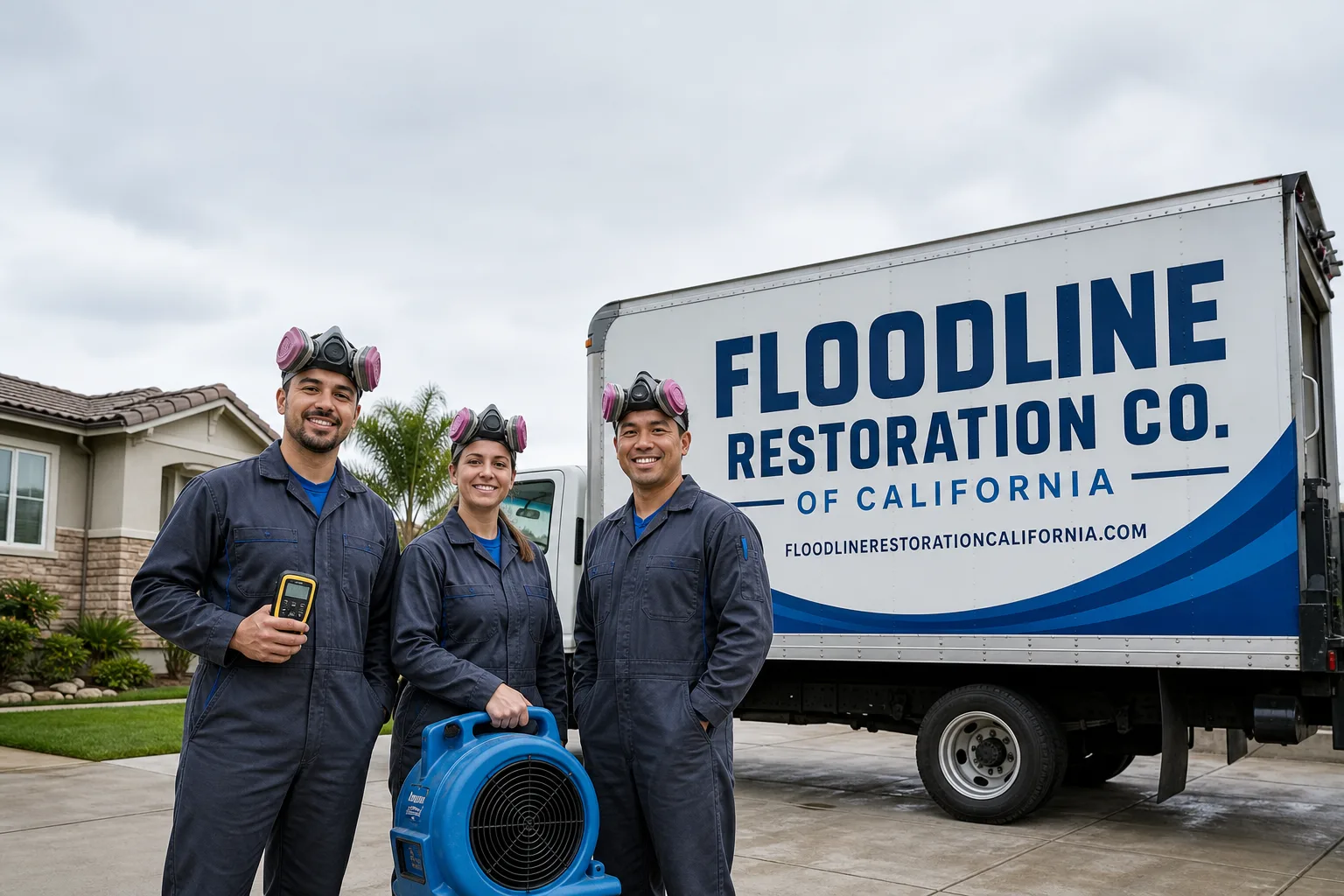
Fast, Reliable Water Damage Restoration Across Stanford
Water damage restoration in Stanford typically costs $1,800-$6,500 depending on the source and extent, and emergency extraction can usually begin within 60-90 minutes of your call. We’re Floodline Restoration Co. of California, and we’ve worked on faculty homes, campus housing, and university-affiliated properties throughout the 94305 ZIP. If you’re standing in water or watching a ceiling stain spread across a custom plaster wall, call (888) 737-2439 right now. A live dispatcher answers, not a recording.
Stanford isn’t a typical Bay Area city. It’s unincorporated Santa Clara County land where the university owns virtually every residential parcel. That changes how restoration work gets approved, scheduled, and billed. We know the dual-track process: county permits plus Stanford Capital Planning review. We also know the housing stock: mid-century faculty homes with original red oak floors, custom walnut cabinetry, and wood details you won’t find in a tract home in Mountain View. Our Water Damage Restoration crews treat those details as irreplaceable, because they are.
Why Floodline Restoration Co. of California Is Stanford’s Preferred Water Damage Restoration Company
We’ve been answering calls from Stanford homeowners for over 42 years as a company built around a dispatch board, not a sales desk. That means when a supply line bursts in a 1950s faculty residence on Gerona Road at 2 a.m., a live person picks up the phone and a certified crew starts rolling toward campus. Not a lead form. Not a callback queue.
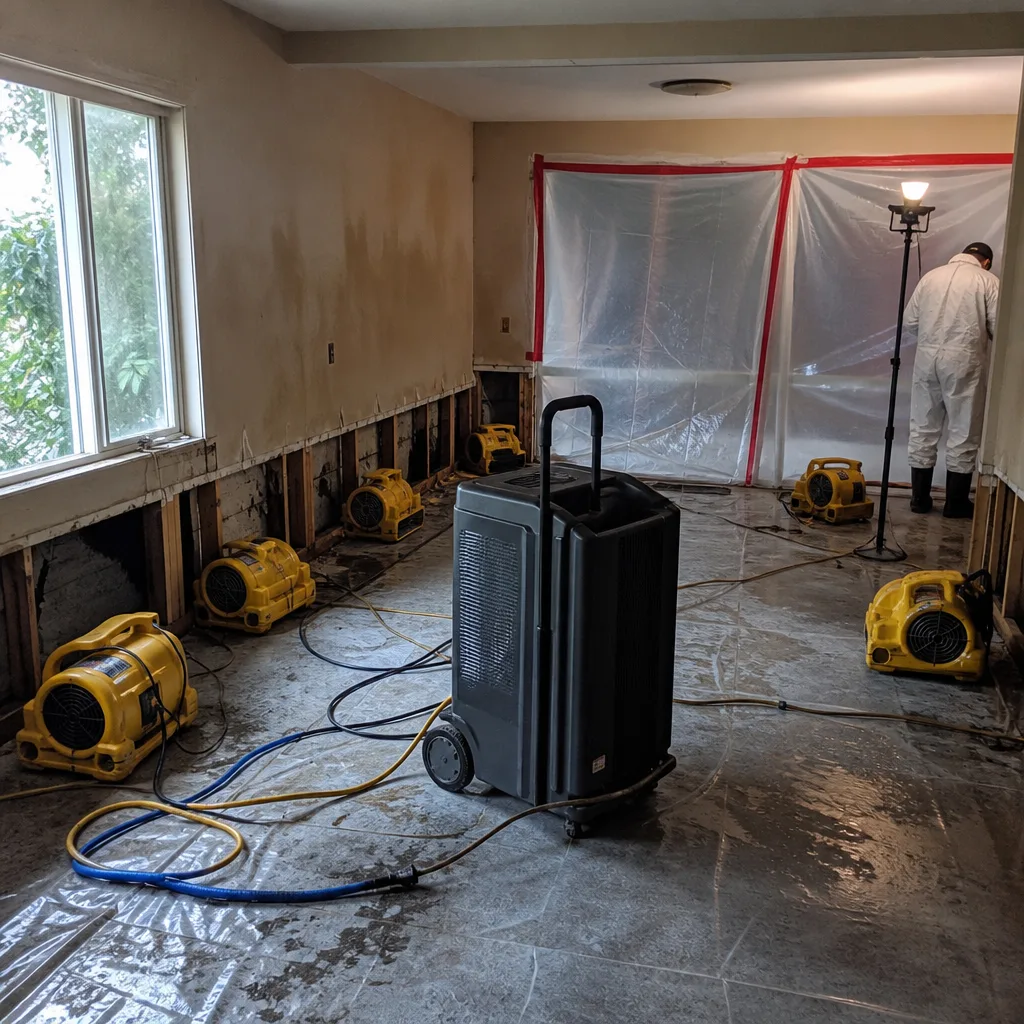
Our technicians are background-checked, uniformed, and certified to IICRC and RIA standards. They carry Dri-Eaz dehumidifiers, XPOWER air movers, and the moisture meters needed to document every drying decision. That documentation matters in Stanford, where Stanford Real Estate & Facilities Management often requires a pre-approved moisture map before structural drying begins. We hand you the log. We hand it to your insurer. We stand behind it in writing with the 90-Day Done Right Promise, our Keystone Standard.
Most Stanford jobs are completed in a single visit. The same crew that reads the moisture map on day one handles daily readings and rebuilds what needs rebuilding. No mid-job handoff to an unknown subcontractor, no phone tag with a project manager in another county. One name, one crew, one written scope before we start.
We also bill insurance directly. You never play messenger between our office and your carrier. Photo-documented assessments go straight to the adjuster. That’s a square deal, and it’s how we’ve earned the trust of Stanford faculty, staff, and administrators who plan to stay in their homes another twenty years.
Our Water Damage Restoration Services in Stanford
Emergency Water Extraction
When water is actively pooling on a hardwood floor or soaking into wool carpet, every hour matters. We deploy extraction equipment the same visit. In Stanford, our crews reach most addresses within 60-90 minutes, from the campus core near Serra Street to faculty housing along Gerona Road and the wooded edges near Jasper Ridge. Water extraction in Stanford typically runs $800-$2,400 for a single-room incident, depending on water volume and the flooring material. We use truck-mounted and portable extraction units matched to the access constraints of mid-century homes with narrow hallways and original thresholds.
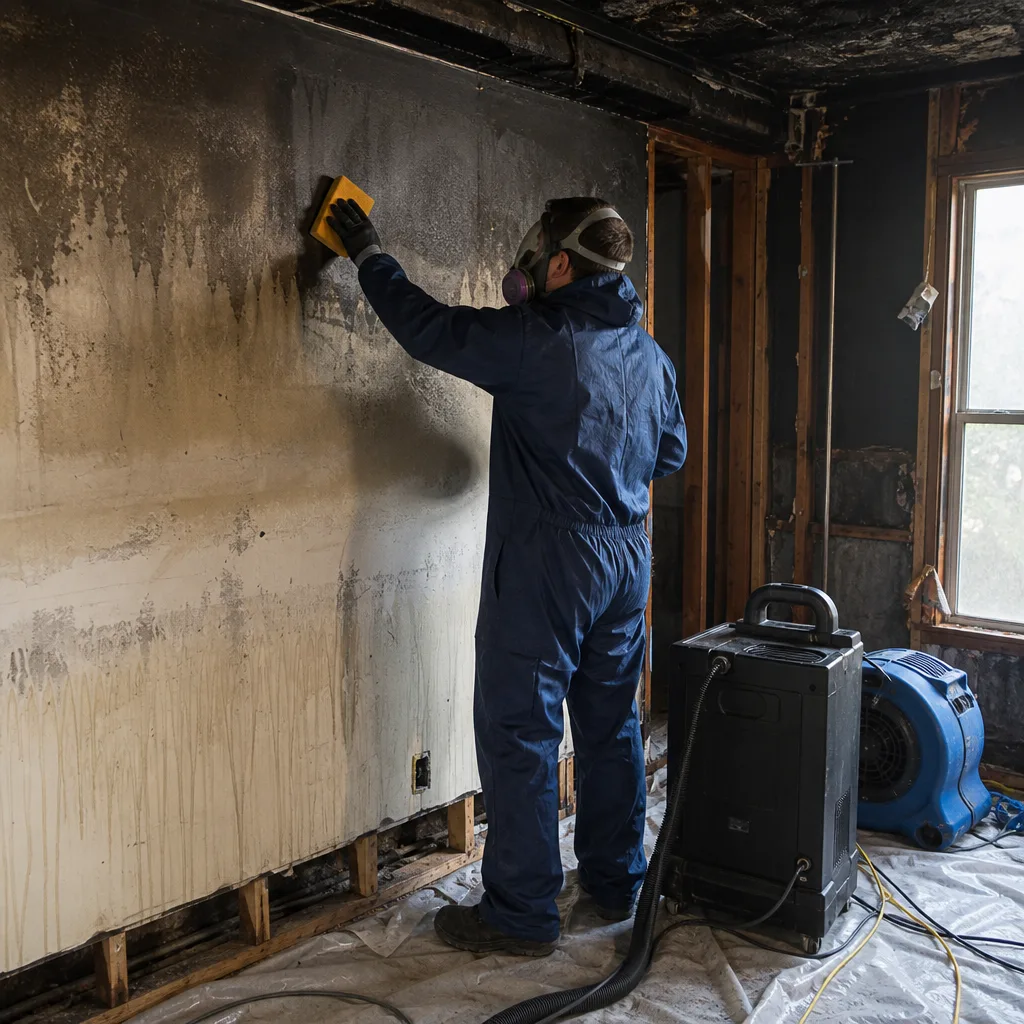
Structural Drying & Dehumidification
After extraction comes the part most contractors rush: drying the structure to a documented standard. In Stanford’s older faculty homes, that means understanding how original red oak flooring, lath-and-plaster walls, and custom walnut cabinetry respond to controlled drying. We place Dri-Eaz LGR dehumidifiers and XPOWER air movers based on a moisture map, not guesswork. Then we take daily readings and log them. Structural drying in Stanford generally runs $1,200-$3,800 per affected zone, with larger areas or crawlspace involvement pushing higher. The drying alone often prevents the need for invasive demolition, which matters when the trim is original and the wood is no longer available off the shelf.
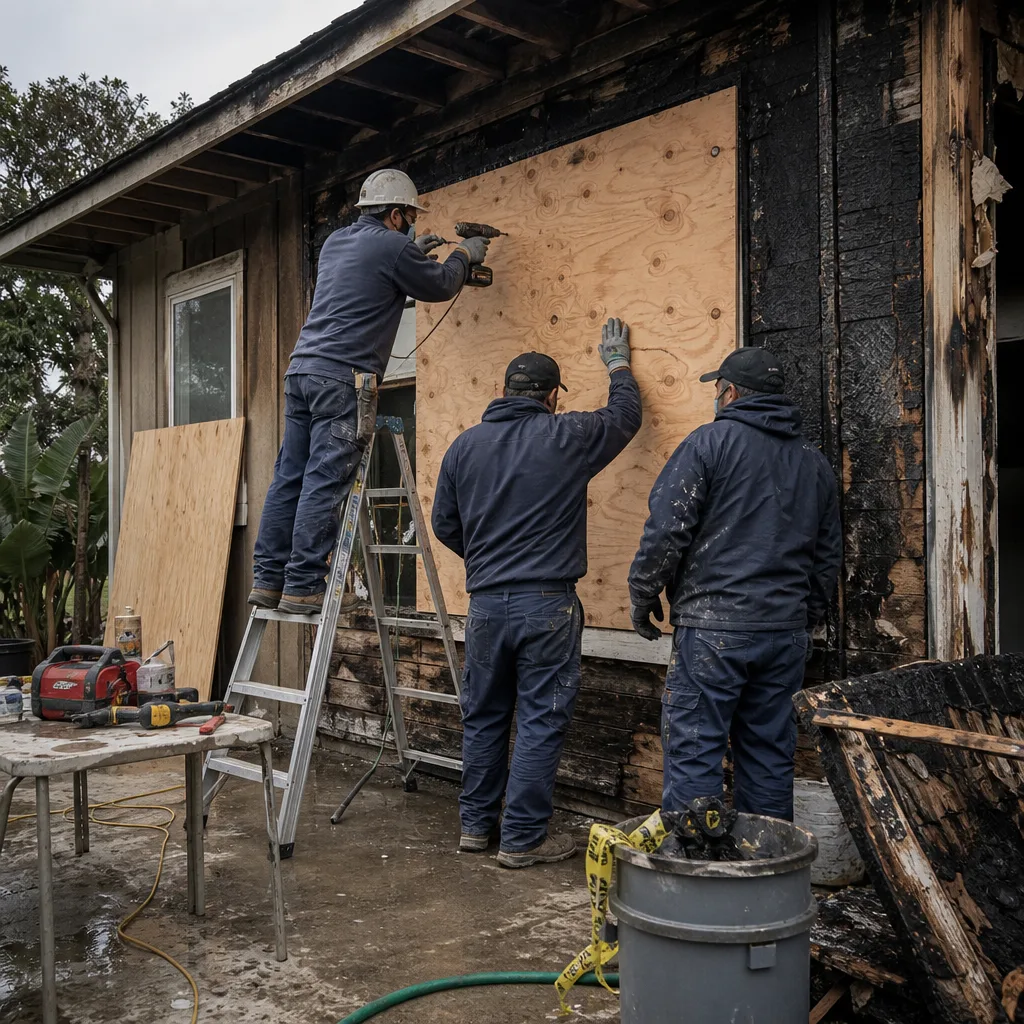
Ceiling & Roof Leak Water Damage
Stanford’s rainy season runs November through March, and homes built in the 1940s through 1970s often have flat or low-slope roof sections that fail gradually. By the time water shows up as a ceiling stain, it has usually been migrating through insulation for days or weeks. We trace the actual leak source, contain the affected area, dry the ceiling cavity, and repair the damaged plaster or drywall to match the existing texture. Ceiling leak restoration in Stanford typically costs $900-$2,800 when caught early. If the leak has compromised structural framing, the scope expands and we document it for your carrier before starting repairs.
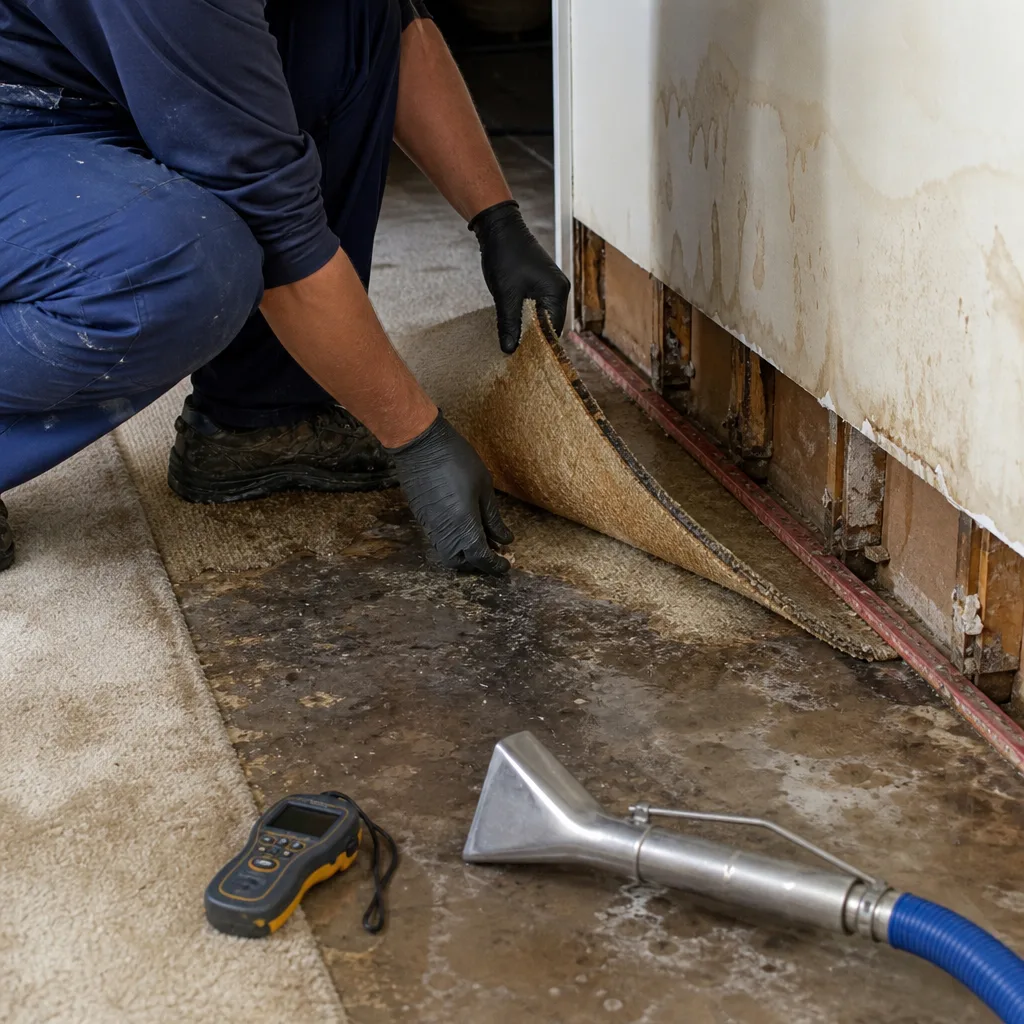
Flood Cleanup
Flash flooding and stormwater intrusion happen in Stanford even outside the formal rainy season. The campus sits below the Santa Cruz Mountain foothills, so heavy rain in the hills can send water moving through neighborhoods near San Francisquito Creek faster than drainage systems handle. Flood cleanup means extraction, drying, sanitizing, and often removing water-damaged drywall and insulation. Flood cleanup in Stanford runs $2,500-$7,500 for a typical ground-level intrusion. We handle the full scope, from initial extraction to finished rebuild, with a written scope agreed before work begins.
What happens when you call
- 1
A real person answersNo phone trees - you reach a local pro.
- 2
You get an upfront price rangeHonest numbers before anyone is dispatched.
- 3
A background-checked tech heads outLicensed & insured, dispatched right away.
- 4
You approve before work beginsNothing starts until you say go.
Trusted Brands We Service in Stanford
Stanford homes don’t have one brand of water heater, one type of supply line, or one flooring material. We service properties with copper and PEX plumbing, original hardwood and engineered flooring, and finishes ranging from 1950s linoleum to custom modern cabinetry. Our techs arrive with professional-grade equipment from Dri-Eaz and XPOWER, and we know which drying approach fits which material. When custom wood details or period-appropriate trim need replacement, we match them rather than swapping in off-the-shelf components. That’s the difference between a restoration job and a patch job, and Stanford homeowners notice the difference.
Common Water Damage Restoration Problems We See in Stanford Homes
- Burst supply lines in 1950s-1970s faculty housing. Galvanized and early copper plumbing reaches failure age, and a pinhole leak behind a wall can saturate framing for weeks before staining appears. By the time we’re called, the damage often extends into subfloor and cabinetry.
- Ground-lease approval surprises. Residents hold no title to the land, and Stanford Real Estate & Facilities Management retains authority over structural drying methods on many properties. Contractors who skip pre-approval on the moisture map can end up with an unpaid invoice and a stalled job.
- Diablo wind effects during dry season. At the wooded western periphery near Jasper Ridge, hot, dry wind events accelerate surface evaporation and can produce “dry” meter readings before subsurface wood reaches equilibrium. Premature removal of drying equipment leads to hidden mold and re-wetting later.
- Original wood details that can’t be replaced. Stanford’s mid-century homes often contain original red oak flooring, custom walnut cabinetry, and hand-finished trim. Demolition that removes these materials destroys character and costs thousands to approximate. Controlled drying and precision repair preserve what’s there.
Pricing for Water Damage Restoration in Stanford, CA
Here’s what we see on the ground in the 94305 ZIP. Emergency water extraction for a single room: $800-$2,400. Structural drying per affected zone: $1,200-$3,800. Ceiling leak repair with drying and plaster match: $900-$2,800. Full flood cleanup of a ground-level room: $2,500-$7,500. The spread reflects water volume, square footage, and whether custom materials like original flooring must be dried in place rather than removed. What affects cost most in Stanford is the approval process itself: jobs requiring Stanford Capital Planning pre-review add a documentation step that we handle for you, without padding the price. Every project starts with a free inspection and a written scope. Call (888) 737-2439. Estimates are free, and the number reaches a live dispatcher 24 hours a day.
We Also Serve Cities Near Stanford
Our crews serve Stanford and the surrounding communities on the Peninsula, including Palo Alto, Atherton, East Palo Alto, and Los Altos Hills. Each area has its own permitting rules, housing stock, and water damage patterns, and we adjust our approach accordingly. Wherever the water is, the line it leaves is where we start.
Serving Stanford, CA - Our Local Coverage Area
We’re based in the Stanford area and know this community well. Use the map below to see our service coverage - if you’re nearby, we can almost certainly help.
FAQs - Water Damage Restoration in Stanford
In most cases, yes. Stanford owns the land under virtually all residential parcels in the 94305 ZIP, and many ground leases give Stanford Real Estate & Facilities Management authority over structural drying methods. Emergency water extraction is generally allowed immediately, but the moisture map and drying plan often require pre-approval before equipment stays on site. We confirm the specific language in your ground lease before work starts so there are no surprises. Call (888) 737-2439 and we’ll walk you through it.
It adds review time, sometimes two to five business days, because Santa Clara County issues the restoration permit while Stanford’s Capital Planning office runs a parallel review for core campus structures. Contractors who file only the county permit can have work halted mid-job. We file both tracks at the outset and coordinate the sign-offs so the work doesn’t stall. That coordination is part of the reason Stanford jobs cost slightly more than comparable work in neighboring cities.
Yes, in most cases. We isolate the affected zone with polyethylene containment and dry materials in place using Dri-Eaz dehumidifiers and XPOWER air movers positioned from a moisture map. Original red oak flooring and custom cabinetry can usually be saved with controlled drying, which takes three to seven days rather than the one to two days a demolition approach allows. Where a custom wood detail is already too far gone, we match the species, thickness, and finish profile rather than swapping in a standard replacement.
They assume Palo Alto or Menlo Park rules apply. Stanford is unincorporated Santa Clara County, so restoration permits run through the county building department, but any work on core campus structures also triggers a review by Stanford’s Capital Planning office. Miss that second track and the job gets halted, invoices go unpaid, and the homeowner is left explaining the delay to the university. We’ve been through this process enough times to file everything up front.
Yes, because the university is often a party to the claim through the ground lease, and Stanford’s centralized risk management office may need documentation of the scope before your carrier releases payment. We provide photo-documented assessments and daily moisture logs formatted for both your insurer and the university. We bill insurance directly when you authorize it, so you never carry the paperwork burden alone. Call (888) 737-2439 for a free estimate and we’ll explain what your specific lease and policy require.
Written by Curt Bowman, Owner at Floodline Restoration Co. of California, serving Stanford and the Peninsula since 2010.