
Fast, Reliable Storm & Disaster Restoration Across Koreatown
For storm and disaster restoration in Koreatown, our crews arrive fast, work through the night, and handle the entire job from first tarp to final reconstruction and cleanup. A burst roof membrane on a 1930s courtyard apartment during an atmospheric river storm doesn’t wait for business hours, and neither do we. Call (888) 737-2439 day or night and a live dispatcher answers. We know Koreatown’s buildings, we know the narrow access, and we know how to get water out before mold gains a foothold.
Storm & Disaster Restoration in Koreatown means more than moving wet drywall. It means checking a soft-story building’s structural status before stepping inside, tarping a flat roof without further damaging the membrane, and walking shared fire-access courtyards without blocking them. We’ve done this work here long enough to know exactly what the buildings on 8th Street, Wilshire, and Vermont show us the moment we walk in.
Why Floodline Restoration Co. of California Is Koreatown’s Preferred Storm & Disaster Restoration Company
Koreatown’s building stock is unlike anything else in Los Angeles. Pre-war courtyard apartments on Oxford and Kingsley sit next to 1960s stucco blocks with flat roofs, and many of the older wood-frame buildings are flagged under the city’s Mandatory Seismic Retrofit Ordinance. Our crews read storm damage against that specific backdrop. We know that a roof breach here doesn’t stop at one unit. It runs down shared walls, through vertical pipe chases, and into the unit below. Before we start water extraction, we assess what the building itself is telling us.
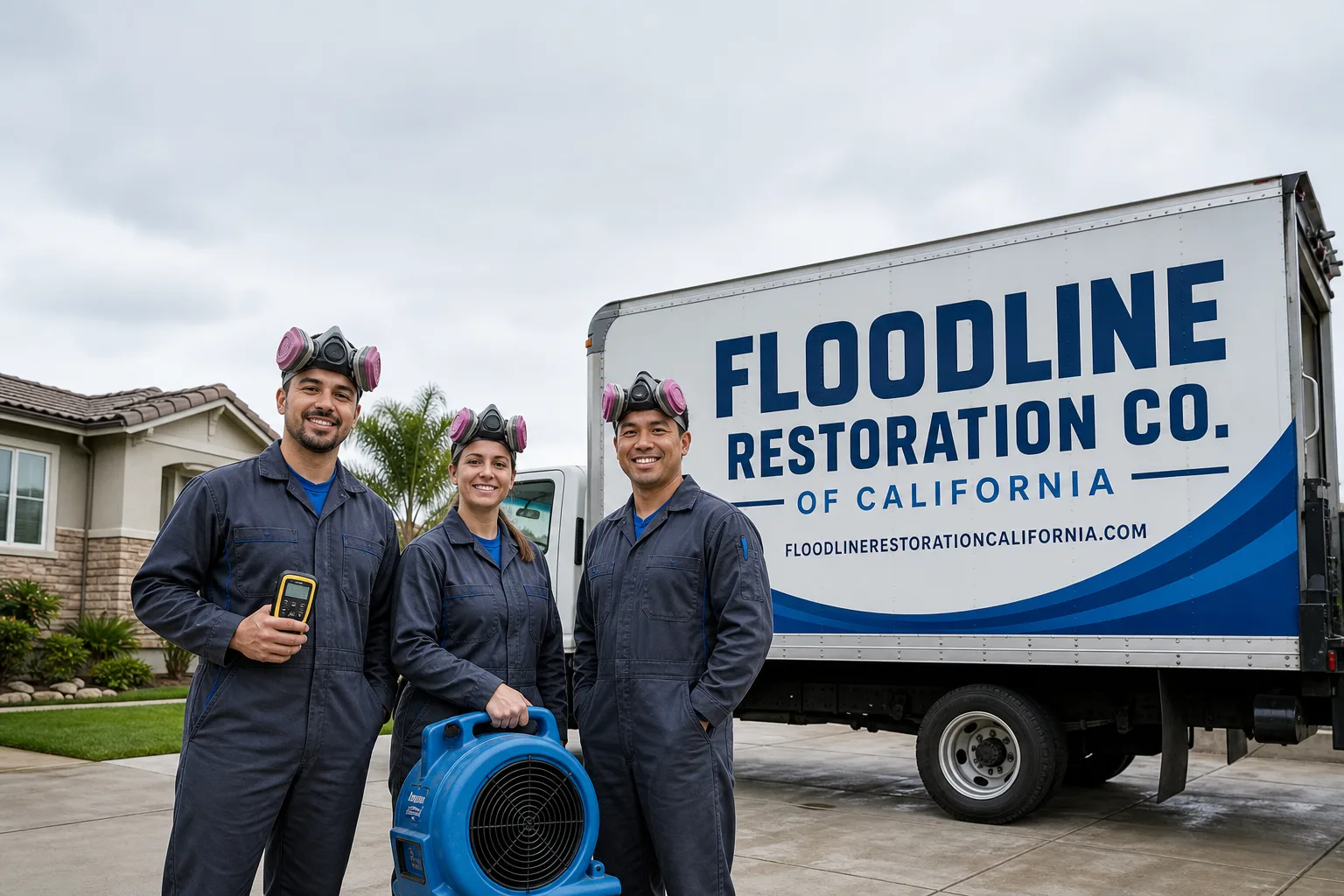
Our Storm & Disaster Restoration team is background-checked, uniformed, and certified to IICRC standards. We carry professional-grade Dri-Eaz and XPOWER equipment sized to work through Koreatown’s tight courtyard walkways and narrow stairwells. No job gets handed off to a subcontractor. The same certified crew that tackles the first extraction stays through drying and rebuild, and every job ends with a written 90-Day Done Right Promise in your hands. That’s our Keystone Standard, named for the line the water leaves on the wall, and we don’t hand a job off mid-way.
Our Koreatown customers call us because a live person picks up at 2 a.m. and because we stand behind the work in writing. We’ve been doing this since 2010 under founder Curt Bowman. The company runs on a dispatch board, not a sales desk. That means when you call us about a saturated ceiling on Berendo Street, the person answering can actually get a truck rolling.
Read more about Storm & Disaster Restoration in Koreatown and how we approach the neighborhood’s specific challenges.
Our Storm & Disaster Restoration Services in Koreatown
We provide full-cycle restoration, from emergency response to finished rebuild. Here’s what that looks like in Koreatown specifically.
Storm Damage Cleanup
After high winds or an atmospheric river, Koreatown’s older apartment buildings often show damage in predictable places: failed flat roof membranes, saturated drywall around window frames, and water damage that has already migrated through floor assemblies into the unit below. A typical storm damage cleanup in Koreatown runs $2,800 to $7,500 depending on square footage and how many units are affected. We scope the entire path of water, not just the room where the ceiling came down, then dry each affected area to the dry standard with daily moisture logs shared with you and your carrier.
Flood Damage Restoration
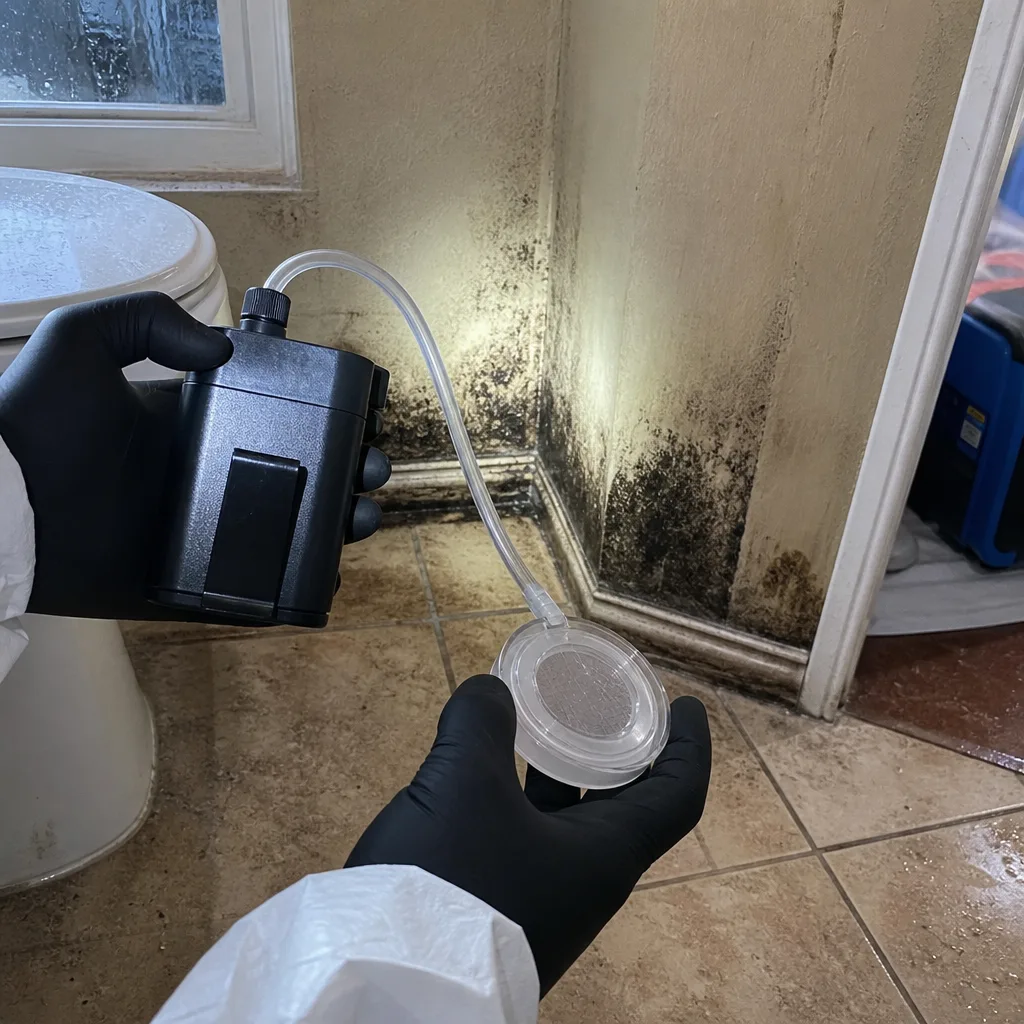
Flooding in Koreatown is often multi-unit from the start. A failed supply line in one bathroom on the third floor means water draining through two floors below by the time we arrive. A flood damage restoration project here typically runs $3,500 to $12,000 when multiple units are involved. We run extraction the same visit, set up containment and drying across affected floors, and document everything for stacked insurance claims. You won’t play messenger between us and the adjuster. We bill the carrier directly.
Emergency Board-Up
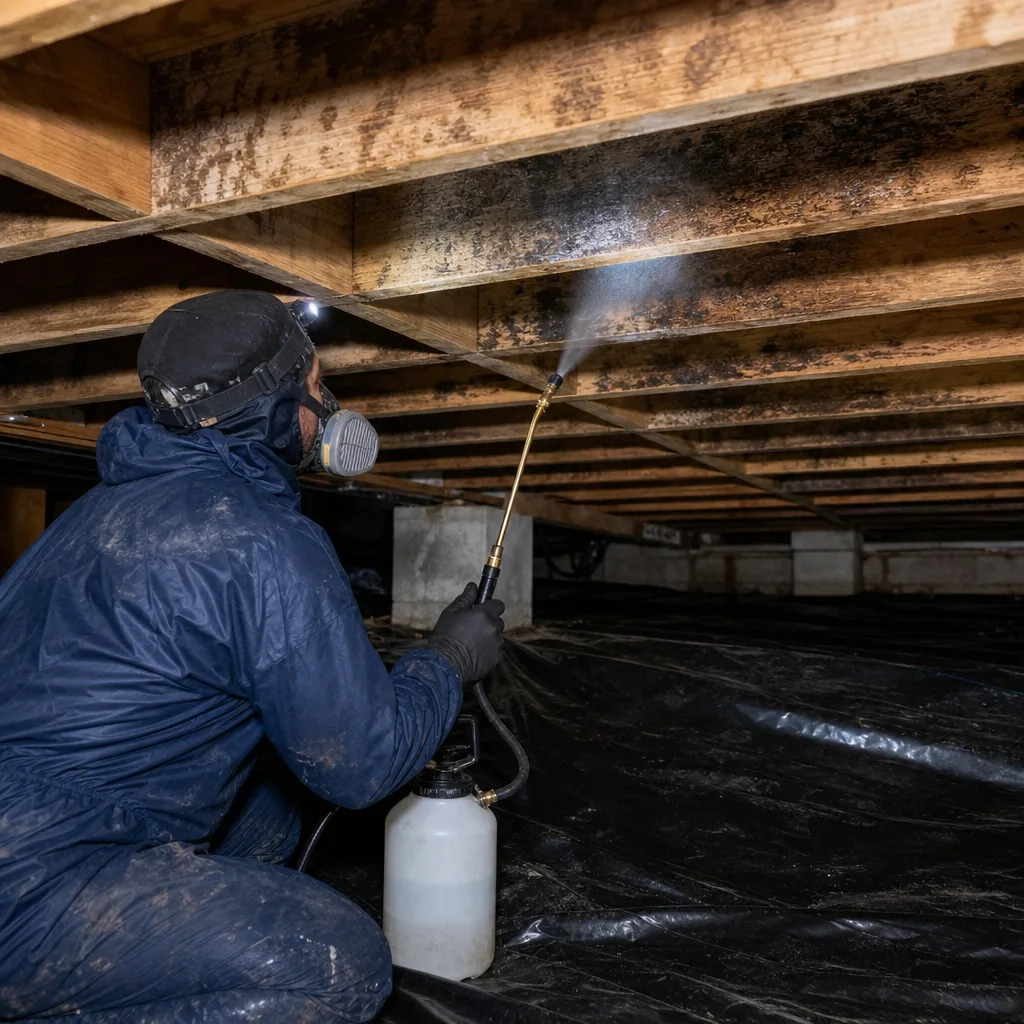
When storm winds blow out windows or a tree limb breaches a wall, the building needs to be secured before the next rain arrives. Emergency board-up in Koreatown typically runs $350 to $900 per opening, including materials and same-visit labor. We use plywood cut to fit the odd window sizes common in 1920s and 1930s buildings, and we never block fire access lanes or rear courtyard exits. LAFD citations from blocked walkways are a real problem here, and we don’t create one on your property.
Roof Tarping
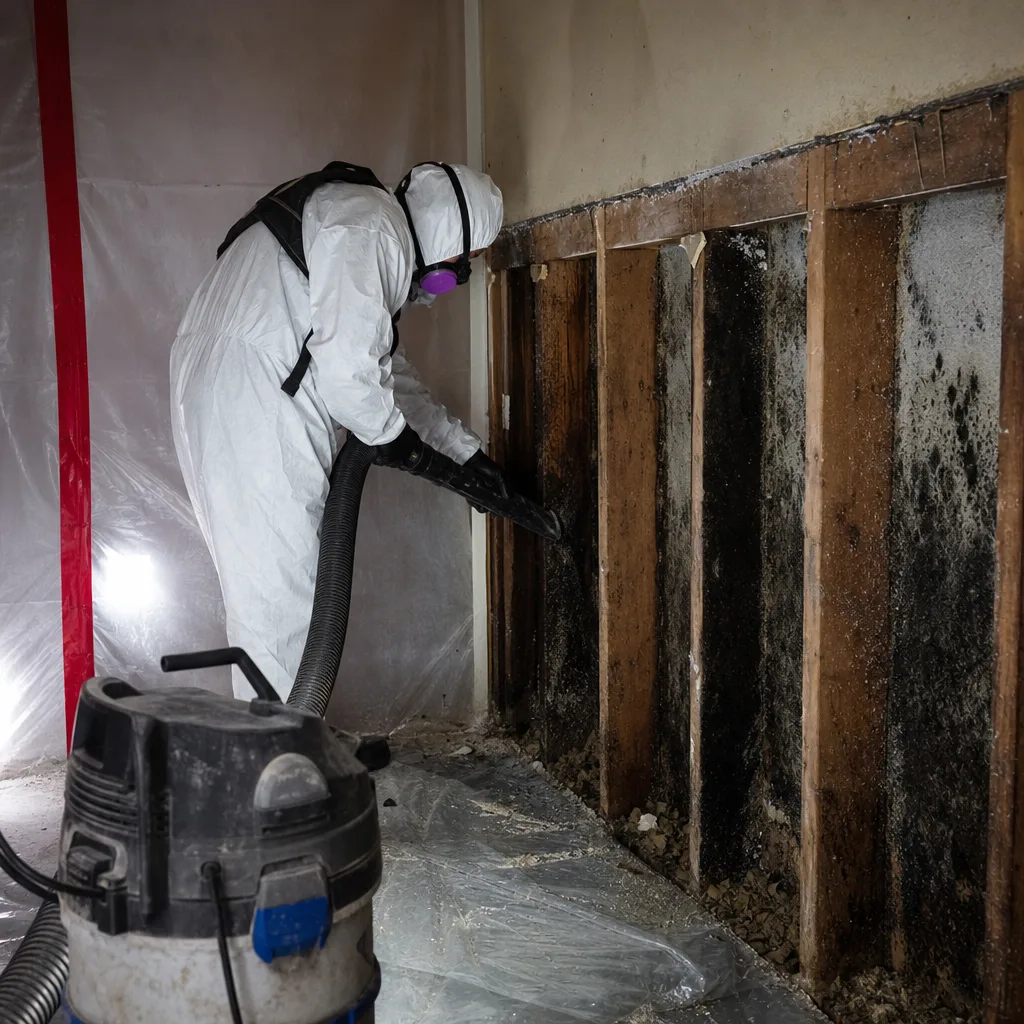
Koreatown’s flat and low-pitch roofs don’t shed water the way pitched residential roofs do. When the membrane fails, water ponds and intrudes. Roof tarping in Koreatown typically runs $650 to $1,850 depending on roof size and access. We anchor tarps to the parapet walls common on these buildings without fastening into the membrane itself. The goal is to stop ingress without causing the next leak. Our crews use the same Dri-Eaz drying equipment indoors while the roof is secured above.
For complete service details, visit our Storm & Disaster Restoration page covering the full scope of what we do.
What happens when you call
- 1
A real person answersNo phone trees - you reach a local pro.
- 2
You get an upfront price rangeHonest numbers before anyone is dispatched.
- 3
A background-checked tech heads outLicensed & insured, dispatched right away.
- 4
You approve before work beginsNothing starts until you say go.
Trusted Brands We Service in Koreatown
We service and install equipment across all major restoration and moisture-control brands, and we stock common replacement components for Koreatown jobs so we don’t lose a day waiting on parts. Our drying equipment is professional-grade Dri-Eaz equipment, and our technicians train to IICRC, RIA, and IFA standards. Whether your building’s existing system is a Dri-Eaz dehumidifier setup, XPOWER air movers, or another major brand, our team can diagnose, service, or replace it. We keep our trucks stocked for the common failures we see in Koreatown’s older buildings: failed pump seals, burned motor capacitors, and clogged drain lines from decades of hard water. Fast turnaround means your building doesn’t sit wet while a part ships from the Midwest. Curt Bowman built Floodline Restoration Co. around keeping equipment running, not selling new gear you don’t need.
Common Storm & Disaster Restoration Problems We See in Koreatown Homes
- Soft-story ground floors compromised before anyone notices. Koreatown has one of LA’s highest concentrations of soft-story wood-frame buildings flagged under the Mandatory Seismic Retrofit Ordinance. After a storm, a weakened ground floor with saturated framing is a structural hazard, not just a water damage problem. We assess retrofit status before setting foot inside a tarped or boarded structure.
- Water migrating vertically through stacked units. The open floor-plan stacking in Koreatown’s 1960s-1980s stucco apartment blocks means water from a third-floor bathroom failure travels down through shared pipe chases and saturates drywall two floors below. If the crew only scopes the unit that called, they miss the real damage. We walk every floor.
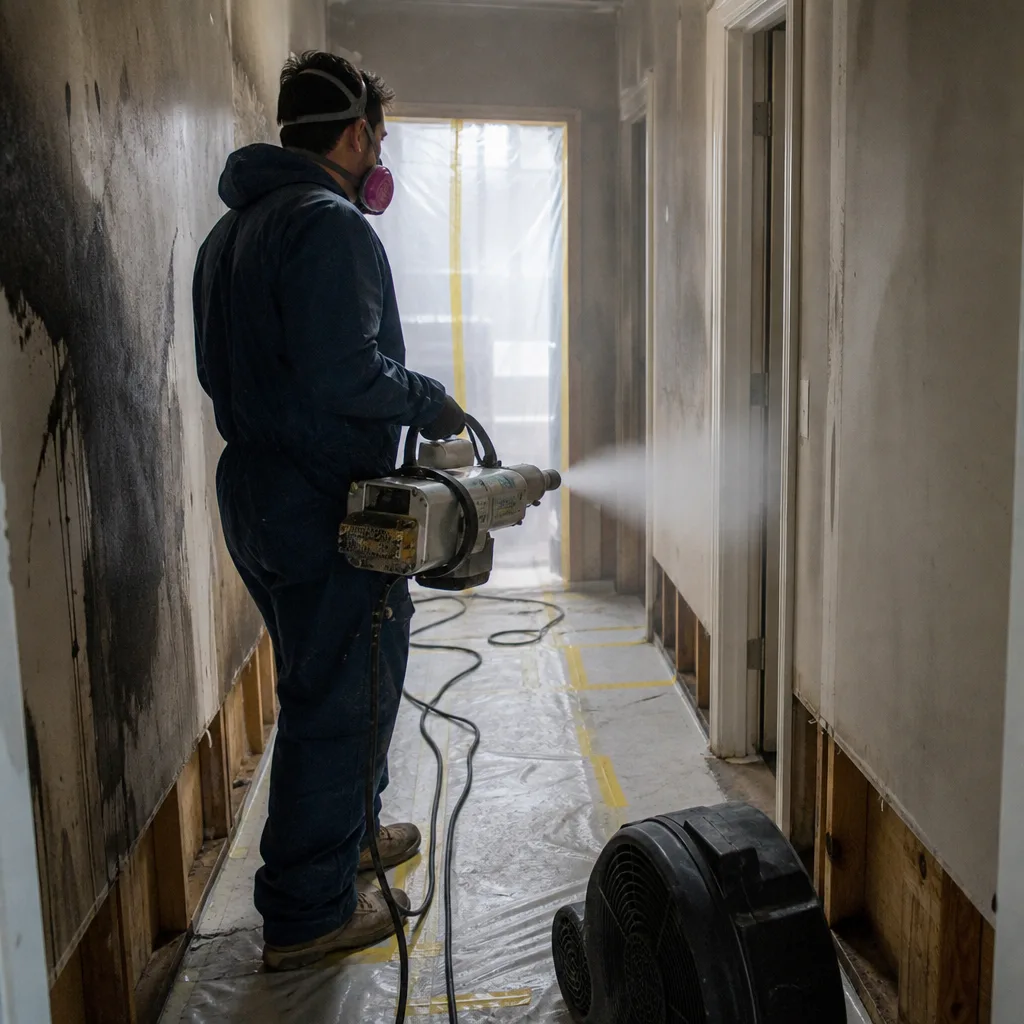
- Secondary mold in shared utility closets. Koreatown’s aging apartment buildings have shared utility closets and vertical pipe chases with almost no air movement. Water that sits in those spaces after a storm event colonizes mold fast, often before the landlord realizes there’s a problem. Our scopes include those tucked-away spaces.
- Flat roof membranes failing under atmospheric river rain. The intense winter rain events that periodically drench the LA basin hit Koreatown’s flat and low-pitch roofs hard. Roof membranes on older apartment buildings fail at seams and parapet junctions, allowing water to pond and intrude. Tarps bought at a hardware store don’t hold. We anchor professional-grade roof tarps to the parapet and stop the ingress the same day.
Pricing for Storm & Disaster Restoration in Koreatown, CA
Expect storm damage cleanup to run $2,800 to $7,500 in Koreatown, with flood damage restoration typically falling between $3,500 and $12,000 when multiple units are affected. Emergency board-up usually runs $350 to $900 per opening, and roof tarping runs $650 to $1,850. These ranges reflect Koreatown’s building stock: multi-unit projects, tight access, and the need to scope vertical water migration rather than just patch the visible damage. The biggest cost drivers are how many units are wet, whether structural drying is needed in soft-story ground floors, and how long the water sat before extraction started. Every estimate is free, written, and includes a line-item scope agreed before any work begins. Call (888) 737-2439 and we’ll give you a straight answer on what your job costs.
We offer $50 Off Any Repair Over $250, plus a Senior & Veteran 5% Discount on every job. The $89 Seasonal Tune-Up is available for maintenance work on existing drying or air-moving equipment in Koreatown buildings.
We Also Serve Cities Near Koreatown
From our dispatch hub serving the central LA corridor, we also respond to storm and disaster restoration calls in Koreatown and the surrounding communities of Los Angeles, Echo Park, Silver Lake, and Hollywood. If your building sits in the 90005 ZIP or just across the border, call us and we’ll get a crew routed to you from the nearest available unit.
Serving Koreatown, CA - Our Local Coverage Area
We’re based in the Koreatown area and know this community well. Use the map below to see our service coverage - if you’re nearby, we can almost certainly help.
FAQs - Storm & Disaster Restoration in Koreatown
Yes. A building flagged under the city’s Mandatory Seismic Retrofit Ordinance but not yet retrofitted has a ground floor that may already be structurally weakened before a storm event. When a post-storm building shows saturated framing or displacement at the ground level, we pause extraction, secure the space, and bring in a structural assessment before crews work under or above load-bearing members. We don’t walk into a scene where a weakened soft-story could fail on our people or your tenants. This is standard for us in Koreatown, not an exception.
We anchor the tarp to the parapet walls that surround most Koreatown flat roofs, not into the roof deck itself. That means no new penetrations in the membrane, no fasteners through the waterproofing layer, and no guarantee we’ve traded one leak for another. The tarp gets tensioned to shed water toward the existing drains. This method works for the 1920s-1940s courtyard apartments and the 1960s-1980s stucco blocks alike. Call us and we’ll explain how we’d handle your specific roof.
Yes. We’ve done it many times. On a recent winter storm weekend, our crew responded to a 1930s Spanish Colonial Revival courtyard building in the 90005 ZIP where a failed flat roof membrane had saturated drywall across three stacked units. The landlord was managing remotely and communicating primarily in Korean, so we did a floor-by-floor walkthrough in Korean, then ran our Dri-Eaz LGR 2800i dehumidifiers and XPOWER air movers through narrow courtyard walkways, coordinating with tenants to keep fire lanes clear while we tarped the roof and began structural drying. Our team includes Korean-speaking technicians. We handle communication with tenants, with the landlord, and with the insurance carrier, and we’re experienced in biohazard and crime scene cleanup when situations require it. If you’re in this situation, call (888) 737-2439 now.
Usually within 60 to 90 minutes of your call. Our dispatch team knows Koreatown’s access problems: narrow one-way streets, meter-only parking on Wilshire and Vermont, and rear courtyards not built for cargo vehicles. We send crews in service vans sized for the neighborhood, not big box trucks that can’t clear an alley. The first step on arrival is damage control: tarping, board-up, or extraction. Parking is our problem to solve, not a reason to delay your building getting dry.
Mold can colonize within 48 to 72 hours after water intrusion in Koreatown’s dense apartment units, especially in shared utility closets and vertical pipe chases where there’s almost no air movement. Our drying protocol runs Dri-Eaz dehumidifiers and XPOWER air movers sized to the space, with daily moisture readings taken until the dry standard is met. If mold is present, we scope it, contain it, remediate it, and document every step for the insurance carrier. The 90-Day Done Right Promise covers the work in writing. Call (888) 737-2439 for a no-pressure assessment.
Written by Curt Bowman, Owner at Floodline Restoration Co. of California, serving Koreatown since 2010.