

Fast, Reliable Fire & Smoke Damage Restoration Across Stanford
A kitchen fire in a faculty home off Campus Drive or smoke infiltration from a foothill brush event near Jasper Ridge leaves soot in places you can’t see. Getting it out right, without damaging the original redwood trim or custom casework, is work that rewards crews who know Stanford’s specific building stock. Floodline Restoration Co. of California has handled fire and smoke damage inside the 94305 ZIP for years, and we know what most out-of-town outfits don’t: this is not a standard residential job. University approval, dual-track permitting, and material-specific soot removal are part of nearly every fire restoration we do in Stanford. Call (888) 737-2439 and a live dispatcher picks up, any hour, every day.
Key takeaways for Stanford homeowners and faculty residents:
- Most fire-and-smoke restoration in Stanford requires pre-approval through Stanford Real Estate & Facilities Management before work begins.
- Soot removal from mid-century lime plaster and original redwood sash is not a wipe-and-paint job; it takes material-specific methods.
- Emergency board-up and odor control can deploy to Stanford the same day you call.
- We bill your carrier directly and document everything for the adjuster, including the university’s risk management office when they’re involved.
Why Floodline Restoration Co. of California Is Stanford’s Preferred Fire & Smoke Damage Restoration Company
Stanford jobs turn on institutional knowledge. Virtually every property in the 94305 ZIP sits on university-owned ground lease land, and that changes the chain of approval before a restoration contractor touches a wall. We’ve worked alongside Stanford Real Estate & Facilities Management, Stanford Capital Planning, and Santa Clara County’s unincorporated building department enough times to know which questions to ask first. A contractor who ignores that pre-approval step gets a stop-work order and a very unhappy facilities manager. We don’t let that happen.
Our crews answer to a dispatch board, not a sales desk. That’s been true since Curt Bowman founded the company in 2010, and it’s the reason a live person answers at 2 a.m. when a faculty family calls after smoke backs into a Campus Drive living room. Our technicians are background-checked, uniformed, and certified to IICRC, RIA, and IFA standards. They’ve done fire and smoke work in Stanford enough that the dual-track permit conversation isn’t a surprise to them, it’s just how Stanford works.
We also stand behind the result in writing. Every job in Stanford carries the 90-Day Done Right Promise, what we call the Keystone Standard. If it’s not done right, we make it right. No paperwork battles, no arguing. That promise means something different when you’re in a mid-century faculty home with original built-ins; we understand what “done right” has to mean there.
Our Fire & Smoke Damage Restoration Services in Stanford
Fire Damage Cleanup
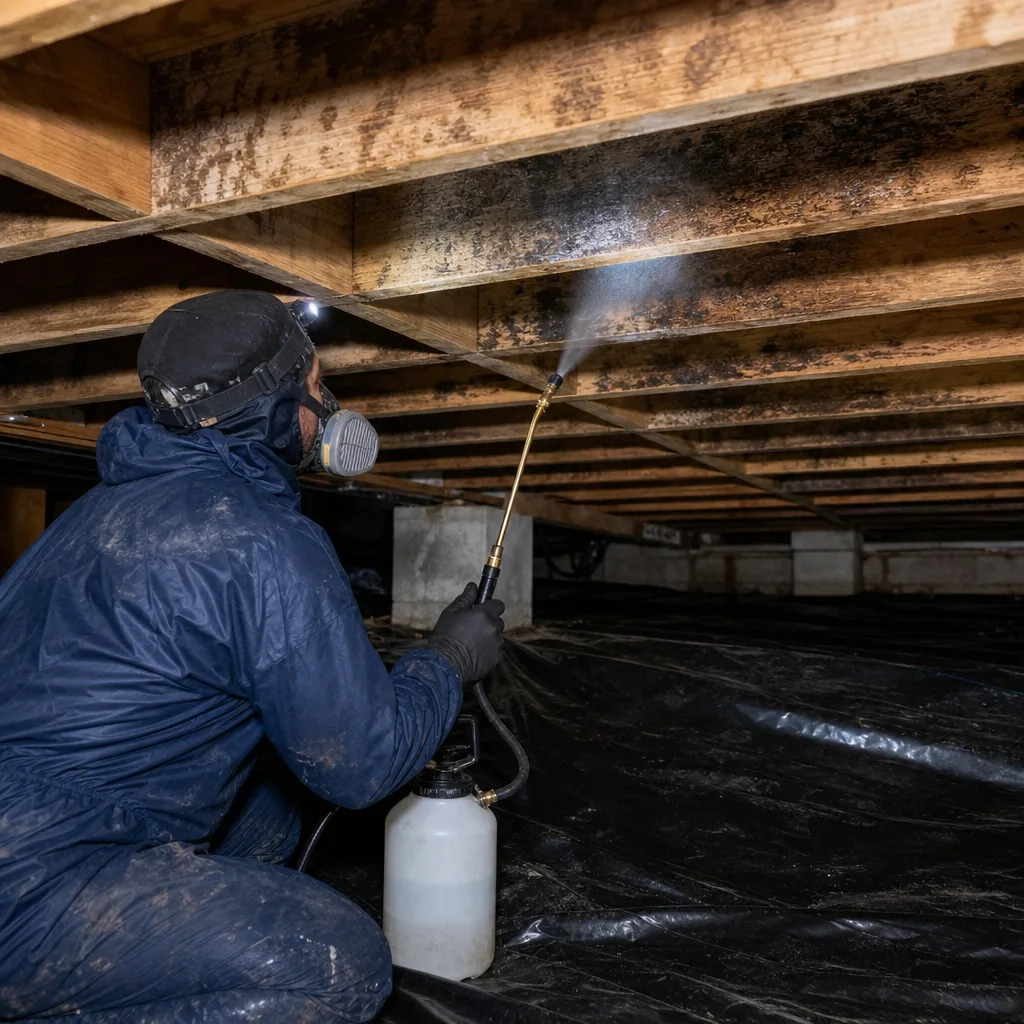
Fire damage cleanup in Stanford starts with containing what’s already spread. Soot moves fast through a forced-air system, and a mid-century faculty home off Junipero Serra has duct runs that carry smoke residue to every room within hours. Our team removes charred material, stabilizes surfaces, and runs professional-grade HEPA filtration before anything gets scrubbed. The goal is to stop the acid etching that ruins bronze and brass door hardware within 48 hours. Call (888) 737-2439 and we’ll have a certified crew assessing the damage the same day.
Smoke & Soot Removal
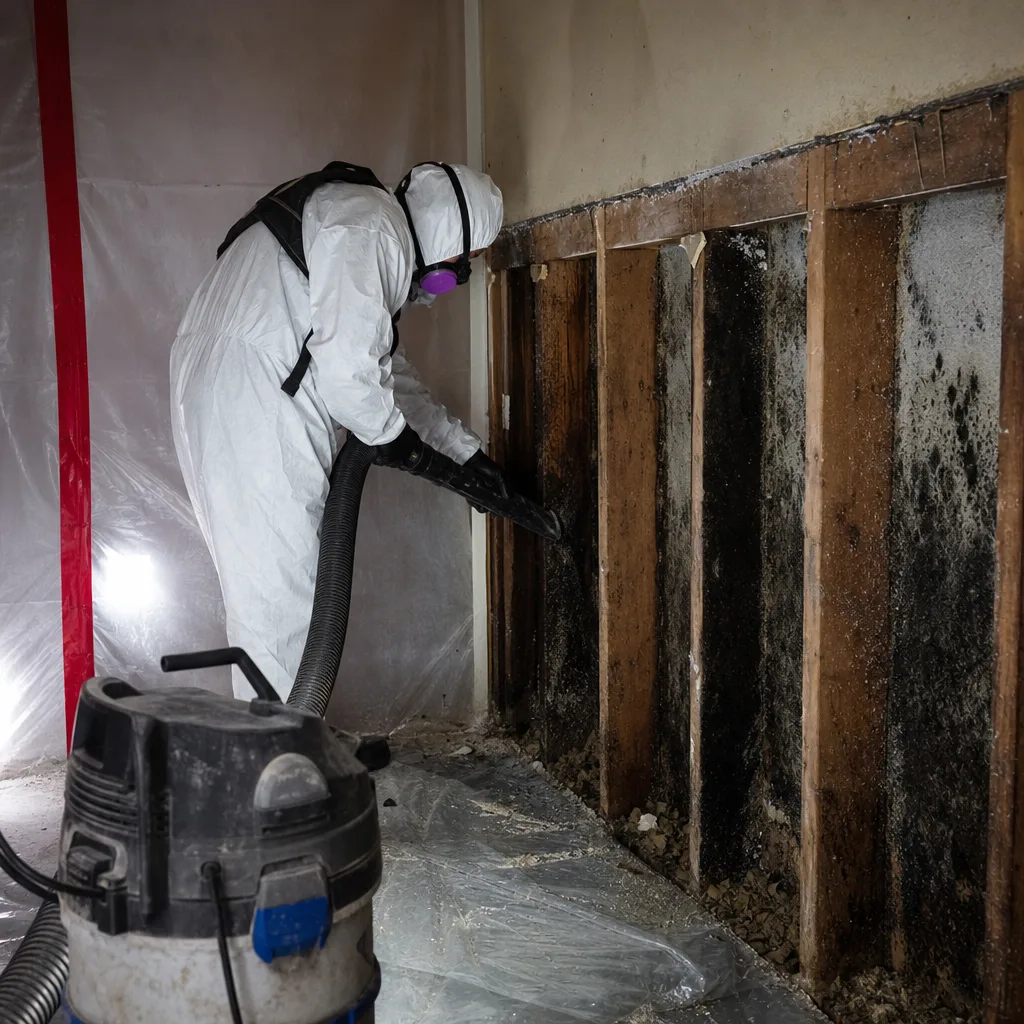
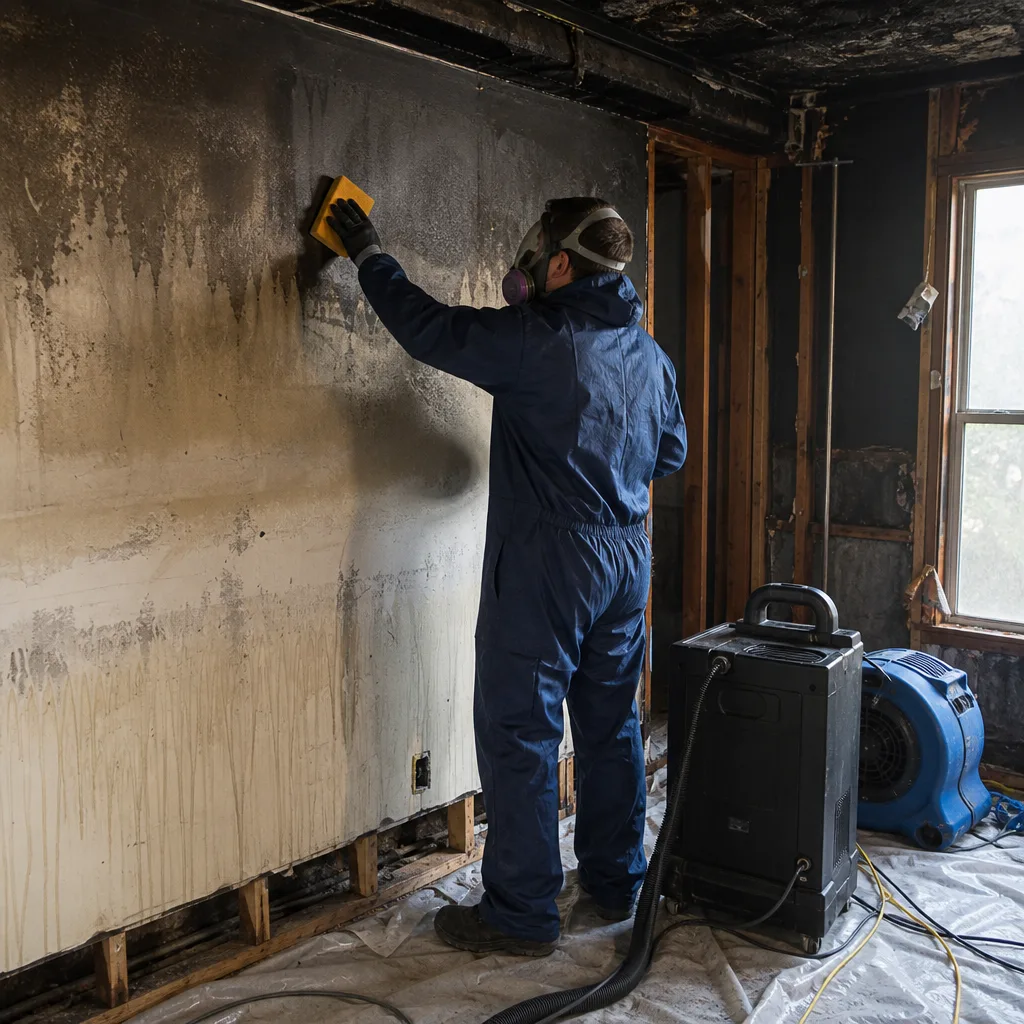
Stanford’s post-war faculty housing often has original redwood sash, lime plaster walls, and site-built casework that absorb soot differently than modern drywall. A generic spray-and-wipe approach drives soot deeper into open-grain wood and can ruin the finish permanently. Our smoke and soot removal in Stanford uses material-specific methods: dry-chem sponge work on lime plaster, controlled vacuuming on redwood, and documented cleaning passes on painted built-ins. We know what not to do here because we’ve seen what happens when a generalist does it.
Odor Removal & Deodorization
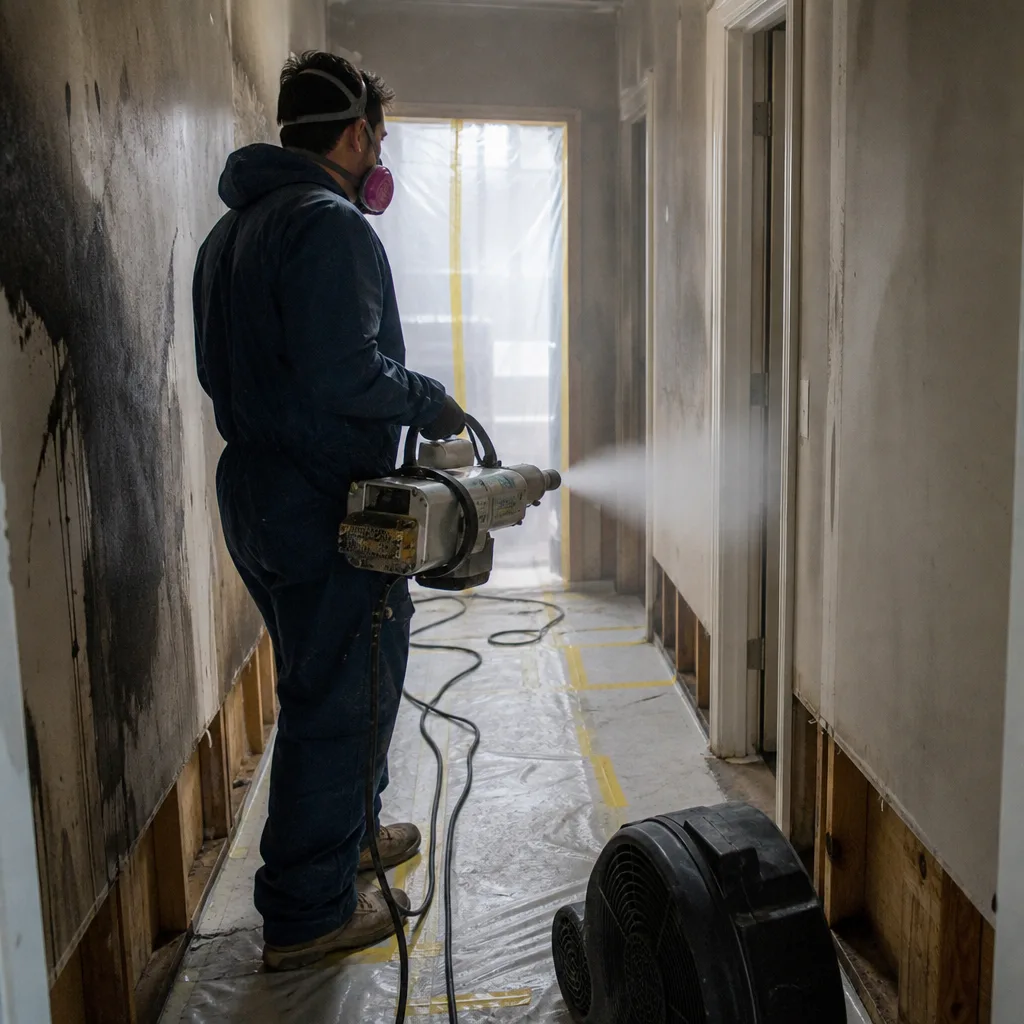
Smoke odor in a Stanford home doesn’t live in one place. It’s in the wool area rugs, the books, the HVAC ducts, the gap behind the base cabinetry, the door hardware. Our odor removal process uses Dri-Eaz HEPA air scrubbers and XPOWER axial fans, run on cycle schedules that respect the fact that neighboring faculty occupants are often separated by a single wall or a shared entry. Deodorization continues until the smell is gone, not until the budget runs out. That’s a promise we put in writing.
Contents Cleaning & Pack-Out
The fastest way to lose a Stanford family’s heirloom furniture is to leave cleanable contents inside a smoke-damaged house. We’ve done contents cleaning and pack-out for households across the 94305 ZIP, including full inventory documentation that the adjuster and the university’s risk management office both want to see. Items move to our controlled cleaning facility, get restored, and then get stored until the structural work is finished. Nothing goes missing, nothing gets skipped, and the photo log is yours to keep.
For structural repair after fire, see our Fire & Smoke Damage Restoration team’s full capabilities, from framing and drywall to window sash and custom millwork restoration. We’re trained to IICRC, RIA, and IFA standards, and we’ve rebuilt fire-damaged interiors in Stanford’s historic Campus Drive loop.
What happens when you call
- 1
A real person answersNo phone trees - you reach a local pro.
- 2
You get an upfront price rangeHonest numbers before anyone is dispatched.
- 3
A background-checked tech heads outLicensed & insured, dispatched right away.
- 4
You approve before work beginsNothing starts until you say go.
Trusted Brands We Service in Stanford
Stanford homes skew toward custom hardware. Restoration work often means matching a period Baldwin brass pull, re-hanging a solid-core walnut door, or re-lacquering a bronze handle set that dates to the home’s original build. We’re set up for that. Our crews run Dri-Eaz and Phoenix equipment on every Stanford job because these machines move air and filter particulates precisely enough for delicate interiors. We keep common restoration consumables on hand and can typically source specialty parts or hardware matches within one to two business days for Stanford customers. You won’t wait a week for a piece of quarter-sawn veneer while the house sits open.
Common Fire & Smoke Damage Restoration Problems We See in Stanford Homes
- Contractors assuming city permits apply. Stanford is unincorporated Santa Clara County. Restoration permits run through the county building department, and core-campus structures also trigger a parallel review by Stanford’s Capital Planning office. Out-of-town crews who skip either track get stopped mid-project. We handle both tracks from day one.
- Treating mid-century faculty housing like standard single-family. Original lime plaster, redwood sash, and built-in casework need material-specific soot removal and odor abatement. A generic cleaning approach ruins finishes and forces expensive replacement that no one planned for.
- Underestimating Diablo wind recurrence. Stanford sits at the base of the Santa Cruz Mountain foothills, at a real wildland-urban interface. After a dry-season fire event near Jasper Ridge, smoke and soot infiltrate HVAC ductwork and custom door hardware throughout the structure. Waiting to pack out and clean contents means permanent acid etching on bronze and brass.
- Smoke odor that lingers because ducts were skipped. Forced-air systems in 1940s-1970s faculty housing push smoke residue into every room, then re-release it for months. We clean and treat duct runs as part of every fire restoration in Stanford, not as an add-on.
Pricing for Fire & Smoke Damage Restoration in Stanford, CA
Fire damage cleanup in Stanford typically runs $3,200-$7,800 for a contained kitchen fire with soot removal and deodorization. Smoke and soot removal alone generally falls between $1,900 and $4,400 depending on how many rooms and surfaces are affected. Contents cleaning and pack-out for a full mid-century faculty home ranges from $4,500 to $11,000 when fine furniture, books, and textiles are involved. Structural fire repair starts around $8,000 for modest damage and rises with the scope of custom millwork and period hardware matching. Stanford’s dual-track approval process does add some coordination time, but it doesn’t change material or labor costs. Estimates are free, written in plain language, and we bill your insurance carrier directly. Call (888) 737-2439 for a precise number on your specific situation.
We Also Serve Cities Near Stanford
Our crews serve Fire & Smoke Damage Restoration in Stanford and the surrounding communities, including Palo Alto, Atherton, East Palo Alto, and Los Altos Hills. If your home is near the campus boundary but outside the 94305 ZIP, the same certified technicians and the same 90-Day Done Right Promise still apply.
Serving Stanford, CA - Our Local Coverage Area
We’re based in the Stanford area and know this community well. Use the map below to see our service coverage - if you’re nearby, we can almost certainly help.
FAQs - Fire & Smoke Damage Restoration in Stanford
Yes. Almost every property in Stanford’s 94305 ZIP sits on university-owned ground lease land, and Stanford Real Estate & Facilities Management requires pre-approval before fire-and-smoke restoration work begins. That applies whether you’re a faculty renter, a staff resident, or a homeowner with a ground lease. Our team handles the pre-approval paperwork as part of the job scope. Call (888) 737-2439 and we’ll start that conversation the same day.
Foothill-adjacent homes face more than smoke residue. Dry-season Diablo wind events push wildfire smoke and fine soot deep into HVAC systems, window assemblies, and exterior door hardware, and the structural risk includes wind-driven ember exposure. Homes on the flat campus deal more with kitchen or electrical fires. Both require the same soot removal and odor abatement rigor, but Jasper Ridge-area homes need earlier duct cleaning and more exterior hardware treatment. We adjust the scope based on exactly where the house sits.
Yes. We’ve restored smoke-damaged redwood sash and site-built cabinetry in Stanford faculty housing, including matching quarter-sawn white oak veneer and period brass pulls after a kitchen fire off Campus Drive. The work takes material-specific methods: controlled vacuuming, dry-chem sponge treatment, and finish matching that a generalist won’t attempt. Get us photos or let us walk the house, and we’ll give you a realistic scope for what can be saved versus what needs replacement.
Structures in the historic Campus Drive loop trigger two review tracks. Santa Clara County’s unincorporated building department handles the restoration permit, and Stanford’s Capital Planning office runs a parallel review for any structure on university-owned ground lease land. Skipping either track gets a stop-work order. We coordinate both before scheduling work, so your restoration doesn’t stall mid-project. Call (888) 737-2439 for a free assessment that includes the approval path specific to your address.
Same day. We run live dispatch around the clock, and our crews can reach Stanford addresses within hours of your call for emergency board-up, structural stabilization, and initial odor control. The first hours after a fire are when soot is easiest to remove and when the least damage gets done to finishes and hardware. If smoke is inside your home right now, call (888) 737-2439 and a certified crew will be on the way.
Written by Curt Bowman, Owner at Floodline Restoration Co. of California, serving Stanford since 2010.