
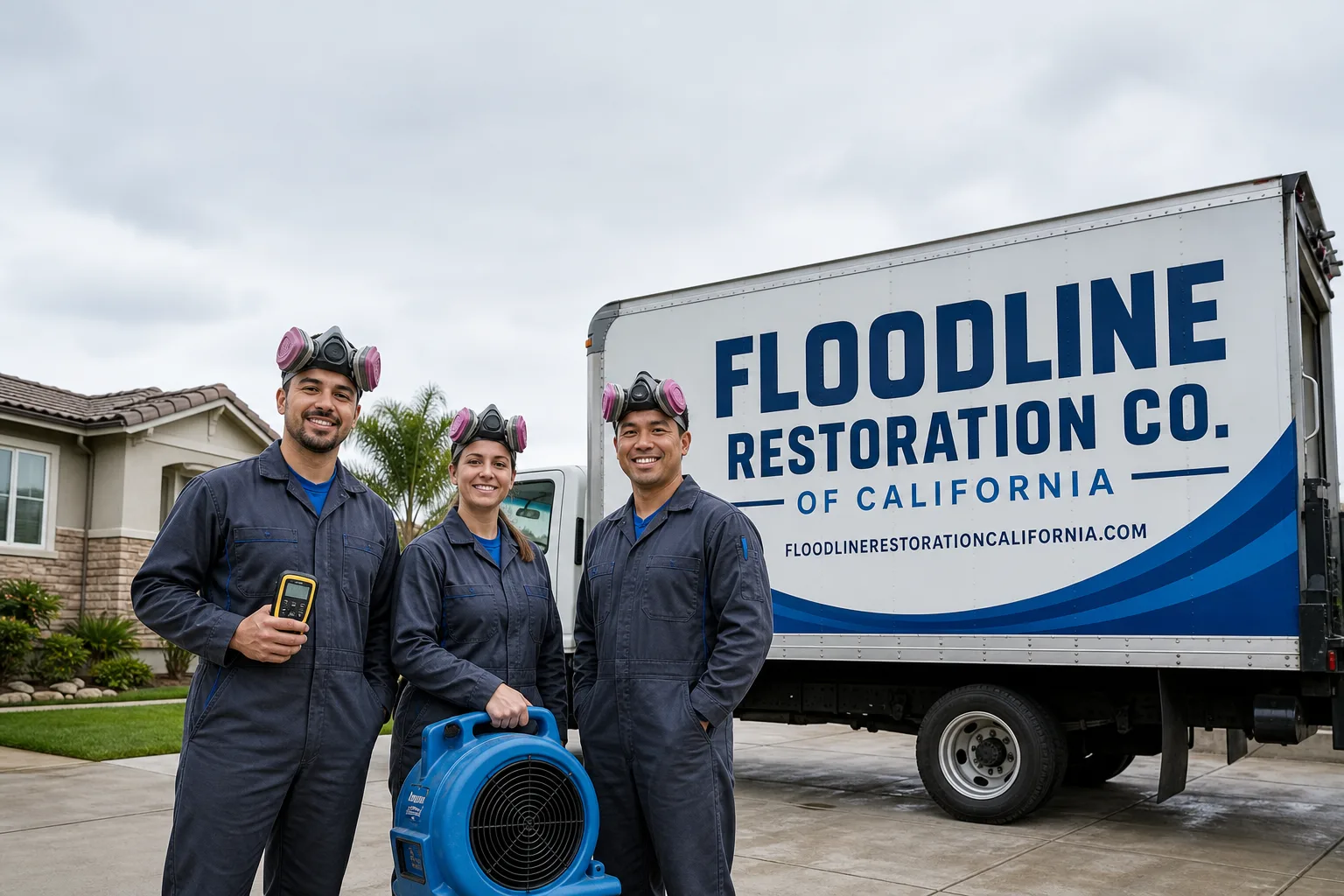
Fast, Reliable Sewage Cleanup Across Monrovia
Sewage cleanup in Monrovia typically costs $1,800 to $6,500 depending on how far the black water traveled and whether the contamination reached wall cavities or crawl space soil. Most backup jobs in Monrovia can be started the same day you call. We answer the phone with a live person at any hour, and our certified crew arrives in marked vehicles with the extraction equipment already loaded.
If you’re dealing with a toilet overflow on Myrtle Avenue, a basement backup near Hillcrest Boulevard, or sewage surfacing under a 1920s Craftsman crawl space, call (888) 737-2439 right now. The longer black water sits, the deeper it wicks into plaster, hardwood, and framing, and the more extensive the rebuild becomes. Floodline Restoration Co. of California handles every phase, from first extraction to finished reconstruction, so you never have to coordinate between a cleanup crew and a remodeler.
We’ve worked Monrovia’s older housing stock long enough to know that a sewage backup here is rarely a simple clog. It’s more often a cast-iron line that cracked at a bell joint, a floor drain overwhelmed by Sawpit Wash stormwater, or a septic system choked with post-fire silt from the San Gabriel foothills. We start with the line the water left and we don’t stop until the structure is dry, sanitized, and rebuilt.
Why Floodline Restoration Co. of California Is Monrovia’s Preferred Sewage Cleanup Company
Monrovia homeowners call us because we understand what the city’s older homes actually require. Around downtown and along Myrtle Avenue, many houses were built in the 1920s through 1940s with plaster-and-lath walls, original oak floors, and early galvanized or cast-iron plumbing. Those materials absorb contaminated water differently than modern drywall, and they demand longer drying timelines. Our technicians are trained to IICRC, RIA, and IFA standards, and we use equipment from Dri-Eaz, Phoenix, and Injectidry to pull moisture from old-growth framing without tearing out more than necessary.
Founded in 2010 by Curt Bowman, Floodline Restoration Co. of California is built around a dispatch board, not a sales desk. That means every call to (888) 737-2439 is answered by a person at a desk in our Los Angeles area office, day or night, and that person’s job is to get a certified crew rolling toward Monrovia. No phone tree. No callback wait. No recording at 2 a.m.
Every job we perform in Monrovia, whether it’s a sewage backup in a basement on Foothill Boulevard or a crawl space contamination off Huntington Drive, is backed by the 90-Day Done Right Promise. That’s the Keystone Standard, and it’s in writing. If it’s not done right, we make it right, no paperwork battles and no arguing. The same crew that reads the moisture map on day one handles daily readings, hands the log to you and your insurance carrier, and rebuilds what needs rebuilding.
We also bill your insurance carrier directly. You don’t play messenger between us and the adjuster. We photo-document the damage, coordinate the scope, and provide the written moisture log carriers ask for. For a Monrovia homeowner who has lived in the same house for twenty years and plans to stay another twenty, that’s a square deal.
Our Sewage Cleanup Services in Monrovia
Floodline Restoration Co. of California offers full-service Sewage Cleanup throughout Monrovia, from first extraction to structural drying, sanitization, and reconstruction. Here’s how we handle the most common situations we see in this city.
Sewage Backup Cleanup
When a sewer line backs up into a Monrovia home, the black water contains bacteria, viruses, and often sewage solids that have already begun decomposing. Our first step is always the same: stop the source, extract the standing water, and establish containment so contamination doesn’t spread through the house. In Monrovia’s older neighborhoods, we’re frequently dealing with cast-iron or clay laterals that fail at bell joints due to decades of mountain-front soil movement, so we expect to find slow seepage that went unnoticed until it surfaced through a floor drain or under the house.
Toilet Overflow Cleanup
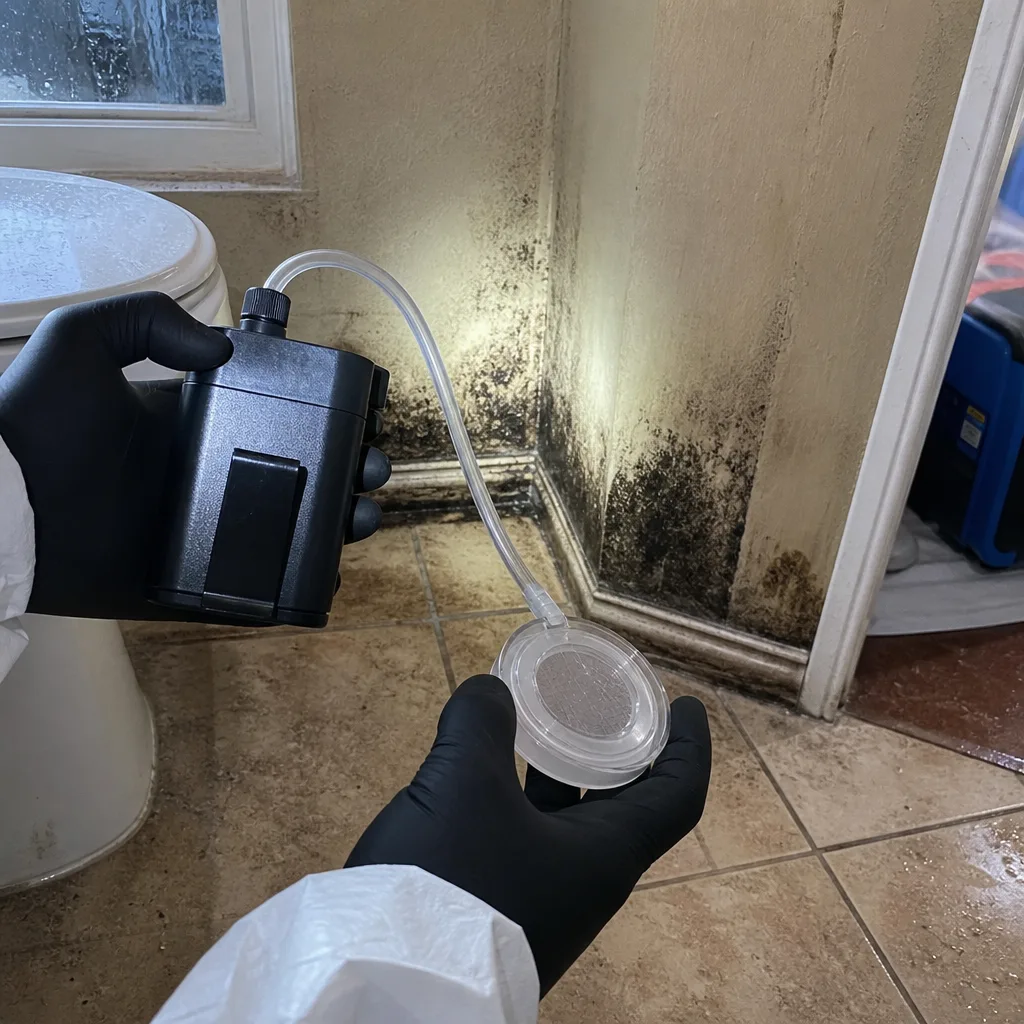
A toilet overflow in Monrovia is usually straightforward, but the damage depends on whether the water reached a finished floor or traveled down through to a lower level. In homes near downtown Monrovia, where original hardwood floors sit over raised foundations, contaminated water can pass through the flooring and pool in the crawl space within hours. We extract, remove affected flooring if needed, sanitize the subfloor, and dry the space to IICRC standards. Most toilet overflow cleanups in Monrovia can be completed in a single visit when we’re called quickly.
Septic Failure Cleanup
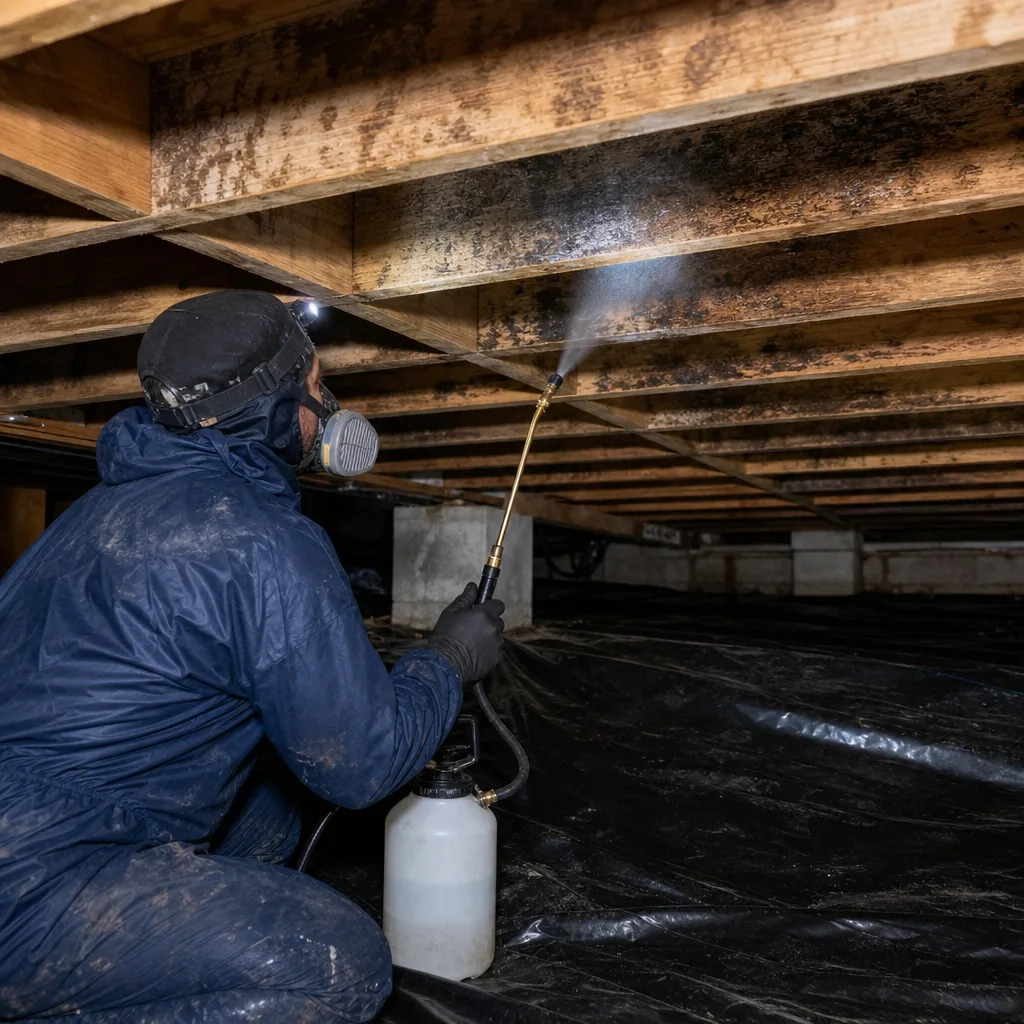
Monrovia’s north end, especially streets approaching the San Gabriel mountain interface, includes properties on septic systems rather than municipal sewer. After the 2016 Fish Fire denuded the slopes above the city, subsequent rain events pushed mud, ash, and burned debris into north Monrovia neighborhoods, and we’ve seen that same silt load septic lines and drain fields. A septic failure here isn’t just a clogged leach field. It’s black water rising through the house, often carrying fire debris. We excavate when necessary, extract, sanitize, and coordinate with septic contractors to restore function.
Black Water Extraction
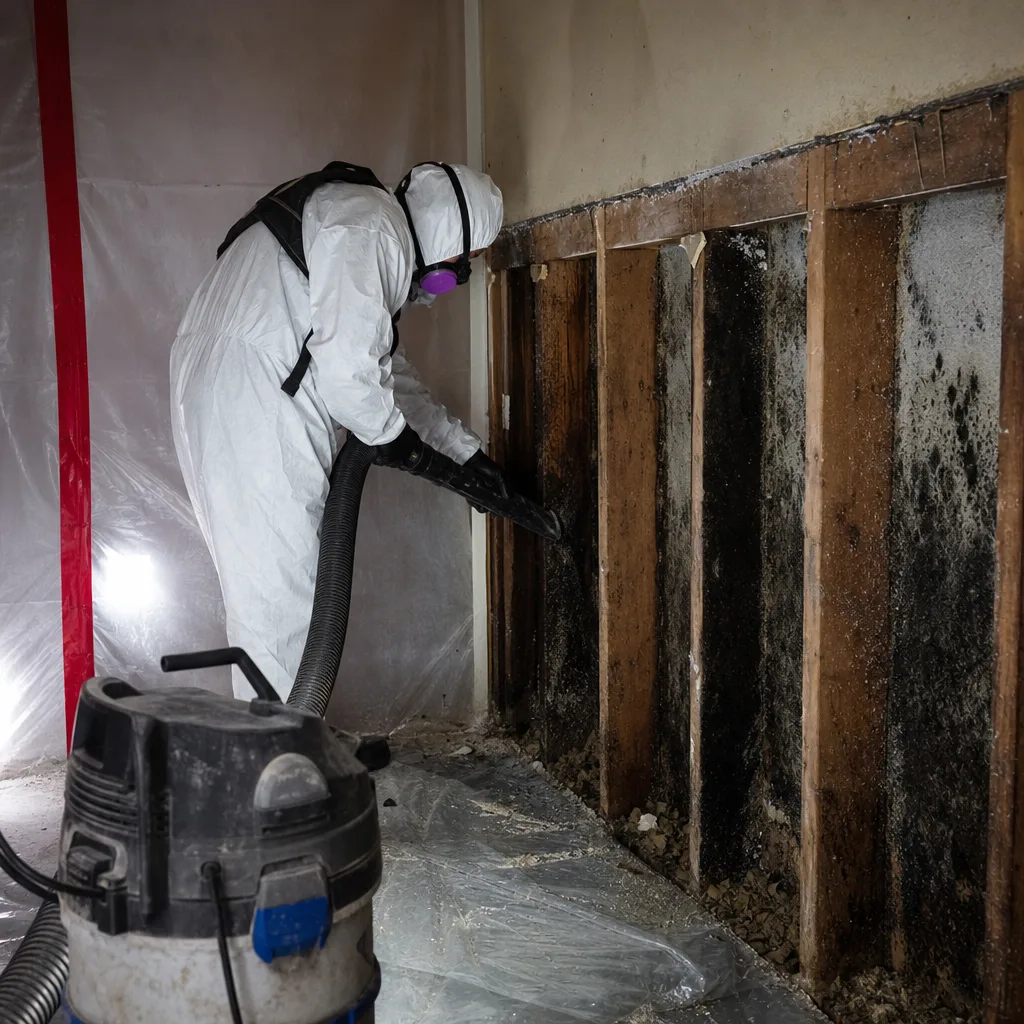
Black water is Category 3 water, meaning it contains pathogens from sewage, and it cannot simply be mopped up. Our crews use professional-grade extraction equipment from Dri-Eaz and Phoenix to remove standing water down to the surface level, then we treat affected materials with EPA-registered disinfectants. In Monrovia basements, where many homes retain original concrete floors and older framing, we’ve found that prompt extraction is the single biggest factor in whether original materials can be saved. We start extraction the same visit, not days later.
What happens when you call
- 1
A real person answersNo phone trees - you reach a local pro.
- 2
You get an upfront price rangeHonest numbers before anyone is dispatched.
- 3
A background-checked tech heads outLicensed & insured, dispatched right away.
- 4
You approve before work beginsNothing starts until you say go.
Trusted Brands We Service in Monrovia
Most Monrovia homes don’t have a single brand of plumbing or fixtures; they have a patchwork assembled over decades of repairs and remodels. Our crews work with all of it: cast iron, ABS, PVC, clay, and early galvanized. We keep common replacement parts stocked for older systems, which matters when a 1930s Spanish Colonial Revival needs a specific cast-iron fitting rather than a modern swap. We use equipment from Dri-Eaz, Phoenix, and Injectidry because those brands give us the moisture mapping and drying performance we need to hit written dry standards on old-growth lumber and plaster walls. When we hand you a moisture log, the numbers are real and backed by professional-grade equipment.
Common Sewage Cleanup Problems We See in Monrovia Homes
- Cast-iron and clay laterals cracking at bell joints from mountain-front soil movement. The ground beneath north Monrovia and the streets approaching Hillcrest Boulevard shifts seasonally, and those old joints are the first point of failure. We see slow seepage that goes unnoticed until black water surfaces under a crawl space or behind a basement wall.
- Sawpit Wash stormwater forcing sewage mixed with mud and ash back into lower-lying properties. During winter rain events, the wash can overwhelm drainage and push contaminated water into basements and floor drains. Debris excavation is often part of the job before extraction can begin.
- Santa Ana winds causing sewer gas back-pressure into 1920s bungalows. When the winds dry out yards and sewer vents for days on end, pressure can build and push sewage odors and backups through basement drains in the older homes around downtown Monrovia and along Myrtle Avenue.
- Plaster-and-lath walls wicking black water far above the water line. We routinely cut inspection holes in Monrovia homes and find contamination three feet higher than expected. Plaster acts like a sponge, and the longer it sits, the more wall we have to open. The fix is quick extraction and rapid drying, not guesswork.
Pricing for Sewage Cleanup in Monrovia, CA
Sewage cleanup in Monrovia carries a wide range because no two backups travel the same distance through a structure. Here’s what we typically see in this city’s market:
- Toilet overflow, single room, no crawl space involvement: $1,800-$3,200
- Sewage backup through floor drain, basement or slab, finished space affected: $3,500-$6,500
- Crawl space sewage removal with soil remediation and vapor barrier replacement: $4,000-$8,000+ depending on square footage and access
- Septic failure with excavation and rebuild coordination: $6,000-$15,000 depending on drain field damage and structural work needed
What drives cost in Monrovia specifically is the age of the plumbing and the material of the walls and floors. A 1940 Craftsman with original oak floors and plaster walls costs more to dry and sanitize than a 1990s drywall build. We provide a written scope before work starts, with no surprises on the bill, and we bill your insurance carrier directly. Call (888) 737-2439 for a free estimate on your exact situation.
We Also Serve Cities Near Monrovia
Floodline Restoration Co. of California covers Sewage Cleanup in Monrovia and the surrounding communities, including Mayflower Village, Duarte, Arcadia, and Sierra Madre. If you’re just over the line in any of those cities, the same crew, the same written scope, and the same 90-Day Done Right Promise apply.
Serving Monrovia, CA - Our Local Coverage Area
We’re based in the Monrovia area and know this community well. Use the map below to see our service coverage - if you’re nearby, we can almost certainly help.
FAQs - Sewage Cleanup in Monrovia
Yes, debris excavation is part of the job when post-fire mud and silt have entered the system. After the Fish Fire, we saw north Monrovia septic lines and sewer laterals clogged with charred debris and fine silt that ordinary augering couldn’t clear. Our crews remove the debris, extract the black water, sanitize the affected area, and then coordinate with a septic contractor if the drain field itself needs repair. Call (888) 737-2439 and we’ll walk you through what happened and what needs to happen next.
We treat it as a two-front job: extraction and sanitization above, and soil remediation and vapor barrier replacement below. In Monrovia’s older neighborhoods around downtown and Myrtle Avenue, many Craftsman homes sit on raised foundations with crawl spaces under the whole house. Black water that reaches the crawl space contaminates the soil, and that contamination can keep re-introducing odors and mold until it’s addressed. We remove the contaminated soil layer, apply antimicrobial treatment, dry the space with Injectidry equipment, and replace the vapor barrier before rebuilding above.
Yes, plaster-and-lath homes routinely take 30 to 50 percent longer to dry to a written standard. Plaster is denser than drywall and holds moisture longer, especially when the wall cavity is filled with lath and old-growth framing. In a 1930s Spanish Colonial Revival, we may run drying equipment on a single wall for four or five days, where a modern drywall home in the same situation might be dry in two. The moisture log we keep for your carrier documents every reading, so nobody is guessing.
Because the wash concentrates stormwater during heavy rain events, and when debris basins above town reach capacity, that water has nowhere to go but into lower-lying properties and the sewer system. If your home sits in the drainage path, stormwater can enter floor drains and basement plumbing, mixing with sewage and pushing it back into the living space. It’s not a sign of a failing line; it’s a sign that the municipal drainage load exceeded capacity. Our job is to get the contaminated water out, sanitize what it touched, and dry the structure so this winter storm doesn’t become next spring’s mold problem.
Depends on how much water reached the floor and how long it sat. Solid oak or fir flooring, which is common in Monrovia basements and first floors, can sometimes be saved with extraction, antimicrobial treatment, and aggressive drying from the underside. But if the sewage wicked into the tongue-and-groove joints and sat for more than a day, the boards may delaminate and need to be removed and replaced in kind. We’ll tell you the truth either way, and we’ll give you a written recommendation before we cut anything. Call (888) 737-2439 for an assessment.
Same day, most of the time. Our dispatch is live 24/7, and our crews service Monrovia locally. If you call at 2 a.m. from a home on Hillcrest Boulevard, a person answers, and we start getting a crew moving immediately. Most Monrovia jobs see a first visit the same day you call.
Most homeowner policies cover sudden and accidental sewage backup, but the specifics depend on your policy endorsements. We photo-document everything from the first visit, produce the written moisture log your adjuster will ask for, and bill your carrier directly. You don’t have to translate between us and the insurance company. Call (888) 737-2439 and we’ll help you figure out what your policy covers.
If the water is black water, meaning it came from a toilet, sewer line, or septic system, you need true remediation, not just cleaning. Black water contains pathogens that survive ordinary household cleaners. The contaminated materials must be either removed or disinfected with EPA-registered antimicrobials, and the affected area must be dried to a written standard. A cleaning company might make it look better; we make it safe, and we document it.
Written by Curt Bowman, Owner at Floodline Restoration Co. of California, serving Monrovia since 2010.