
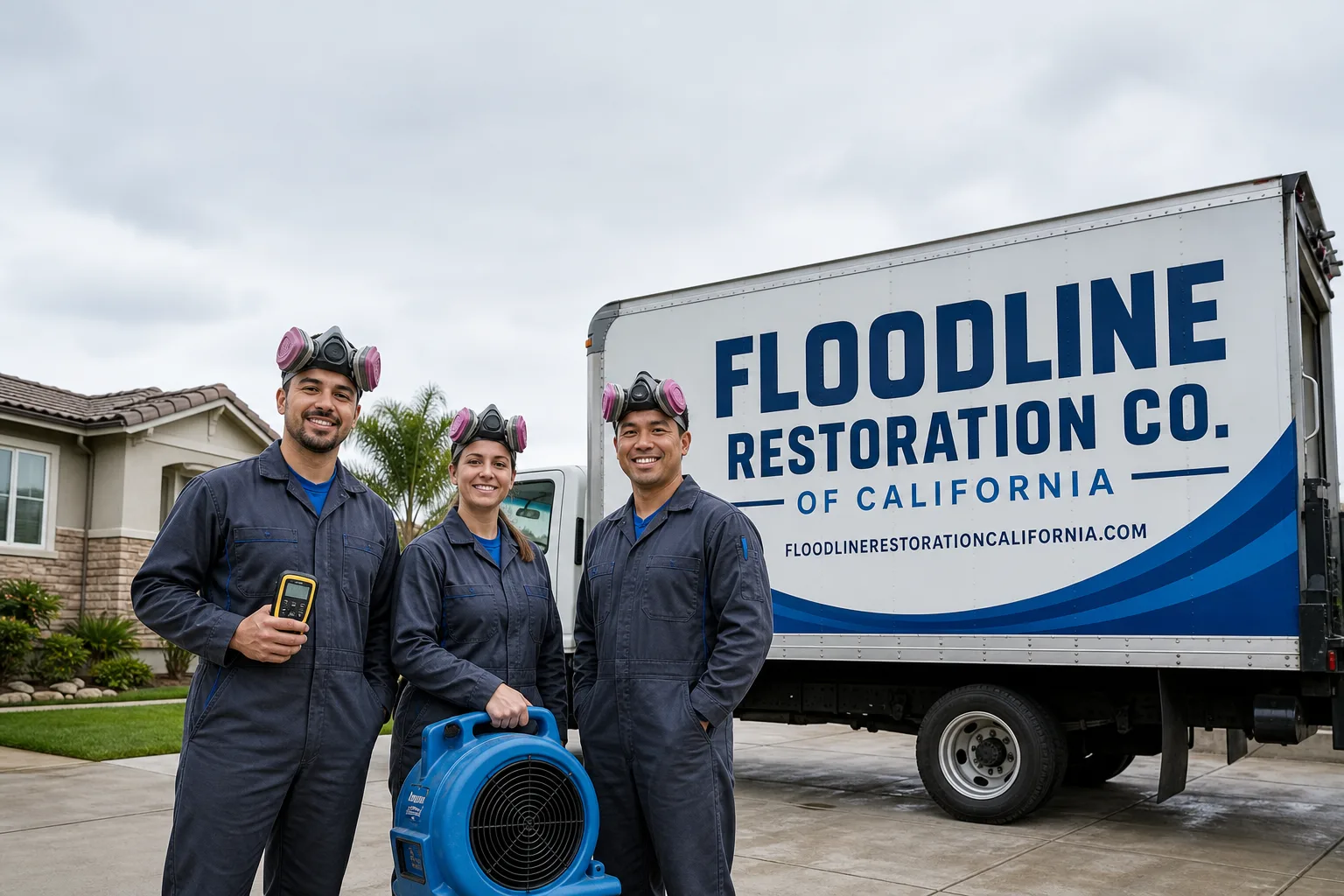
Fast, Reliable Mold Remediation Across Monrovia
Mold remediation in Monrovia typically costs $1,800-$6,500 depending on square footage and whether crawlspace or attic treatment is needed, and most jobs are completed in 2-5 days. If you see dark staining on plaster walls, smell mustiness near old flooring, or have water intrusion from a recent storm, call Floodline Restoration Co. of California at (888) 737-2439. A certified crew reaches most Monrovia neighborhoods within 60-90 minutes, and we answer the phone with a live person at 2 a.m. just as readily as at noon.
Why Floodline Restoration Co. of California Is Monrovia’s Preferred Mold Remediation Company
We know the difference between a 1928 bungalow off Myrtle Avenue and a 1970s split-level near Sawpit Wash. That local knowledge changes how we set drying goals, where we look for hidden moisture, and how long we keep containment up. Monrovia’s older plaster-and-lath construction holds water two to three times longer than modern drywall, and a crew that treats every house the same will pull equipment too early and leave mold to regrow behind the walls.
Our Mold Remediation team has worked homes throughout 91016 and 91017, from the Craftsman bungalows around Library Park to the canyon-adjacent streets north of Hillcrest Boulevard. We’ve responded to post-storm crawlspace flooding near Duarte Road and attic mold driven by Santa Ana wind cycles in the foothills. Every job gets a written scope before work starts, background-checked uniformed technicians, and the 90-Day Done Right Promise in writing. If mold returns inside that window, we make it right. No arguing, no paperwork battle.
Floodline Restoration Co. of California was founded in 2010 by Curt Bowman, and we built the company around a dispatch board, not a sales desk. That means the person who takes your call at midnight knows how to send a crew, not how to upsell you. Our technicians are certified to IICRC, RIA, and IFA standards, and we document every moisture reading daily until the dry standard is met.
For Monrovia homeowners, response time matters because mold spreads fast in the city’s older construction. We keep crews staged to reach Monrovia quickly, and most jobs are completed in a single visit using professional-grade Dri-Eaz dehumidifiers and Phoenix air scrubbers. You get a moisture log, a dry-standard confirmation, and a square deal: no surprises on the bill.
Our Mold Remediation Services in Monrovia
Mold Inspection & Testing
Before we remove anything, we find out what we’re dealing with. Monrovia’s older homes often have mold in places you can’t see: behind 1920s plaster, under original hardwood, inside wall cavities where old galvanized plumbing has been seeping for years. Our inspection includes moisture mapping, air sampling, and a written report of what we found and what needs to happen next. We do not recommend remediation you don’t need. If the answer is a cleaning rather than a tear-out, we’ll tell you that.
Mold Removal
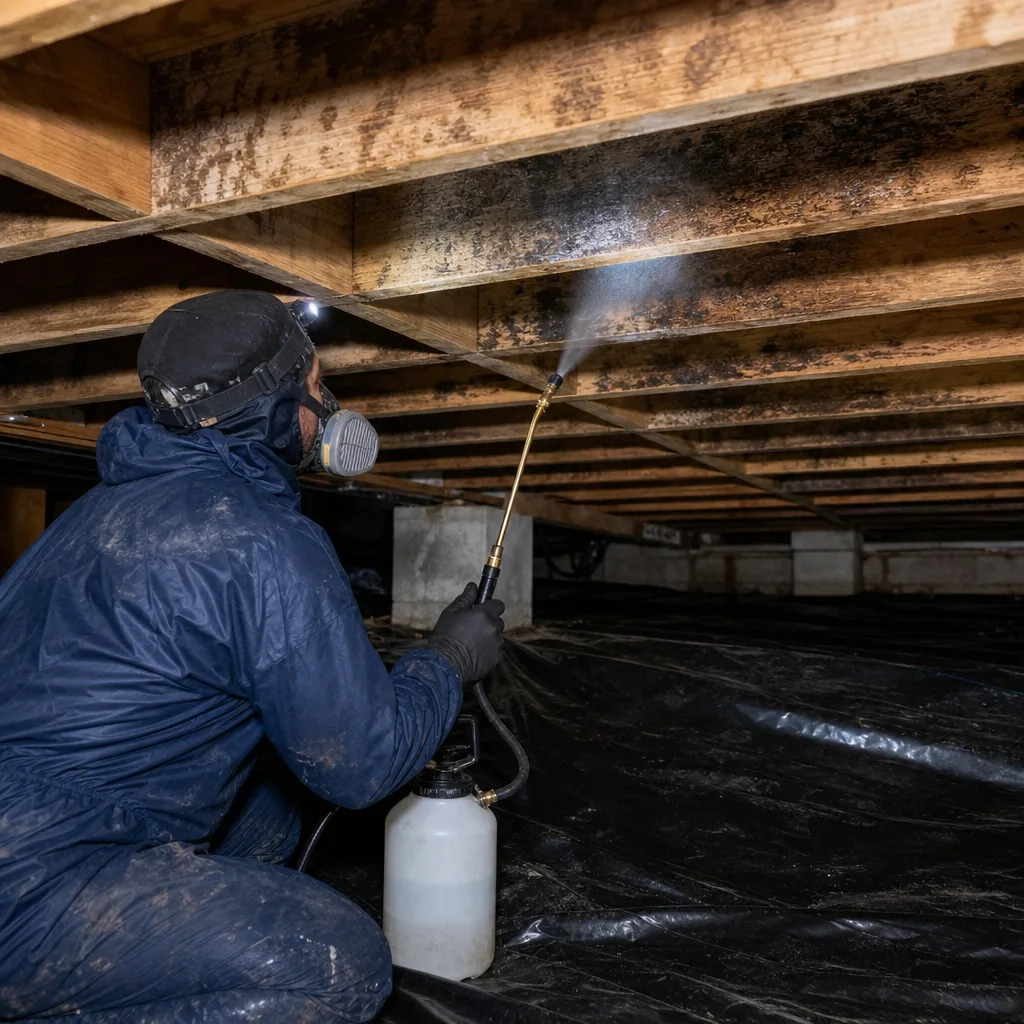
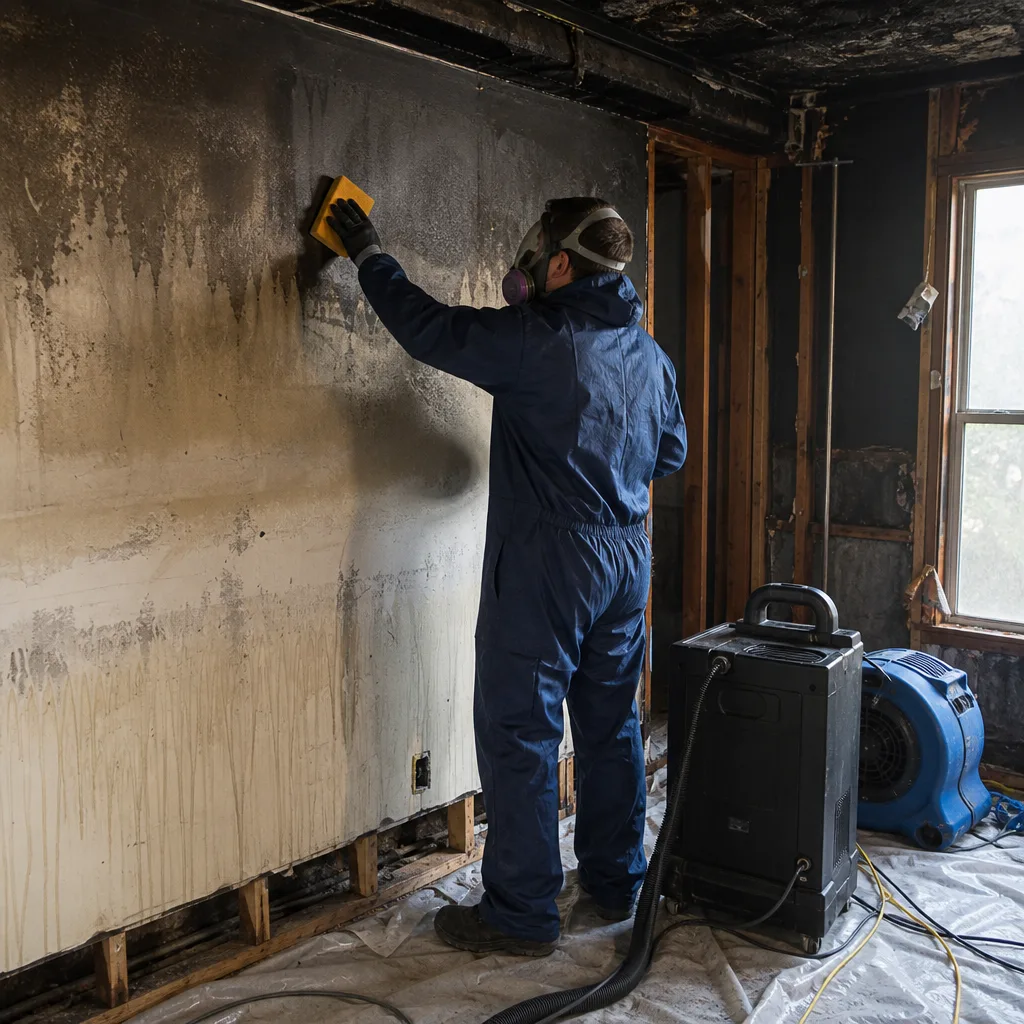
Removal in Monrovia usually means working around original materials that are worth saving. Old-growth redwood framing, quarter-sawn oak floors, period plaster details – these hold up under careful remediation when the drying protocol is right. We contain the affected area, scrub and HEPA-vacuum surfaces, treat the framing if needed, and run Dri-Eaz LGR dehumidifiers and Phoenix air scrubbers until the moisture log shows dry standard met. Then we hand you the log and the carrier a copy.
Black Mold Remediation
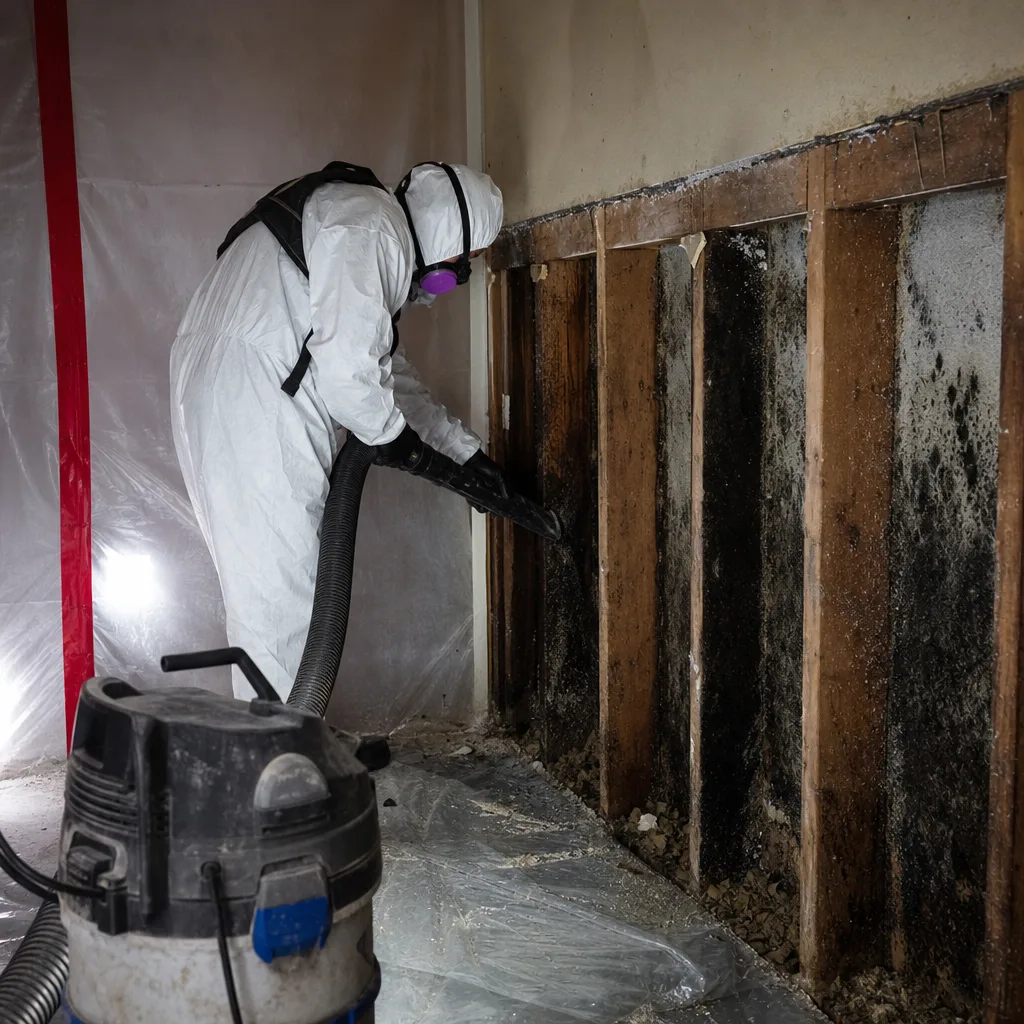
Black mold gets attention, and rightly so, but the truth is that any mold colony in a Monrovia home with high humidity or a slow leak needs the same serious response: containment, removal, drying, and verification. We treat black mold with full containment and HEPA filtration, then document everything for your insurer. If it’s in a crawlspace or behind a wall, we don’t just scrub the visible surface – we open it up enough to confirm the moisture source is gone. Half-measures are how mold comes back in three months.
Air Quality Restoration
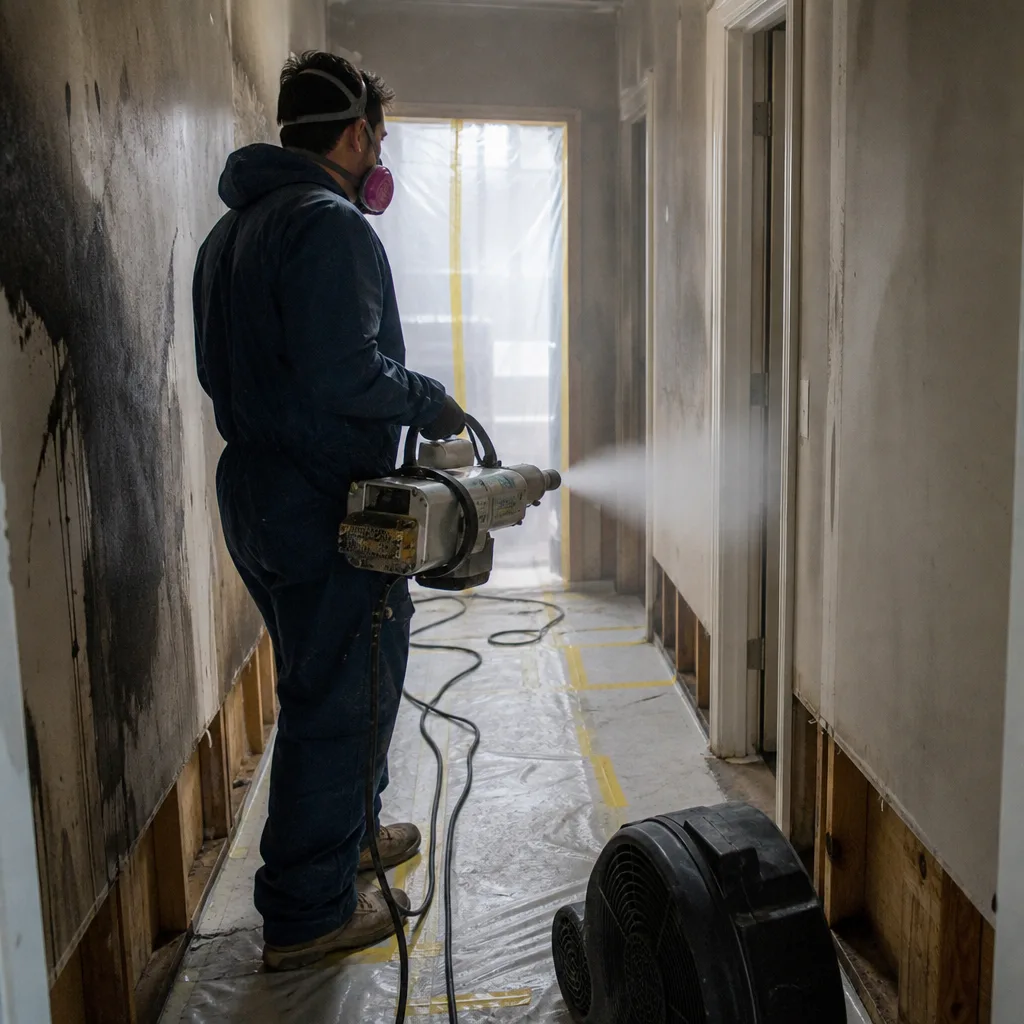
After mold removal, the air in your house matters. We run HEPA air scrubbers during and after remediation to pull spores and dust from the air, then confirm with air sampling before we leave. In Monrovia homes that have had smoke intrusion from a fire season months earlier, we find that HVAC ducts and attic insulation often hold residual contamination that keeps reintroducing odor and particulates. Air quality restoration means cleaning or replacing that material, not just masking the smell.
What happens when you call
- 1
A real person answersNo phone trees - you reach a local pro.
- 2
You get an upfront price rangeHonest numbers before anyone is dispatched.
- 3
A background-checked tech heads outLicensed & insured, dispatched right away.
- 4
You approve before work beginsNothing starts until you say go.
Trusted Brands We Service in Monrovia
We run Dri-Eaz and Phoenix equipment on Monrovia jobs because these machines hold steady for the long dry-downs that plaster-and-lath homes require. Our technicians train to RIA and IFA standards on this equipment, and we stock replacement filters, hoses, and panels locally so a failed pump mid-job doesn’t stall your remediation. For Monrovia homeowners, that means the crew that reads the moisture map on day one handles daily readings and brings the job to the dry standard without swapping in unfamiliar hands.
Common Mold Remediation Problems We See in Monrovia Homes
- Skipped ash and char screening before water work. Homes north of Hillcrest Boulevard that caught smoke from the Fish Fire cycle often have ash-laden insulation and dust embedded in attic framing. If a crew starts drying without screening for that residue first, the moisture drives it into plaster and feeds a mold bloom months later.
- Drying goals set for modern drywall, not 1920s plaster. Monrovia’s Craftsman bungalows and Spanish Colonial Revivals absorb water differently than post-WWII tract housing. Technicians who pull containment at drywall-standard moisture levels leave hidden reservoirs in plaster and lath. We hold drying longer and verify with moisture meters at multiple depths.
- Treating visible mold on old hardwood without addressing the crawlspace. In canyon-drainage homes near Sawpit Wash and the northern residential streets, saturated soil keeps crawlspaces damp for weeks after a debris-flow event. If you only sand and treat the floor above, the mold returns from below. Crawl space treatment and moisture control have to happen first.
- Ignoring old galvanized plumbing leaks behind walls. A 1930s Monrovia home with original galvanized pipe often has slow pinhole leaks that no one detects until mold shows on the plaster. We trace the moisture source, not just the stain, and coordinate with a plumber before we close the wall back up. Otherwise you’re remediating the same wall again next year.
Pricing for Mold Remediation in Monrovia, CA
For Monrovia’s market, here are honest ranges based on the jobs we’ve completed in 91016 and 91017. A mold inspection with air sampling runs $350-$600. Minor surface removal in a single room, like a bathroom or closet, stays around $800-$1,800. Full containment and removal across multiple rooms or a crawlspace typically lands between $2,500 and $6,500 depending on square footage and whether HVAC or attic material needs replacement. Post-debris-flow work that includes biohazard debris excavation adds $1,500-$4,000 because the sequence is longer: charred material comes out, then the drying and mold work begins.
What changes your number: crawlspace access, plaster repair after opening walls, HVAC duct cleaning, and whether we need to pull flooring to dry subfloor. We give you a written scope before work starts, with a line-item breakdown. Estimates are free. Call (888) 737-2439 and we will walk it through with you.
We Also Serve Cities Near Monrovia
Floodline Restoration Co. of California serves Monrovia and the surrounding foothill communities. If you live in Mayflower Village, Duarte, Arcadia, or Sierra Madre, our crews cover those too. We know this corridor well enough to quote accurately over the phone and get a team to you fast. For full details on our local commitment, see Mold Remediation in Monrovia.
Serving Monrovia, CA - Our Local Coverage Area
We’re based in the Monrovia area and know this community well. Use the map below to see our service coverage - if you’re nearby, we can almost certainly help.
FAQs - Mold Remediation in Monrovia
Because the walls are made of plaster and lath, not drywall. Plaster-and-lath holds water two to three times longer, so drying has to run longer before we remove containment and verify the dry standard. In a 1920s Craftsman near downtown Monrovia, we plan for extra drying days and deeper moisture-meter readings at multiple depths in the wall. We will not rush that. Call (888) 737-2439 for a scope on your specific home.
Yes, and here’s the sequence to know. After a debris-flow event, mud and water push into crawlspaces and against foundations, but the silt often contains charred organic material from the burn scar. That combination holds moisture for weeks and feeds rapid mold growth. If your home had smoke and ash intrusion in an earlier season, you need debris removal and biohazard screening before standard drying starts. We run that sequence correctly. Call (888) 737-2439 to schedule an assessment.
It does. Santa Ana winds drive fine dust and ember material into attic spaces before and during fire season, and the same winds can move dry, hot air through the attic after a moisture intrusion, creating a false sense that things are drying. If the underside of the roof sheathing or the insulation holds moisture, wind alone won’t save it. We inspect the attic after wind events when odor or staining appears, and we check for embedded ash in insulation before setting drying goals.
Absolutely. Once one section of galvanized pipe starts pinhole-leaking inside a wall, other sections are rarely far behind. The leak you find and fix may be followed by another within months, and each one reintroduces moisture into the same wall cavity. In a 1930s Spanish Colonial Revival or bungalow, we map the full pipe run, coordinate a plumber for replacement or repair, and only then close the wall and finish remediation. Otherwise you will be back in the same wall. Get a moisture assessment at (888) 737-2439.
Debris and charred material come out first. That means excavating ash-laden silt from crawlspaces, removing charred attic insulation if needed, and running a biohazard screening before any mold containment or drying starts. Then we address the moisture, then the mold, then the air quality. Reversing that order is how Monrovia homeowners end up with recycled contamination. We follow the correct sequence and document every step for your carrier.
Written by Curt Bowman, Owner at Floodline Restoration Co. of California, serving Monrovia and the San Gabriel Valley foothills.