
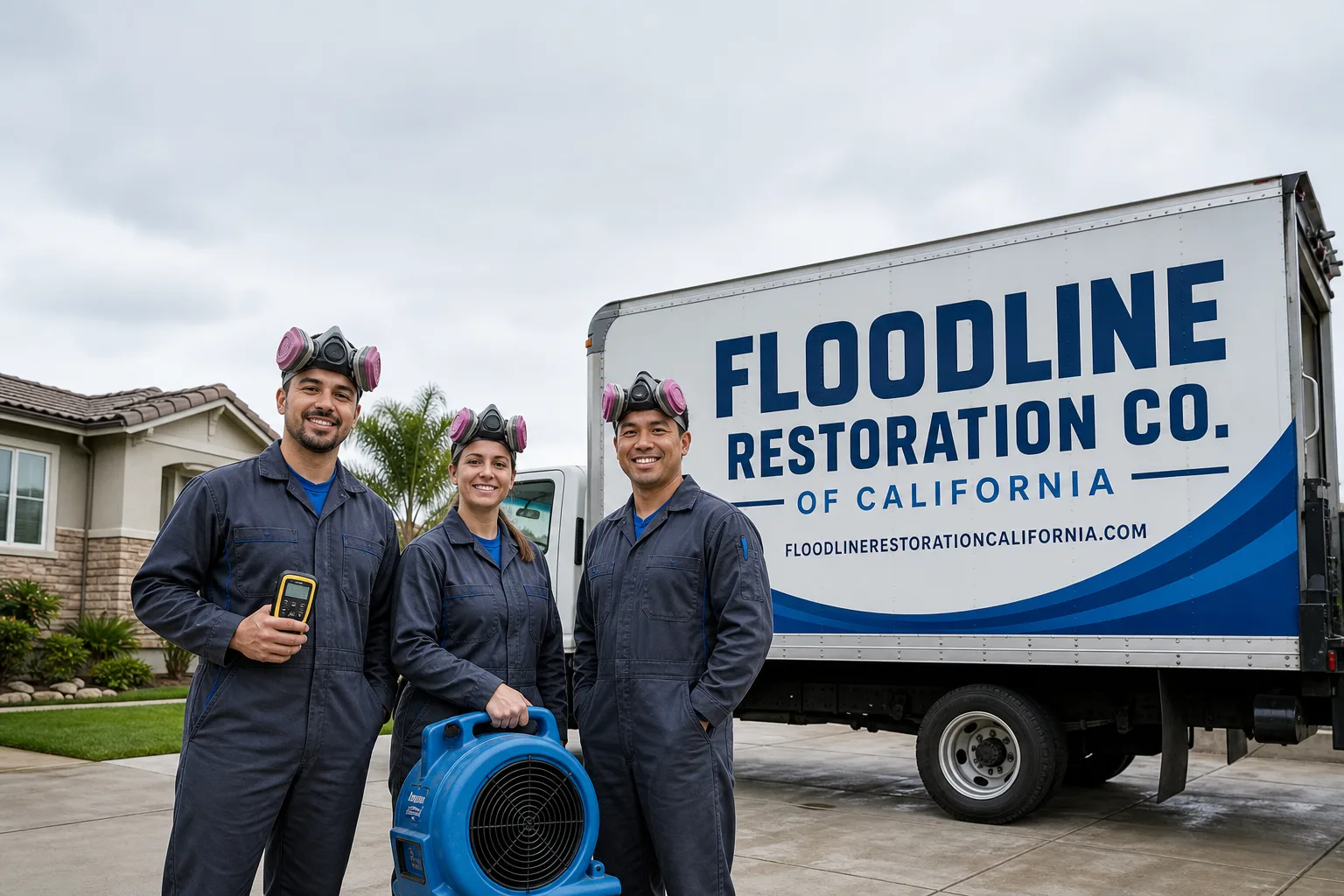
Fast, Reliable Storm & Disaster Restoration Across Glendora
Storm damage in Glendora rarely arrives as a single, clean event. Between the Santa Ana winds that rake the foothills each fall and the debris flows that follow fire seasons, homeowners in 91740 and 91741 deal with water, wind, and mud intrusion that compounds quickly. Floodline Restoration Co. of California answers the phone with a live dispatcher at any hour, and a certified crew can reach most Glendora addresses within 60 to 90 minutes of your call. If you’re standing in water or watching a tarp fail at 2 a.m., call (888) 737-2439 right now. We start extraction the same visit, and we don’t hand your job off to another company halfway through.
Why Floodline Restoration Co. of California Is Glendora’s Preferred Storm & Disaster Restoration Company
Glendora sits on an alluvial fan at the base of the San Gabriel Mountains, and that single fact shapes how we approach every job here. The 2014 Colby Fire burned the chaparral slopes directly above the city’s northern edge, leaving denuded hillsides that shed water and debris into residential streets for years afterward. We’ve worked homes in northern Glendora where post-fire mud pushed through garage doors and saturated original 1960s plaster walls, and we know that those walls dry on a different timeline than modern drywall. Local knowledge like that changes the scope, the equipment plan, and the documentation your insurer sees.
Our Storm & Disaster Restoration team is background-checked, uniformed, and certified to IICRC and RIA standards. Every job is backed by the 90-Day Done Right Promise, the Keystone Standard. It’s in writing. If it’s not done right, we make it right, no arguing. That’s how Curt Bowman built this company in 2010, and it’s how we operate in Glendora today.
Our Storm & Disaster Restoration Services in Glendora
Storm Damage Cleanup
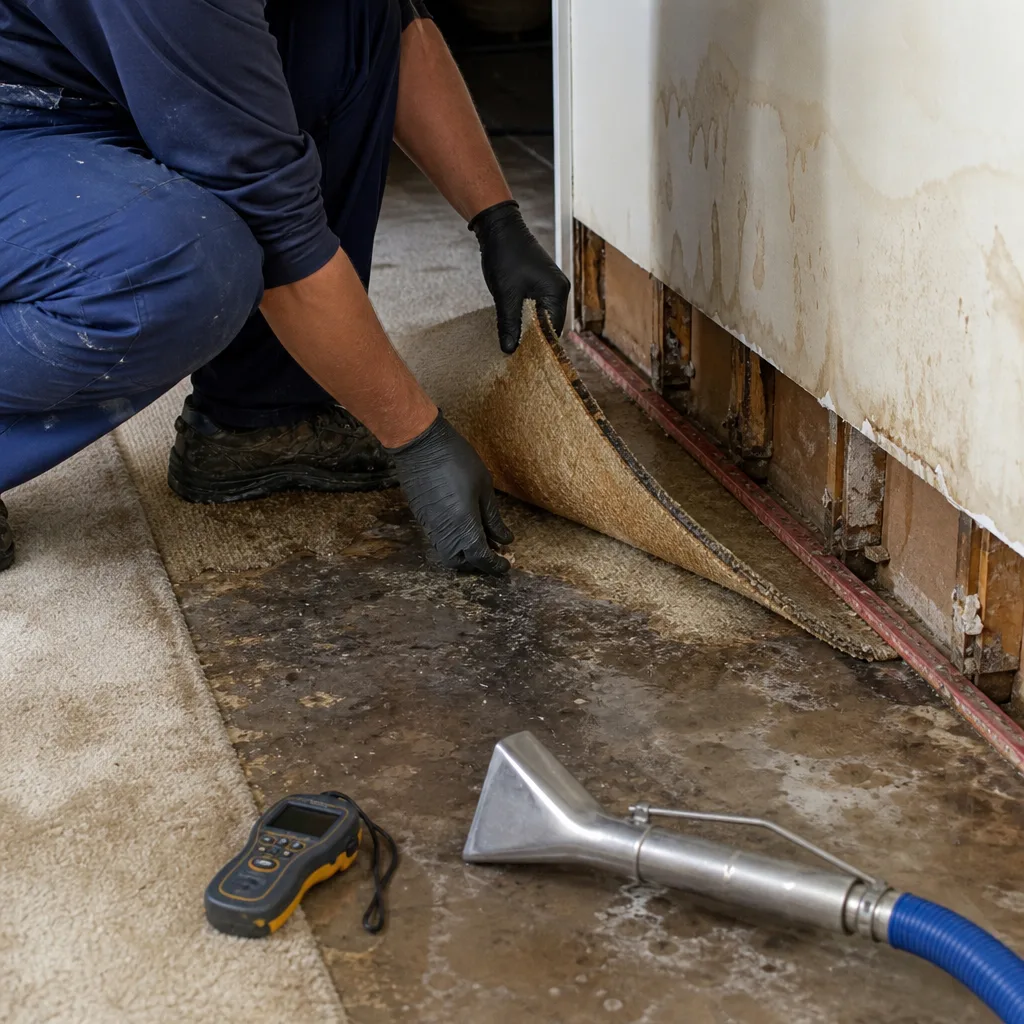
After a heavy rain or wind event in Glendora, the first priority is stopping active water movement and beginning controlled drying. On mid-century ranch homes in 91740, that means accounting for plaster walls and original subfloor systems that hold moisture far longer than newer construction. We run Dri-Eaz and Phoenix drying systems with daily moisture readings until the dry standard is met, and we hand that log to you and your carrier. Cleanup includes muck-out, debris removal, and sanitizing surfaces that contacted contaminated runoff.
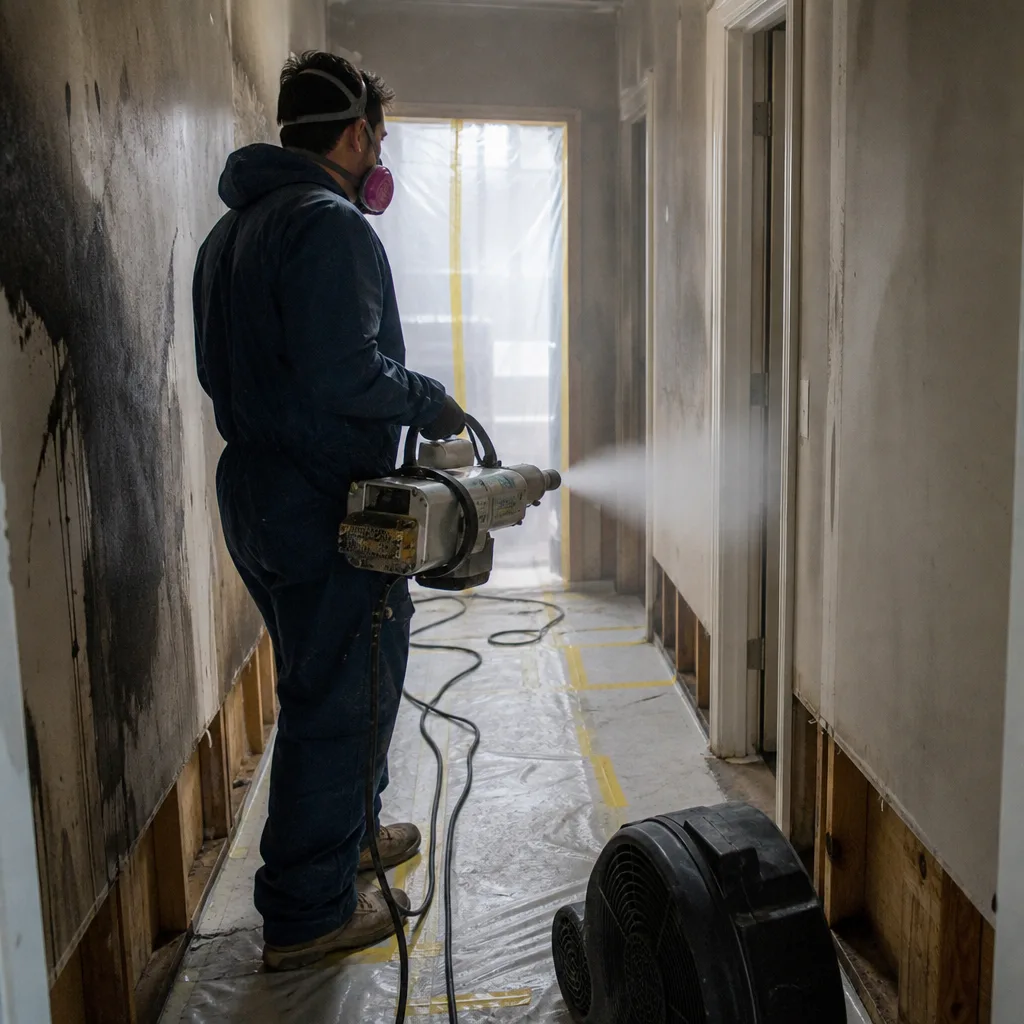
Flood Damage Restoration
When water crosses the threshold in Glendora, whether from a failed drainage channel or a storm drain backup, time is the enemy. We extract standing water the same visit, map moisture across floors and walls, and set professional-grade air movers and dehumidifiers. In foothill homes near the mountain front, we also check for silt and ash intrusion in crawlspaces and ducts. Those fine particles continue wicking moisture long after visible water is gone. A typical flood extraction and drying scope in Glendora runs $1,800 to $4,600, depending on square footage and how far the water traveled.
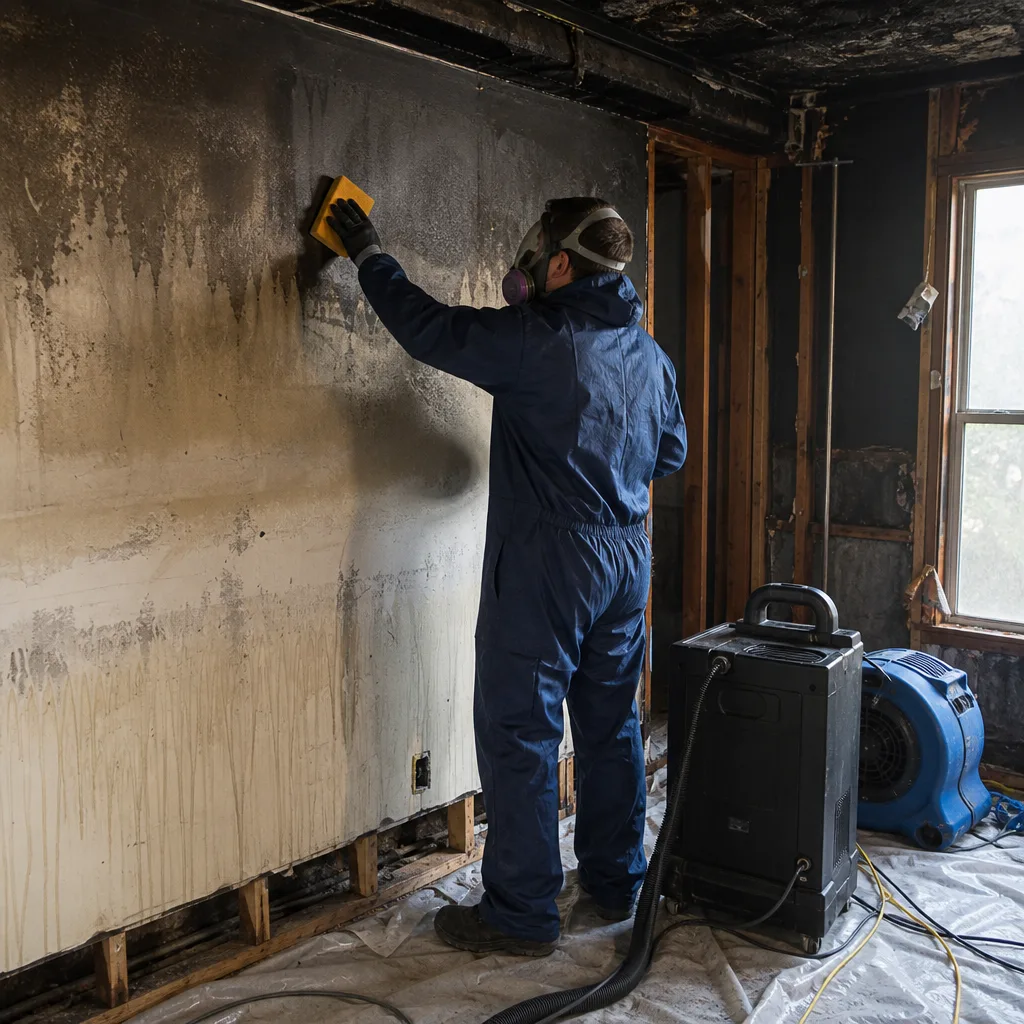
Emergency Board-Up
A broken window or blown-out patio door after a Santa Ana wind event leaves your Glendora home open to rain, animals, and opportunistic entry. We board up within hours, using plywood cut to fit and secured properly, not just nailed over the opening. For homes along the northern foothills, we recommend boarding up promptly even when the forecast looks clear. Wind can shift, and the next storm front off the Angeles National Forest can arrive faster than the news predicts. Board-up in Glendora typically runs $450 to $1,200 depending on the number of openings and access.
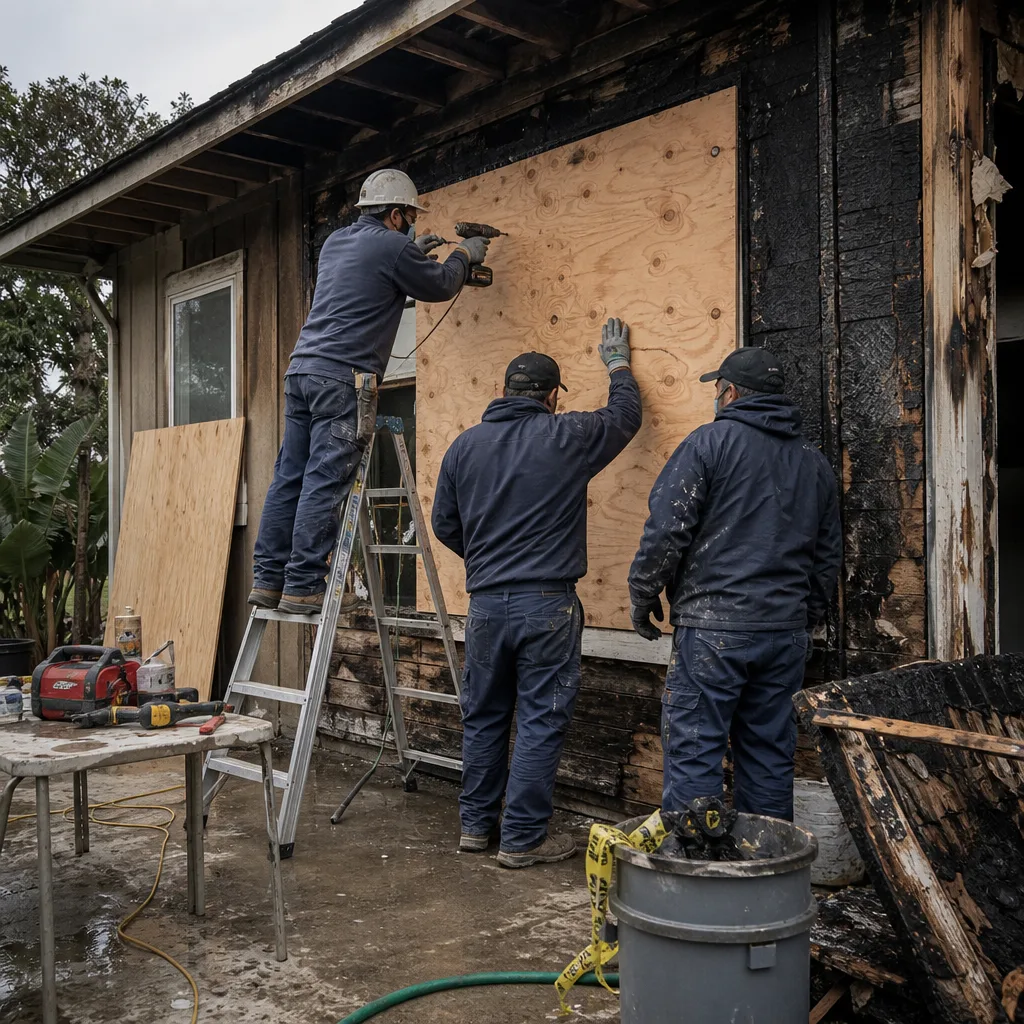
Roof Tarping
When wind tears shingles off a Glendora roof or a tree limb punctures the decking, a properly secured tarp prevents water from spreading into ceilings, walls, and insulation. We use reinforced tarps and secure them to rafters, not just the fascia. A standard tarp job on a Glendora ranch or foothills tract home runs $600 to $1,500. We photograph everything before and after, which matters for your insurance file and for the adjuster who’ll review the claim.
What happens when you call
- 1
A real person answersNo phone trees - you reach a local pro.
- 2
You get an upfront price rangeHonest numbers before anyone is dispatched.
- 3
A background-checked tech heads outLicensed & insured, dispatched right away.
- 4
You approve before work beginsNothing starts until you say go.
Trusted Brands We Service in Glendora
Most Glendora homes have the same mechanical bones regardless of the storm: water heaters in the garage, furnaces in a hallway closet, and original ductwork that predates modern filtration. When we dry a home, we service and protect those systems rather than treating them as afterthoughts. Our crews are trained to IICRC and RIA standards, and we run Dri-Eaz and Phoenix equipment calibrated to the home’s specific footprint. We stock common parts and supplies locally so Glendora jobs don’t stall waiting on a warehouse shipment from across the county. Fast turnaround matters when your subfloor is wet and the drywall is wicking.
Common Storm & Disaster Restoration Problems We See in Glendora Homes
- Plaster and subfloor saturation in 91740 ranch homes. Homes built from the 1950s through the 1970s used plaster over wood lath and tongue-and-groove subflooring. Both materials hold water longer than drywall and plywood. A crew that signs off on drying too early leaves moisture behind, and mold follows within weeks.
- Post-fire debris flows in northern 91741. After the Colby Fire, hydrophobic chaparral ash coated the slopes above Glendora. When rain arrives, that ash and charred vegetation mixes with mud and flows downhill into cul-de-sacs near the mountain front. It enters garages, crawlspaces, and living areas. It’s not just water. It’s abrasive, contaminated slurry.
- Insurer documentation gaps on foothill properties. Certain Glendora addresses near the alluvial fan drainages have documented repeat-loss histories. Some carry California FAIR Plan policies. If the initial scope photos and line-item documentation are thin, adjusters stall debris removal approvals for weeks. We document from the first visit with those adjusters in mind.
- Wind-driven rain through original windows and doors. Santa Ana winds in Glendora hit harder than coastal communities. Older aluminum-frame windows and original door seals fail under sustained gusts, letting rain ride sideways into wall cavities. The visible water on the floor is often the smaller problem.
Pricing for Storm & Disaster Restoration in Glendora, CA
Here’s what Glendora homeowners can expect to pay for common storm restoration work. Emergency board-up runs $450 to $1,200. Roof tarping ranges from $600 to $1,500. Debris removal and muck-out after a flood typically runs $1,200 to $3,800 depending on volume and contamination level. Full extraction and drying on a mid-century Glendora ranch home with plaster walls and original subfloors lands between $1,800 and $4,600. Post-fire debris flow cleanup in foothill areas runs higher due to ash contamination protocols and disposal requirements. Every estimate is free, in writing, and we bill your insurance carrier directly so you’re not playing messenger. Call (888) 737-2439 for a specific number on your home.
We Also Serve Cities Near Glendora
Our crews regularly work Storm & Disaster Restoration in Glendora and the surrounding foothill communities, including San Dimas, Azusa, Citrus, and Charter Oak. If your home sits near the San Gabriel mountain front, we know the drainage patterns, the soil behavior, and the building stock. That local knowledge shortens response time and sharpens the scope on day one.
Serving Glendora, CA - Our Local Coverage Area
We’re based in the Glendora area and know this community well. Use the map below to see our service coverage - if you’re nearby, we can almost certainly help.
FAQs - Storm & Disaster Restoration in Glendora
Northern Glendora homes sit on ancient alluvial fan drainages that channeled debris flows after the 2014 Colby Fire, and the intrusion there is muddy, ashy, and abrasive rather than clean storm water. Flatland 91740 ranch homes face a different problem: original plaster and subfloor systems that hold moisture for weeks. A correct protocol in 91741 addresses contaminated silt and ash extraction plus insurer documentation, while a correct protocol in 91740 requires extended drying timelines and daily moisture readings on plaster. Call (888) 737-2439 and tell us your ZIP code. We’ll tell you what to expect before we arrive.
The subfloor saturates with water carrying fine ash and charred vegetation, and because 1950s and 1960s subfloors were built from dimensional lumber with tight joints, that material wicks and holds moisture far longer than plywood. Simply extracting surface water leaves a reservoir under the flooring. We open the affected area, extract from the cavity, run Dri-Eaz drying systems with daily readings, and document the contamination level for your carrier. Skipping this process means mold forms under the floor, and you’ll smell it within weeks.
Within hours, not days. Glendora’s Santa Ana winds arrive with enough force to blow out original windows and doors, and the next weather system off the Angeles National Forest can arrive without much warning. An unboarded opening invites rain, animals, and debris. We dispatch a board-up crew the same day you call, typically reaching Glendora addresses within 60 to 90 minutes. The cost runs $450 to $1,200 depending on openings and access.
Yes, especially on foothill properties with repeat-loss histories or California FAIR Plan policies. Adjusters reviewing these claims want initial scope photos, line-item documentation from day one, and moisture logs tied to specific rooms and floor plans. Thin documentation stalls debris removal approvals. Our crews photograph every phase, log daily moisture readings, and provide a written scope agreed before work starts. We bill your carrier directly and coordinate with your adjuster so you don’t carry paperwork back and forth.
Those cul-de-sacs sit on alluvial fan drainages, the natural channels that carried debris flows after the Colby Fire. They were shaped by mountain runoff long before the homes were built, and they continue receiving water and fine sediment whenever heavy rain falls on the slopes above. Some addresses have documented repeat-loss histories and insurer flags because of that geography. If you own one of those homes, the right restoration partner documents every event thoroughly, understands the drainage context, and doesn’t treat each incident as a one-off fluke.
If storm damage has already reached your Glendora home, or if you’re watching water move toward it, call (888) 737-2439 now. A live person answers. A certified crew responds. We’ll be there when we say, and the work is backed in writing.
Written by Curt Bowman, Owner at Floodline Restoration Co. of California, serving Glendora and the San Gabriel foothills since 2010.