
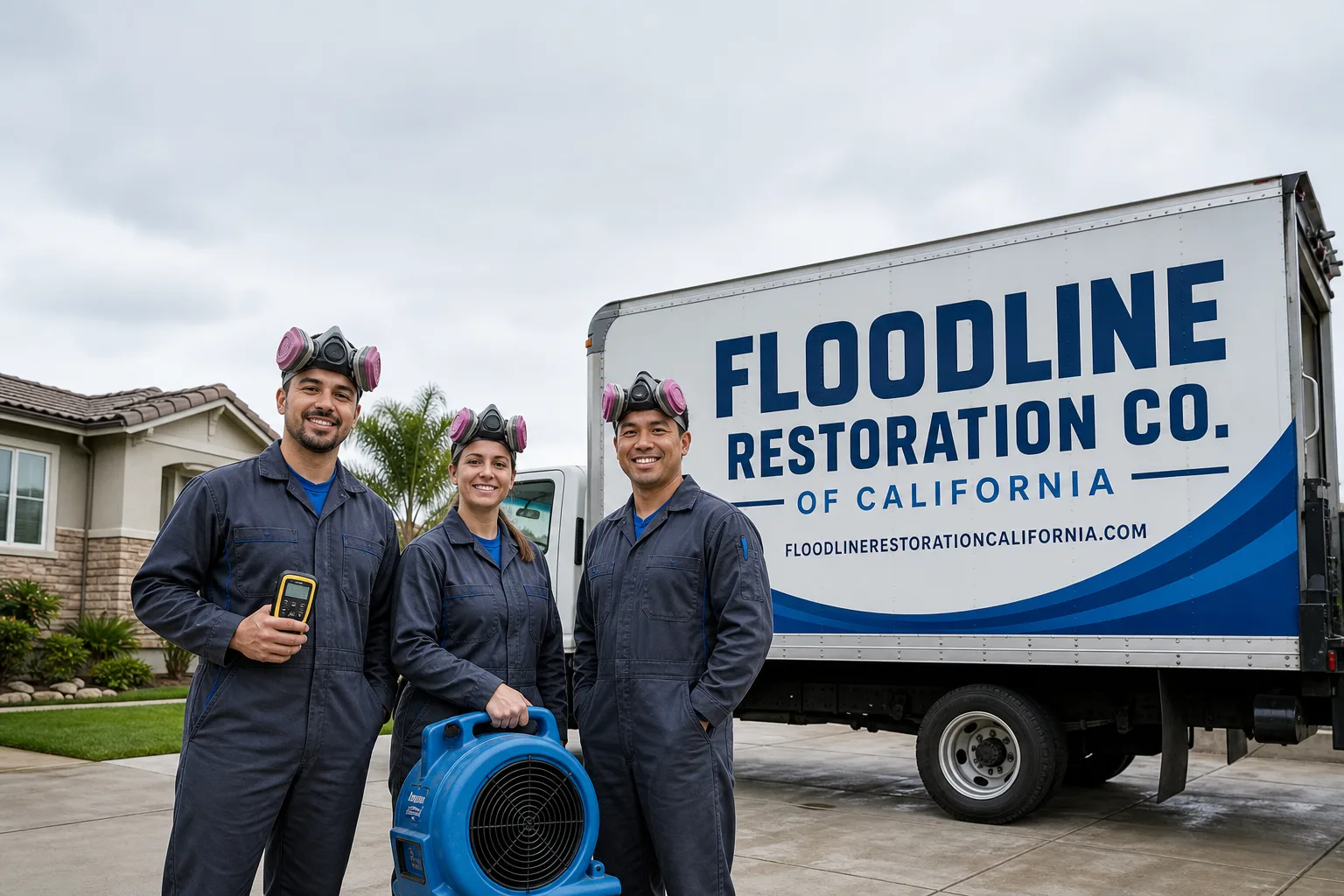
Fast, Reliable Storm & Disaster Restoration Across San Dimas
Storm damage in San Dimas moves fast, and so do we. When an atmospheric river hits the San Gabriel Mountains and sends debris-laden water down San Dimas Wash into foothill neighborhoods, waiting even a few hours can turn a manageable cleanup into a full-scale contamination event. Our crews reach San Dimas homes quickly, usually the same day you call, with the equipment already loaded for mud excavation, structural drying, and hazmat testing. Call (888) 737-2439 and a live dispatcher answers, 24/7. We do not send you to voicemail when water is rising against your slab foundation.
Why Floodline Restoration Co. of California Is San Dimas’s Preferred Storm & Disaster Restoration Company
San Dimas sits at a point where geography writes the damage report. The city’s northern streets climb toward the mouth of San Dimas Canyon, and when the slopes above burn, the next storm delivers not just water but ash, mud, and fire-retardant residue straight into residential properties. We’ve handled enough of those jobs to know what inland-valley restoration companies miss: the water pooling against a 1950s ranch home on the alluvial fan is often Category 3 black water, not clean runoff. Our Storm & Disaster Restoration team carries hazmat testing equipment on foothill calls because we’ve learned the hard way that what looks like mud can test positive for heavy metals.
Homeowners around San Dimas Canyon Road, along Arrow Highway, and throughout the 91773 ZIP code call us because we answer in person at any hour and show up with certified, background-checked technicians who have seen this specific kind of damage before. We carry IICRC, RIA, and IFA certifications, and we work with Dri-Eaz structural drying equipment that reads moisture levels daily until the dry standard is met. Our 90-Day Done Right Promise backs every job in writing. If it’s not done right, we make it right. No arguing, no paperwork battles.
Our Storm & Disaster Restoration Services in San Dimas
Every storm disaster in San Dimas starts with the same phone call and ends with a dry home and a written guarantee. Here’s what we handle most often in this city.
Storm Damage Cleanup
Storm cleanup in San Dimas usually means moving mud first, not just water. When debris flows overrun curbs along the northern foothill streets, sediment carries ash from burned chaparral and anything else the wash picked up on the way down. We excavate the mud, test what pooled against your foundation, and document everything with photos for your insurance carrier. Direct billing to your carrier means you never play messenger between us and the adjuster.
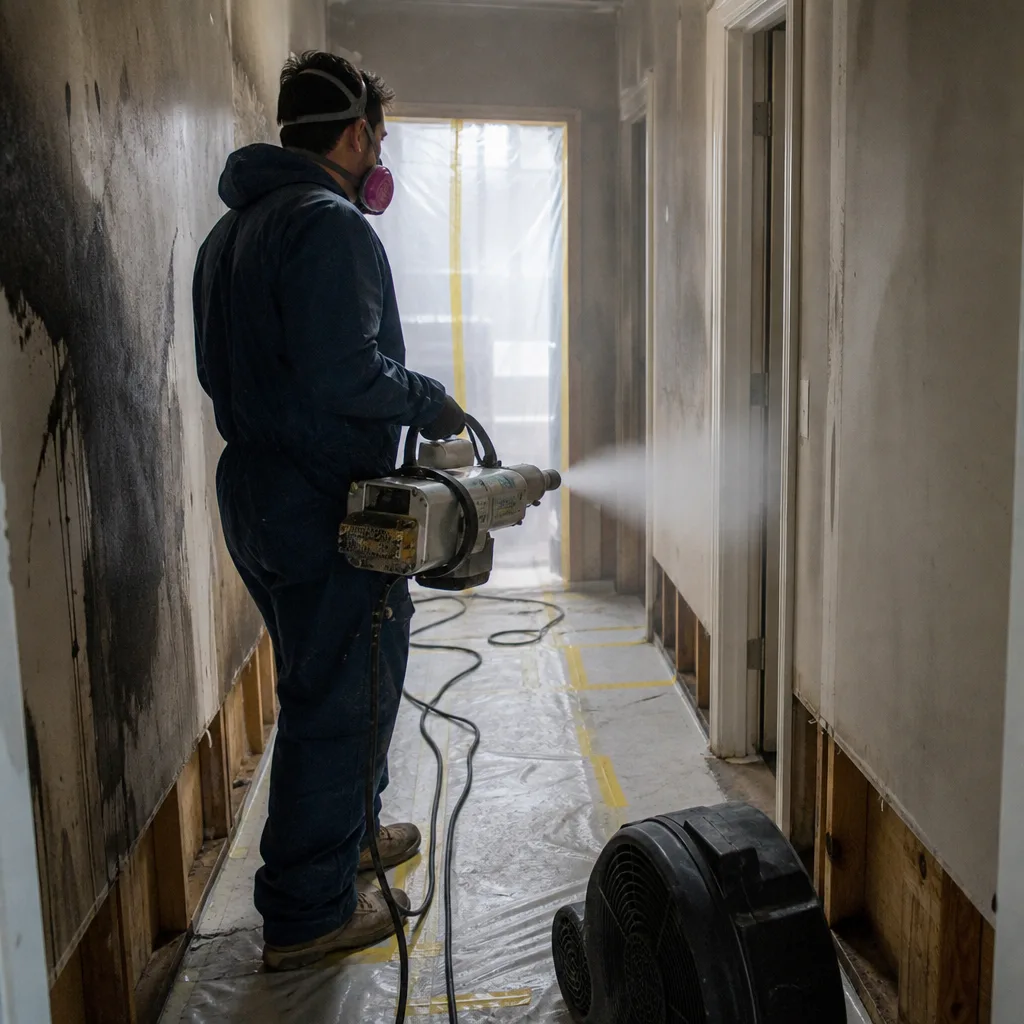
Flood Damage Restoration
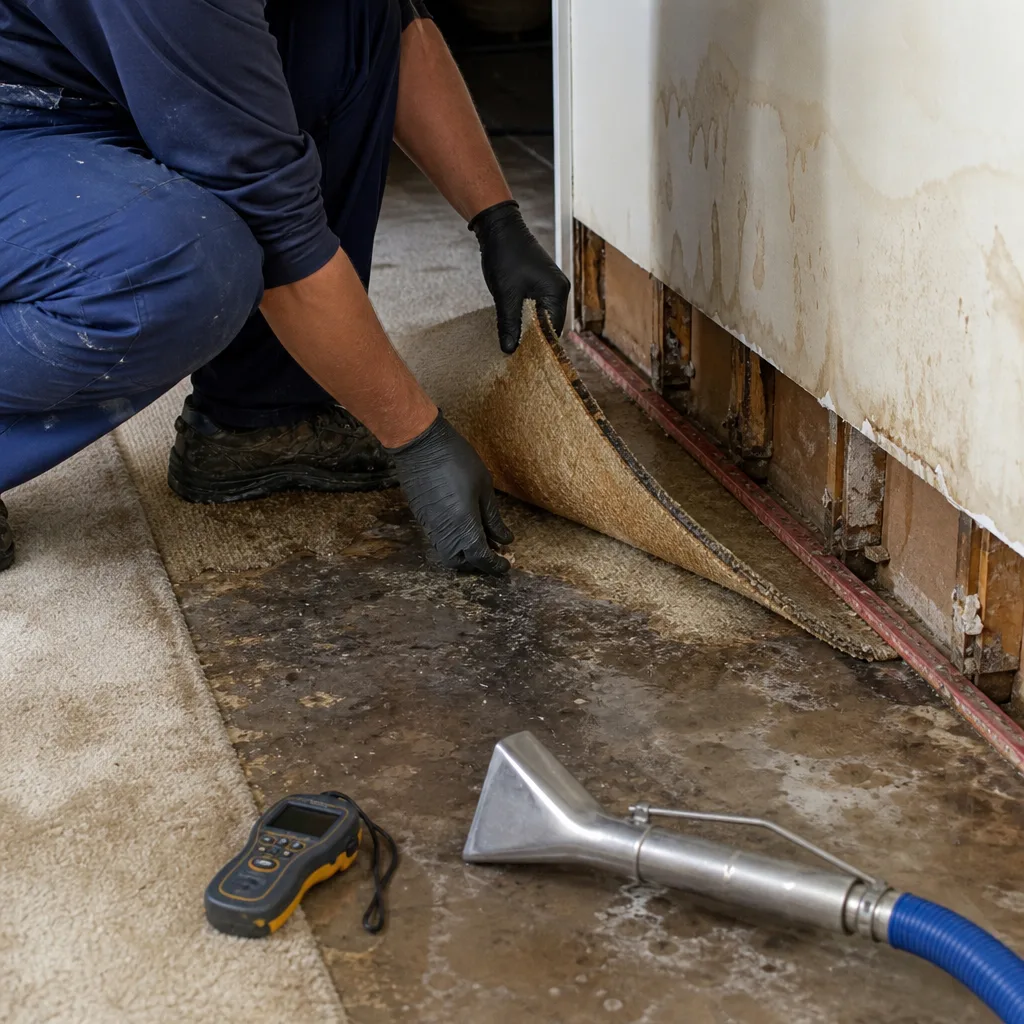
Floods in San Dimas’s older ranch and tract homes hit slab-on-grade foundations hard. Water that pools against original stucco wicks upward into framing within hours, and the damage spreads behind walls before it ever shows inside. Our crews in San Dimas use Dri-Eaz, Phoenix, XPOWER, B-Air, and Injectidry equipment to extract and dry every affected surface, with daily moisture readings logged until the home meets the dry standard. Same-visit extraction is the norm, not the exception.
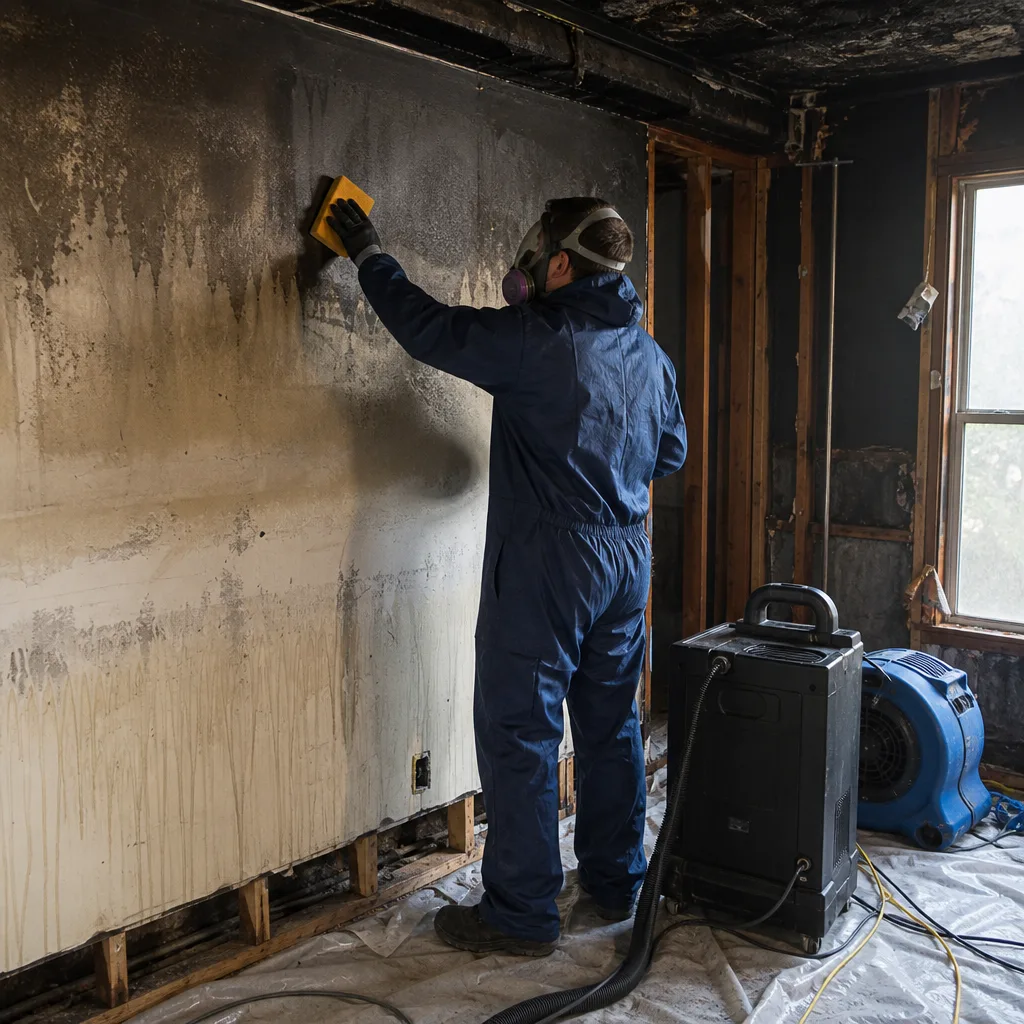
Emergency Board-Up
Wind-driven debris and falling tree limbs punch holes in San Dimas homes most often during Santa Ana events and winter atmospheric rivers. We board up broken windows and breached walls the same visit, securing the property so water and wildlife stay out while the full restoration scope is written. No homeowner in this city should sleep in a house open to the elements, and you won’t have to.
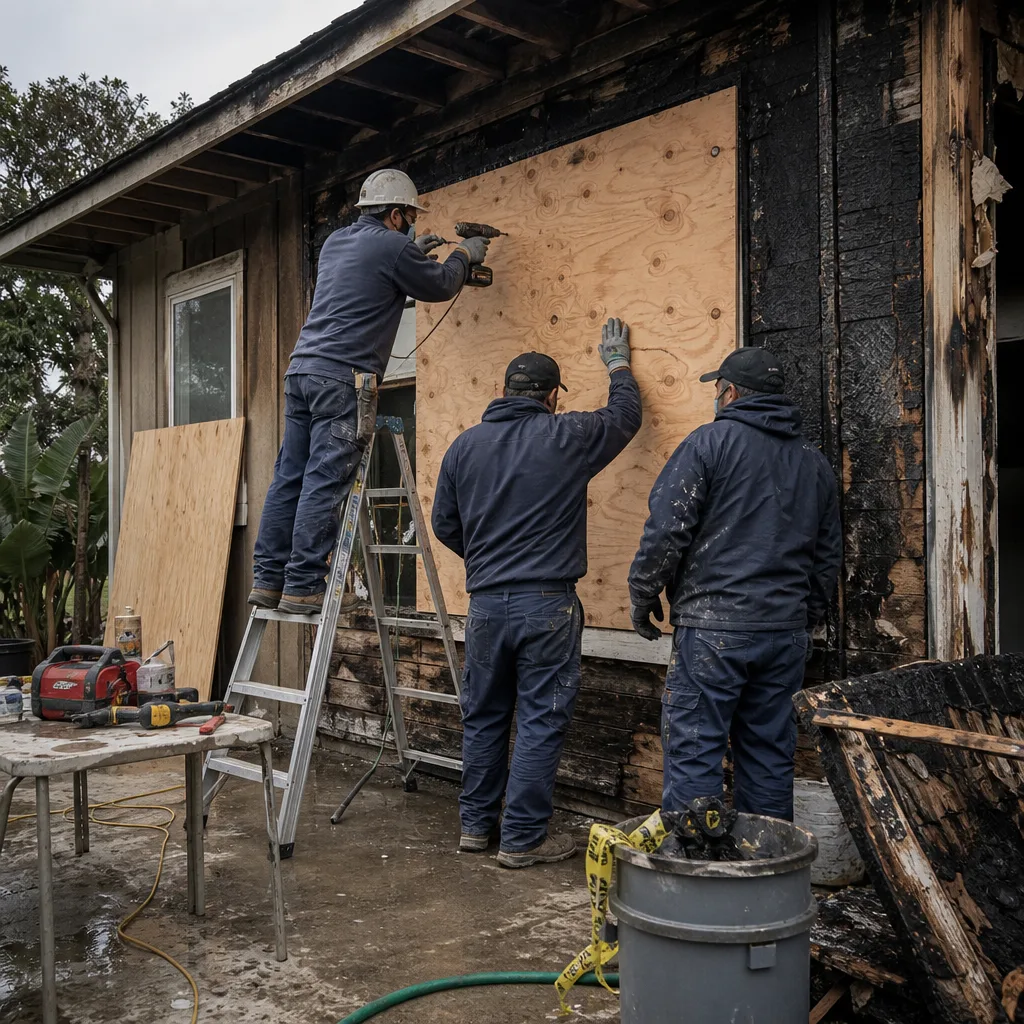
Roof Tarping
Storm winds lift shingles, and debris flows can tear sections of roofing loose. We tarp damaged roofs immediately, using secure fastening that holds against the next wind event. A properly tarped roof stops interior water damage before it starts, which is why roof tarping in San Dimas is a priority call for us whenever a storm cell passes over the foothills.
We also handle debris removal from wind and flood events around San Dimas neighborhoods, clearing fallen branches, mud deposits, and scattered wreckage before drying and repair work begins.
What happens when you call
- 1
A real person answersNo phone trees - you reach a local pro.
- 2
You get an upfront price rangeHonest numbers before anyone is dispatched.
- 3
A background-checked tech heads outLicensed & insured, dispatched right away.
- 4
You approve before work beginsNothing starts until you say go.
Trusted Brands We Service in San Dimas
We service and install the brands San Dimas homeowners most often have from original construction and past replacements: LiftMaster and Genie openers, Clopay, Amarr, and Wayne Dalton doors. For older 1950s-to-1970s homes that still have original or early hardware, we keep a wide stock of common replacement components and can usually match legacy sizes without waiting on special orders. For San Dimas customers, quick turnaround on parts means faster restoration and fewer days living with a damaged home. We stand behind every installation, part, and repair with the 90-Day Done Right Promise.
Common Storm & Disaster Restoration Problems We See in San Dimas Homes
- Debris-laden water pooling against slab foundations. Homes on the alluvial fan north of Arrow Highway sit at the base of the canyon, and when the wash overflows, sediment and ash settle against stucco exteriors. Water wicks upward into framing and insulation, causing hidden mold growth behind walls if not dried within 48 hours.
- Post-wildfire runoff contamination. When the slopes above San Dimas Canyon burn, the next storm carries heavy metals and fire retardant chemicals into residential streets. We test standing water and sediment before beginning restoration, because standard flood cleanup procedures aren’t enough when hazmat protocols are triggered.
- Corroded galvanized supply lines. Many San Dimas homes built before 1970 still have original galvanized pipes. Storm pressure surges and ground shifting can cause these lines to fail, creating water damage inside walls and under slabs that homeowners often don’t notice for days. We inspect and address these failures during every flood restoration job in San Dimas.
- Roof damage from Santa Ana winds and storm debris. High winds in the foothill canyons lift shingles and hurl branches, leaving roofs exposed before rain even begins. Damaged roofs let water enter the attic and wall cavities, creating damage that goes unnoticed until stains appear on ceilings weeks later.
Pricing for Storm & Disaster Restoration in San Dimas, CA
Storm restoration costs in San Dimas depend on what the storm left behind. Debris removal typically runs $450-$900 for a single-family yard and perimeter, while emergency board-up on a broken window or door runs $250-$600 per opening. Roof tarping for San Dimas homes generally runs $500-$1,200 depending on roof size and pitch. Flood damage restoration with full extraction and structural drying falls between $3,500 and $12,000 for most 1950s-to-1970s ranch homes in the area. Debris-flow contamination that triggers hazmat testing and sediment excavation adds $1,500-$4,500 to the final scope. Our estimates are free and written before work begins, and we bill your insurance carrier directly. Call (888) 737-2439 for an exact quote on your San Dimas property.
We Also Serve Cities Near San Dimas
Floodline Restoration Co. of California covers the foothill communities surrounding San Dimas, including San Dimas, Charter Oak, La Verne, Pomona, and Glendora. If you’re in one of these neighboring cities and storm damage has hit your property, the same crews, the same equipment, and the same 90-Day Done Right Promise apply. Dispatch and scheduling are coordinated from the brand’s Los Angeles office, with local crews serving San Dimas and the surrounding foothill neighborhoods.
Serving San Dimas, CA - Our Local Coverage Area
We’re based in the San Dimas area and know this community well. Use the map below to see our service coverage - if you’re nearby, we can almost certainly help.
FAQs - Storm & Disaster Restoration in San Dimas
When debris flows from burned slopes above San Dimas Canyon enter residential areas, the sediment can test positive for heavy metals like arsenic and fire retardant residue. These contaminants require hazmat handling protocols, including protective suits and specialized disposal, which ordinary flood restoration companies do not provide. If your property backs up to the San Dimas Wash or sits north of Arrow Highway, we test the water and soil before starting any interior work.
Call within the first 24 hours. Water in San Dimas’s older slab-on-grade homes wicks into stucco and framing quickly, especially when debris-laden water carries contaminants from the canyon above. The longer water sits, the more likely you’ll face mold growth and structural damage that extends the restoration timeline. Call (888) 737-2439 as soon as you see standing water or mud, and a live dispatcher will get a crew headed your way.
Yes, and we do it with the same crew from start to finish. We excavate contaminated sediment, test for heavy metals, run structural drying with Dri-Eaz equipment, and handle the interior restoration that follows. There’s no handoff to a different company, no new crew to re-explain your home’s history to, and no gap between mitigation and rebuild. The line the water left is where we start, and we stay until the job is done right.
Yes, often it does. Debris-flow damage from a burned watershed can fall under different policy language than a standard flood or plumbing failure, and contamination testing and hazmat disposal add line items that adjusters need documented properly. We provide photo documentation and direct adjuster coordination, so you don’t have to interpret policy language yourself. Call (888) 737-2439 after the storm, and we’ll walk through the coverage questions with your carrier.
We collect water and sediment samples from the affected area and test for elevated arsenic, lead, and fire retardant residue before any interior restoration begins, especially on properties north of Arrow Highway near San Dimas Canyon Road. If contamination is present, we follow hazmat protocols for removal and disposal, and we document the process for your insurance claim. This testing is standard on our San Dimas foothill storm jobs, not an add-on you have to request.
Storm Restoration That Understands San Dimas’s Geography
San Dimas sits at the mouth of San Dimas Canyon, where the San Gabriel Mountains meet the valley floor. That position is beautiful, but it also means the city absorbs the mountain’s runoff directly. When wildfire burns the chaparral slopes above, the next atmospheric river sends mud, ash, and debris surging down the San Dimas Wash into foothill neighborhoods. Restoration work here routinely means handling Category 3 black water, not clean rain intrusion. The damage pool lies against slab foundations that absorb moisture readily, and the mud contains what the mountain burned last fall. Standard inland-valley restoration guides don’t prepare you for that.
After a January atmospheric river, our crew was called to a 1963 ranch home on San Dimas Canyon Road where mud and debris had surged over the curb and pooled against the slab foundation. Because the slopes above had burned the prior fall, we tested the standing water and found elevated arsenic and fire retardant residue, so our techs donned hazmat suits, excavated the contaminated sediment, and used Dri-Eaz structural drying equipment before any interior restoration could begin. That’s the reality of storm work in San Dimas, and it’s why we never treat these calls like a standard flood job.
Written by Curt Bowman, Owner at Floodline Restoration Co., serving San Dimas since 2010.
If your San Dimas home has been hit by storm damage, mud, or debris flow, don’t wait for the water to finish spreading. Call (888) 737-2439 now for a free estimate and a same-day response. Our live dispatchers answer 24/7, and our certified crews will be on the way with the equipment to start extraction immediately, document the damage for your carrier, and back every bit of work with the 90-Day Done Right Promise in writing.