
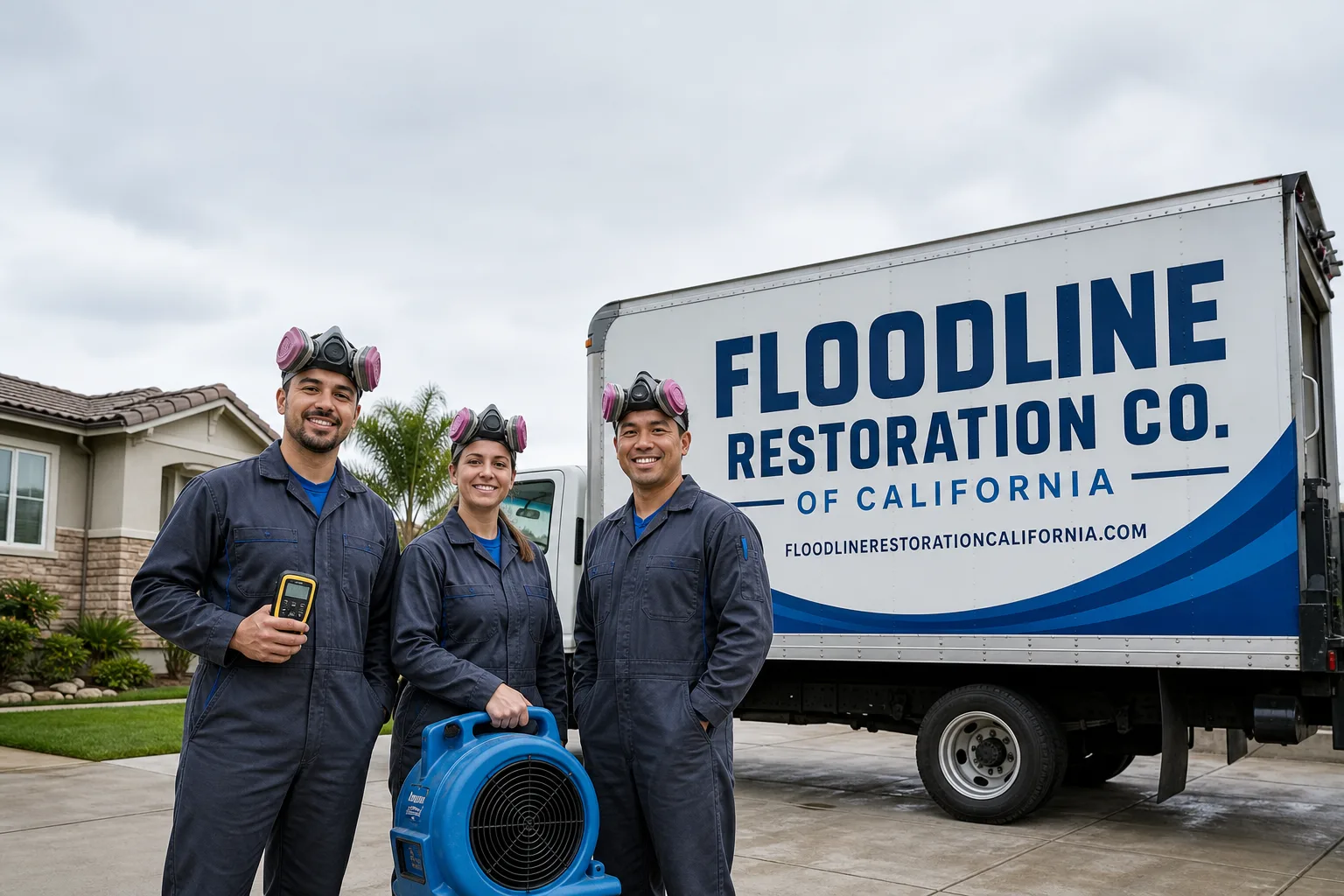
Fast, Reliable Mold Remediation Across Fillmore
Mold remediation in Fillmore, CA typically costs between $1,800 and $6,500 depending on the square footage affected, whether crawl spaces or subfloor framing are involved, and how far the moisture has traveled. Most jobs in Fillmore can be scoped within one visit and completed within three to five days once drying begins. If you’re seeing dark patches on walls, smelling musty air, or dealing with a recent water intrusion along the Santa Clara River corridor, call (888) 737-2439 and a live dispatcher will get a certified crew scheduled. We know Fillmore’s older homes, and we know what the winter debris flows leave behind.
Why Floodline Restoration Co. of California Is Fillmore’s Preferred Mold Remediation Company
We’ve worked in Fillmore long enough to know the difference between mold caused by a leaking bathroom vent and mold caused by silty debris-flow water pushing up under a 1930s pier-and-beam foundation. That distinction matters, because the cleanup is not the same. Fillmore homeowners call us after standard drying jobs fail, after air quality tests come back positive a second time, and after another company declared the job done without ever looking inside the subfloor assembly. Our crews are IICRC, RIA, and IFA trained, background-checked, and uniformed. Every job is backed by the 90-Day Done Right Promise, the Keystone Standard, in writing. No arguing. No paperwork battles.
Response time to Fillmore is measured in hours, not days. Dispatch is coordinated from our Los Angeles office, and our crews serve Fillmore directly. A live person answers the phone at 2 a.m., not a recording. That matters when a post-fire debris flow pushes contaminated water into the older downtown grid off Center Street and you need extraction running the same visit. We’ve handled the 1920s bungalows off Central Avenue, the postwar cottages near the high school, and the 1950s ranch homes between A Street and the river. Fillmore is small enough that we know the neighborhoods. Big enough that every job is different.
Our Mold Remediation Services in Fillmore
Mold Inspection & Testing
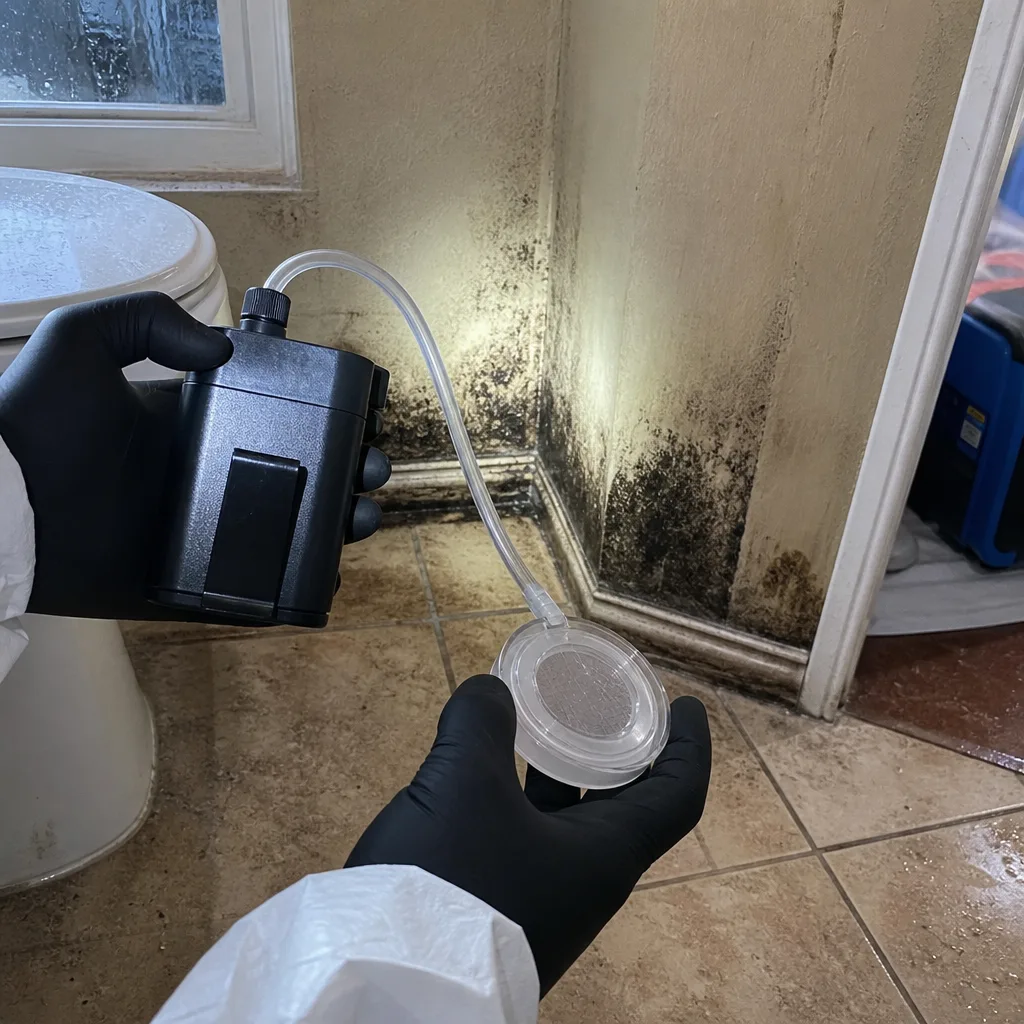
Mold inspection in Fillmore homes usually costs $300 to $600 when performed as a standalone service, and is often credited toward remediation if you proceed with us. We test air samples, surface samples, and most critically, we pull back the subfloor access panels in older pier-and-beam homes. Fillmore’s 1920s-1950s housing stock hides moisture under the floor long before it shows up on a wall. If the Thomas Fire burn scar has been sending debris-laden runoff toward your neighborhood, we’ll check the crawl space first, not last.
Mold Removal
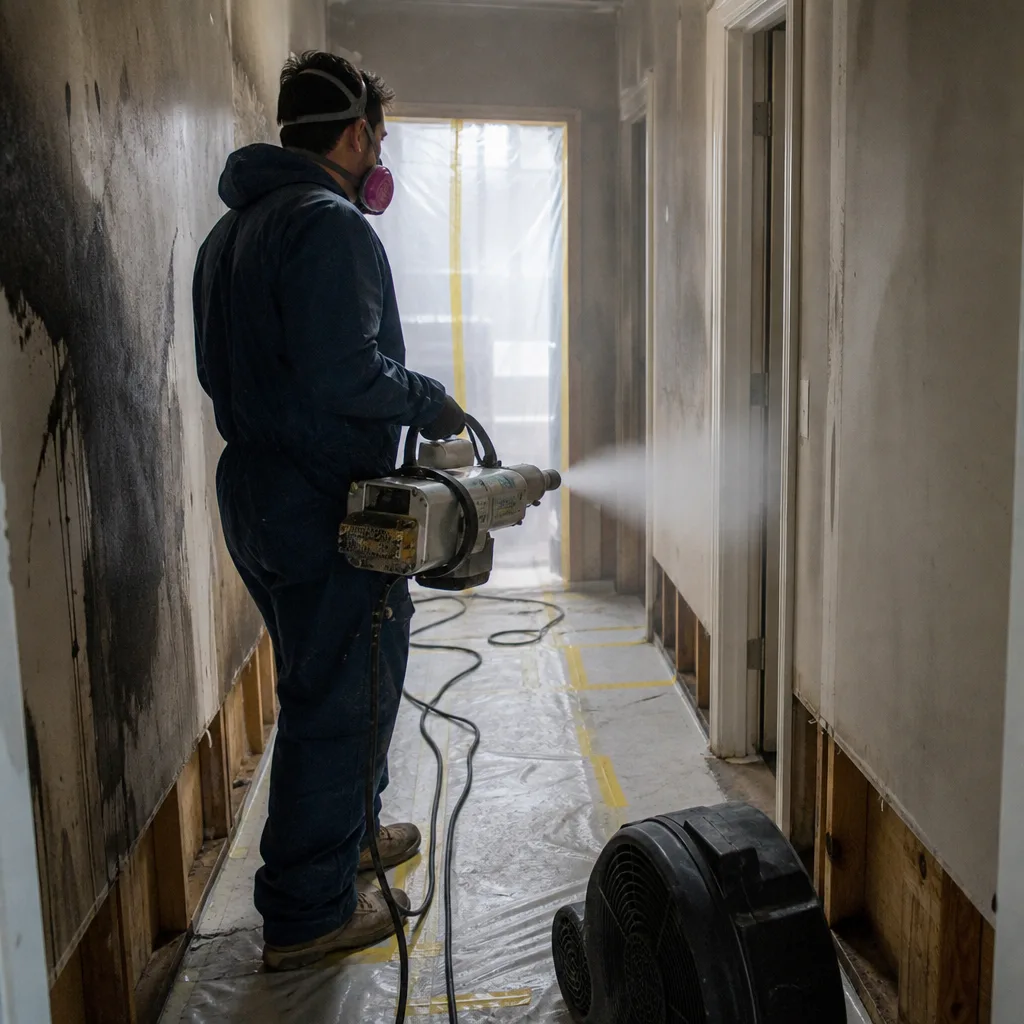
Mold removal in Fillmore typically runs $1,800 to $4,200 for a contained area like a bathroom, laundry room, or a single crawl space section. Full-house remediation, especially after floodwater has saturated original subfloor framing along the Santa Clara River corridor, runs $4,800 to $6,500 or more. We use HEPA filtration, negative air pressure, and professional-grade Dri-Eaz and Phoenix drying equipment. The line the water left is where we start, but the moisture map tells us where to stop.
Black Mold Remediation
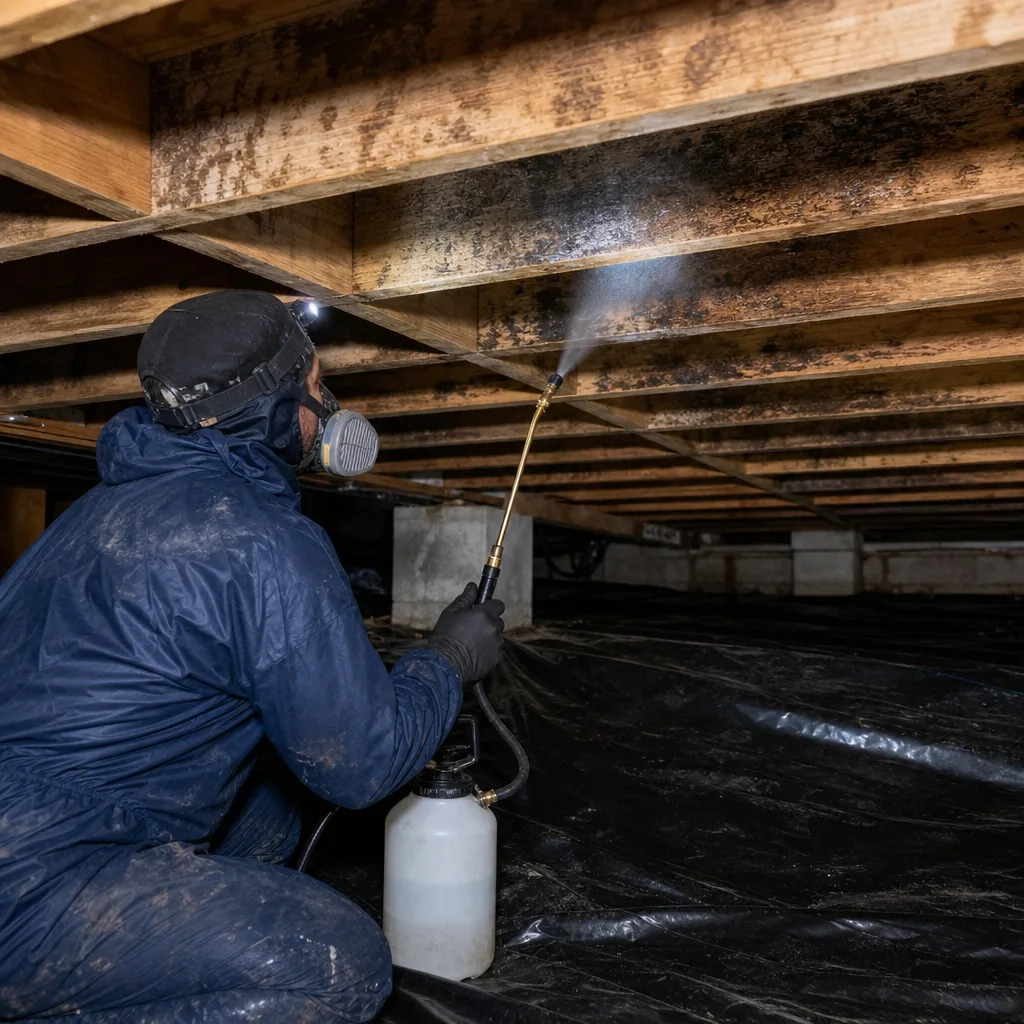
Black mold, or Stachybotrys, gets a lot of attention, but the health concern depends on the spore count and the individual’s sensitivity. What we see in Fillmore is that black mold colonizes the original galvanized plumbing runs and unsealed crawl space framing in older homes faster than it appears in newer construction. Black mold remediation in Fillmore typically adds $500 to $1,200 to a standard mold removal job because of the additional containment and clearance testing required. We do not cut corners on the clearance test. If it does not pass, we are not done, and the 90-Day Done Right Promise says so in writing.
Air Quality Restoration
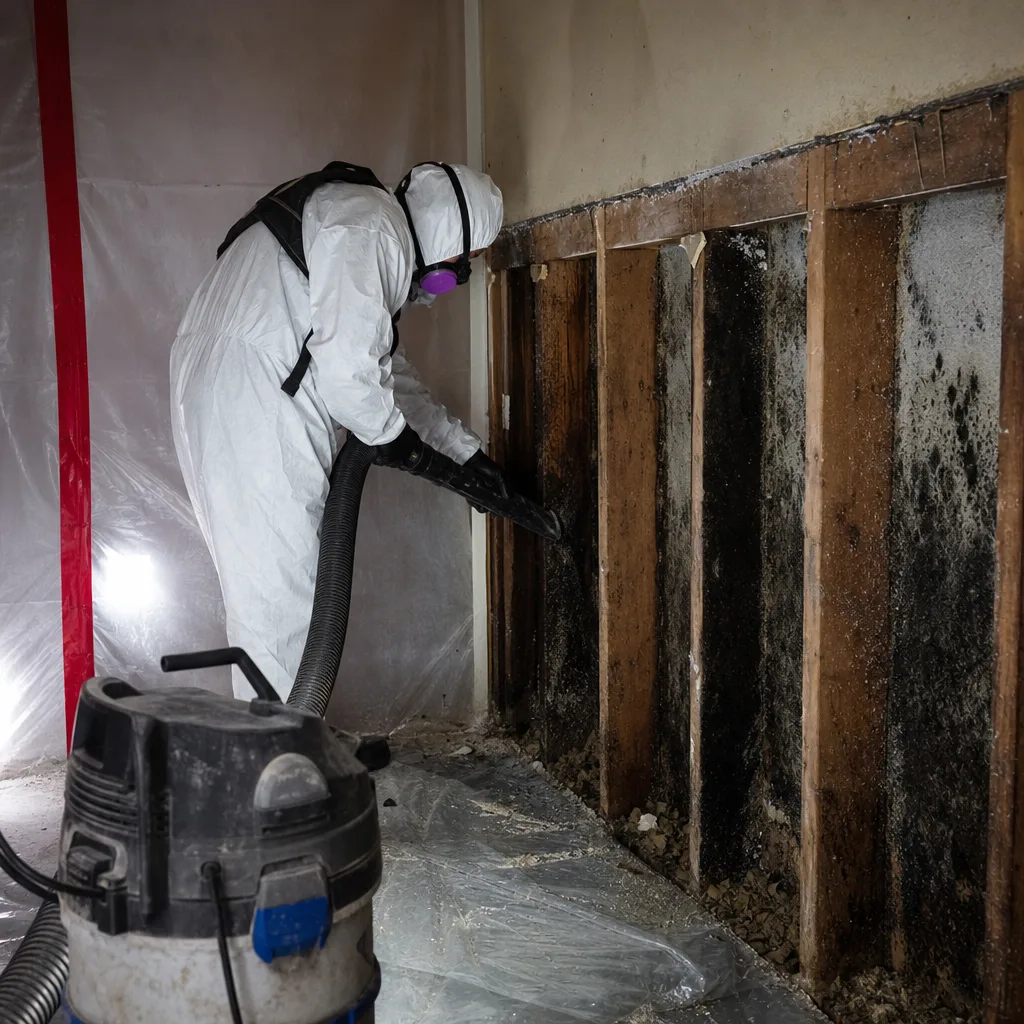
Air quality restoration in Fillmore means more than running a HEPA filter for a day. After mold is removed, the air in the home has to be scrubbed, dried, and rebalanced. We use commercial air scrubbers and dehumidifiers, then verify with post-remediation testing. Fillmore’s older homes with original subfloor assemblies often hold spore reservoirs in the underfloor airspace. That air moves up through the floorboards and wall cavities. If you skip the air quality restoration, you may still smell mold six weeks later. We see it happen after other companies finish. Our moisture log and daily readings go to you and to your insurance carrier, so nobody guesses.
What happens when you call
- 1
A real person answersNo phone trees - you reach a local pro.
- 2
You get an upfront price rangeHonest numbers before anyone is dispatched.
- 3
A background-checked tech heads outLicensed & insured, dispatched right away.
- 4
You approve before work beginsNothing starts until you say go.
Common Mold Remediation Problems We See in Fillmore Homes
- Hidden moisture in pier-and-beam subfloors. Fillmore’s 1920s-1950s bungalows and cottages were built on raised foundations with original subfloor framing. Water from debris flows or plumbing leaks collects there and never fully dries. Remediation crews that only dry visible surfaces leave a reservoir underneath that re-blooms weeks later.
- Sediment contamination from post-Thomas Fire runoff. When the burn scar above Fillmore sheds debris-laden water, that water carries organic matter: ash, charred wood particles, and fine silt. This is not clean floodwater. Standard mold cleanup that ignores sediment means the microbial load is not fully removed, and air quality testing still fails.
- Earthquake-patched masonry with inconsistent wall systems. Fillmore’s commercial and some residential masonry was repaired or rebuilt after the 1971 Sylmar and 1994 Northridge earthquakes. Those walls often have unsealed mortar joints and hidden voids where moisture sits. A structural drying plan that assumes uniform walls will miss mold thriving in those seams.
- Original galvanized plumbing that sweats and leaks. Many Fillmore homes still have their original galvanized pipes. As those pipes age, they sweat in the humid months and leak at the joints. That slow, continuous moisture feed keeps mold alive even after surface cleaning, unless the source is addressed during remediation.
Pricing for Mold Remediation in Fillmore, CA
Here are honest ranges for Fillmore’s market. A small contained mold removal, like a bathroom ceiling or a closet, runs $1,800 to $2,800. Crawl space treatment under a typical pier-and-beam Fillmore bungalow runs $2,500 to $4,500, depending on access and how much subfloor framing needs cleaning or replacement. Whole-home remediation after debris-flow flooding along the Santa Clara River corridor runs $4,800 to $6,500 on average. Larger jobs with structural drying, custom containment, or major reconstruction run higher, and we scope those in writing before work begins. Our mold remediation team does not surprise you on the bill. You get a written scope, direct insurance billing when applicable, and the $89 Seasonal Tune-Up or Senior & Veteran 5% discount where they apply. Call (888) 737-2439 for a free estimate. We’ll be there when we say.
Trusted Brands We Service in Fillmore
Because many Fillmore homes still have original fixtures and hardware from their citrus-era construction, parts availability matters. We keep common replacement parts in stock for the older wall and floor assemblies we encounter weekly, and our local supplier network covers the rest quickly. Our crews train to IICRC, RIA, and IFA standards, and they use Injectidry floor drying mats alongside Dri-Eaz and Phoenix dehumidifiers when subfloor framing needs deep drying. That combination, applied to a 1940s pier-and-beam floor, is the difference between a one-visit remediation and a recurring mold problem that comes back in the next rainy season.
We Serve Fillmore and the Surrounding Valley Communities
Beyond Fillmore, our mold remediation crews regularly work in Mold Remediation in Fillmore neighboring communities including Moorpark, Santa Paula, Simi Valley, and Camarillo. Each one has its own housing stock and moisture patterns, and we scope each job to the home, not the zip code. If you’re in Fillmore or nearby, the same live dispatch line at (888) 737-2439 gets you a certified crew.
Serving Fillmore, CA - Our Local Coverage Area
We’re based in the Fillmore area and know this community well. Use the map below to see our service coverage - if you’re nearby, we can almost certainly help.
FAQs - Mold Remediation in Fillmore
Mold returns because the moisture source was never fully addressed. In many Fillmore homes built between the 1920s and 1950s, the original pier-and-beam subfloor assembly holds moisture that surface drying never reaches. If the crew only treats visible mold on walls and ceilings, the subfloor reservoir re-blooms weeks or months later. We treat the source, not just the symptom, and we verify with moisture readings and air quality clearance before the job is closed.
Post-fire debris flow water is mold fuel. The 2017 Thomas Fire burned the chaparral on the slopes above Fillmore, and now even modest rain sends water loaded with ash, charred organic material, and fine sediment down into the valley. That water enters homes along Center Street, the older downtown grid, and the Santa Clara River corridor, carrying the exact organic matter mold needs to colonize quickly. Standard water damage scoping that ignores sediment contamination will routinely underestimate the remediation scope on Fillmore jobs.
It should not, if the remediation plan accounts for the wall system. Fillmore has a patchwork of pre- and post-earthquake construction after the 1971 Sylmar and 1994 Northridge events. Older masonry walls with unsealed mortar joints and hidden voids need a drying plan that reads those cavities, not one that assumes uniform wall sections. We document the wall condition before work starts and adjust containment and drying accordingly, so the cleanup removes mold without destabilizing anything the retrofits depend on.
Air quality testing is necessary, but it is not enough on its own. In Fillmore’s older pier-and-beam homes, spore reservoirs sit in the underfloor airspace and move up through floorboards and wall cavities. A passing air sample can be misleading if the subfloor was never checked. We combine air testing with surface sampling, visual inspection of the crawl space and subfloor assembly, and moisture readings until the dry standard is met. Only then do we run clearance testing.
Santa Ana winds accelerate fire spread and drive embers into older neighborhoods before anyone can respond. But they also dry surface moisture quickly, which can create a false sense that a home is fine. In Fillmore, the bigger mold risk comes after the wind event, when winter rains hit the burn-scarred slopes and send debris-laden water down into the valley. That water, not the wind itself, is what creates the mold conditions we see most often in this town’s older housing stock. If you suspect hidden moisture after any weather event, call (888) 737-2439 for a free estimate.
Written by Curt Bowman, Owner at Floodline Restoration Co. of California, serving Fillmore and the Santa Clara River Valley with mold remediation and full-cycle restoration.