
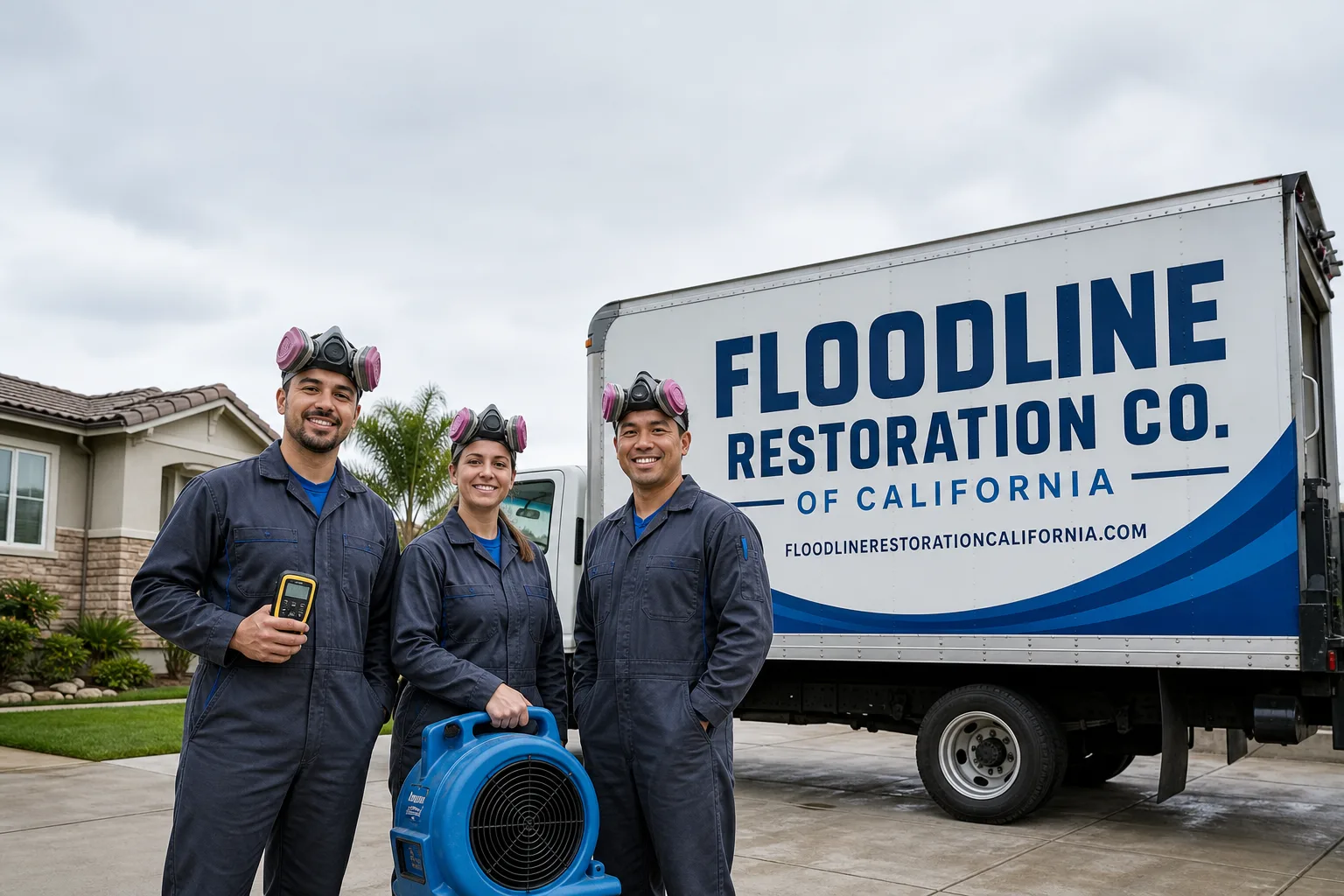
Fast, Reliable Storm & Disaster Restoration Across Fillmore
Storm and disaster restoration in Fillmore carries a specific set of risks that most restoration companies in Ventura County simply don’t prepare for. The 2017 Thomas Fire changed how water moves through this valley, and that changed what a proper restoration job looks like. We know what moves through Fillmore’s older bungalows when the Santa Clara River watershed sends debris-laden runoff down Center Street and through the downtown grid. A live person answers at (888) 737-2439 around the clock, and our crews reach most Fillmore properties within the hour.
Why Floodline Restoration Co. of California Is Fillmore’s Preferred Storm & Disaster Restoration Company
We approach every Fillmore job the same way: find the honest mark the water left, then stay on it until extraction, drying, and rebuild are finished by the same certified crew. No mid-job handoff to another company. No homeowner playing messenger with an insurance carrier. Our Storm & Disaster Restoration team has worked through enough post-fire flood seasons here to know that a standard scope, one that only tests for clear-water moisture, will miss what Fillmore floodwater actually carries. That’s the difference between a job done once and a job that starts smelling six months later.
Fillmore’s housing stock is largely pre-war bungalows and cottages with pier-and-beam foundations and galvanized plumbing, built during the citrus era when nobody imagined wildfire-scarred hillsides upstream. When those hillsides shed debris flows, the water that reaches 93015 and 93016 doesn’t behave like normal floodwater. Curt Bowman founded this company around a dispatch board, not a sales desk, and that matters when you’re standing in a flooded living room at midnight. Every technician is background-checked, uniformed, and certified to IICRC, RIA, and IFA standards. The 90-Day Done Right Promise is in writing, and we stand behind it.
Our Storm & Disaster Restoration Services in Fillmore
Storm Damage Cleanup
In Fillmore, storm damage cleanup rarely means just picking up branches. It means removing sediment-laden water that pushed through original subfloor assemblies, then documenting everything for your carrier with photo evidence and moisture readings. We do the full scope: debris removal, sediment extraction, structural drying. Done right, and backed in writing.
Flood Damage Restoration
This is the service that separates Fillmore jobs from nearby cities. Post-Thomas Fire floodwater here carries burned organic material, silt, and microbial load that clear-water restoration protocols don’t address. We dry pier-and-beam crawl spaces with Dri-Eaz dehumidifiers and Injectidry floor mats after first removing the sediment, then treat framing with antimicrobials. Our Storm & Disaster Restoration in Fillmore work always includes a moisture log handed to you and your adjuster.
Emergency Board-Up
When the valley’s Santa Ana winds accelerate, a broken window or punctured wall becomes an open invitation for embers, rodents, and more water. Our crews secure openings quickly with professional-grade materials, then schedule the repair scope in writing. No surprises on the bill.
Roof Tarping
In Fillmore, the wind funnels down from the Los Padres slopes fast. Waiting even an hour after a storm front passes can turn a contained roof leak into widespread interior damage. We tarp roofs same-day, using materials that hold against the next wind event, not just the current one. Roof tarping here isn’t a stopgap; it’s the single fastest step that prevents a full interior rebuild.
What happens when you call
- 1
A real person answersNo phone trees - you reach a local pro.
- 2
You get an upfront price rangeHonest numbers before anyone is dispatched.
- 3
A background-checked tech heads outLicensed & insured, dispatched right away.
- 4
You approve before work beginsNothing starts until you say go.
Trusted Brands We Service in Fillmore
We work across all major equipment and material brands found in Fillmore homes, so no job stalls waiting for parts that have to be ordered from out of state. Our technicians are certified to IICRC, RIA, and IFA standards, and we run Dri-Eaz, Phoenix, XPOWER, B-Air, and Injectidry equipment on Fillmore jobs. If your home still has original hardware from the 1940s or 1950s, we assess whether it can be dried and saved or whether replacement is the more honest recommendation. Either way, you’ll know the square deal before work starts.
Common Storm & Disaster Restoration Problems We See in Fillmore Homes
- Sediment contamination underestimated. Standard water-damage scopes test for clean-water moisture but ignore the silty debris and microbial load from burned watersheds. In Fillmore, that oversight leaves persistent odor and hidden mold in pier-and-beam subfloors.
- Assumed uniform pre-1994 construction. Fillmore’s patchwork of buildings that survived or were rebuilt after the 1971 Sylmar and 1994 Northridge earthquakes means water travels differently through walls and foundations. A structural drying assessment that doesn’t account for post-quake retrofits will either under-dry or demolish unnecessarily.
- Delayed roof tarping during Santa Ana events. The valley amplifies wind, pushing embers and debris toward structures quickly. A one-hour delay after a storm front passes can expand a small roof leak into whole-room wind-and-water damage.
- Original galvanized plumbing failing during floods. Many 1920s-1950s Fillmore homes still have original galvanized supply lines. Flood pressure and shifting pier-and-beam foundations can crack these lines, adding clean-water leaks on top of contaminated floodwater. We check this every time.
Pricing for Storm & Disaster Restoration in Fillmore, CA
We Also Serve Cities Near Fillmore
We handle storm and disaster restoration in Moorpark, Santa Paula, Simi Valley, and Camarillo as well. Fillmore’s post-fire watershed conditions are unique, but our crews cross into surrounding communities whenever the job calls for it.
Serving Fillmore, CA - Our Local Coverage Area
We’re based in the Fillmore area and know this community well. Use the map below to see our service coverage - if you’re nearby, we can almost certainly help.
FAQs - Storm & Disaster Restoration in Fillmore
Why does Fillmore flood more often now than before 2017, even during normal rainstorms?
The Thomas Fire stripped chaparral from the upstream Los Padres National Forest slopes, leaving burn-scarred soil that repels water instead of absorbing it. Even modest rain now sends debris flows toward lower-lying Fillmore streets along the Santa Clara River corridor that never flooded before. If your neighborhood flooded recently for the first time, that’s why. Call (888) 737-2439 and we’ll scope it correctly the first time.
Does the floodwater in Fillmore carry more than just water?
Yes. Post-fire floodwater in Fillmore carries silt, burned organic debris, and microbial load from the upstream watershed. That means a standard clear-water drying protocol will leave hidden contamination in subfloors and crawl spaces. Our crews remove sediment first, then dry, then treat with antimicrobials. It’s the only sequence that works on Fillmore jobs.
How quickly do we need to tarp a roof after wind damage in Fillmore?
Same day, ideally within hours. The Santa Ana winds that funnel through the valley will keep working on any opening, pulling more moisture and debris into the structure. We dispatch roof tarping crews to Fillmore properties immediately, because each passing hour expands the repair scope and the final bill.
Are old pier-and-beam foundations in Fillmore more at risk in a flood?
Yes, significantly. The original pier-and-beam foundations under Fillmore’s 1920s-1950s bungalows have open crawl spaces that collect floodwater, sediment, and organic debris quickly. Once that material sits against wood framing, drying becomes a much longer process. We use Dri-Eaz dehumidifiers and Injectidry mats to dry those subfloors correctly.
Should we repair or replace original building materials in a Fillmore storm-damaged home?
That depends on what you have and what the water brought in. Original hardwood, plaster walls, and early subfloor assemblies can often be saved if sediment is removed before drying begins. If contaminated water sat against original materials for days, replacement is sometimes the more honest recommendation. We’ll tell you the straight truth, in writing, with a scope you approve before work starts. Call (888) 737-2439 to talk it through.
Written by Curt Bowman, Owner at Floodline Restoration Co. of California, serving Fillmore and surrounding communities.