
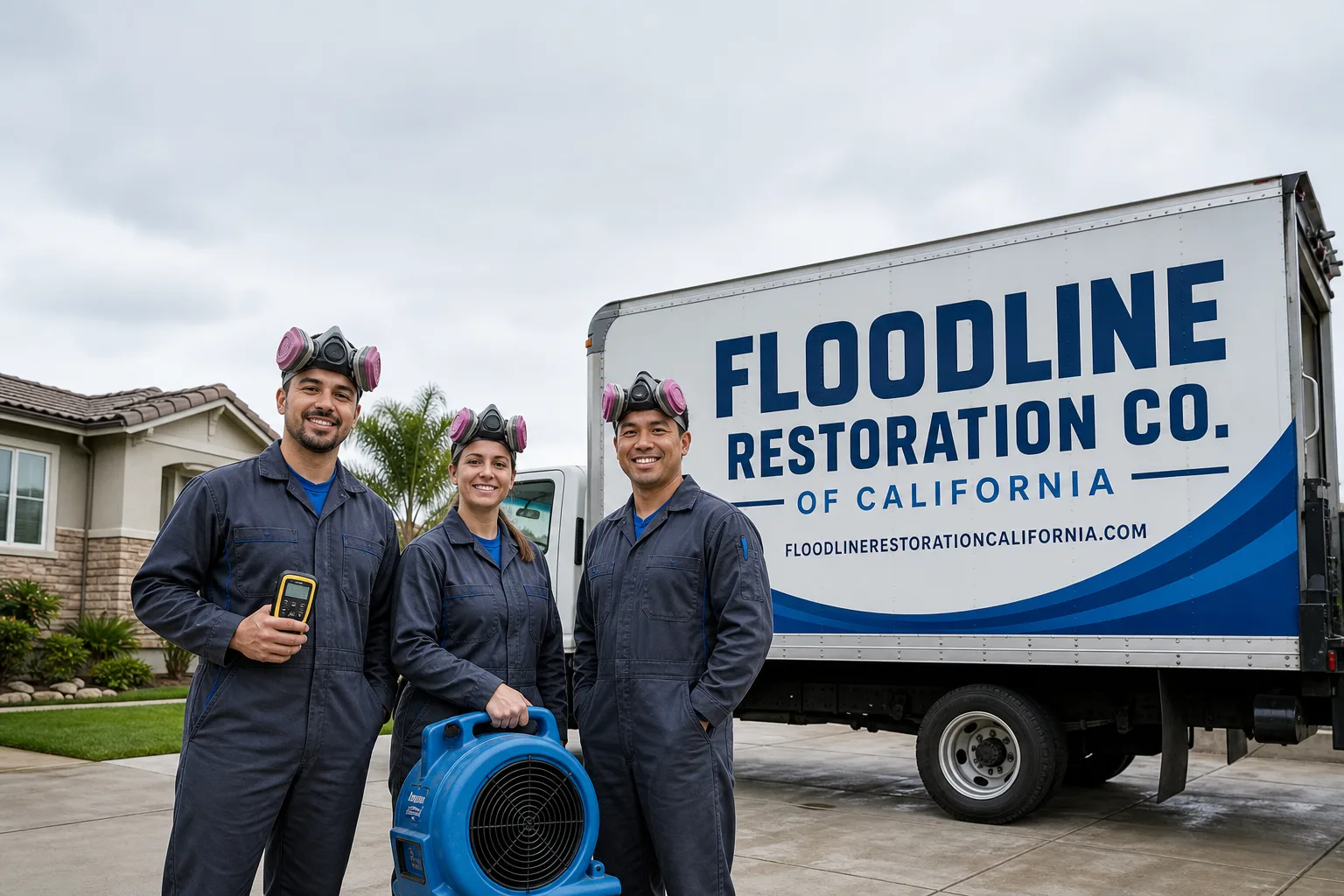
Fast, Reliable Mold Remediation Across Brea
Mold remediation in Brea usually costs $1,800 to $6,500 depending on where the colony sits and how far it has spread, with crawl space and sub-slab work at the higher end. Most Brea jobs finish in two to five days once containment goes up. If you’ve spotted staining on drywall, smelled that musty odor that won’t leave, or just had a supply line let go inside a wall, call (888) 737-2439 and a live dispatcher will route a certified crew to your ZIP code, same day in most cases.
We know Brea’s housing stock because we’ve worked inside it for years: 1950s and 1960s tract homes off Imperial Highway, hillside builds in Olinda Ranch, canyon properties along Carbon Canyon Road. The mold problems these houses develop are not the same, and treating them as interchangeable is how recurrences happen. We don’t do that.
Why Floodline Restoration Co. of California Is Brea’s Preferred Mold Remediation Company
Floodline Restoration Co. has been handling water and mold damage since 2010, built around a dispatch board, not a sales desk. When a Brea homeowner calls at midnight with a bathroom supply line spraying into a wall cavity, a real person answers, a certified crew loads up, and extraction starts the same visit. That matters in Brea, where a 1960s stucco-over-frame house will wick water through wall cavities fast, and every hour of delay means more drywall to cut out later.
Our Mold Remediation team is trained to IICRC, RIA, and IFA standards. They show up in uniform, background-checked, and they carry Dri-Eaz, Phoenix, and Injectidry equipment sized for the job, not whatever fits in the van. The work is backed by the 90-Day Done Right Promise, our written guarantee: if it is not done right, we make it right. No arguing, no paperwork battles. We stand behind it. Senior and veteran homeowners in Brea always receive 5% off, and any repair over $250 carries a $50 discount.
We serve all three Brea ZIP codes, 92821, 92822, and 92823, from the flats north of the 57 up through the canyon. Dispatch and scheduling run from our Los Angeles office; the crews work local. When you call, you’re not getting routed through a national call center. You’re talking to someone who knows that a moisture problem in an Olinda Ranch hillside home is a different animal than one in a 1960s tract slab off Central Avenue.
Our Mold Remediation Services in Brea
Mold Inspection & Testing
We start every Brea mold job by finding the water source. Not the stain, the source. In 92821 tract homes, that often means pinhole leaks in original galvanized supply lines or failed early copper joints that have been weeping inside wall cavities or under slabs for months. We use moisture meters and thermal imaging to map the wet zone, then pull air and surface samples. You get a written scope and a moisture map before any drywall comes down.
Mold Removal
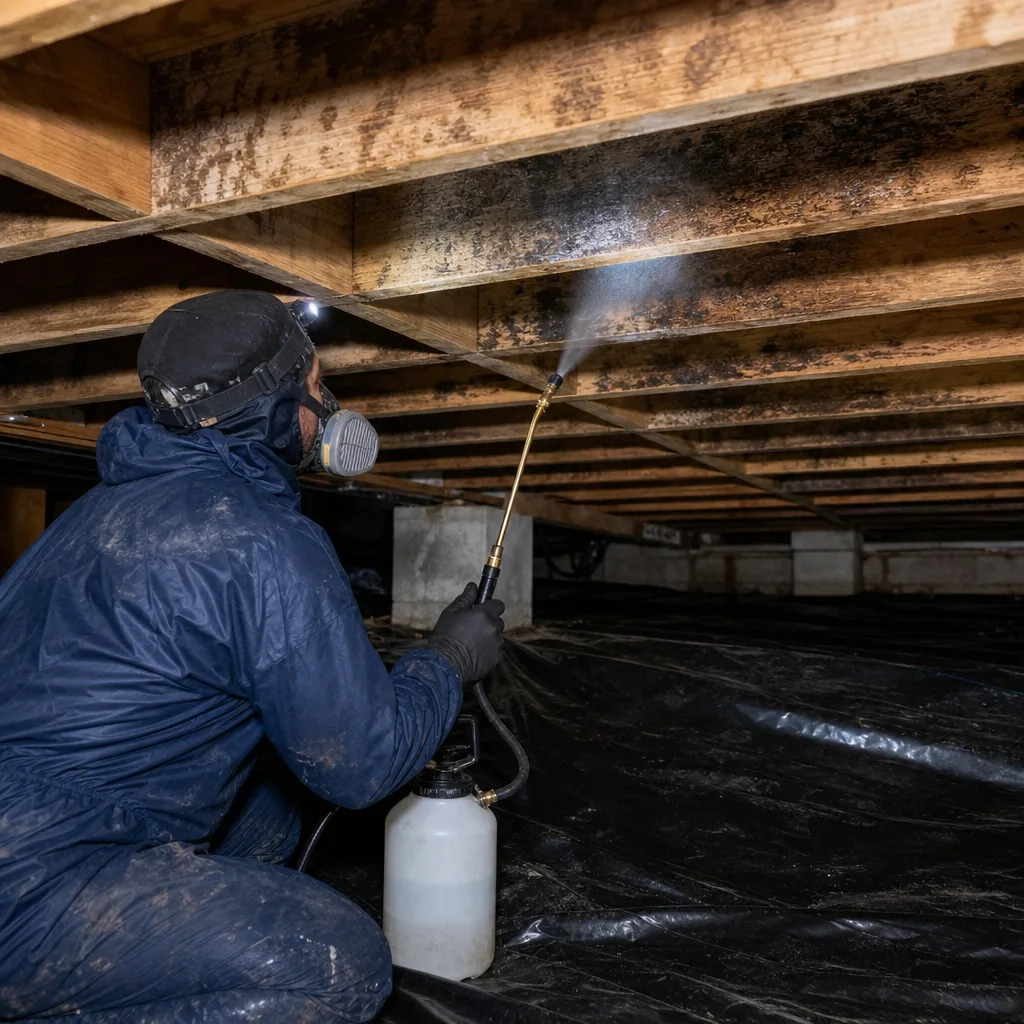
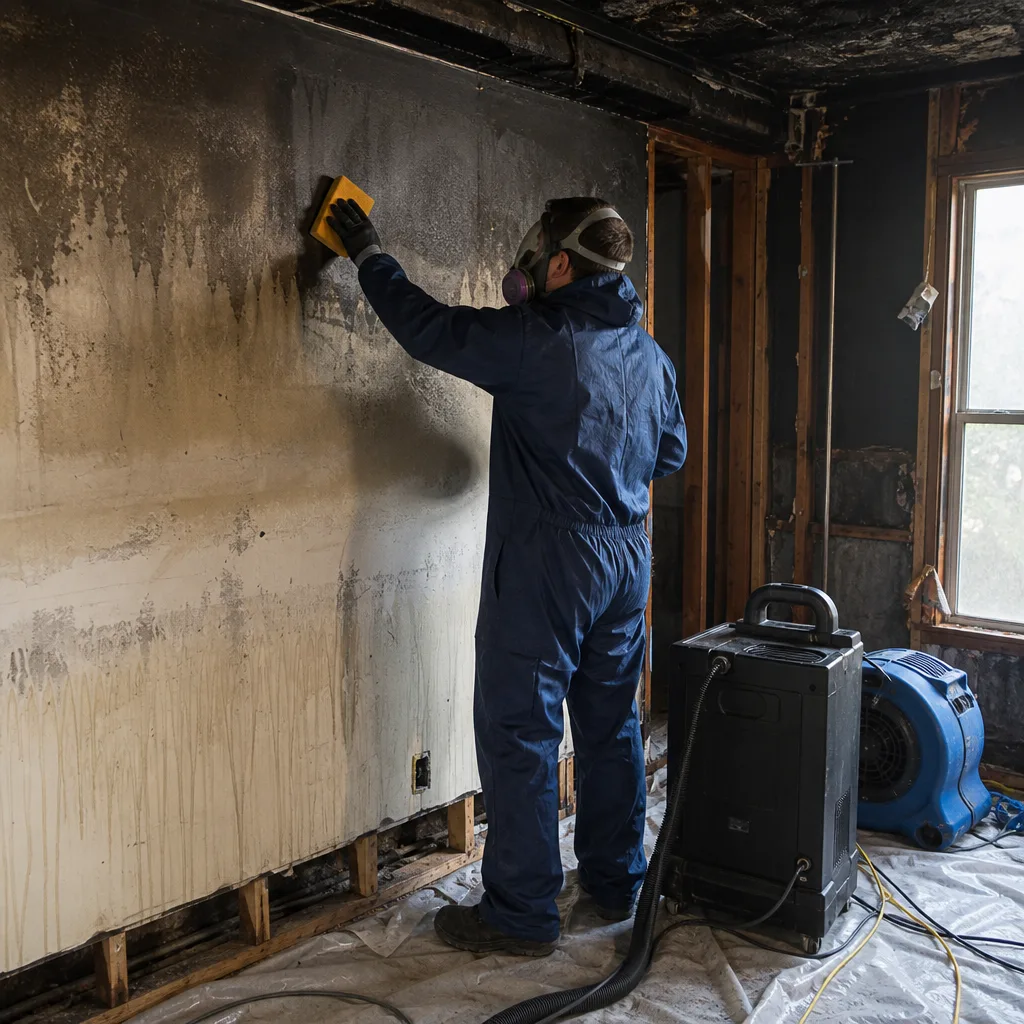
Removal in Brea means physical extraction: cutting out affected drywall, wire-brushing framing, HEPA-vacuuming cavities, and applying an EPA-registered antimicrobial. We contain the work area with negative air so spores don’t travel through your HVAC returns into the rest of the house. On stucco-over-frame homes, which make up most of Brea’s flatland neighborhoods, we check the exterior stucco for micro-cracks that let winter rain re-wet the same wall cavities. Fix the source, fix the colony, keep it from coming back.
Black Mold Remediation
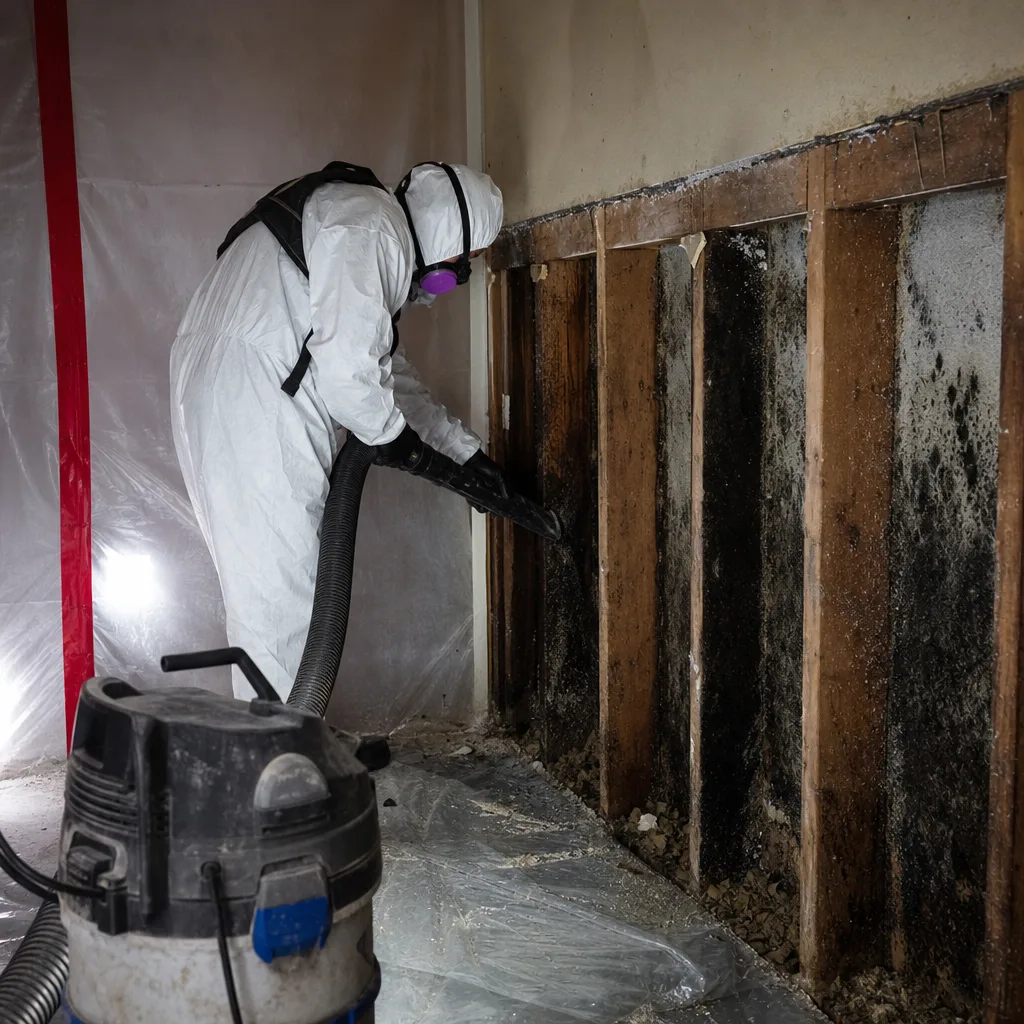
Black mold, Stachybotrys chartarum, grows on material that has stayed wet for days or weeks. In Brea, we find it behind baseboards in bathrooms with failed wax rings, under kitchen sinks with slow supply-line drips, and inside wall cavities fed by slab leaks. It is genuinely hazardous, especially for older homeowners and anyone with respiratory conditions. We follow full containment protocol: HEPA air scrubbers, negative pressure, proper PPE, and clearance testing before we pull the containment down.
Air Quality Restoration
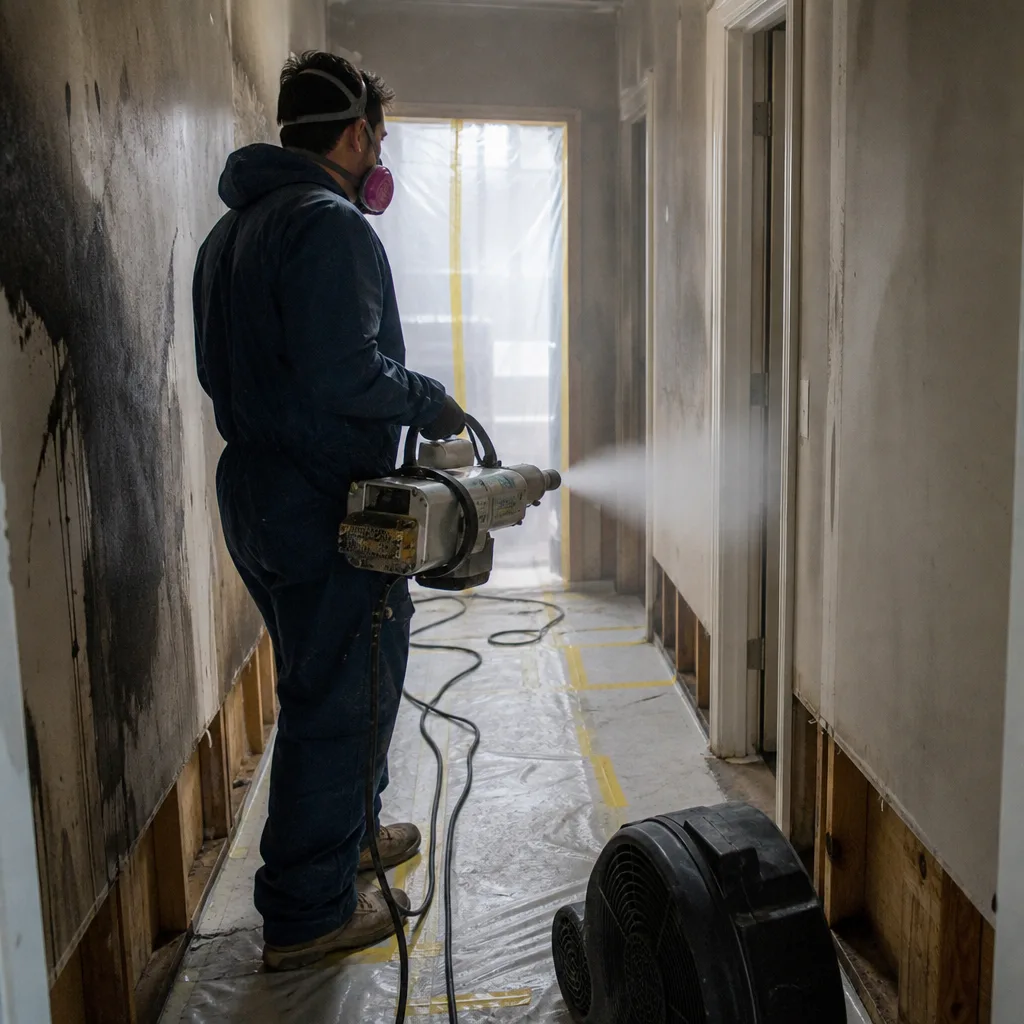
After remediation, the air in your house has to read clean. We run post-remediation verification with air sampling and compare it against outdoor baseline counts for your Brea neighborhood. If your home sits on the flatland side of town, you’re breathing air mixed with regional smog and freeway particulates from the 57, but your indoor spore counts should still be below outdoor levels. We do not hand back a house that fails that test. The 90-Day Done Right Promise covers this work, in writing.
We also handle Mold Remediation in Brea for crawl spaces, attics, and the tight, hard-to-reach areas behind water heaters and under laundry rooms, places mold loves in older tract construction where original venting was never great.
What happens when you call
- 1
A real person answersNo phone trees - you reach a local pro.
- 2
You get an upfront price rangeHonest numbers before anyone is dispatched.
- 3
A background-checked tech heads outLicensed & insured, dispatched right away.
- 4
You approve before work beginsNothing starts until you say go.
Common Mold Problems We See in Brea Homes
- Corroded galvanized supply lines under 92821 slabs. Brea’s water has moderate hardness, and fifty-year-old galvanized pipe builds scale from the inside out. When pinholes form, water seeps into the slab and under flooring for months before you see anything. By the time the stain shows, mold is often thriving in the subfloor cavity.
- Hillside water intrusion in 92823. Puente Hills clay expands and contracts with rain cycles, opening micro-cracks in foundation walls and retaining structures. Stormwater finds those cracks, wets the wall cavity, and mold follows. Homes built into steep terrain in Olinda Ranch and along Carbon Canyon Road see this cycle repeat every wet winter.
- Post-wildfire moisture and debris effects. Carbon Canyon is a CalFire Very High Fire Hazard Severity Zone. After fire years, winter rains run down denuded slopes and push debris against foundation walls, wicking moisture into framing. That water, trapped behind stucco or siding, is exactly where hidden mold takes hold within weeks.
- Repeated surface-only remediation by prior contractors. We regularly follow other crews in Brea who sprayed a stain, painted over it, and left. The colony was never removed at the source. If a previous contractor did not show you moisture readings and post-remediation air clearance results, the mold probably never left.
Trusted Equipment, Trusted Standards, Local Know-How
We run professional-grade drying and remediation equipment on every Brea job: Dri-Eaz LGR dehumidifiers, Phoenix axial air movers, Injectidry panel systems for wall cavities and under-cabinet drying, XPOWER HEPA air scrubbers. Our techs train to IICRC, RIA, and IFA standards, which means the containment is built right, the negative air is actually negative, and the clearance sample means something. We don’t cut corners on equipment because 1960s drywall falls apart when you get aggressive, and hillside framing does not forgive guesswork.
Pricing for Mold Remediation in Brea, CA
Most Brea mold remediation jobs land between $1,800 and $6,500. Here’s how that breaks down on the ground:
- Inspection & testing only: $350 to $700, including moisture mapping and air or surface sampling with third-party lab analysis.
- Small contained removal, one wall cavity or bathroom ceiling: $1,200 to $2,400.
- Full-room remediation with containment, HEPA scrubbing, drywall replacement, and clearance testing: $3,500 to $6,500 depending on square footage.
- Crawl space mold remediation with encapsulation and dehumidification: $4,000 to $9,000 in Brea, higher on hillside 92823 homes where access and drainage add labor.
- Sub-slab moisture and mold from leaking supply lines: $5,000 to $12,000 because it usually means opening the slab, repairing pipe, and rebuilding the floor system.
Every quote includes a written scope, a moisture map, and a line-item breakdown before work starts. No surprises on the bill. We bill your insurance carrier directly when the loss is covered, and you get photo documentation for every phase, ready for your adjuster. Estimates are free: call (888) 737-2439.
We Also Serve Cities Near Brea
Our crews work the same ZIP codes regularly, so we reach Placentia, Rowland Heights, Fullerton, and Yorba Linda just as fast as we reach Brea. If you’re on the border of Brea and one of these cities, call anyway, and our dispatch will confirm coverage and response time for your street. (888) 737-2439, live, any hour.
Serving Brea, CA - Our Local Coverage Area
We’re based in the Brea area and know this community well. Use the map below to see our service coverage - if you’re nearby, we can almost certainly help.
FAQs - Mold Remediation in Brea
Flatland 92821 homes sit on slabs over soils repeatedly wetted by leaking galvanized or copper supply lines, so the dominant mold profile is hidden sub-slab and wall-cavity colonies fed by plumbing failures. Hillside 92823 homes face water intrusion at foundation walls from Puente Hills clay expansion and post-fire debris-flow runoff, so the dominant profile is retained-earth wall wetting and hidden colonies behind finish materials. Each needs a different diagnostic starting point; treating both the same way misses the source and guarantees recurrence.
It rarely affects interior mold remediation directly, but it does matter if your remediation involves excavation, sub-slab access, or foundation work. Any ground disturbance in parts of 92823 may require checking mapped oil-field infrastructure and Air Quality Management District notification for hydrocarbon-impacted soil. We handle that permitting conversation so you don’t have to. Call (888) 737-2439 and we’ll tell you if your address is affected before anyone digs.
Fires burn off the vegetation that holds Carbon Canyon slopes together. The following winter’s rains run faster down those slopes, dragging debris and ash against foundation walls and into crawl spaces. That debris wicks moisture into framing for months. Any Brea home in the 92823 canyon corridor that has survived a nearby fire needs a moisture check on the downhill foundation wall and crawl space within the first wet season after the burn, even if no fire touched the house directly.
Yes, in our field experience, and for a straightforward reason: the supply lines in 1950s to 1970s Brea tract homes are original galvanized or early copper, now failing from decades of hard water exposure. Those small, slow leaks create the weeks-long wet conditions Stachybotrys needs. The Olinda Ranch houses are on newer plumbing and tighter foundations, so when they do get mold, it is more often from stormwater intrusion than from a weeping joint inside a wall. Call (888) 737-2439 for a moisture inspection if your tract home is over forty years old.
Ask for post-remediation verification with indoor spore counts measured against an outdoor baseline taken the same day in your Brea neighborhood. Indoor counts should be equal to or lower than outdoor counts, and water-indicating mold types should not be present indoors at elevated levels. Any contractor who will not put that clearance in writing has not finished the job. Our 90-Day Done Right Promise includes that standard, spelled out before work begins. Call (888) 737-2439 for a free estimate.
One Brea-Specific Failure We See Constantly, and the Fix
We pulled mold-laden drywall from a 1963 stucco-over-frame home in the 92821 tract off Imperial Highway after a pinhole leak in original galvanized supply piping had been weeping inside a wall cavity for months. The homeowner had no idea anything was wrong until paint started bubbling behind the sofa. Our techs removed the affected area, dried the cavity with a Dri-Eaz LGR 7000 and an Injectidry panel system, then fogged with an EPA-registered antimicrobial before placing a Phoenix dehumidifier to hold the room below 45% RH. That house is dry today, with a written guarantee to prove it.
That scenario repeats all over Brea’s flatland neighborhoods, because the plumbing that built these houses is now past its service life. If your home is forty to seventy years old, the question is not whether a supply line will fail, it is when, and whether moisture is already feeding a colony you have not seen yet. We answer that question with meters, not guesswork.
Written by Curt Bowman, Owner at Floodline Restoration Co., serving Brea since 2010.