
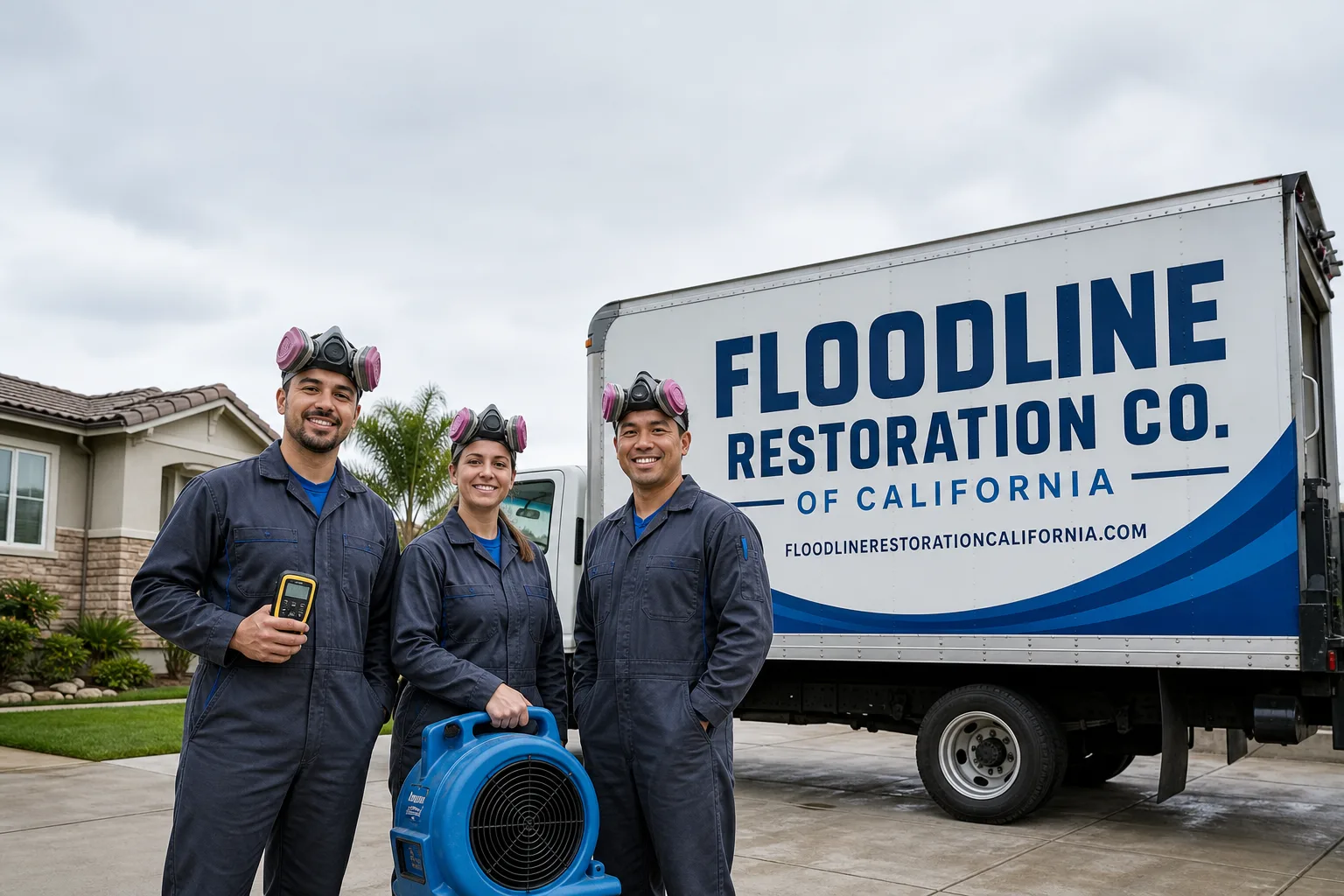
Water Damage Restoration in Watsonville, CA: Fast, Honest Work When You Need It
Water damage restoration in Watsonville means dealing with a set of conditions you won’t find in most California cities. The Pajaro River levee system has failed repeatedly, the marine fog keeps humidity high nearly every day, and much of the housing stock predates modern moisture barriers. That combination means water doesn’t just soak things here. It breeds mold fast, carries agricultural runoff into living spaces, and hides in lath-and-plaster walls that a generic drying crew never opens. Floodline Restoration Co. of California has handled every phase of that problem since 2010. If water is rising or a pipe has let go in your home, call (888) 737-2439 and you’ll reach a live dispatcher, not a recording. A certified crew can be on the road to Watsonville the same call.
What Water Damage Restoration in Watsonville Actually Costs
Here’s the direct answer most homeowners need first. Water damage restoration in Watsonville typically runs between $1,800 and $6,500 for a standard single-room extraction and structural drying job. A full flood cleanup after Pajaro River overtopping, with agricultural contamination documentation and wall-cavity drying, commonly lands between $8,000 and $22,000 depending on square footage and how much framing was exposed. A ceiling leak from a winter atmospheric river storm usually runs $900 to $2,400 when caught before water reaches the flooring. Those numbers include equipment, daily moisture readings, and the written moisture log we hand to you and your carrier.
| Service | Typical Watsonville Range |
|---|---|
| Emergency water extraction (single room) | $700-$1,600 |
| Structural drying & dehumidification (per affected area) | $1,200-$3,800 |
| Flood cleanup with ag-runoff documentation | $4,000-$14,000+ |
| Burst pipe restoration (drywall + cavity drying) | $2,000-$7,500 |
| Ceiling leak from storm damage | $900-$2,400 |
The biggest cost variables in Watsonville are whether Pajaro River floodwater is involved, whether your home has original plaster-and-lath construction, and whether mold has already colonized framing. That last one moves fast here. We’ll get into why below. Call (888) 737-2439 for a free estimate on your specific situation. No sales pressure, no surprise line items.
Why Watsonville Homes Need a Different Kind of Water Damage Restoration
Most water damage companies treat every job like a burst pipe in a newer tract home. That approach fails in Watsonville. Our Water Damage Restoration team has worked enough jobs in the 95076 and 95077 zip codes to know what a drying plan has to account for here, and what it can’t skip.
The first thing is speed, and not just because water spreads. Watsonville sits at the inland terminus of the Monterey Bay funnel, which means near-daily marine fog and elevated humidity year-round. Unlike drier inland cities such as Salinas, Watsonville’s humidity causes mold to colonize wet drywall and framing within 48 to 72 hours after a flood event, not the typical 5 to 7 days. That cuts your response window nearly in half. It also means our techs run professional-grade Dri-Eaz, Phoenix, and Injectidry equipment harder and longer than they would in a drier city, because the ambient air here is already working against the drying process.
The second thing is contamination. When the Pajaro River levee overtopped in March 2023, the water that poured through downtown and residential neighborhoods wasn’t clean river water. It carried strawberry-field irrigation runoff, pesticide residues, fertilizer compounds, and sediment into homes. That’s a Category 3 blackwater event with an agricultural-chemical profile, not a simple sump failure. We document that contamination using both IICRC Category 3 protocols and Cal/OSHA agricultural chemical exposure standards. Dual documentation matters when your insurance carrier reviews the claim. Out-of-area franchise crews often skip the ag-chemical piece entirely because they don’t know the Pajaro Valley’s contamination profile. We do.
Floodline Restoration Co. of California: Built Around a Dispatch Board, Not a Sales Desk
Floodline Restoration Co. was founded in 2010 by Curt Bowman, and it’s stayed independent since day one. We’re not a franchise with rotating crews from three counties away. Our techs are background-checked, uniformed, and trained to IICRC, RIA, and IFA standards. They carry professional-grade Dri-Eaz, Phoenix, XPOWER, B-Air, and Injectidry equipment on every truck. And when you call (888) 737-2439 at 2 a.m. because a pipe burst inside a wall, a live person picks up. Not a voicemail. Not an answering service that takes a message. A dispatcher who can put a certified crew on the road to Watsonville that same visit.
We stand behind every job with the 90-Day Done Right Promise. It’s a written guarantee, known internally as the Keystone Standard, tied to our K.E.Y.S. values code: Krafted right, Every time, Your home first, Standing behind it. If something isn’t done right, we make it right. No paperwork battles. No arguing about what was in the scope. We also handle direct insurance billing, so you never play messenger between us and your adjuster. We take photo documentation on every job, coordinate directly with your carrier, and hand you a written scope before any work begins. That’s a square deal, and it’s how we’ve operated for years across the Pajaro Valley.
Our Water Damage Restoration Services in Watsonville
Emergency Water Extraction
When water is active in your Watsonville home, the first job is getting it out. Our crews arrive with truck-mounted extraction units and portable Dri-Eaz extractors sized for tight downtown lots and alley-load situations. We’ve pulled standing water from basements on Marchant Street, slab homes near Freedom Boulevard, and cracked foundations in the older neighborhoods south of Main Street. Extraction starts the same visit. The line the water left is where we start.
Structural Drying & Dehumidification
This is where Watsonville’s humidity changes the math. Standard drying plans assume ambient air will help pull moisture out of drywall and framing. In Watsonville, ambient air often works against you, especially from May through October when the marine layer sits over the Pajaro Valley all day. We run Dri-Eaz LGR dehumidifiers and Phoenix air movers at higher capacity and for longer cycles than we would in a drier climate like Salinas. Every day we take moisture readings, log them, and adjust placement until the dry standard is met. You get the log. Your carrier gets the log. No guesswork.
Flood Cleanup
Pajaro River flooding is not a hypothetical in Watsonville. It happened in 1995, again in 2023, and the levee system has not been fully modernized. Flood cleanup here means removing contaminated water and sediment, documenting agricultural chemical exposure, cutting and removing saturated insulation and drywall that can’t be dried, and treating structural cavities before mold gets a foothold. We don’t just dry the surface. We open what needs opening, document what we find, and rebuild what we remove. One crew handles all of it.
Burst Pipe Restoration
Watsonville’s older housing stock has a lot of original galvanized and copper piping that’s been patched, re-patched, and deferred for decades. A burst pipe in a 1920s Victorian near downtown isn’t a simple drywall job. Water travels inside plaster-and-lath cavities and behind original baseboards and wainscoting. Our Injectidry wall-drying systems pull moisture from those cavities without requiring us to tear out original plaster in every wall. We save what can be saved, and we tell you honestly what can’t.
What happens when you call
- 1
A real person answersNo phone trees - you reach a local pro.
- 2
You get an upfront price rangeHonest numbers before anyone is dispatched.
- 3
A background-checked tech heads outLicensed & insured, dispatched right away.
- 4
You approve before work beginsNothing starts until you say go.
Common Water Damage Restoration Problems We See in Watsonville Homes
- Mold colonizing faster than restorers expect. Near-daily marine fog and humidity mean mold appears in 48 to 72 hours, not the 5 to 7 days seen in drier inland cities. If a drying plan isn’t aggressive from hour one, you’re already behind.
- Pajaro River floodwater treated like ordinary Category 3 water. Out-of-area crews don’t test for pesticide or fertilizer residue, leaving hidden contamination that can void an insurance claim later. This is a Watsonville-specific failure mode we document from the first visit.
- Pre-1940 homes with unopened lath-and-plaster cavities. Technicians dry the visible drywall and leave the wall cavity wet, allowing mold to colonize behind original wainscoting and baseboards. We use Injectidry systems to reach those cavities without unnecessary demolition.
- Blocked access on narrow downtown lots. Crews park blocking driveways or alley-loaded doors, and hoses cross neighboring property lines without permission, triggering access disputes that delay extraction. We stage equipment for tight clearances and get written permission before any hose crosses a neighbor’s lot.
Why Watsonville’s Housing Stock Changes the Restoration Approach
Watsonville’s building inventory splits into two categories, and both demand a different protocol than a standard water damage call in a newer subdivision. The city holds a notable number of pre-1940 Victorian and craftsman-era homes near the historic downtown. Many of those houses were patched but not fully modernized after the 1989 Loma Prieta earthquake. Their original plaster-and-lath walls, old-growth framing, and unventilated wall cavities create exactly the conditions where hidden moisture persists for weeks after the surface looks dry.
Alongside those older homes sit dense blocks of mid-century agricultural-worker rental housing. Many of those units lack proper vapor barriers, and deferred maintenance is common. After any moisture event, those structures become highly susceptible to deep mold colonization behind walls and under flooring. Our drying plans for rental housing account for smaller rooms, shared walls, and the fact that multiple units may have been affected by the same leak or flood event.
Tight Lots, Narrow Doors, and the Access Problem Nobody Plans For
This is a practical reality of working in Watsonville that doesn’t show up on a national restoration company’s checklist. Many downtown homes sit on lot lines with no alley access. Doors are narrow. Driveways are short. Parking blocks the street. We arrived at a 1910s Victorian on East Beach Street after a March atmospheric river storm overtopped the Pajaro River levee. Our techs set up Dri-Eaz LGR 7000XLi dehumidifiers and Injectidry wall-drying systems inside the tight plaster-and-lath walls, but first documented agricultural runoff contamination using both IICRC Category 3 protocols and Cal/OSHA agricultural chemical exposure standards. Dual documentation that most out-of-area crews skip. Because the home sits on a lot-line with no alley access, we staged our Phoenix air movers through the front door and ran hoses through a neighbor’s side yard after securing written permission. That’s the kind of access problem that delays lesser crews for a full day or more. We’ve dealt with it enough times that it’s just part of the job.
Standing Offers for Watsonville Homeowners
We keep three standing offers available to all Watsonville customers. They never expire, and they stack where they apply. Take $50 off any repair over $250. Ask about the $89 seasonal tune-up for a moisture inspection before storm season. And if you’re a senior or a veteran, you get a 5% discount on every job, always. These aren’t gimmicks. They’re part of being a local company that plans to still be here in thirty years.
We Also Serve Cities Near Watsonville
Beyond Watsonville proper, our crews regularly work in Interlaken, Aptos, Rio Del Mar, and Capitola. Each of those areas has its own microclimate and housing quirks, and we adjust our drying plans accordingly. If you’re in one of those communities and water is where it shouldn’t be, call (888) 737-2439 and a live dispatcher will route a crew your way. For a full look at our Water Damage Restoration in Watsonville coverage and service area, see the city page.
Serving Watsonville, CA - Our Local Coverage Area
We’re based in the Watsonville area and know this community well. Use the map below to see our service coverage - if you’re nearby, we can almost certainly help.
Frequently Asked Questions About Water Damage Restoration in Watsonville
Does Watsonville require special documentation for water damage from Pajaro River flooding?
Yes. Because Pajaro River overflows carry strawberry-field irrigation runoff, pesticide residues, and sediment into structures, proper documentation requires both IICRC Category 3 protocols and Cal/OSHA agricultural chemical exposure standards. We document both from the first day. Most out-of-area crews only do the first, which leaves a documentation gap that insurance carriers can use to underpay or deny a claim.
How fast does mold appear in Watsonville homes after a water leak compared to Salinas?
Mold typically colonizes wet drywall and framing within 48 to 72 hours in Watsonville, compared to 5 to 7 days in drier inland cities like Salinas. That’s because Watsonville sits at the inland terminus of the Monterey Bay funnel, producing near-daily marine fog and persistently elevated humidity year-round. The window to act is half as long here. Call (888) 737-2439 at the first sign of water.
Can you dry my 1920s downtown Watsonville Victorian without tearing out original plaster?
In many cases, yes. We use Injectidry wall-drying systems to pull moisture from inside plaster-and-lath cavities without removing the original plaster surface. We also use Dri-Eaz LGR dehumidifiers sized for tight rooms and narrow doorways. If the plaster has already failed or bulk water saturated the cavity for days, some removal will be necessary. We’ll tell you what’s saveable before we cut anything.
What’s different about water damage restoration in Watsonville’s agricultural-worker rental housing?
Those units commonly lack proper vapor barriers and have suffered deferred maintenance, making them highly susceptible to deep mold colonization after any moisture event. They also tend to have shared walls and smaller rooms, which changes drying-equipment placement and the number of affected units we need to assess. We’ve restored dozens of these units across Watsonville’s residential blocks and understand the access, documentation, and speed issues they involve.
Do you handle ceiling leaks from Watsonville’s winter atmospheric river storms?
Yes. Winter atmospheric river storms channel directly up the Pajaro Valley and compress extreme rainfall into short windows that overwhelm storm-drain capacity. Ceiling leaks are common, and they often run into wall cavities before the homeowner notices staining. We respond to storm-related ceiling leaks all winter, and the same 90-Day Done Right Promise applies.
Call Floodline Restoration Co. for Water Damage Restoration in Watsonville
If water is active in your Watsonville home, don’t wait for the fog to clear. Every hour of delay in this climate shortens what can still be dried. Call (888) 737-2439 for a free estimate. A live person answers, day or night, every day of the year. We’ll send a background-checked, uniformed crew with professional-grade equipment, document everything in writing, bill your insurance carrier directly, and stand behind the work with the 90-Day Done Right Promise. If it’s not done right, we make it right. That’s not a slogan. That’s how Curt Bowman built this company.
Written by Curt Bowman, Owner at Floodline Restoration Co. of California.