
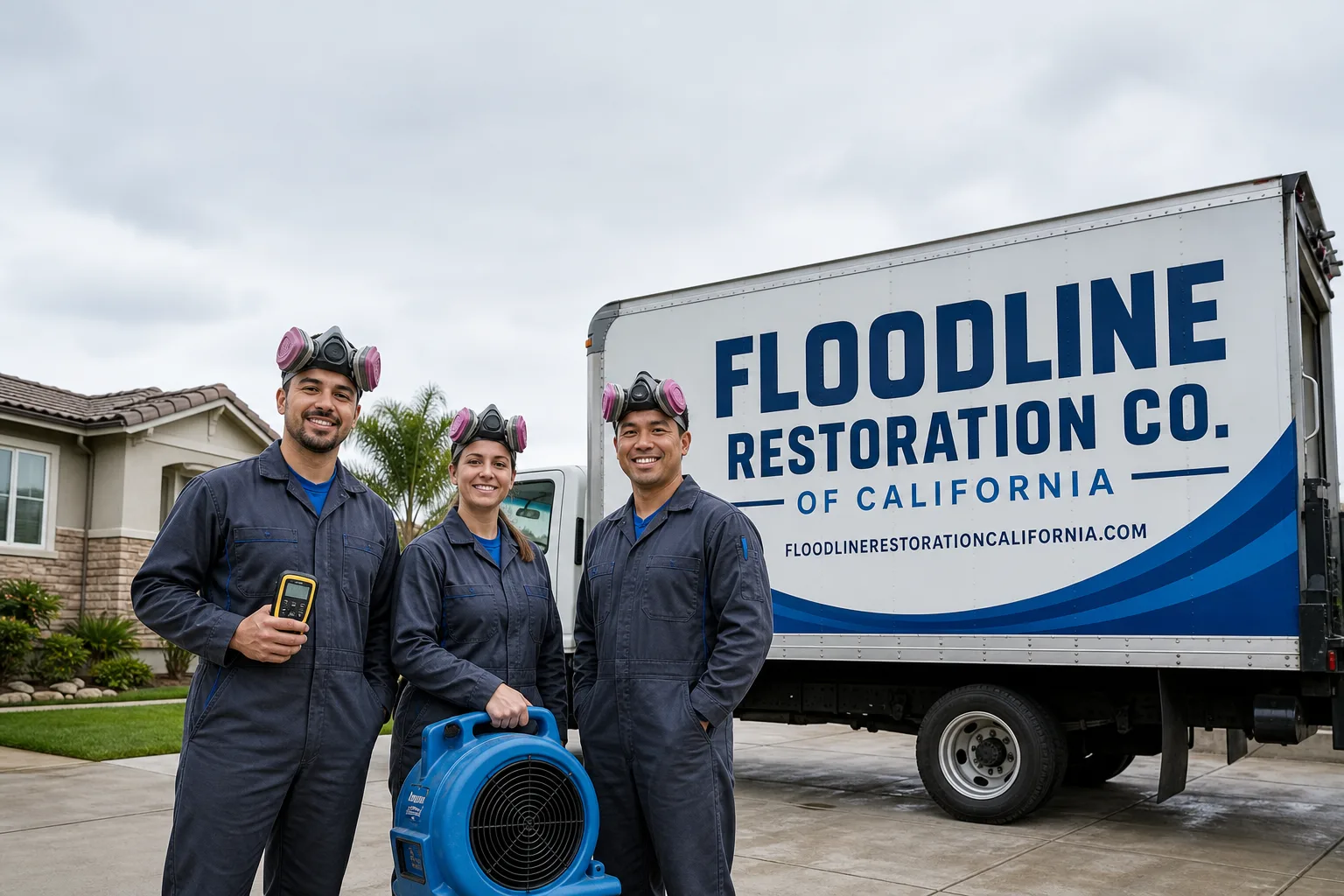
Fast, Reliable Water Damage Restoration Across San Rafael
When a supply line lets go at 2 a.m. in a Terra Linda split-level, or the Canal floods for the third time in two winters, you need a crew that knows San Rafael’s houses and San Rafael’s rules. Water damage restoration in San Rafael comes with a challenge most Bay Area cities don’t share: the same small city contains sea-level flood zones and high-fire-hazard hillsides, and the housing stock spans original-lath Victorians to 1960s slab-on-grade tract homes. Floodline Restoration Co. of California has worked both profiles for over 42 years, with live dispatch answering at any hour. Call (888) 737-2439 and a certified crew gets to your street fast, extraction starts the same visit, and the drying plan is written for your building’s actual age and construction, not a national template.
Why Floodline Restoration Co. of California Is San Rafael’s Preferred Water Damage Restoration Company
San Rafael homeowners want a name they can hold accountable. That’s the whole reason we give our 90-Day Done Right Promise in writing on every job, the Keystone Standard, no arguing, no paperwork battles. It’s tied to our K.E.Y.S. values code: Krafted right, Every time, Your home first, Standing behind it. Background-checked, uniformed technicians handle every visit, trained to IICRC, RIA, and IFA standards. We answer the phone with a live person 24/7, because a recording at 3 a.m. doesn’t help a homeowner watching water spread across a finished basement. Our Water Damage Restoration team arrives with the same professional-grade equipment our lead techs have run for years: Dri-Eaz, Phoenix, XPOWER, B-Air, and Injectidry. We don’t hand your job to a sub. The same crew that reads the moisture map on day one handles daily readings and rebuilds what needs rebuilding. For San Rafael specifically, we know Marin County’s habitability and tenant-relocation deadlines, and we know how a 1960s Terra Linda slab house dries differently from a downtown Craftsman with no vapor barrier.
Our Water Damage Restoration Services in San Rafael
Emergency Water Extraction
Standing water does its worst damage in the first hours, especially in San Rafael’s older homes where original plaster and gypsum lath soak water like a sponge. We extract fast with truck-mounted and portable units, then set up containment and airflow. For Canal-area ground-floor units, extraction has to move even faster, because the base of the wall assembly is often already saturated from previous flood events. Our crew gets water out and drying started the same visit, and we document everything for your carrier.
Structural Drying & Dehumidification
This is where San Rafael’s housing age really matters. A 1970s Terra Linda home with original drywall over 2×4 framing dries on one schedule. A 1910 downtown craftsman with plaster over lath and no vapor barrier dries on a much longer one. We run Dri-Eaz and Phoenix LGR dehumidifiers, log daily moisture readings, and keep drying until our meters confirm the dry standard, not when a fan has been running a set number of hours. If you have a crawlspace full of Marin County marine air, we address that too, because moisture from below re-wets walls that look dry from inside.
Flood Cleanup
The Canal neighborhood in the 94901 zip floods during king tides and atmospheric river pulses, and many of those units are second, third, or fourth-repeat water damage events. The assemblies have absorbed years of moisture, and the mold load is often endemic. Flood cleanup here means removing contaminated water, cutting drywall up to the floodline, treating framing, and drying against Marin County’s strict re-occupancy rules. We handle the tenant-relocation documentation too, so landlords and property managers don’t get caught out by legally enforceable deadlines.
Burst Pipe Restoration
Galvanized supply lines in 1950s and 1960s San Rafael tract homes are past their service life. When they let go, they don’t drip; they dump. Burst pipe restoration starts with shutting down the water, extracting the spill, mapping the migration path, and drying wall cavities and slab penetrations. Last winter our crew responded to a burst galvanized supply line in a 1960s Terra Linda split-level on Glenwood Avenue. We extracted standing water from the slab-on-grade family room, ran a Phoenix 200 MAX LGR dehumidifier with Dri-Eaz air movers, and had to keep our Injectidry system running an extra 48 hours because the original plaster over gypsum lath trapped moisture. By documenting the drying curve against Marin County’s habitability rules, we got the family back in before tenant-relocation triggers applied.
What happens when you call
- 1
A real person answersNo phone trees - you reach a local pro.
- 2
You get an upfront price rangeHonest numbers before anyone is dispatched.
- 3
A background-checked tech heads outLicensed & insured, dispatched right away.
- 4
You approve before work beginsNothing starts until you say go.
Trusted Brands We Service in San Rafael
We work on every brand of plumbing, appliance, and drainage system found in San Rafael homes, from original cast-iron drains in Canal-area apartments to copper supply lines in 1980s tracts. The brands that matter most on the restoration side are the ones in our drying rooms: Phoenix and Dri-Eaz dehumidifiers, XPOWER and B-Air air movers, and Injectidry for hard-to-reach cavities behind tile and plaster. Because San Rafael’s housing is older on average than the rest of Marin, we keep a stock of common replacement parts for legacy plumbing and repair materials sized for imperial-dimension framing, so we’re not waiting on a supplier when your ceiling is open.
Common Water Damage Restoration Problems We See in San Rafael Homes
- Protracted drying in pre-1980 homes without vapor barriers. Plaster over gypsum lath or wood lath holds moisture for days after a surface meter reads dry, and hidden mold can colonize inside wall cavities before anyone sees a stain. We dry these structures with cavity injection and extended monitoring schedules.
- Repeat flood cuts in Canal district apartments. Corroded cast-iron drain lines and absent subfloor ventilation re-wet the assembly from below even after initial extraction is complete. The restoration plan has to account for a building that has already been wet multiple times, not a first-event dryout.
- Smoke and ash intrusion in hillside fire zones. During Diablo wind events, homes in San Rafael’s CAL FIRE-designated Very High Fire Hazard Severity Zones take on smoke through ridge vents and attic penetrations even when flames never reach the property. A water-only job turns into a dual restoration with independent particulate removal and drying.
- Compromised wall assemblies from previous unpermitted repairs. We see 1970s additions and enclosed porches where drywall was patched over water-damaged framing without removal. By the time a leak returns, the structure behind the patch is worse than the visible surface suggests.
Pricing for Water Damage Restoration in San Rafael, CA
We Also Serve Cities Near San Rafael
Our crews run daily routes through San Anselmo, Fairfax, Lucas Valley-Marinwood, and Kentfield, and we know their housing stock as well as we know San Rafael’s. If you’re outside the city line but still in central Marin, call (888) 737-2439 and ask about our San Rafael response area; we’ll confirm whether we can reach you under the same dispatch time.
Serving San Rafael, CA - Our Local Coverage Area
We’re based in the San Rafael area and know this community well. Use the map below to see our service coverage - if you’re nearby, we can almost certainly help.
FAQs - Water Damage Restoration in San Rafael
How does San Rafael’s Canal district flood risk change the drying plan compared to a hillside home in the same city?
The drying plan changes completely because the wall assembly in a Canal district ground-floor unit has likely been wet before, sometimes multiple times. We assume endemic moisture and mold colonization behind the drywall, so the protocol includes aggressive flood cutting, extended drying with cavity injection, and documentation timed to Marin County’s tenant-relocation rules. A hillside home’s drying plan is built around structure age and fire-smoke intrusion instead.
Can I stay in my San Rafael rental during water damage restoration, or does Marin County force me to relocate?
Marin County’s habitability and tenant-relocation rules impose legally enforceable re-occupancy deadlines, and whether you can stay depends on the extent of the cut, the presence of mold, and utility service. For smaller jobs you can often remain in the unit while drying runs. For flood cuts in repeated-event buildings, relocation is usually required if the unit is not habitable under county code. We document every phase so the timeline satisfies the county.
My 1950s-era Terra Linda home has the original galvanized pipes. What water damage should I expect when they fail?
Galvanized supply lines don’t fail gradually; they let go suddenly and dump gallons per minute until the main is shut off. Expect standing water migrating under slab-on-grade floors, into wall cavities, and down into the crawlspace. The restoration usually requires extraction, flood cuts along the migration path, and drying against slab and framing. We quote a written scope before any wall is opened.
How do you handle smoke and ash damage from North Bay fires in San Rafael homes that never caught fire?
Fire smoke enters through attic vents and HVAC intakes and binds to the dust film inside a house even miles from the flame front. We clean HVAC coils and ducts, remove and replace attic insulation where smoke penetration is deep, and run air scrubbers to knock down particulates. If water damage is present too, we run drying and particulate removal as separate but parallel tracks, because wet smoke odor behaves differently from dry smoke odor.
Why does my downtown San Rafael Victorian take longer to dry than a newer home after a ceiling leak?
Victorians and early Craftsman bungalows in central San Rafael lack modern vapor barriers and cavity insulation, so plaster and original lath hold moisture deep inside the wall. A newer home with faced insulation and drywall dries in a few days. An uninsulated lath-and-plaster wall can take five to seven days of active drying and monitoring, sometimes longer, because the moisture bank is deeper than the surface reads. We extend the drying plan and log daily readings until the dry standard is met, not when the clock runs out.
Get Help Now, San Rafael
If you have water where it shouldn’t be, call (888) 737-2439 right now. A live dispatcher answers, any hour, every day. We’ll send a background-checked, uniformed crew to your San Rafael address, start extraction the same visit, and put the drying plan and a written scope in your hands before any walls come open. Our 90-Day Done Right Promise is in writing on every job. We stand behind it.
Written by Curt Bowman, Owner at Floodline Restoration Co. of California, serving San Rafael and Marin County since founding the company in 2010.