
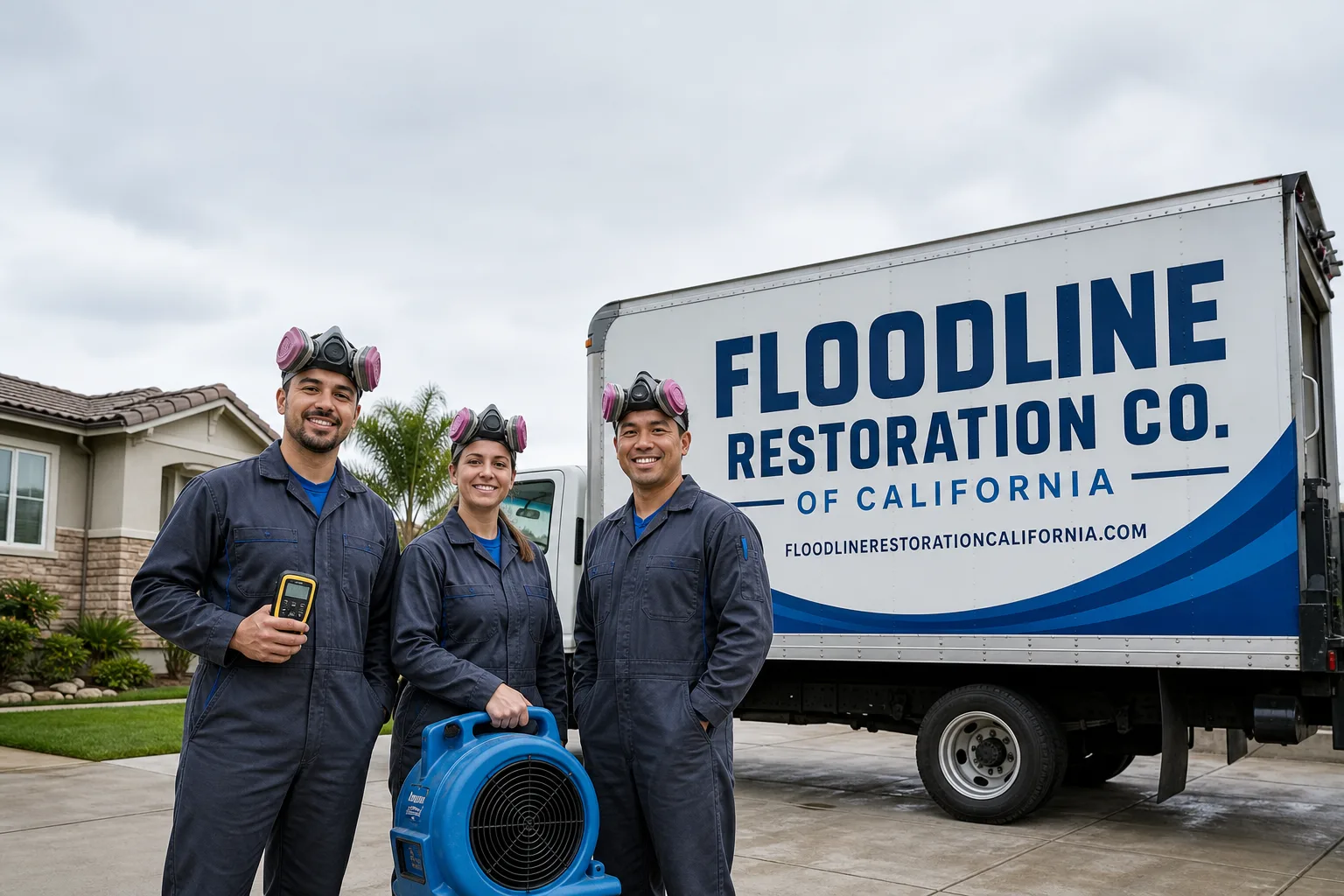
Fast, Reliable Water Damage Restoration Across Mission Viejo
Water damage restoration in Mission Viejo typically runs $1,800-$4,200 for a standard Category 1 or 2 extraction and dry-out, with same-day dispatch available to every ZIP from 92690 through 92692. We’re Floodline Restoration Co. of California, and we’ve built our reputation in the Saddleback Valley on showing up fast, scoping the damage honestly, and staying until the moisture meter says the job is dry. Call (888) 737-2439 and a live dispatcher answers, not a recording.
Mission Viejo’s housing stock is almost entirely wood-frame, stucco-over-plywood construction built between 1965 and 1990. That means the homes we walk into share the same failure points: original copper fittings past their design life, aging shower-pan membranes, dried-out stucco cracking around window flanges. We know these houses because we’ve worked in hundreds of them. We know which streets in the 92691 ZIP flood first during an atmospheric river, and we know why homes near Lake Mission Viejo dry differently than homes off Oso Parkway.
Why Floodline Restoration Co. of California Is Mission Viejo’s Preferred Water Damage Restoration Company
Floodline Restoration Co. of California has served Mission Viejo homeowners since our founding in 2010, with a live dispatch desk that answers at two in the morning and a written 90-Day Done Right Promise we call the Keystone Standard. That guarantee is simple: if it’s not done right, we make it right, in writing, with no arguing. Homeowners who’ve been burned by a contractor before tend to repeat that last part back to us. We mean it.
Our crews arrive in uniform, background-checked, and trained to IICRC, RIA, and IFA standards. We document every phase with photos for your insurance carrier, and we bill the adjuster directly so you’re never playing messenger. Curt Bowman, our founder, built the company around a dispatch board, not a sales desk. That’s why the person who answers your call understands water damage, not just call scripts.
We respond to Mission Viejo calls from our metro-office dispatch, with crews staged locally throughout South Orange County. Typical arrival windows run 60 to 90 minutes for emergency extraction anywhere from La Paz Road down to Crown Valley Parkway. When the water is still rising behind a burst pipe, that response time matters.
Our Water Damage Restoration Services in Mission Viejo
Emergency Water Extraction
When a supply line lets go or a water heater blows out, standing water is working its way into Mission Viejo’s slab-on-grade foundations within minutes. We run truck-mounted extraction units same visit, pulling water before it wicks into drywall, baseboards, and the plywood subfloor common to our 1970s and 1980s tract homes. Most emergency extraction jobs are started the same visit you call.
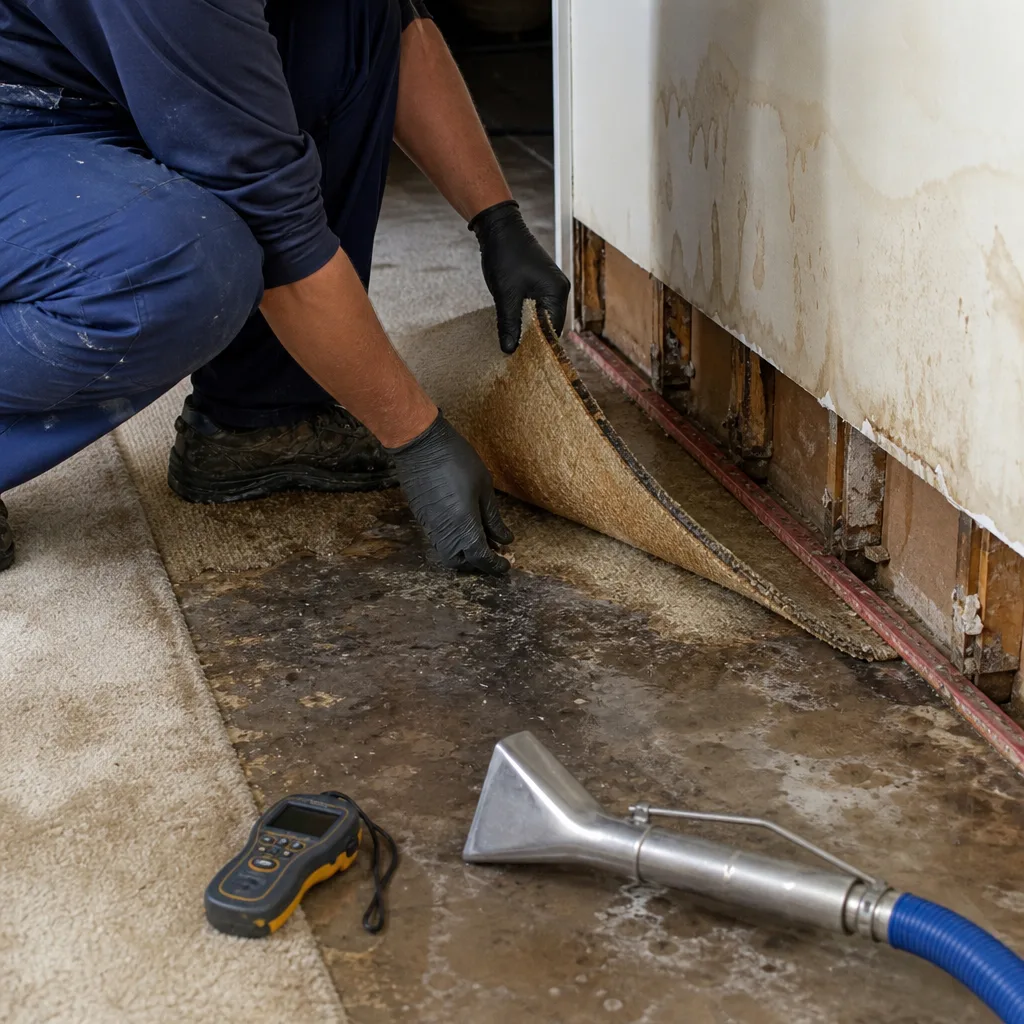
Structural Drying & Dehumidification
Mission Viejo’s hillside grading and Lake Mission Viejo’s localized humidity change how a structure dries. We moisture-map every affected room on day one, then run Dri-Eaz, Phoenix, and B-Air equipment with daily readings logged until the dry standard is met. That log goes to you and your adjuster. No guessing, no “it’ll probably be fine.” We verify before we stop.
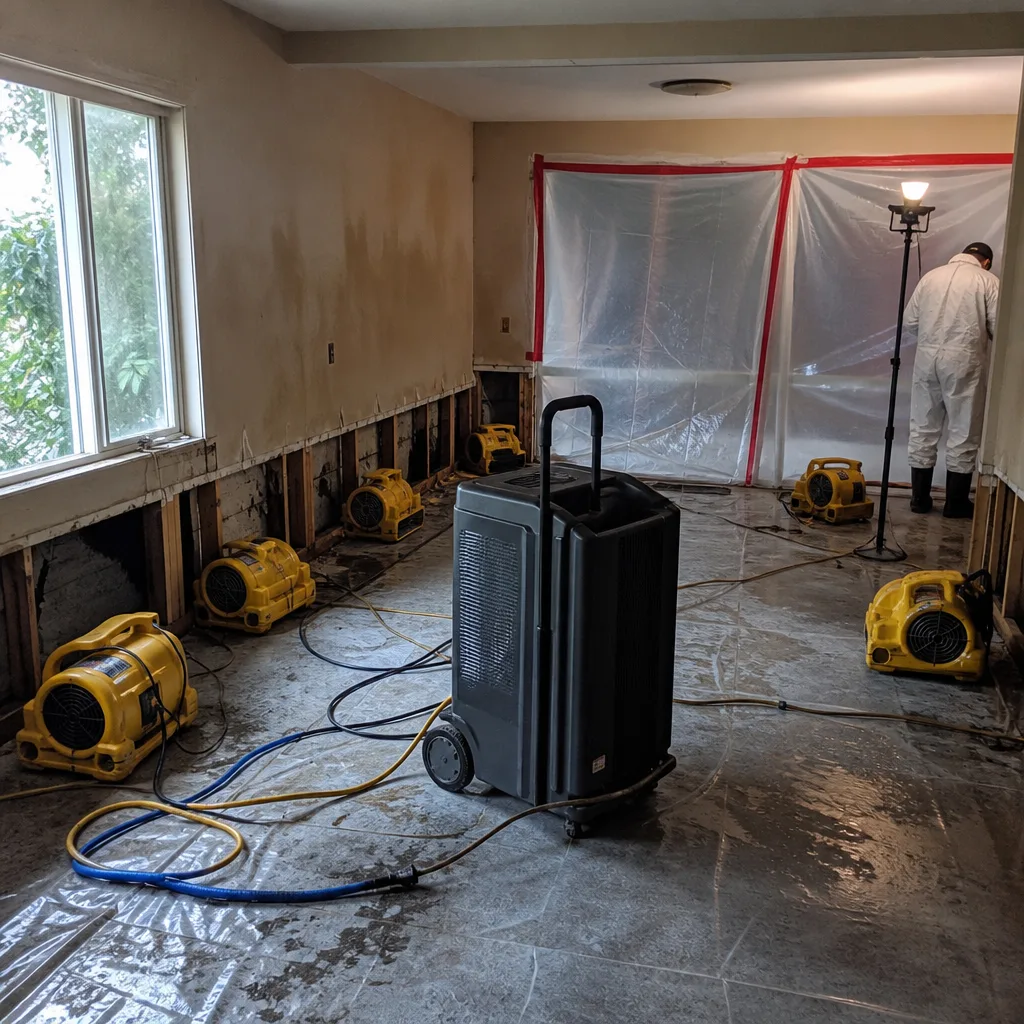
Flood Cleanup
Winter atmospheric rivers send sheet-flow runoff down Mission Viejo’s extensively graded hillsides and into garages, lower-level rooms, and finished basements in ways flat-terrain cities in the county never see. We extract, sanitize, dry, and then rebuild what needs rebuilding. One crew, start to finish, so there’s no mid-job handoff and no inherited crew you’ve never met.
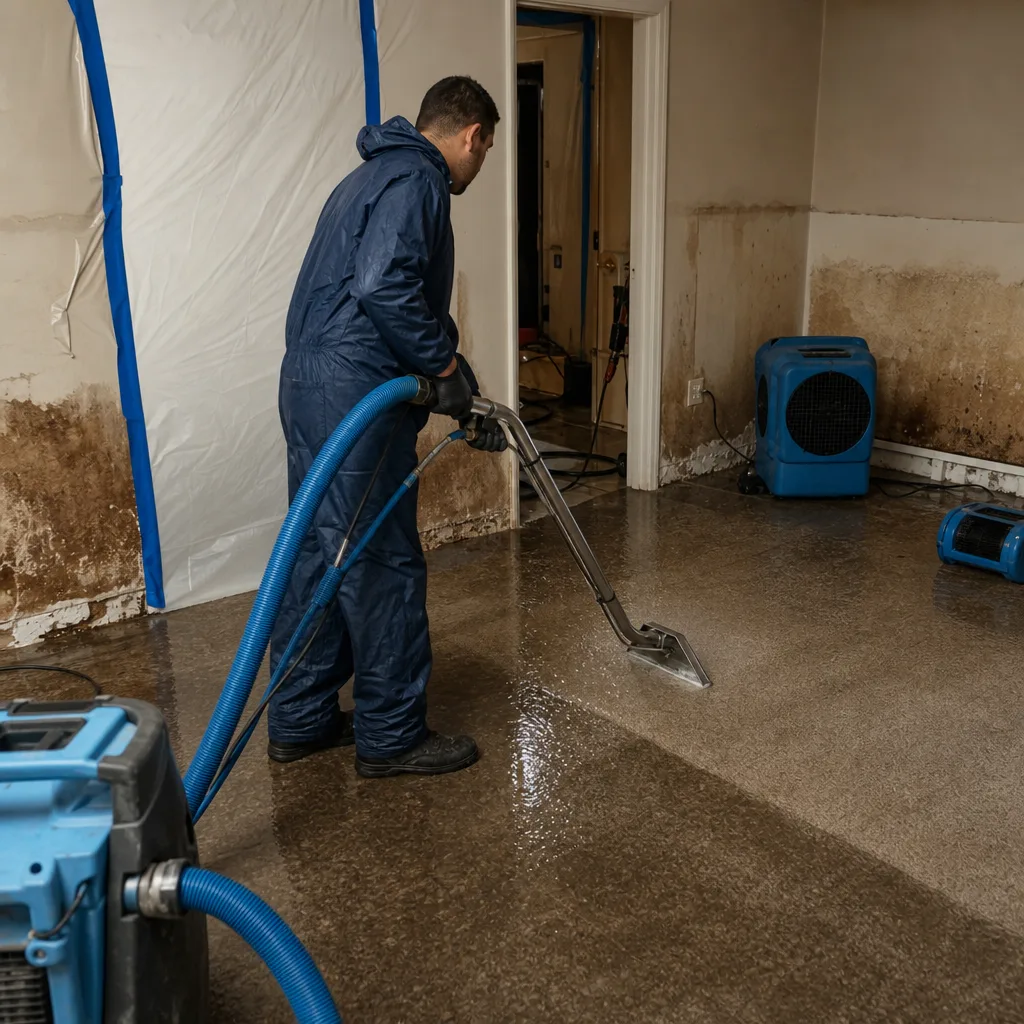
Burst Pipe Restoration
A burst pipe behind a Mission Viejo wall does two things at once: soaks the drywall and finds every gap in your sill plate. We trace the water path, not just the puddle. That means opening walls surgically, drying the cavity, and replacing only what cannot be saved. The original copper in these 1970s tract homes fails at fittings first, and we know where to look.
Ceiling & Roof Leak Water Damage
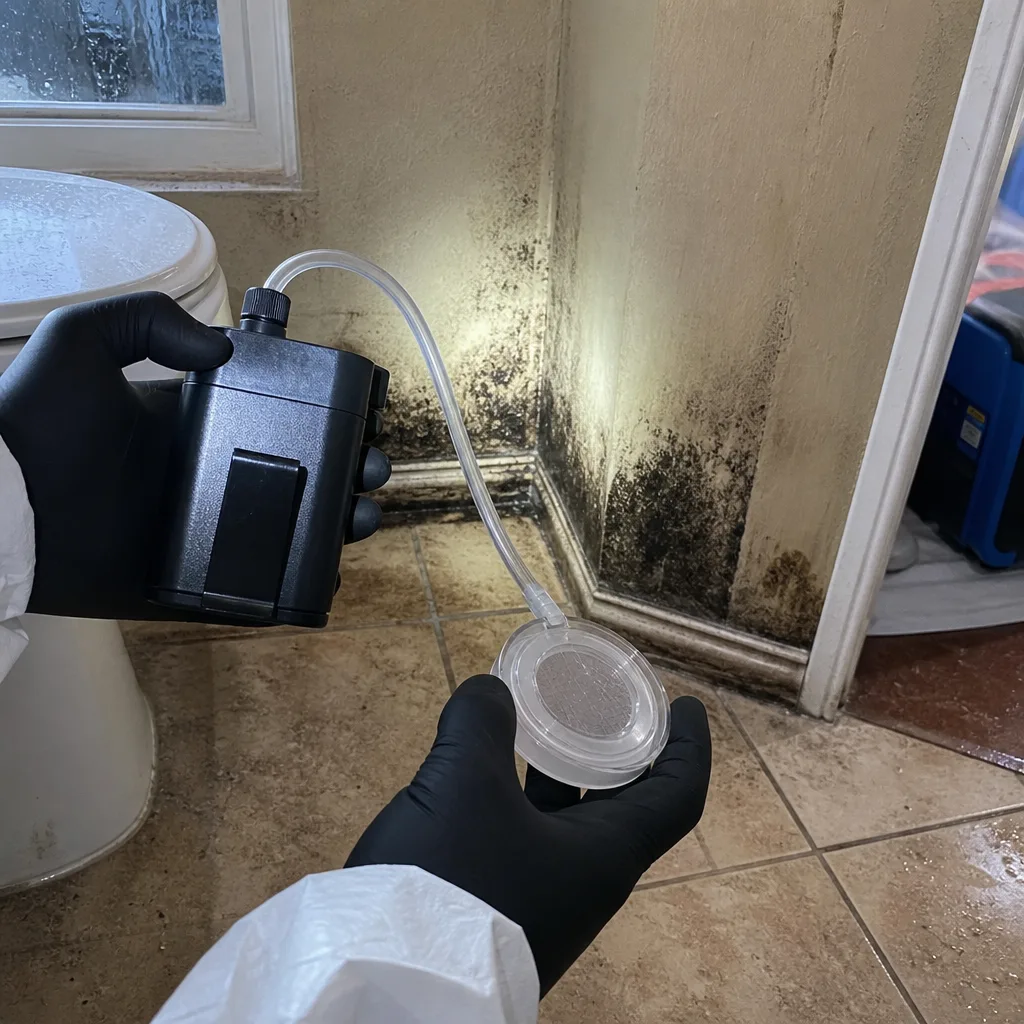
Concrete tile roofs dominate Mission Viejo’s skyline, but the underlayment beneath them has a 25-year design life. Hundreds of these homes are on their second or third roof, and the transition points at valleys and flashings are where we see water entering ceilings. We dry the ceiling cavity, treat any mold that’s begun, and replace the drywall at the source.
What happens when you call
- 1
A real person answersNo phone trees - you reach a local pro.
- 2
You get an upfront price rangeHonest numbers before anyone is dispatched.
- 3
A background-checked tech heads outLicensed & insured, dispatched right away.
- 4
You approve before work beginsNothing starts until you say go.
Trusted Brands We Service in Mission Viejo
We service and install restoration-grade drying systems regardless of what’s already in your home, and we’re factory-familiar with Dri-Eaz, Phoenix, XPOWER, B-Air, and Injectidry equipment, so our techs know exactly how each unit performs in Mission Viejo’s coastal-inland humidity range. When a 1970s subfloor needs panel drying after a copper-pipe failure, we show up with the right Injectidry setup the first time. We keep replacement parts stocked for the equipment we run, and we stand behind every installation with our written guarantee. The 90-Day Done Right Promise covers the work, the materials, and the labor.
Common Water Damage Restoration Problems We See in Mission Viejo Homes
- Original shower-pan membranes failing in 1970s and 1980s tract homes. These pans were designed to last about 30 years. In Mission Viejo, most are 35 to 50 years old. The first sign is often wicking stucco efflorescence on the wall below the shower, not a visible puddle.
- Hillside-pad grading concentrating runoff against foundation walls. Mission Viejo’s master-planned layout puts many homes on graded pads that slope toward the structure. During winter atmospheric rivers, that runoff overwhelms subsurface drains and turns garage slabs into moisture reservoirs.
- Dried-out stucco cracking around window flanges. Stucco loses elasticity with age and Mission Viejo’s sun exposure. Hairline cracks around window openings let rain water into the wall cavity, where sill-plate decay begins in the dark. You’ll see flooring buckle long before you see the crack.
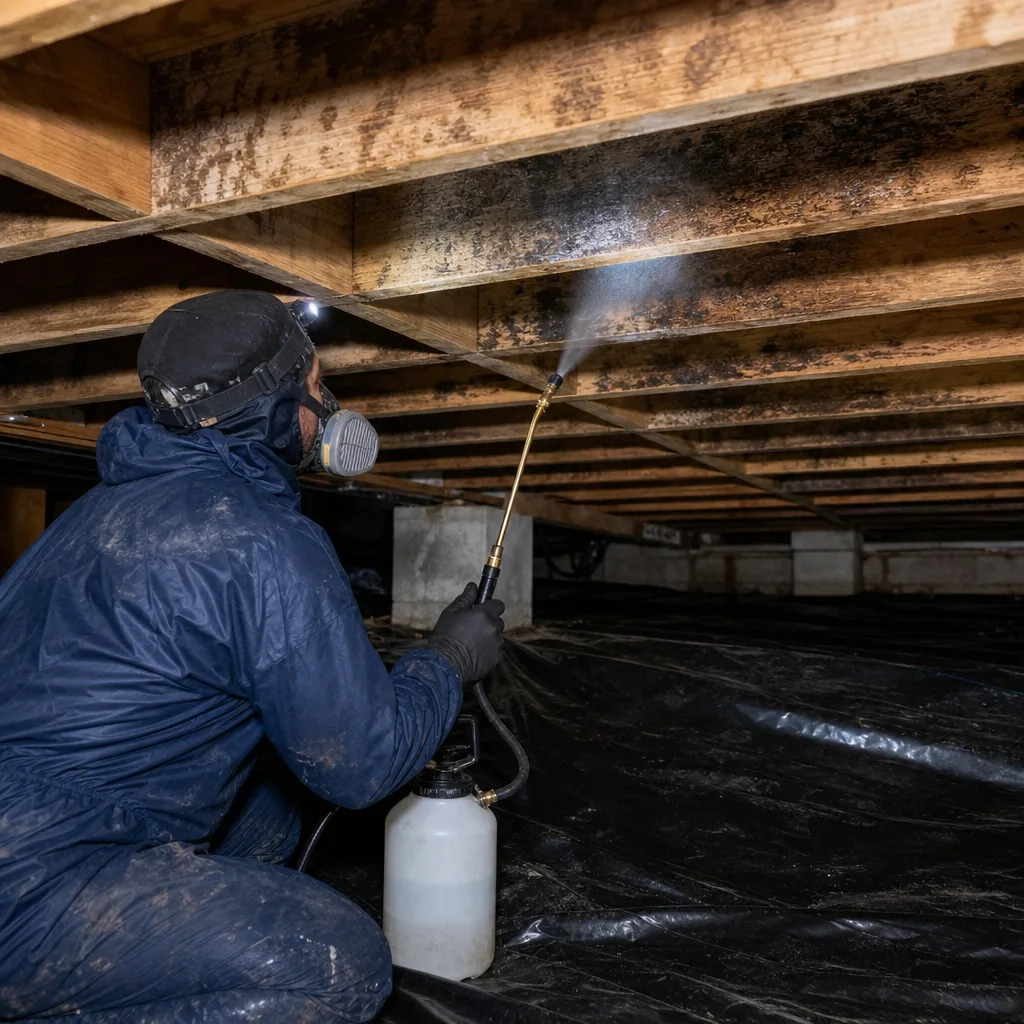
- Elevated subfloor humidity near Lake Mission Viejo. Homes in the 92692 ZIP near the lake carry a microclimate that homes off Marguerite Parkway don’t. Crawlspace framing often sits above 22% moisture content even without a leak, which changes the drying plan when water damage occurs. We scope for it explicitly.
Pricing for Water Damage Restoration in Mission Viejo, CA
Here’s what Mission Viejo homeowners can expect based on jobs we’ve completed across the city’s three ZIP codes:
| Service | Typical Range in Mission Viejo |
|---|---|
| Emergency water extraction (single room) | $800-$1,400 |
| Structural drying & dehumidification (3-5 days) | $1,200-$2,800 |
| Ceiling leak repair with drywall replacement | $900-$1,800 |
| Shower-pan membrane replacement (lower-level leak) | $2,500-$5,000 |
| Full flood cleanup with subfloor drying | $4,000-$9,000 |
What moves the number is how far the water has traveled: a supply-line leak caught the same night is a smaller job than a shower pan that has been seeping into a lower-level closet for six months. We always provide a written scope before work begins. Estimates are free. Call (888) 737-2439 for an exact quote on your Mission Viejo home.
We Also Serve Cities Near Mission Viejo
Our crews cover the surrounding South Orange County communities, including Coto De Caza, Lake Forest, Laguna Hills, and Rancho Santa Margarita. If you’re in one of those cities, you get the same live dispatch and the same written guarantee. Learn more about our Water Damage Restoration services, or see how we serve Mission Viejo specifically.
Serving Mission Viejo, CA - Our Local Coverage Area
We’re based in the Mission Viejo area and know this community well. Use the map below to see our service coverage - if you’re nearby, we can almost certainly help.
FAQs - Water Damage Restoration in Mission Viejo
Yes. Mission Viejo homes built between 1965 and 1990 used copper supply lines whose fittings corrode from the inside out over 40-plus years. When a fitting fails, water travels along the pipe run and soaks wall cavities and subfloor framing before it ever surfaces. That means restoration requires careful tracing of the water path, not just extraction at the visible puddle. Call (888) 737-2439 and we’ll scope your house’s specific plumbing layout before we quote.
Homes in the 92692 ZIP within a quarter-mile of Lake Mission Viejo carry elevated relative humidity in crawlspace framing year-round. Moisture content often reads above 20% before any leak occurs. We account for that by running additional dehumidification capacity and extending the drying plan by one to two days compared to a home off Oso Parkway. It’s not a guess; it’s measured on the moisture map from day one.
Streaking or efflorescence on stucco is water moving through the stucco and carrying soluble salts to the surface. In Mission Viejo’s 35-to-55-year-old tract homes, that usually means a failed window flange, a compromised weep screed, or a roof-to-wall flashing gap. The streak itself is cosmetic, but the moisture path behind it is not. Hidden sill-plate decay is the real damage. If you’re seeing streaks, call us for a moisture assessment. We’ll tell you what’s wet before you spend a dollar on repairs.
Mission Viejo was built in a single generational wave, and homes on a given street typically share the same construction date, the same original plumbing, and the same shower-pan membranes. When one home on the block develops a lower-level water intrusion from a failed membrane or a stucco crack, neighboring homes with identical original fittings are usually close behind. We pre-scope the whole block’s exposure when we see a pattern, not just the first call.
In most cases, yes. Slab-on-grade garage slabs in Mission Viejo absorb water and release it slowly, which is why a garage can feel damp for weeks after a storm. We run high-capacity dehumidification and air movement across the slab surface, and we check the foundation-to-slab joint for subsurface drain failure. If the subsurface drains are overwhelmed, that’s a separate repair we scope and quote in writing. No rip-out-first approach. We dry first, then replace only what’s necessary.
Written by Curt Bowman, Owner at Floodline Restoration Co. of California, serving Mission Viejo since 2010.