
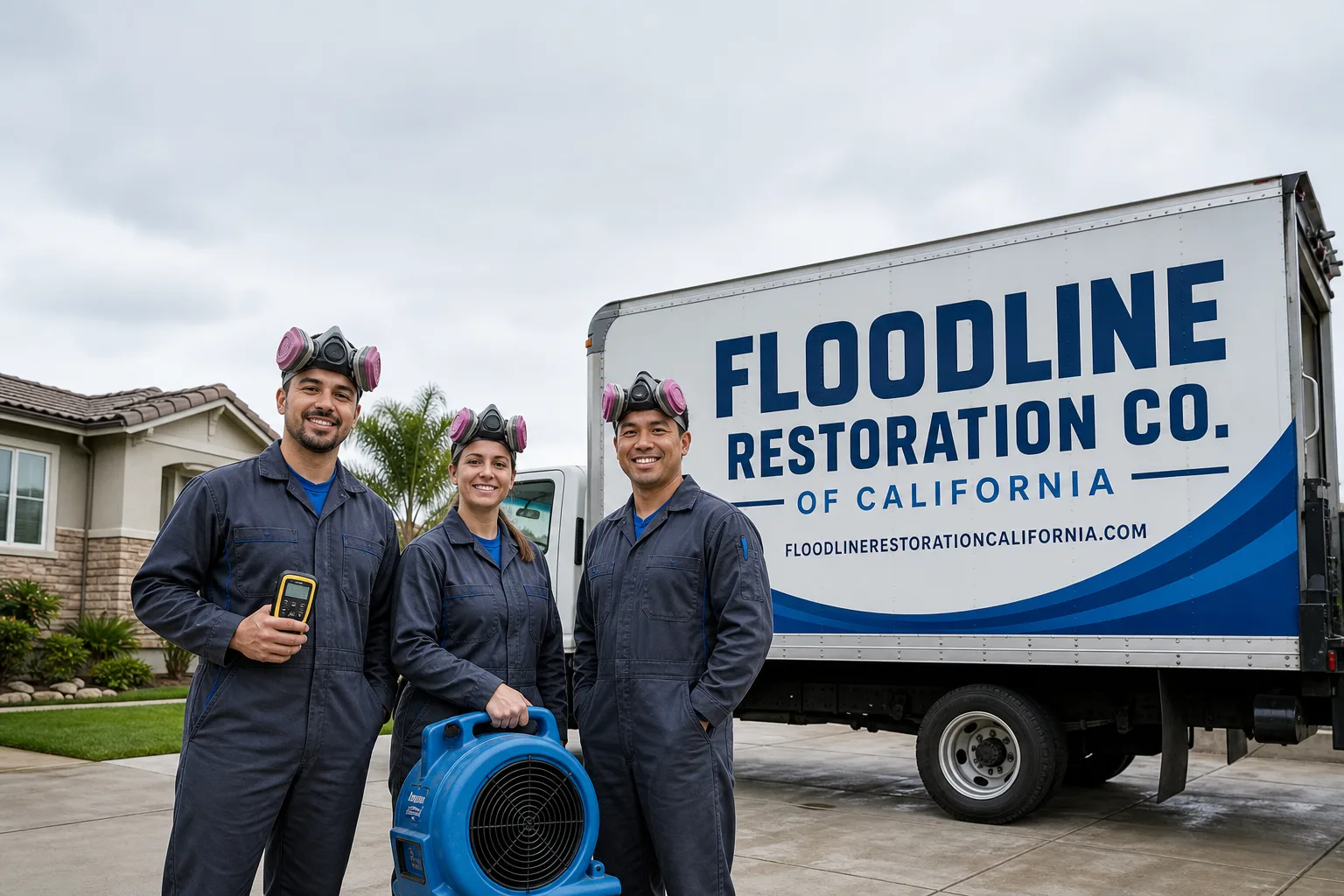
Fast, Reliable Water Damage Restoration Across Koreatown
Water damage restoration in Koreatown usually costs between $2,800 and $7,500 for a typical multi-unit apartment water loss, with emergency extraction starting around $900. Most jobs in the 90005 ZIP need a same-day response because water moves fast through stacked floor cavities in our older buildings. Call (888) 737-2439 and a live dispatcher answers, day or night, ready to send a certified crew to your building off Wilshire, 6th Street, or anywhere in Koreatown. We know these courtyards, these flat roofs, and the way one burst pipe becomes three flooded units before lunch.
Key Takeaways
- Emergency extraction in Koreatown typically runs $900-$2,500 depending on square footage and how far water has already traveled.
- Full structural drying and dehumidification for a stacked-unit loss usually lands between $2,500 and $6,000.
- A single pipe failure in a 1920s courtyard building can wet three units below within a few hours.
- We coordinate with structural engineers when soft-story displacement is present before setting drying equipment.
- Insurance billing is direct: we photograph, document, and talk to your adjuster, so you don’t have to.
Why Floodline Restoration Co. of California Is Koreatown’s Preferred Water Damage Restoration Company
Floodline Restoration Co. has spent over 42 years working in dense Los Angeles neighborhoods, and Koreatown’s 1920s and 1930s courtyard apartments have taught us lessons no textbook covers. We know that a third-floor pipe burst on South Normandie doesn’t just soak that unit. It finds the open floor-plan stacking, follows the old cast-iron and galvanized chase lines, and saturates drywall two floors down. Our crews have walked hundreds of these buildings, and that’s why restoration in Koreatown isn’t something we treat as a generic water job. It’s a building-specific problem from the first moisture reading.
Every technician who arrives at your door is background-checked, uniformed, and trained to IICRC, RIA, and IFA standards. Curt Bowman founded this company in 2010 around a dispatch board, not a sales desk, and that still shows: you call, a live person picks up, and a certified crew reaches your Koreatown address fast. Property managers with buildings near the Wilshire/Vermont corridor call us because we don’t hand the job off after extraction. We dry, we log moisture readings daily, we rebuild what needs rebuilding, and we hand you a written 90-Day Done Right Promise when the job is finished. Done right, and backed in writing.
Our Water Damage Restoration Services in Koreatown
Emergency Water Extraction
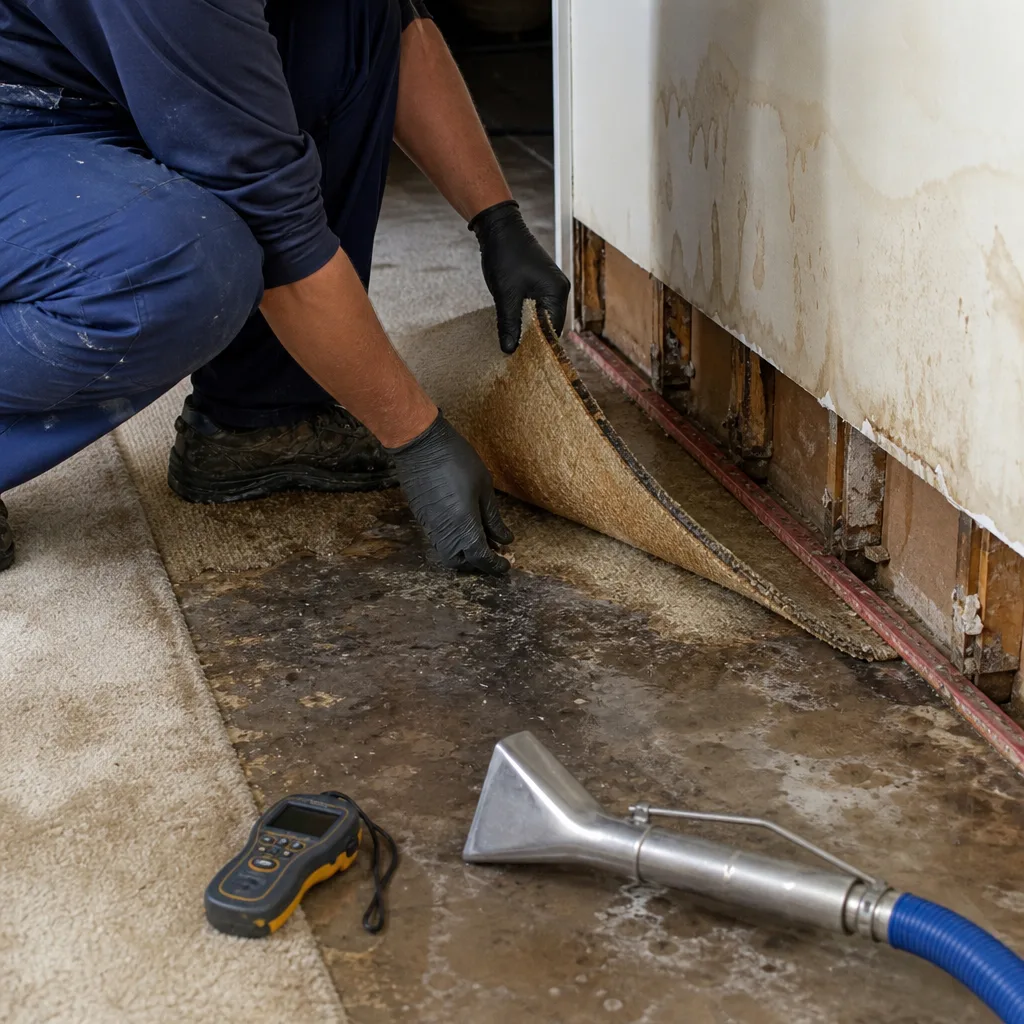
When a supply line lets go in a 1960s stucco block on Oxford Avenue, the first hour decides whether you’re dealing with one wet unit or five. Our emergency extraction crews arrive with truck-mounted extraction units and begin pulling standing water the same visit. In Koreatown’s stacked apartment buildings, we don’t stop at the unit where the leak started. We walk the floor below, check the shared utility closets, and map the moisture migration before it becomes a building-wide event. A typical emergency extraction in Koreatown runs $900-$2,500.
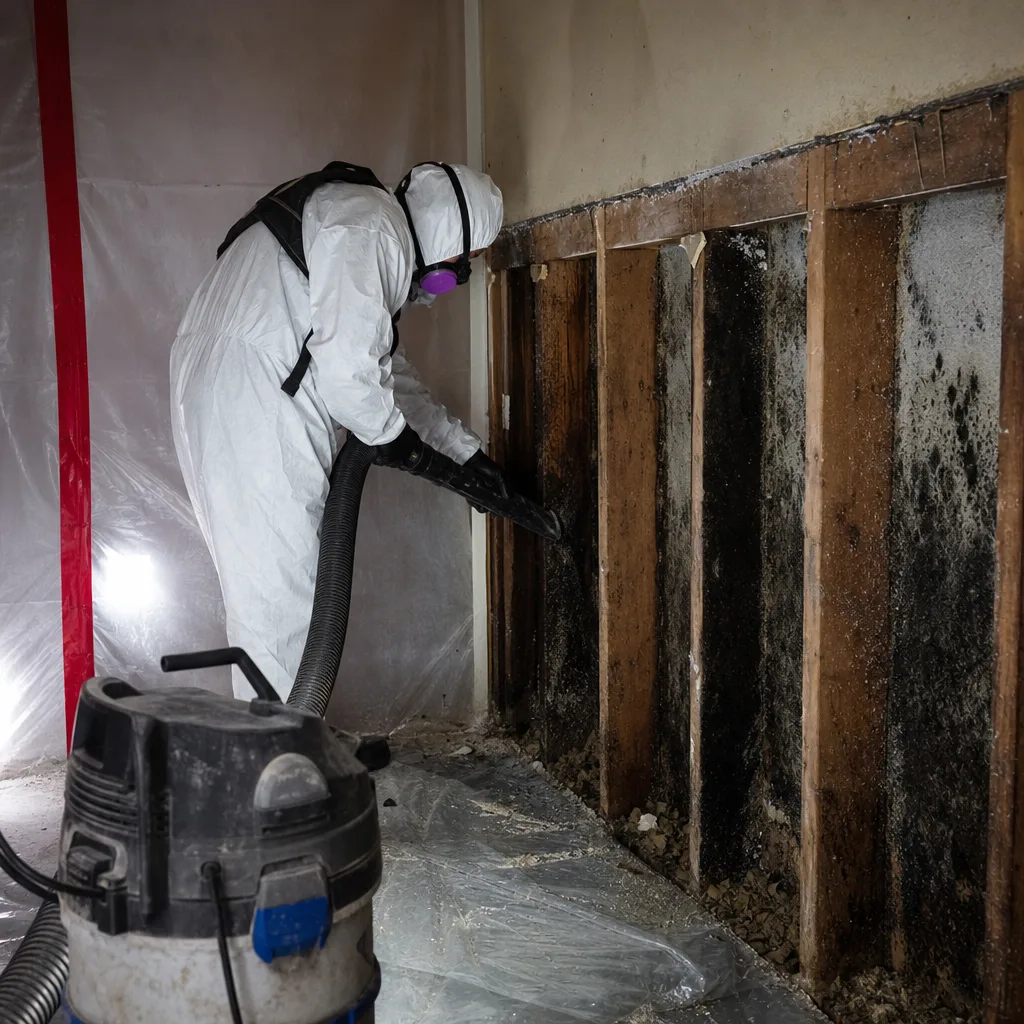
Structural Drying & Dehumidification
Koreatown’s dense urban heat island means mold doesn’t wait. In a pre-war courtyard apartment with minimal cross-ventilation, fungal colonization can begin within 48 hours. Our structural drying uses Dri-Eaz LGR 7000XLi dehumidifiers, Phoenix axial air movers, and Injectidry systems placed according to a daily moisture log, not a guess. We set drying chambers that account for the building’s open floor-plan stacking, because air movement through shared cavities is what actually gets studs dry. Structural drying and dehumidification for a typical Koreatown stacked-unit loss runs $2,500-$6,000.
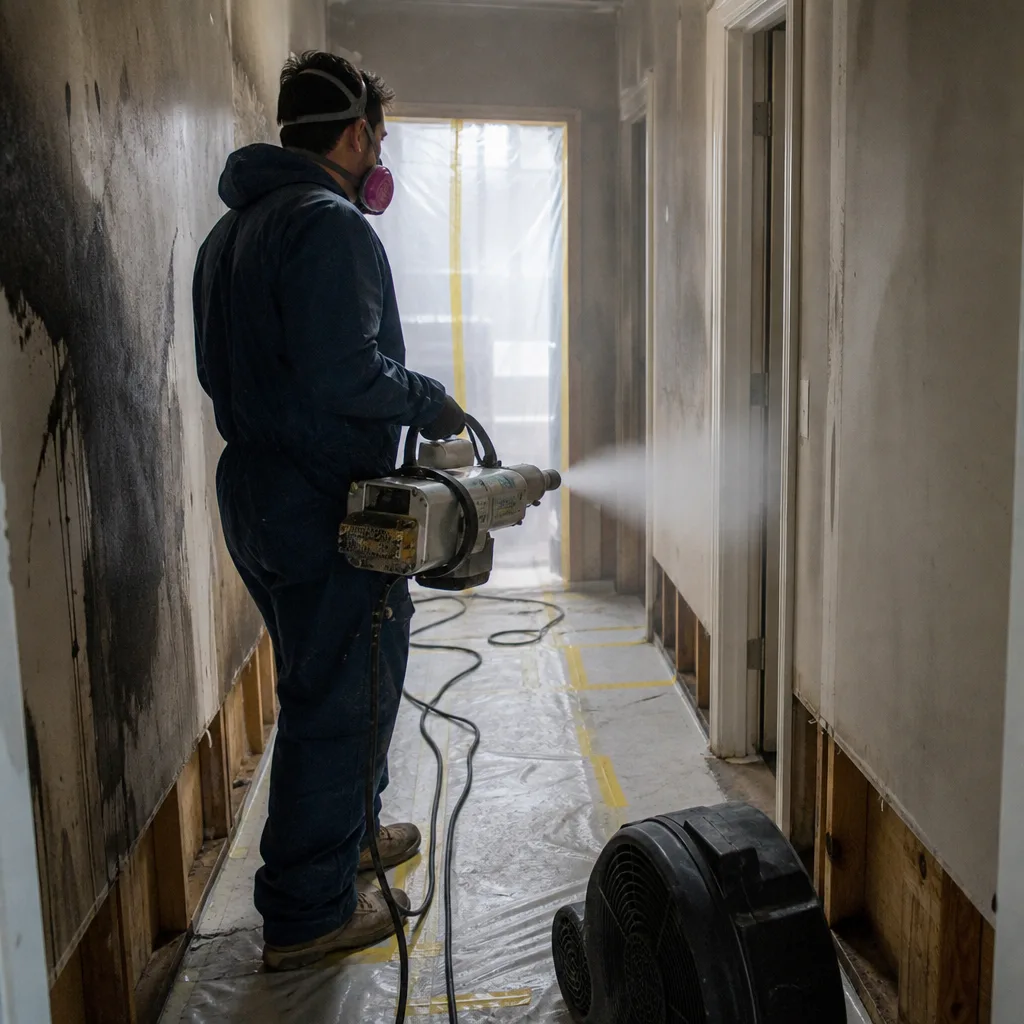
Flood Cleanup
Atmospheric river events hit Koreatown hard because so much of our housing stock has flat or low-pitch roofs. When membranes fail on a 1970s apartment block near 8th Street, interior flooding follows fast, and that floodwater carries whatever was on the roof, in the gutters, and inside the ceiling cavities. Flood cleanup means more than removing water. We extract, remove saturated materials, sanitize, and set the drying plan that prevents what the water left behind from turning into a mold claim a week later. Flood cleanup in Koreatown generally starts around $1,800 and goes up with square footage and contamination level.
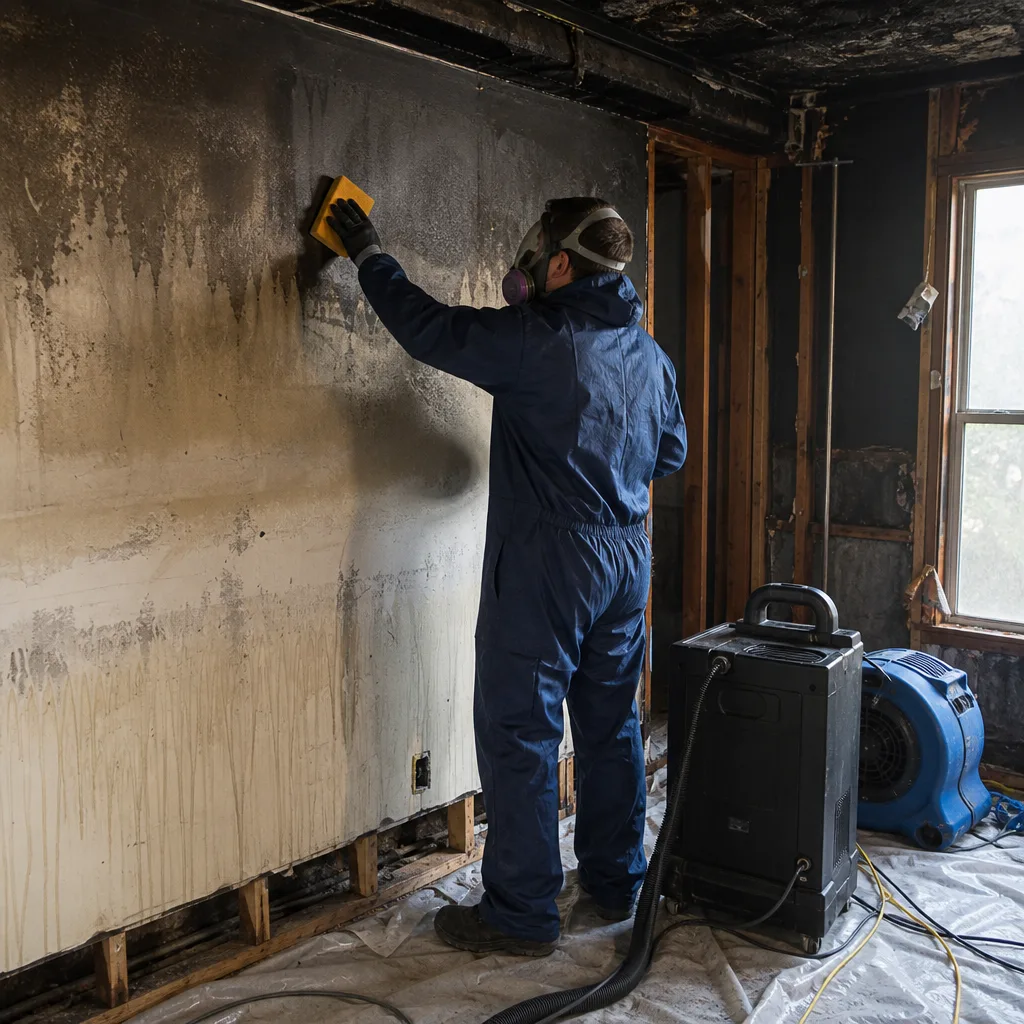
Burst Pipe Restoration
Burst pipes in Koreatown are almost never a one-unit problem. A failed cast-iron supply line or a cracked galvanized riser in a 1930s Spanish Colonial Revival courtyard can dump water for hours before anyone notices, especially when the landlord manages remotely. We trace the pipe path, open the minimum amount of drywall needed to dry the cavity, and coordinate with your plumber so one crew isn’t undoing another’s work. Burst pipe restoration in Koreatown, including extraction, drying, and repair, typically lands between $3,000 and $8,000 depending on how many units got wet.
Ceiling & Roof Leak Water Damage
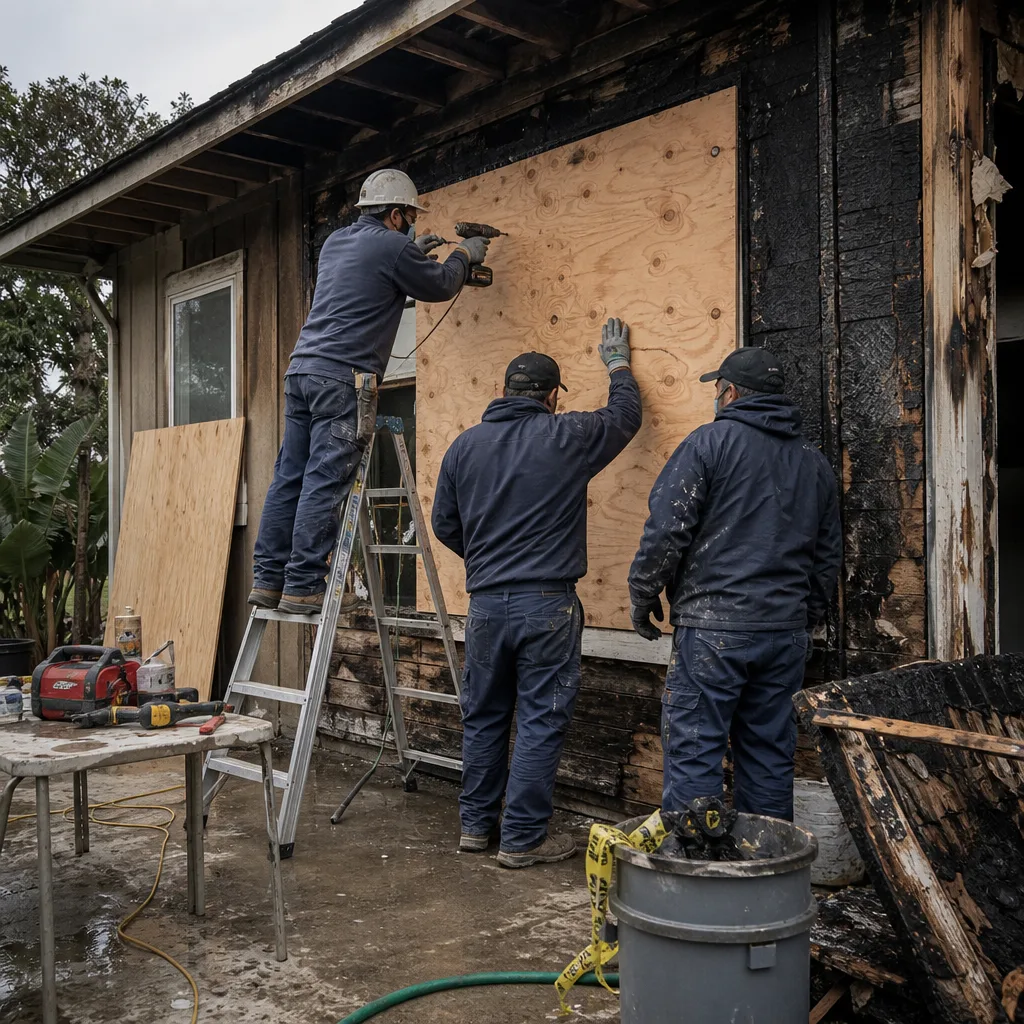
During the atmospheric river events that hit the basin each winter, older Koreatown buildings with flat roofs become a long line of service calls. Water finds a membrane seam, then travels horizontally through insulation before dropping into a top-floor unit two rooms away from the actual breach. We’ve pulled water from ceilings on Kenmore Avenue where the roof damage was sixty feet from the visible stain. Our approach: find the true leak path first, extract second, and dry the cavity with targeted equipment third. Ceiling and roof leak restoration in Koreatown typically runs $1,500-$5,000 depending on how far the water traveled and how much ceiling needs replacement.
What happens when you call
- 1
A real person answersNo phone trees - you reach a local pro.
- 2
You get an upfront price rangeHonest numbers before anyone is dispatched.
- 3
A background-checked tech heads outLicensed & insured, dispatched right away.
- 4
You approve before work beginsNothing starts until you say go.
Why Koreatown Water Damage Travels the Way It Does
Koreatown has one of Los Angeles’s highest concentrations of soft-story wood-frame apartment buildings flagged under the city’s Mandatory Seismic Retrofit Ordinance. That matters for water damage restoration in a way most people don’t expect. Many of these buildings, especially the 1920s and 1930s courtyard properties, have open floor-plan stacking: a unit’s floor cavity is both the ceiling cavity of the unit below and a highway for water. When a pipe fails on an upper floor, water doesn’t just saturate the unit where the leak started. It follows the framing, the old plumbing chases, and the low points in the structure, dripping into units two floors down through shared structural cavities. A single water loss at an address in the 90005 ZIP frequently becomes a multi-unit claim before a restoration crew ever arrives. And because so many of these ground floors are non-retrofitted soft stories, a water loss can uncover pre-existing structural displacement. When that happens, we pause drying and bring in a structural engineer before we set equipment. Setting heavy drying equipment on a racked and displaced floor can make the problem worse. We’d rather take the extra half-day, do it right, and document everything for your carrier than rush a drying plan that turns a water claim into a structural claim and a tenant displacement event.
We learned this the hard way in our early years, and now it’s just how we work. We were called to a 1930s Streamline Moderne courtyard building off Wilshire after a cast-iron supply line burst on the third floor. Our techs used Dri-Eaz LGR 7000XLi dehumidifiers and XPOWER air movers to chase water that had migrated through open floor-plan stacking into two units below, then discovered secondary mold in a shared utility closet during the floor-by-floor walkthrough. That’s exactly the kind of multi-unit expansion we anticipate in 90005, and it’s why our first move in Koreatown is always a floor-by-floor survey, not just an extraction at the reported address.
Trusted Brands We Serviced in Koreatown
Our crews arrive with professional-grade Dri-Eaz and Phoenix equipment, because building owners in Koreatown deal with enough unknowns without wondering if the drying equipment is up to the job. We keep XPOWER air movers and Injectidry systems on our trucks for the tight confines of older Korean-owned apartment buildings, where closets, utility shafts, and compact courtyards demand equipment that fits. We maintain our gear, log every moisture reading, and don’t leave a building until the dry standard is met, not just the visible water is gone.
Common Water Damage Restoration Problems We See in Koreatown Homes
- Stacked-unit migration: Water from a third-floor pipe failure in a 1920s courtyard building can appear as ceiling stains in units two floors below within hours. Until a crew checks every shared cavity, treating the visible damage is just guessing.
- Rapid mold colonization: Koreatown’s urban heat island effect, combined with the minimal cross-ventilation in pre-war apartments, accelerates fungal growth. We’ve seen mold become established in as little as 48 hours when humidity isn’t controlled immediately.
- Soft-story structural complications: In unflagged and unretrofitted ground-floor units, pre-existing racking can be worsened by heavy wet materials and drying equipment. We check for displacement before we set anything down.
- Old flat-roof failures during atmospheric rivers: Koreatown’s aging 1960s-1980s stucco blocks often have membranes well past their useful life. One intense winter storm can breach dozens of buildings in the 90005 ZIP, and landlords don’t know until ceilings start dripping.
Pricing for Water Damage Restoration in Koreatown, CA
Here’s what Koreatown homeowners and property managers can expect to pay, based on the losses we’ve handled in the area. Emergency extraction alone runs $900-$2,500, depending on how many rooms and units got wet. Structural drying and dehumidification for a stacked-unit loss usually lands between $2,500 and $6,000. Burst pipe restoration, including extraction, drying, and drywall repair, typically runs $3,000-$8,000. Flood cleanup after a roof or atmospheric river event starts around $1,800. Ceiling and roof leak restoration from a flat-roof membrane failure runs $1,500-$5,000 depending on how far water traveled through insulation and how much ceiling needs replacement.
The honest variables are square footage, how many units are wet, whether the water sat overnight, and whether structural displacement is present. We don’t add surprises on the back end. We give you a written scope and direct insurance billing from the start, and the senior and veteran 5% discount always applies. Call (888) 737-2439 for a free estimate over the phone, same visit when needed.
We Also Serve Cities Near Koreatown
Our Koreatown crews cover the full Water Damage Restoration scope across nearby Los Angeles neighborhoods, including Echo Park’s hillside homes, Silver Lake’s mid-century builds, and the dense apartment blocks of Hollywood. If your building sits just outside the 90005 ZIP, call (888) 737-2439 and we’ll confirm which crew reaches you fastest.
Serving Koreatown, CA - Our Local Coverage Area
We’re based in the Koreatown area and know this community well. Use the map below to see our service coverage - if you’re nearby, we can almost certainly help.
FAQs - Water Damage Restoration in Koreatown
Mold can begin colonizing within 48 to 72 hours after a water leak in a Koreatown courtyard apartment, and the dense urban heat island effect combined with the minimal cross-ventilation in pre-war units means it often moves faster here than in other LA neighborhoods. The critical window is the first 24 hours: extraction and drying equipment should be running before that window closes. Call (888) 737-2439 and a crew can be on site the same day to start pulling water and getting air moving through the affected cavities.
Yes, and in Koreatown’s 1960s apartment blocks, open floor-plan stacking means a burst pipe on an upper floor almost always affects units below. Water follows the shared floor and ceiling cavities, the old plumbing chases, and the low points in the framing, saturating drywall, insulation, and electrical runs in units two floors down. That’s why our first step on any multi-story call in the 90005 ZIP is a floor-by-floor survey, not just extraction at the reported unit. Call (888) 737-2439 if you suspect an upper-floor leak and we’ll check every unit in the stack.
Shut off electrical to the affected areas, place buckets to catch active water, and call (888) 737-2439 before water saturates more ceiling or wall cavities. In a 1920s Spanish Colonial Revival building with a flat or low-pitch roof, the actual breach is often far from where water appears inside. Our roof leak restoration starts by tracing the true leak path, then extracting and drying the ceiling and wall cavities so the next storm doesn’t reopen the same wound.
The Mandatory Seismic Retrofit Ordinance affects water damage restoration in Koreatown because many of our soft-story wood-frame buildings have pre-existing structural displacement. When a water loss happens in an unretrofitted ground-floor unit, our crews check for racking before setting drying equipment. If displacement is present, we coordinate with a structural engineer and pause drying until the floor assembly is stable. Call (888) 737-2439 if your building has been flagged under the ordinance and you need a restoration crew who understands the engineering constraints.
A single water loss in 90005 often involves multiple insurance claims because Koreatown’s stacked apartment buildings share floor and ceiling cavities, so one pipe failure routinely wets units two floors apart. Each affected tenant files a claim, and the building owner files another for common areas. We document every unit with photographs, moisture readings, and a written scope for the carrier, and we bill the carrier directly for the entire job so no one has to play messenger between Floodline and an adjuster. Call (888) 737-2439 and we’ll handle the documentation from day one.
Call Floodline Restoration Co. of California for Water Damage Restoration in Koreatown
If water is spreading in your Koreatown apartment building, call (888) 737-2439 now. A live dispatcher answers 24 hours a day, every day, and a certified, background-checked crew can be on site fast. We’ll extract the standing water, map the moisture, handle your insurance documentation, and stand behind our work with the written 90-Day Done Right Promise. Curt Bowman founded this company on a simple rule: the line the water left is where we start, and the job isn’t done until the building is dry and the paperwork is straight. That’s what we do in Koreatown, every day.
Written by Curt Bowman, Owner at Floodline Restoration Co. of California, serving Koreatown and the surrounding Los Angeles neighborhoods.