
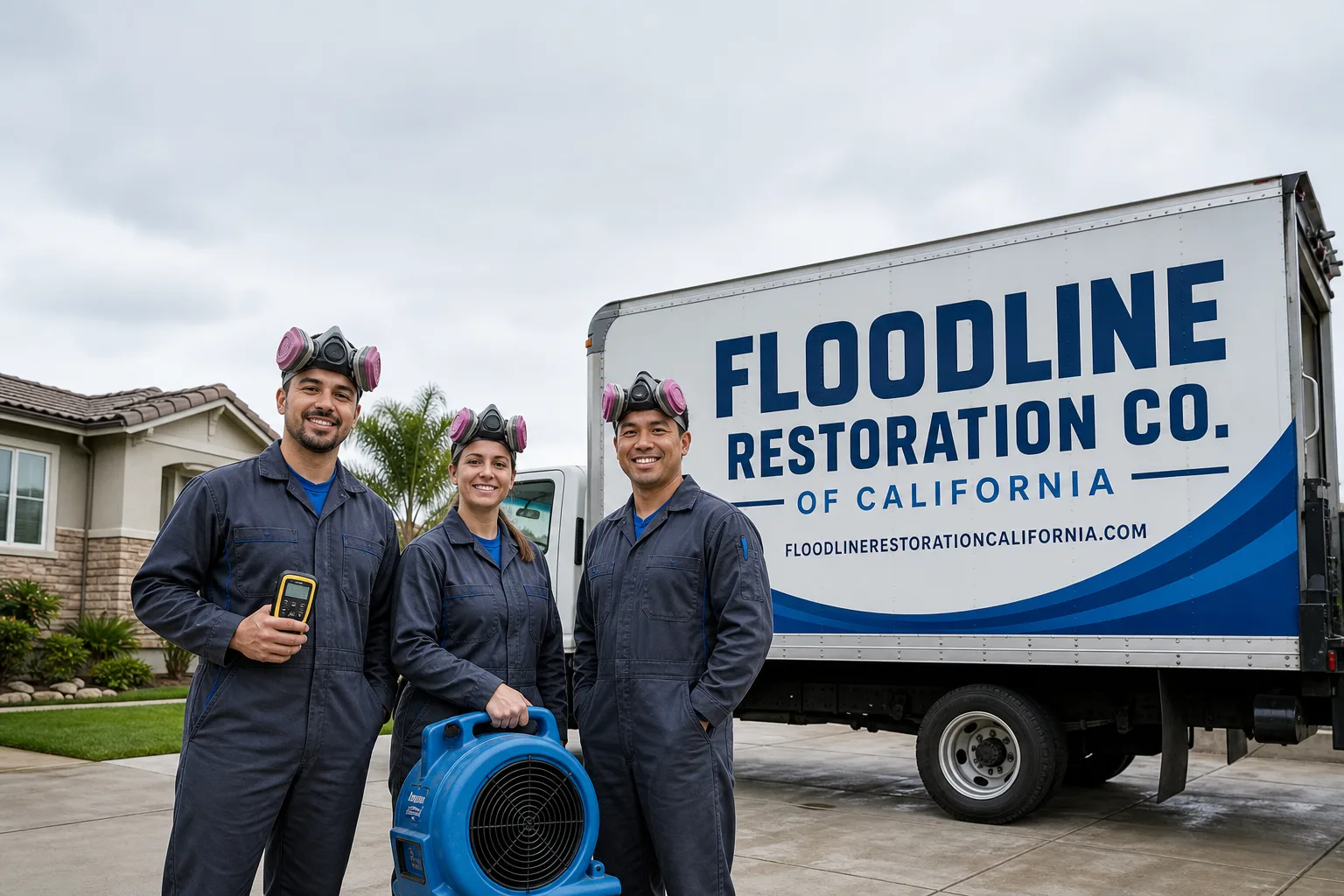
Fast, Reliable Water Damage Restoration Across Dinuba
Water damage restoration in Dinuba typically runs $1,800 to $6,500 for a standard extraction and structural drying job, with emergency response available 24 hours a day. We also offer Fire & Smoke Damage Restoration - Dinuba for homes dealing with secondary damage after a fire. Floodline Restoration Co. of California has crews staged to reach neighborhoods throughout 93618 quickly, because we know that in Dinuba, the problem is rarely just the water you can see. It’s what’s happening in the uninsulated wall cavities and pier-and-beam crawlspaces of houses built before 1960, where moisture hides and waits for the Tule fog to arrive. Call (888) 737-2439 and a live dispatcher answers, day or night.
We’ve spent over 42 years learning how agricultural water behaves around foundations here. Not from a distance. From the crawlspaces on E. Tulare Street, the slab cracks near El Monte Middle School, and the canal-adjacent blocks off Alta Avenue that take on groundwater every spring like clockwork. Water Damage Restoration in this city means understanding the irrigation calendar as much as the plumbing.
Why Floodline Restoration Co. of California Is Dinuba’s Preferred Water Damage Restoration Company
Our reputation in Dinuba is built on showing up when a galvanized pipe lets go at 2 a.m. and standing behind the work in writing. The 90-Day Done Right Promise, our Keystone Standard, means if something isn’t dry, if a seam opens, if a repair fails, we make it right. No arguing. No paperwork battles. That matters in a town where people stay in their homes for thirty years and remember exactly who did honest work the last time.
Response to Dinuba is handled through our Fresno, Central Valley dispatch office, with uniformed, background-checked technicians running professional-grade drying equipment: Dri-Eaz LGR dehumidifiers, Phoenix axial fans, XPOWER air movers. Every tech is trained to IICRC, RIA, and IFA standards. When we arrive, we’re not guessing. We’re moisture-mapping the structure, documenting what existed before the water event, and writing a scope you approve before we cut anything.
Our Water Damage Restoration Services in Dinuba
Emergency Water Extraction
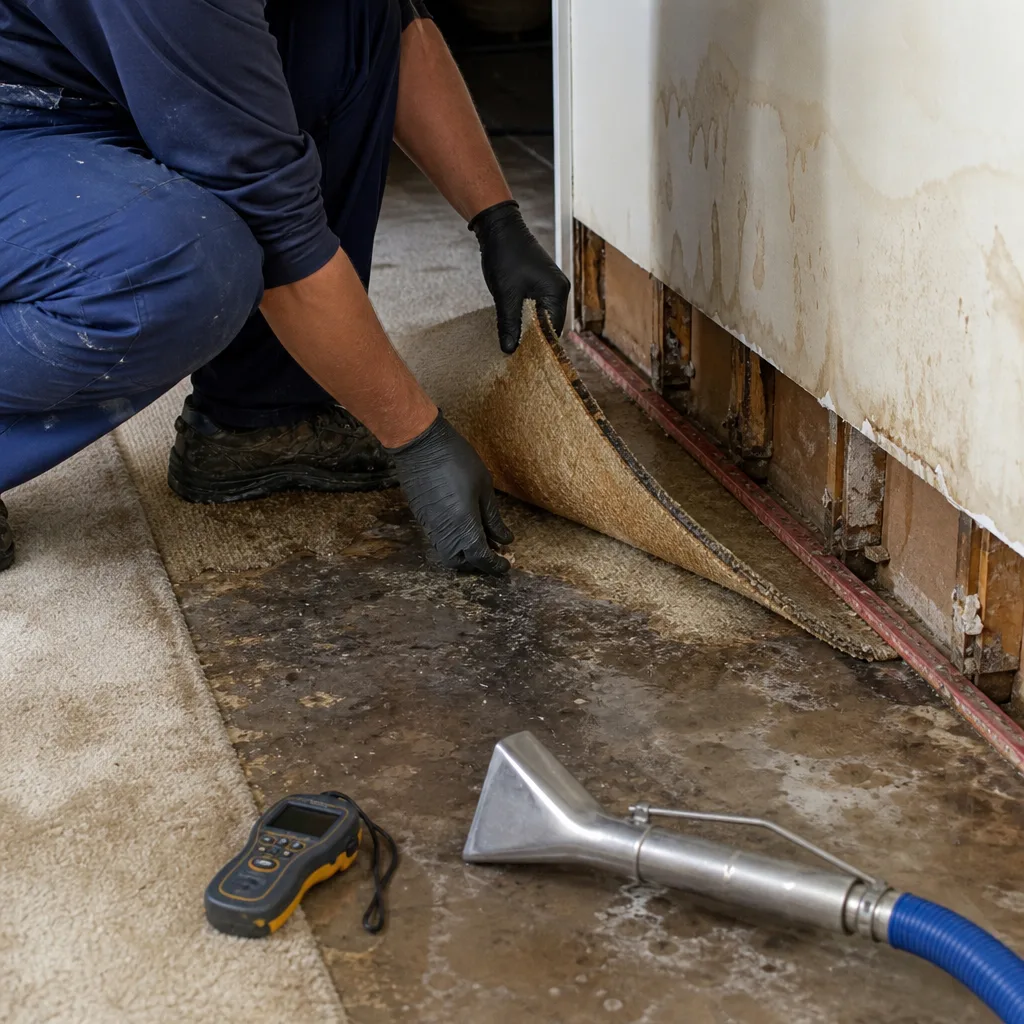
When a supply line bursts in a 1950s Dinuba wood-frame home, water doesn’t pool politely on the surface. It drops through floorboards, saturates the pier-and-beam subfloor, and wicks up into uninsulated wall cavities that haven’t seen dry air since the Eisenhower administration. Our extraction crews arrive with truck-mounted units and portable extractors, pull standing water immediately, and set up containment so your floors don’t keep absorbing moisture while we work. In Dinuba, extraction has to happen fast, because soil under many of these older slabs is already waterlogged from canal seepage and can’t absorb another gallon.
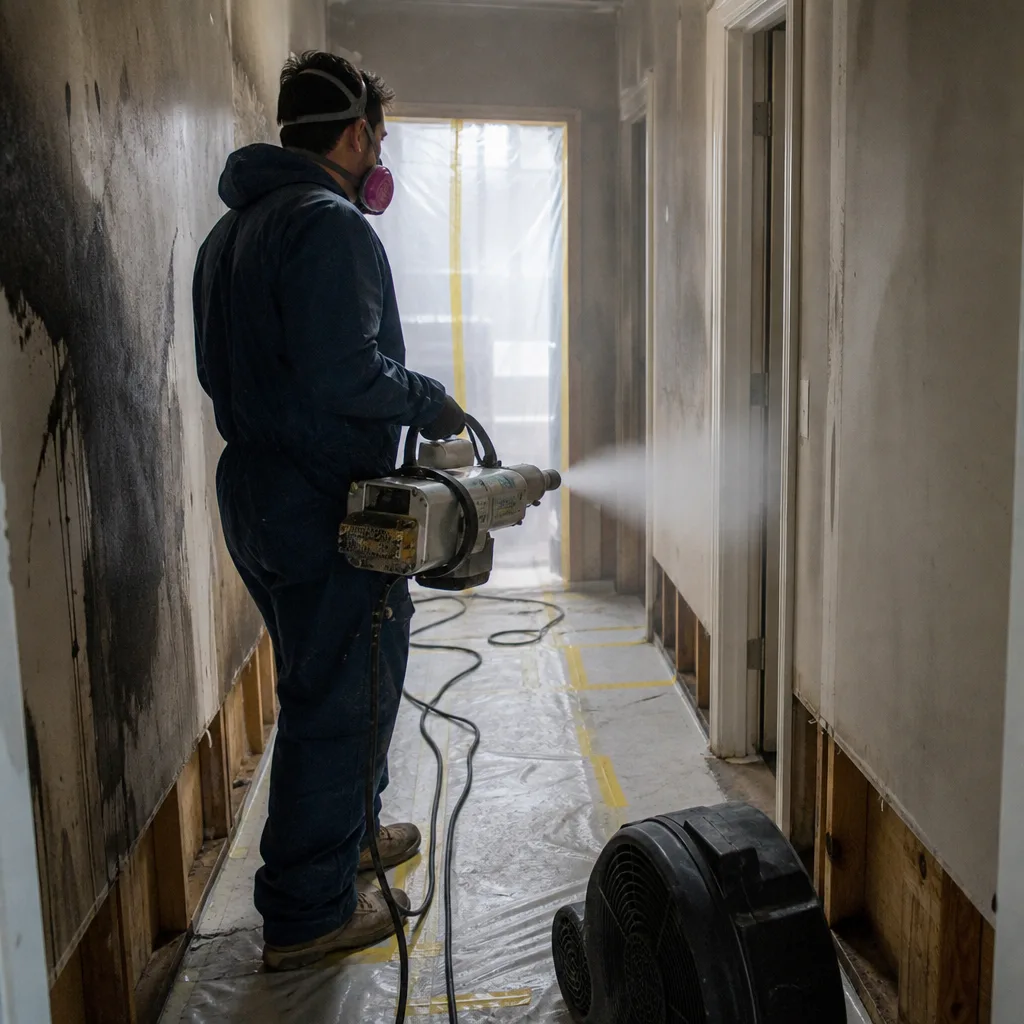
Structural Drying & Dehumidification
This is where Dinuba jobs go wrong when an inexperienced crew handles them. The visible drywall reads dry, the carpet feels fine, and everyone packs up. Then Tule fog season arrives, relative humidity sits near 100% for weeks, and mold blooms behind baseboards by Thanksgiving. We don’t consider a job finished until daily moisture readings hit the dry standard and we hand you the log. Dri-Eaz and Phoenix equipment runs continuously, not on a timer, because we’re drying the cavities you can’t see, not just the surface you can.
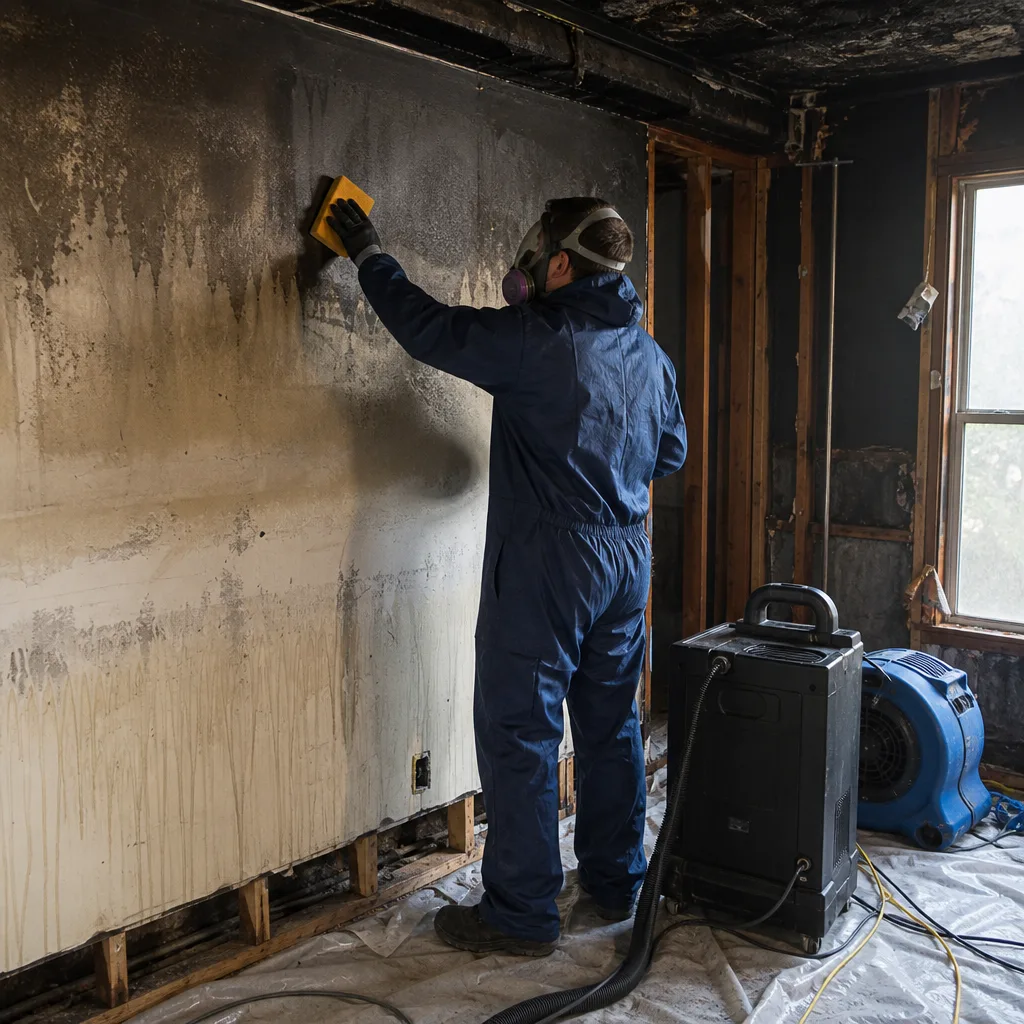
Flood Cleanup
Flooding in Dinuba isn’t always rainwater. It’s often irrigation water from the Consolidated Irrigation District’s canal network, which ramps up delivery in spring and shuts off after the October raisin harvest. When that water table rises under a shallow slab, it forces moisture through cracks that have been settling for decades. Our flood cleanup includes full extraction, antimicrobial treatment, containment, and drying, but it also includes documentation of where the water came from. That distinction matters when you’re standing in front of your insurance adjuster.
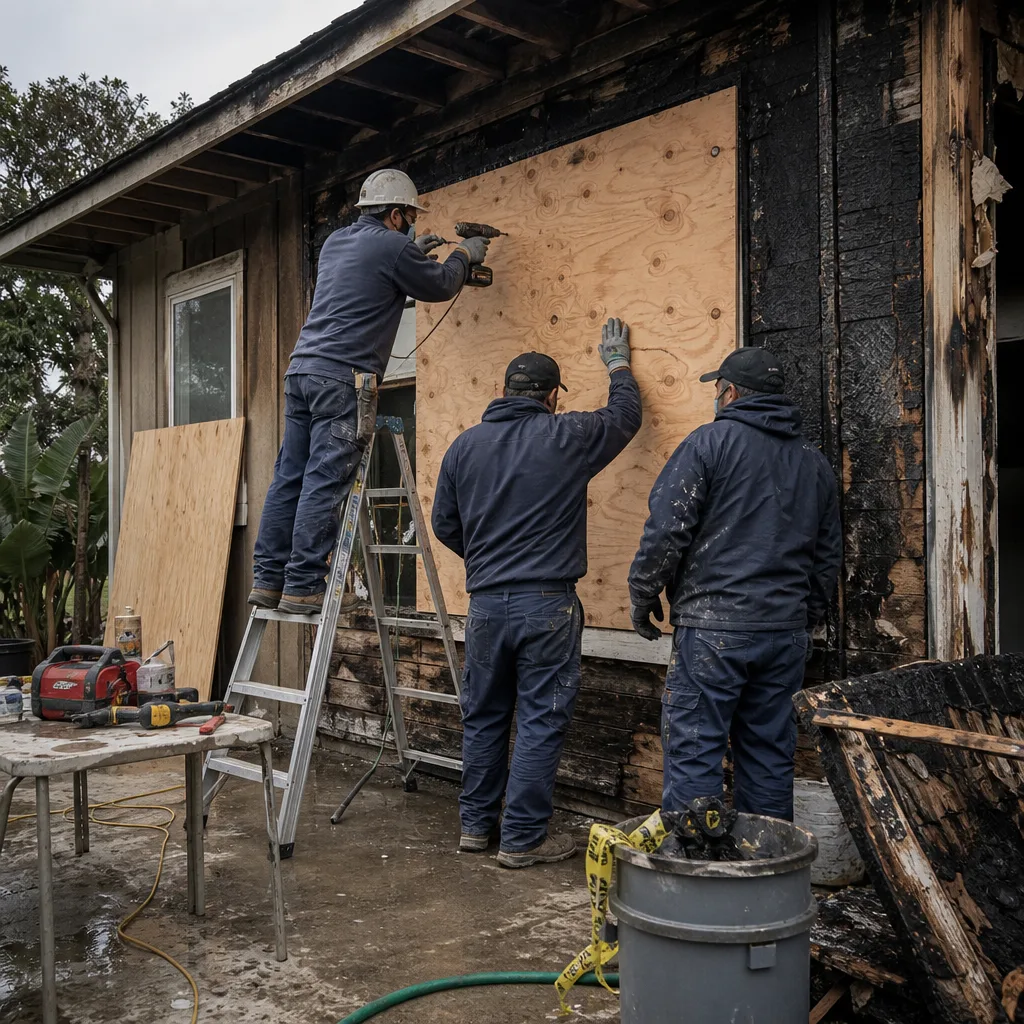
Burst Pipe Restoration
We responded to a 1950s wood-frame home on E. Tulare Street where a legacy galvanized supply line had burst behind an uninsulated wall cavity, saturating the pier-and-beam subfloor. Our techs used a Dri-Eaz LGR 2800i and XPOWER X-400 axial fan to pull 121°F-dried air through the crawlspace, but documented pre-existing slab cracks and 1.5-inch foundation settling from years of groundwater over-pumping before cutting any drywall. The homeowner got a clear repair-vs-retrofit recommendation: replace the 70-year-old galvanized runs with PEX now rather than patch a third pinhole leak. That’s the kind of honesty Dinuba homeowners deserve, and it’s the kind we deliver.
What happens when you call
- 1
A real person answersNo phone trees - you reach a local pro.
- 2
You get an upfront price rangeHonest numbers before anyone is dispatched.
- 3
A background-checked tech heads outLicensed & insured, dispatched right away.
- 4
You approve before work beginsNothing starts until you say go.
Trusted Brands We Service in Dinuba
We work on every configuration found in Dinuba’s 1940s through 1960s housing stock, and we stock parts for the systems these homes actually have, not just what’s current. Our equipment lineup includes Dri-Eaz and Phoenix drying systems, RIA and IFA training standards ensure our techs know how older materials respond to modern drying science. When your original plumbing, your original framing, or your original subfloor needs attention, we bring parts that fit and knowledge that applies, not a generic playbook.
Common Water Damage Restoration Problems We See in Dinuba Homes
- Uninsulated wall cavities from the 1940s-1960s hiding moisture: Dinuba’s older homes were built fast and cheap for agricultural workers, with no insulation between studs. Water migrates into those cavities and stays there. Surface readings can’t tell you what’s happening behind a plaster wall.
- Canal-driven seasonal seepage under shallow slabs: Irrigation water deliveries ramp up in spring, raising the local water table under homes near the Consolidated Irrigation District network. Water enters through slab cracks that have been there for years and gets mistaken for a plumbing failure.
- Original galvanized plumbing reaching end of life: Most 1950s Dinuba homes still have galvanized supply lines that are 70 years old. They fail from the inside out, producing slow seeps that saturate wall cavities for weeks before anyone notices. By the time you see the stain, the damage is extensive.
- Tule fog extending drying timelines indefinitely: From November through February, Dinuba sits under fog that holds relative humidity near saturation. A structure that isn’t fully dried before the fog arrives will never dry on its own. It just stays wet and grows mold. September and October restoration work has to be thorough, because you can’t come back and fix a fog-locked cavity easily.
Pricing for Water Damage Restoration in Dinuba, CA
Most Dinuba water damage jobs are mid-range compared to coastal markets, but the older construction drives costs in specific ways. A typical emergency water extraction and structural drying job in Dinuba runs $1,800 to $4,500. A burst pipe restoration with drywall removal, cavity drying, and subfloor repair usually lands between $3,200 and $6,500. Galvanized pipe replacement after a leak adds $2,000 to $5,000 depending on how much of the run is accessible. Crawlspace drying with encapsulation runs $1,500 to $3,800 when you include the documentation and moisture logging your insurer will want. Every estimate is free, and we put the scope in writing before work starts, so you know exactly what you’re approving.
We Also Serve Cities Near Dinuba
While this page focuses on Dinuba, our crews regularly handle Water Damage Restoration in Dinuba and the surrounding communities of Reedley, Cutler, Orosi, and Orange Cove. If your home sits on the agricultural edges of any of these towns, the same irrigation-calendar and subsidence issues apply. Call us and we’ll tell you honestly what you’re looking at.
Serving Dinuba, CA - Our Local Coverage Area
We’re based in the Dinuba area and know this community well. Use the map below to see our service coverage - if you’re nearby, we can almost certainly help.
FAQs - Water Damage Restoration in Dinuba
Dinuba’s water damage season follows the Consolidated Irrigation District’s canal-delivery calendar, not the weather. Canals ramp up in spring to flood surrounding fields, the local water table rises under shallow slabs, and water forces through existing cracks. Then deliveries cut off after the October raisin harvest, the soil contracts, and the same cracks open wider. Your home takes on water on the same agricultural schedule every year, even during dry months. Call (888) 737-2439 for an inspection before the next irrigation cycle starts.
Dinuba’s Tule fog holds relative humidity near saturation for weeks at a time from November through February. A structure that isn’t dried below the dry standard before the fog settles in will not finish drying on its own. The moisture just stays suspended in uninsulated wall cavities and pier-and-beam crawlspaces. Any restoration completed in September or October has to be verified with daily moisture readings through the fog season. That’s why we hand you the moisture log and stand behind the 90-Day Done Right Promise.
Replace them with PEX, not another galvanized patch. We’ve pulled 70-year-old galvanized lines from Dinuba homes that look fine on the outside and are nearly sealed shut with corrosion on the inside. A single pinhole leak means the entire run is near end of life. Patching buys you months, not years. A full galvanized-to-PEX replacement typically costs $2,000 to $5,000 depending on access, and we can do it in tandem with your water damage restoration so you’re not paying for demolition twice.
We photograph and document every pre-existing foundation crack before we start extraction, because Tulare County has some of the most severe land subsidence in the United States from chronic groundwater over-pumping. That means nearly every Dinuba home we enter has slab settling and cracking that predates the water event, often by decades. We map those cracks, note their width and orientation, and log them in our report. Your water damage claim stays clean, and you don’t get blamed for damage that was there long before the pipe burst. That documentation also matters for your insurance adjuster, which we coordinate with directly.
Your home is tied to the agricultural irrigation cycle that surrounds it. Spring water deliveries to fields around Dinuba raise the local water table, saturating the soil under your slab and creating hydrostatic pressure that pushes water through existing cracks. After the October harvest cutoff, the soil dries and contracts, and the cracks open wider. This cycle repeats annually with remarkable precision. We’ve documented homes that seep every April and crack every November, year after year. It’s a pattern unique to canal-irrigated ag-belt cities like Dinuba, and it’s why restoration here requires understanding the water delivery schedule, not just the plumbing in your walls.
Call Floodline Restoration Co. of California Now
If you’ve got water where it shouldn’t be, in a crawlspace, behind a wall, or creeping up through a slab crack, call (888) 737-2439. A live dispatcher answers. A uniformed, background-checked crew gets dispatched to your Dinuba address. We document everything, bill your insurance carrier directly, and hand you a written scope before any work starts. No surprises on the bill, no mid-job handoff to a different crew, and the 90-Day Done Right Promise in writing when we finish.
We’re also happy to honor our standing offers: $50 Off Any Repair Over $250, the $89 Seasonal Tune-Up, and a Senior & Veteran 5% Discount, always. Curt Bowman founded this company in 2010 on a simple idea: do the work right, document everything, and answer the phone like a neighbor. That’s how we still operate in Dinuba today.
Written by Curt Bowman, Owner at Floodline Restoration Co. of California, serving Dinuba and the surrounding Central Valley.