
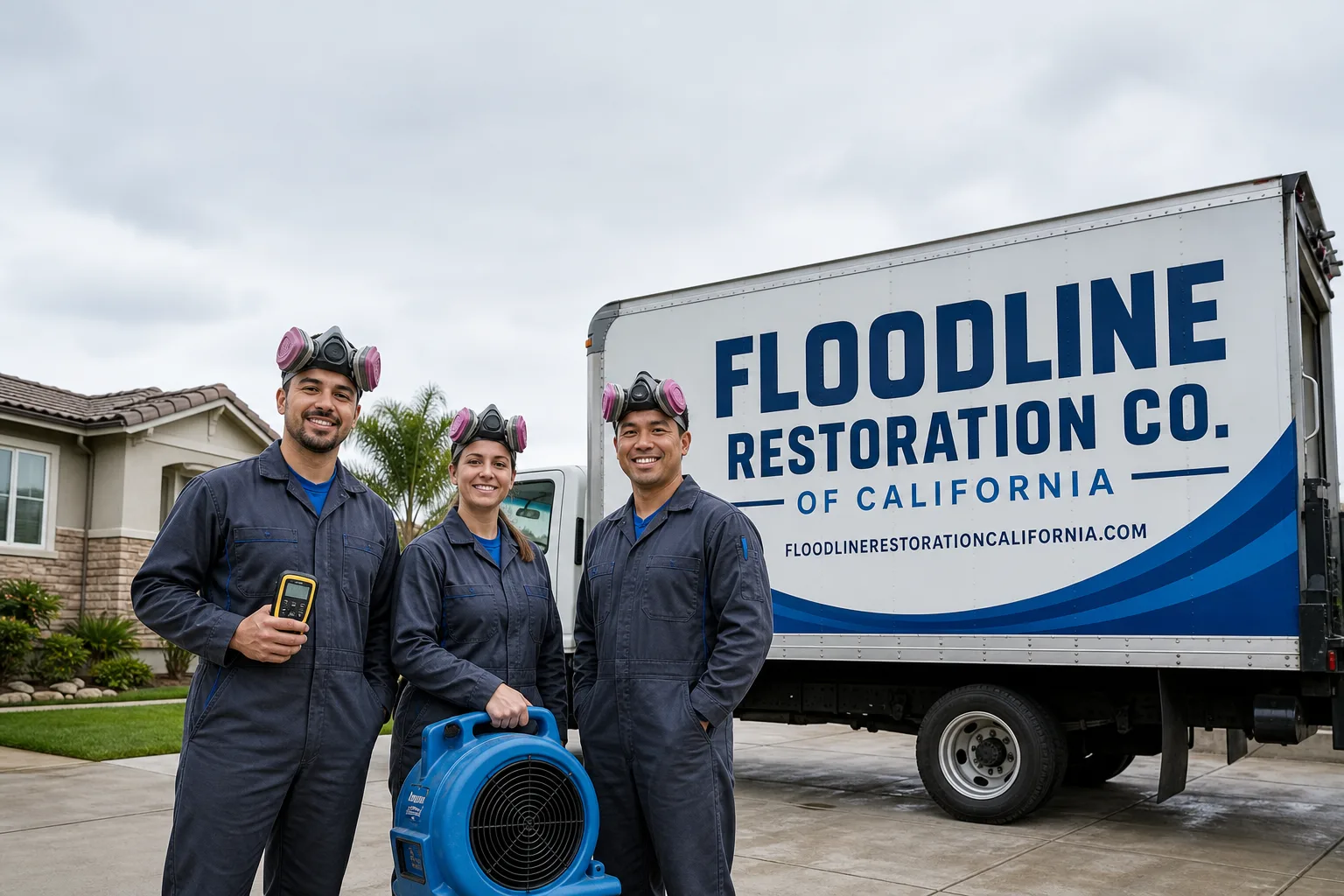
Fast, Reliable Water Damage Restoration Across Claremont
Water damage restoration in Claremont, CA typically costs between $2,100 and $7,800 depending on the scope, with emergency extraction starting around $400 to $900 for a single room. Our crews reach most Claremont homes within 60 to 90 minutes, because we know the streets, the housing stock, and the way water behaves in this particular city. If you’re standing in a flooded living room right now, call (888) 737-2439 and you’ll get a live dispatcher, not a recording.
Claremont isn’t like Pomona or Upland when it comes to water damage. The mountain-front position changes everything: the runoff, the wind, the age of the houses, the way plaster walls hold moisture. We’ve spent years responding to emergencies here, from the Village to the foothill streets north of Foothill Boulevard, and we’ve learned what works and what doesn’t in these specific homes.
Why Floodline Restoration Co. of California Is Claremont’s Preferred Water Damage Restoration Company
Floodline Restoration Co. was founded in 2010 by Curt Bowman, built around a dispatch board rather than a sales desk. That matters in Claremont, where homeowners tend to be people who’ve lived in the same house for two decades and don’t have patience for a company that sends a different crew every day. Our technicians are background-checked, uniformed, and certified to IICRC, RIA, and IFA standards. The same crew that reads the moisture map on day one handles the daily readings, hands the log to you and your carrier, and rebuilds what needs rebuilding.
Claremont homeowners call us because we answer the phone at two in the morning with a live person, and because we stand behind the work in writing. Every job we complete carries the 90-Day Done Right Promise, our Keystone Standard. If it isn’t done right, we make it right. No paperwork battles, no arguing. It’s the same guarantee Curt Bowman built the company on, and it applies to every extraction, every drying job, and every rebuild we do in the 91711 zip code.
We’re not the cheapest bid in Claremont, and we don’t try to be. We’re the company that shows up when we say we will, documents everything for your insurance carrier, and leaves you with a moisture log and a written promise. For a homeowner who’s been burned by a contractor once, that’s worth more than a lowball estimate.
Our Water Damage Restoration Services in Claremont
Emergency Water Extraction
When a supply line fails in a 1930s Craftsman bungalow in the Village, the water doesn’t wait. Extraction has to start the same visit. We run professional-grade Dri-Eaz and Phoenix extractors to pull standing water out of hardwood floors, carpet, and the cavities inside lath-and-plaster walls. In Claremont’s older homes, the critical window is shorter than people expect: original plaster wicks moisture upward quickly, and once water reaches the old-growth Douglas fir framing, drying gets much harder. Our dispatch is live 24/7, and a certified crew can be on-site and running extraction equipment within 90 minutes for most Claremont streets.
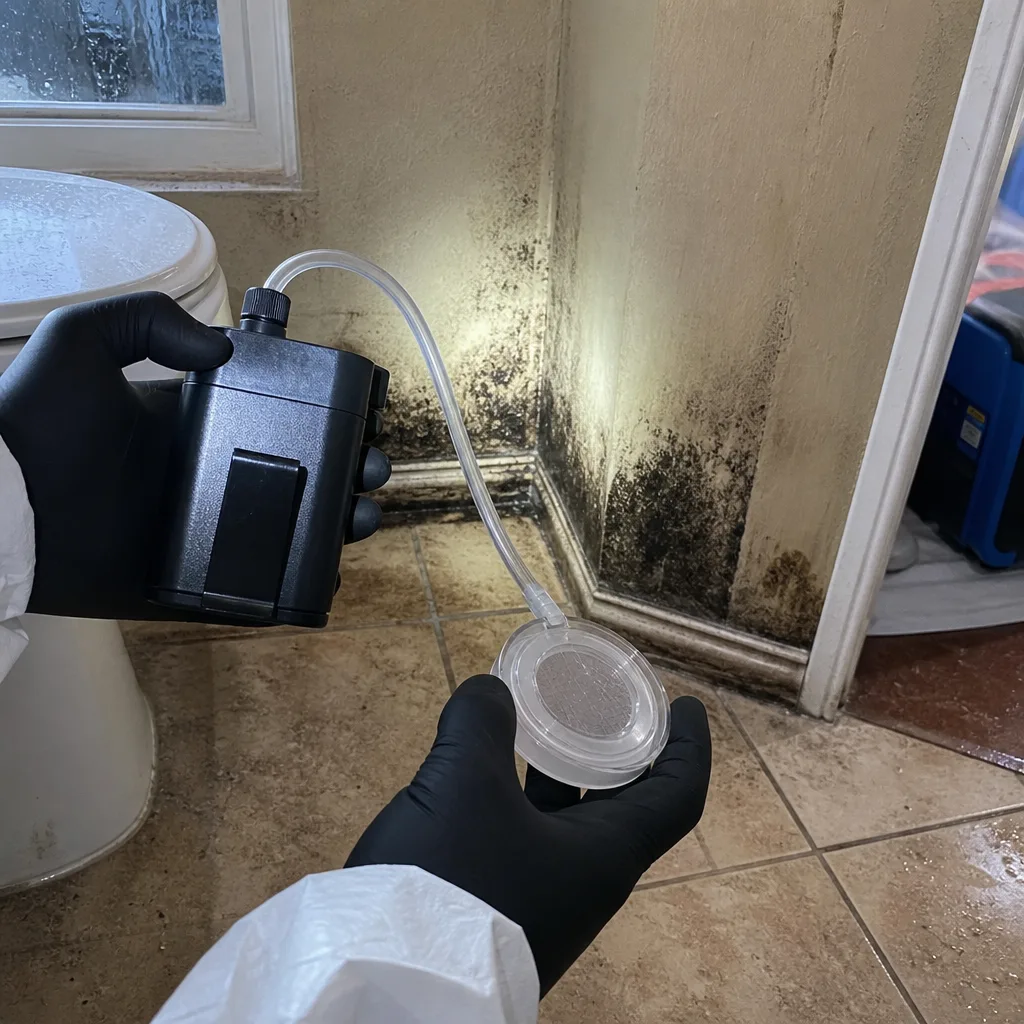
Structural Drying & Dehumidification
Drying a Claremont house isn’t the same as drying a newer tract home in Upland. Lath-and-plaster walls, original hardwood, and pre-1950 framing all hold water differently than modern drywall and dimensional lumber. We use Injectidry panels to force dry inside wall cavities without tearing out original plaster, and we place Phoenix and B-Air dehumidifiers with a moisture map guiding every placement. Daily readings get logged until the dry standard is met, and that log goes to you and your adjuster. No guessing, no “it feels dry to us.” The numbers say when it’s done.
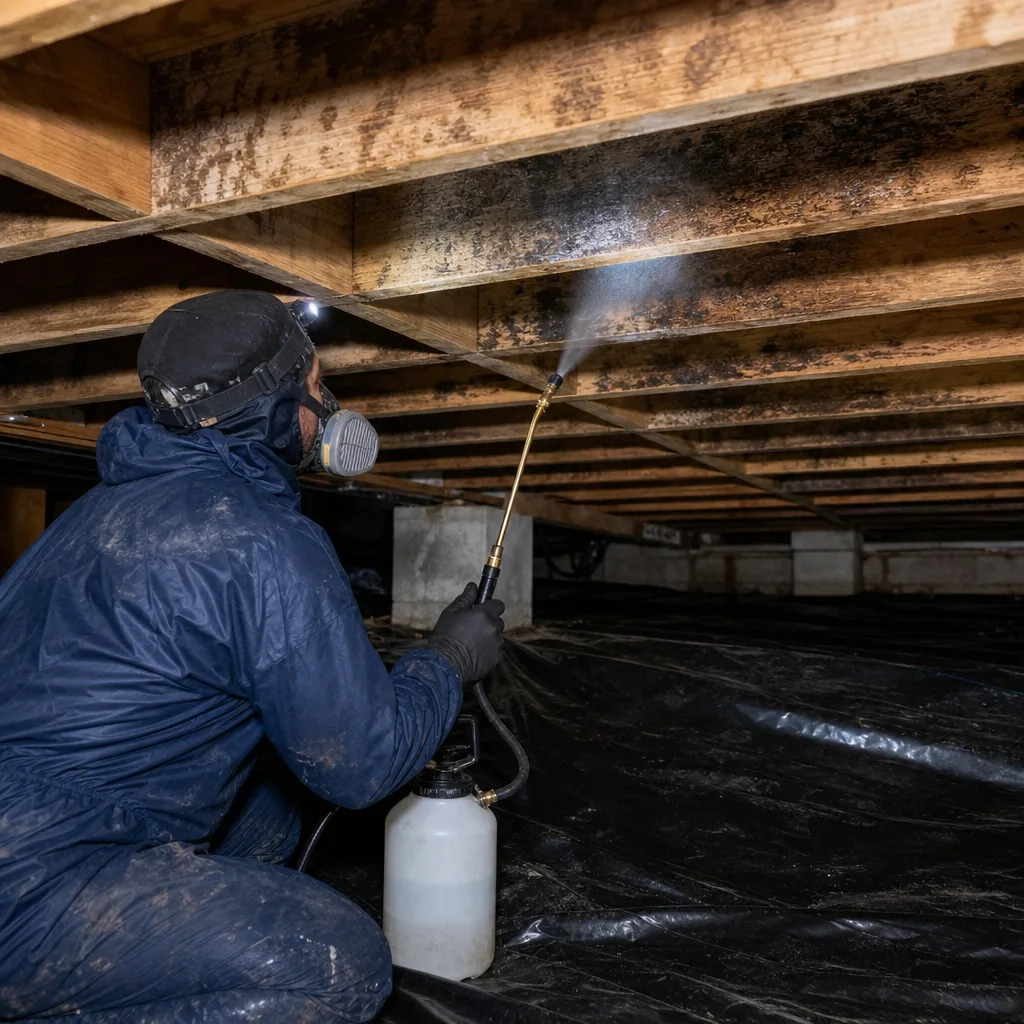
Flood Cleanup
Flooding in Claremont takes two forms, and they require very different protocols. The first is the obvious one: a burst pipe, an overflowing washing machine, a failed water heater. The second is specific to this city. When rain follows a wildfire on the San Gabriel slopes above Claremont, the runoff carries ash, sediment, and organic material into the northern residential streets. That’s not stormwater; it’s Category 3 contamination, and treating it like ordinary floodwater allows mold to establish in plaster walls within days. We scope these jobs accordingly, with full containment and antimicrobial treatment from the start. If your flooding came from outside the house and you live north of Foothill Boulevard, tell the dispatcher and we’ll treat it as the contamination event it is.
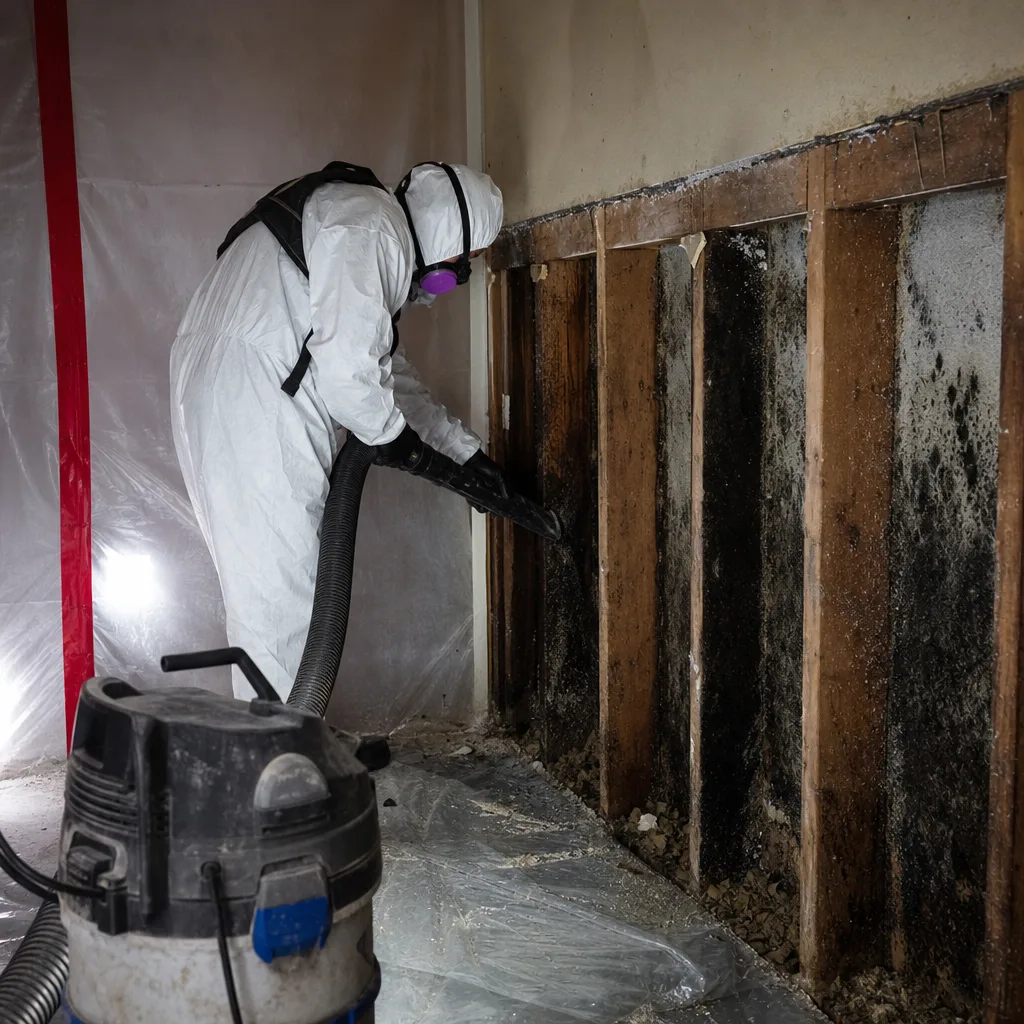
Burst Pipe Restoration
Claremont’s Village district still has plenty of original galvanized and iron supply lines from the 1920s through the 1940s. These pipes fail from the inside out, and by the time they let go, they often flood an entire room before the homeowner can shut off the water. We handle the full sequence: emergency extraction, structural drying, and then the plumbing repair or replacement so you don’t repeat the cycle. A key part of burst pipe work in Claremont is knowing when to salvage old plumbing and when to replace it. If your 1940s galvanized line has failed once, patching it often just queues up the next flood. We’ll give you a straight answer on that, backed by a written scope before any work starts.
What happens when you call
- 1
A real person answersNo phone trees - you reach a local pro.
- 2
You get an upfront price rangeHonest numbers before anyone is dispatched.
- 3
A background-checked tech heads outLicensed & insured, dispatched right away.
- 4
You approve before work beginsNothing starts until you say go.
Common Water Damage Restoration Problems We See in Claremont Homes
- Ash-laden runoff mistaken for ordinary stormwater. After a burn on the San Gabriel slopes, the next rain pushes sediment and ash into north Claremont streets and sometimes into homes. Homeowners assume it’s just rainwater, delay the call, and secondary mold takes hold in plaster within days.
- Fan drying on original lath-and-plaster walls. Setting up basic fans and hoping for the best doesn’t work on 1920s-1940s plaster. Surface drying happens, but hidden moisture wicks into old-growth framing and causes warped floors and concealed mold. Claremont’s older homes need cavity drying, not just air movement.
- Repeated bursts from legacy plumbing. We regularly see homes in the Village where a galvanized supply line failed, got a patch, and failed again within a year. Every repeat burst means new water damage, new drying, new mold risk. The honest fix on pre-1950 plumbing is often replacement, not another patch.
- Roof puncture damage from the fall canopy. Claremont’s dense urban tree canopy drops heavy branches during Santa Ana wind events, and those branches punch through roofing and decking. The water intrusion that follows often doesn’t show up immediately; it seeps into attic insulation and wall cavities, and by the time a stain appears on the ceiling, there’s already a drying problem behind it.
Pricing for Water Damage Restoration in Claremont, CA
A typical single-room water extraction and drying job in Claremont runs between $2,100 and $4,500. A full basement water removal with structural drying typically falls in the $3,800 to $7,200 range depending on square footage and whether containment is needed. Flood cleanup involving Category 3 contamination, common in foothill homes after a debris-flow event, generally starts around $5,500 and goes up based on how much wall and flooring material must be removed and treated. This older housing stock costs more to dry properly than modern drywall construction, because lath-and-plaster and old-growth framing take longer and require specialized equipment like Injectidry panels.
Every job starts with a written scope and an upfront price. No surprises on the bill. We handle direct insurance billing, so you’re not playing messenger between us and your carrier. Call (888) 737-2439 for a free estimate. We also offer $50 off any repair over $250, an $89 seasonal tune-up, and a 5% discount for seniors and veterans, always.
We Also Serve Cities Near Claremont
Our crews serve Claremont and the surrounding foothill communities, including Montclair, La Verne, Upland, and Pomona. If you’re in one of those cities and dealing with water damage, the same live dispatch, same certified technicians, and same 90-Day Done Right Promise apply. You can learn more about our full coverage area on our Claremont service page.
Serving Claremont, CA - Our Local Coverage Area
We’re based in the Claremont area and know this community well. Use the map below to see our service coverage - if you’re nearby, we can almost certainly help.
FAQs - Water Damage Restoration in Claremont
It changes the contamination classification from typical stormwater to Category 3 black water, which requires containment, antimicrobial treatment, and often more extensive material removal.
When fire burns the San Gabriel slopes above Claremont, the next significant rain carries ash, sediment, and decomposed organic matter down into the northern residential streets. Water that enters a home under those conditions isn’t clean stormwater; it’s contaminated, and drying it without proper treatment leaves pathogens and mold spores embedded in porous materials like plaster, insulation, and subflooring. Anyone living north of Foothill Boulevard should tell the dispatcher that the flooding came from outside during a post-fire rain event. That one conversation changes the entire restoration scope, and it’s why a local company that knows Claremont’s geography beats a generic water damage franchise every time. Call (888) 737-2439 and we’ll scope it correctly from the first visit.
Yes, in most cases, using Injectidry panel systems that force air through wall cavities without removing the original plaster, as long as the drying starts before mold establishes.
Our crew responded to a 1930s Craftsman bungalow in the Village where a failed legacy galvanized supply line had flooded the plaster-walled living room. We used Injectidry panels to force dry the lath-and-plaster without demolition, and our techs isolated the old-growth Douglas fir framing for controlled drying, preventing mold in the original walls. That kind of preservation matters in a city like Claremont, where the architecture is part of the home’s value. It also requires equipment and training that a contractor running basic fans off a pickup truck simply doesn’t have. The earlier you call, the better the odds of saving original plaster. Call (888) 737-2439 and we’ll tell you honestly whether drying or selective removal is the right call.
Because Claremont’s high Basin temperatures, dense tree canopy, and original lath-and-plaster construction combine to create warm, humid, low-airflow wall cavities that are ideal for mold growth, often within 72 hours.
Claremont records some of the hottest temperatures in the greater Los Angeles Basin, and the mature tree canopy that makes the Village so beautiful also blocks the airflow that would otherwise help walls dry naturally. Inside a 1930s wall, you’ve got organic materials: wood lath, old-growth framing, and sometimes decades of accumulated dust inside the cavity. Add water from a burst pipe or a roof breach, and the conditions are perfect. We see mold establish in as little as three days in these homes, which is why the first extraction call matters so much. If you’ve had water sitting for more than 48 hours in a Claremont home, don’t wait. Call (888) 737-2439 and get a certified crew on it.
Shut off the main water supply immediately, call our 24/7 dispatch at (888) 737-2439, and do not attempt to patch the line, because pre-1950 galvanized failures are almost always a sign that the entire pipe run is near the end of its service life.
When a 1940s galvanized pipe bursts in a Village Craftsman or Spanish Colonial Revival home, the visible split is rarely the only weak point. The pipe has been corroding from the inside for decades, and the wall thickness that remains is often paper-thin along the entire run. Patching one section leaves the rest of the line ready to fail, which means another flood, another drying cycle, and another mold risk in original plaster walls. The right move is extraction and drying first, then a straight conversation about replacing the legacy plumbing. We handle both phases, so you’re not coordinating two companies and waiting for a plumber who doesn’t understand historic framing. Call (888) 737-2439 and we’ll walk you through it from the first phone call.
Yes, because homes north of Foothill Boulevard sit in the direct path of runoff from the San Gabriel slopes, meaning their floodwater often carries mountain sediment and post-fire contaminants that require Category 3 treatment.
Claremont sits hard against the base of the San Gabriel Mountains, and the northernmost residential streets are the first stop for whatever comes off those slopes. After a wildfire, the denuded terrain funnels mud, ash, and debris into those streets during the very next rain event. That sediment carries enough organic contamination to require full black water protocols, which means containment, antimicrobial application, and often flooring and lower-wall removal that a standard stormwater cleanup wouldn’t need. Homeowners routinely assume it’s ordinary runoff, delay the call, and end up with mold inside plaster walls. If you’re north of Foothill Boulevard and water came into your home from outside, tell us when you call. We’ll scope it correctly from the start. Call (888) 737-2439 for an honest assessment.
Contact Floodline Restoration Co. of California
If you have water where it shouldn’t be in Claremont, don’t wait. Every hour changes the drying scope, and in these older homes, the margin for error is thinner than you’d think. Call (888) 737-2439 now, day or night, and a live dispatcher will get a certified, background-checked crew to your home. You’ll get a written scope before work starts, a moisture log at the end, and our 90-Day Done Right Promise in writing. That’s how we’ve done it since Curt Bowman founded Floodline Restoration Co. in 2010, and that’s how we’ll do it for you.
Written by Curt Bowman, Owner at Floodline Restoration Co. of California, serving Claremont.