
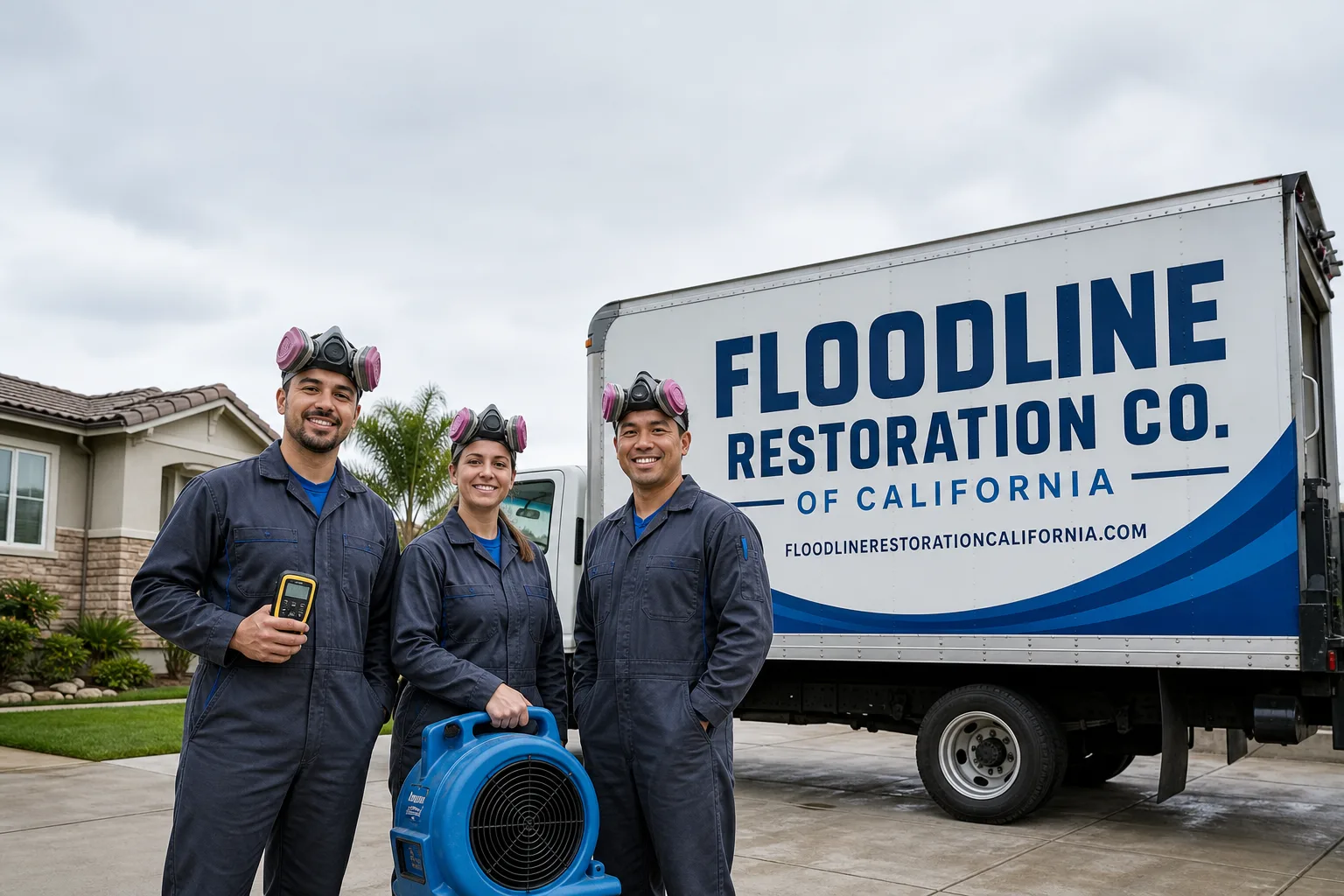
Fast, Reliable Storm & Disaster Restoration Across West Hollywood
Storm damage in West Hollywood doesn’t wait for business hours, and neither do we. Floodline Restoration Co. of California answers the phone with a live dispatcher 24/7, and our certified crews reach West Hollywood addresses fast because we know exactly how to navigate the tight alley loads off Santa Monica Boulevard, the hillside switchbacks above Sunset, and the gated courtyard entries that define this city’s housing stock. Whether a Santa Ana wind event just tore a section of roof off a 1950s dingbat or an atmospheric river sent runoff through a rent-stabilized unit off Cynthia Street, we start extraction the same visit. Call (888) 737-2439 and a person picks up, not a recording.
Why Floodline Restoration Co. of California Is West Hollywood’s Preferred Storm & Disaster Restoration Company
West Hollywood is not unincorporated Los Angeles County, and restoration work here has legal teeth that most companies never see until it’s too late. The city’s Rent Stabilization Ordinance means a water event in a covered unit triggers a 24-hour clock for tenant relocation assistance, and every hour we’re not on site is an hour the landlord is bleeding money. We get that. Our technicians document moisture mapping, equipment placement, and drying progress in timestamped logs that hold up in WeHo’s tenant protection framework. Curt Bowman founded this company in 2010 around a dispatch board, not a sales desk, and that’s why a live person still answers at 2 a.m. when a storm knocks out power across the 90069 hills.
The same crew that reads the moisture map on day one handles daily readings, hands the log to the homeowner and carrier, and rebuilds what needs rebuilding. No mid-job handoff to a subcontractor you’ve never met. Background-checked, uniformed technicians trained to IICRC, RIA, and IFA standards show up with professional-grade Dri-Eaz and Phoenix equipment, and they’ll be there when they say. We’ve spent over 42 years serving local communities, and the way we see it, a company that plans to be in town in thirty years hires local, trains apprentices into journeymen, and answers the phone with a person.
Our Storm & Disaster Restoration Services in West Hollywood
Storm Damage Cleanup
When wind and rain tear through West Hollywood, the damage pattern here is predictable: saturated stucco on Mid-Century dingbats, water cascading through skylights on hillside homes above Laurel Canyon, and clogged drains pushing runoff into carport-level units. Our crews arrive with commercial extractors, set containment where needed, and remove storm debris before it becomes a mold problem. In West Hollywood specifically, we prioritize getting moisture readings logged the same day because the RSO clock is already running.
Flood Damage Restoration
A failed supply line on the fourth floor of a vintage Sunset Strip apartment building can flood three rent-stabilized units in under an hour. Our first move after stopping the water is setting up extraction and logging the affected units, because under WeHo law the landlord owes each displaced tenant comparable housing costs within 24 hours. We run Dri-Eaz LGR 7000XLi dehumidifiers and Phoenix air movers through tight stairwells and narrow courtyard gates, cutting access panels where needed to stop capillary spread. The drying log goes to the homeowner and the insurance carrier daily.
Emergency Board-Up
Broken windows and compromised doors after a storm are a security issue and a liability issue in West Hollywood. Our board-up crews secure openings fast, using materials cut to fit the arched windows and casement frames common in 1920s Spanish Colonial Revival courtyard apartments. We don’t just nail plywood over an opening; we make it weather-tight, lockable, and documented so the insurance adjuster sees exactly what we did and why. Response time to a 90069 address is measured in hours, not days.
Roof Tarping
When a Santa Ana wind event rips shingles off a hillside property in the High Fire Hazard Severity Zone north of Sunset, the next rainstorm is already a liability. Our roof tarping crews use reinforced poly tarps and mechanical fasteners rated for SoCal wind gusts, sealing the damaged area so water can’t reach the interior. For West Hollywood’s flat-roofed dingbats and garden apartments, we anchor edge-to-edge and secure penetrations around vents, skylights, and parapet walls where wind gets underneath and tears roofing loose.
What happens when you call
- 1
A real person answersNo phone trees - you reach a local pro.
- 2
You get an upfront price rangeHonest numbers before anyone is dispatched.
- 3
A background-checked tech heads outLicensed & insured, dispatched right away.
- 4
You approve before work beginsNothing starts until you say go.
Trusted Brands We Service in West Hollywood
Our Storm & Disaster Restoration crews run Dri-Eaz, Phoenix, XPOWER, B-Air, and Injectidry equipment every day on West Hollywood jobs, and we maintain a local parts inventory for these brands so we’re not waiting on a shipment while a unit sits wet. Most jobs are completed in a single visit using professional-grade equipment. Technicians certified to IICRC, RIA, and IFA standards know these machines well enough to read the moisture map, adjust drying profiles, and hand the homeowner and carrier a log that makes sense. If a Phoenix dehumidifier needs a filter swap or an XPOWER air mover needs a cord, we handle it on the spot without slowing the job down.
Common Storm & Disaster Restoration Problems We See in West Hollywood Homes
- Concealed cavities from soft-story retrofits. Many of WeHo’s dingbat buildings got mandatory seismic retrofits that added steel frames and shear walls, which created new wall and ceiling voids that trap moisture. Standard drying setups miss these cavities, and that trapped moisture eventually forces a full mold remediation. We map every cavity before we set equipment.
- Multi-unit cascade failures. A single corroded galvanized supply line on an upper floor can flood several rent-stabilized units at once, and each one carries its own relocation obligation. The financial clock starts the moment water hits the subfloor, so speed and documentation matter equally.
- Hillside smoke and water doubles. The northern 90069 corridor sits in a High Fire Hazard Severity Zone, so Santa Ana-driven fires that accelerate through Laurel Canyon leave smoke damage that requires different containment than a flatland flood. Those same hillside properties then face slope runoff and secondary water intrusion during El Niño winters, creating back-to-back restoration seasons for the same addresses.
- Tight access for equipment. Alley-loaded dingbat carports, narrow 1920s courtyard gates, and hillside switchbacks don’t accommodate full-size restoration trailers. Crews that can’t get their equipment inside delay extraction long enough to turn a clean-water event into a mold problem. We run compact commercial extractors and air movers sized for these constraints.
Pricing for Storm & Disaster Restoration in West Hollywood, CA
We Also Serve Cities Near West Hollywood
Our crews handle Storm & Disaster Restoration in West Hollywood and the surrounding communities every week. We’re in Beverly Hills, Century City, Hollywood, and Universal City regularly, and our equipment and dispatch system are set up to respond to any of these areas without routing through a distant office. If your property sits near the West Hollywood border, call (888) 737-2439 and we’ll confirm coverage before you hang up.
Serving West Hollywood, CA - Our Local Coverage Area
We’re based in the West Hollywood area and know this community well. Use the map below to see our service coverage - if you’re nearby, we can almost certainly help.
FAQs - Storm & Disaster Restoration in West Hollywood
How does West Hollywood’s Rent Stabilization Ordinance change how fast we have to start water extraction after a storm?
You have 24 hours from the moment a rent-stabilized unit is affected to provide displaced tenants with comparable housing or hotel costs, so extraction and documentation need to start the same day, not the next morning. Our crews are on site within hours of your call, running extractors and logging moisture readings with timestamps that hold up in WeHo’s tenant protection framework. Call (888) 737-2439 and we’ll dispatch immediately.
Can our crew even fit drying equipment into a 1920s courtyard apartment on a Laurel Canyon hillside?
Yes. We use compact commercial extractors, low-profile air movers, and desiccant dehumidifiers sized for narrow courtyard gates, tight stairwells, and alley-loaded carports that full-size trailers can’t reach. On a 1930s courtyard apartment off Cynthia Street in 90069, we ran a Dri-Eaz LGR 7000XLi and an XPOWER X-4700AM air mover through the dingbat stairwell, cut access panels in the original lath-and-plaster ceiling to stop capillary spread, and worked with the property manager to timestamp all moisture mapping so their RSO relocation obligation was locked in from hour one.
Why does smoke damage from a Santa Ana wind event hit the 90069 hills differently than a flatland fire?
The northern swath of West Hollywood sits inside a High Fire Hazard Severity Zone, so Santa Ana winds that accelerate through Laurel Canyon drive smoke and embers into the hills with enough force to press soot into wall cavities, attic spaces, and HVAC ducting. The smoke binds with mineral-heavy dust and leaves a residue that standard flatland cleanup methods won’t fully remove, so containment and air scrubbing have to be set differently. We adjust our process for this specific failure mode on every hillside job.
If a broken pipe on the fourth floor floods three rent-stabilized units at once, what’s the first thing our crew does after stopping the water?
We identify every affected unit, start extraction in the most heavily flooded one first, and begin timestamped documentation of each unit’s condition, square footage, and drying status. That documentation is what the property manager needs to execute relocation obligations within the city’s 24-hour deadline, and it’s what your insurance carrier needs to see when the claim lands. Then we set containment and run drying equipment through the tightest access point we can find.
Do soft-story retrofit cavities actually change how long drying takes in a WeHo dingbat?
They absolutely do. Mandatory soft-story seismic retrofits added steel frames and shear walls to many of West Hollywood’s dingbats, and those additions created concealed wall and ceiling cavities that trap moisture behind finished surfaces. If we don’t cut access panels and dry those cavities directly, the structure looks dry on the surface while moisture hides inside, which extends the drying schedule and can force a full mold remediation later. We map every cavity before we set equipment so the dry standard is actually met, not just assumed.
Storm & Disaster Restoration You Can Hold Accountable
When a storm hits West Hollywood, the last thing you need is a restoration company that treats your rent-stabilized building like it’s in unincorporated LA County and misses the 24-hour relocation clock. Our Storm & Disaster Restoration team works with the RSO from hour one, documents every step, bills your carrier directly, and stands behind the result with the 90-Day Done Right Promise, the Keystone Standard, in writing. No arguing. No mid-job handoff. Just a square deal from a company that has been serving local communities for over 42 years and plans to be here in thirty more. Senior and veteran discounts are always available, along with $50 off any repair over $250 and the $89 seasonal tune-up.
Call (888) 737-2439 now. A live person answers at two in the morning, and a certified crew reaches your West Hollywood property the same visit. We’ll be there when we say.
Written by Curt Bowman, Owner at Floodline Restoration Co. of California.