
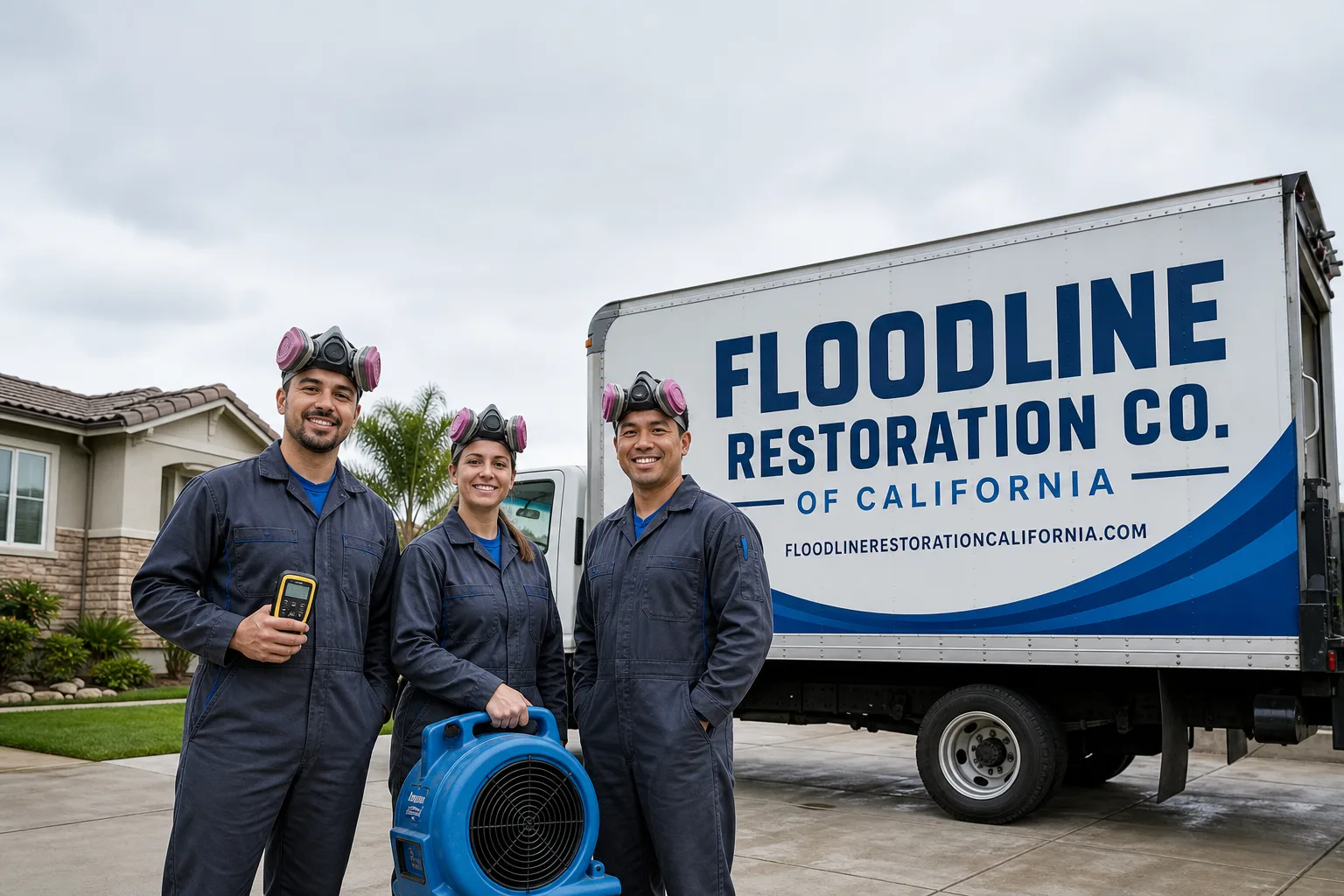
Fast, Reliable Storm & Disaster Restoration Across Visitacion Valley
Storm damage in Visitacion Valley rarely looks like the textbook photo. Here, water arrives from two directions at once: down from the sky and up through the ground. The valley bowl that gives this neighborhood its name collects runoff from McLaren Park’s slopes and the surrounding heights, pushing groundwater against slab foundations from November through April. When a 1950s stucco home takes on water, the damage is often already inside the walls before anyone sees a stain. Floodline Restoration Co. of California has crews stationed to reach Visitacion Valley fast, with extraction running the same visit. Call (888) 737-2439 and a live dispatcher answers, day or night.
Why Floodline Restoration Co. of California Is Visitacion Valley’s Preferred Storm & Disaster Restoration Company
We’ve worked enough Visitacion Valley homes to know the pattern before we pull a single wall section. The 1940s-1960s stucco houses that line streets off Bayshore and Sunnydale Avenue share a common anatomy: shallow crawl spaces with no vapor barrier, original galvanized supply lines, and composition shingles with step flashing that gave up years ago at the parapet walls. That means a winter storm rarely causes one clean category of damage. It causes three, layered.
Our crews treat Storm & Disaster Restoration as a full-cycle job, not a patch. We don’t extract and leave you to find a plumber, a roofer, and a drywall crew. The same uniformed, background-checked team that reads the moisture map on day one handles the drying, the rebuild, and the daily readings until the dry standard is met. Every Visitacion Valley job is backed by our 90-Day Done Right Promise, in writing, with no argument if something isn’t right.
Since Curt Bowman founded this company in 2010, the dispatch board has never closed. We answer the phone with a person at 2 a.m. when a storm blows through Visitacion Valley, because that’s when you need to know someone is actually coming. We coordinate scheduling from our San Francisco Bay Area office, but the crews who knock on your door are local, trained to IICRC, RIA, and IFA standards, and they carry professional-grade Dri-Eaz and Phoenix equipment that gets water out before it soaks deeper.
Our Storm & Disaster Restoration Services in Visitacion Valley
Flood Damage Restoration
Flooding in Visitacion Valley is rarely surface-only. Because the neighborhood sits in a low bowl, stormwater doesn’t just pool in the street, it presses upward against slab foundations and wicks into shallow crawl spaces. We extract standing water fast, then map the moisture with professional meters to find what’s hidden in framing and under flooring. If groundwater keeps seeping after extraction, we address the source before drying, not after.
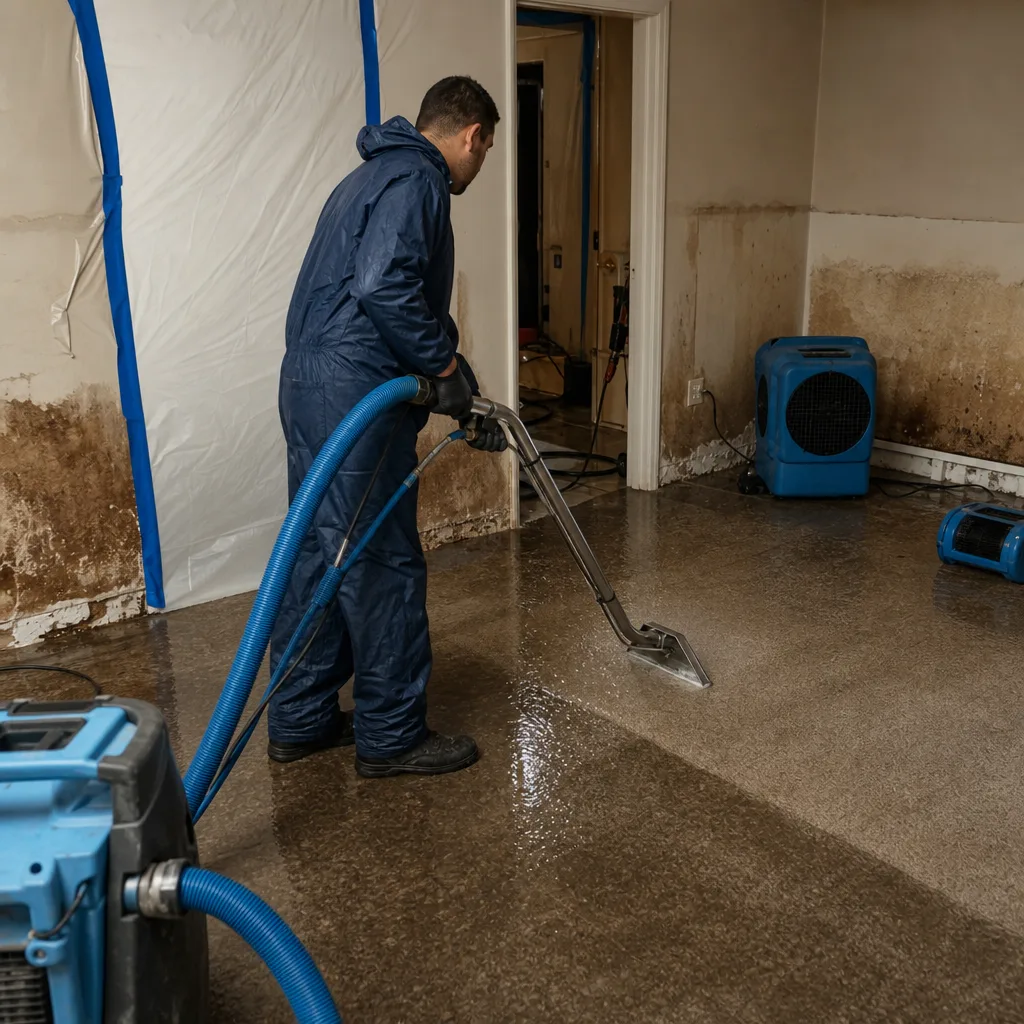
Storm Damage Cleanup
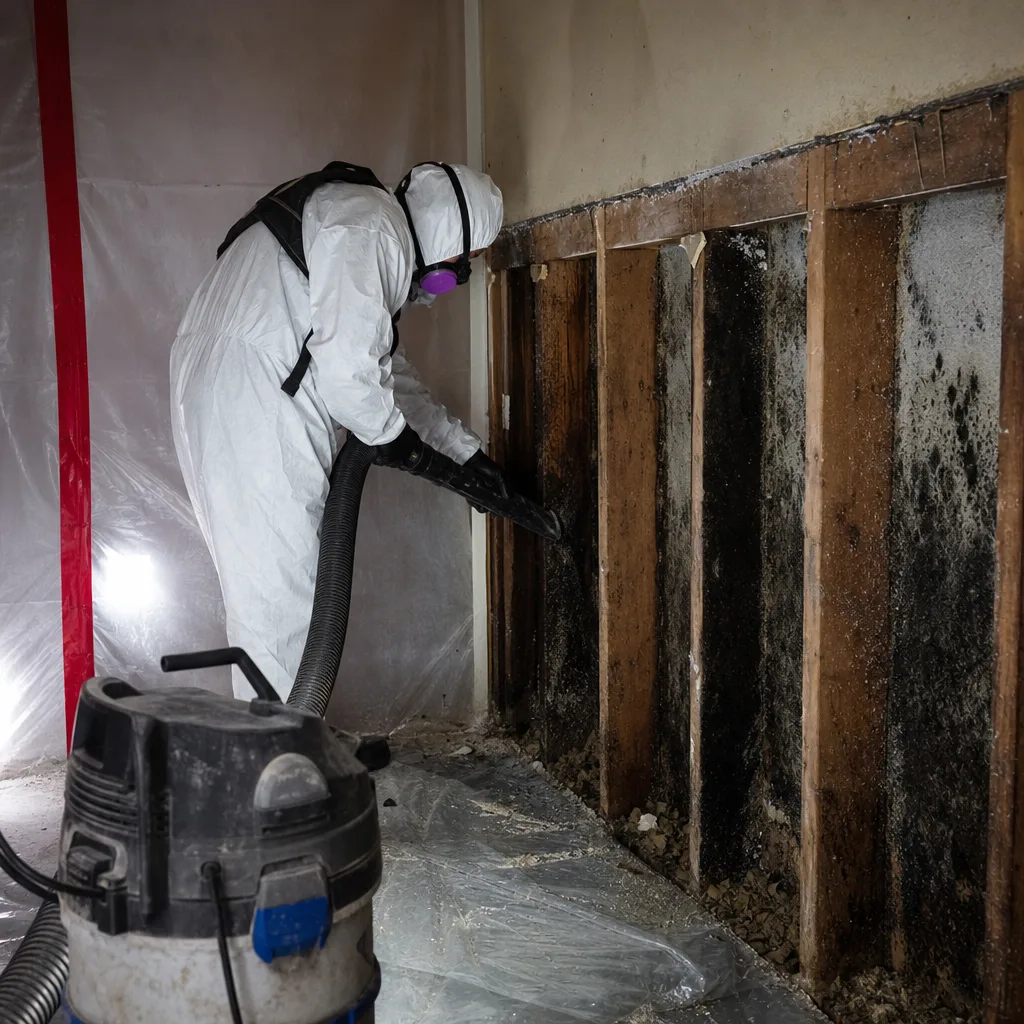
When wind and rain tear through the 94134 zip code, debris, saturated drywall, and compromised roofing are usually just the visible half. Our storm cleanup jobs in Visitacion Valley frequently uncover water that’s been traveling inside wall cavities for days, following the path of failed step flashing at stucco parapet walls. We remove damaged material, document everything for your carrier, and dry to the standard, not to a guess.
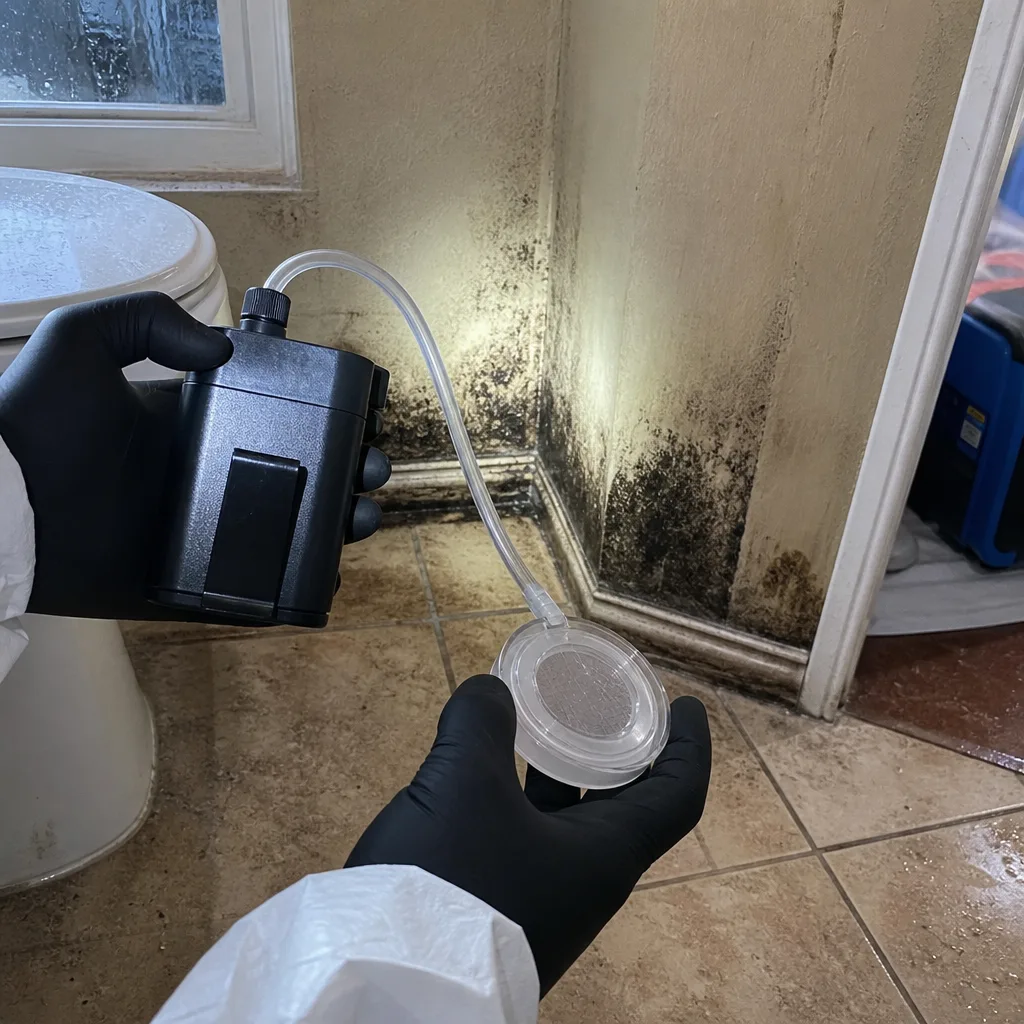
Emergency Board-Up
A broken window or a tree limb through a wall on a Visitacion Valley hillside street leaves your home open to wind-driven rain and unwanted entry. We respond to board-up calls in Visitacion Valley with urgency, but we also photograph every opening before and after securing it. That documentation goes straight to your insurance adjuster, so the board-up is part of the claim from the start, not an afterthought.
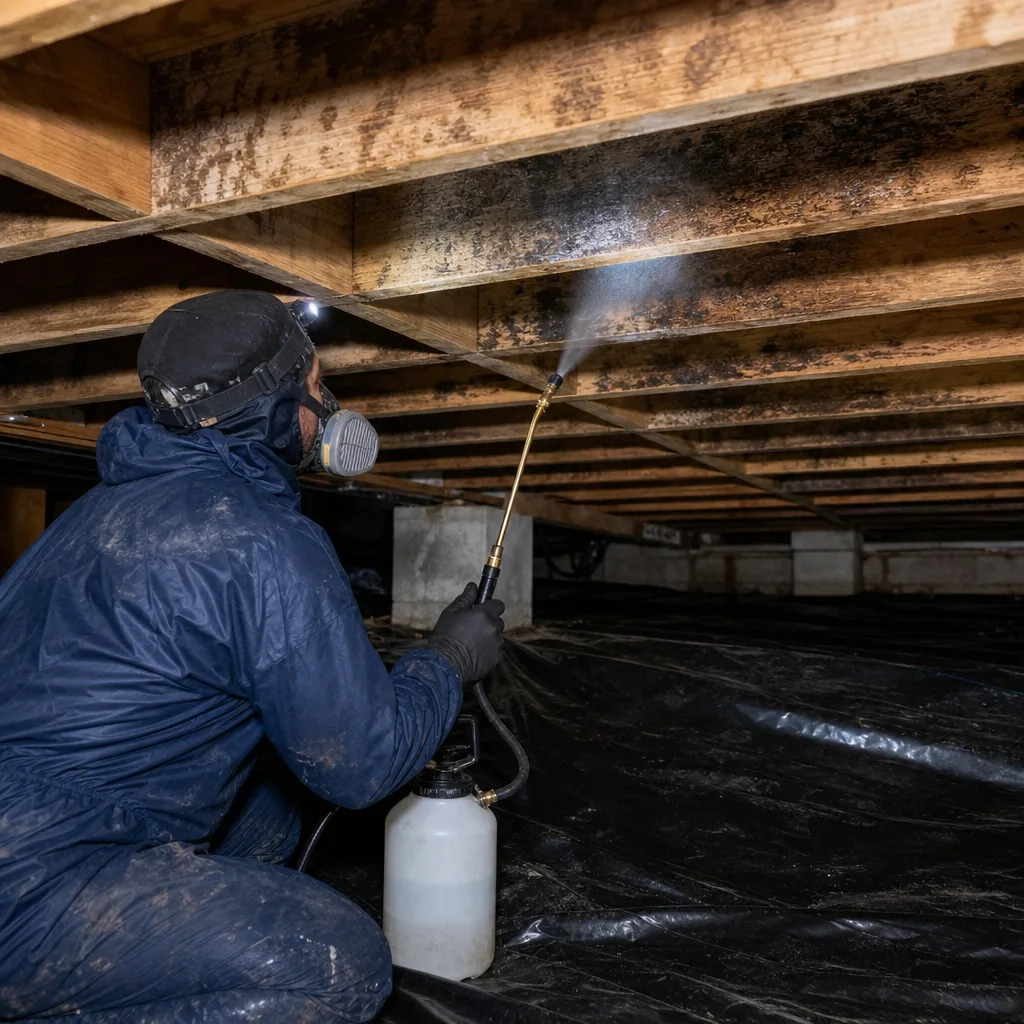
Roof Tarping
A tarp is not a repair, and we’ll say that plainly. But on a steep Visitacion Valley lot where the next storm is already forming over San Bruno Mountain, a properly secured tarp stops active intrusion while we scope the full repair. Our crews know how aging composition shingles and deteriorated step flashing behave on this neighborhood’s characteristic stucco parapet walls. We tarp so the water stops now, then give you a written scope for what needs to happen next.
What happens when you call
- 1
A real person answersNo phone trees - you reach a local pro.
- 2
You get an upfront price rangeHonest numbers before anyone is dispatched.
- 3
A background-checked tech heads outLicensed & insured, dispatched right away.
- 4
You approve before work beginsNothing starts until you say go.
Trusted Brands and Equipment We Use in Visitacion Valley
Our Visitacion Valley crews run Dri-Eaz LGR dehumidifiers and Phoenix air movers on most storm jobs, paired with Injectidry systems for the shallow crawl spaces that make up most of this neighborhood’s under-floor area. These brands are workhorses, not showpieces. We train to IICRC, RIA, and IFA standards, and we bring the right machine for the specific job, not whatever’s rolling closest to the truck door. For Visitacion Valley homeowners with legacy hardware and original building materials, that matters because the equipment has to work around old framing, not against it.
Common Storm & Disaster Restoration Problems We See in Visitacion Valley Homes
- Hidden slab seepage that returns every winter. Shallow crawl spaces with no vapor barrier sit directly above saturated ground from roughly November through April. Surface water gets extracted and floors look dry, but groundwater keeps re-wetting the framing from below.
- Original galvanized plumbing failing during storm remediation. The same water event that floods a crawl space often pushes corroded 1950s supply lines past their breaking point. A flood cleanup turns into a simultaneous pipe-repair and structural drying job on Visitacion Valley streets more than anywhere else we work.
- Deteriorated step flashing at stucco parapet walls. Rain channels behind composition shingles and into wall cavities, then shows up as damage weeks after the storm has passed. By the time you see the stain, the framing has been wet for days.
- Hydrostatic pressure from the valley bowl. Runoff draining off McLaren Park and the elevated districts around Visitacion Valley doesn’t just run downhill; it builds pressure against below-grade walls and slabs. Neighboring elevated neighborhoods like Excelsior and Portola don’t experience this the same way.
Pricing for Storm & Disaster Restoration in Visitacion Valley, CA
Job costs in Visitacion Valley reflect the compound nature of the damage here. A straightforward storm cleanup with extraction and drying on a single room typically runs $1,200-$3,800 in this market. Crawl space drying with Injectidry or similar systems on a 1950s stucco home usually lands between $2,500 and $6,000 depending on square footage and how long the water sat. Roof tarping runs $400-$900 for a standard Visitacion Valley lot, while full flood restoration with wall removal, structural drying, and rebuild commonly falls between $8,000 and $25,000. Galvanized pipe replacement discovered mid-job adds $3,000-$9,000 depending on access and wall removal. We give you a written scope before work starts, bill your carrier directly, and honor our standing offers: $50 off any repair over $250, and a Senior & Veteran 5% discount, always. Call (888) 737-2439 for a free estimate with real numbers.
We Also Serve Cities Near Visitacion Valley
Floodline Restoration Co. of California serves the broader San Francisco Bay Area, including Mission District, Noe Valley, Daly City, and San Francisco. If your home sits just outside Visitacion Valley, we’ll still get there fast. The same live dispatch, the same written guarantee, the same crew that finishes the job.
Serving Visitacion Valley, CA - Our Local Coverage Area
We’re based in the Visitacion Valley area and know this community well. Use the map below to see our service coverage - if you’re nearby, we can almost certainly help.
FAQs - Storm & Disaster Restoration in Visitacion Valley
Your crawl space is flooding because Visitacion Valley sits in a low-lying bowl that collects groundwater runoff from McLaren Park and the elevated neighborhoods around it. Even after the rain stops, that water continues moving downhill and builds hydrostatic pressure against your slab and foundation walls for weeks. In a 1940s-1960s stucco home with no vapor barrier in the crawl space, that groundwater keeps re-wetting the framing long after the surface water is gone. Call (888) 737-2439 and we’ll map the moisture and give you a written scope for drying the space properly.
If your home still has original galvanized supply lines, you should have them inspected before the winter storm season, and often the answer is to replace them. San Francisco’s moderately hard water corrodes galvanized pipe from the inside, and a storm event that saturates the ground around your foundation adds stress that can turn a slow weep into a sudden failure. We regularly find that a Visitacion Valley flood job becomes a pipe-replacement job the moment we open a wall. Doing it proactively prevents the compound damage; call us for an honest recommendation, not a sales pitch.
Active construction at the Sunnydale-Velasco Hope redevelopment on Visitacion Valley’s eastern edge has changed drainage patterns in adjacent blocks, and mid-century public housing units nearby often share stormwater infrastructure that was designed for conditions that no longer exist. Additionally, restoration contractors pulling walls or flooring in legacy units from that era must anticipate asbestos-containing materials. We’re prepared for that reality in Visitacion Valley, and we factor the additional containment and disposal requirements into the written scope before we start, not as a surprise add-on.
The first thing we do is stop the water, then read the moisture map. On a Visitacion Valley stucco home, that means checking for active roof intrusion at the parapet step flashing, extracting standing water, and using professional meters to find what’s hidden in walls and under floors. We photograph everything before we touch it, because your insurance carrier needs documentation from the first hour. Then we give you a clear scope in writing. Call (888) 737-2439 and a live dispatcher will get a crew moving.
Floors can feel dry to the touch while the framing underneath them is still saturated, especially in Visitacion Valley’s shallow crawl spaces where groundwater pressure pushes moisture up from below. If that hidden water isn’t dried to the standard, you’ll get warped flooring, mold growth, and structural weakening over the next months. We use Dri-Eaz and Phoenix drying systems placed in the crawl space itself, with daily moisture readings logged until the dry standard is met. That log goes to you and your carrier, so there’s proof the job was done right.
Written by Curt Bowman, Owner at Floodline Restoration Co. of California.
Contact Floodline Restoration Co. of California in Visitacion Valley
When storm water is moving through your Visitacion Valley home, you don’t need a website. You need a live person who knows what to do next. Call (888) 737-2439 any hour, any day. We’ll answer, ask the right questions, and get a certified crew to your door in Visitacion Valley. Every job starts with a written scope, ends with a dry home, and carries the 90-Day Done Right Promise in your hands. Done right, and backed in writing.