
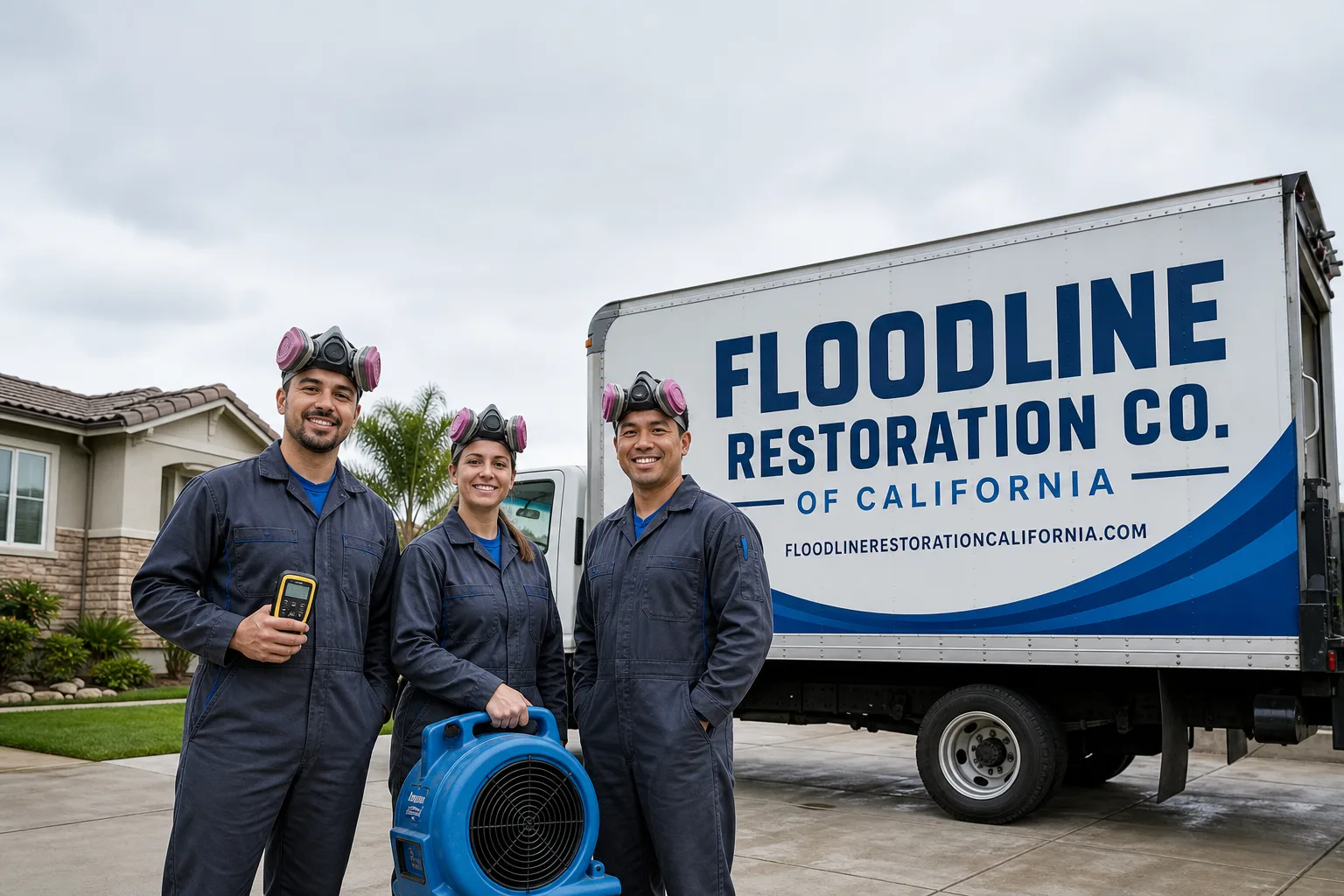
Fast, Reliable Storm & Disaster Restoration Across Tracy
Storm damage in Tracy rarely announces itself politely. A February atmospheric river can soak the Altamont foothills, rip shingles off a 2003 Pulte home near Balsam Park, and push water through valley flashing that held dry since the day it was nailed down. When that happens, you need a crew that knows exactly which failure pattern your subdivision is prone to, not a dispatcher three states away. Floodline Restoration Co. of California responds to Tracy storm calls the same day, with certified technicians, a moisture map on every job, and a live person answering the phone at (888) 737-2439 at any hour.
Why Floodline Restoration Co. of California Is Tracy’s Trusted Storm Restoration Crew
We’ve worked enough storm losses across the 95376, 95377, and 95378 ZIP codes to recognize the patterns. A windstorm rips through the Ellis neighborhood, and within days we’re on four streets in the same subdivision, tarping roofs and drying slabs on homes built within eighteen months of each other by the same builder, with the same flashing detail, the same drainage design, and the same production-grade roof membrane now at the end of its expected service life. That’s Tracy’s specific restoration problem, and we plan for it.
Our Storm & Disaster Restoration crews carry professional-grade Dri-Eaz, Phoenix, and XPOWER drying equipment sized for slab-on-grade homes, and every technician is background-checked, uniformed, and trained to IICRC and RIA standards. When we give a Tracy homeowner a written scope, it’s the Keystone Standard: the 90-Day Done Right Promise in writing. If it’s not done right, we make it right. No arguing.
We answer the phone with a live dispatcher around the clock. That matters most at 5:30 a.m. on a holiday weekend when the wind is still howling off the Delta and water is coming through the ceiling in a 2006 KB Home off Tracy Boulevard.
Our Storm & Disaster Restoration Services in Tracy
Storm Damage Cleanup
After a Tracy windstorm, the mess is often the first emergency: downed branches, torn roof material, shattered glass from patio furniture thrown against sliding doors. Our crews clear the debris, secure the site, and document everything with photos for your carrier before we touch a single water-damaged surface. In Tracy’s tract-home neighborhoods, we know exactly where the drainage chokepoints are and where storm water pools against slab edges, so cleanup includes checking those failure points, not just hauling debris.
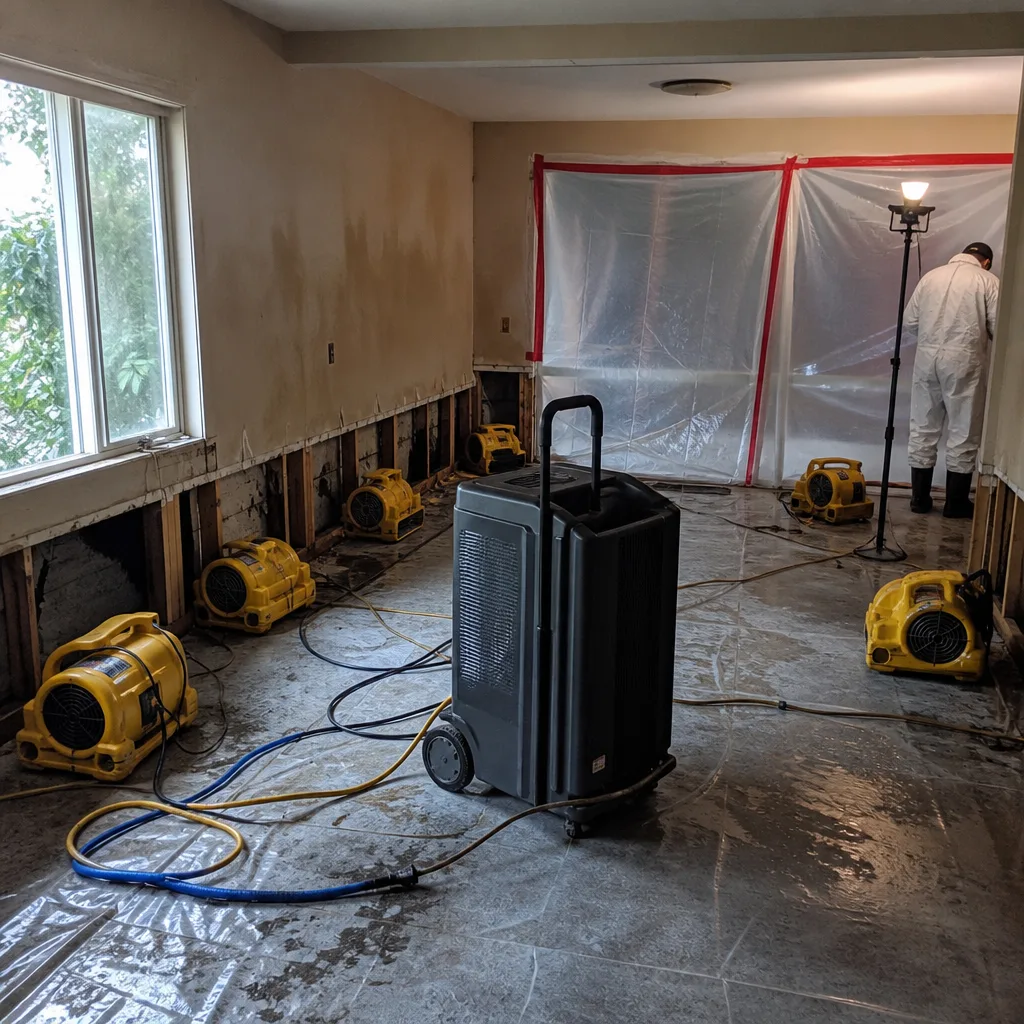
Roof Tarping
Valley flashing and boot flashing on the 1999-2008 production builds fail in clusters. Wind-driven rain finds every seam that’s been drying out through years of 105-degree summers and Delta humidity. We tarp quickly, but we don’t treat a tarp as the repair. We treat it as the first step that buys time for a proper moisture assessment of the roof deck, the wall cavities, and the slab below, because in Tracy, water from a roof breach rarely stays in the attic.
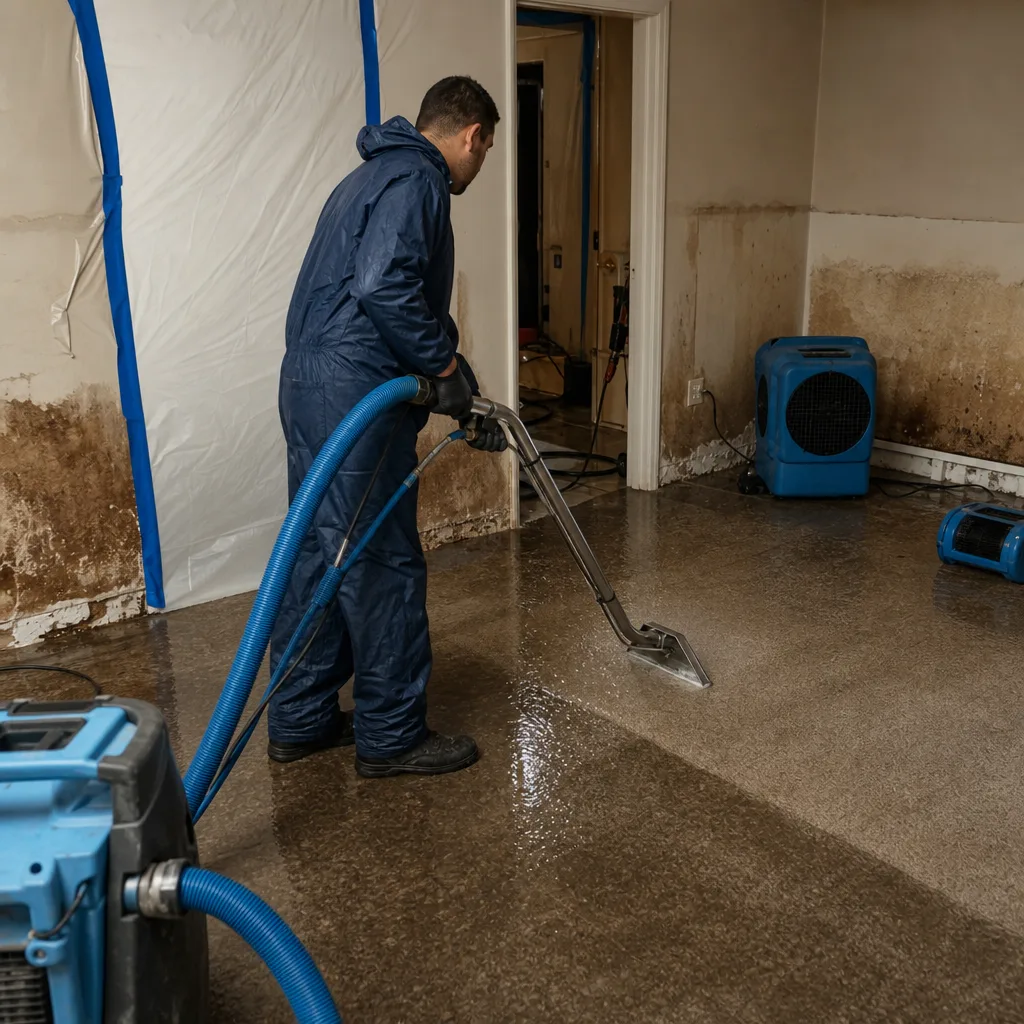
Flood Damage Restoration
Atmospheric rivers hit Tracy hard in December through February. When long dry stretches end abruptly, clogged gutters and cracked boot flashings on homes that deferred maintenance for years suddenly fail together, overwhelming drainage and pushing water into wall cavities. We respond to flood calls across 95377 and 95378 with the same urgency for a two-inch slab flood as we do for a two-foot crawlspace fill, because with Vertisol clay underneath, water does not drain away. It lingers.
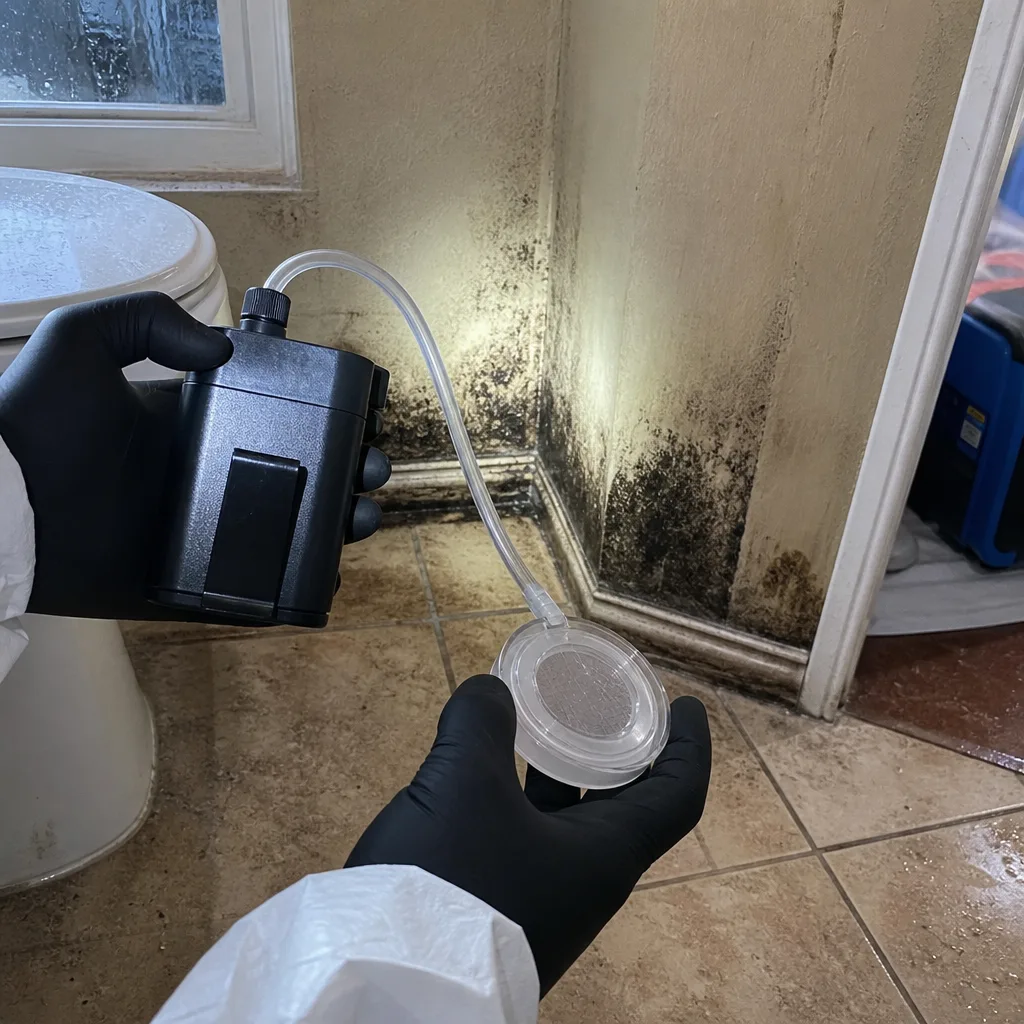
Emergency Board-Up
A storm that puts a tree limb through a bedroom window on a home near Kimball High School leaves a family exposed in more ways than one. We secure openings with professional board-up, keep the site safe, and make sure the repair timeline doesn’t force the family out of the house longer than necessary. Board-up is not a stopgap. It’s the line of defense between a storm loss and a break-in, an animal intrusion, or another night of rain before permanent repairs begin.
What happens when you call
- 1
A real person answersNo phone trees - you reach a local pro.
- 2
You get an upfront price rangeHonest numbers before anyone is dispatched.
- 3
A background-checked tech heads outLicensed & insured, dispatched right away.
- 4
You approve before work beginsNothing starts until you say go.
Common Storm & Disaster Restoration Problems We See in Tracy Homes
- Synchronized roof failures in 1999-2008 subdivisions. Pulte, Lennar, and KB Home built at scale with identical materials. One storm can cause repeat leaks at the same valley and flashing locations on dozens of homes along one street. We’ve seen it on consecutive calls in the Redbridge and Ellis areas.
- Under-slab supply line cracks from Vertisol clay movement. The expansive clay under Tracy’s slab homes heaves in wet winters and contracts in dry summers. Silent cracks form in supply lines, months pass, then a single storm raises the water table and exposes what was already saturating the slab. A “small water stain” becomes a full slab-dry project.
- Fast mold colonization after storms. Delta humidity right after a storm can push moisture into drywall and tighten the clock. In tightly sealed attics and tract homes with minimal overhangs, mold shows up within 48 hours if water isn’t extracted and dried with real equipment and daily moisture readings.
- Older downtown Tracy homes with galvanized supply lines. Around historic downtown, the 1940s-1960s homes carry original galvanized plumbing corroded by years of hard groundwater. A storm that shifts soil can crack those fragile lines overnight, and drying those older frameworks takes longer than drying a newer tract home’s open floor plan.
Pricing for Storm & Disaster Restoration in Tracy, CA
Storm damage cleanup in Tracy typically runs $450-$900 for a standard single-family home with moderate debris and one water intrusion point. Emergency roof tarping for an average two-story production home in 95377 or 95378 usually lands between $400 and $850, depending on roof pitch, accessibility, and how much compromised decking needs temporary covering. Flood water extraction and structural drying in Tracy slab homes commonly ranges from $1,800 to $4,200, with the higher end appearing on hidden slab leaks that require sub-slab access. Board-up services run $350-$850 per opening. Every estimate is free, written, and includes a photo-documented scope. We bill your insurance carrier directly, and we will not begin work until you’ve seen the numbers. Call (888) 737-2439 and we’ll have someone in front of you fast.
We Also Serve Cities Near Tracy
Our Tracy restoration crews also respond across the nearby communities of Mountain House, Discovery Bay, Livermore, and Brentwood. Homeowners there face many of the same Delta climate and tract-housing conditions we see in Tracy, and our schedule is built around getting a certified crew to your home without making you wait on a call center. For full details on our Tracy coverage, see Storm & Disaster Restoration in Tracy.
Serving Tracy, CA - Our Local Coverage Area
We’re based in the Tracy area and know this community well. Use the map below to see our service coverage - if you’re nearby, we can almost certainly help.
FAQs - Storm & Disaster Restoration in Tracy
Because homes built between 1999 and 2008 by Pulte, Lennar, and KB Home share identical roof membranes, flashing details, and drainage designs. When one roof system reaches the end of its life, every house on the block with the same construction dates is right behind it. A single strong storm pushes many of them over the edge at once. We plan for that cluster effect when we schedule Tracy storm response, and our crews carry the drying capacity to handle multiple homes in one subdivision without losing response time.
Vertisol clay under Tracy contracts in long dry summers and swells in wet winters, moving enough to crack slab supply lines and drain pipes. Storms add weight and water to soil already shifting. The result is water appearing at the edges of a slab days or weeks after a roof leak was already repaired, because the true source is a crack below the concrete. Our restoration plans on Tracy slab homes always include checking for subsurface moisture migration, not just drying the visible water.
Yes, and here’s why: on Tracy tract homes, a small ceiling stain often means a flashing failure at a valley or boot that has been slowly letting water into the wall cavity or attic space. By the time a stain shows, the leak may have been active through several storms. The tarp stops further water intrusion while we trace the actual path of the water with moisture meters and thermal imaging. Waiting on the stain saves nothing. The stain has already been there longer than you think.
Often it does. When we clear storm debris around Tracy slab homes, we inspect where the soil has eroded away from the foundation edge, where water pooled against the slab for days, and where gutters directed water at the concrete instead of away from it. If the slab edge is consistently wet or shows efflorescence, we recommend checking for a slow supply leak under the concrete. Catching that before mold moves into the drywall above saves thousands, and it is one reason our cleanup crews carry moisture meters on every call.
Those older homes were framed with dimensional lumber and built with plaster and lathe walls, not gypsum wallboard over open trusses. Plaster absorbs and holds water differently than modern drywall, and those wall cavities are often deeper and less ventilated. Add galvanized supply lines weakened by Tracy’s hard groundwater, and a storm can cause a plumbing failure that saturates wall cavities for days before anyone notices. Drying a 1950s downtown Tracy home to standard demands more time, more air movement, and daily moisture readings until the dry standard is met. We don’t rush that process, and we log every reading for your carrier.
Written by Curt Bowman, Owner at Floodline Restoration Co. of California, serving Tracy and the Central Valley since 2010.
Contact Floodline Restoration Co. of California in Tracy
If you’re looking at water coming in, a roof that’s opened up, or a ceiling that’s sagging after the latest Tracy storm, call our office at (888) 737-2439 now. A live dispatcher answers. We’ll walk you through what to do in the next ten minutes, get a crew on the road to Tracy, and put a written plan in your hands before any work starts. Done right, and backed in writing.