
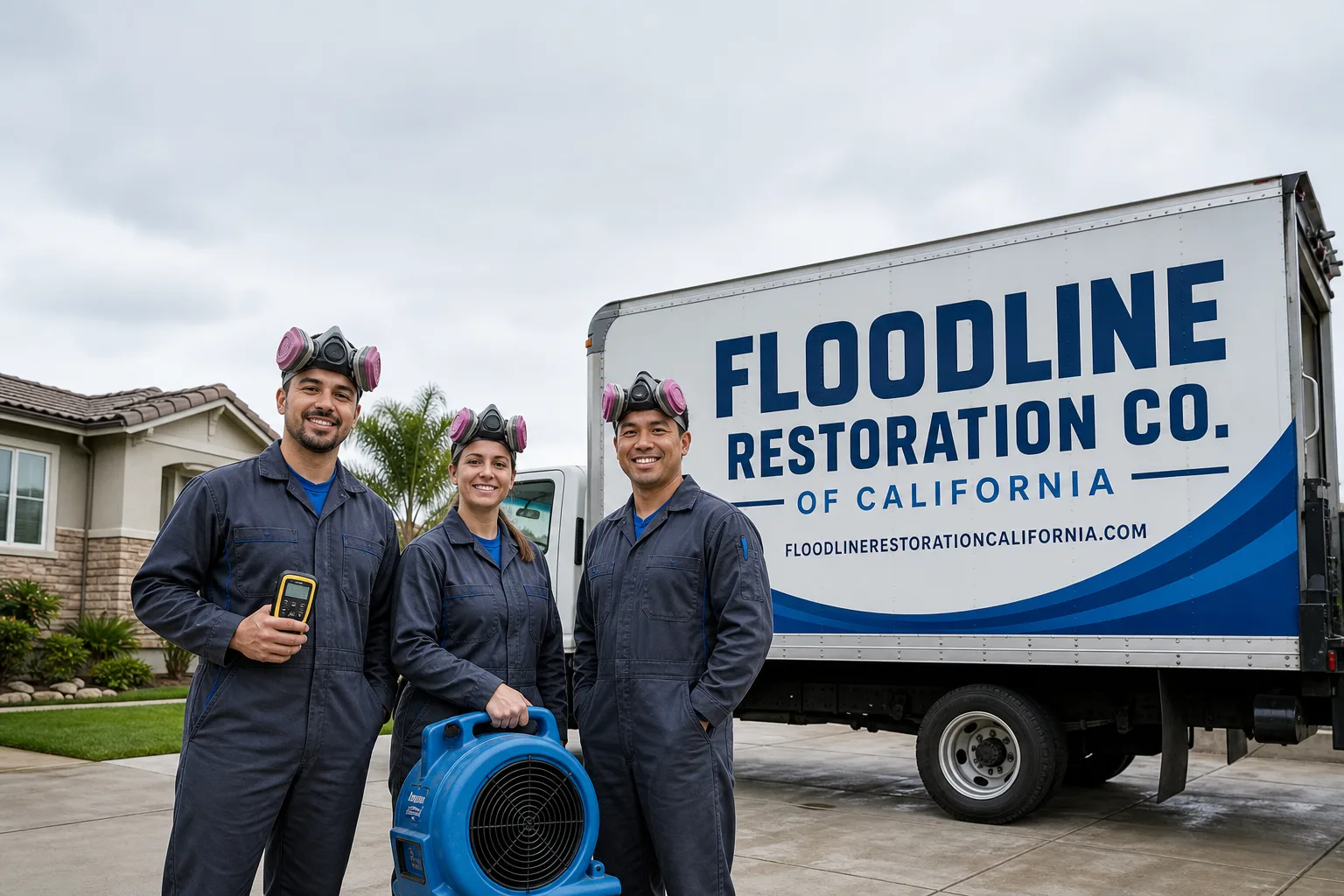
Fast, Reliable Storm & Disaster Restoration Across Sierra Madre
Storm damage in Sierra Madre moves fast, and so do we. When debris flows off the San Gabriels or wind tears a section of roof loose, most Sierra Madre homeowners need two things immediately: a live voice on the phone and a crew that actually shows up. You’ll get both. Call (888) 737-2439 any hour, day or night. A dispatcher answers, and our Storm & Disaster Restoration crews serve Sierra Madre from the Los Angeles metro office – not from some call center three states away. We’ve worked the north-end streets near Baldwin Avenue, the Craftsman cottages off Sierra Madre Boulevard, and the ranch homes in the 91024 and 91025 zip codes. We know what these mountains send downhill, and we bring the equipment to handle it.
Key Takeaways
- Sierra Madre’s position on an alluvial fan at the base of the San Gabriel Mountains makes post-wildfire debris flows the defining storm risk here – not just rain water.
- Older homes from the 1910s through the 1940s hide moisture in wood subfloors and lath-and-plaster walls long after the water stops.
- Storm damage cleanup in Sierra Madre typically runs $800 to $2,400 for debris removal, with flood restoration averaging $2,800 to $6,500 for a single room.
- We answer live, 24 hours a day, and every job is backed by the 90-Day Done Right Promise in writing.
- Direct insurance billing – you never play messenger between us and your carrier.
Why Floodline Restoration Co. of California Is Sierra Madre’s Preferred Storm & Disaster Restoration Company
We’ve been at this since 2010, which means we’ve seen every type of storm event this mountain community can produce. Not every crew that works Sierra Madre understands what an alluvial fan is, let alone what it deposits in a crawlspace. Ours does. The homeowners here tend to stay in their homes for decades – many of you have lived in the same house since the 1980s or earlier. You remember what the hills looked like before the Bobcat Fire. You know what a Santa Ana wind sounds like through an old attic. We respect that history, and we work like people who plan to answer the phone in this area for another thirty years. Curt Bowman founded this company around a dispatch board, not a sales desk, and that’s still how we run. Background-checked, uniformed technicians arrive at your Sierra Madre home trained to IICRC, RIA, and IFA standards, and we hand you a written scope before any work begins.
Response time to Sierra Madre? We’ll be there when we say. Our dispatch coordination from the Los Angeles office means a crew is typically rolling toward your neighborhood within the hour, and extraction equipment starts running the same visit. That speed matters when alluvial sediment is sitting under your house or water is wicking into original wood subflooring. Sierra Madre homeowners call us because they’ve heard the same thing from neighbors: Floodline shows up, does the job, and stands behind it in writing. Done right – and backed in writing.
Our Storm & Disaster Restoration Services in Sierra Madre
Storm work in Sierra Madre isn’t one-size-fits-all. A debris flow through a foundation vent is a different job than wind-driven rain through a roof. Here’s what we handle most often.
Debris Removal
After a heavy storm or a mud movement off the burn scar, Sierra Madre yards and crawlspaces collect rock, silt, ash, and organic debris. We remove it from where it shouldn’t be – including under the house. Crawlspace sediment removal is the most overlooked piece of storm cleanup in this city, and skipping it sets up mold and structural moisture problems that surface months later. Our crews check foundation vents and subfloor areas as standard practice on every Sierra Madre storm job. Typical debris removal in Sierra Madre runs $800 to $2,400 depending on volume and whether the material has entered the crawlspace.
Flood Damage Restoration
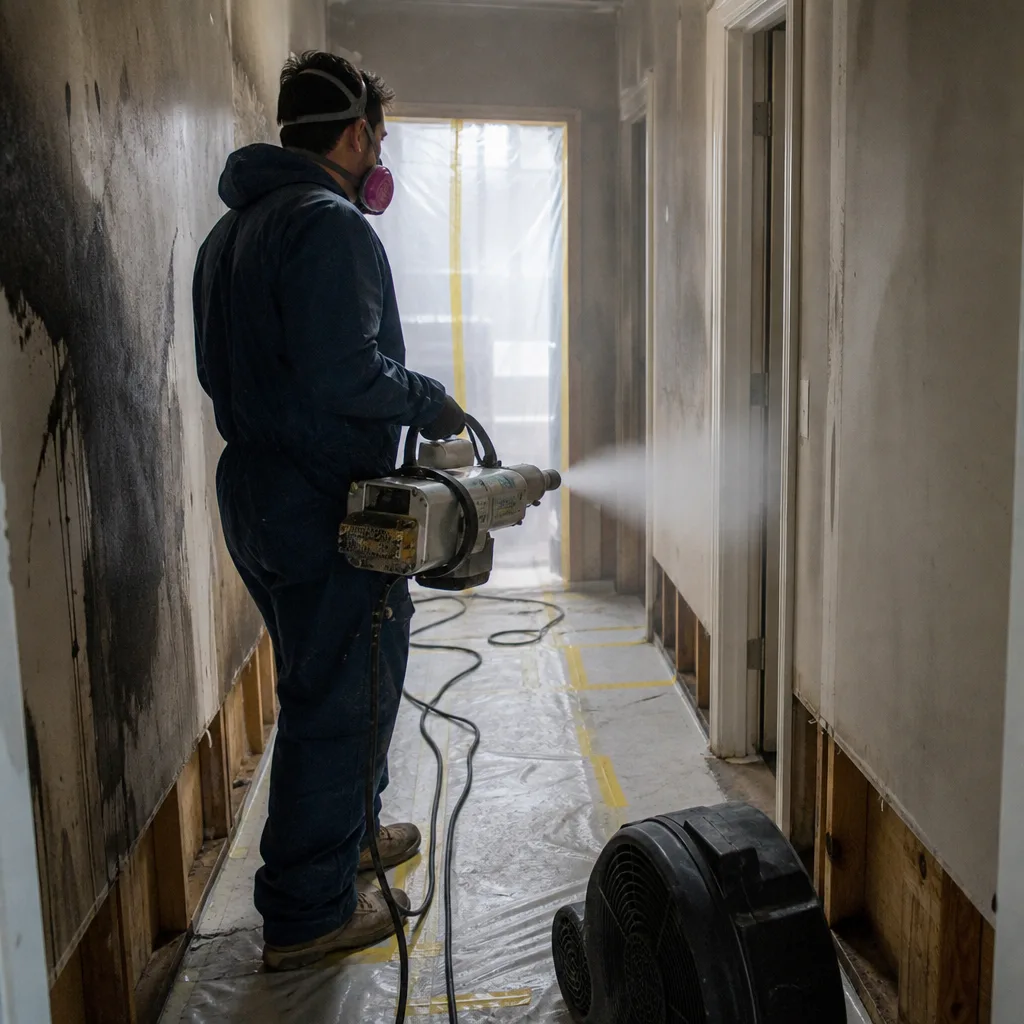
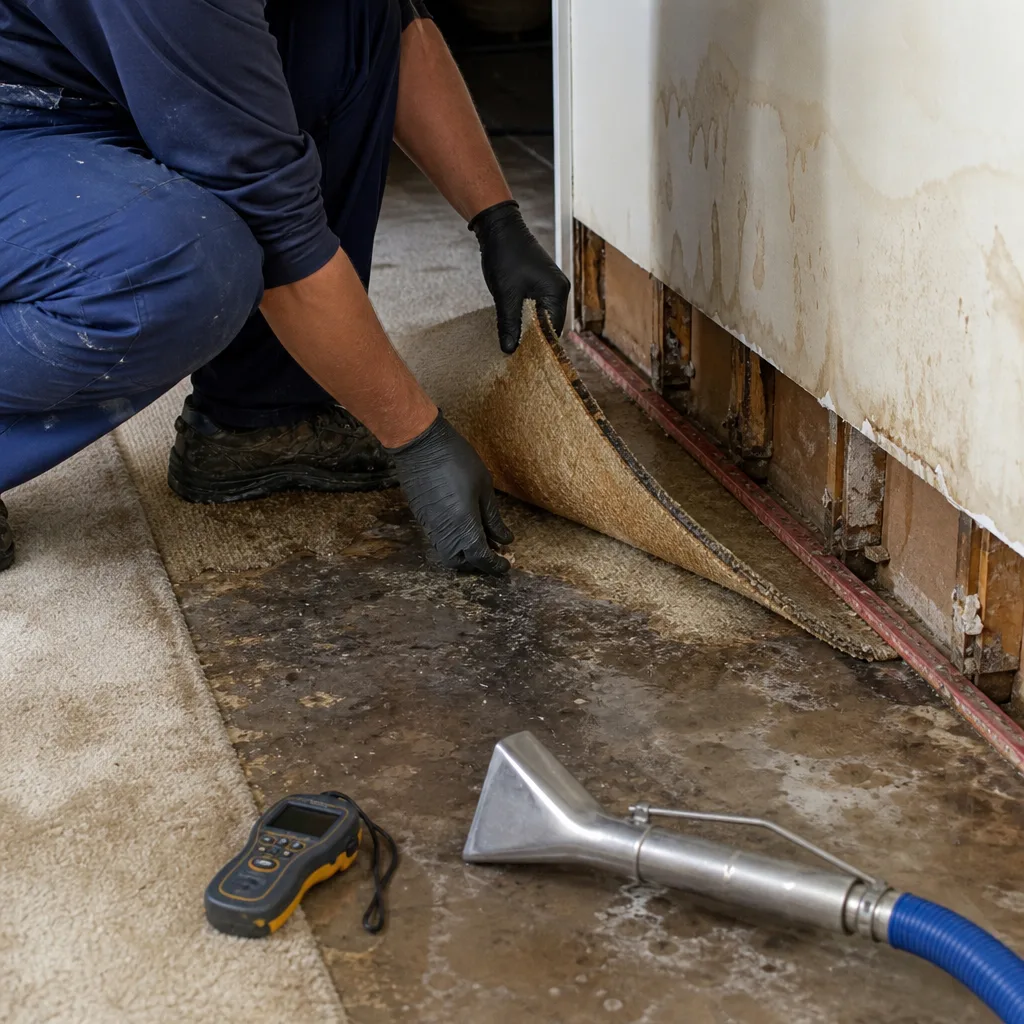
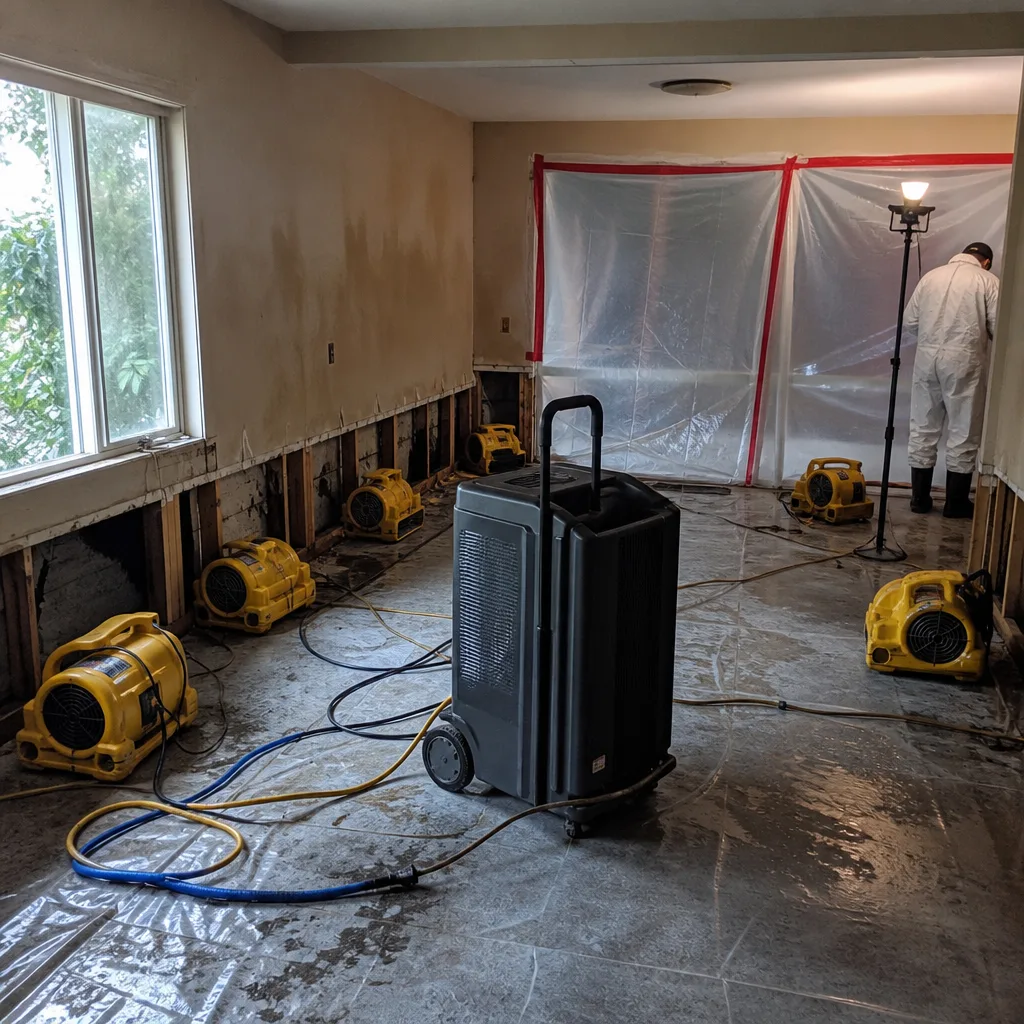
Flooding in Sierra Madre often carries more than water. When the first significant rain falls after a fire, the hydrophobic soil layer on the mountainsides sends a Category 3 soup of ash, rock, and organic material downhill. That’s not clean stormwater – it’s contaminated, and it requires full extraction, drying, and disinfection. We set up professional-grade Dri-Eaz dehumidifiers and XPOWER air movers, map moisture from day one, and log daily readings until the dry standard is met. The moisture log goes to you and your insurance carrier. No guesswork. A single room flood restoration in Sierra Madre typically costs $2,800 to $6,500, and more when multiple rooms or crawlspaces are involved.
Storm Damage Cleanup
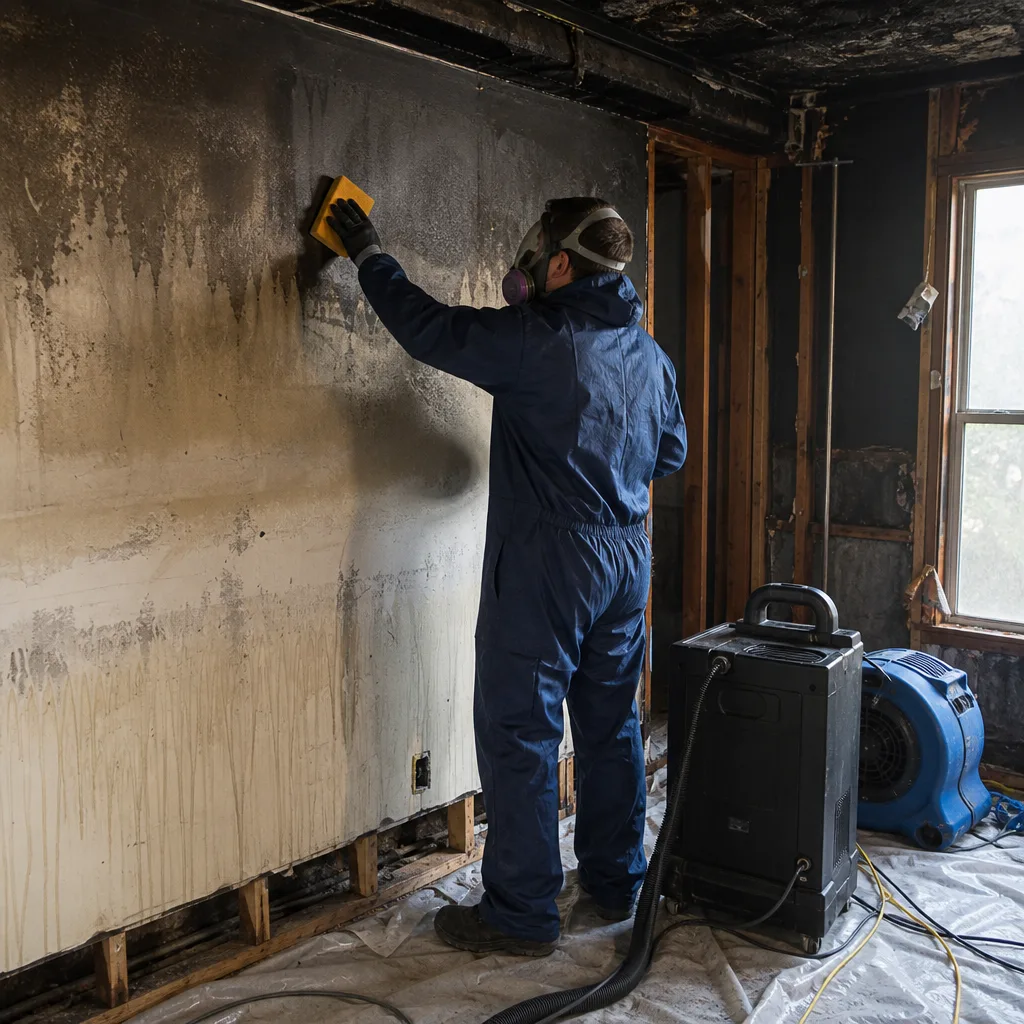
This is the broad response: broken branches through windows, mud splatter on siding, wet insulation, damaged drywall, saturated carpet. We handle the full scope – extraction, demolition of unsalvageable material, drying, and documentation for your claim. In Sierra Madre’s older Craftsman homes, we pay special attention to lath-and-plaster walls and original wood subfloors, because both absorb water fast and hide it well. Expect $1,500 to $4,800 for a standard single-room storm cleanup, with the final number depending on how far the water traveled and what has to come out.
Emergency Board-Up
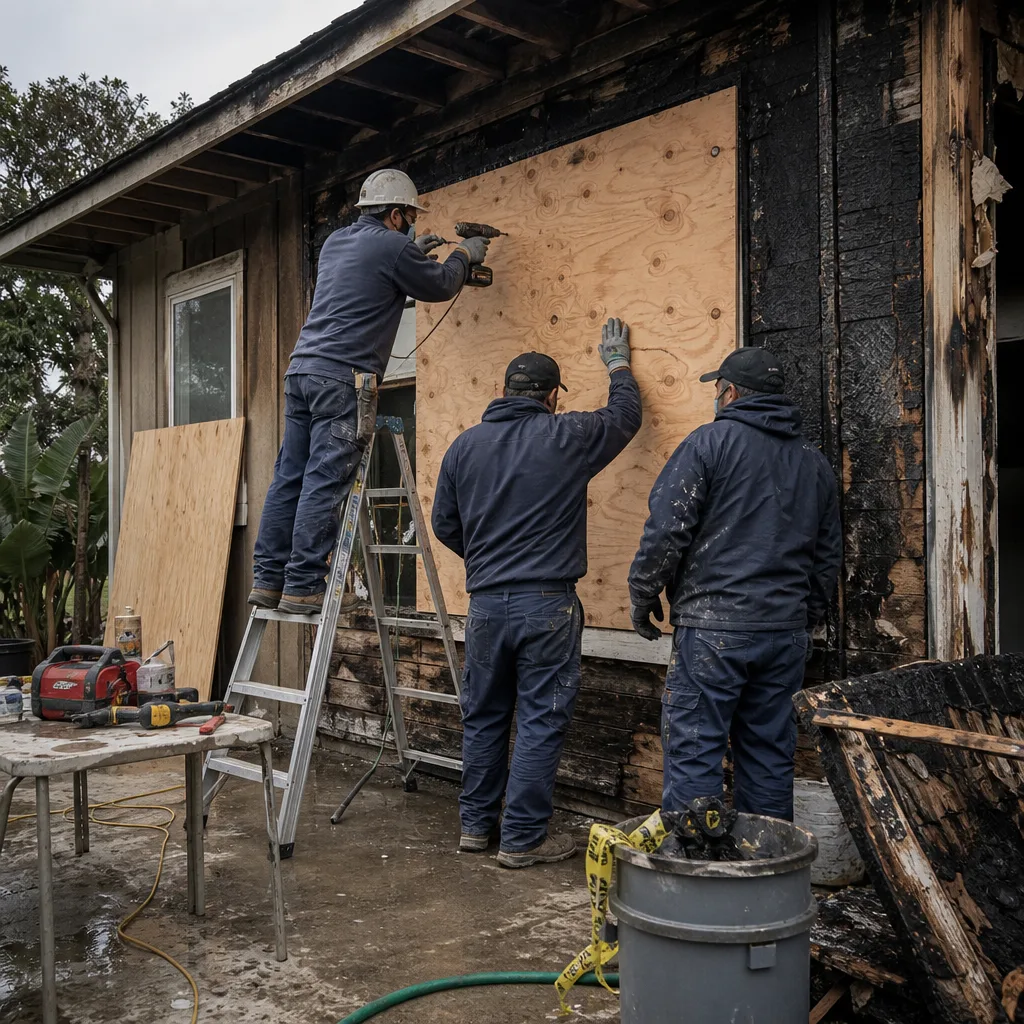
When wind or debris punches a hole in your home, the opening has to be secured before the next round of weather – or before an animal moves in. We board up broken windows and damaged doors the same day you call, using materials that keep the weather out without causing more damage to old framing. Emergency board-up in Sierra Madre runs $350 to $900 per opening, and we always document it thoroughly for the claim.
Roof Tarping
A torn-off section of shingles on a 1920s Craftsman or a post-war ranch needs a tarp fast. We tarp damaged roofs to keep water out until permanent repairs can be scheduled. On Sierra Madre’s north-end homes closer to the mountain, wind can lift tarps if they’re not secured right, so we anchor them properly and check them after the next wind event. Roof tarping typically costs $450 to $1,200 depending on roof pitch and damage size.
What happens when you call
- 1
A real person answersNo phone trees - you reach a local pro.
- 2
You get an upfront price rangeHonest numbers before anyone is dispatched.
- 3
A background-checked tech heads outLicensed & insured, dispatched right away.
- 4
You approve before work beginsNothing starts until you say go.
Trusted Equipment We Use in Sierra Madre
We run the same professional-grade equipment the industry benchmarks: Dri-Eaz dehumidifiers, XPOWER air movers, Injectidry systems for wall and ceiling cavities, and B-Air units where the job demands it. In older Sierra Madre construction, Injectidry proves itself repeatedly – those lath-and-plaster walls don’t dry on their own, and cavity drying prevents the hidden mold that follows. Our IICRC-certified technicians stock the right parts and setup for the housing they find here, not whatever’s on the truck from a job in the flatlands.
Common Storm & Disaster Restoration Problems We See in Sierra Madre Homes
- Alluvial sediment in crawlspaces: Debris flows through foundation vents deposit contaminated silt under north-side homes near the canyon mouths. Homeowners don’t see it, don’t smell it, and don’t find it until mold or soft subflooring appears months later. We check crawlspaces on every storm call in Sierra Madre, even when the visible damage is elsewhere.
- Mudflow ingress in post-war ranch homes: Ranch-style homes built in the 1950s and 1960s on the north end have older foundation vents and shallow crawlspaces that let mud and water in easily. Standard storm cleanup that ignores the crawlspace misses the contamination that matters most.
- Saturated lath-and-plaster in Craftsman bungalows: The 1910s through 1940s homes in Sierra Madre’s core wick water fast and release it slowly. A flooded wall here is not the same as a flooded wall in a 1990s drywall-and-stud house. It needs cavity drying and patience, or it grows mold behind the finish.
- Debris and ember damage during Santa Ana events: High winds drive embers, smoke, and debris into unsealed attics and under eaves. Homes don’t have to catch fire to need restoration – smoke odor in an old attic and ember-damaged vents are common calls after Santa Ana wind events.
Pricing for Storm & Disaster Restoration in Sierra Madre, CA
The numbers vary by scope, but here’s what Sierra Madre homeowners can expect to pay for common storm restoration work. Debris removal runs $800 to $2,400. Single-room flood damage restoration averages $2,800 to $6,500. Storm cleanup with extraction and drying runs $1,500 to $4,800 per room. Emergency board-up is $350 to $900 per opening, and roof tarping runs $450 to $1,200. Crawlspace sediment removal, when the mud has infiltrated under the house, adds $1,200 to $3,500 depending on depth and square footage. These ranges reflect Sierra Madre’s older housing stock and the mountain-derived contamination we routinely find. Every job gets a written scope before we start. Estimates are free. Call (888) 737-2439 – and ask about the Senior & Veteran 5% discount, which is always on the table.
Three standing offers apply on storm work in Sierra Madre: $50 off any repair over $250, the $89 Seasonal Tune-Up, and the Senior & Veteran 5% discount. We’ll apply whichever saves you the most.
We Also Serve Cities Near Sierra Madre
If you’re in Arcadia, East Pasadena, Mayflower Village, or Monrovia, our Storm & Disaster Restoration teams reach you just as quickly from the Los Angeles office. The mountain front doesn’t stop at the city limit, and neither do we. Homeowners in those communities deal with the same post-wildfire debris and Santa Ana wind patterns, and we bring the same written-scope discipline and direct insurance billing to every job.
Serving Sierra Madre, CA - Our Local Coverage Area
We’re based in the Sierra Madre area and know this community well. Use the map below to see our service coverage - if you’re nearby, we can almost certainly help.
FAQs - Storm & Disaster Restoration in Sierra Madre
Sierra Madre sits directly on an alluvial fan at the mouth of the San Gabriel canyons, which means centuries of debris flows have built the very ground the city stands on. After a wildfire burns the chaparral slopes above town, the soil becomes hydrophobic – it repels water instead of absorbing it. The first significant rain then sends a slurry of ash, rocks, and organic debris downhill as a Category 3 flow, and Sierra Madre takes it head-on. Cities a few miles south sit on flatter ground and receive water that has already dropped its sediment load. Call (888) 737-2439 if you suspect mud has reached your foundation.
You can check the exterior foundation vents first. If you see a tan or gray silt line on the outside of the vent or staining around the opening, sediment has likely moved toward the crawlspace. Shine a flashlight through the vent and look for a water line or deposited dirt on the foundation stem wall. Do not enter a contaminated crawlspace – the material can contain ash, sewage, and sharp debris. We’ll inspect it with proper protective gear and tell you honestly whether it needs removal. Estimates are free.
Yes, directly. Even several years after the Bobcat Fire, the slopes above Sierra Madre carry a hydrophobic soil layer that continues to shed water and debris rather than absorbing it. Until vegetation reestablishes deeply, every significant rain event carries some risk of debris movement. We factor that into every storm response in this city, and we check crawlspaces and foundation vents on every call because the risk pattern is not the same as in unburned areas.
Two reasons: older construction and orographic rainfall. Sierra Madre receives measurably more annual rainfall than the cities to its south because the mountains force air upward and wring moisture out of it. Combine that with 1910s to 1940s craftsmanship – wood subfloors, lath-and-plaster walls, unsealed crawlspaces – and water has better places to hide. Arcadia and Monrovia have a larger share of newer construction with drywall and vapor barriers. Mold needs moisture, time, and organic material; Sierra Madre’s original homes supply all three generously. If you suspect mold after a storm, call us for a photo-documented assessment.
Yes. Post-war ranch homes near the mountain base sit closest to the ember path when Santa Ana winds push down through the canyons. Their unsealed attics, older foundation vents, and aging roof edges give embers more entry points. Even when the structure doesn’t ignite, smoke and fine ash work into attics and insulation, leaving an odor that doesn’t fade on its own. We clean smoke-damaged attics and seal the entry points to reduce the next event’s damage. Call (888) 737-2439 for a free estimate.
Call Floodline Restoration Co. of California for Storm & Disaster Restoration in Sierra Madre
When the storm has passed and the mud or water is inside your house, you need a company that answers the phone at 2 a.m. and sends a crew that knows Sierra Madre. You need a written scope, direct insurance billing, and a guarantee in writing. That’s how we work. Call (888) 737-2439 now for a free estimate. A live dispatcher will answer, any hour, every day. We’ll be there when we say, and we stand behind the work with the 90-Day Done Right Promise – the Keystone Standard, in your hands.
Written by Curt Bowman, Owner at Floodline Restoration Co. of California.