
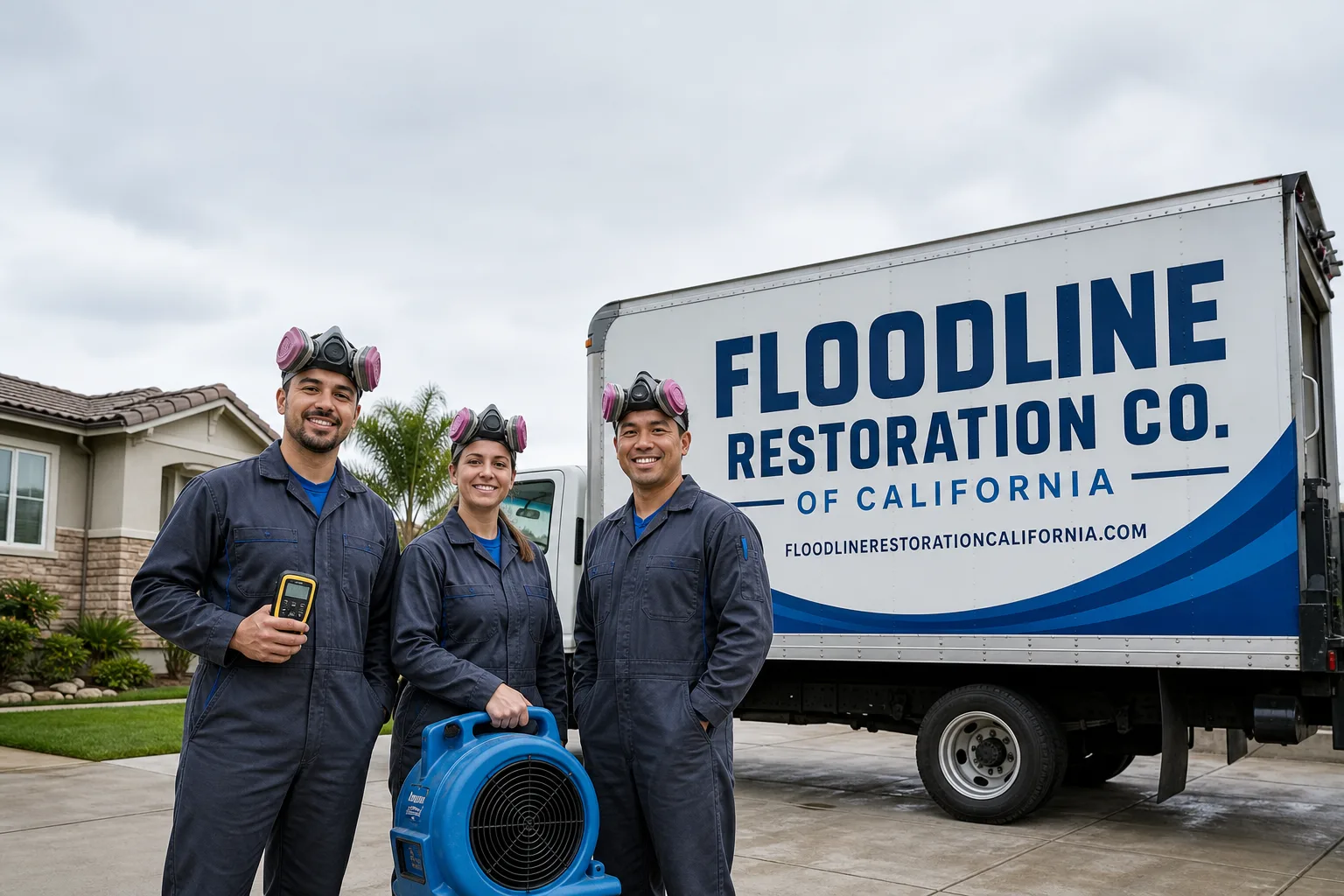
Fast, Reliable Storm & Disaster Restoration Across Santa Cruz
Storm damage in Santa Cruz rarely announces itself politely. It arrives as a February atmospheric river pushing the San Lorenzo over its banks, or a January windstorm peeling flashing off a Seabright Craftsman at 3 a.m. When that happens, you need a crew that knows the difference between a Beach Flats crawl space and a Westside hillside foundation, and you need them now. Floodline Restoration Co. of California dispatches certified, background-checked technicians to every Santa Cruz ZIP code, 95060 through 95065, with live phone dispatch at any hour. Call (888) 737-2439 and a real person answers, then a crew starts moving toward your door. Our Storm & Disaster Restoration team handles extraction, drying, board-up, tarping, and full rebuild under one roof, so the job never gets handed off mid-crisis.
Why Floodline Restoration Co. of California Is Santa Cruz’s Preferred Storm & Disaster Restoration Company
Homeowners in Santa Cruz tend to know their houses the way you know an old friend’s habits: which window leaks in a south wind, which floorboard creaks after a wet winter, which section of the foundation has shifted since 1989. That’s exactly the kind of customer we work for, and the kind of detail our crews are trained to read. We have been restoring storm-damaged homes in Santa Cruz for years, including the post-CZU Lightning Complex smoke and ash intrusion cases that other restoration outfits simply walked away from because they lacked the mold-and-seismic combination expertise the job demanded. Our technicians hold IICRC, RIA, and IFA certifications, and every job runs on Dri-Eaz, Phoenix, XPOWER, B-Air, and Injectidry professional-grade equipment. The 90-Day Done Right Promise, our Keystone Standard, goes in writing on every storm restoration we complete in Santa Cruz. If it isn’t done right, we make it right. No arguing, no paperwork battles. That’s a square deal, and it’s how Curt Bowman has run this company from the first day.
Fog-belt humidity, Loma Prieta structural compromises, and CZU smoke residue make Santa Cruz storm restoration different from any other California coastal market. We know that. Our crews start every storm call by asking what the water touched, what the fog has been doing to the envelope, and which retrofits were done after the quake. That local read is why homeowners in Seabright, Beach Flats, and the Soquel Avenue corridor call us first when a storm turns destructive.
Our Storm & Disaster Restoration Services in Santa Cruz
Flood Damage Restoration
When the San Lorenzo River tops its banks in lower Beach Flats, the water that enters a 1930s pier-and-beam bungalow is not clean rainwater. It carries silt, sewage, and whatever else the watershed picked up on its way down from Boulder Creek and Felton. Floodline Restoration Co. arrives with truck-mounted extraction units, sets containment, and begins the same-visit water removal that prevents Category 3 contamination from setting into redwood framing. We log moisture readings daily until every structural member meets the dry standard, and we hand that log to you and your insurance carrier. The line the water left is where we start.
Storm Damage Cleanup
Santa Cruz storms leave behind more than water. Winter wind events bring down limbs from Monterey pines and eucalyptus, drive debris into side yards, and scatter roofing material across Westside streets like Mission Street and Bay Street. Our storm cleanup crews clear the property, document everything photographically, and separate salvageable items from irreparable material before drying begins. For homes in the fog belt, we treat the crawl space as the first diagnostic stop on every storm cleanup, because ground vapor is often the primary moisture driver, not the leak you can see from the living room.
Emergency Board-Up
A broken window or blown-out door on a Seabright or Beach Flats home is an open invitation to the marine layer. In 95060 and 95062, ambient humidity frequently sits at 85 to 95 percent. Standard plywood board-up without vapor-permeable housewrap traps that wet air against lath-and-plaster walls, and concealed mold starts feeding behind the tarp within days. We board up storm openings in Santa Cruz using the right barrier assembly for this climate, so the temporary fix doesn’t become the next mold problem. Technicians are on call around the clock, because storm damage in Santa Cruz doesn’t wait for business hours.
Roof Tarping
Roof damage on a pre-1940 Craftsman in Santa Cruz is rarely a straightforward patch job. Original redwood sheathing absorbs moisture readily, and decades of deferred seismic repair often mean the decking is less uniform than it looks from below. We secure damaged roofs with heavy-duty tarps that shed water while allowing the roof assembly to breathe, preventing the trapped-humidity failures we routinely see in this city when generic tarp jobs are slapped on without accounting for the marine layer. If the structural drying shows the framing is sound, we repair. If the decking is compromised, we scope the rebuild in writing before work starts.
What happens when you call
- 1
A real person answersNo phone trees - you reach a local pro.
- 2
You get an upfront price rangeHonest numbers before anyone is dispatched.
- 3
A background-checked tech heads outLicensed & insured, dispatched right away.
- 4
You approve before work beginsNothing starts until you say go.
Trusted Brands We Service in Santa Cruz
Our teams work on the full range of Santa Cruz housing stock, from Victorian-era wood frames downtown to 1990s post-Loma Prieta rebuilds in the hills above Highway 1 and the mid-century bungalows that line Soquel Avenue toward Capitola. We stock and run Dri-Eaz dehumidifiers, XPOWER air movers, and Injectidry drying mats sized for the crawl spaces and wall cavities typical of Santa Cruz construction. Because we dispatch locally from our San Francisco Bay Area office, parts and equipment reach Santa Cruz fast, and our technicians are certified to IICRC, RIA, and IFA standards on every job.
Common Storm & Disaster Restoration Problems We See in Santa Cruz Homes
- Fog-belt crawl space fungal growth. In Beach Flats and lower Seabright, the persistent marine layer keeps ground vapor so high that active mold colonies form beneath 1920s pier-and-beam homes even without a plumbing leak or storm opening. Any storm restoration job that skips the crawl space diagnostic is incomplete.
- Over-dried 1920s redwood framing. Contractors who treat old-growth redwood like modern kiln-dried lumber dry it too aggressively, causing new cracks in walls already stressed by seismic movement. We dry to redwood-appropriate moisture targets, not generic chart numbers.
- Atmospheric river repeat flooding. The San Lorenzo River and Soquel Creek corridors flood the same lower-elevation addresses year after year. Each event reactivates dormant mold colonies in wall cavities and floor systems if the previous drying was superficial.
- CZU smoke and ash residue in storm-damaged envelopes. Homes that survived the 2020 CZU Lightning Complex with smoke intrusion often have carbon-laden dust packed into wall cavities. When a later storm opens the envelope, water carries that residue deeper into the structure and complicates both drying and indoor air quality.
Pricing for Storm & Disaster Restoration in Santa Cruz, CA
We Also Serve Cities Near Santa Cruz
Beyond Santa Cruz proper, our crews respond to storm losses in Capitola, Scotts Valley, Soquel, and Ben Lomond. Each of those areas has its own terrain and building patterns, from Capitola Village’s low-lying beach cottages to Ben Lomond’s tree-heavy mountain parcels, but every job gets the same Santa Cruz standard: same-visit extraction when possible, daily moisture readings, and a written 90-Day Done Right Promise.
Serving Santa Cruz, CA - Our Local Coverage Area
We’re based in the Santa Cruz area and know this community well. Use the map below to see our service coverage - if you’re nearby, we can almost certainly help.
FAQs - Storm & Disaster Restoration in Santa Cruz
Why does a slow roof leak turn into visible mold in days in Westside Santa Cruz but take weeks in San Jose?
The answer is the marine layer. Westside Santa Cruz sits in a fog belt that keeps ambient relative humidity at 85 to 95 percent for long stretches, so a roof leak that would simply dry out in San Jose’s warmer inland air stays wet here and pushes wall cavities past the mold threshold within 48 to 72 hours. In Santa Cruz, we treat every slow leak as an active mold risk from day one. Call (888) 737-2439 for an assessment, and we’ll check the crawl space and wall cavities, not just the visible stain.
My Beach Flats bungalow flooded from the San Lorenzo River. Why do you start drying in the crawl space instead of the living room?
Because the crawl space is where the fog-belt ground vapor has already been feeding hidden moisture into your framing for decades, and floodwater just made it worse. If we dry the living area first while the crawl space stays saturated, capillary action keeps pulling moisture up into the floor joists and walls, and mold returns within weeks. We dry the crawl space first, install a vapor barrier where needed, then work upward. That’s the only sequence that holds in Beach Flats.
Our 1940s Seabright Craftsman has original redwood framing with water staining from this winter’s storms. Should we strip and replace or structurally dry?
Structural drying is usually the right call for old-growth redwood if the wood is sound and the moisture content can be brought below 12 to 15 percent. Redwood has natural decay resistance that modern framing lumber lacks, and replacing it with dimensional fir actually reduces the long-term durability of the home. We dry it under controlled conditions with Injectidry mats and Dri-Eaz dehumidifiers, then verify with daily moisture readings. Replacement only makes sense when rot or fungal damage has already compromised the structural capacity.
How do Santa Cruz’s seismic history and wildfire smoke complicate storm damage restoration compared to other coastal towns?
The 1989 Loma Prieta earthquake left many Santa Cruz wood-frame homes with hidden moisture pathways: micro-gaps at foundation connections, patched shear walls, and inconsistent retrofits from mixed-quality 1990s rebuilds. When a storm introduces water, it travels along those same pathways and reaches framing we cannot see from the surface. Wildfire smoke from the CZU Lightning Complex added a layer of carbon-laden residue inside wall cavities that water pushes deeper into the structure. This triple-threat profile is unique to Santa Cruz, and it’s why we moisture-map every job before we set equipment.
Why do some Santa Cruz storm board-up jobs fail even when the tarping looks solid?
They fail because standard solid plywood without vapor-permeable housewrap traps 90 percent humidity against lath-and-plaster walls on the west side and in Beach Flats, creating a hidden mold factory behind the tarp. Within a week, the wall cavity is worse than it was before the board-up went on. In Santa Cruz, the board-up material has to breathe. We install the right assembly for this climate, so the temporary barrier doesn’t become a second disaster.
Call Floodline Restoration Co. of California for Storm & Disaster Restoration in Santa Cruz
When a storm opens up your Santa Cruz home, you don’t have time to wonder whether the contractor understands what 90 percent humidity does to redwood framing, or whether the board-up crew will trap moisture in your walls, or whether the insurance paperwork will turn into a second job. You need a live person on the phone and a certified crew on the way. Floodline Restoration Co. of California answers 24 hours a day, every day, with a live dispatcher, not a recording. Estimates are free, and every job in Santa Cruz carries the 90-Day Done Right Promise in writing. Call (888) 737-2439 now, and we’ll be there when we say. Done right, and backed in writing.
Written by Curt Bowman, Owner at Floodline Restoration Co. of California, serving Santa Cruz with 24/7 live dispatch and storm restoration crews on call every day.