
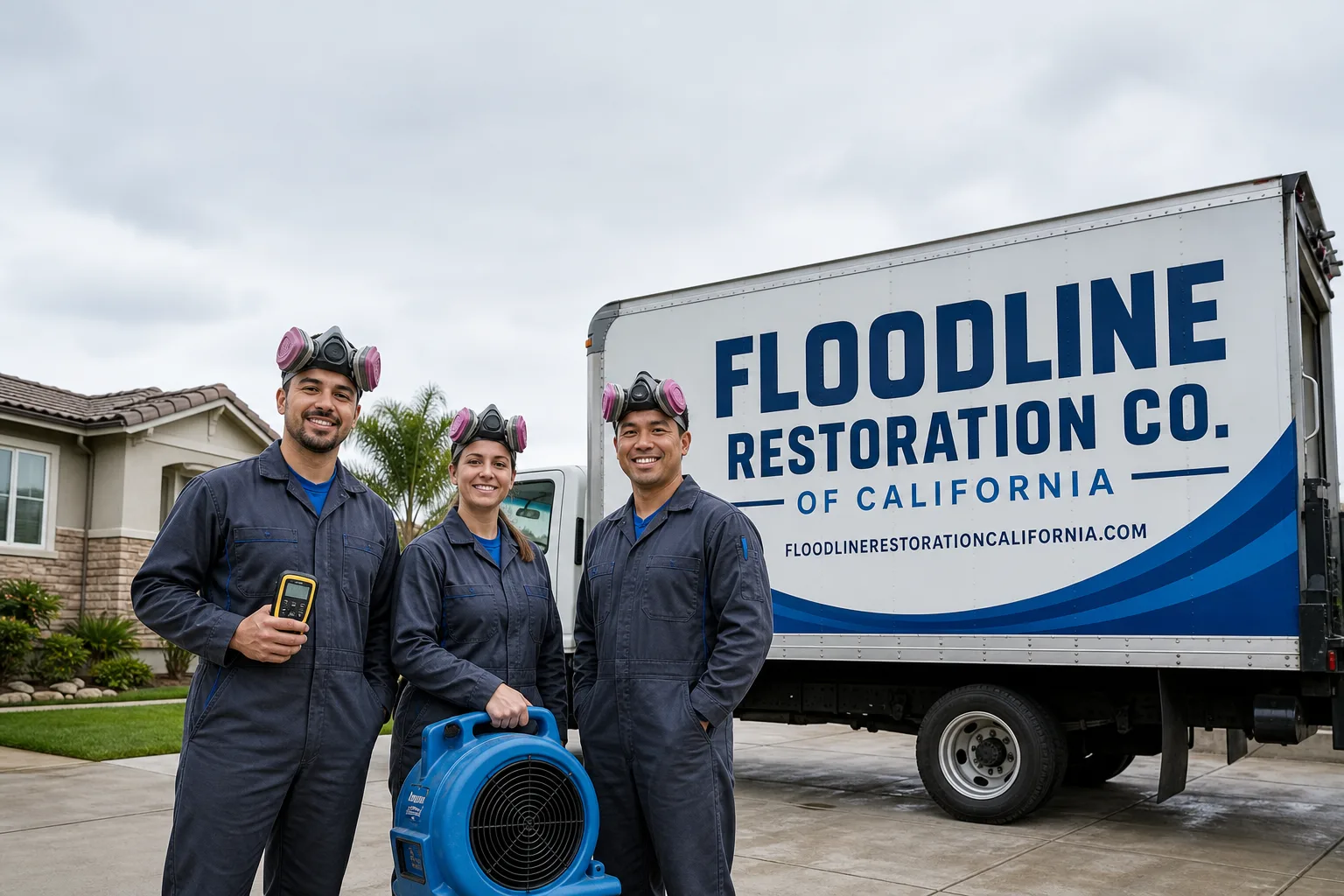
Fast, Reliable Storm & Disaster Restoration Across Rancho Cucamonga
Storm and disaster restoration in Rancho Cucamonga typically costs $1,800-$8,400 for water extraction and drying, $450-$1,200 for emergency board-up, and $600-$1,800 for roof tarping, with most crews arriving within 60-90 minutes of your call. Floodline Restoration Co. of California answers the phone with a live dispatcher 24 hours a day, and our certified crews know the foothill tracts, the creek channels, and the wind corridors that make storm damage in this city different from anywhere else in the Inland Empire. Call (888) 737-2439 and we’ll have a uniformed technician mapping moisture levels in your home the same visit.
Rancho Cucamonga sits directly on the alluvial fan below the San Gabriel Mountains, and that one geographic fact shapes nearly every storm restoration job we take here. Day Creek, Deer Creek, and Cucamonga Creek channel mountain runoff straight into residential neighborhoods. When a Pacific storm follows a fire season that stripped the chaparral above the city, those channels can overflow within minutes, pushing sediment-laden debris flows into foothill homes in 91737 and 91739 in ways that simply do not occur in the flatland cities of Ontario or Fontana immediately to the south. If you own a home in the upper foothill tracts, your storm risk profile is different, and your restoration plan has to be too.
Why Floodline Restoration Co. of California Is Rancho Cucamonga’s Preferred Storm & Disaster Restoration Company
We’ve been answering the phone in the Inland Empire since 2010, and our dispatch board coordinates directly with crews serving Storm & Disaster Restoration in Rancho Cucamonga every day. The company was founded by Curt Bowman around a dispatch board, not a sales desk, which means the person who picks up at 2 a.m. has the authority to send a crew, not just take a message. Rancho Cucamonga homeowners tell us the same thing: they want a square deal, background-checked technicians in uniform, and a name they can hold accountable. We give them all three.
Our technicians are trained to IICRC, RIA, and IFA standards, and they carry Dri-Eaz, Phoenix, XPOWER, B-Air, and Injectidry equipment on every truck. More important than the brand names is how we use them here. Rancho Cucamonga’s clay-heavy alluvial soils stay saturated far longer than coastal or valley soils after a water event. Moisture wicks laterally into slab-on-grade foundations and interior framing for weeks. A crew that doesn’t know this will read acceptable numbers on day three, pack up, and leave you with mold behind the baseboards by day ten. We know to expect the rebound, and we plan for it.
Every job we complete in Rancho Cucamonga comes with the 90-Day Done Right Promise, our Keystone Standard, in writing. If it’s not done right, we make it right. No paperwork battles, no arguing. Curt Bowman built the company around the K.E.Y.S. values code: Krafted right, Every time, Your home first, Standing behind it. We stand behind the result, and we put that promise in your hands before we leave the driveway.
Our Storm & Disaster Restoration Services in Rancho Cucamonga
Our Storm & Disaster Restoration work in Rancho Cucamonga covers the full cycle, from first extraction to finished rebuild, by the same certified crew. No mid-job handoff, no inherited stranger walking through your front door in week three. Here’s what that looks like on four of the services Rancho Cucamonga homeowners call us for most.
Storm Damage Cleanup
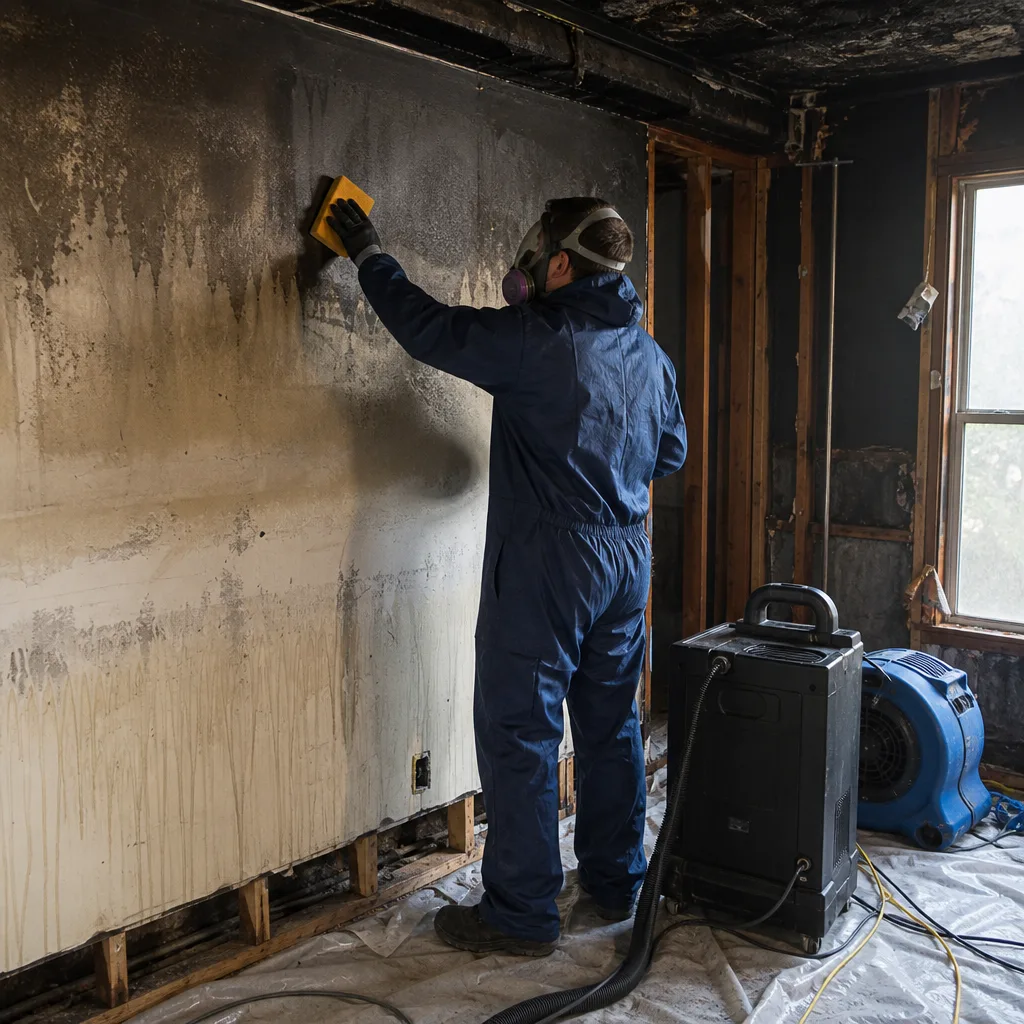
After a Cajon Pass-driven Santa Ana event tears through the foothill tracts, we’re moving fallen limbs, clearing debris from window wells, and extracting standing water before it soaks into your subfloor. In Rancho Cucamonga the cleanup is rarely just water. After a fire season, the runoff carries ash, sediment, and rock into homes that were never flooded before. We remove the contaminated material, pressure-wash hard surfaces where it’s safe to do so, and log every moisture reading from day one. Most debris and water removal jobs in the 91737 and 91739 ZIP codes run $1,800-$4,200 depending on square footage and contamination level.
Emergency Board-Up
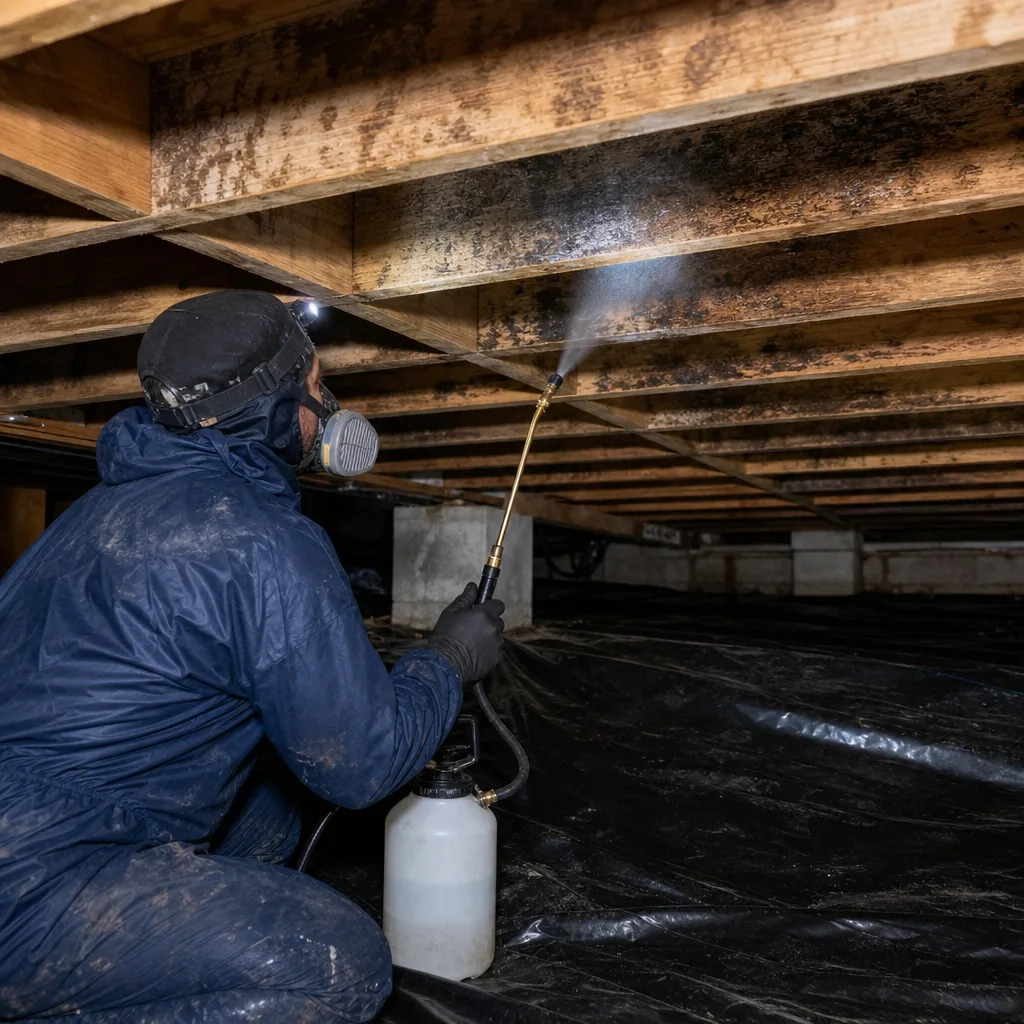
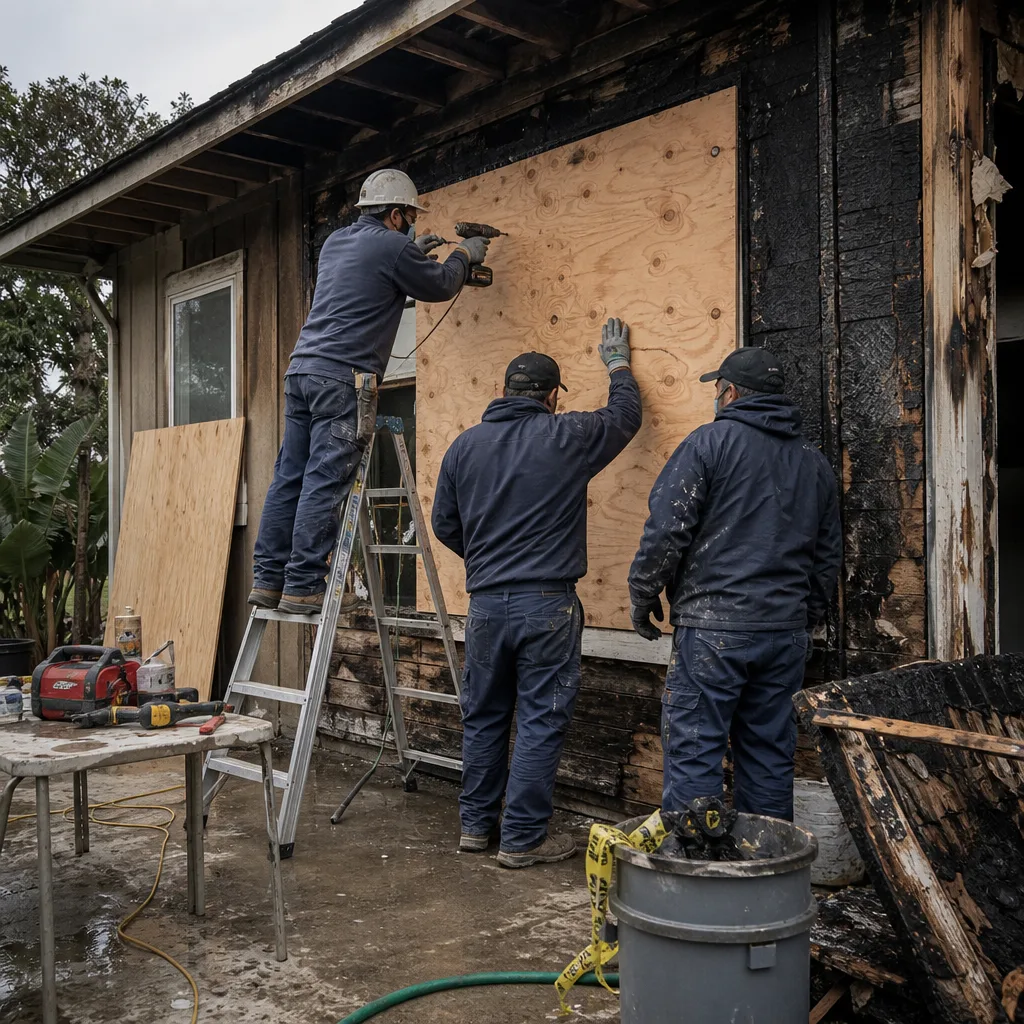
When a 70 mph gust peels back a section of roofing or blows a sliding door out of its track, your home is open to weather, animals, and trespass. Emergency board-up in Rancho Cucamonga runs $450-$1,200 depending on the number of openings and the height of the access. We pre-stage materials for foothill communities because we know how quickly a Cajon Pass wind event can turn a minor roof lift into a full attic breach. Our techs can be on site within 60-90 minutes of your call, and we secure every opening with weather-rated panels so secondary damage doesn’t compound while you wait on your carrier.
Roof Tarping
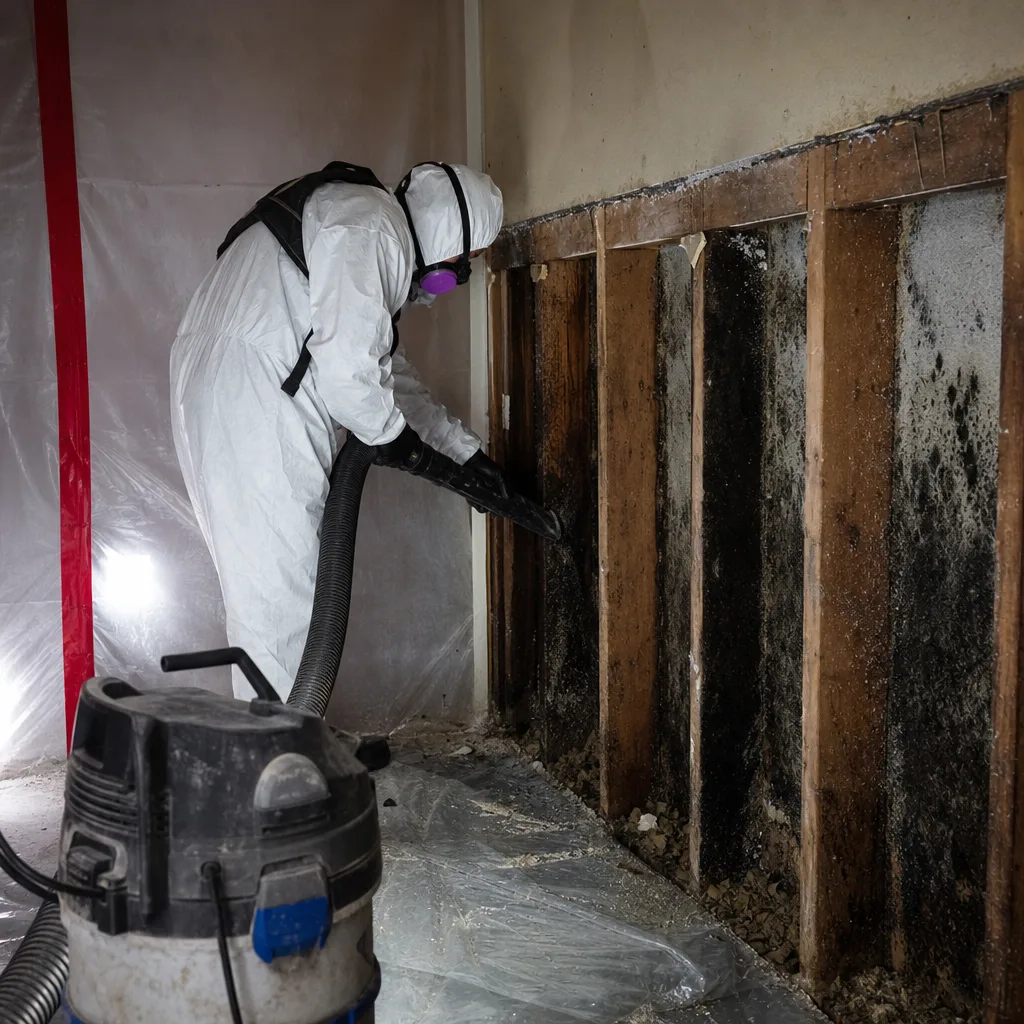
Roof tarping after a Santa Ana wind event in Rancho Cucamonga typically costs $600-$1,800 depending on roof pitch, access difficulty, and the square footage of damaged decking. The foothill tracts in 91737 get the worst of it. The Cajon Pass corridor accelerates winds dramatically as they funnel between the San Gabriels and the San Bernardinos, and those gusts routinely exceed 70 mph. We worked a Terra Vista home after a gust peeled back a section of tile roofing, letting rain pour into the attic. Our crew tarped the roof same-day using the homeowner’s existing trusses, then set up Dri-Eaz dehumidifiers and XPOWER air movers. Because the clay-heavy alluvial soil under the slab kept wicking moisture, we returned on day ten to find elevated readings behind the baseboards and ran a second drying cycle before replacing the affected drywall. That’s the kind of local knowledge that keeps a tarp job from becoming a mold claim.
Flood Damage Restoration
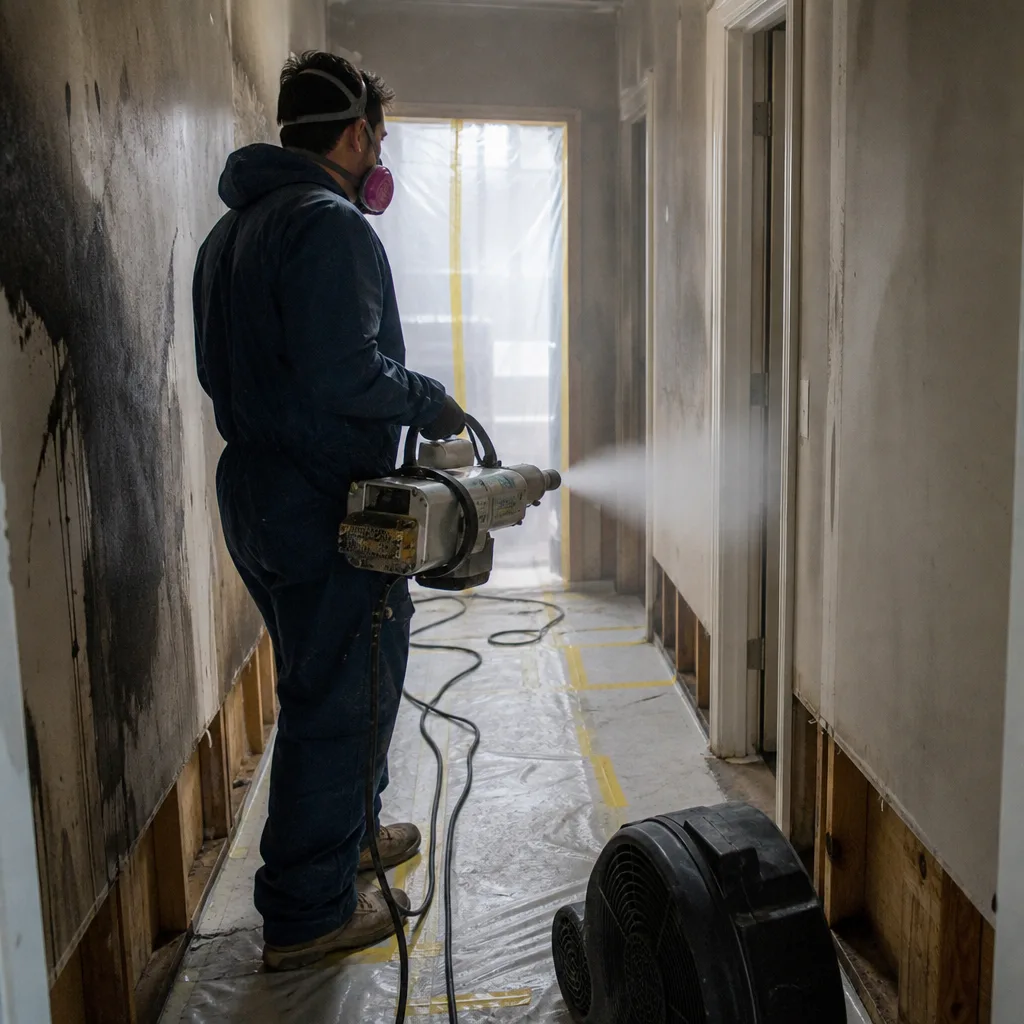
Flood damage restoration in Rancho Cucamonga typically runs $3,200-$8,400 for a single-story home with multiple affected rooms, including extraction, drying, and basic reconstruction. The number that matters to you is the drying timeline. Standard drying schedules work in San Gabriel Valley soils that drain in days. Here, the clay holds water. We run moisture mapping on day one, daily readings until the dry standard is met, and a re-check around day ten because we know the rebound risk. The log goes to you and your carrier. If your home is slab-on-grade and the water sat for more than a few hours, expect a longer dry-out than a coastal contractor would predict.
Debris Removal
Post-storm debris removal in Rancho Cucamonga’s foothill neighborhoods runs $350-$1,400 depending on volume and whether the material includes mud, rock, or burned vegetation from the urban-wildland interface. After a debris flow down Day Creek or Deer Creek, the slurry that reaches a home is heavy, abrasive, and often mixed with ash from the previous fire season. We haul it, separate what can be recycled, and document everything for your insurance claim. The documentation matters. A photo log with time stamps and a written scope is the difference between a smooth carrier conversation and a denied line item.
What happens when you call
- 1
A real person answersNo phone trees - you reach a local pro.
- 2
You get an upfront price rangeHonest numbers before anyone is dispatched.
- 3
A background-checked tech heads outLicensed & insured, dispatched right away.
- 4
You approve before work beginsNothing starts until you say go.
Common Storm & Disaster Restoration Problems We See in Rancho Cucamonga Homes
- Cajon Pass-accelerated wind damage. Santa Ana events here regularly push foothill gusts past 70 mph, lifting shingles and driving rainwater under eaves before a standard tarp can be deployed. Homes in the upper tracts of 91737 and 91739 get hit first and hardest.
- Debris-flow intrusion from burned hillsides. Post-fire atmospheric rivers turn Day, Deer, and Cucamonga Creeks into chutes for sediment, ash, and rock. The slurry overwhelms storm drains and pushes into slab-on-grade homes that have never flooded before.
- Secondary moisture rebound in clay-heavy soils. Alluvial clay under Rancho Cucamonga homes stays saturated for weeks after a storm. Readings that look fine on day three can spike again by day ten, creating hidden mold conditions behind baseboards and under flooring.
- Aging roofing and plumbing in early-2000s stucco tract housing. Much of Terra Vista and Victoria was built between the 1980s and mid-2000s. The roofing membranes are now at the age where wind lift and water intrusion become common, and early CPVC plumbing cracks under the pressure surge that often accompanies a major storm event.
Pricing for Storm & Disaster Restoration in Rancho Cucamonga, CA
| Service | Typical Range in Rancho Cucamonga |
|---|---|
| Emergency board-up (single opening) | $450 - $800 |
| Emergency board-up (multiple openings) | $800 - $1,200 |
| Roof tarping (standard pitch, single area) | $600 - $1,100 |
| Storm debris removal | $350 - $1,400 |
| Storm damage cleanup (water extraction + drying) | $1,800 - $4,200 |
| Full flood damage restoration (multi-room) | $3,200 - $8,400 |
What moves a Rancho Cucamonga job toward the top of these ranges is access difficulty in foothill tracts, contamination from ash or sediment, and the extended drying timelines imposed by clay-heavy soils. What moves it down is a single-room event with clean water and quick extraction. Every estimate is free, written, and agreed before work starts. We bill your insurance carrier directly when you have an active claim, so you’re never playing messenger between us and the adjuster. Call (888) 737-2439 for an exact quote on your storm damage.
We Also Serve Cities Near Rancho Cucamonga
Floodline Restoration Co. of California serves Rancho Cucamonga homeowners across all four local ZIP codes: 91737, 91739, 91701, and 91729. Our crews also respond to storm and disaster calls in Upland, Ontario, Fontana, and Montclair, with the same live dispatch, certified technicians, and 90-Day Done Right Promise on every job.
Serving Rancho Cucamonga, CA - Our Local Coverage Area
We’re based in the Rancho Cucamonga area and know this community well. Use the map below to see our service coverage - if you’re nearby, we can almost certainly help.
FAQs - Storm & Disaster Restoration in Rancho Cucamonga
The clay-heavy alluvial soils under Rancho Cucamonga slab foundations stay saturated for weeks after a water event, and moisture wicks laterally into framing and drywall long after the initial extraction. Readings that look acceptable on day three can spike again by day ten because the soil keeps feeding moisture back into the structure. A second check at day ten catches the rebound before it becomes a hidden mold problem. Call (888) 737-2439 if your current contractor didn’t do this and you’re seeing staining or musty odors.
Within minutes, not hours. When a Pacific storm follows a fire season that stripped the chaparral above Rancho Cucamonga, Day Creek and Deer Creek can jump their banks and push sediment, ash, and rock into foothill homes with almost no warning. The city’s storm drain system was not designed for post-fire debris volumes. If you live near either channel in 91737 or 91739 and you hear heavy rain plus a rumbling sound, that’s not thunder. That’s rock moving. Call (888) 737-2439 and we’ll have a crew staging in the area.
The first thing to check is the roof-to-wall junction, because wind-driven rain gets pushed under eaves and into the attic before you ever see a leak. Then check window flashing, especially on the windward side. Terra Vista homes built in the early 2000s are now at the age where roofing membranes and window seals fail under 70 mph gusts. If you see lifted shingles, staining on ceiling corners, or daylight through attic vents where it shouldn’t be, call (888) 737-2439 for an inspection. It’s cheaper to tarp now than to rebuild a ceiling later.
Yes. We remove the wet mud and ash material, dispose of it properly, and run professional-grade drying equipment from Dri-Eaz, Phoenix, and XPOWER until moisture readings stabilize. The ash and sediment from those debris flows is contaminated, not just dirty. It carries hydrocarbons from burned vegetation and whatever was on the hillside. That material doesn’t just dry out; it has to be removed and the structure treated before reconstruction starts. Call (888) 737-2439 and we’ll document everything for your carrier.
Yes, and the reason is structural. The older wood-framed homes in the Etiwanda Colony area of 91739 have original roofing and cast-iron or galvanized plumbing that the Inland Empire’s hard water has been corroding for decades. When a major storm hits, those older roofs are more likely to lift, and that plumbing is more likely to crack under pressure surges. The combination turns a standard storm event into a multi-system failure. We treat these homes with extra care because the materials aren’t replaceable off a modern supply list. Call (888) 737-2439 for a free assessment.
Written by Curt Bowman, Owner at Floodline Restoration Co. of California, serving Rancho Cucamonga since 2010.