
Fast, Reliable Storm & Disaster Restoration Across Long Beach
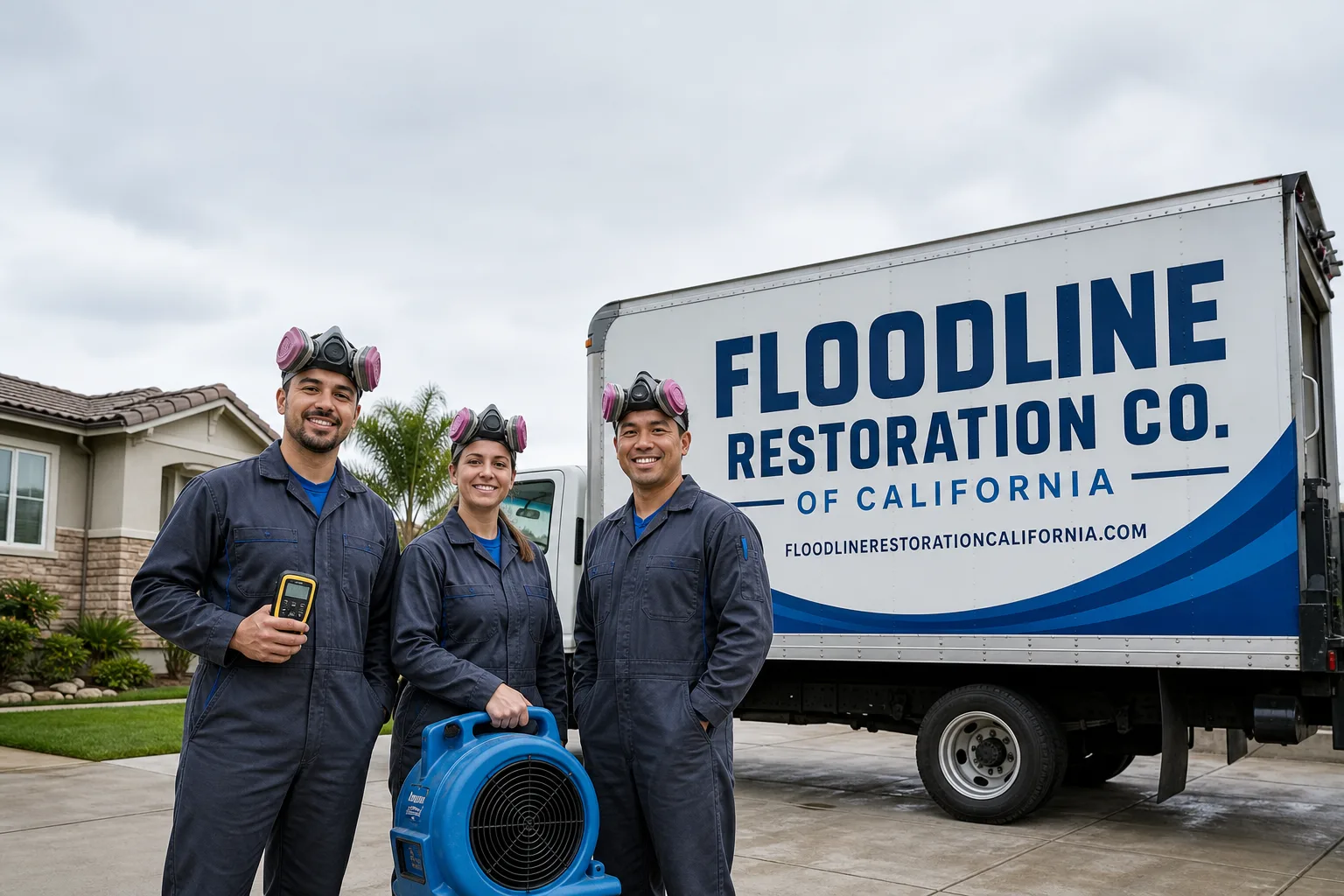
When a storm hits Long Beach, the damage doesn’t wait, and neither should you. Floodline Restoration Co. of California answers the phone with a live dispatcher at 2 a.m., not a recording, and a certified crew reaches homes in Long Beach fast enough to start extraction on the same visit. Our Storm & Disaster Restoration team knows this city block by block: the pre-war bungalows in Rose Park, the canal-front homes in Naples, the mid-century apartment blocks on the west side. If water is moving through your house right now, call (888) 737-2439.
Why Floodline Restoration Co. of California Is Long Beach’s Preferred Storm & Disaster Restoration Company
We’ve been doing this work since 2010, built around a dispatch board instead of a sales desk. Long Beach homeowners call us because they want a name they can hold accountable, not a rotating cast of subcontractors. Our technicians are background-checked and uniformed, trained to IICRC, RIA, and IFA standards, and the same crew that reads the moisture map on day one handles daily readings until the dry standard is met.
Response time matters in a city where the marine layer keeps walls wet for days. That’s why we position crews and equipment for Long Beach specifically. When an atmospheric river opens up over San Pedro Bay or wind tears a section of roof off a 90813 craftsman, we’re already close. Dispatch and scheduling are coordinated from our Los Angeles office, but the crews serving Long Beach work locally and know the streets. A homeowner in Wrigley doesn’t have time to wait for a crew to fight traffic down the 710. They won’t have to.
Every job gets the 90-Day Done Right Promise in writing. That’s the Keystone Standard: if it’s not done right, we make it right. No arguing. No paperwork battles. It’s backed by our K.E.Y.S. values code: Krafted right, Every time, Your home first, Standing behind it.
Our Storm & Disaster Restoration Services in Long Beach
Flood Damage Restoration
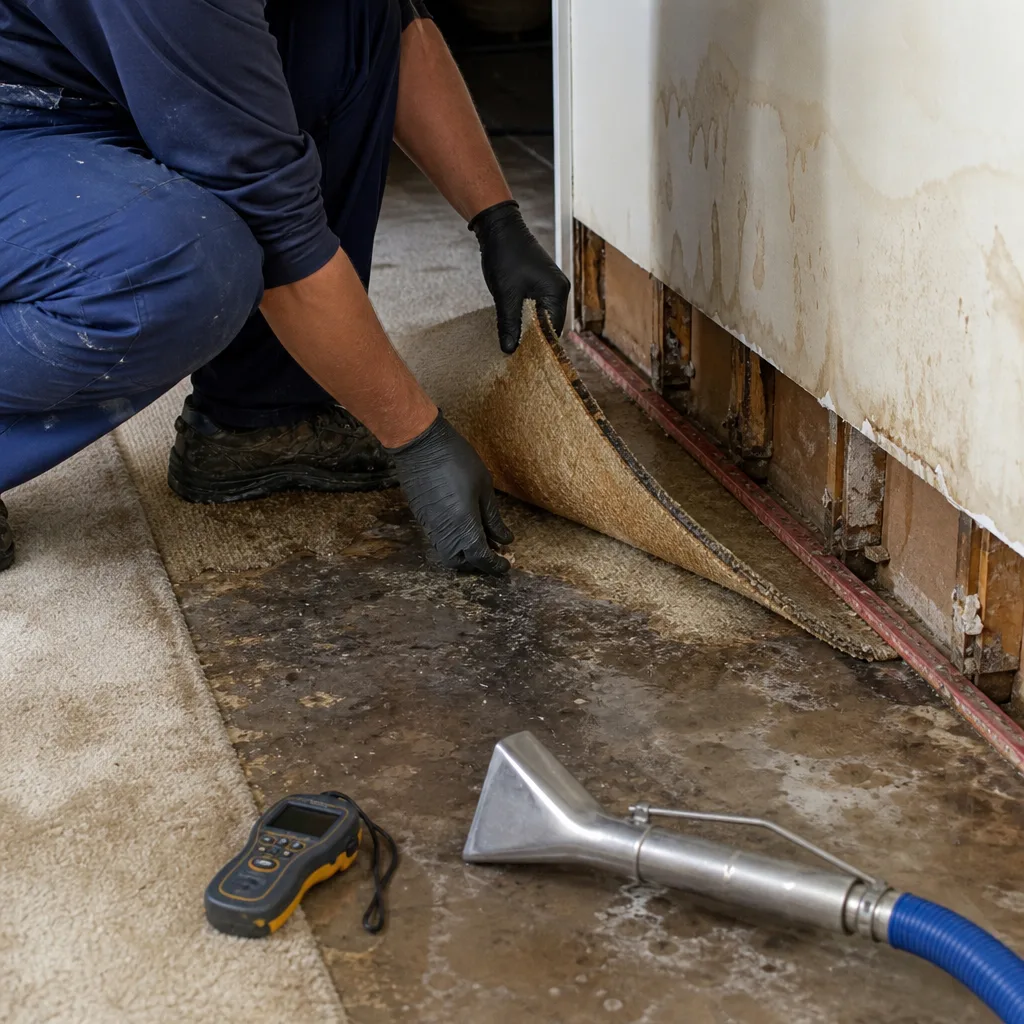
Flood water in Long Beach carries more than you think, especially in west-side ZIP codes like 90810, where salt-laden air and port-adjacent runoff leave a residue that accelerates corrosion and mold. We extract, dry, and restore using professional-grade Dri-Eaz and XPOWER equipment, with moisture readings logged daily until your structure meets the dry standard. In Naples, where king tides push water up through floor drains, we account for tidal timing and saltwater contamination before we even set the first air mover.
Storm Damage Cleanup
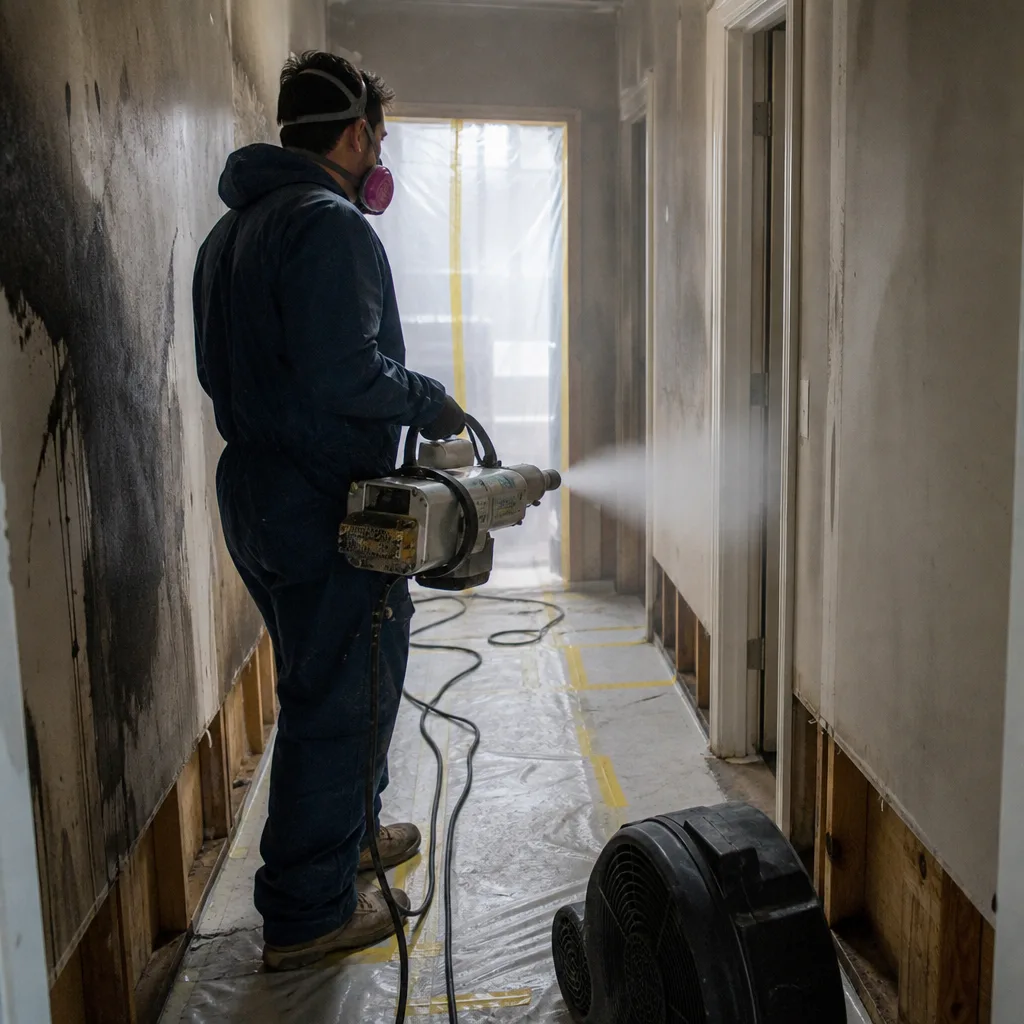
Fallen trees, wind-driven debris, shattered windows, waterlogged drywall. Storm cleanup in Long Beach means working fast but working right, especially in older homes where lathe-and-plaster walls hide moisture in ways modern drywall doesn’t. Our crews clear debris, stabilize damaged areas, and document everything with photos for your insurance carrier. We bill carriers directly, so you’re never playing messenger between us and the adjuster.
Emergency Board-Up
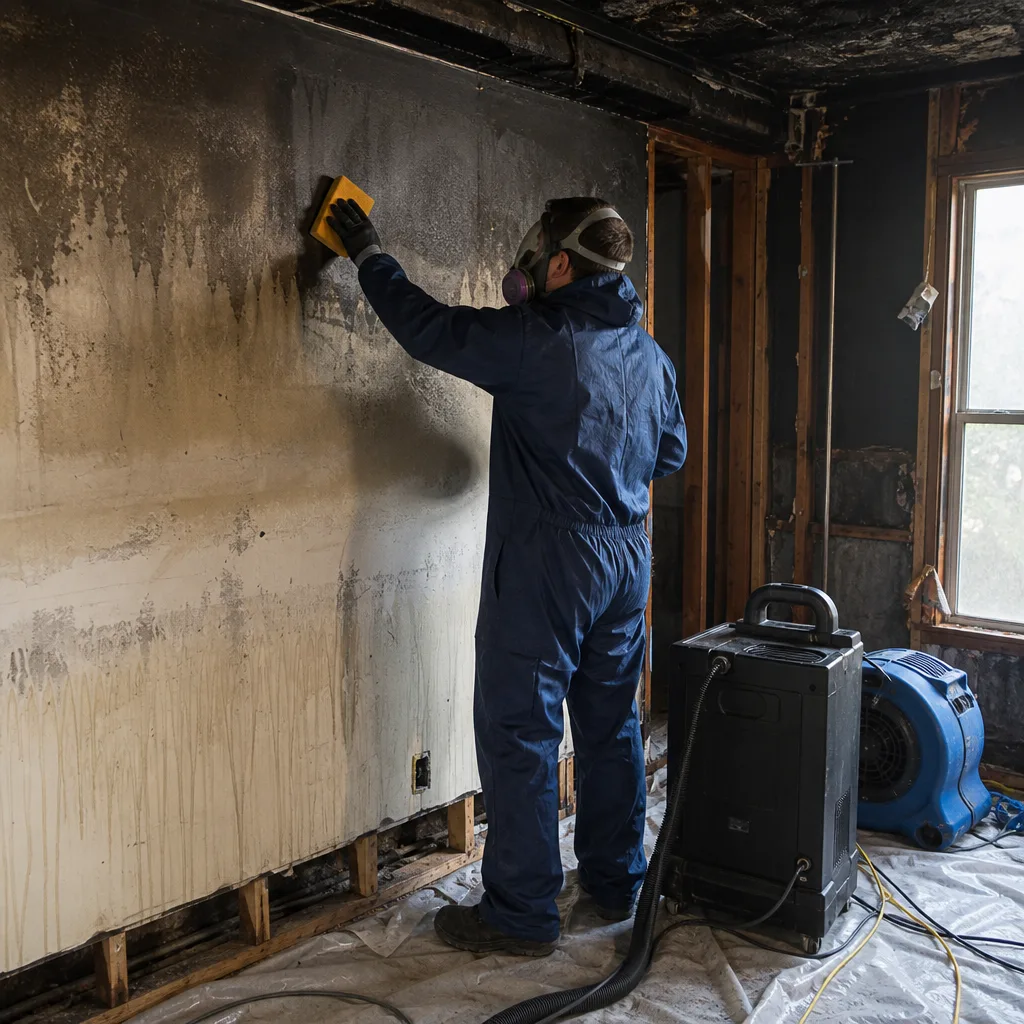
A broken window or breached wall in a 90813 bungalow becomes an open invitation to animals, vandals, and more water. We board up storm-damaged openings the same day, securing your home until permanent repairs can be scoped and scheduled. In Long Beach’s dense residential streets, a tarped or boarded property also keeps the neighbors from worrying, and keeps the block looking as it should.
Roof Tarping
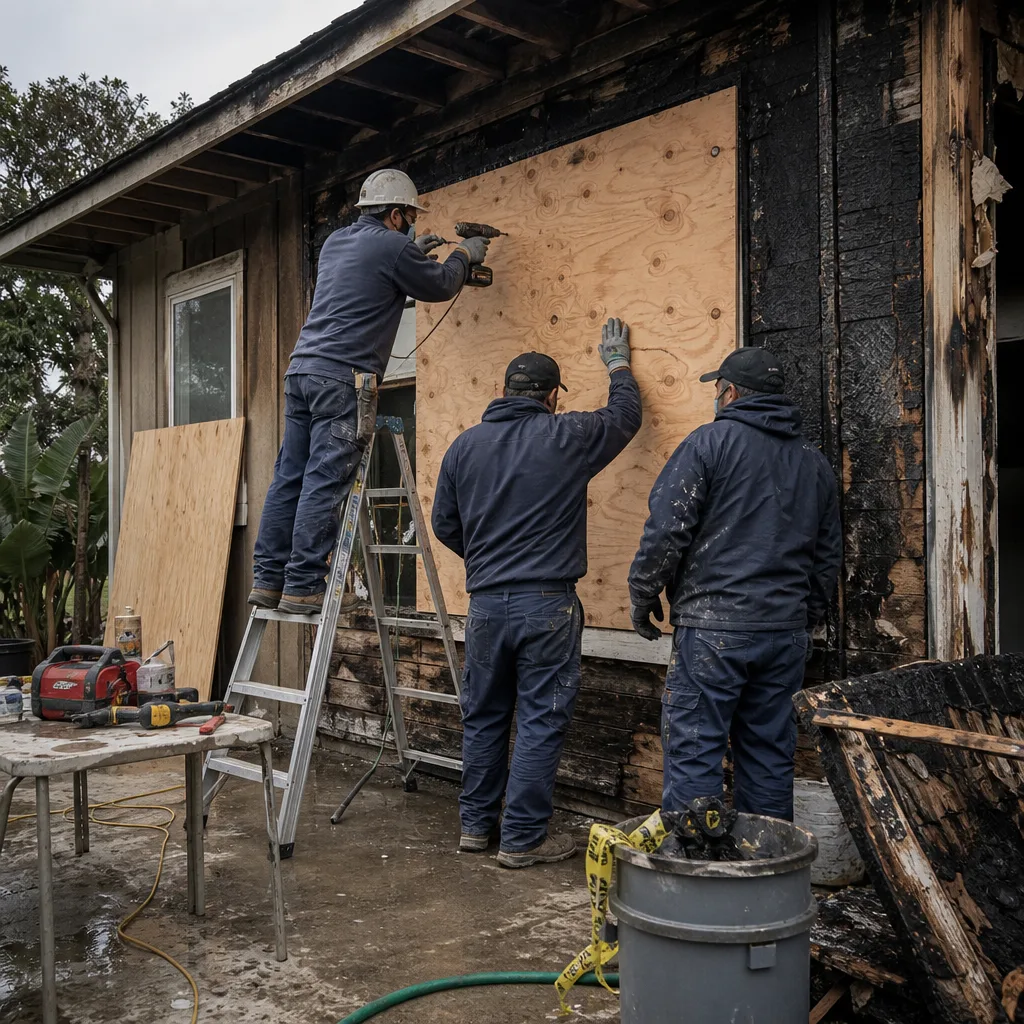
When wind tears shingles off a 90814 Spanish Colonial or a tree limb punctures a flat roof in 90802, tarping stops the bleeding. We install heavy-duty tarps that hold against Long Beach’s persistent coastal wind, not just a fair-weather patch. The marine layer means a small roof breach can keep a ceiling wet for weeks if it isn’t covered immediately. That’s a recipe for mold behind the lath. We don’t let it get there.
What happens when you call
- 1
A real person answersNo phone trees - you reach a local pro.
- 2
You get an upfront price rangeHonest numbers before anyone is dispatched.
- 3
A background-checked tech heads outLicensed & insured, dispatched right away.
- 4
You approve before work beginsNothing starts until you say go.
Trusted Brands We Service in Long Beach
Floodline Restoration Co. uses professional-grade equipment that Long Beach’s climate demands: Dri-Eaz and Phoenix for structural drying, XPOWER for air movement and extraction. These aren’t rental-fleet leftovers; they’re maintained, calibrated, and deployed based on the moisture map of your specific structure. In a city where the marine layer keeps relative humidity at 80 to 90 percent well into midday, equipment choice isn’t a preference. It’s the difference between a dry home and a callback three months later. We stand behind the gear we run, and we stand behind the work it does.
Common Storm & Disaster Restoration Problems We See in Long Beach Homes
- Salt corrosion on the west side. In ZIP codes like 90810 and the downtown corridor, years of salt-laden marine air and port-adjacent chemical residue accelerate corrosion on metal ductwork, fasteners, and even restoration equipment. If those surfaces aren’t rinsed and coated after each job, they fail prematurely and you’re calling us back for something we should have caught the first time.
- Hidden slab cracks from harbor-area subsidence. Decades of oil extraction from the Wilmington field caused documented land subsidence across the harbor district. Mid-century structures have slab penetrations that shifted subtly over the years, creating water-intrusion pathways most crews miss. Water seeps back weeks after a standard dry-out because those seals were never checked.
- Tidal backflow in Naples. In the 90803 canal islands, king tides and storm surge force water up through floor drains and low slab penetrations rather than through walls or the roof. It’s a failure mode essentially nonexistent anywhere else in Long Beach, and rare in LA County. Restoration crews who don’t plan around tidal cycles leave homes wet behind the baseboards.
- Condensation mold in jalousie-window apartments. The aging mid-century apartment blocks in 90802 and 90805 still have single-pane jalousie or aluminum windows and original galvanized supply lines. Chronic condensation feeds mold inside wall cavities that standard water extraction never touches. It’s a slow, hidden problem that standard storm cleanup misses, and it’s a leading source of post-job callbacks on the west side.
Pricing for Storm & Disaster Restoration in Long Beach, CA
Storm damage restoration in Long Beach typically runs between $1,200 and $4,500 for cleanup and drying on a single affected room, depending on how far the water traveled and what’s behind the walls. Emergency board-up usually falls between $250 and $650 per opening. Roof tarping averages $400 to $900 for a standard residential roof breach. Flood damage restoration on a larger scale, where multiple rooms are involved and structural materials need to come out, commonly runs $4,000 to $15,000 or more. Saltwater contamination in Naples or port-adjacent areas adds a decontamination step that inland cities rarely see. Every job starts with a free estimate and a written scope before work begins, so you know the number before we touch anything. Call (888) 737-2439 and we’ll give you a straight answer.
We Also Serve Cities Near Long Beach
Our crews work throughout the Long Beach area, including Signal Hill, Lakewood, Carson, and Compton. If you’re just outside city limits and dealing with storm damage, you’re still within reach. Floodline Restoration Co. of California covers the whole Long Beach corridor, and we don’t hand your job off to a different company when you cross a city line.
Serving Long Beach, CA - Our Local Coverage Area
We’re based in the Long Beach area and know this community well. Use the map below to see our service coverage - if you’re nearby, we can almost certainly help.
FAQs - Storm & Disaster Restoration in Long Beach
Because in Naples, king tides and storm surge force water up through floor drains and low slab penetrations, which means the water entering your home is saltwater, not rainwater. Saltwater leaves a corrosive residue in wall cavities, under baseboards, and inside electrical boxes, and it changes how the structure dries. Standard freshwater extraction and drying leaves chlorides behind, which wick moisture out of the air for months and corrode what they touch. That’s why we treat Naples storm losses with a saltwater-specific decontamination protocol before drying begins. Call (888) 737-2439 if you’ve had tidal water come up through your drains. This isn’t a wait-and-see situation.
It extends them, sometimes by 30 to 50 percent. Long Beach’s position on San Pedro Bay means coastal neighborhoods sit under a persistent morning marine layer that holds relative humidity at 80 to 90 percent well into midday. Structural drying relies on low-ambient humidity to pull moisture out of materials. When the outside air is already saturated, you need more dehumidification and more days on site. A job that dries in four days in Lakewood might take six or seven in Naples. That’s the honest math, and we plan for it before we start, not after the first moisture reading disappoints.
We shut the water, extract, and get the walls open where they need to be open. Original galvanized supply lines in Long Beach’s pre-WWII bungalows, especially in Rose Park and Wrigley, are past their service life. When one lets go during a storm, water moves fast through lathe-and-plaster walls and pools in the lowest point. The plaster holds the moisture, so drying takes longer than with drywall, and we map that before we start pulling baseboards. Our crew responded to a 1940s Spanish Colonial revival in Rose Park after an atmospheric river overwhelmed the original galvanized lines. We ran Dri-Eaz LGR 7000XLi dehumidifiers and XPOWER air movers for what should have been five days. The marine layer kept RH above 85 percent into the afternoon, so we extended to seven, then opened walls to remediate mold behind the vintage lath. Because the house was rebuilt after the 1933 earthquake with materials that now trigger mandatory protocols, we ran asbestos and lead-paint checks before any demolition. Call us and we’ll walk you through what your specific house needs.
Yes, frequently. The west side sits close to one of the busiest port complexes in the world, and stormwater that moves through 90810 and the downtown corridor can carry petroleum-adjacent residue, salt-laden air deposits, and industrial runoff. That contamination accelerates mold colonization and material corrosion in ways you don’t see in Compton or Torrance. A standard extraction without addressing the residue leaves a film behind that feeds mold growth later. We account for that in the scope, and we document it for your carrier. If your flood water came from the street or a storm drain, don’t assume it’s clean. Call (888) 737-2439 and we’ll assess what actually came in.
Because the ground under parts of Long Beach has moved. Decades of oil extraction from the Wilmington field caused documented land subsidence across the harbor district. Foundations and slab penetrations shifted subtly. The cracks that opened up become persistent water-intrusion pathways, and standard dry-out jobs don’t address them because nobody looks. Weeks after the equipment is gone, water seeps back through those shifted seals. A restoration company that knows Long Beach checks the slab before declaring a job done. If your home is in the harbor district or any older west-side neighborhood and you’ve had water come back after a storm loss, call us. We’ll find the pathway and seal it instead of drying the same square footage twice.
Call Floodline Restoration Co. of California for Storm & Disaster Restoration in Long Beach
Storm damage doesn’t wait for business hours, and neither do we. A live person answers the phone at (888) 737-2439 around the clock, every day. We’ll give you a straight answer, a free estimate, and a written scope before any work starts. Our technicians are background-checked, uniformed, and certified. We bill your insurance carrier directly, and we hand you a moisture log and a 90-Day Done Right Promise when the job’s finished. That’s a square deal, and it’s how we’ve worked since Curt Bowman founded this company in 2010. Done right, and backed in writing.
Written by Curt Bowman, Owner at Floodline Restoration Co. of California, serving Long Beach and the surrounding communities.