
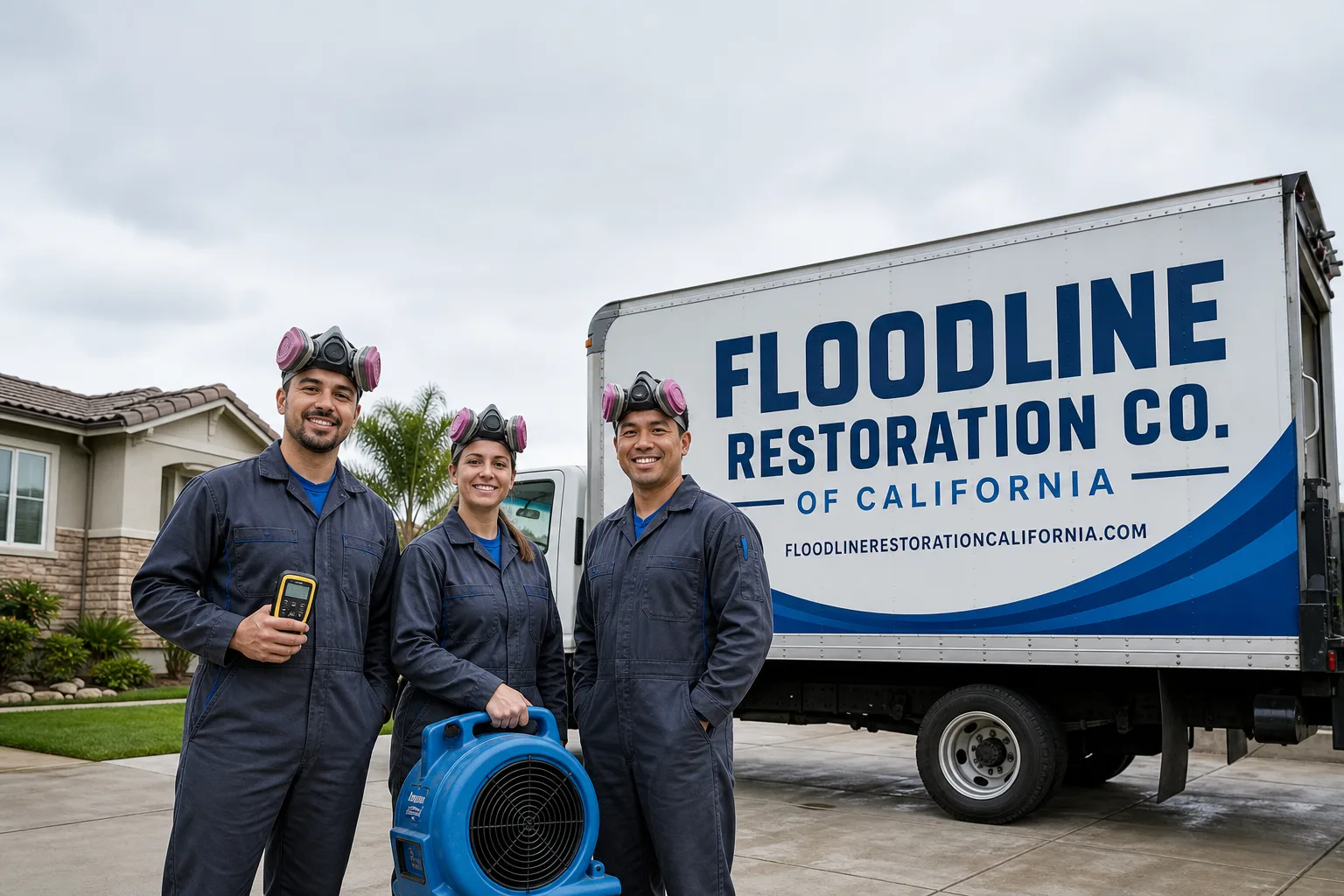
Fast, Reliable Storm & Disaster Restoration Across Lomita
Storm & Disaster Restoration in Lomita means dealing with two forces at once: wind-driven rain from the coast and a housing stock built almost entirely before 1965. When a storm rips off a fascia board or a garage door jams against rusted tracks, the damage doesn’t wait, and neither do we. Our crew knows the streets here, from 250th Street down to the 90717 neighborhood blocks, and we can have a certified team at your door with extraction equipment and board-up material in hand. Call (888) 737-2439 the moment water is inside your home. A live dispatcher answers, any hour, and a crew rolls toward Lomita the same visit.
Why Floodline Restoration Co. of California Is Lomita’s Preferred Storm & Disaster Restoration Company
Lomita homeowners don’t hand their house keys to just anyone. The homes here were built in a single wave, late 1940s through early 1960s, and the people who live in them tend to be the same folks who remember when those walls went up. Curt Bowman founded Floodline Restoration Co. in 2010 with a simple rule: the crew that starts the job finishes it, and nobody gets passed to a subcontractor mid-project. That matters in Lomita, where every teardown carries the risk of asbestos-containing materials and a restoration company without local experience will stall on a stop-work order.
Our Lomita customers tell us the same thing: a live dispatcher picked up, a uniformed technician arrived when promised, and the moisture log was handed over with the final walkthrough. It’s not flashy. It’s the square deal, and it’s backed by the 90-Day Done Right Promise in writing. If it’s not done right, we make it right. No paperwork battles, no arguing. That’s the Keystone Standard, and it applies to every storm job we run in Lomita.
We coordinate dispatch from our Los Angeles office, but the crews working Lomita are local to this corridor. They know which homes on the 250th Street corridor still have original galvanized supply lines. They know the marine layer sits heavier west of Narbonne Avenue. That’s not marketing. That’s the difference between a crew that guesses and a crew that shows up knowing what to look for.
Our Storm & Disaster Restoration team carries IICRC, RIA, and IFA certifications, and every technician is background-checked and uniformed. We run Dri-Eaz and Phoenix dehumidifiers sized for Lomita’s humidity, not equipment borrowed from a drier inland call. You get the right dry, the first time.
Our Storm & Disaster Restoration Services in Lomita
Storm Damage Cleanup
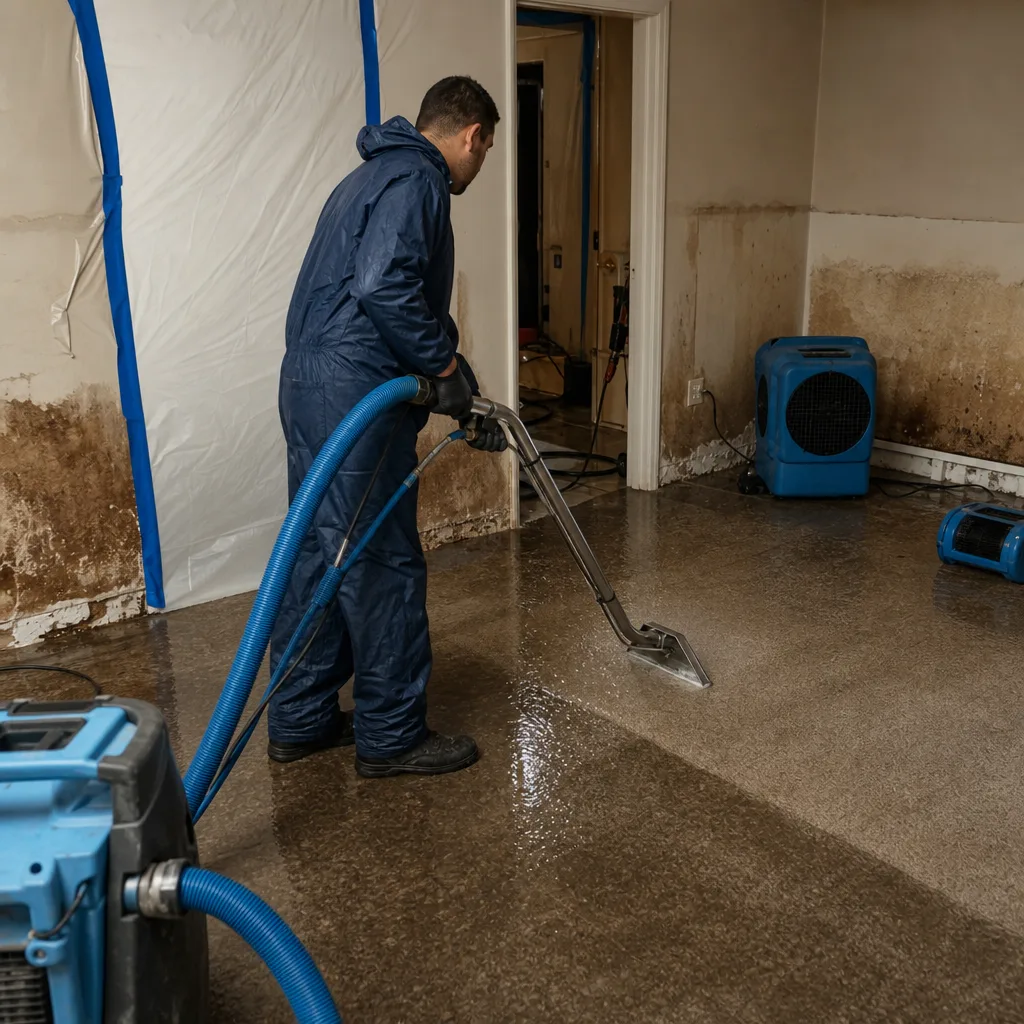
Storm damage cleanup in Lomita almost always starts with a stop at the front door to check what’s under the flooring. The city’s mid-century homes sit on 9-inch vinyl-asbestos tiles so often that we plan for a testing hold before any water extraction begins. Once the hold clears, our crew removes saturated drywall, carpet, and debris, logs every moisture reading, and runs professional-grade drying equipment until the structure hits the dry standard. You get a written scope before any work starts, and the cleanup crew is the same one that handles the rebuild if it’s needed.
Flood Damage Restoration
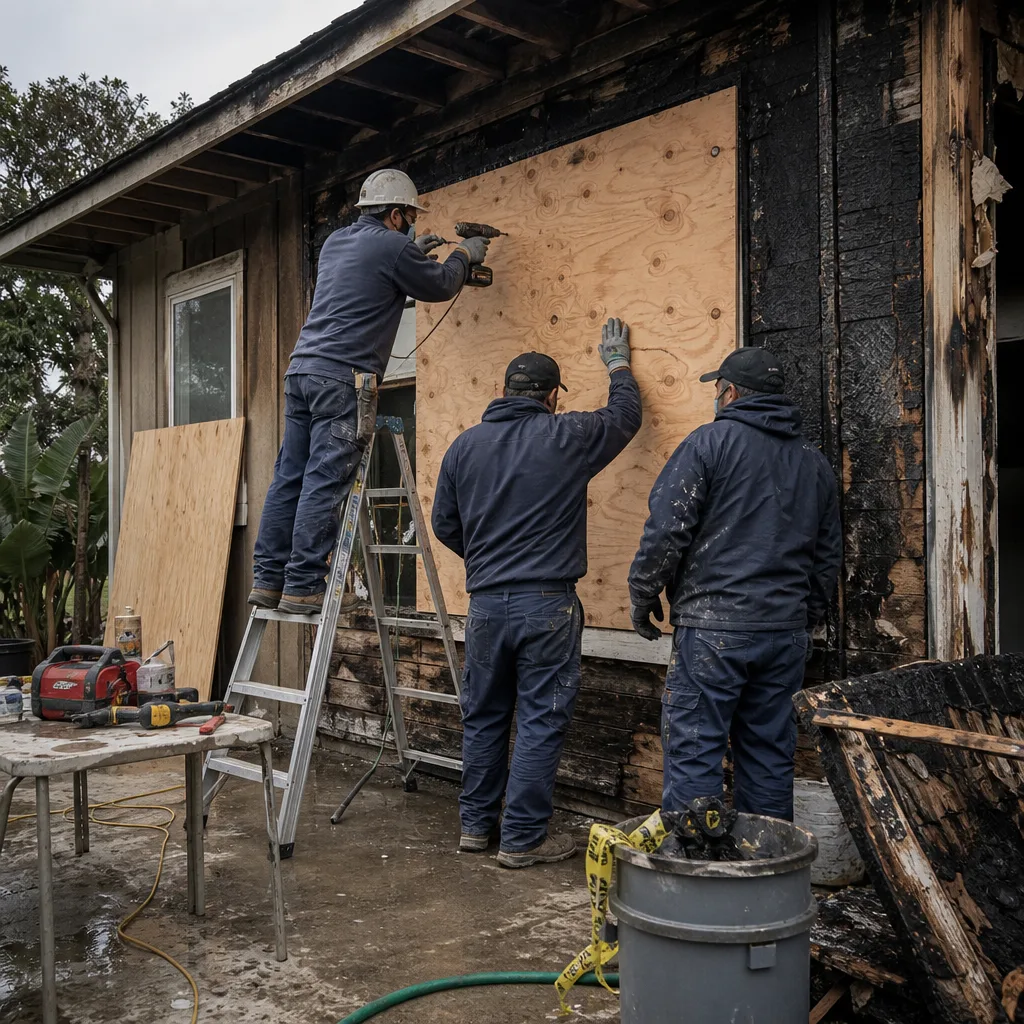
Flood damage restoration in Lomita runs into a local problem: the city’s flat-ceiling attics and poorly ventilated crawl spaces hold moisture long after the standing water is gone. Marine-layer humidity pushing in from the Port of Los Angeles corridor slows drying, so we size dehumidification for coastal conditions, not inland assumptions. A typical flood job in Lomita means Injectidry mat drying on hardwood, XPOWER air movers in cavities, and daily moisture readings until the structure is verified dry. Storm surge, gutter overflow, or a failed garage door seal, it’s the same playbook: extract, map, dry, and document for your carrier.
Emergency Board-Up
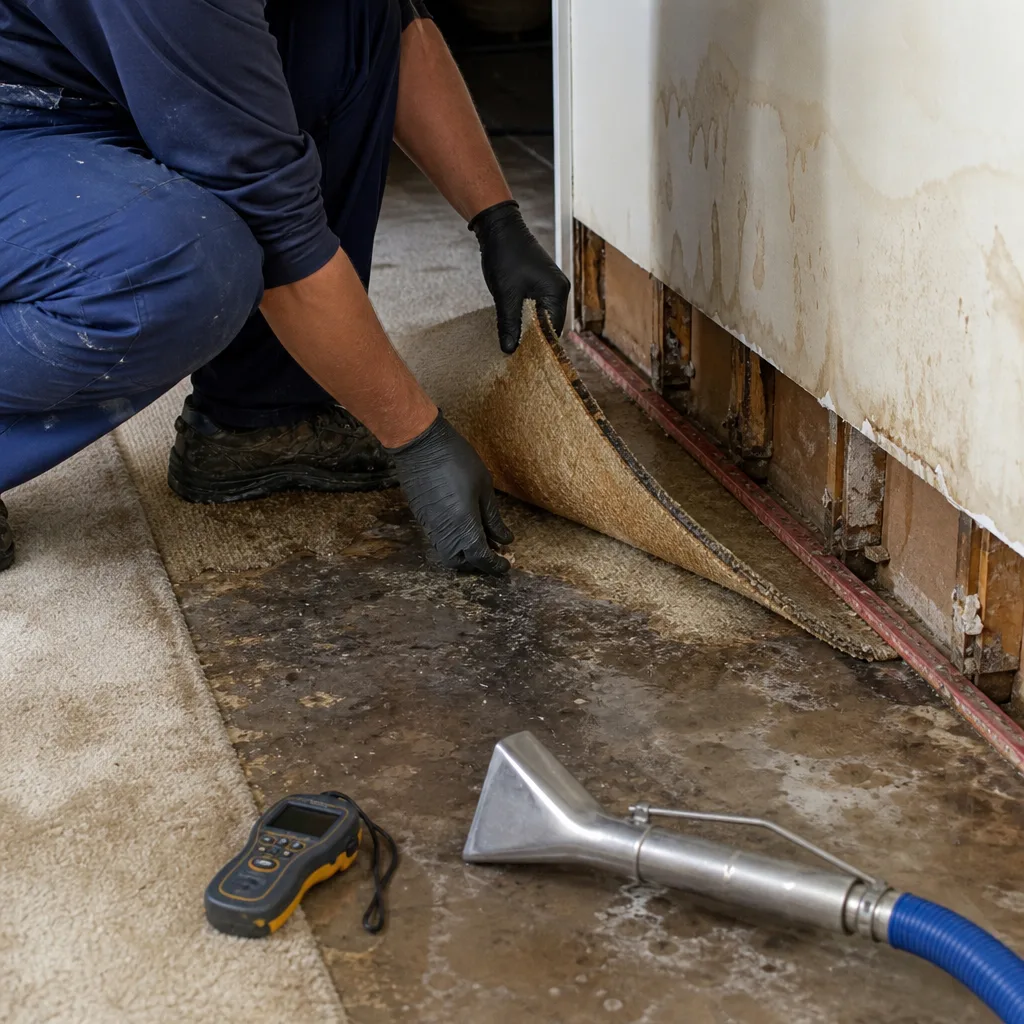
When a storm punches out a window or tears off a section of roof, emergency board-up is the first line of defense against further damage. In Lomita, we board up fast because the coastal wind doesn’t give notice. Our crew arrives with plywood, fasteners, and tarps, secures the opening, and photographs everything for your insurance file. You get a written scope before a single nail goes in. And if the board-up reveals original 9-inch floor tiles beneath the damaged area, we trigger the asbestos hold immediately, not after demolition starts.
Roof Tarping
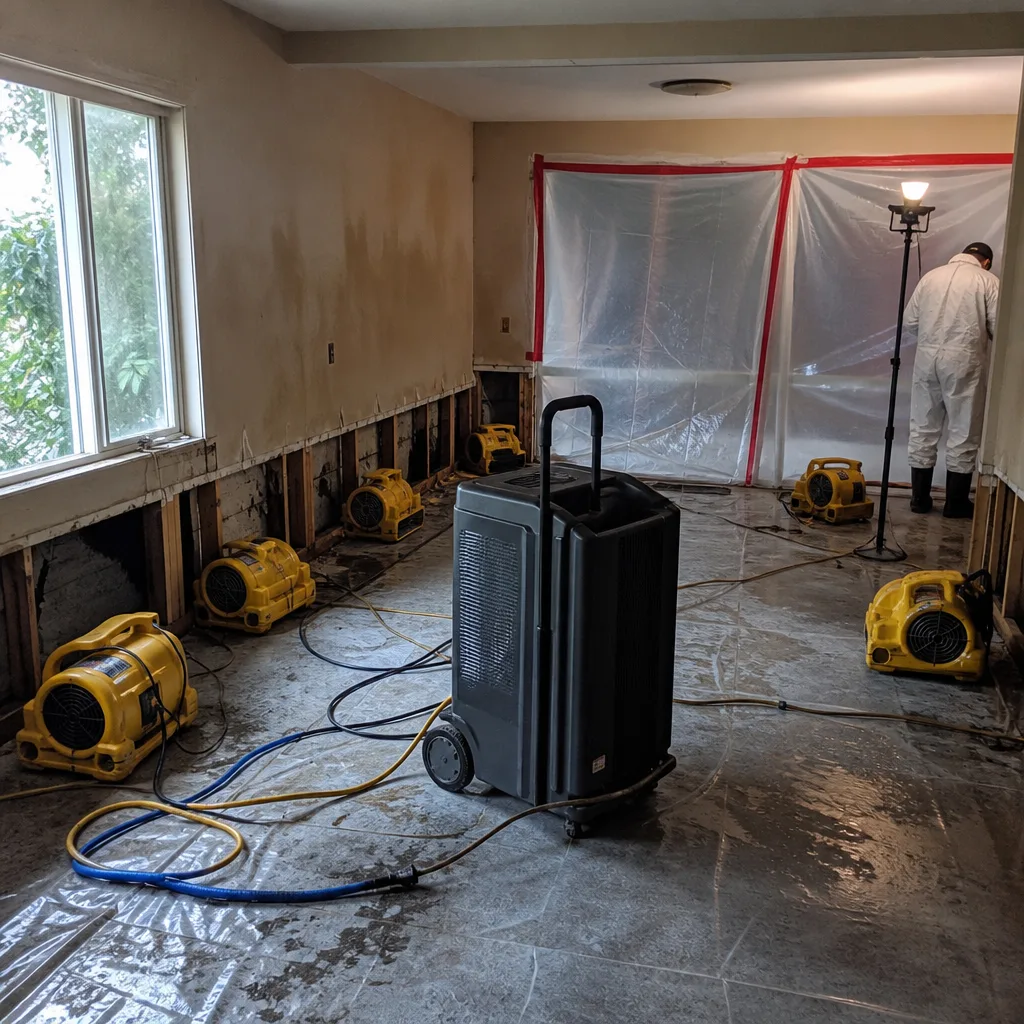
Storm damage to Lomita roofs carries a second risk beyond the shingles: the original 1950s roof decking often contains materials that require assessment before removal can begin. We tarp first to stop water entry, then inspect what’s underneath. Tarping is temporary, but the decisions made at the tarp stage determine the safety of the whole restoration. We photograph, log, and coordinate directly with your adjuster so the tarp doesn’t become a forgotten footnote in the claim.
What happens when you call
- 1
A real person answersNo phone trees - you reach a local pro.
- 2
You get an upfront price rangeHonest numbers before anyone is dispatched.
- 3
A background-checked tech heads outLicensed & insured, dispatched right away.
- 4
You approve before work beginsNothing starts until you say go.
Trusted Brands We Service in Lomita
Lomita’s ranch-style homes don’t respond to generic equipment. We run Dri-Eaz and Phoenix dehumidifiers because they’re built for the kind of sustained moisture extraction that coastal air demands. XPOWER air movers keep the airflow tight in small crawl spaces. Injectidry mats pull water out of 1950s hardwood floors without ripping them out. If your home has original Dri-Eaz or Phoenix equipment from a past remediation, we stock compatible parts locally and can service most units on a Lomita job within the same trip. Fast turnaround matters here, where the marine layer will grow mold in a week if the dry stall isn’t addressed.
Common Storm & Disaster Restoration Problems We See in Lomita Homes
- Asbestos-containing floor tiles hiding beneath carpet or linoleum. Lomita’s housing was built in one compressed wave, and 9-inch vinyl-asbestos tiles are so common that a testing hold is routine on storm teardown jobs. Skipping the pre-test means a stop-work order and a claim delay.
- Rusted garage-door tracks and jammed doors after storms. Palm and redwood trees in Lomita drop serious wind-borne debris, and original 1950s hardware corrodes fast in the salt air. A jammed door can become structural damage if water gets behind the frame.
- Flat-ceiling attics with heat-damaged insulation and poor ventilation. The 1950s attics were built with minimal roofing felt, and storm-driven rain soaks insulation quickly. Without aggressive drying, mold colonies appear inside three weeks.
- Under-sized dehumidification causing mold regrowth. Lomita’s marine-layer humidity means the dry standard takes longer. If a crew uses inland drying math, the crawl space stays damp and mold regrows within a month.
Pricing for Storm & Disaster Restoration in Lomita, CA
Most of our Lomita storm restoration jobs fall into clear ranges. Emergency board-up in Lomita runs $350-$900 depending on openings and structural complexity. Roof tarping typically costs $400-$1,100 for standard ranch-style homes in the 90717 area. A full flood damage restoration with extraction, drying, and basic repairs usually lands between $2,900 and $7,500 for a single room, with whole-home storm damage running $9,000-$25,000 depending on asbestos hold clearance and rebuild scope. The single biggest local cost factor is the asbestos testing and abatement hold, which adds $500-$2,000 to nearly every teardown in Lomita. We write the scope before work starts and bill your carrier directly. Call (888) 737-2439 for a free estimate with concrete numbers, not a placeholder.
We Also Serve Cities Near Lomita
Our Storm & Disaster Restoration crews serve Lomita and the surrounding communities, including Torrance, Rolling Hills Estates, San Pedro, and West Carson. If you’re in a neighboring block and need a board-up or water extraction, the same live dispatch and certified crews respond. And for neighbors in those cities, we offer the same 90-Day Done Right Promise with direct insurance billing.
Serving Lomita, CA - Our Local Coverage Area
We’re based in the Lomita area and know this community well. Use the map below to see our service coverage - if you’re nearby, we can almost certainly help.
FAQs - Storm & Disaster Restoration in Lomita
Nearly every storm damage job in Lomita requires an asbestos hold because the city’s homes were built in a single post-WWII wave, and the 9-inch vinyl-asbestos floor tiles installed during that era sit beneath most original flooring. When teardown begins and black mastic appears under the carpet, work stops until a certified lab tests the material. The hold typically takes 24 to 72 hours and adds $500-$2,000 to the job. We include the testing step in every Lomita scope so the claim doesn’t stall.
Coastal salt air accelerates garage-door failure in Lomita by corroding springs, hinges, tracks, fasteners, and opener chains two to three years faster than the same hardware inland. When a storm hits and wind-driven water pushes against the door, a rusted roller or spring fails under load and the door jams. That jammed door then becomes a water entry point. We replace standard corroded hardware with galvanized or coated springs and stainless fasteners, and we run a corrosion inspection on every storm call here.
The biggest storm cleanup challenge in Lomita’s mid-century homes is the combination of asbestos-containing materials and poor ventilation. The 9-inch floor tiles require a testing hold before demolition, and the flat-ceiling attics and crawl spaces built in the 1950s trap moisture. Storm cleanup crews that don’t plan for both problems end up with a stop-work order and a wet structure. We hold before we cut and dry longer than inland crews would, because Lomita’s marine layer demands it.
Restoration crews need different drying equipment in Lomita because the marine-layer humidity from the Port of Los Angeles corridor keeps baseline indoor moisture higher than Torrance’s eastern sections. A dehumidifier sized for a drier inland home won’t pull enough water from a 1950s Lomita crawl space, and mold regrowth becomes likely. We size Dri-Eaz and Phoenix units for coastal humidity and run daily readings until the structure meets the dry standard, period.
Homeowners should expect a brief testing hold, not a stop-work dead end. When our board-up crew sees original 9-inch vinyl floor tiles, we photograph the area, stop further demolition, and coordinate a certified lab test before any water extraction or teardown continues. The hold typically clears within 24 to 72 hours, and the testing cost is documented for your carrier. We don’t ignore the tiles and we don’t cut through them. The right way is the only way we work.
Call Floodline Restoration Co. of California at (888) 737-2439 for a free storm damage estimate in Lomita. A live dispatcher answers now. We’ll be there when we say, and the line the water left is where we start. Done right, and backed in writing.
Written by Curt Bowman, Owner at Floodline Restoration Co. of California, serving Lomita since 2010.