
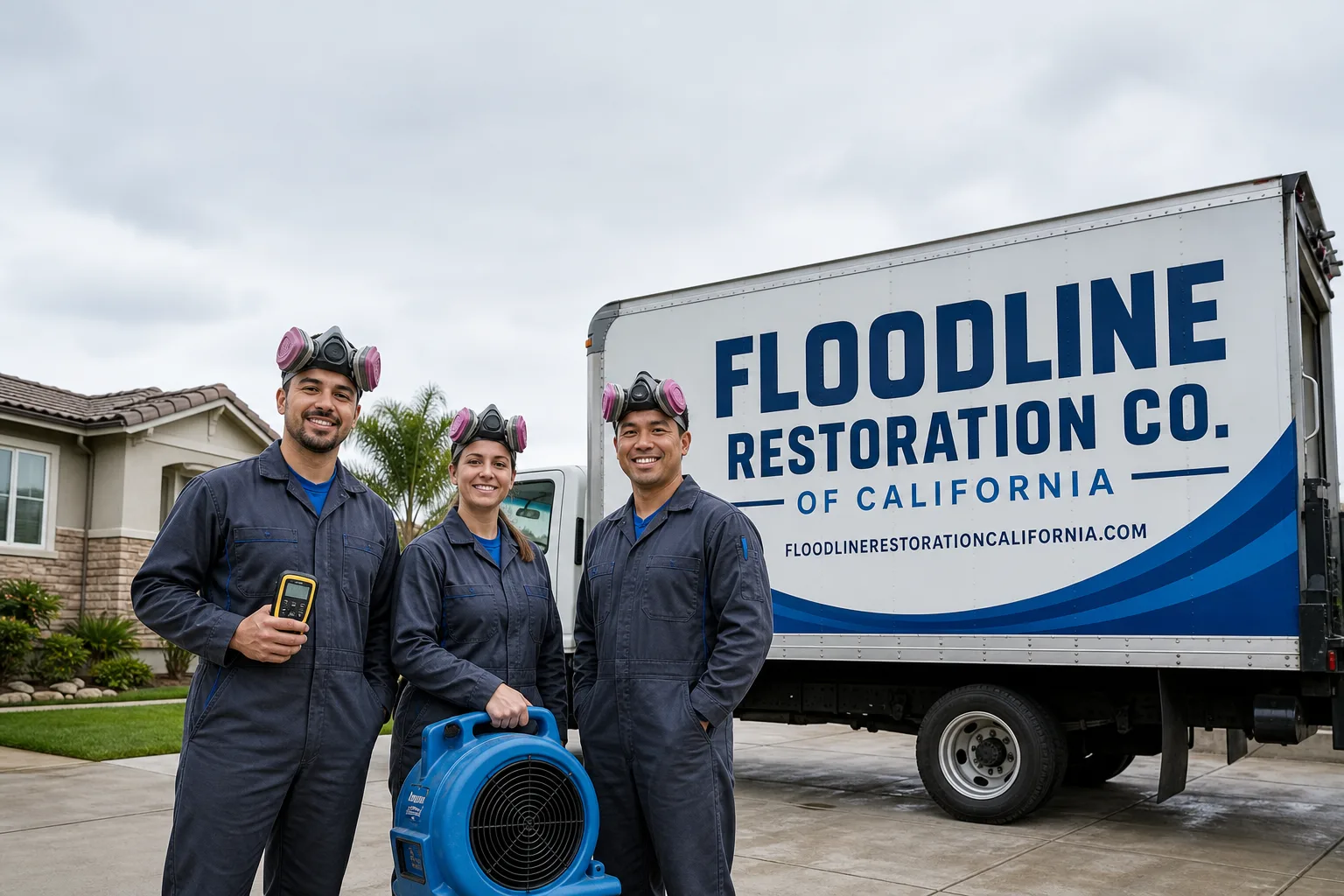
Fast, Reliable Storm & Disaster Restoration Across Lancaster
Storm and disaster restoration in Lancaster is a race against caliche. That hardpan under most of the Antelope Valley stops rain from soaking into the ground, so even a half-inch storm sends runoff ponding against slabs and footings. Add 70 mph wind gusts tearing at dried-out roofing on 1970s and 1980s stucco tract homes, and you get a wind-and-water damage cycle most restoration companies in other parts of LA County never see. We respond to Lancaster homes within hours, not days, because we know what that cycle does to framing, sub-flooring, and manufactured home skirting. Call (888) 737-2439 any hour, any day. A live dispatcher answers. If you’re looking at a roof breach, water in the slab, or wind damage near 20th Street West, you’ll speak to a person who knows exactly what you’re describing.
Our Storm & Disaster Restoration crews work the 93534, 93535, 93536, 93539, 93584, and 93586 corridors every week. We don’t dispatch from a call center across the country. The dispatch board sits in our Los Angeles office, and the certified technicians who arrive at your Lancaster door are background-checked, uniformed, and carrying Dri-Eaz and Phoenix equipment calibrated for high-desert conditions. Most jobs are completed in a single visit. If it’s not done right, our 90-Day Done Right Promise is in writing. No arguing.
Why Floodline Restoration Co. of California Is Lancaster’s Preferred Storm & Disaster Restoration Company
Lancaster homeowners tend to stay. They bought during the aerospace boom, raised families in those stucco tract homes, and plan to be here another twenty years. That means when wind strips a roof membrane and rain follows behind it, they’re not looking for the cheapest crew. They want a square deal, someone who shows up when they say, and a name they can hold accountable. Curt Bowman founded Floodline Restoration Co. in 2010 around a dispatch board, not a sales desk. The company has grown by answering the phone with a live person at 2 a.m. and standing behind the work in writing.
We know the housing stock. The low-pitch and flat-roof designs built across Lancaster in the 1970s through the 1990s are now aging in extreme UV and 110°F heat. Membrane seams dry out. Caulking shrinks. The moment a windstorm hits and rain follows, those old seals fail. We also know the flat grading in 1980s tract developments means water doesn’t drain away. It migrates laterally under slabs for 20 to 30 feet. Homeowners are routinely surprised when a roof breach over the garage translates into saturation in a back bedroom. Our techs aren’t surprised. They’ve moisture-mapped it a hundred times.
When you call for Storm & Disaster Restoration in Lancaster, you get a certified technician trained to IICRC, RIA, and IFA standards. You get a written scope before work starts. You get direct insurance billing, photo documentation of every affected area, and the 90-Day Done Right Promise, the Keystone Standard, in your hands before we leave. $50 off any repair over $250, the $89 seasonal tune-up, and a 5% senior and veteran discount are always available. Every job, every time.
Our Storm & Disaster Restoration Services in Lancaster
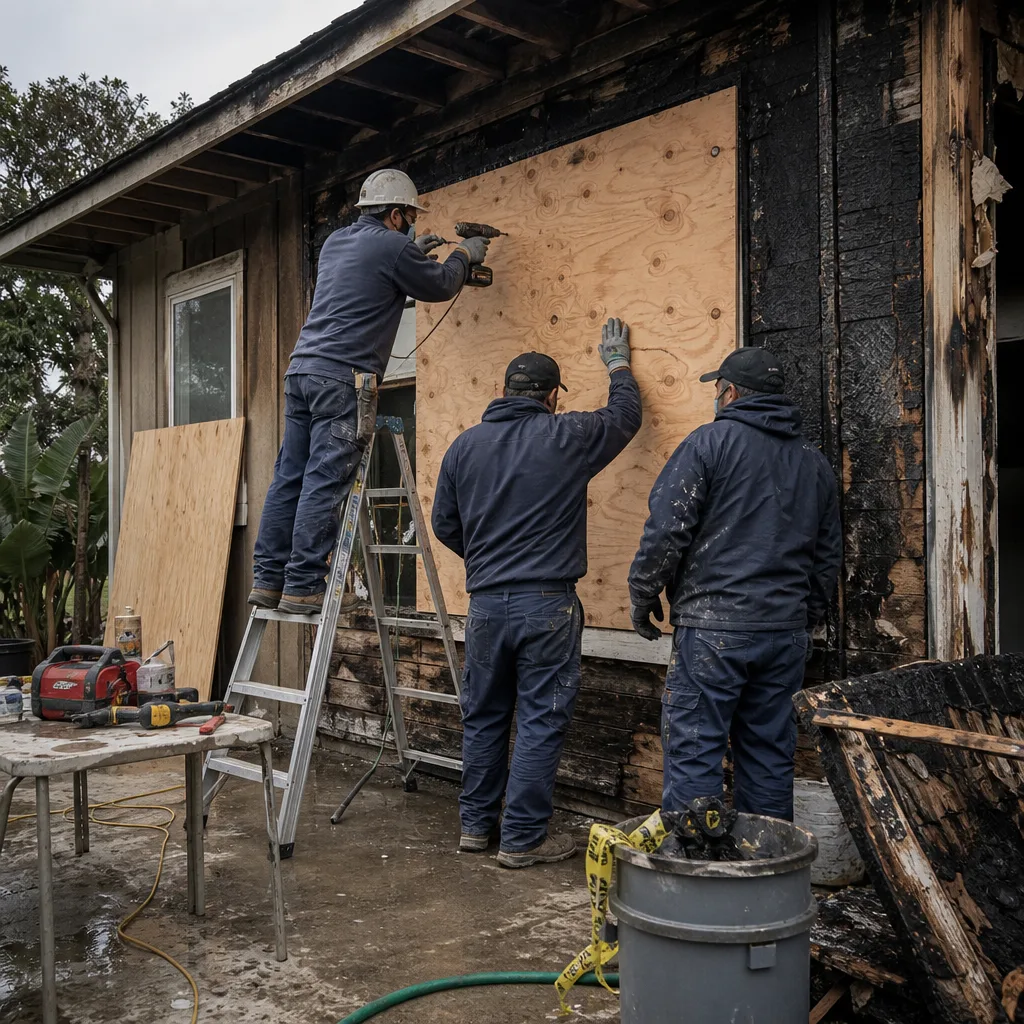
Emergency Board-Up
When a windstorm blows out a window or sends a tree limb through a wall near Sierra Highway, the first job is securing the house. Emergency board-up in Lancaster typically runs $250 to $650 for a standard window or door opening, depending on size and access. We use exterior-grade plywood cut and fastened properly, not whatever happens to be in the truck. Board-up prevents further wind intrusion, keeps animals out, and stops one breach from becoming a structural problem. It also makes the home safe for our own crew and your family until permanent repairs are scoped and scheduled.
Roof Tarping
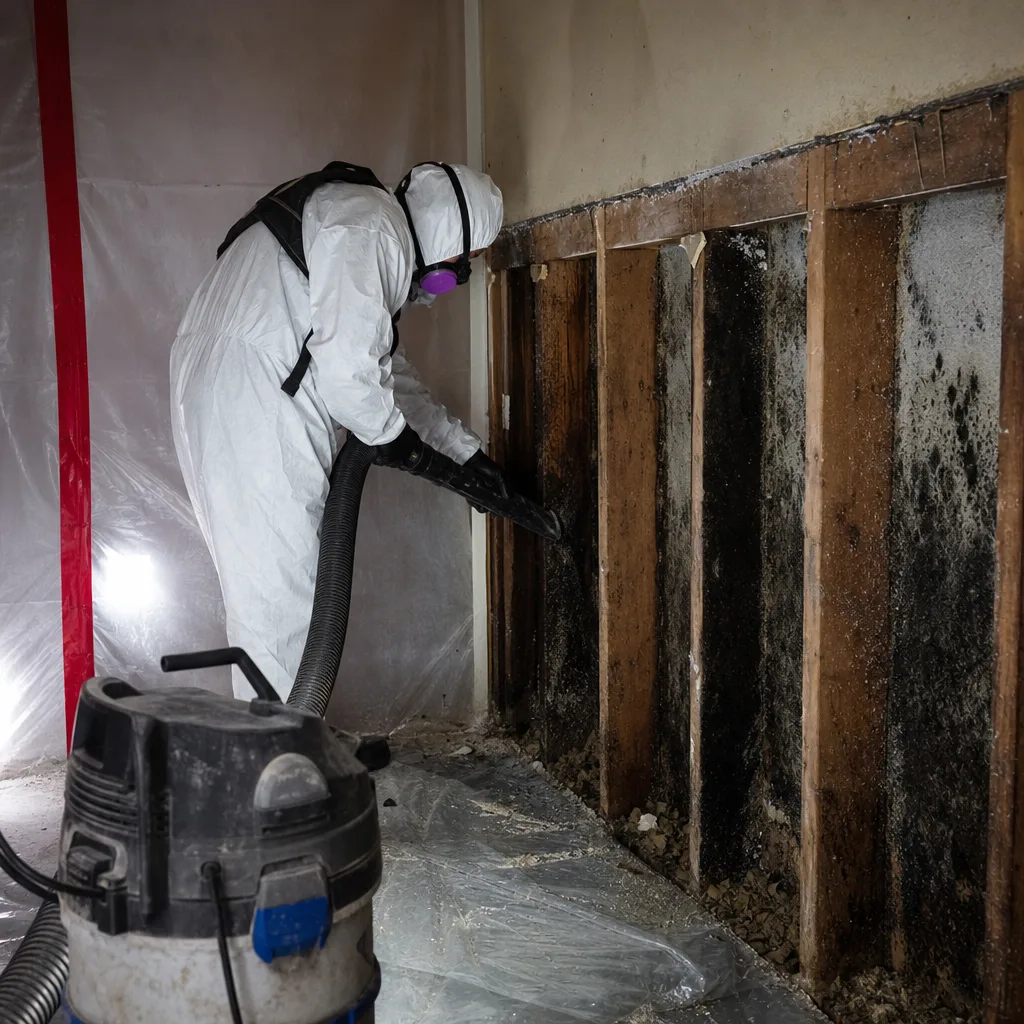
Roof tarping in Lancaster runs $400 to $900 for a typical wind-damaged section on a low-pitch or flat roof, including securing the tarp against the next 70 mph gust. That second part matters. A tarp that flaps loose in Antelope Valley winds does more damage than the original breach. We nail and batten tarps to stay put through the next storm, not just the next hour. On manufactured and modular homes in 93535 and 93536, we inspect skirting seams and roof edges as part of every tarping job, because wind uplift at those seams is where water gets into enclosed cavities and starts mold amplification before anyone sees a drip inside.
Storm Damage Cleanup
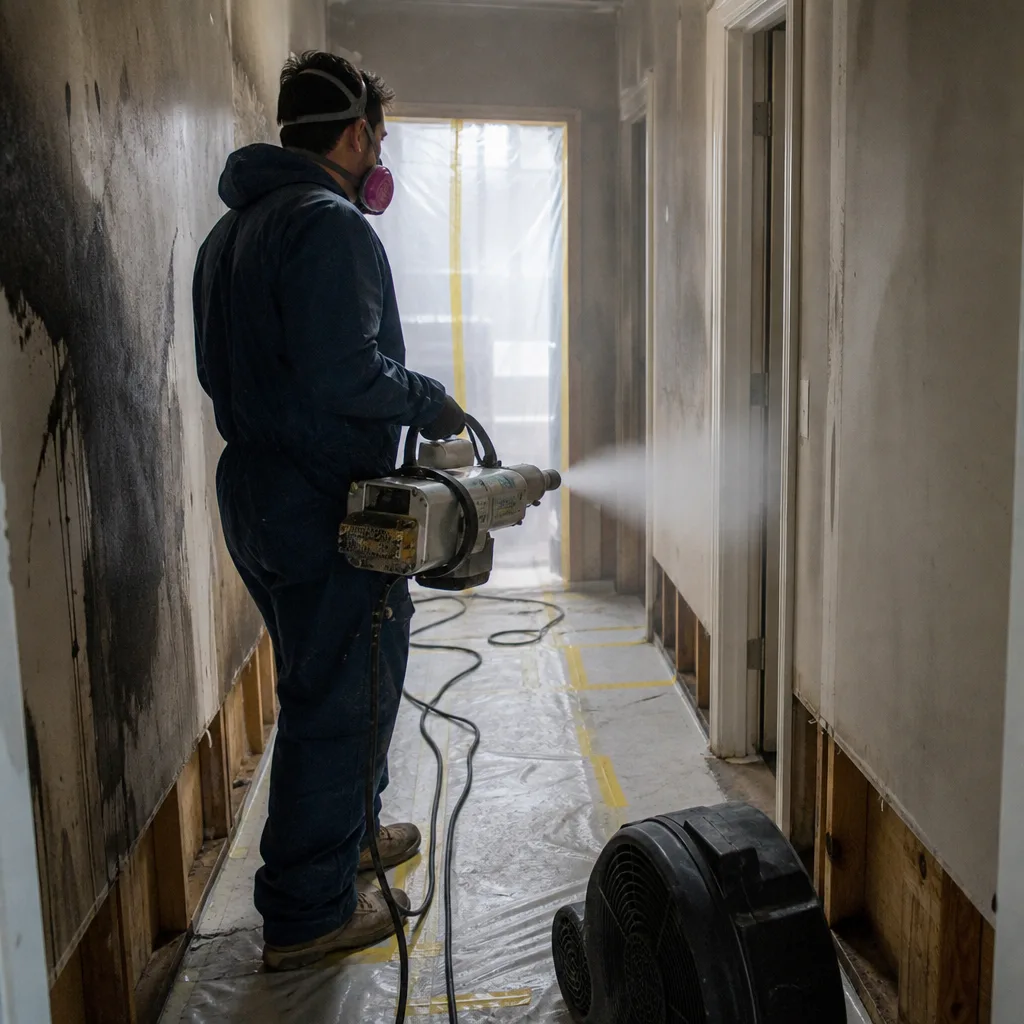
Storm damage cleanup in Lancaster starts with a walk of the property line, not just the front door. Debris from wind-damaged roofs, fences, and trees collects against slab edges and walkways. That debris traps moisture against the foundation, which compounds the runoff problem created by the caliche hardpan. Cleanup typically runs $350 to $800 for standard residential lots in 93534 and 93535. We haul everything off, document what we removed for your insurance carrier, and flag any area where debris contact has already caused moisture intrusion. You get a written scope. No surprises on the bill.
Flood Damage Restoration
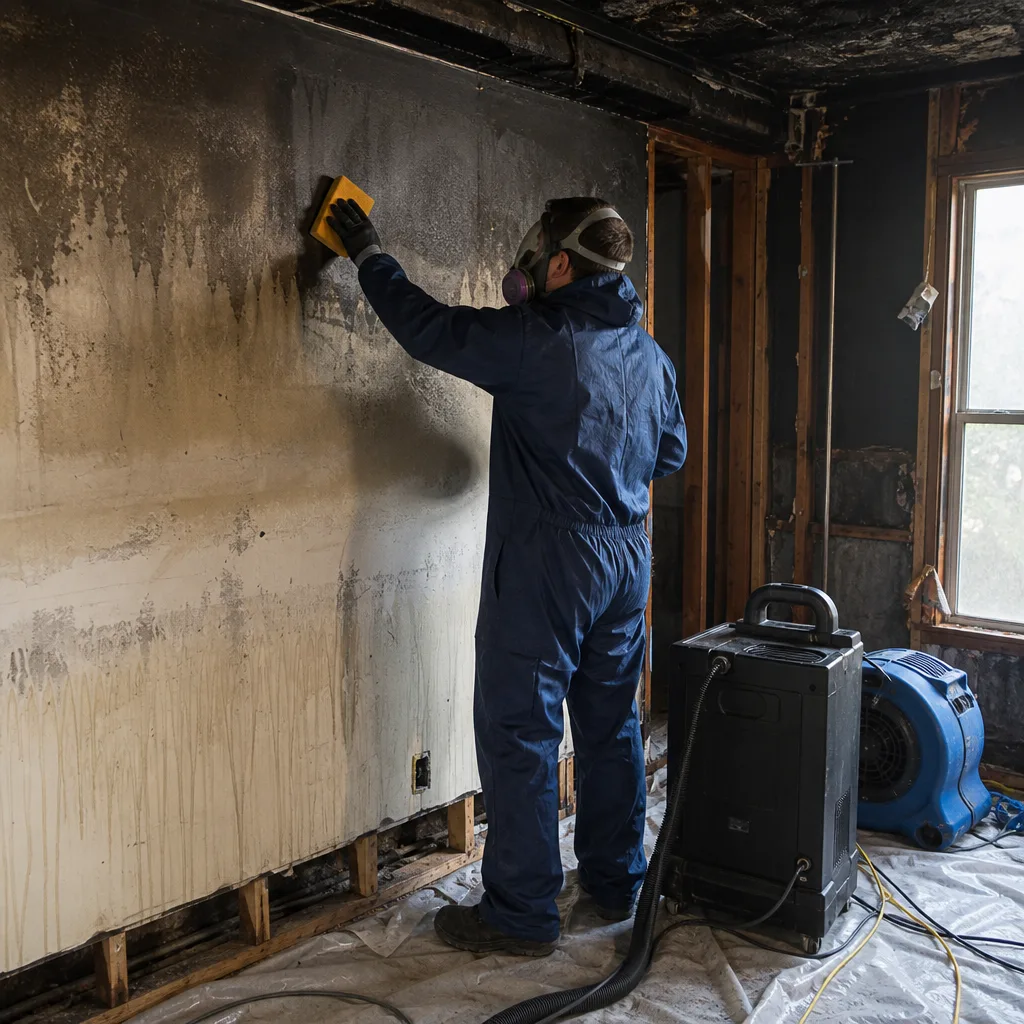
Flood damage restoration in Lancaster is different from flood damage in the San Fernando Valley. Here, the water doesn’t leave. The hardpan holds it against your slab and footings, giving it time to force its way under doors, through window wells, and into any crack in the perimeter. A typical single-room flood restoration in Lancaster runs $1,800 to $3,500, depending on saturation depth and how far water has migrated under the slab. We use Dri-Eaz moisture meters and Phoenix pumps to map the damage accurately, then run XPOWER air movers until every reading drops below IICRC dry standard. We log every reading daily and give that log to you and your adjuster.
What happens when you call
- 1
A real person answersNo phone trees - you reach a local pro.
- 2
You get an upfront price rangeHonest numbers before anyone is dispatched.
- 3
A background-checked tech heads outLicensed & insured, dispatched right away.
- 4
You approve before work beginsNothing starts until you say go.
Trusted Brands We Service in Lancaster
We service and restore homes built with virtually every roofing membrane, stucco system, and manufactured home construction method found across the Antelope Valley. Our techs carry certification from IICRC, RIA, and IFA, and we stock the Injectidry panels, Dri-Eaz dehumidifiers, and Phoenix pumps needed for high-desert drying jobs. When a Lancaster homeowner calls about a wind-damaged low-pitch roof or moisture in manufactured home skirting, we don’t have to order parts and wait. We bring what’s needed the first visit. Same crew that reads the moisture map on day one handles the daily readings and rebuilds what needs rebuilding. The job stays whole from the floodline to the finished wall.
Common Storm & Disaster Restoration Problems We See in Lancaster Homes
- Caliche-driven slab flooding. The hardpan under much of Lancaster prevents rain from soaking into the ground. Water ponds against slabs and footings, then migrates laterally 20 to 30 feet. We routinely find saturation in rooms with no visible source of water.
- Wind-stripped roofing membranes. Lancaster’s channeled winds gust above 70 mph year-round, not just in a winter storm season. Low-pitch and flat roofs built in the 1970s through 1990s have dried-out seams and caulking that fail the moment wind-driven rain arrives.
- Manufactured home vulnerabilities. Homes in the 93535 and 93536 ZIP codes, many of them manufactured or modular, suffer wind uplift at skirting seams. Moisture enters enclosed cavities and amplifies mold before the homeowner sees any leak inside.
- Heat-then-freeze plumbing and envelope damage. Summer temperatures above 110°F break down roofing membranes, pipe insulation, and expansion joints. Winter cold snaps into the low 20s still find those weakened spots. A desert city does not mean freeze-proof plumbing.
We responded to a 1980s stucco tract home near 20th Street West in 93534 after a windstorm peeled back a section of low-pitch roofing membrane, then a sudden downpour sent water migrating laterally under the slab. Our techs used Dri-Eaz moisture meters and found saturation 25 feet from the visible breach, requiring sub-floor drying and replacement of delaminated laminate in a back bedroom the homeowner thought was untouched. We tarped the roof, extracted standing water with a Phoenix pump, and ran XPOWER air movers for four days until readings dropped below IICRC standards. That’s what the caliche cycle looks like on a real house. We see it multiple times a year.
Pricing for Storm & Disaster Restoration in Lancaster, CA
Storm and disaster restoration pricing in Lancaster runs on honest ranges because we quote every job before work starts:
- Emergency board-up: $250 to $650 per opening
- Roof tarping: $400 to $900 for a standard wind-damaged section
- Storm debris cleanup: $350 to $800 for a typical residential lot
- Flood damage extraction and drying: $1,800 to $3,500 per room, depending on saturation and slab migration
- Wind damage repair: $600 to $2,500, depending on roofing, siding, and framing exposure
What changes the final number is how far water has traveled under the slab, whether manufactured home skirting has to come off, and how much of the old 1980s roof membrane has to be replaced rather than patched. You’ll see it all in writing before we start. Estimates are free. Call (888) 737-2439 and we’ll have someone out to Lancaster the same day to assess the damage.
We Also Serve Cities Near Lancaster
Floodline Restoration Co. of California answers storm restoration calls across the Antelope Valley, including Quartz Hill, Palmdale, Sun Village, and Acton. If you’re on the edge of Lancaster or just over the line in one of those communities, the same live dispatch, same certified crews, and same 90-Day Done Right Promise apply. The caliche doesn’t stop at the city limit, and neither do we.
Serving Lancaster, CA - Our Local Coverage Area
We’re based in the Lancaster area and know this community well. Use the map below to see our service coverage - if you’re nearby, we can almost certainly help.
FAQs - Storm & Disaster Restoration in Lancaster
Because Lancaster sits on caliche hardpan, a dense soil layer that prevents ground absorption. Runoff from even a modest storm ponds against slabs and footings, where it forces its way into cracks, under doors, and through any perimeter weakness. The water then travels laterally under the slab for 20 to 30 feet, so you see flooding symptoms in rooms far from the actual entry point. The fix is professional extraction and slab-directed drying, not just mopping the visible water. Call (888) 737-2439 and we’ll send a crew to Lancaster immediately.
Lancaster’s channeled winds are persistent and powerful year-round, so roof tarping, board-up, and debris cleanup have to account for the next gust, not just the last one. Tarps must be nailed and battened to survive another 70 mph event. Cleanup must include anything wind will pick up and slam into your siding or windows. And because wind-stripped roofing often exposes membrane seams that have been dried out by 110°F heat, the real damage is rarely visible from the ground. We inspect the whole envelope, not just the obvious breach. Call (888) 737-2439 for a free Lancaster storm assessment.
Yes, they do. Manufactured and modular homes in those Lancaster ZIP codes are disproportionately vulnerable to wind uplift at skirting seams. When the skirting lifts, wind drives moisture into enclosed under-floor cavities, where mold amplifies quickly before any sign appears inside the living space. Every storm restoration job we do on a Lancaster manufactured home includes a full skirting and under-floor inspection, with photo documentation for your insurance carrier. Call (888) 737-2439 if you suspect wind got under your skirting in a recent storm.
It can, and we’ve seen it repeatedly in the 93534 corridor. The flat grading of 1980s tract developments plus the caliche hardpan means water that enters through one roof breach travels laterally under the slab for 20 to 30 feet. Rooms with no visible source of water light up on moisture meters. That’s why we don’t just tarp the breach and leave. We moisture-map the entire floor plan to find every area of migration, then dry it all to IICRC standards before we talk about rebuilding. Call (888) 737-2439 for an exact scope and quote.
Yes. Summer temperatures regularly above 110°F accelerate the breakdown of roofing membranes, caulking, and expansion joints. When a windstorm later hits, those already-degraded seals fail faster and more completely than they would on a home in a milder climate. Heat also accelerates mold growth inside saturated cavities, shrinking the window for effective drying. We run professional-grade drying equipment and log daily moisture readings until the dry standard is met, because in Lancaster the heat is both the cause and the clock. Call (888) 737-2439 for a free estimate.
Written by Curt Bowman, Owner at Floodline Restoration Co. of California, serving Lancaster and the Antelope Valley with restoration work since 2010.