
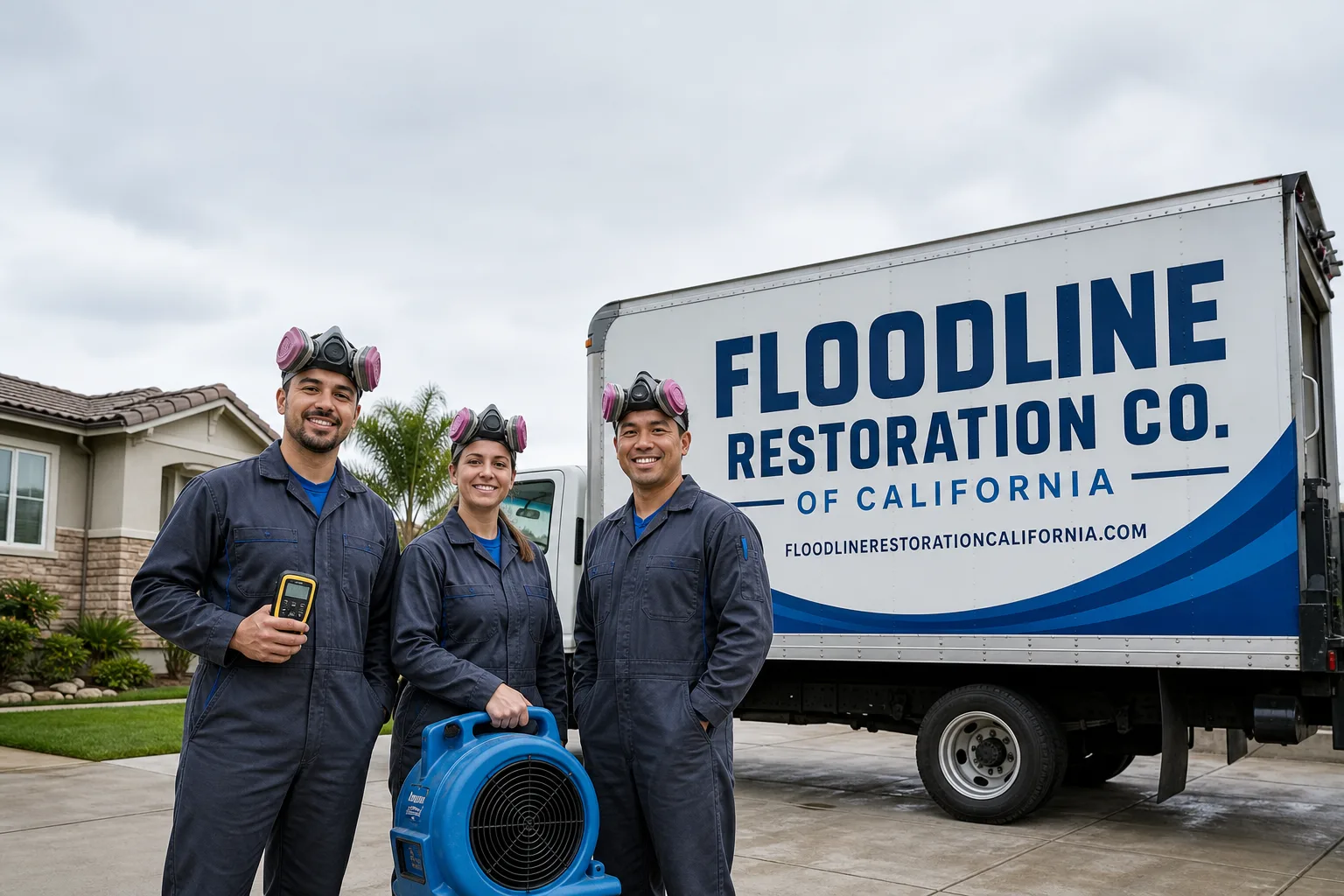
Fast, Reliable Storm & Disaster Restoration Across Lake Los Angeles
Storm damage in Lake Los Angeles moves differently than it does in the foothills or the city. The flat, former-lakebed grade means water doesn’t drain away from your home. It sheets across the hardpan, pools against your slab, and wicks into wall bases and subfloors for hours before anyone from Palmdale or Lancaster can even get here. Floodline Restoration Co. of California answers the phone with a live person at 2 a.m., and our certified crews know the caliche soil, the owner-built ranch homes, and the septic systems that make Lake Los Angeles its own restoration challenge. Call (888) 737-2439 and a real dispatcher picks up, every time.
Why Floodline Restoration Co. of California Is Lake Los Angeles’s Preferred Storm & Disaster Restoration Company
Our Storm & Disaster Restoration team has spent over 42 years learning what the Antelope Valley throws at a house, and Lake Los Angeles is its own animal. The nearest major restoration contractors operate out of Palmdale or Lancaster, 30 to 40 miles away. That gap matters when hardpan soil is pushing water against your foundation and every hour lets damage migrate further into wall cavities. Our crews stage locally and know the difference between a Lake Los Angeles flood and a Palmdale flood: the standing water here doesn’t percolate, so we bring extraction and drying equipment sized for that reality, not for a hillside driveway.
Curt Bowman founded this company in 2010 around a dispatch board, not a sales desk. The result is a restoration outfit that sends background-checked, uniformed technicians trained to IICRC, RIA, and IFA standards, with professional-grade Dri-Eaz and Phoenix equipment on the truck. Homeowners in Lake Los Angeles tell us the same thing: they want one crew that starts the job and finishes it, a written scope before work begins, and a name they can hold accountable. That’s what we do. And every job carries the 90-Day Done Right Promise in writing, the Keystone Standard. If it’s not done right, we make it right. No arguing.
Our Storm & Disaster Restoration Services in Lake Los Angeles
Flood Damage Restoration
Flood damage restoration in Lake Los Angeles usually means sheet flow, not rising water. The caliche hardpan under your property stops rain from absorbing, so water runs across the flat grade and ponds against slab foundations. We start with a moisture map, not a guess. Our techs use Phoenix low-profile dehumidifiers and Dri-Eaz extraction units sized for the under-slab wicking that’s common here. We log daily readings until the dry standard is met and hand that log to you and your insurance carrier. A typical flood damage restoration in Lake Los Angeles runs $2,800 to $8,500 depending on how far water has moved through wall bases and subfloors.
Storm Damage Cleanup
Storm damage cleanup in Lake Los Angeles usually follows a wind event or a rare atmospheric river. The East Side, areas off 170th Street East, and the scattered acreage parcels all deal with the same aftermath: downed limbs on roofs, wind-driven rain through compromised flashing, and debris pushed against garage thresholds. We remove the debris, document everything with photos, tarp what needs tarping, and dry what needs drying. The same crew handles it all, and most jobs finish in one visit. That matters on a rural property where scheduling a second trip means another 40-minute drive.
Emergency Board-Up
When a pine comes through a detached workshop roof or wind blows out a window on an owner-built ranch on East Avenue Q, the first priority is keeping more water and animals out. Our emergency board-up crew responds the same day with plywood, fasteners, and the tools to secure the opening properly. We measure, cut, and install so the board-up holds through the next wind event, not just until morning. The cost for emergency board-up in Lake Los Angeles typically runs $350 to $900 per opening, depending on access and size. We bring the materials and the labor in one trip.
Roof Tarping
Roof tarping buys you time to file a claim and schedule the repair without letting rain keep coming in. On Lake Los Angeles’s flat and low-slope roofs, the tarp has to be anchored differently than on a steep rafter roof. We use the right fastening pattern for the roof type so the tarp doesn’t lift in the next big wind. A standard roof tarping job in Lake Los Angeles runs $400 to $1,100 depending on roof size and access. If the tarp goes up the same day as the water cleanup, you save a second mobilization fee.
What happens when you call
- 1
A real person answersNo phone trees - you reach a local pro.
- 2
You get an upfront price rangeHonest numbers before anyone is dispatched.
- 3
A background-checked tech heads outLicensed & insured, dispatched right away.
- 4
You approve before work beginsNothing starts until you say go.
Trusted Brands We Service in Lake Los Angeles
We work on every brand that shows up in Lake Los Angeles garages and outbuildings, but a few names dominate the acreage properties here. When you’ve got a roll-up door on a detached workshop that took wind damage, or a garage opener that quit after a power surge, we stock common parts and weatherstripping so we’re not driving back to Palmdale for a $12 seal. Our techs train on RIA and IFA standards, and we run Dri-Eaz and Phoenix drying equipment on every water-related call because those units are built for the low-profile, tight-space work that Lake Los Angeles slabs and workshops demand.
Common Storm & Disaster Restoration Problems We See in Lake Los Angeles Homes
- Hardpan-driven under-slab wicking: The caliche under your home won’t absorb water, so storm runoff ponds at the slab perimeter and wicks upward through the concrete into wall bases. A standard drying setup misses this. We use low-profile Phoenix and Dri-Eaz units positioned at the slab edge to pull that hidden moisture out.
- Storm sheet flow against workshop thresholds: The flat, former-lakebed grade channels water directly against detached workshop and garage door thresholds. After a storm, the bottom 2 feet of OSB or drywall is often wet, and the door frame is compromised. We dry the wall cavity and the door frame in one trip using Injectidry wall-base panels and low-profile dehumidifiers.
- Freeze-burst pipes in owner-built homes: Many Lake Los Angeles homes have minimal pipe insulation in exterior walls or under slabs. When the Antelope Valley swings 50 degrees between day and night and drops below freezing, pipes let go. The water pools against the slab instead of draining, and the freeze-thaw cycle makes the damage worse. We identify every wet area with the moisture map, not just the visible puddle.
- Septic-contaminated stormwater floods: Many Lake Los Angeles properties run on private septic systems, not municipal sewer. When stormwater floods a home with a septic tank, the contamination risk is different, and the containment has to be different too. We handle stormwater floods with septic-aware protocols so the cleanup is actually clean.
Pricing for Storm & Disaster Restoration in Lake Los Angeles, CA
We Also Serve Cities Near Lake Los Angeles
Our Storm & Disaster Restoration in Lake Los Angeles crews also cover Sun Village, Palmdale, Piñon Hills, and Phelan. If you’re on the north edge of Lake Los Angeles near Avenue S or out toward 240th Street East, you’re still in our service area, and the same one-trip standard applies.
Serving Lake Los Angeles, CA - Our Local Coverage Area
We’re based in the Lake Los Angeles area and know this community well. Use the map below to see our service coverage - if you’re nearby, we can almost certainly help.
FAQs - Storm & Disaster Restoration in Lake Los Angeles
After a heavy storm in Lake Los Angeles, why does water pool against my ranch home’s slab even though the yard looks flat?
The caliche hardpan under Lake Los Angeles is nearly impermeable, so rainwater can’t percolate into the soil the way it does in the foothills. The water sheets across the flat grade and ponds against the low point of your slab because the former lakebed has almost no natural drainage slope. That’s why a moderate storm event here causes pooling disproportionate to the rainfall total. We check the slab perimeter first on every Lake Los Angeles flood call, because that’s where the hidden wicking starts. Call (888) 737-2439 for a free assessment.
My detached workshop’s roll-up door leaked during the last storm, and now the bottom 2 feet of OSB wall is wet. How do you dry it in one trip, given the rural location?
We bring the drying equipment sized for the space, not a standard slab setup. We use Injectidry wall-base drying panels against the wet OSB, a Dri-Eaz LGR 7000 for extraction, and a Phoenix 125 Max low-profile dehumidifier placed at the slab edge to pull moisture from the wall cavity and the slab. We moisture-map the whole workshop on arrival and log readings until the dry standard is met, usually in one trip. The 30 to 40 mile drive doesn’t change the standard; it just means we load the truck right the first time.
The storm knocked a pine onto my detached garage roof and rain got in overnight. Can you board up and tarp the same day you start the water cleanup?
Yes. We bring the board-up materials, the tarp, and the water cleanup equipment on the same truck. The board-up and tarp go up first to stop the active water intrusion, then the extraction and drying starts. For a call like this in Lake Los Angeles, you’re looking at a single mobilization, which matters when the alternative is paying two dispatch fees for a crew that’s driving from Palmdale. We do it in one trip.
Will freeze-burst pipes from a cold snap behave differently on my Lake Los Angeles acreage than in Palmdale?
The freeze-thaw cycle is similar across the Antelope Valley, but the damage pattern here is different because your home likely sat over hardpan with no drainage. A burst pipe in Palmdale often drains away from the slab if there’s any slope. In Lake Los Angeles, the water pools and wicks into the slab and wall bases. That means the hidden damage is usually more extensive than the visible puddle suggests. We moisture-map the whole affected area, not just the wet spot on the floor.
My home uses a septic system, not city sewer. Does that change how you handle a stormwater flood?
It changes the containment. On a municipal sewer line, stormwater intrusion is a clean-water or gray-water problem. On a septic system, a flood can back up effluent into the living space, and that requires different containment, disinfection, and disposal protocols. Our crews know which Lake Los Angeles parcels are on septic and handle those jobs with septic-aware procedures from the first assessment. We’ll tell you in writing what we found and what the scope is before work starts.
Call Floodline Restoration Co. of California at (888) 737-2439 for a free estimate on storm and disaster restoration in Lake Los Angeles. A live person answers, 24/7, and our crews arrive ready to do the job in one trip. Every job is backed by the 90-Day Done Right Promise, in writing.
Written by Curt Bowman, Owner at Floodline Restoration Co. of California, serving Lake Los Angeles and the Antelope Valley since 2010.