
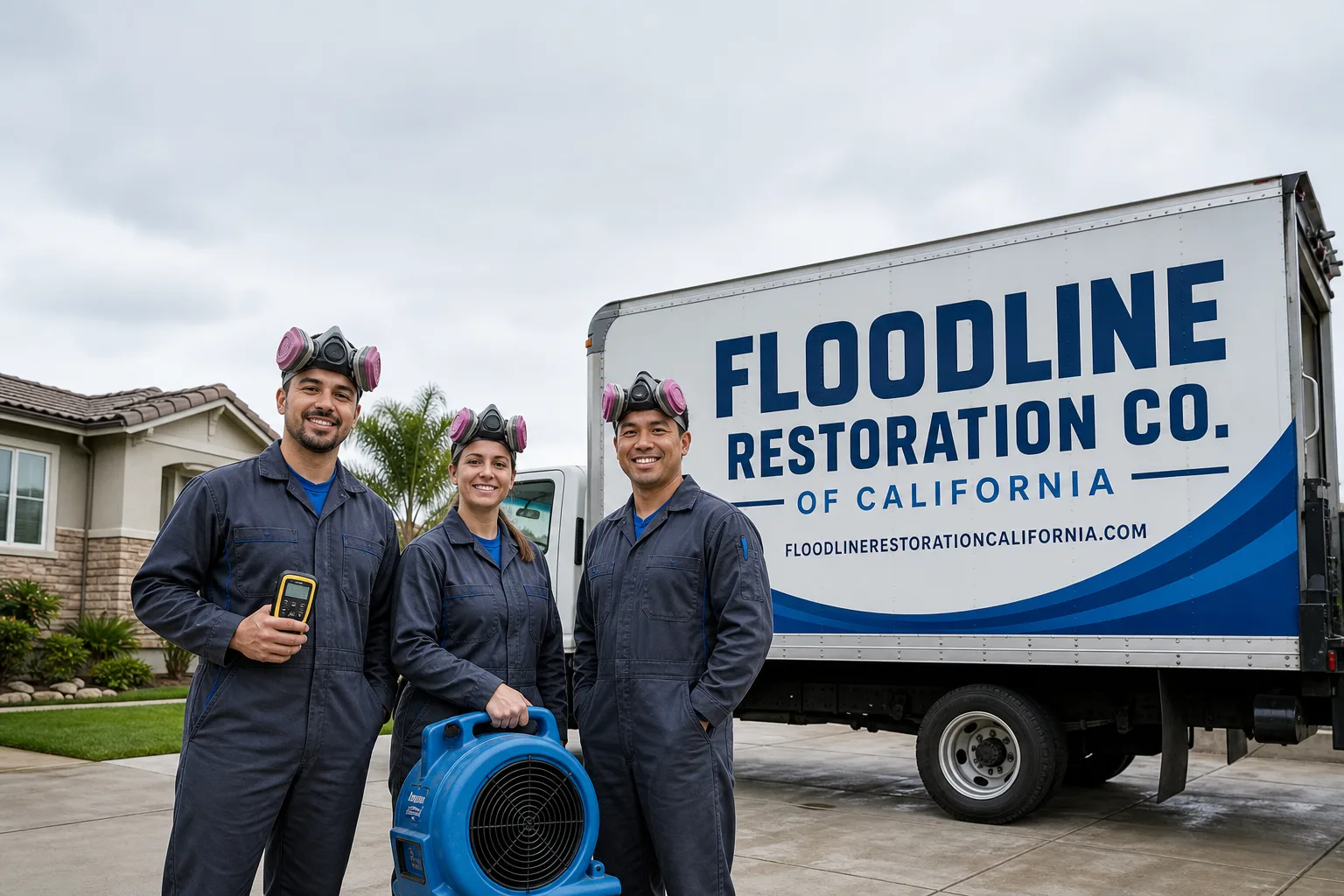
Fast, Reliable Storm & Disaster Restoration Across Fullerton
Storm damage in Fullerton needs a crew that understands what this city throws at a house. We’re not talking about a little gutter overflow. We’re talking about Santa Ana winds peeling tiles off roofs in the hills, flash runoff roaring down Brea Creek into flatland garages, and older Craftsman framing that drinks water like a sponge. Floodline Restoration Co. of California answers the phone with a live person at 2 a.m., and our certified crews reach Fullerton neighborhoods fast, with extraction running the same visit. Call (888) 737-2439 for a free estimate from our Storm & Disaster Restoration team.
Why Floodline Restoration Co. of California Is Fullerton’s Preferred Storm & Disaster Restoration Company
Fullerton homeowners don’t have time to gamble on a contractor who shows up late with the wrong drying equipment. Our background-checked, uniformed technicians are certified to IICRC and RIA standards, and we’ve been doing this long enough to know that an old Fullerton house hides water differently than a new tract home in Anaheim. The lath-and-plaster walls, the original galvanized supply lines, the stem walls holding back decomposed granite, all of it demands a crew that reads moisture maps, not just one that rips out drywall.
We serve the flatland ZIPs around downtown, the hillside tracts up in 92835, and everything between Cal State Fullerton and the Brea border. Dispatch is coordinated from our Los Angeles office, but the crews you’ll see in Fullerton carry professional-grade Dri-Eaz and Phoenix equipment, log daily moisture readings, and hand you the log and the scope of work before anything gets torn open. Every job carries the 90-Day Done Right Promise, in writing, no arguing. That’s not a marketing line. It’s the Keystone Standard, and it means if it isn’t done right, we make it right.
Our Storm & Disaster Restoration Services in Fullerton
Storm Damage Cleanup
When a storm passes through Fullerton, the damage is rarely just what you see at eye level. Wind-driven rain gets under eaves, behind old wood siding, and into the gaps where 1920s framing has dried and shifted. Our crews remove downed tree limbs, clear blocked drainage paths, and start structural drying the same day. In Fullerton’s older neighborhoods, that often means opening up a plaster wall carefully, not treating the whole house like a flooded basement.
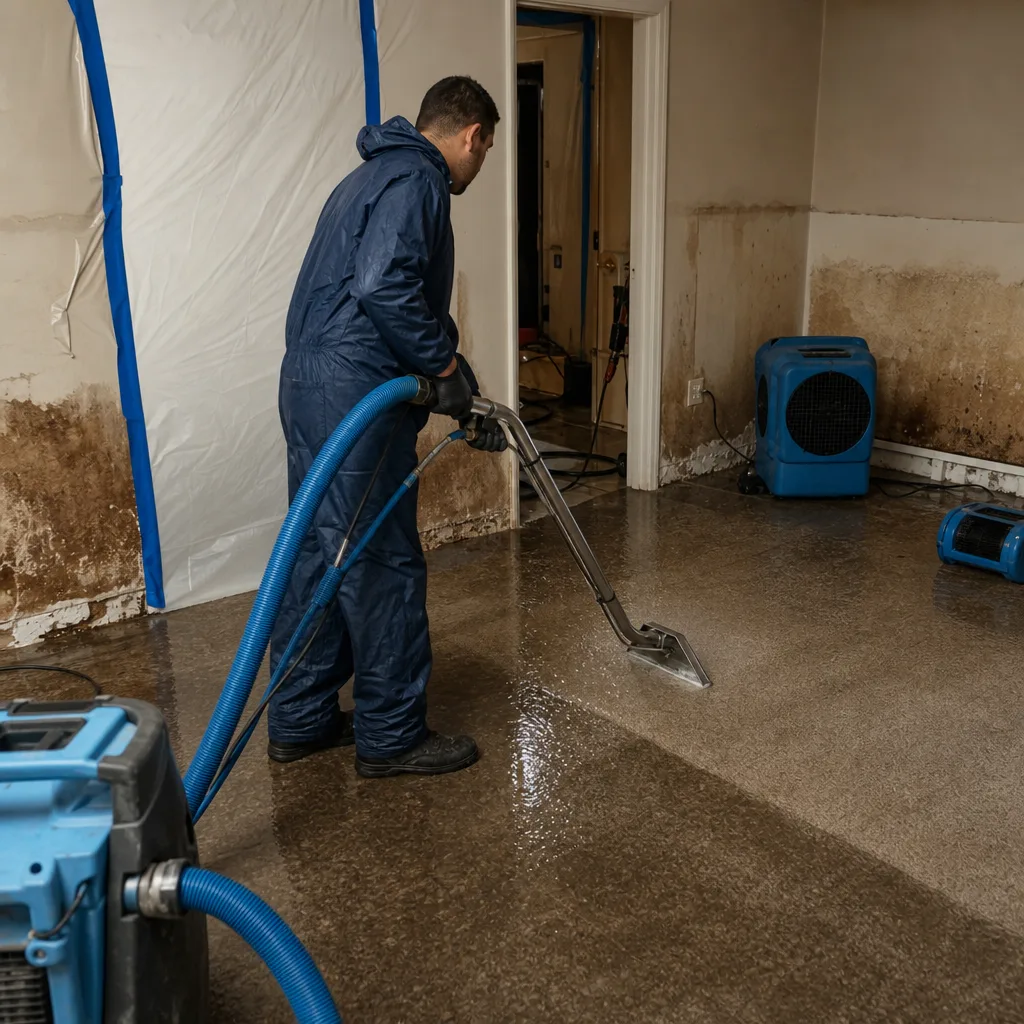
Flood Damage Restoration
The neighborhoods along Brea Creek and Fullerton Creek know what flash flooding means, water that rises fast and leaves silt and contamination behind. We extract standing water, pull soaked materials, and set professional-grade drying equipment with a moisture map guiding every placement. For slab-on-grade homes in central Fullerton, vapor barrier failures after a flood are common, and we address that before it becomes a recurring mold problem, not after.
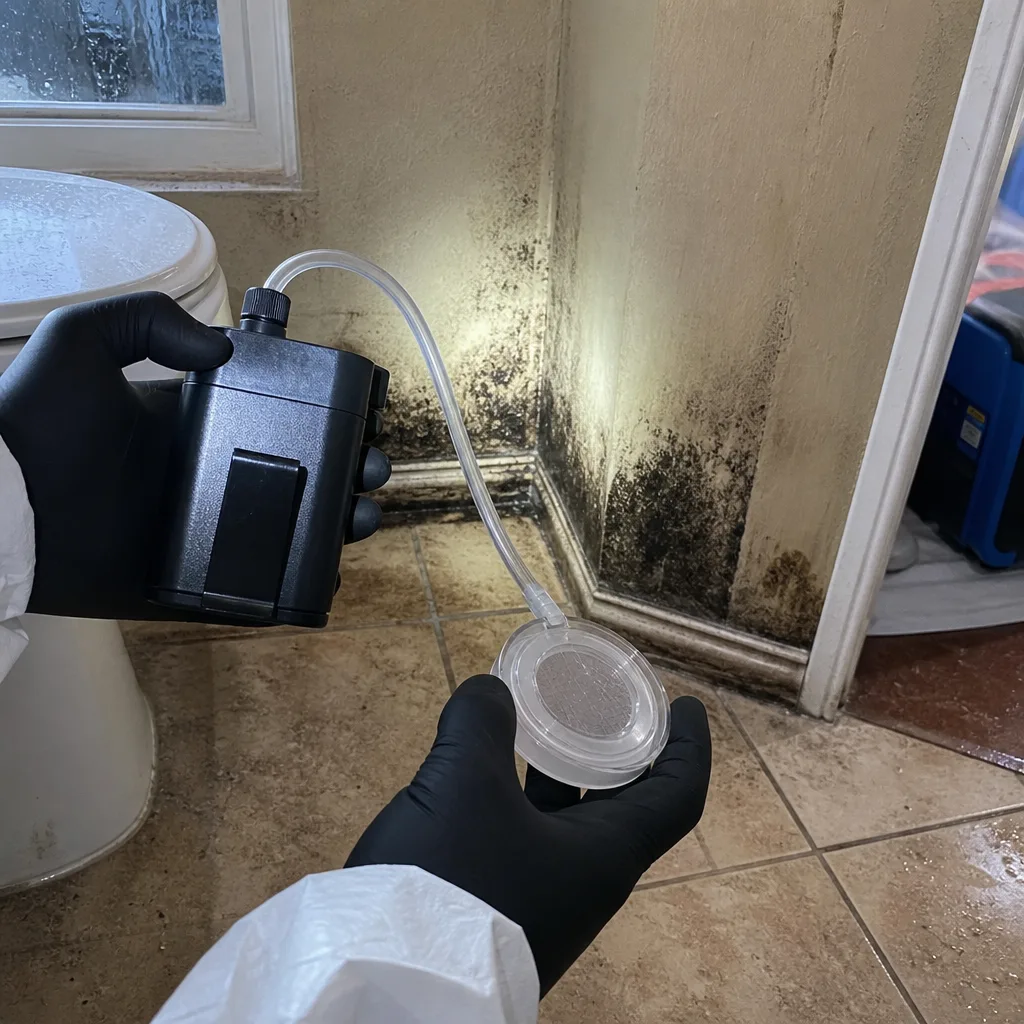
Emergency Board-Up
A broken window or a wind-torn wall section needs to be secured before the next gust does more damage. We board up Fullerton homes with plywood cut to fit the actual opening, not a generic sheet nailed over the trim. On hillside homes in 92835 where exposure is worse, we use heavier fasteners and anchors rated for the wind loads those ridgelines see during Santa Ana events. This is mitigation, so we’re moving fast, but we’re not cutting corners on security.
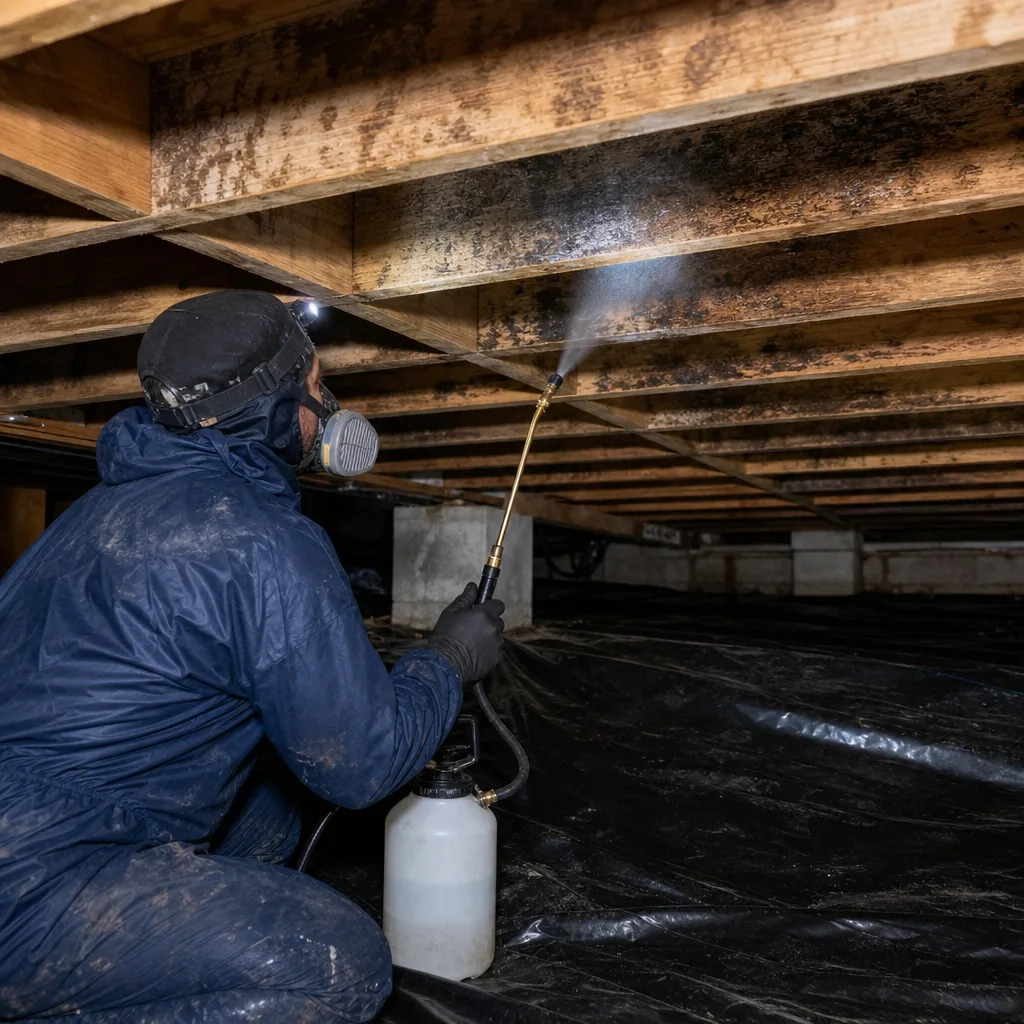
Roof Tarping
Fullerton’s older Spanish and Craftsman homes often have heavy clay tile roofs. A lightweight blue tarp won’t survive one night of Santa Ana wind on those ridges. We use midweight and heavyweight tarps, mechanically fastened with battens, and on tile roofs we secure the tarp edges under the tile courses where possible. The goal is keeping water out until permanent roof repair is scheduled, not watching the tarp end up in a neighbor’s avocado tree.
What happens when you call
- 1
A real person answersNo phone trees - you reach a local pro.
- 2
You get an upfront price rangeHonest numbers before anyone is dispatched.
- 3
A background-checked tech heads outLicensed & insured, dispatched right away.
- 4
You approve before work beginsNothing starts until you say go.
Trusted Brands We Service in Fullerton
We work on every type of home in Fullerton, from 1930s Craftsman bungalows in the 92832 and 92833 ZIPs to 1970s apartment blocks near Cal State Fullerton. Our drying fleet leans on Dri-Eaz and Phoenix equipment, the same professional-grade gear used by restoration firms nationwide, because these older Fullerton homes need aggressive, controlled drying, not budget blowers. We stock common parts and materials for emergency jobs, so when a cast-iron drain stack or a galvanized supply line fails in Fullerton, we’re not waiting on a parts run from across the county.
Common Storm & Disaster Restoration Problems We See in Fullerton Homes
- Groundwater seep in hillside lower levels: The decomposed-granite soils in Fullerton’s 92835 hillside tracts hold perched water that migrates laterally into stem walls year-round. It looks like a storm intrusion, but it’s not. Without a perimeter drain or vapor barrier, the mold returns every spring, and we tell that to homeowners plainly before we touch anything.
- Hidden water behind lath-and-plaster walls: Pre-1940s Craftsman framing soaks up pinhole-leak water fast, and the original plaster hides the damage for weeks. By the time you see a stain, the sill plate is often already wet. We open these walls surgically, dry the stud bays, and treat the framing rather than hanging drywall over active mold.
- Tarp failure on heavy tile roofs during Santa Ana winds: Lightweight residential tarps shred overnight on Fullerton’s clay tile roofs when the wind funnels down from the Puente Hills. Water re-enters, and the damage compounds. We use heavier tarps and proper mechanical fastening, because we’ve seen what the cheap fix costs.
- Runoff intrusion along drainage corridors: Homes along Brea Creek and Fullerton Creek face flash-flood intrusion during atmospheric river events. The water arrives fast and carries silt and organic debris into garages and crawlspaces. Extraction is just the start, the drying plan for a silt-laden crawlspace in Fullerton takes longer than most homeowners expect.
Pricing for Storm & Disaster Restoration in Fullerton, CA
Fullerton’s restoration pricing reflects the age and construction of the housing here. A typical emergency tarp job on a Fullerton roof runs $450 to $900, depending on the roof pitch, tile type, and how much anchor work the wind conditions require. Board-up after a window or wall breach starts around $350 for a standard entry or window and goes up from there on hillside homes needing wind-rated fastening. Water extraction and structural drying for a single-room intrusion of storm water in Fullerton generally runs $1,200 to $2,800, with older plaster wall homes at the higher end because the drying is more invasive and the salvage work is more careful. Flood damage restoration after Creek overflow where crawlspaces and insulation are involved can span $3,000 to $8,000. Call (888) 737-2439 for an exact scope and written estimate, free.
We Also Serve Cities Near Fullerton
Our crews work throughout north Orange County. If your home is in Anaheim, La Habra, Placentia, or La Habra Heights, the same Fullerton team can respond, with the same equipment and the same 90-Day Done Right Promise in writing. We know the difference between a Fullerton hillside seep and an Anaheim flatland flood, and that local knowledge changes how we dry the house.
Serving Fullerton, CA - Our Local Coverage Area
We’re based in the Fullerton area and know this community well. Use the map below to see our service coverage - if you’re nearby, we can almost certainly help.
FAQs - Storm & Disaster Restoration in Fullerton
The decomposed-granite soils in Fullerton’s hillside neighborhoods hold perched groundwater that migrates laterally into stem walls year-round, independent of rainfall. It’s a slow, persistent seep that reads like a storm intrusion but recurs every spring unless a perimeter drain or vapor barrier is installed. Call (888) 737-2439 and we’ll inspect the lower level, map the moisture, and tell you whether you’re dealing with a seep or a one-time event.
We dry pre-1940s plaster walls by opening only the damaged section, drilling access ports behind the lath, and placing Dri-Eaz LGR dehumidifiers and air movers to pull moisture from the stud bays. The plaster itself often survives if we get in fast. Last winter we dried a 1930s Craftsman bungalow in the 92832 zip this way, treated the sill plate for mold, and had the homeowner back before the weekend. Call us and we’ll assess the wall with a moisture meter before anything gets cut.
We typically reach Fullerton hillside homes the same day you call, and tarping a tile roof takes our crew a few hours once on site, depending on the pitch and the damage footprint. We use heavyweight tarps with mechanical fastening because lightweight tarps shred in Santa Ana winds. Call (888) 737-2439 and a live dispatcher will get a crew routed to you while you’re still on the phone.
Brea Creek flooding is surface water, fast-moving, carrying silt and debris, and it comes from storm runoff on a defined weather timeline. Groundwater seep in north Fullerton is subsurface water migrating through decomposed granite into stem walls, present year-round and independent of weather. The drying approach and the long-term fix are different, and if we treat a seep like a one-time flood, the problem comes back. We identify the source before we write the drying plan, not after.
Yes. Fullerton sits directly above the Puente Hills Fault, and the unreinforced masonry buildings along the Harbor Blvd and Commonwealth Ave corridor are a recognized seismic risk. We handle cracked masonry, ruptured supply lines, and structural stabilization work that follows earthquake damage, with the same written scope and direct billing to your carrier that we use on storm work. Call (888) 737-2439 for a seismic damage assessment from a crew that knows what Fullerton’s older commercial stock demands.
Written by Curt Bowman, Owner at Floodline Restoration Co. of California.