
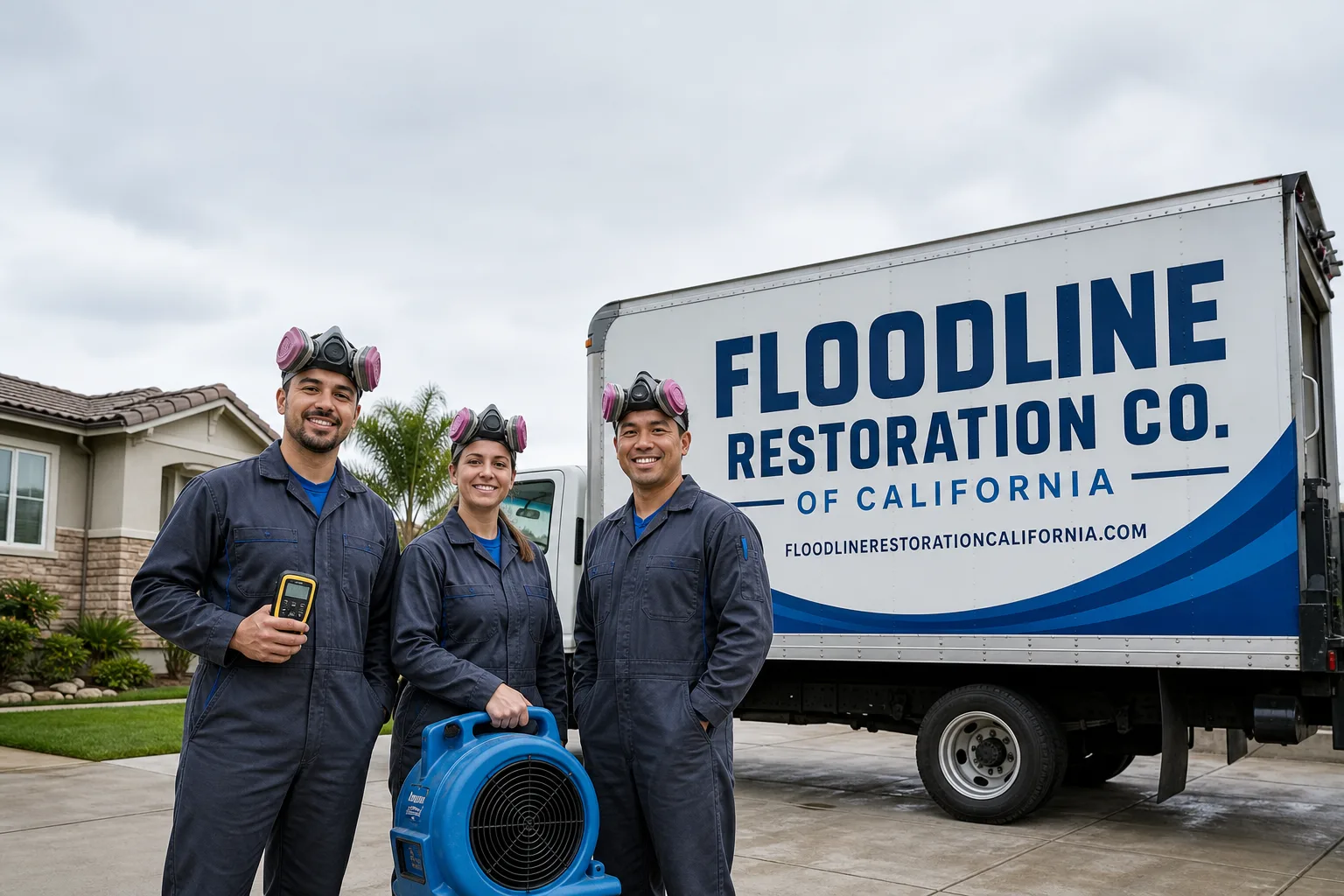
Fast, Reliable Storm & Disaster Restoration Across Fillmore
Storm damage in Fillmore rarely looks like it does in Moorpark or Camarillo. Here, winter rains hitting the burn-scarred slopes above town push silty, ash-laden water into streets and under foundations, and Santa Ana winds tear roofing loose before anyone has time to call a roofer. Storm & Disaster Restoration in Fillmore means treating every flood as potentially contaminated, not just wet. Our crews know the difference, and we answer the phone at 2 a.m. the same way we do at 2 p.m. Call (888) 737-2439 when the water is still moving or the tarp just tore off.
Why Floodline Restoration Co. of California Is Fillmore’s Preferred Storm & Disaster Restoration Company
Floodline Restoration Co. has been answering calls from Fillmore homeowners for years, and the work here has taught us things that textbook restoration training never covered. The 2017 Thomas Fire changed how water moves through this valley. We saw it first on the ground: homes that had never flooded in fifty years suddenly took on debris-laden water after an ordinary winter storm. That changes how we scope every Fillmore job.
Our technicians are background-checked, uniformed, and trained to IICRC, RIA, and IFA standards. We run Dri-Eaz dehumidifiers and XPOWER air movers on Fillmore jobs because the drying loads here after post-fire flooding are heavier than standard water-loss tables predict. Sediment and hydrophobic ash hold water differently than clean water does, and our moisture logs reflect that. Curt Bowman founded this company on a simple rule: the same crew that starts the extraction finishes the rebuild. No handoffs. No inherited crews. No messenger duty for the homeowner.
Fillmore homeowners get the 90-Day Done Right Promise in writing on every job. If it’s not done right, we make it right. No paperwork battles. No arguing. That guarantee, and the fact that a live person answers our phone 24/7, is why calls come to us from the older neighborhoods around Center Street and from newer homes alike.
Our Storm & Disaster Restoration Services in Fillmore
Storm Damage Cleanup
Storm cleanup in Fillmore often starts with what the Santa Ana winds left behind: downed limbs, torn shingles, debris piled against garage doors and crawlspace vents. We clear it, document it for your carrier, and keep the moisture log running from day one. If a debris flow pushed silt up against your foundation, we remove the sediment before drying starts, because drying through a layer of ash and mud wastes days and breeds mold.
Flood Damage Restoration
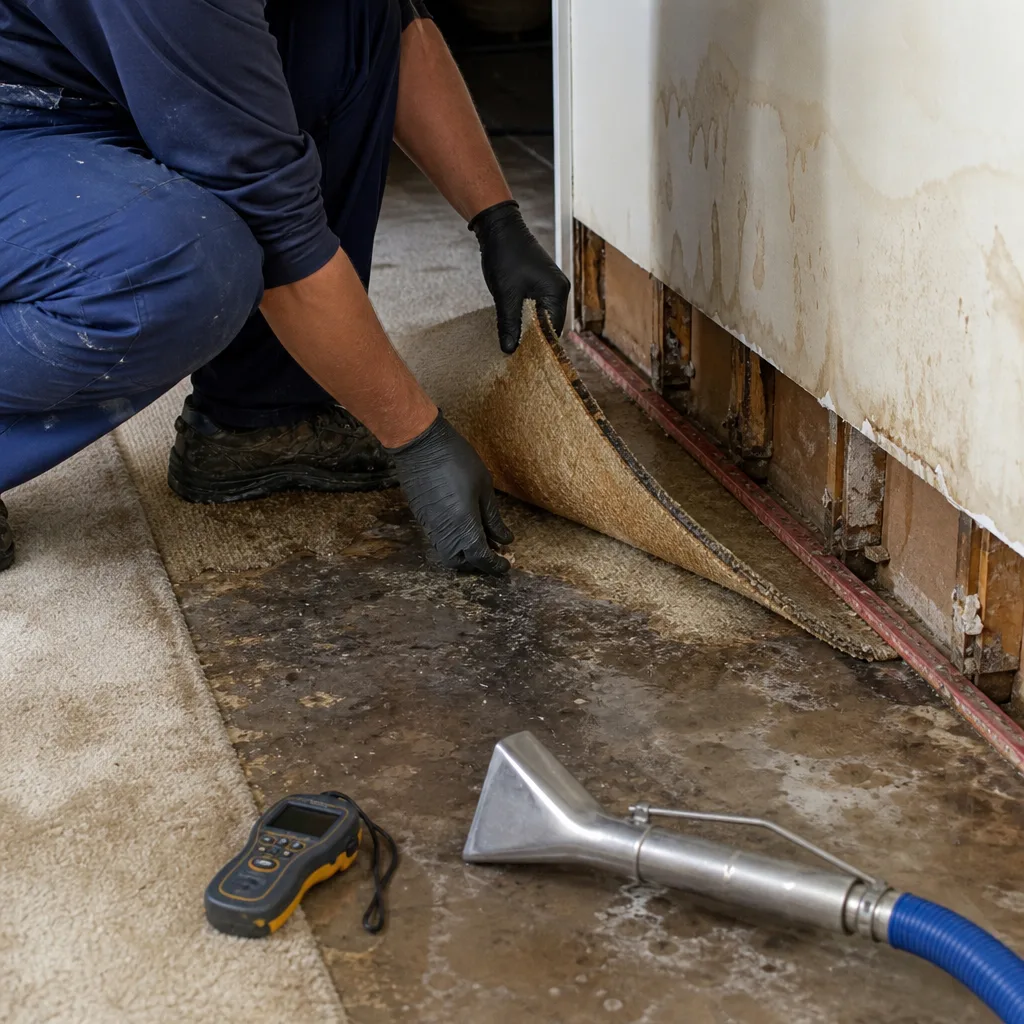
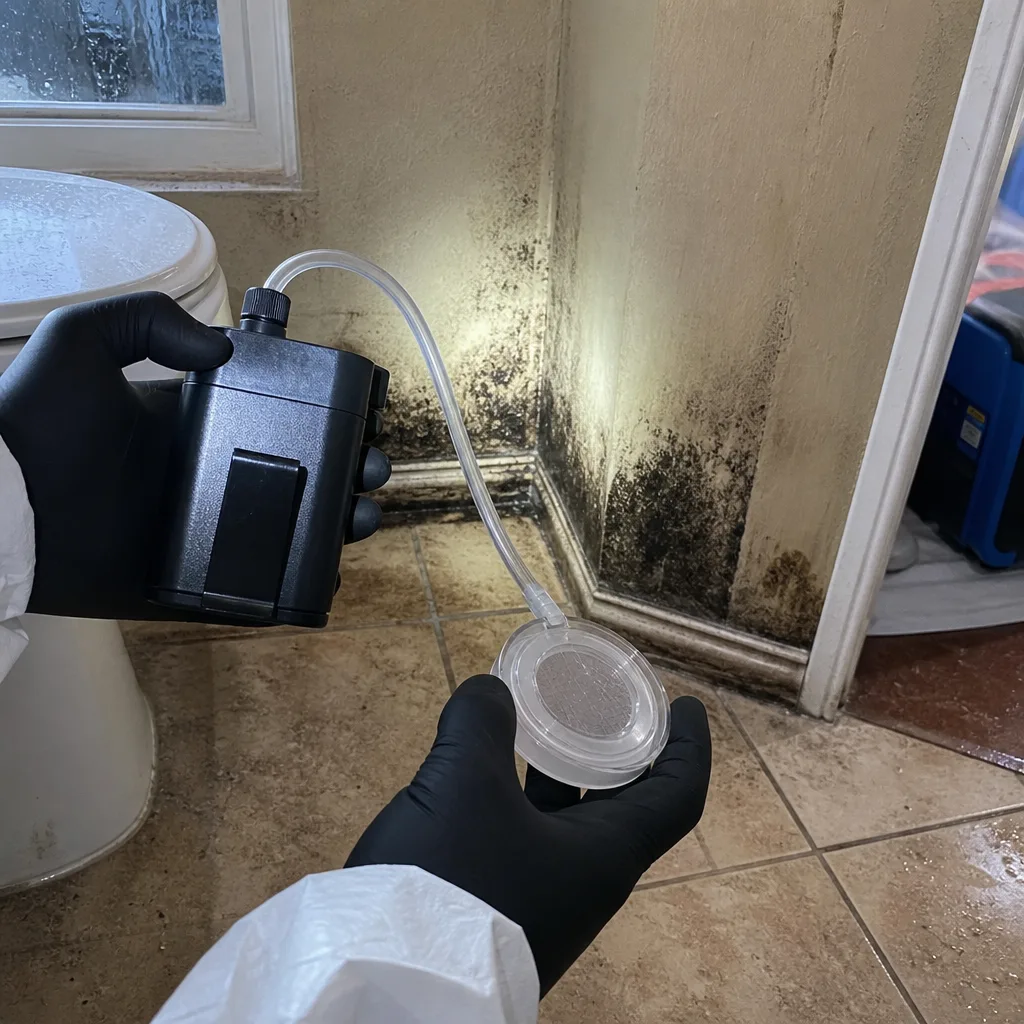
Flooding here is not like a pipe burst in a bathroom. Water moving off burn-scarred Los Padres National Forest slopes carries fine sediment, ash, and organic matter into crawlspaces and wall cavities. Standard water-damage scoping calls that clean water. Fillmore jobs call for sediment extraction, contamination testing, and longer drying schedules. Our crews use Dri-Eaz LGR dehumidifiers and XPOWER air movers after extracting the silt, then we treat affected surfaces with antimicrobial before structural drying is complete. Call (888) 737-2439 the moment water enters the house. The first hour determines how far it spreads.
Emergency Board-Up
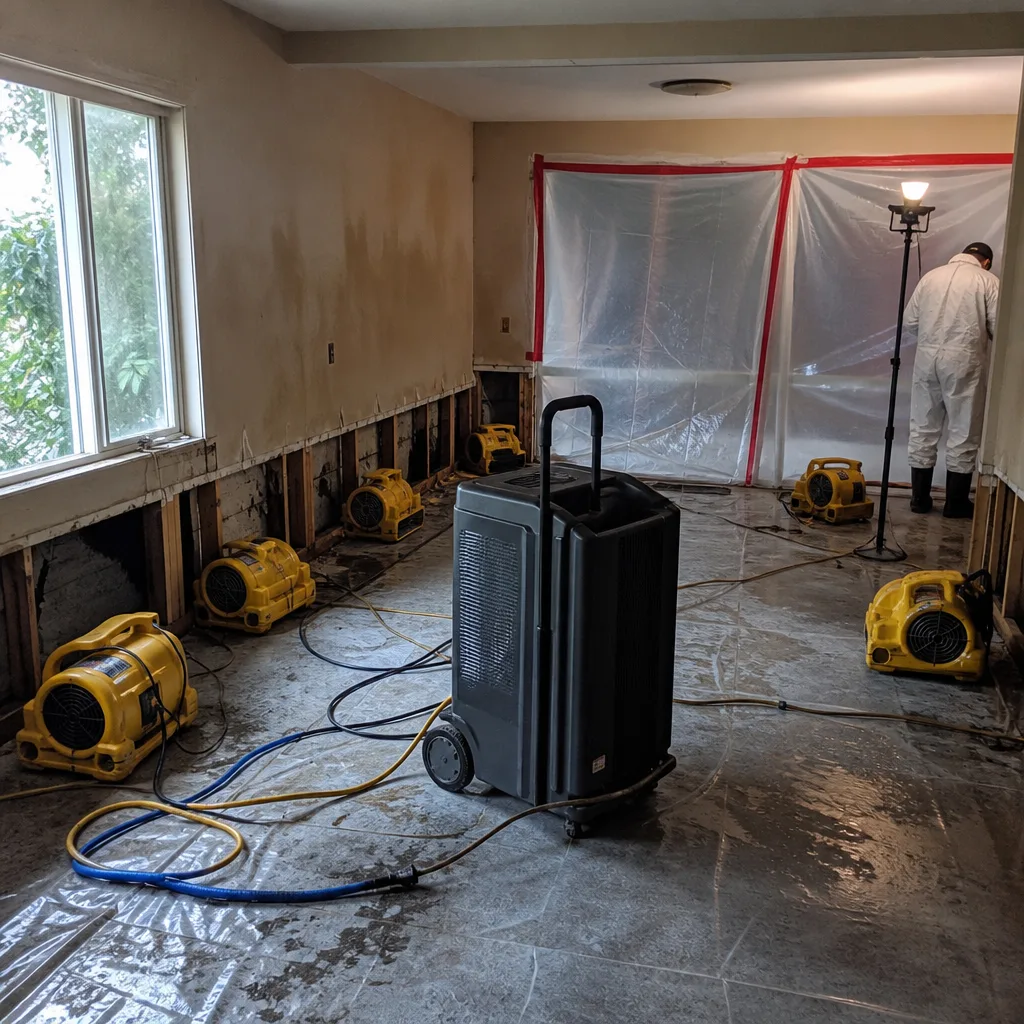
When a storm or wind event breaks a window, splits a door frame, or tears open a roof section, Fillmore homes are exposed to more than weather. They are exposed to embers if fire risk is active, and to animals and debris in every season. Our board-up crews arrive in hours, not days. We secure all entry points, photograph everything for your insurance file, and coordinate directly with your adjuster. The 90-Day Done Right Promise applies here too.
Roof Tarping
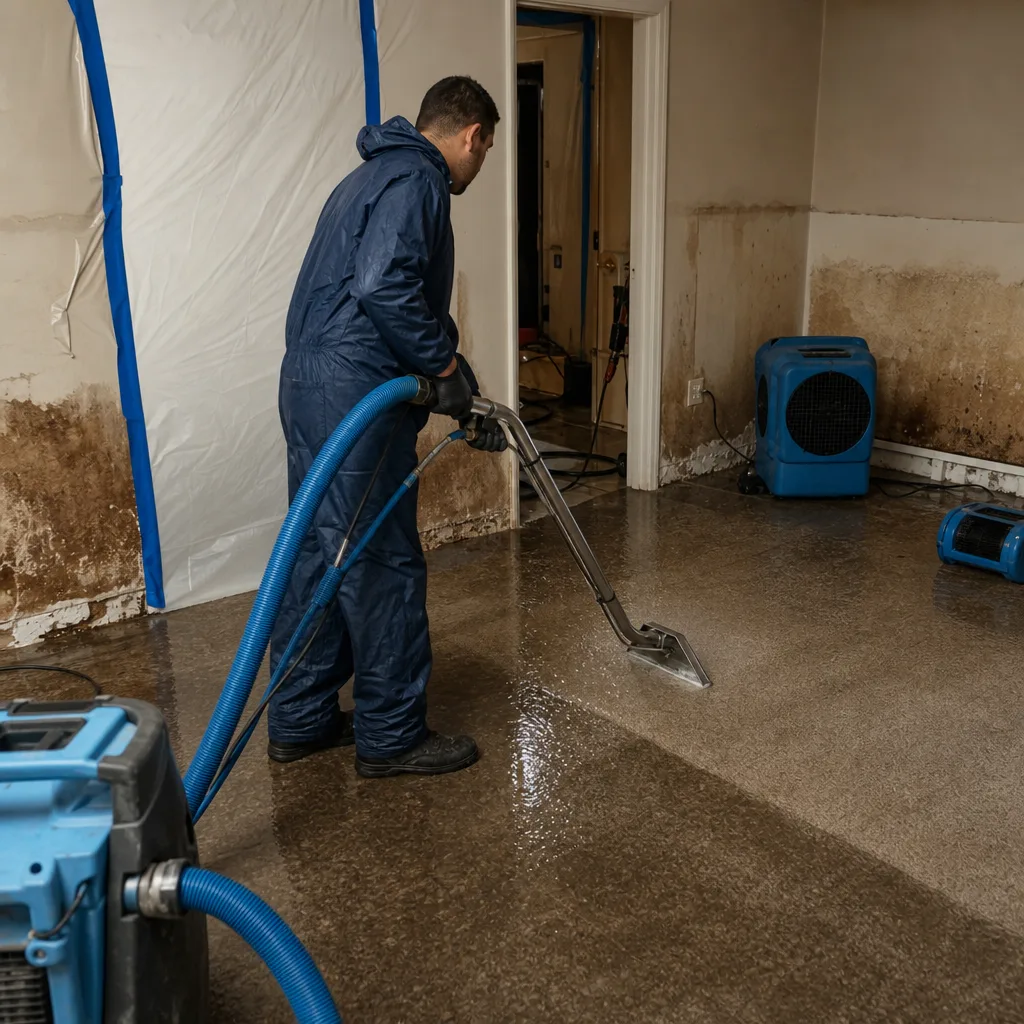
A torn roof in Fillmore during a Santa Ana event is an emergency, not a next-week repair. We tarp before rain finds the opening and before wind peels the damage wider. Our tarping is measured, nailed, and documented, with photos that protect your claim. Many Fillmore homeowners discover roof damage only after daylight, and we have run tarp crews in pre-dawn hours more than once since the Thomas Fire cycle began.
What happens when you call
- 1
A real person answersNo phone trees - you reach a local pro.
- 2
You get an upfront price rangeHonest numbers before anyone is dispatched.
- 3
A background-checked tech heads outLicensed & insured, dispatched right away.
- 4
You approve before work beginsNothing starts until you say go.
Trusted Brands We Service in Fillmore
We work on all makes and models of residential construction here, from 1920s bungalows on pier-and-beam foundations to post-1994 rebuilds on slab. Our equipment fleet includes Dri-Eaz and XPOWER units that are sized for the specific drying demands of Fillmore’s older subfloor assemblies and post-quake masonry construction. Because we run our own extraction and drying gear, we don’t rent equipment between jobs or wait on a supply house to restock before we start. That cuts response time for Fillmore homeowners, especially during storm season when every valley contractor is booked solid.
Common Storm & Disaster Restoration Problems We See in Fillmore Homes
- Post-fire debris flow flooding that gets treated like a clean-water leak. Water that ran off Thomas Fire burn scars carries hydrophobic ash and fine sediment. It penetrates subfloor insulation and wall cavities differently than tap water. Skipping sediment extraction means longer drying times and a mold clock that starts before the water is even extracted.
- Pier-and-beam foundations that hold water under the house. Many Fillmore homes built in the 1920s through 1950s have crawlspaces that flood during heavy debris flow events. Original galvanized plumbing often survives, but the batt insulation and subfloor joists absorb contaminated water. If we do not remove the wet insulation and treat the subfloor, the house never fully dries.
- Santa Ana wind damage that turns into smoke or ember exposure. Fillmore sits at the bottom of the Santa Clara River Valley where wind events funnel and accelerate. A torn roof edge or broken vent becomes an ember intake point during fire season. Board-up and tarping done the day of the storm prevents a much bigger loss the next day.
- Masonry structures with hidden seismic cracks from the 1971 Sylmar and 1994 Northridge quakes. Cracked foundations and wall systems channel debris-laden water into cavities that never show on the surface. Our moisture mapping reads inside those assemblies, not just the visible wet line on drywall.
Pricing for Storm & Disaster Restoration in Fillmore, CA
Storm damage cleanup in Fillmore typically runs $400-$1,200 for small debris removal and surface extraction on a single room or crawlspace section. Flood damage restoration for a crawlspace affected by post-fire sediment runs $2,500-$6,500, depending on how much insulation and subfloor material must be removed and replaced. Emergency board-up generally runs $350-$900 per opening for window and door coverage. Roof tarping runs $250-$750 for standard residential roof sections. These ranges cover work performed by the same crew from first extraction to final dry-out, with a moisture log handed to you and your carrier. We offer $50 off any repair over $250, an $89 seasonal tune-up, and a senior and veteran 5% discount. Estimates are free, and pricing is written before work starts. Call (888) 737-2439 for an exact quote on your Fillmore property.
We Also Serve Cities Near Fillmore
While this page is written for Storm & Disaster Restoration in Fillmore, our crews regularly respond to storm calls in Moorpark, Santa Paula, Simi Valley, and Camarillo. The same live dispatcher answers, the same certified technicians arrive, and the same written guarantee applies to every job in the valley.
Serving Fillmore, CA - Our Local Coverage Area
We’re based in the Fillmore area and know this community well. Use the map below to see our service coverage - if you’re nearby, we can almost certainly help.
FAQs - Storm & Disaster Restoration in Fillmore
Flood damage in Fillmore after the Thomas Fire is scoped as a contaminated water event, not a clean-water leak. Water that has crossed burn-scarred soil carries hydrophobic ash, fine sediment, and organic debris that ordinary water-damage scoping does not account for. Our crews extract sediment first, test for contamination, replace saturated insulation, and treat subfloor surfaces before structural drying begins. Standard drying timelines do not apply to sediment-laden water. Call (888) 737-2439 if you are unsure whether your flooding picked up burn-scar debris.
Yes. Fillmore’s 1920s through 1950s bungalows often sit on pier-and-beam foundations with crawlspaces that flood quickly when debris flows move through the lower-lying neighborhoods along Center Street and the Santa Clara River corridor. The water does not just wet the floor, it saturates subfloor insulation and joists from underneath. Crawlspace drying requires sediment removal, insulation replacement, and antimicrobial treatment before the structure can be considered dry. Slab-on-grade homes have less subfloor to dry but can still suffer wall-cavity intrusion through seismic cracks.
Yes. The valley’s topography funnels and accelerates Santa Ana winds as they move through Fillmore, which means roof edges, vents, and window frames here take more direct and sustained wind pressure than in neighboring cities like Oxnard or Camarillo. That increases the chance of torn shingles becoming full roof breaches, and any breach becomes an ember intake point during fire season. Board-up and tarping should happen the day damage is spotted, not at the end of the week.
Clear only what you can reach without entering the crawlspace or climbing onto unstable debris. A blocked French drain means water is backing up against your foundation, and blocked crawlspace vents mean the underfloor area is not drying. Call us at (888) 737-2439 for debris removal and drain clearing. Leaving the blockage in place accelerates moisture damage and invites mold in Fillmore’s older pier-and-beam homes, where underfloor air movement is already limited.
Yes, often they do, but not in the way most people expect. Pre-quake masonry buildings still standing in Fillmore have survived two major earthquakes, and many carry hidden cracks from the 1971 Sylmar and 1994 Northridge events. Those cracks channel debris-laden water into wall cavities that never show on the surface. Post-quake rebuilds generally have better seismic detailing, but their wall assemblies are tighter, which traps moisture longer once water gets in. Our moisture mapping reads inside wall systems on both construction types, not just the visible wet line on drywall.
Contact Floodline Restoration Co. for Storm & Disaster Restoration in Fillmore
When the wind has torn your roof and the rain is coming, or a debris flow has pushed silt under your house, call a crew that knows Fillmore, knows what the Thomas Fire did to this valley, and answers the phone with a live person at any hour. Floodline Restoration Co. serves homeowners with the 90-Day Done Right Promise in writing, background-checked certified technicians, direct insurance billing, and no-hassle upfront pricing. We’ll be there when we say. Call (888) 737-2439 now for a free estimate on storm or disaster restoration anywhere in Fillmore, from the 93015 and 93016 ZIP codes to the neighborhoods along Center Street and the Santa Clara River corridor.
Written by Curt Bowman, Owner at Floodline Restoration Co. of California, serving Fillmore and the surrounding valley communities.