
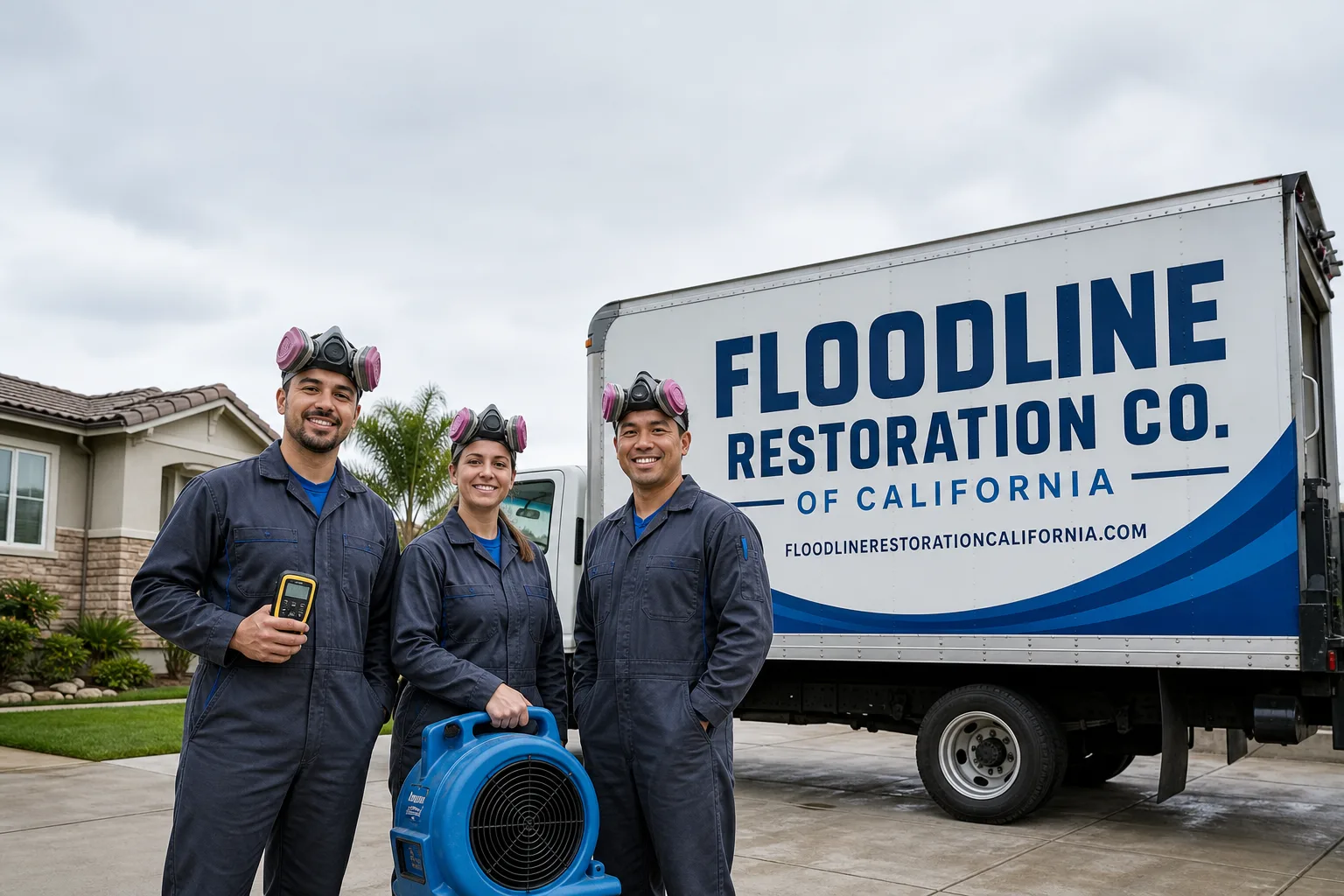
Fast, Reliable Storm & Disaster Restoration Across Fairfax
Storm and disaster restoration in Fairfax comes down to speed, local knowledge, and drying the places other crews miss. Most Fairfax homes sit on pier-and-beam foundations with shaded crawl spaces that hold moisture for weeks after a storm passes, which means a standard dry-out leaves mold behind and a homeowner with a recurring problem. We’re Floodline Restoration Co. of California, and we run extraction and drying crews into Fairfax the same day you call, with moisture-mapped drying plans built around the valley’s specific conditions. Reach a live dispatcher at (888) 737-2439 any hour, any day, including 2 a.m. when a storm has just pushed Fairfax Creek over Sir Francis Drake Boulevard.
Why Floodline Restoration Co. of California Is Fairfax’s Preferred Storm & Disaster Restoration Company
We’ve answered calls from Fairfax homeowners since 2010, and our crews know the difference between a water event in the flatlands of Terra Linda and one in the shaded canyon blocks off Bolinas Road. Fairfax presents a specific set of problems: steep hillside runoff, a creek that runs through the center of town, and a housing stock of 1920s through 1950s wood-frame cottages that were never built with vapor barriers. A crew that treats Fairfax like Novato loses the window to stop secondary mold, and the homeowner pays for that mistake months later.
Curt Bowman founded this company around a dispatch board, not a sales desk, and that matters when a storm hits Fairfax at midnight. A live person answers. A certified crew gets dispatched. The same uniformed technicians who read the moisture map on day one take daily readings until the dry standard is met, then hand you and your carrier the log. Every job is backed by our 90-Day Done Right Promise in writing. If it’s not done right, we make it right. No arguing.
Our Storm & Disaster Restoration Services in Fairfax
Storm Damage Cleanup
When wind and rain tear through Fairfax’s canyon, the damage usually isn’t confined to one spot. Shingles lift on the windward slope. Tree limbs from the wooded hillsides come down on roofs and decks. Gutters clog with redwood duff and overflow against foundations. Our storm damage cleanup crews clear debris, assess structural threats, and get your property stable so the real restoration can begin. We work the Sir Francis Drake Boulevard corridor, the hillside streets off Manor Road, and every residential block in between, because a storm in Fairfax doesn’t announce which neighborhood it will hit.
Flood Damage Restoration
Flooding in Fairfax runs through Fairfax Creek, and the low-lying blocks flanking it near Sir Francis Drake Boulevard flood repeatedly during major storm years. Water enters through foundation vents, crawl space access doors, and the gaps where 80-year-old framing meets shifting pier blocks. We extract standing water with truck-mounted units, then run professional-grade drying systems: Dri-Eaz dehumidifiers, Phoenix axial fans, and Injectidry mats under hardwood floors. The difference in Fairfax is that drying must account for the valley’s trapped humidity and the winter shade that keeps structures damp days longer than the same square footage in San Rafael. We run desiccants and low-profile air movers continuously until the moisture meter tells us the job is actually done, not until the calendar says it should be.
Emergency Board-Up
After a storm breaks windows, rips off a roof section, or drops a limb through a wall, your Fairfax home is open to weather, animals, and the next rain band that rolls over White Hill. We board up openings the same visit we arrive, using materials sized to the job. For a bungalow on a narrow hillside street off Cascade Drive, that often means carrying plywood up steps and securing it against wind gusts that funnel down the canyon. We don’t wait for business hours to protect your home. The dispatch line is live 24/7, and board-up crews carry what they need to leave the structure secured and photographed for your insurance claim.
Roof Tarping
Roof tarping in Fairfax’s hillside canyon isn’t the same job as tarping a single-story rancher in flat Marin. The slopes off Deer Park and the switchbacks above Fairfax Creek put wind pressure on tarps in ways that demand different anchoring. We tarp damaged roof sections immediately after water intrusion or wind damage, using weighted and mechanically fastened covers that hold through valley wind events. Water that gets through a roof in Fairfax doesn’t pool on a slab; it runs down into crawl spaces and starts the clock on mold growth. Tarps stop that clock the same day.
What happens when you call
- 1
A real person answersNo phone trees - you reach a local pro.
- 2
You get an upfront price rangeHonest numbers before anyone is dispatched.
- 3
A background-checked tech heads outLicensed & insured, dispatched right away.
- 4
You approve before work beginsNothing starts until you say go.
Common Storm & Disaster Restoration Problems We See in Fairfax Homes
- Interior dry, crawl space saturated. Homeowners on Fairfax Creek low blocks check the living room floor and think they dodged the flood. Two to three weeks later, active mold blooms in the raised foundation’s shaded, low-airflow crawl space, holding 20%+ moisture long after the floorboards read dry.
- Chronic run-off channels rotting the same subfloor sections. The 1920s to 1940s cottages near Sir Francis Drake Boulevard sit at the base of steep slopes, and storm water funnels into the rear of their pier-and-beam foundations. A spot repair that ignores the run-off channel means the same joist rots again next heavy winter.
- Winter shade compressing the drying window. Fairfax sees more than 40 inches of rain annually, and the surrounding wooded hillsides shade structures through the wet season. Standard Bay Area dry-out timing fails here; crews that don’t run desiccants continuously lose the race against secondary mold.
- Single-layer subfloors with no vapor barrier. The original fir flooring in 1930s-1940s homes sits directly over damp valley soil. One creek overflow soaks it. Drying it properly means getting underneath, not just running fans in the living room.
Pricing for Storm & Disaster Restoration in Fairfax, CA
We Also Serve Cities Near Fairfax
Our Storm & Disaster Restoration crews cover the surrounding Marin communities as well. We’re often in San Anselmo, San Rafael, Kentfield, and Lucas Valley-Marinwood the same day we dispatch to Fairfax, because a storm system that floods Fairfax Creek usually leaves water in a dozen other drainages too. If you’re just over the ridge or down the valley, call the same number and ask for the Fairfax crew.
Serving Fairfax, CA - Our Local Coverage Area
We’re based in the Fairfax area and know this community well. Use the map below to see our service coverage - if you’re nearby, we can almost certainly help.
FAQs - Storm & Disaster Restoration in Fairfax
Why does my Fairfax crawl space smell musty every winter even when the creek hasn’t overflowed onto the street?
The musty smell comes from trapped moisture in your shaded, low-airflow crawl space where 40-plus inches of annual rainfall raises the water table and saturates the soil under your pier-and-beam foundation. Even without surface flooding, Fairfax’s valley trough keeps crawl spaces damp through the winter, and homes without vapor barriers absorb that moisture into the subfloor. The fix starts with a moisture assessment and usually requires drying, crawl space sealing, and mold treatment before the original fir flooring and joists suffer permanent rot. Fairfax homes on creek-adjacent blocks simply start wetter than homes on higher ground. Call (888) 737-2439 and we’ll send a tech with a moisture meter to map exactly where the damp is coming from.
How soon after a Fairfax Creek flood should I check my raised foundation for hidden mold?
Start checking within 48 hours of the flood receding, and expect to keep checking for two to three weeks. The interior may look clean on initial inspection, but Fairfax’s shaded crawl spaces on the low blocks near Sir Francis Drake Boulevard hold 20%+ moisture for weeks, and active mold colonization follows that moisture curve. We run Dri-Eaz meters and moisture-mapped logs on every Fairfax flood job because the moisture in those spaces hides from a one-time extraction. The late-blooming mold is the reason we handle drying, daily readings, and final rebuild with the same certified crew instead of handing you off to a different contractor midway.
Does Floodline Restoration tarp roofs differently in Fairfax’s hillside canyon than in flat Marin towns?
Yes. A tarp on a Fairfax hillside home, especially on slopes off Bolinas Road or Deer Park, faces wind loads and water channeling that don’t exist on flatland Marin roofs. Our crews anchor tarps more aggressively, run extra straps over ridge lines, and account for water that will sheet down the canyon slopes during the next storm. We also coordinate tarping with emergency board-up on homes where one storm already opened multiple entry points, so the structure stays protected from all sides until permanent roof repair is scheduled.
What’s the biggest mistake homeowners make after a Fairfax storm floods their crawl space?
The biggest mistake is assuming the subfloor is dry because it reads below 15% moisture on day one. Fairfax’s shaded, low-airflow crawl spaces on Fairfax Creek low blocks hide 20%+ moisture for two to three weeks after a flood, and that late-stage moisture produces mold blooms that a one-time extraction misses. Homeowners who skip the extended drying cycle lose original fir flooring to rot and then face a much larger remediation bill. The real fix is a drying plan that accounts for the valley’s trapped humidity, including desiccants and low-profile air movers running continuously until the meter proves the dry standard is met.
Can you restore my original 1920s Fairfax cottage’s flooded subfloor without gutting it?
In most cases, yes. We use Injectidry drying mats under the original single-layer subfloor, pulling moisture out from the underside of the flooring where the 1920s construction left no vapor barrier. The goal is to save the original fir, not replace it. If the subfloor has already begun to delaminate or rot from a previous flood cycle, we’ll show you the damage with photo documentation, give you a written scope for partial versus full replacement, and let you decide. Our crews have restored original flooring in Fairfax cottages throughout the area, and we bill the carrier directly so you don’t carry the cost while the claim processes.
Storm & Disaster Restoration in Fairfax: Started at the Floodline, Finished by the Same Crew
Fairfax’s storm damage story is always the same in one way: the line the water left is where the work starts. But what happens after that line depends entirely on whether the crew knows the valley. We do. We know that after a Pine Flat Road home took creek overflow through its 1941 pier-and-beam foundation, our crew ran Injectidry drying mats under the original single-layer subfloor, but the Dri-Eaz meter still read 34% moisture content in the shaded crawl space two weeks later. We pulled back the vapor-barrier-less insulation to expose the second mold bloom that every Fairfax tech learns to expect in that corridor, then layered a Phoenix axial fan and B-Air low-profile air mover to break the valley’s trapped humidity cycle before the homeowner lost the original fir flooring.
That’s the difference between a restoration company that services Fairfax and one that understands it. We don’t walk away after extraction. We don’t hand the rebuild to a different crew. We carry the job from first pump-out to final trim, with a moisture log and our 90-Day Done Right Promise delivered in writing when the work is finished.
If a storm has left water in your Fairfax home, or if you’re smelling the musty warning sign of a crawl space that never dried, call (888) 737-2439. A live person answers. A certified, background-checked, uniformed crew gets dispatched. And the same team that starts the job finishes it, standing behind every step.
Written by Curt Bowman, Owner at Floodline Restoration Co. of California, serving Fairfax since 2010.