
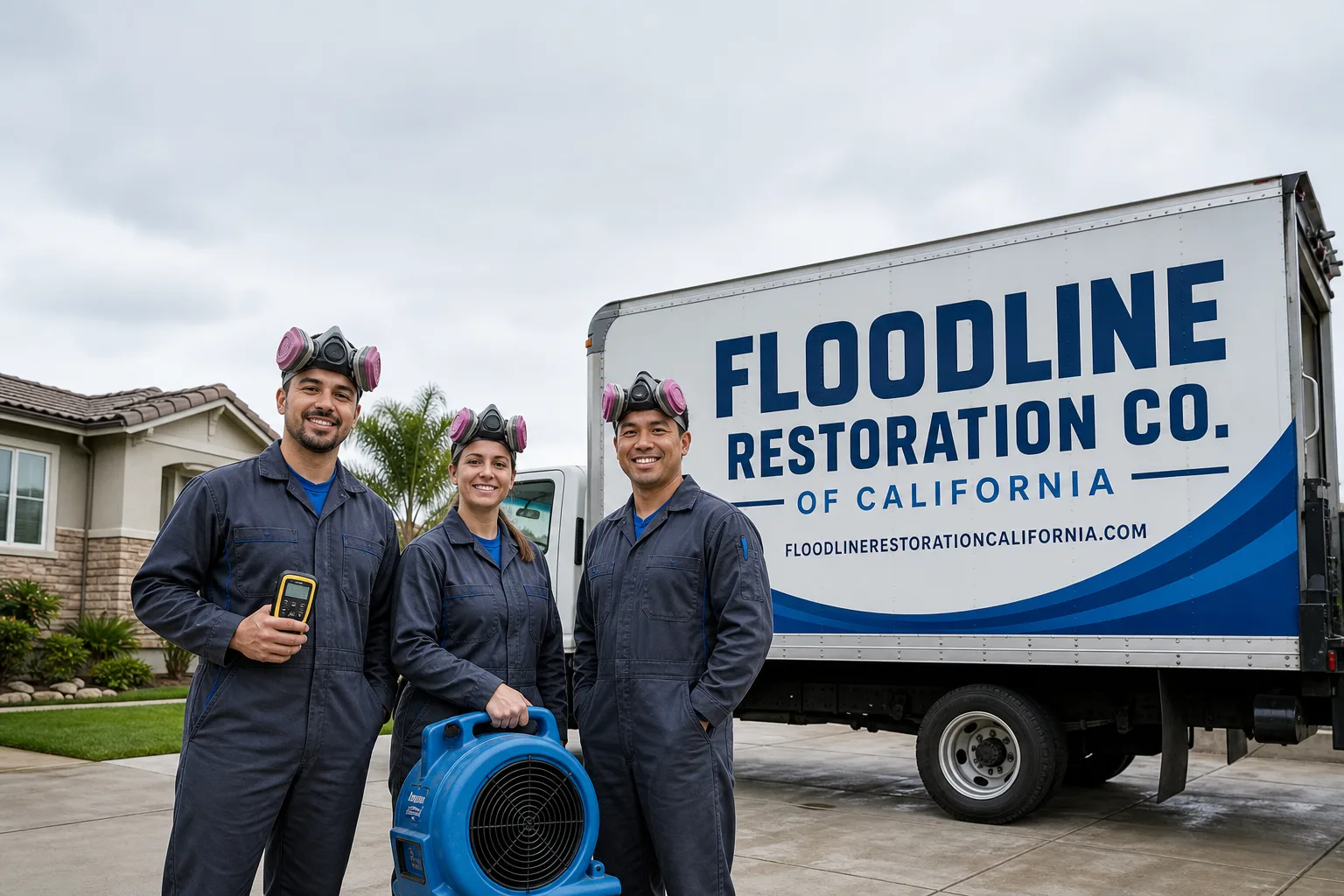
Storm & Disaster Restoration in Dinuba: Fast Response When the Water Rises
Storm and disaster restoration in Dinuba means moving quickly when an irrigation canal spills over, a February windstorm peels roofing back, or a summer flash flood sends muddy water through a 1950s pier-and-beam foundation. We respond to Dinuba from our Fresno-area dispatch office, and the first crew generally reaches most parts of 93618 within 90 minutes. Call (888) 737-2439 right now and you’ll get a live dispatcher, not a recording. Extraction starts the same visit.
Dinuba’s older homes, with their shallow slab foundations and decades of subsidence-driven settling, don’t handle water intrusion the way newer construction does. The soil here moves. The canals that feed the raisin-grape fields run on a schedule that has more to do with your foundation’s health than most people realize. We know both systems, and that’s why our Storm & Disaster Restoration team treats every Dinuba job as a local problem, not a generic one. This page explains what we see in Dinuba homes, what it costs to fix, and how to stop the same damage from coming back next irrigation season.
Key Takeaways
- Most storm and flooding calls in Dinuba get a crew on site within 90 minutes, 24 hours a day.
- Dinuba’s canal irrigation cycle causes recurring water intrusion that many homeowners mistake for one-time storm damage.
- Flood cleanup in Dinuba typically runs $2,800 to $7,500 depending on square footage and how long water sat.
- Every job is backed by the 90-Day Done Right Promise in writing, and we bill your insurance carrier directly.
Why Floodline Restoration Co. of California Is Dinuba’s Storm Damage Contractor
We’ve been answering calls from Dinuba homeowners long enough to know what a 1940s wood-frame on El Monte Way sounds like over the phone: worried, tired, and usually standing in a wet hallway. Floodline Restoration Co. has served California’s Central Valley for over 42 years, founded by Curt Bowman with a dispatch board and a simple rule: answer the phone with a person. That still happens at 2 a.m. when a spring canal overflow floods a garage on Crawford Avenue.
Our technicians are background-checked, uniformed, and trained to IICRC, RIA, and IFA standards. They bring professional-grade Dri-Eaz, Phoenix, and Injectidry equipment on every job, map moisture with daily readings, and hand you and your adjuster the moisture log. No subcontractor roulette. The crew that starts the extraction stays through the dry-out and rebuild. That’s the full-cycle approach we bring to every Dinuba job, and it’s why homeowners here keep our number near the kitchen phone.
When Storm & Disaster Restoration in Dinuba is needed fast, we move. Our dispatchers know the roads: Alta Avenue, Road 80, the stretch of 63 that runs past the packing sheds. They route around harvest traffic and field-equipment slow zones to get a crew to your door quickly. You’ll know who’s coming before they arrive, and what they’ll do first.
Our Storm & Disaster Restoration Services in Dinuba
Flood Damage Restoration
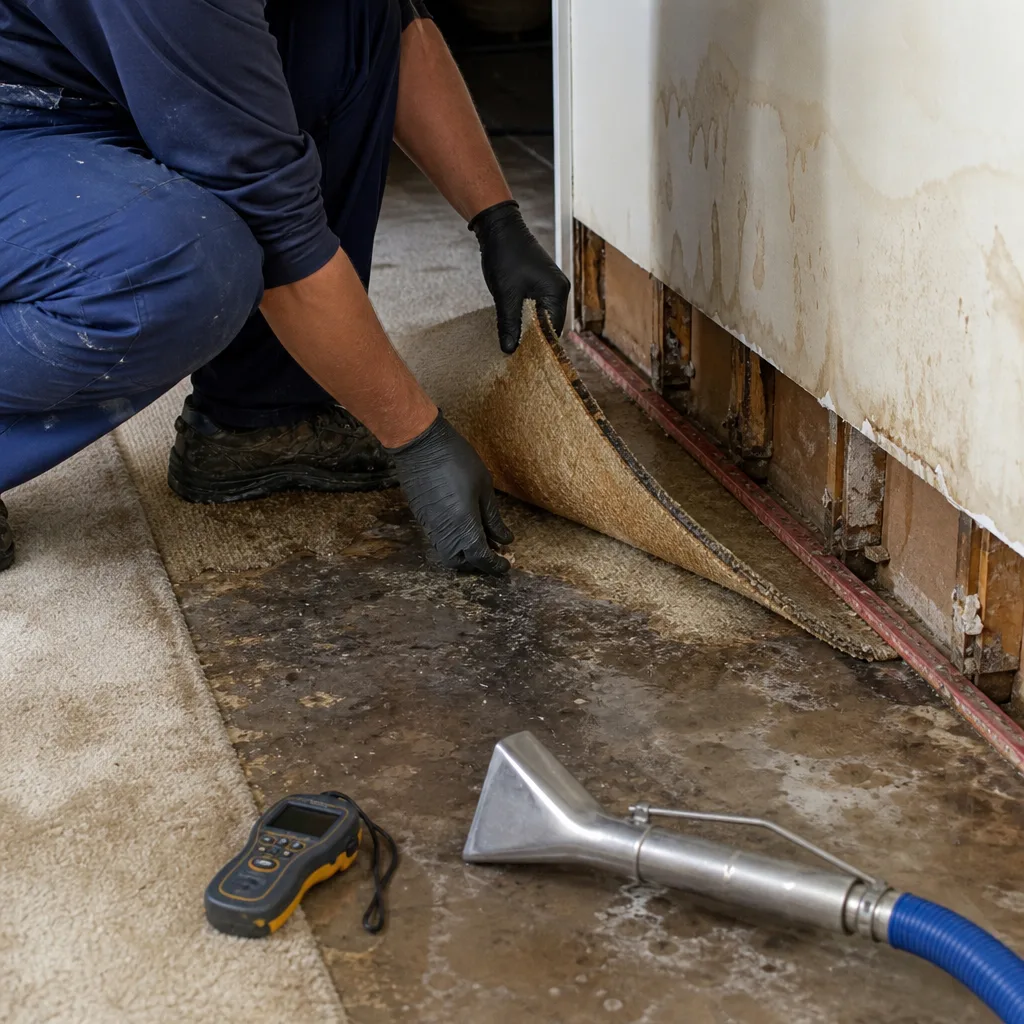
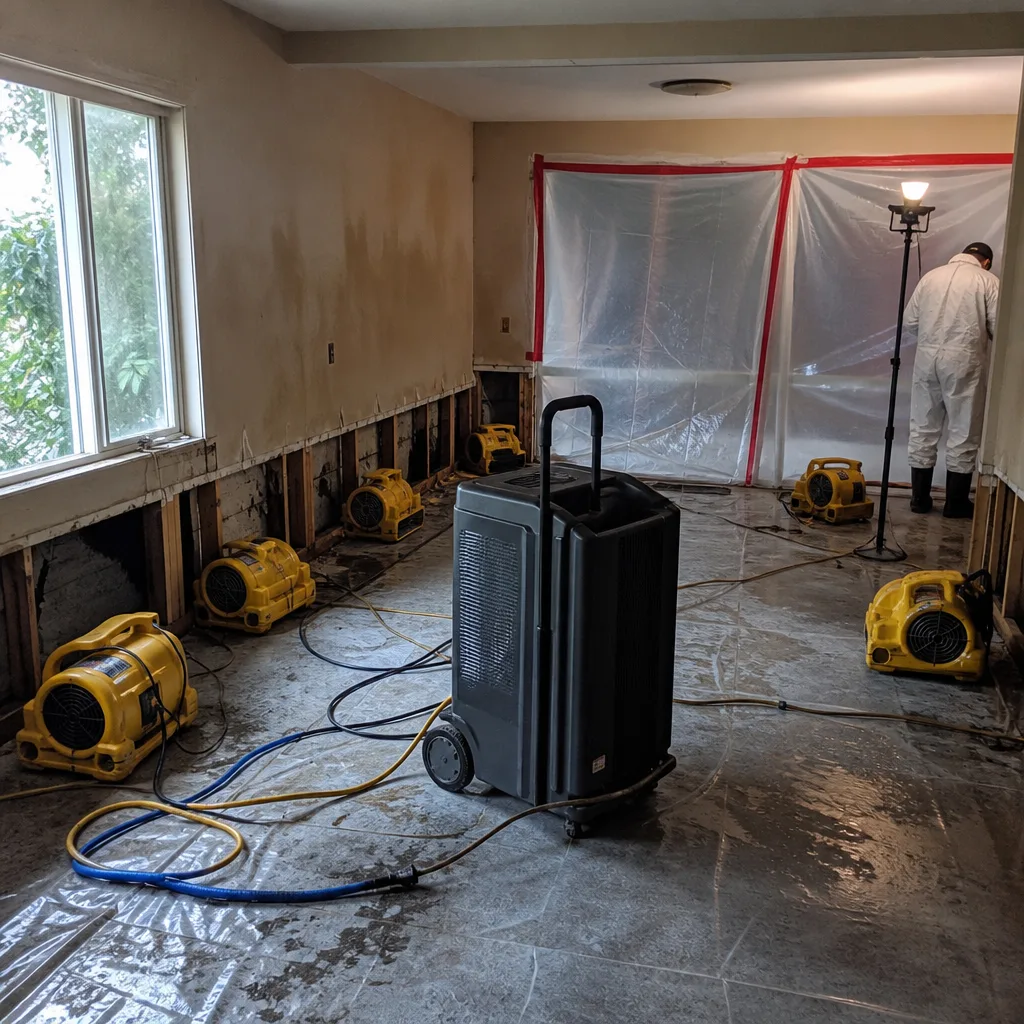
Flood restoration in Dinuba usually means one of two things: storm water pushed a wall of mud through a door, or an irrigation canal near your property backed up and saturated the soil around your foundation. We extract the standing water, cut and remove ruined drywall and insulation, and set up professional drying with Dri-Eaz LGR dehumidifiers and Injectidry panel systems. In uninsulated 1950s wall cavities, hidden moisture takes longer to release, so our daily moisture readings continue until the cavities hit the dry standard, not just until the surface feels dry.
Storm Damage Cleanup
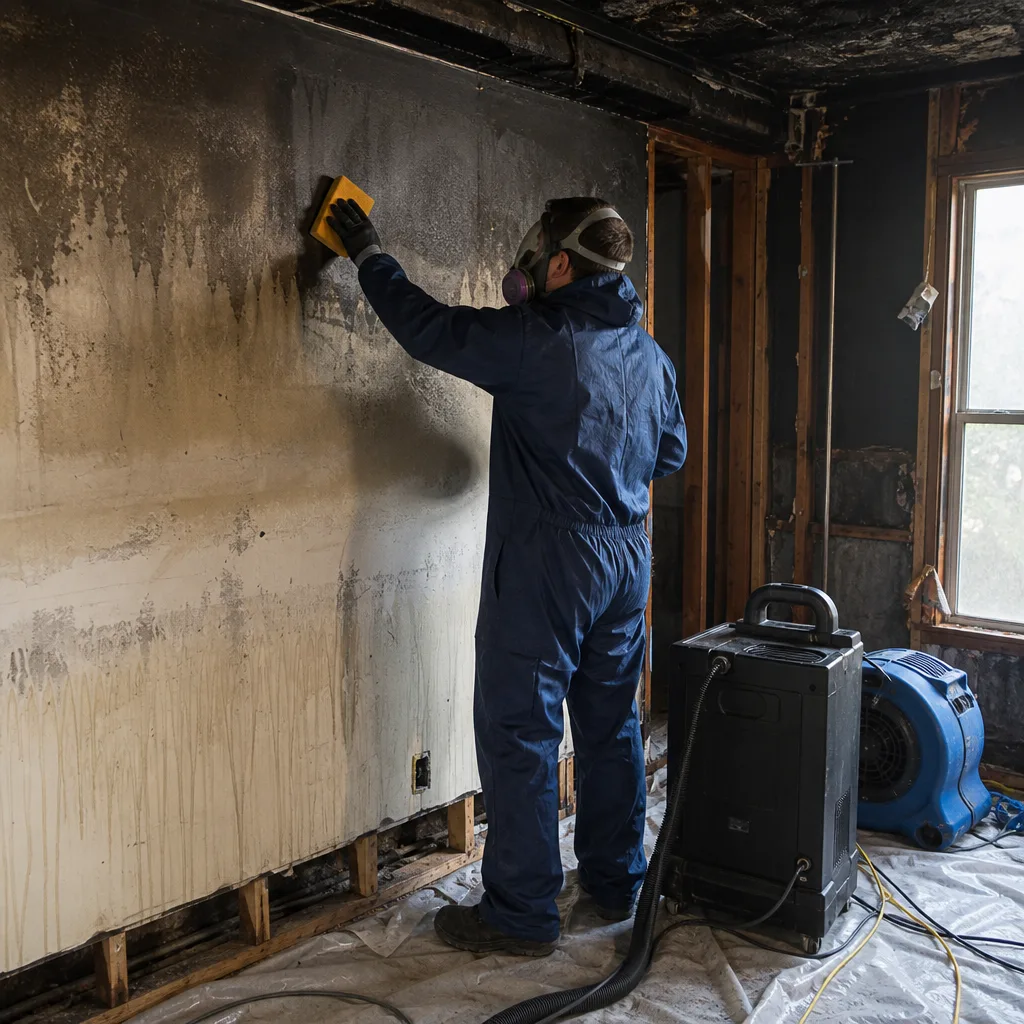
When a Valley windstorm or a rare torrential downpour tears branches down and drives water through window flashing, the first job is stopping the intrusion, the second is cleanup. Our crews remove storm debris, wet carpet, buckled flooring, and waterlogged drywall. We also document everything photographically for your insurance claim before we dispose of a single item. In Dinuba, where many homes still have original galvanized plumbing and no vapor barriers in the crawl space, storm water often reveals old damage. We record what’s storm-related and what was already there, so your claim stands up.
Emergency Board-Up
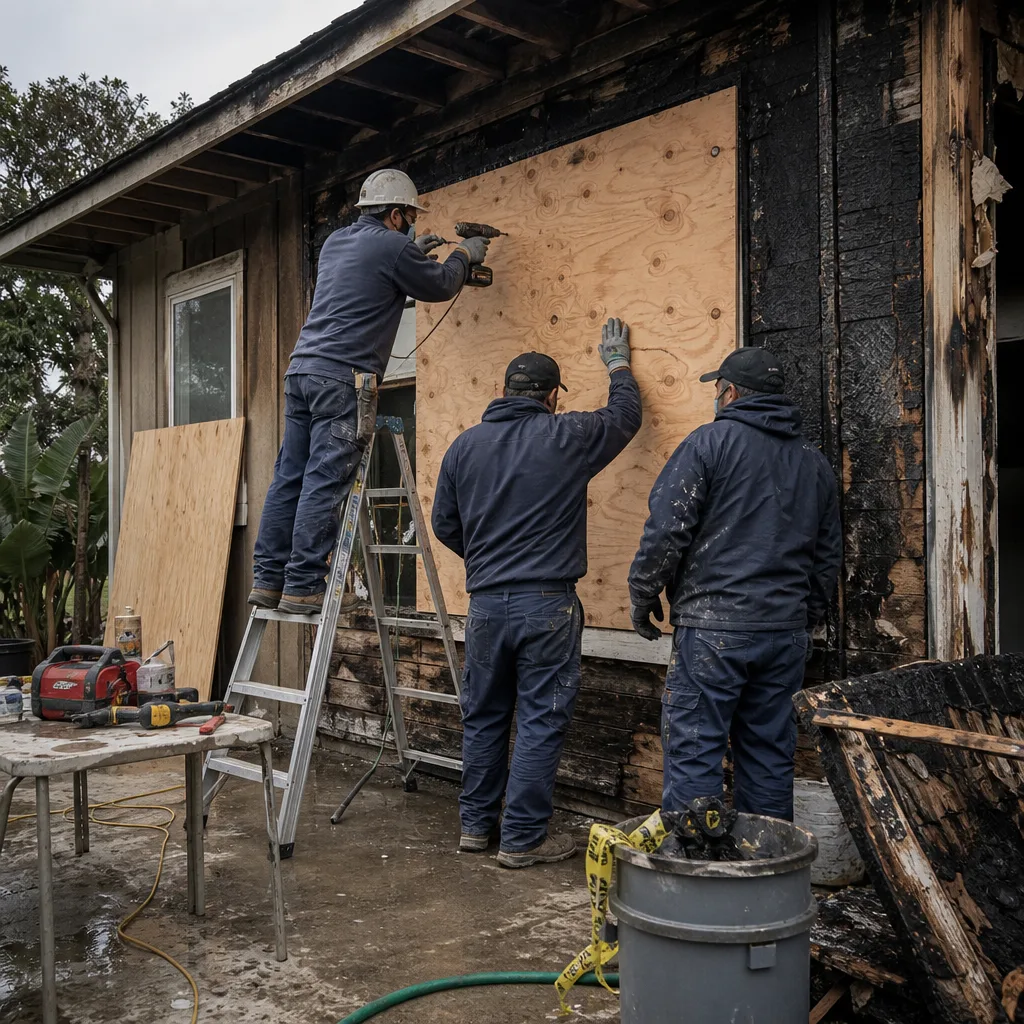
A tree limb through a bedroom window on a Friday night can’t wait until Monday. Our emergency board-up service secures openings with plywood and weatherproof fastening, keeps animals and rain out, and gives you time to work through the insurance process without the house being exposed. We also tarp damaged roof sections the same visit when we can safely access them. In Dinuba, where many homes have old growth shade trees close to the eaves, wind-damaged windows and roof penetrations are common in February and March.
Roof Tarping
Roof tarping stops active water intrusion and buys time for a proper repair or rebuild. We use reinforced polyethylene secured with furring strips and cap nails, and our crews know how to work on the low-pitch roofs common to 1950s Dinuba ranch homes. When roof decking is saturated or visible rafters show rot, we’ll document it before tarping so the adjuster sees the full picture.
What happens when you call
- 1
A real person answersNo phone trees - you reach a local pro.
- 2
You get an upfront price rangeHonest numbers before anyone is dispatched.
- 3
A background-checked tech heads outLicensed & insured, dispatched right away.
- 4
You approve before work beginsNothing starts until you say go.
How Dinuba’s Irrigation Canals Change Storm and Flood Restoration
Dinuba sits inside the Consolidated Irrigation District’s dense canal network. That’s not background scenery. It’s the single biggest reason “one-time” flood damage here turns into a repeating problem. Water deliveries to surrounding fields ramp up sharply in spring and cut off after the raisin harvest in October. The soil around your slab foundation swells and shrinks on that same schedule every year. We regularly arrive at homes in 93618 where water seeping through a foundation crack wasn’t caused by a storm at all. It was the first irrigation delivery of the season, pushing groundwater through soil already saturated by a canal overflow two blocks away.
This matters because restoration work that doesn’t account for the agricultural water cycle will fail. If we dry a crawl space in March but don’t address the drainage slope that sends canal seepage toward the stem wall, the same wall cavity gets wet again when the next delivery cycle hits in April. Our crews know the local irrigation calendar and check for recurring moisture patterns before recommending a repair scope. That’s the difference between fixing a wet floor once and fixing it every spring for the next decade.
What We Saw on Sierra Way
Our crew was called to a 1950s wood-frame home on Sierra Way after an irrigation canal overflow sent water across the yard and under the pier-and-beam foundation. The original galvanized plumbing had already been stressed by decades of subsidence-related slab settling, and the uninsulated wall cavities held moisture for weeks. We used Injectidry panel drying and a Dri-Eaz LGR 2800i to pull hidden water from the cavities, then documented the pre-existing foundation cracks separately from the storm intrusion to protect the homeowner’s claim. The house dried properly before November fog season. The homeowner finally understood why her hallway smelled musty every fall.
Common Storm & Disaster Problems We See in Dinuba Homes
- Irrigation-cycle seepage mistaken for storm damage. Water appears along a baseboard days after a rainstorm, but the real source is a canal delivery or field flooding upslope. The next delivery cycle repeats the pattern unless drainage is corrected and the intrusion path is sealed.
- Under-dried wall cavities before Tule fog season. Dinuba’s winter Tule fog holds relative humidity near saturation for weeks. Any cavity that wasn’t fully dried by mid-October becomes a mold incubator by Thanksgiving. We push final moisture readings hard in September and early October.
- Pre-existing slab settling that complicates claims. Tulare County is one of the most severely land-subsidence-affected areas in the U.S. Foundation cracks predate almost every storm event here. If those cracks aren’t documented separately, a carrier may deny the water damage portion of your claim. We photograph and measure every crack before we start.
- Original galvanized plumbing failing under storm pressure. Older Dinuba homes still have galvanized supply lines that were installed decades ago. Storm-driven soil movement or a saturated crawl space can cause a pinhole leak or full break that floods the house from the inside while you’re focused on the rain outside.
How Much Does Storm & Disaster Restoration Cost in Dinuba?
Flood damage restoration in Dinuba typically runs $2,800 to $7,500 for a moderate single-room water intrusion with extraction, dry-out, and minor reconstruction. Storm damage cleanup, with debris removal and wet material disposal, usually lands between $1,200 and $3,200. Emergency board-up calls start around $350 to $900 depending on the number and size of openings. Roof tarping for wind damage typically runs $450 to $1,400 for a standard single-story Dinuba ranch home.
What moves the number is how long water sat, whether wall cavities are insulated, and whether the foundation needs drainage correction after the dry-out. A 1940s pier-and-beam home with a wet crawl space and uninsulated cavities takes longer to dry and costs more than a newer slab with modern insulation. We give you a written scope and a firm price before any work starts. No surprises on the bill. Call (888) 737-2439 for a free estimate. We’ll send someone to Dinuba the same day.
Trusted Equipment Brands We Use on Dinuba Jobs
We don’t rent whatever the equipment yard has left. Our Storm & Disaster Restoration crews run Dri-Eaz LGR dehumidifiers, Phoenix axial air movers, Injectidry panel-drying systems, and B-Air drying setups. These are professional-grade machines built for long-running commercial use, not the homeowner units you’d find at a big-box store. In Dinuba’s uninsulated wall assemblies and tight crawl spaces, the right machine matters. We carry the parts and filters to keep our equipment running through multi-day dry-downs, so a regional parts shortage doesn’t stall your job.
We Also Serve Cities Near Dinuba
Our storm and disaster restoration crews cover Dinuba and the surrounding communities, including Reedley, Cutler, Orosi, and Orange Cove. If you’re in any of these towns and water is coming in, call us at (888) 737-2439. We’ll route the nearest crew to you.
Serving Dinuba, CA - Our Local Coverage Area
We’re based in the Dinuba area and know this community well. Use the map below to see our service coverage - if you’re nearby, we can almost certainly help.
FAQs: Storm & Disaster Restoration in Dinuba
An irrigation canal overflow typically delivers a slower, longer-lasting water release than a storm, and it reoccurs on the agricultural water-delivery calendar, not the weather forecast. The fix requires addressing drainage and soil saturation around the foundation, not just extracting water from inside the house. We check the surrounding irrigation infrastructure and terrain before recommending a repair scope.
Yes, if we start in September or early October and push moisture readings hard. Pier-and-beam homes with uninsulated wall cavities dry slowly, but Injectidry panel systems and Dri-Eaz LGR dehumidifiers pull hidden water from those cavities every day until the dry standard is met. Starting the job before the fog locks in humidity is the key. Call (888) 737-2439 as soon as you see water.
Because the canal and field irrigation cycle saturates the soil around their foundations every spring. Homes built on shallow slabs or pier-and-beam systems with poor surface drainage take on groundwater from the same path each year. Fixing the drainage and sealing the intrusion path stops the repeat, but only if the work accounts for the agricultural water schedule. Most contractors miss that entirely.
Call us at (888) 737-2439. We’ll tarp the damaged area the same day to stop water from getting in if it rains again. Then we photograph everything, document the condition of the roof decking and rafters, and give you a written assessment for your insurance claim. Don’t climb onto the roof yourself after a windstorm. Damaged sheathing can be unstable, and the risk isn’t worth it. A trained restoration technician should assess the full extent of the damage.
We document every pre-existing crack before we start the flood restoration work, with measurements and photos. Then we compare the condition after extraction and drying. Cracks that appeared or widened during the event are included in the claim documentation as storm-related. Pre-existing subsidence cracking is documented separately, so your carrier can’t deny the water damage by blaming the foundation. A written record protects you. Call (888) 737-2439 for an assessment, and we’ll produce the documentation your claim needs.
Storm & Disaster Restoration in Dinuba: Call Now
A canal overflow at midnight. A windstorm that peeled shingles off a Ridgeview Drive roof. A summer cloudburst that pushed mud through a garage on Kamm Avenue. We’ve handled all of it in Dinuba, and we’re ready to handle yours. The 90-Day Done Right Promise stands behind every job. If it’s not done right, we make it right, in writing, no arguing. We bill your insurance carrier directly, so you don’t have to play messenger. We also offer $50 off any repair over $250, an $89 seasonal tune-up, and a 5% discount for seniors and veterans. A live person answers at (888) 737-2439, day or night. Call now and we’ll route the nearest crew to Dinuba.
Written by Curt Bowman, Owner at Floodline Restoration Co. of California, founder since 2010.