
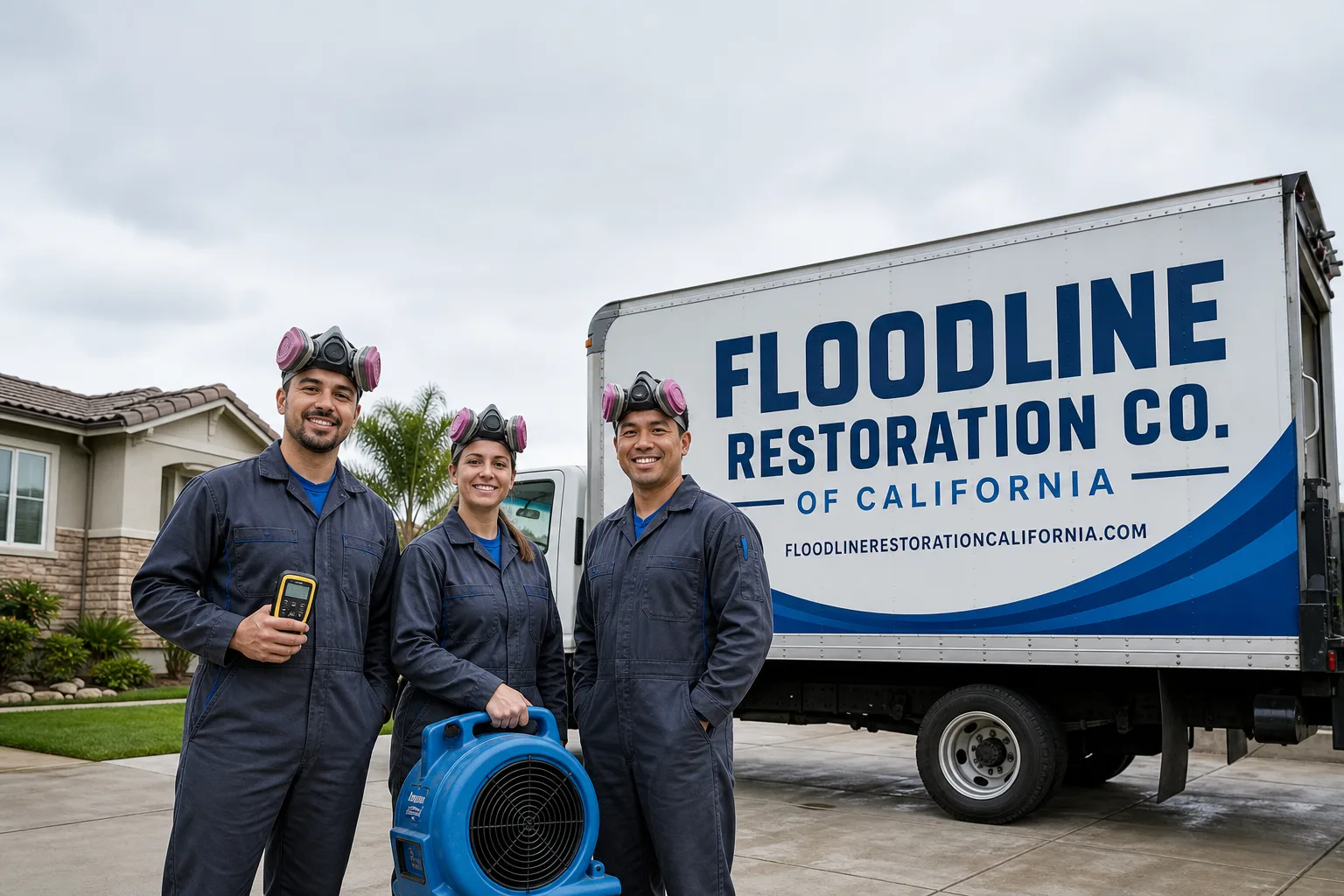
Fast, Reliable Storm & Disaster Restoration Across Diamond Springs
Storm and disaster restoration in Diamond Springs, CA typically starts with a phone call at two in the morning, when a pine limb has gone through a roof or floodwater is rising against a hillside foundation. We answer that call with a live person, every time. Floodline Restoration Co. of California has served the 95619 foothill zone through fire seasons, atmospheric rivers, and the occasional ice storm that buckles gutters on century-old homes. Our crews know Diamond Springs roads, the drainage behavior of Weber Creek, and what a Caldor Fire smoke event does to a 1920s board-and-batten house. When you call (888) 737-2439, you get a dispatcher who knows the area, not a call center reading from a script.
Why Floodline Restoration Co. of California Is Diamond Springs’s Preferred Storm & Disaster Restoration Company
Diamond Springs homeowners don’t have time for a restoration company that learns the territory on their dime. We’ve been doing this work since 2010, founded by Curt Bowman around a dispatch board and a simple promise: answer the phone, get there fast, and finish the job with the same crew that started it. Curt still runs the company that way. The Storm & Disaster Restoration team that responds to a Diamond Springs call is background-checked, uniformed, and trained to IICRC, RIA, and IFA standards. They arrive in trucks stocked with Dri-Eaz, XPOWER, and Injectidry equipment, not a sales kit.
Local reputation matters in a small foothill community. When a Diamond Springs neighbor watches our crew tarp a roof on Pleasant Valley Road or run extraction lines on a flooded crawlspace off Missouri Flat Road, they remember whether we showed up when we said. We’ve built our name in El Dorado County on exactly that. Every job ends with a written 90-Day Done Right Promise, the Keystone Standard, backing the work. No fine print, no arguing. If it’s not done right, we make it right.
Our Storm & Disaster Restoration Services in Diamond Springs
Storm Damage Cleanup
Diamond Springs sits in El Dorado County’s Very High Fire Hazard Severity Zone, but wildfire isn’t the only threat. Atmospheric river storms between November and April dump heavy rain on saturated foothill soil, and wind events send pine and oak limbs through windows, siding, and roof decking. Our storm damage cleanup in Diamond Springs includes structural stabilization, water extraction from exposed interiors, debris clearing around the affected structure, and complete moisture mapping so nothing gets missed. A fallen tree on a Diamond Springs roof is never just a roof problem. Water has already found its way into wall cavities and subflooring by the time we arrive, and we scope for that from the first walkthrough.
Flood Damage Restoration
Steep topography and Weber Creek’s drainage behavior create a flood pattern in Diamond Springs that flat Sacramento Valley lots never see. Post-storm groundwater channels downhill into crawlspaces and hillside foundations, often while the roof remains perfectly intact. Out-of-area technicians misdiagnose this as roof leaks and chase the wrong problem. We know better. Flood damage restoration in Diamond Springs starts with identifying the actual water source, then deploying professional-grade Dri-Eaz dehumidifiers, Phoenix air movers, and Injectidry drying panels to pull moisture from subflooring, sill plates, and stud cavities. Daily moisture readings get logged and shared with you and your carrier until the dry standard is met.
Emergency Board-Up
After a Diamond Springs wind event or fire-related structural compromise, an unsecured opening is an open invitation for weather, animals, and trespass. We provide emergency board-up across the 95619 zip code, usually within hours of your call. Our crews secure broken windows, damaged doors, and breached wall sections with heavy-gauge plywood cut to fit. We don’t slap boards over a hole and leave. We inspect the surrounding framing, document everything with photographs for your insurance adjuster, and make sure the structure can hold until permanent repairs begin. For Diamond Springs homeowners evacuated during a fire event, board-up also deters the property crimes that unfortunately spike when foothill neighborhoods empty out.
Roof Tarping
At roughly 1,600 feet elevation, Diamond Springs roofs take a beating that valley roofs don’t. Ice storms occasionally form in this elevation band, and rare snow loads can buckle gutters and compromise decking. When a tree limb punctures a roof off Bucks Bar Road or a section of flashing fails during a heavy rain event, water enters fast. Roof tarping in Diamond Springs is a stopgap that buys time for proper repair, but it has to be done right: secured to prevent wind lift, overlapped correctly to shed water, and documented for the insurance claim. Our crews tarp quickly and return for the actual repair once your claim is moving.
What happens when you call
- 1
A real person answersNo phone trees - you reach a local pro.
- 2
You get an upfront price rangeHonest numbers before anyone is dispatched.
- 3
A background-checked tech heads outLicensed & insured, dispatched right away.
- 4
You approve before work beginsNothing starts until you say go.
Trusted Brands We Service in Diamond Springs
Diamond Springs homeowners with older and custom homes often run equipment from a wide range of manufacturers. Our techs work on all of it, and we keep common parts stocked in our service vehicles so a Diamond Springs call doesn’t stall waiting for a warehouse shipment. The equipment we run in your home carries the same standard: Dri-Eaz and XPOWER for drying, Injectidry for panel drying in tight wall cavities. We don’t bring rental-store gear to a foothill structure that’s been absorbing smoke since the Caldor Fire. We bring commercial restoration equipment sized for real damage, and we know how to run it in a 1920s home with minimal attic insulation and single-pane windows that never sealed tight even when new.
Common Storm & Disaster Restoration Problems We See in Diamond Springs Homes
- Smoke intrusion into HVAC ductwork during fire events. When the Caldor Fire smoke settled over the 95619 foothills for days, forced-air systems drew particulate deep into return ducts, wall cavities, and attic insulation. Homes that never saw a flame still needed serious smoke and soot remediation.
- Atmospheric-river moisture breaching single-pane windows and minimal insulation. Gold Rush-era and early-1900s Diamond Springs homes typically retain single-pane windows and thin attic insulation, leaving multiple pathways for winter rain to enter behind trim and into wall cavities. Surface drying alone won’t fix it.
- Hillside groundwater intrusion near Weber Creek. Post-storm groundwater follows the steep drainage into crawlspaces, wicking up through sill plates and subflooring. We see this constantly in hillside properties along the creek corridor, and it’s routinely misdiagnosed as a roof leak by crews unfamiliar with foothill hydrology.
- Wood-heavy exteriors absorbing soot and moisture. Board-and-batten, T1-11, and cedar siding common on Diamond Springs homes soak up smoke and storm moisture far more aggressively than stucco. Surface cleaning without proper drying leaves hidden fungal growth behind, which then fails clearance testing.
Pricing for Storm & Disaster Restoration in Diamond Springs, CA
We Also Serve Cities Near Diamond Springs
Our crews cover Diamond Springs and the surrounding foothill communities: Placerville, Cameron Park, El Dorado Hills, and Pollock Pines. If you’re up the grade in Pollock Pines or down in El Dorado Hills, the same background-checked team responds with the same written guarantee.
Serving Diamond Springs, CA - Our Local Coverage Area
We’re based in the Diamond Springs area and know this community well. Use the map below to see our service coverage - if you’re nearby, we can almost certainly help.
FAQs - Storm & Disaster Restoration in Diamond Springs
Why did my Diamond Springs home fail a clearance test after a previous company did smoke remediation for the Caldor Fire?
Most clearance test failures in Diamond Springs trace back to one thing: the previous company treated visible surfaces but never addressed smoke particulates inside ductwork, wall cavities, and attic insulation. Foothill homes with forced-air systems that ran during the Caldor Fire pulled smoke deep into spaces you can’t see. A standard surface wipe-down won’t touch it. We scope with HEPA-filtered equipment, run negative air with XPOWER scrubbers, and dry cavity interiors with Injectidry panels before any clearance testing. Call (888) 737-2439 and we’ll walk through what was missed.
How do atmospheric river storms affect hillside homes near Weber Creek differently from flat Sacramento lots?
Flat valley lots shed water across the surface, where gutters and drainage swales can carry it away. Diamond Springs hillside properties near Weber Creek contend with groundwater that moves downhill through soil and bedrock, entering crawlspaces and foundations from below, not from the roof. The water damage pattern looks different on a moisture map: saturated sill plates, wicking subflooring, and elevated humidity in the lowest level of the house. Our techs read those patterns correctly because we work this terrain year after year. If someone tells you it’s a roof leak without checking the crawlspace, get a second opinion from us.
My 1920s Diamond Springs home has original single-pane windows that let smoke and rain in. Should I replace them before storm season?
Replacing original single-pane windows on a Diamond Springs historic home is a solid long-term move, but it’s not a storm-season emergency unless the frames are structurally compromised. What matters more before the November-to-April rainy season is sealing the existing gaps: re-caulking trim, checking flashing, and making sure attic insulation isn’t channeling moisture against the sheathing. If you’ve already absorbed heavy smoke from a recent fire event, window replacement alone won’t fix hidden soot in wall cavities. Let us scope the current damage first, then we can tell you what actually needs doing before the next atmospheric river.
What hidden smoke damage did the Caldor Fire cause in Diamond Springs even to homes that never saw flames?
Homes that never saw a flame still got days of dense smoke pushed by foothill wind patterns. That smoke worked into return ducts, wall cavities behind outlets and switches, attic insulation, and the fibers of wood-heavy siding. In many 95619 homes, HVAC systems ran continuously during evacuations on smart thermostats, pulling particulate deeper than any surface cleaning can reach. The damage is real, it affects indoor air quality, and it fails clearance tests until it’s properly remediated. We’ve done this work in Diamond Springs since the fire, and we know exactly where to look.
Can I handle storm debris removal myself after a Diamond Springs wind event, or do I need a licensed restoration crew?
You can clear small branches and leaves yourself. What you shouldn’t do is remove large limbs or trees from a structure without an assessment, because the tree is often applying pressure that’s temporarily stabilizing the damage. Cutting it wrong can collapse a section of roof or wall. We handle debris removal as part of the full restoration scope: cutting, hauling, and structural stabilization done safely, with photo documentation for your claim from start to finish. Call (888) 737-2439 and we’ll have someone out to look before you pick up a chainsaw.
Call Floodline Restoration Co. of California in Diamond Springs
When a storm hits Diamond Springs or a fire event leaves smoke inside your walls, call (888) 737-2439. A live dispatcher answers, day or night. We’ll send a background-checked, certified crew to your 95619 home, scope the damage honestly, and put the plan in writing before any work begins. The 90-Day Done Right Promise backs every job we do in Diamond Springs. Done right, and backed in writing.
Written by Curt Bowman, Owner at Floodline Restoration Co. of California, serving Diamond Springs and the surrounding foothill communities.