
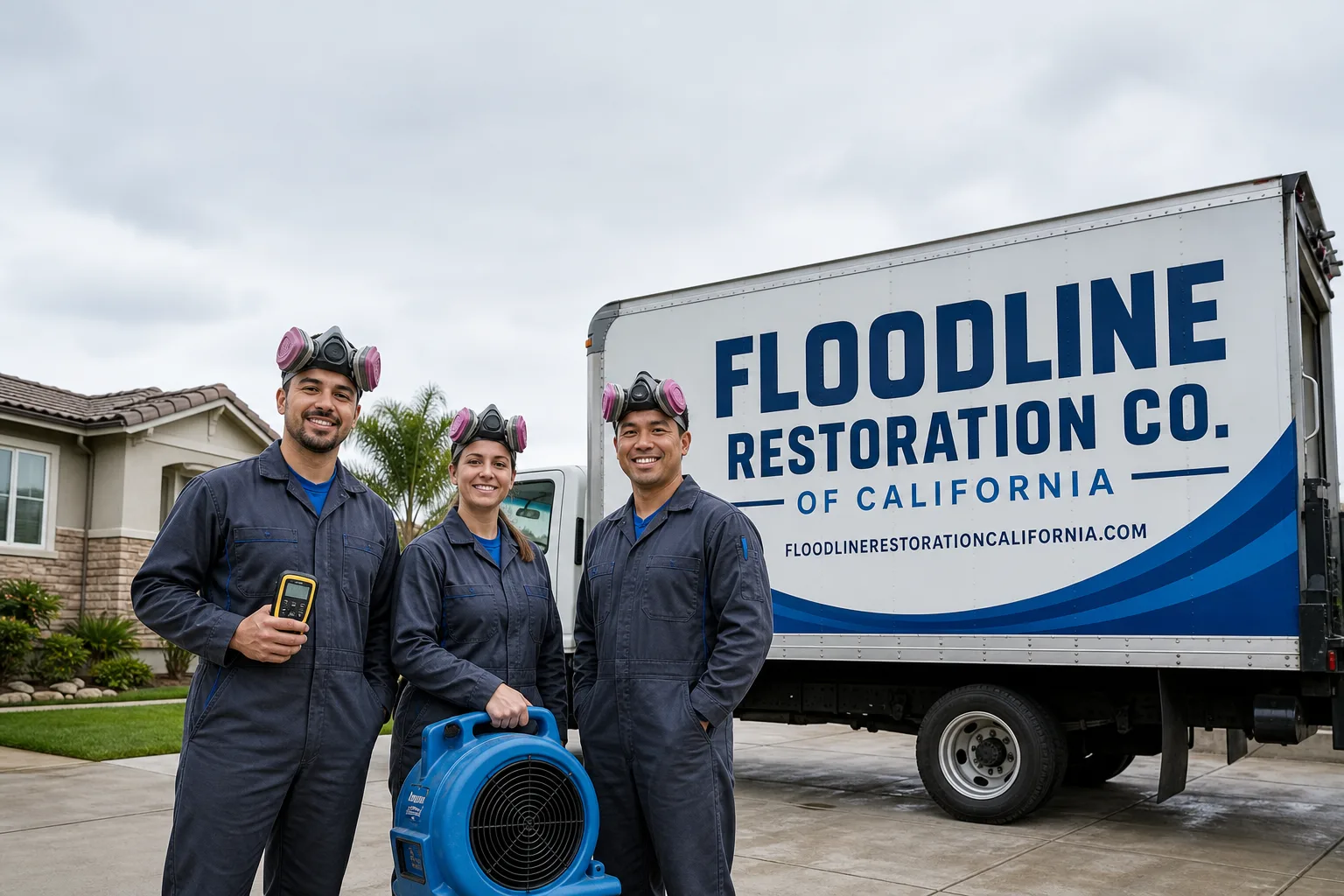
Fast, Reliable Storm & Disaster Restoration Across Claremont
Storm damage in Claremont rarely follows a clean script. In the foothills north of Foothill Boulevard, a wildfire on the San Gabriel slopes gets followed by a hard rain, and suddenly the street carries mud, ash, and rock into homes that were dry an hour earlier. That’s the call we answer most in 91711, and we answer it with a live dispatcher at (888) 737-2439, twenty-four hours a day. Floodline Restoration Co. of California runs a full storm and disaster crew into Claremont whenever the call comes: extraction, drying, board-up, tarping, and rebuild, handled by the same certified technicians who wrote the moisture log on day one. We know the older houses here, the mountain-front weather patterns, and how fast water moves through a 1920s Craftsman once a wall gets compromised. When you call, a real person picks up and starts the clock. The line the water left is where we start.
Why Floodline Restoration Co. of California Is Claremont’s Preferred Storm & Disaster Restoration Company
Claremont homeowners don’t want a rotating cast of subcontractors. They want one crew that knows the house, the street, and what the mountains above town can do after a burn. Floodline has been that crew for local families since Curt Bowman founded the company in 2010, built around a dispatch board rather than a sales desk. Our Storm & Disaster Restoration team handles every phase, from the first extraction on a flooded floor to the final coat of paint on a rebuilt wall. That continuity matters here more than in flatter neighboring cities, because Claremont’s damage sequences are rarely simple: a Santa Ana wind event snaps a limb through a roof on Monday, then rain drives sediment through the opening on Thursday, and by Saturday the lath-and-plaster is wicking moisture into the framing. Background-checked, uniformed technicians trained to IICRC, RIA, and IFA standards read that moisture map and act on it the same visit. And every job is backed by the 90-Day Done Right Promise, our written guarantee that if it’s not done right, we make it right. No paperwork battles. No arguing.
We serve Claremont with the same professional-grade equipment we’d bring anywhere: Dri-Eaz, Phoenix, XPOWER, B-Air, and Injectidry. Calls are answered by a live person at 2 a.m., because storm damage doesn’t wait for office hours and neither does the water moving through a 1930s Spanish Colonial Revival’s original plaster walls. We’ll be there when we say.
Our Storm & Disaster Restoration Services in Claremont
Storm Damage Cleanup
When a storm blows through Claremont, the damage usually comes in layers: wind-torn limbs on the roof, water through the breach, and debris across the yard and walkways. We clear the debris, secure the structure, and start the drying process in one visit. In the Village, where 1920s Craftsman bungalows sit close together under mature oaks, a fallen limb on one property often means fence damage and window damage on the neighbor’s as well. We scope both properties with a written plan before work starts, so the homeowner and the carrier know exactly what’s covered and what’s not.
Flood Damage Restoration
North Claremont has a problem that flatter cities like Pomona and Ontario don’t. After a burn on the San Gabriel slopes above town, the next rain carries sediment, ash, and organic material into foothill neighborhoods at speed. That runoff is classified as Category 3 water, the same contamination level as sewage, yet homeowners routinely assume it’s ordinary stormwater and delay the call. That delay gives secondary mold a chance to establish in original plaster walls within days. Our crews know this pattern and treat every post-burn rain intrusion in north Claremont with full black-water protocol: extraction with professional-grade pumps, removal of contaminated plaster where necessary, and forced drying of the old-growth Douglas fir framing beneath.
Emergency Board-Up
A broken window or a breached wall on a Claremont home can’t wait for Monday. We board up the opening the day we’re called, using materials that hold through the next wind event. In the historic district, we do it cleanly: straight cuts, no unnecessary fasteners through original millwork, and a written scope for what the board-up covers versus what the permanent repair will require. That keeps the carrier informed and the homeowner from guessing what happens next.
Roof Tarping
Claremont’s dense urban tree canopy is beautiful until the Santa Anas blow. Every fall, the winds funnel down the mountain front and snap branches into clay-tile and wood-shake roofs across 91711. We tarp quickly and securely, using methods that won’t further damage brittle old tiles or shake courses. The tarp is a temporary fix, but done wrong it becomes a second claim. Done right, it gets you through the next rain until full reconstruction is scheduled and priced in writing.
What happens when you call
- 1
A real person answersNo phone trees - you reach a local pro.
- 2
You get an upfront price rangeHonest numbers before anyone is dispatched.
- 3
A background-checked tech heads outLicensed & insured, dispatched right away.
- 4
You approve before work beginsNothing starts until you say go.
Trusted Brands We Service in Claremont
We use Injectidry for hard-to-dry cavities behind original plaster, and our technicians carry certifications from IICRC, RIA, and IFA so the work meets the standards your carrier expects. Rather than trucking in whatever’s on the shelf, we keep the right drying equipment ready for Claremont’s specific housing stock: LGR dehumidifiers and axial air movers sized for the tight rooms and dense plaster of pre-war construction. When a flood event hits multiple homes on a street, our crews have the equipment staged to move house to house without losing drying time. Done right, and backed in writing.
Common Storm & Disaster Restoration Problems We See in Claremont Homes
- Post-burn debris flows treated as ordinary stormwater. Foothill homeowners north of Foothill Boulevard often wait after the first post-fire rain, thinking it’s just muddy water. By the time we’re called, the ash and sediment have soaked into the plaster and begun feeding mold growth.
- Homeowner-grade fans on 1920s plaster walls. Unlicensed handymen try to dry original lath-and-plaster with box fans, leaving hidden moisture trapped against old-growth Douglas fir framing. The framing warps and splits months later.
- Historic-district work without preservation permits. Contractors unfamiliar with Claremont’s rules start repairs on Spanish Colonial Revival homes, then hit a stop-work order. We scope historic work correctly from the start, with the right filings and the right materials.
- Wind-damaged roofs left untarped through the next rain. A Santa Ana event cracks tiles on Monday. The homeowner schedules a roofer for next week. It rains Wednesday. The interior damage, which started as a few cracked tiles, is now a full remediation job.
Pricing for Storm & Disaster Restoration in Claremont, CA
We Also Serve Cities Near Claremont
Beyond Claremont, our crews run regular routes into Montclair, La Verne, Upland, and Pomona. The mountain-front damage patterns shift a little in each city, but the standard of work doesn’t. Call (888) 737-2439 and we’ll route the nearest available crew.
Serving Claremont, CA - Our Local Coverage Area
We’re based in the Claremont area and know this community well. Use the map below to see our service coverage - if you’re nearby, we can almost certainly help.
FAQs - Storm & Disaster Restoration in Claremont
Call immediately, the same hour water enters the home. Post-burn runoff in north Claremont carries ash and sediment that classifies as Category 3, and the contamination begins working into plaster and framing within hours. The sooner extraction starts, the less plaster gets removed. Call (888) 737-2439 and a live dispatcher starts the clock.
Yes. Runoff that crosses a burn scar picks up ash, char, and organic material. It is not ordinary stormwater. It requires full black-water handling: PPE, contamination barriers, controlled removal, and professional drying. We bring that protocol standard on every post-burn call in the foothills.
Often, yes, if we get in before secondary mold sets. We use Injectidry panels and professional-grade Dri-Eaz LGR dehumidifiers to force dry inside wall cavities without tearing out every wall. Plaster that’s been saturated for more than a few days, or that’s showing mold, gets cut out to the line of damage and rebuilt cleanly. The written scope shows you exactly which walls can be saved before we open anything up.
With a tarp method that respects what’s underneath. We fasten tarps using batten strips and tension points that don’t punch unnecessary holes through brittle tiles or shake. It’s slower than nailing a tarp flat, but it protects the roof for the rebuild, and it doesn’t turn a wind claim into a tile-replacement claim. Done right, and backed in writing.
Yes, in two ways. First, a flood shifts the soil and the structure, which can stress old galvanized lines at the joints. Second, saturated walls hide slow leaks from corroded iron pipe, and the moisture just never drops. We log daily drying readings with that in mind, and if the numbers plateau, we look for a plumbing source, not just a drying problem.
Call Floodline Restoration Co. of California in Claremont
If this is happening right now, call (888) 737-2439. A live dispatcher answers, confirms your address in 91711, and gets a certified crew moving toward Claremont. We run background-checked, uniformed technicians with IICRC, RIA, and IFA training, Dri-Eaz and Phoenix equipment, and a written scope before work starts. Current standing offers apply: $50 off any repair over $250, an $89 seasonal tune-up, and a 5% senior and veteran discount, always. The 90-Day Done Right Promise stands behind every job we finish. We’ll be there when we say. And we’ll leave the walls dry, the structure sound, and the paperwork handled with your carrier. That’s the whole job. Call (888) 737-2439 now.
Written by Curt Bowman, Owner at Floodline Restoration Co. of California, serving Claremont and the surrounding foothill communities since 2010.