
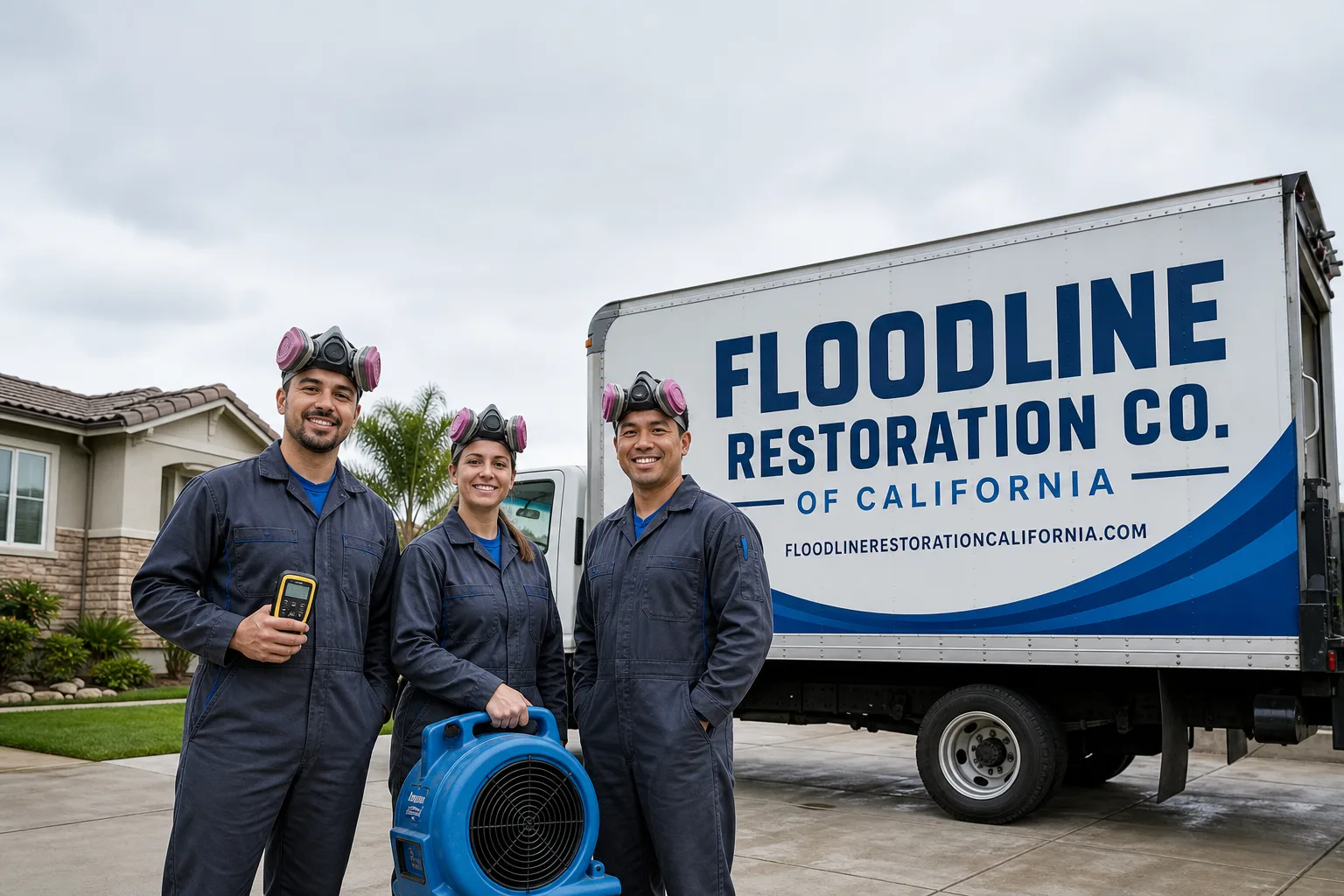
Fast, Reliable Storm & Disaster Restoration Across Chino Hills
Storm damage in Chino Hills rarely announces itself politely. A Santa Ana wind event can peel roof membranes off 1990s tract homes along Butterfield Ranch Road, and a hillside brush fire can push smoke and fine ash through attic vents three miles from the ignition point. Floodline Restoration Co. of California handles the whole sequence: emergency board-up, roof tarping, debris removal, water extraction, drying, and the rebuild that puts your house back together. We answer the phone with a live person day or night, and we reach Chino Hills fast because our dispatchers know the canyon routes and every major artery from Soquel Canyon Parkway to Grand Avenue. Call (888) 737-2439 when you need someone now.
Why Floodline Restoration Co. of California Is Chino Hills’s Preferred Storm & Disaster Restoration Company
We’ve built our reputation in Chino Hills on showing up ready. Homeowners in Los Serranos, along Peyton Drive, and in the ridgeline tracts above Carbon Canyon know what a contained brush fire leaves behind: a film of ash on every horizontal surface, smoke that hangs in the upholstery for weeks, and HVAC systems that recirculate particulate long after the fire crews leave. Our crews live with that reality. We carry HEPA air scrubbers, moisture meters, and thermal imaging gear on every truck, and we know which Chino Hills neighborhoods vent smoke through ridge vents versus gable vents, because it changes how we clean the ductwork.
This is our Storm & Disaster Restoration team’s home territory. The 90-Day Done Right Promise, our written Keystone Standard, applies to every job in Chino Hills. If the work isn’t right, we make it right. No arguing, no paperwork battles. That guarantee sits in writing before we start, and it’s backed by 42 years of serving local communities and a dispatch board that never rolls to voicemail.
Background-checked, uniformed technicians trained to IICRC, RIA, and IFA standards handle every phase of the work. That matters when the job runs from emergency tarping to subfloor mold remediation to rebuilding a kitchen. One crew, one standard, one point of accountability. You won’t play messenger between us and your insurance carrier either. We bill direct to the carrier and hand you a written scope of work before anything gets torn out.
Our Storm & Disaster Restoration Services in Chino Hills
Storm Damage Cleanup
In Chino Hills, storm damage cleanup almost always involves wind-driven debris from canyon terrain. Branches, roofing tile fragments, and pulverized vegetation end up in gutters, downspouts, pool skimmers, and window wells. Our crews clear the debris, catalog what’s storm-related versus pre-existing, and document everything photographically for your carrier. The goal is a home that drains correctly and a file that supports every claim.
Flood Damage Restoration
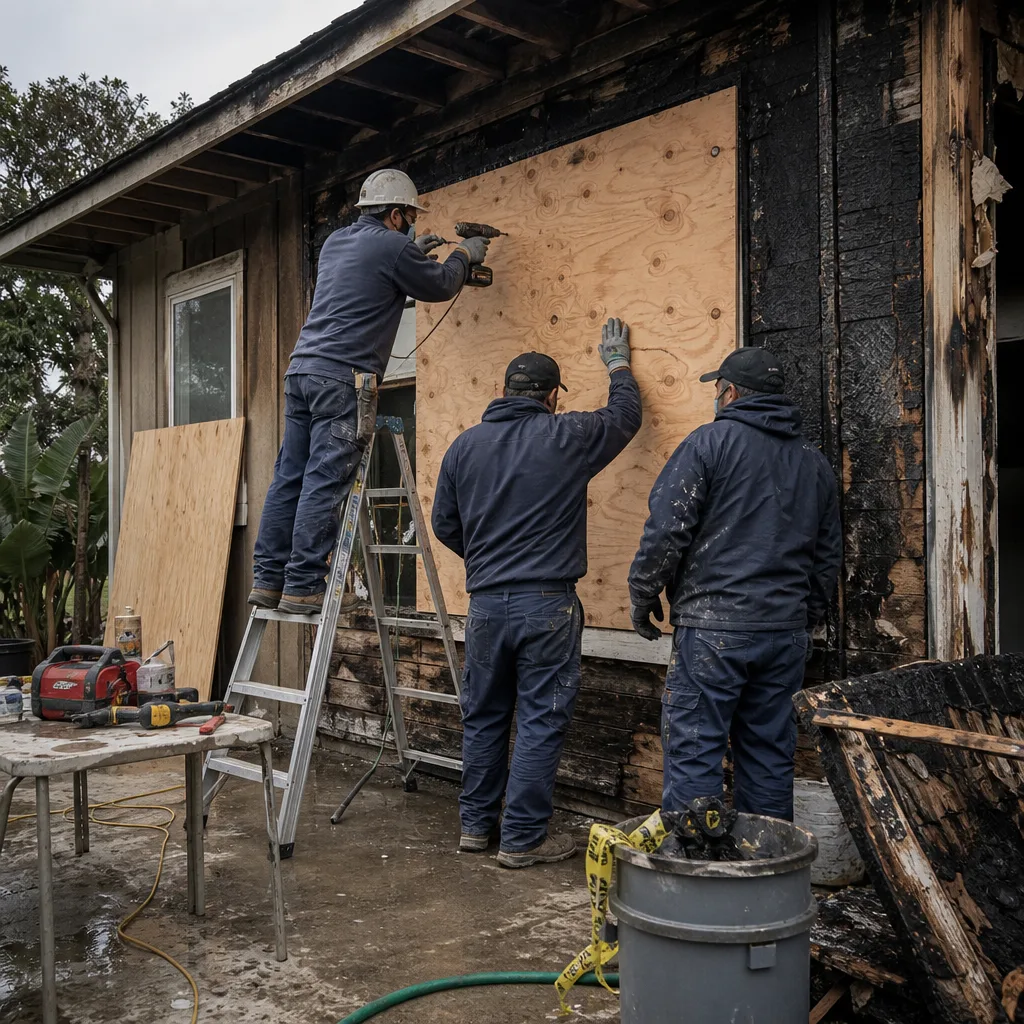
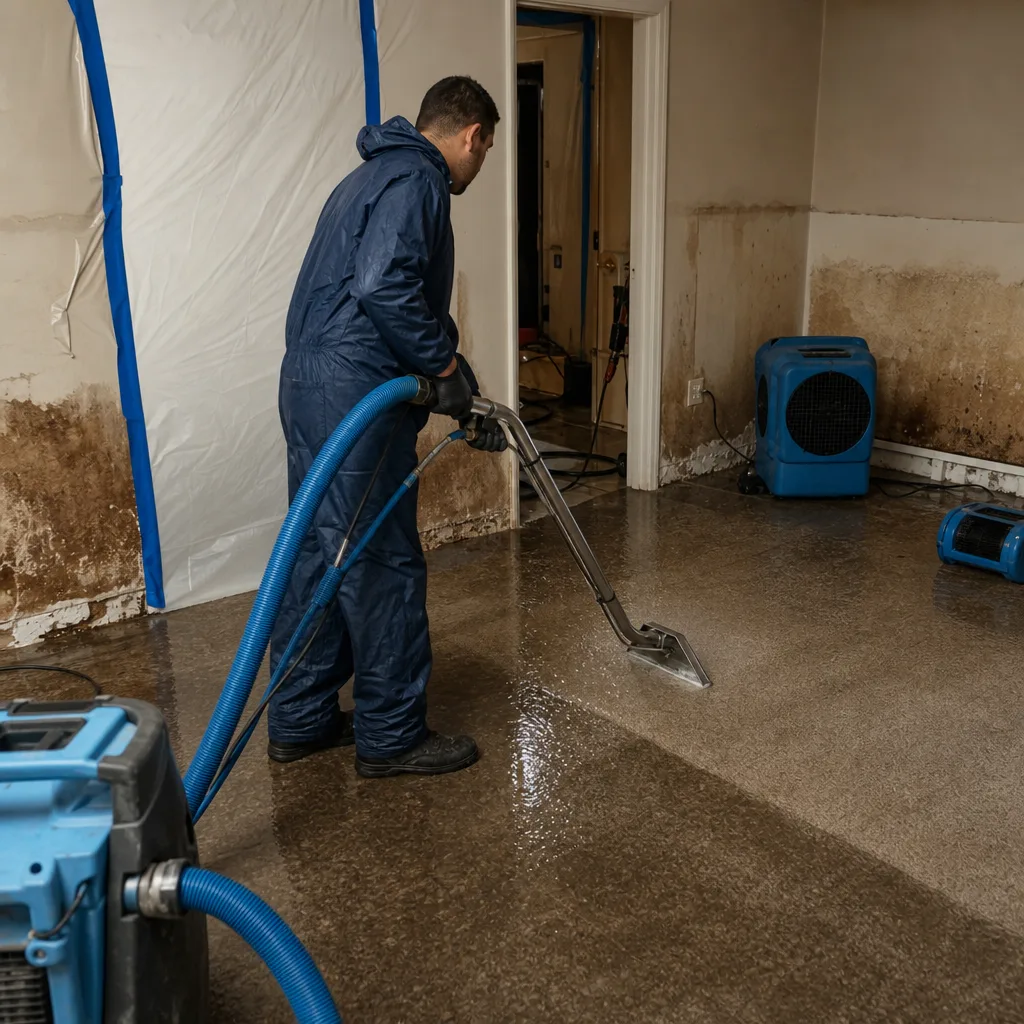
Hillside lot grading in Chino Hills channels runoff against slab perimeters. When a heavy Pacific front stalls over the Puente Hills, water finds the path of least resistance, and the path is usually toward your foundation. We extract standing water, map the moisture with meters and thermal cameras, and run professional-grade equipment from Dri-Eaz, Phoenix, XPOWER, B-Air, and Injectidry until the dry standard is met. Daily moisture logs go to you and your carrier. No guesswork, no premature rebuild.
Emergency Board-Up
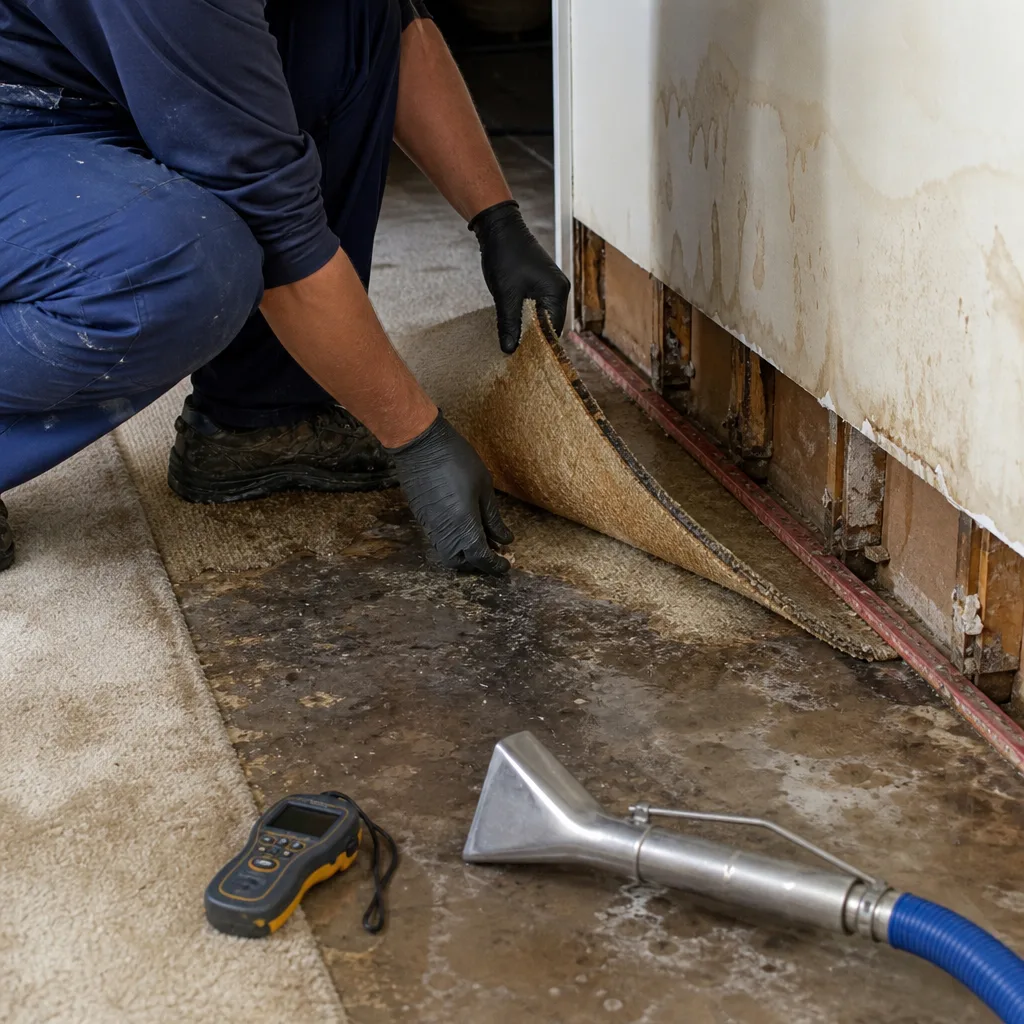
Storm and fire damage on the wildland-urban interface creates real security problems for properties that sit empty, even for one night. Board-up in Chino Hills happens in the same visit as assessment, because a house with a missing window in the Los Serranos area is a liability before dark. We secure openings, tarp damaged roofs, and leave the property safe enough for our next crew to work and locked enough to keep everything else out.
Roof Tarping
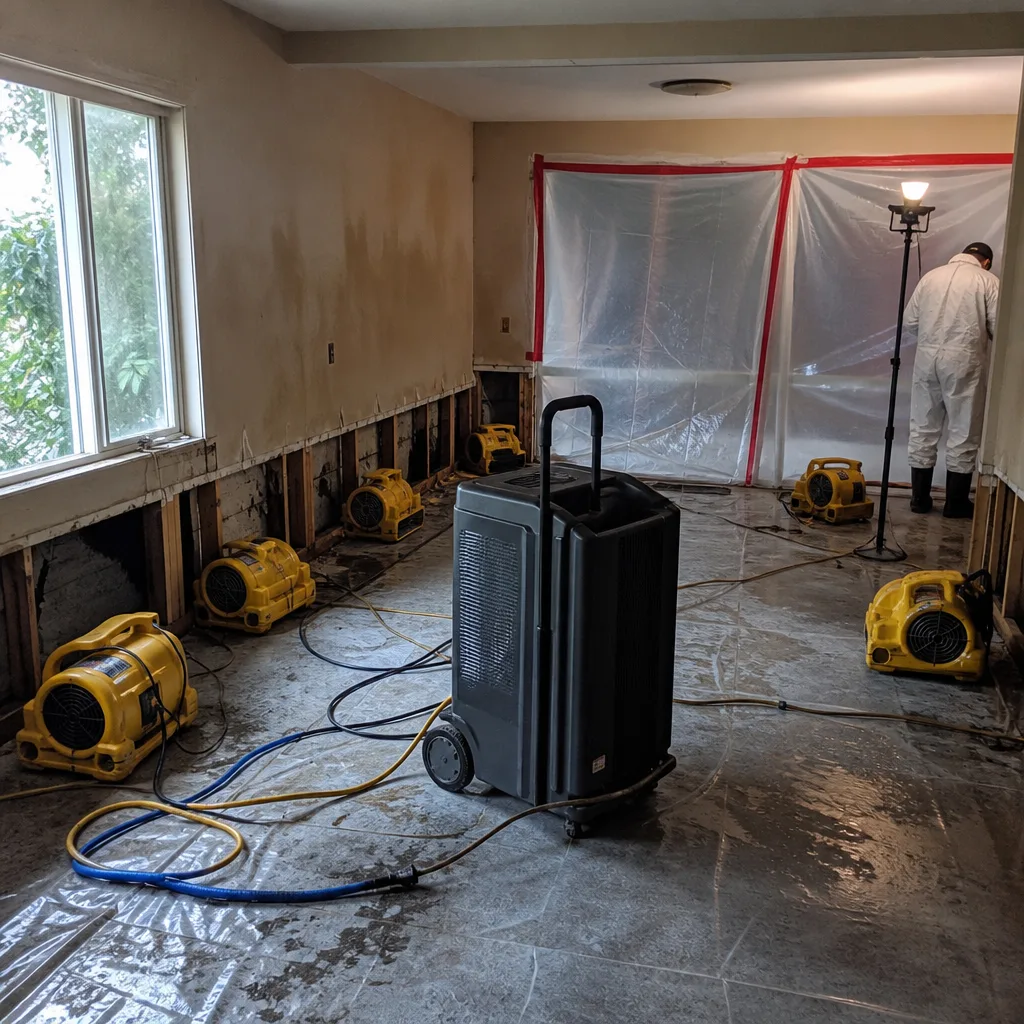
Hip roofs are the default style on most 1990s tract homes here, and they shed wind differently than gable roofs. Santa Ana gusts can tear ridge shingles and expose the underlayment before you notice a leak. We tarp in a pattern that holds in canyon wind, using fasteners that don’t create new penetrations. Temporary protection buys time to coordinate the real repair with your carrier, so a wet season doesn’t become a mold problem.
What happens when you call
- 1
A real person answersNo phone trees - you reach a local pro.
- 2
You get an upfront price rangeHonest numbers before anyone is dispatched.
- 3
A background-checked tech heads outLicensed & insured, dispatched right away.
- 4
You approve before work beginsNothing starts until you say go.
Trusted Brands We Service in Chino Hills
Our crews work with professional-grade equipment from Dri-Eaz and Phoenix, and we keep the same standard on every Chino Hills job because mixed equipment creates inconsistent drying data. We’re trained to IICRC, RIA, and IFA standards, which means our readings hold up when an adjuster reviews the moisture log. Local parts availability matters too. When we need replacement ductwork, filtration media, or drying components mid-job, we run supply out of our Inland Empire operation, which keeps most Chino Hills jobs moving without a second visit.
Common Storm & Disaster Restoration Problems We See in Chino Hills Homes
- Ash and smoke infiltration through poorly sealed attic vents. Santa Ana events push fine particulate into a home even when a brush fire never reaches a structure. The result is contaminated HVAC ductwork, smoke-laden soft goods, and an odor that returns every time the system cycles.
- Post-seismic water intrusion at foundation slabs. The Chino Hills fault system, including the 2008 M5.4 event, left slab cracks in homes across the 91709 ZIP. Stormwater follows those same fractures and can saturate subfloor cavities without ever showing a puddle.
- Hillside runoff against slab perimeters. Homes on graded lots channel stormwater directly to foundation edges. Over time, repeated wetting promotes subfloor mold and softens the bond between flooring materials and concrete.
- Wind-damaged hip roofs with hidden underlayment tears. The low-slope hip roofs common on Chino Hills tract homes hold moisture longer after storm exposure. A roof that looks intact from the street can hide saturated sheathing that invites microbial growth within a week.
Pricing for Storm & Disaster Restoration in Chino Hills, CA
A typical storm damage cleanup in Chino Hills runs $400 to $1,200 depending on debris volume, roof access, and the square footage affected. Roof tarping on a standard single-story tract home generally falls between $350 and $800 per elevation. Emergency board-up is usually $150 to $450 per opening. Full flood restoration after a foundation-adjacent intrusion, with extraction, drying, and minor rebuild, typically lands between $2,500 and $7,500 in Chino Hills. Ash and smoke remediation across a whole HVAC system and contents pack-out starts around $1,800 and scales with severity. Every job gets a written scope and a free estimate. Call (888) 737-2439 and we’ll put real numbers on your situation, not a guess.
We Also Serve Cities Near Chino Hills
Our crews work the full corridor around Chino Hills, from Los Serranos and Chino to Diamond Bar and Yorba Linda. If you’re in one of those communities and need storm damage repair, call the same number and ask for the same crew. The ridge lines don’t stop at city limits and neither do we.
Serving Chino Hills, CA - Our Local Coverage Area
We’re based in the Chino Hills area and know this community well. Use the map below to see our service coverage - if you’re nearby, we can almost certainly help.
FAQs - Storm & Disaster Restoration in Chino Hills
Fine smoke particles and ash from a brush fire inside Chino Hills State Park travel well beyond the burn perimeter, especially during Santa Ana wind events that funnel through canyon terrain and push particulate through attic vents, ridge caps, and any gap in the building envelope. Your HVAC system then recirculates the odor on every cycle. Call (888) 737-2439 for an assessment, we’ll check for carbon staining, test the ductwork, and give you a written scope if remediation is needed.
A poorly vented hip roof traps moisture after wind-driven rain, and trapped moisture in the Chino Hills climate leads to mold in attic sheathing within seven to ten days. Restoration in that situation means drying the attic cavity before patching, not just tarping over the damage. Our crews map moisture daily and won’t close the roof until the dry standard is met.
Terrain matters in Chino Hills. Wildland-urban interface smoke patterns, hillside runoff, and construction details specific to 1980s and 1990s tract homes here affect how a restoration job should be scoped. A company based in flat neighboring cities rarely sees the same volume of ash infiltration and post-seismic foundation issues. We work these hillside tracts weekly. If your situation is straightforward, an experienced regional company works fine. For anything involving smoke, slab cracks, or hillside drainage, local pattern recognition saves you time and money. Call (888) 737-2439 to talk through what you’re seeing.
You won’t see it as a puddle. The signs are buckling flooring, persistent musty odor in one room, or baseboard staining that returns after cleaning. Moisture meters and thermal imaging reveal what the slab is doing. We’ll map the affected area, document the findings, and give you a written scope before any floor comes up.
Document the fractures now and watch for moisture staining after the next rain. Stucco cracks let wind-driven rain into the wall cavity even when everything looks dry from inside. A restoration assessment with a moisture meter costs nothing for us to perform during an estimate visit, and finding a problem early is cheaper than mold remediation later. Call (888) 737-2439 and we’ll schedule a look.
Written by Curt Bowman, Owner at Floodline Restoration Co. of California.