
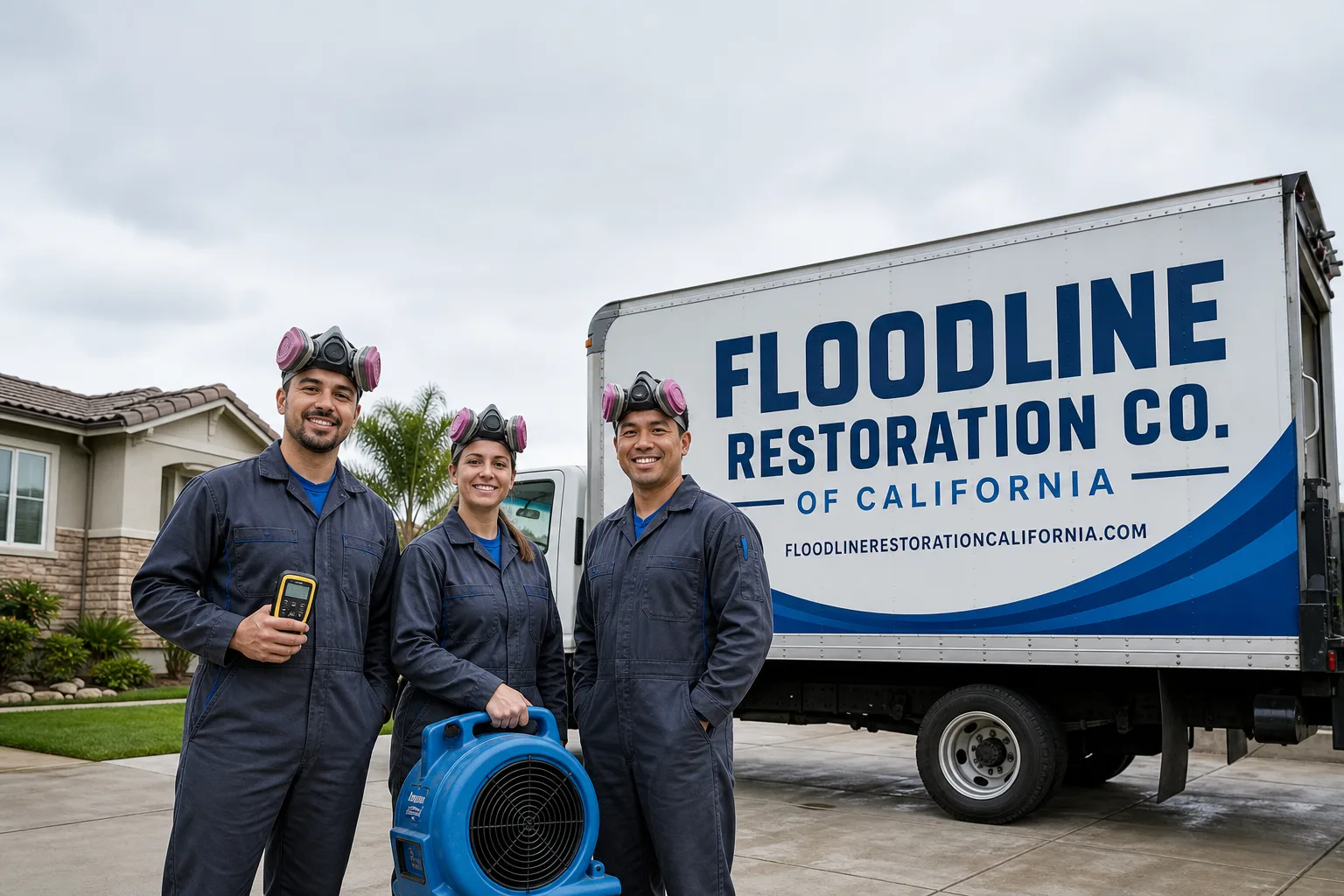
Fast, Reliable Storm & Disaster Restoration Across Carpinteria
Storm damage in Carpinteria moves fast, and so do we. When the Santa Ynez Mountains shed debris or a Pacific storm punches through a beach cottage off Linden Avenue, you need a crew that knows this town’s specific risks and gets extraction running the same visit. Floodline Restoration Co. of California serves all of Carpinteria, 93013 and 93014, with live dispatch 24/7. A certified, background-checked technician answers dispatch, and a crew reaches your property with professional-grade Dri-Eaz, Phoenix, and XPOWER equipment already on the truck. Call (888) 737-2439 and you’ll speak to a person, not a recording, no matter the hour.
Why Floodline Restoration Co. of California Is Carpinteria’s Preferred Storm & Disaster Restoration Company
We’ve spent 42 years as a company learning what failure looks like, and Carpinteria teaches a specific lesson: this town gets hit from two directions at once. The mountains send post-wildfire debris and ash-laden mud downhill; the ocean sends salt-laden storm surge and chronic coastal humidity uphill. A restoration contractor who only understands one of those threats will miss the other, and the homeowner pays for it later. Our Storm & Disaster Restoration team works both sides of Highway 101 every week. We know the hillside streets above Carpinteria Avenue sat in mandatory evacuation zones during the January 2018 post-Thomas Fire rain events, and we know the beach cottages near the shoreline fight salt-air corrosion every single day. That local knowledge changes the equipment we bring and the drying protocols we run.
Carpinteria homeowners call us because we show up when we say we will, we do the job in one visit when the scope allows, and we hand you a moisture log and a written 90-Day Done Right Promise when we finish. No paperwork battles after the fact. No arguing about whether the job was done correctly. If it’s not done right, we make it right. That’s the Keystone Standard, and it’s in writing every time.
Our Storm & Disaster Restoration Services in Carpinteria
Storm Damage Cleanup
Storm damage cleanup in Carpinteria rarely looks like it does inland. Here, storms drop debris from the mountain front, bury vent wells and crawlspace access points under mud, and drive saltwater spray into siding and window flashing. We handle the full scope: structural debris removal, sediment extraction from crawlspaces, moisture mapping, and structural drying. Every job starts with an IICRC-certified technician walking the property with a moisture meter, not a sales pitch. The line the water left is where we start.
Flood Damage Restoration
Flood damage in Carpinteria divides into two categories, and we treat them differently. Storm surge and coastal flooding bring saltwater, which accelerates corrosion in a way freshwater never does. Post-wildfire debris flows bring ash-laden mud that packs into pier-and-beam crawlspaces and behind foundation vents, where it holds moisture for months. Either way, extraction starts the same visit, and drying runs until the dry standard is met, with daily readings logged and handed to you and your adjuster. We don’t hand the job off between extraction crews and drying crews. The same certified team that reads the moisture map on day one handles daily readings and rebuilds what needs rebuilding.
Emergency Board-Up
When a storm blows out a window or a falling limb opens a hole in your roof, securing the property is the first priority. In Carpinteria, standard residential-grade board-up often fails because onshore winds off the Pacific work the fasteners loose within days. We use heavier gauge fasteners and marine-rated barrier materials that hold under salt-laden wind loads, so you don’t get a second moisture intrusion event a week after the first. Board-up also prevents wildlife entry, which is a real concern in the hillside neighborhoods where storm debris disturbs opossum and raccoon habitat.
Roof Tarping
Roof tarping on Carpinteria’s older housing stock requires a different approach than newer construction elsewhere in Santa Barbara County. Many of the 1940s and 1950s ranch homes off Foothill Road and the beach cottages near Linden Avenue have original flashing that’s been corroded by decades of salt air. We don’t tarp over failing flashing and call it done; we anchor the tarp to structural framing, not fascia boards, and we note the flashing condition in the written scope so the repair or rebuild addresses the underlying corrosion, not just the visible damage.
Debris Removal
Storm debris removal in Carpinteria means more than hauling branches to the curb. Properties on hillside streets that sat in the 2018 evacuation zones often still have residual mud and sediment packed into crawlspace vents, subfloor cavities, and drainage channels. We probe for that mud even on homes that didn’t flood visibly in 2018, because we’ve pulled sediment out of pier-and-beam foundations years after the original debris flow event. We also coordinate directly with your insurance carrier on covered debris removal, including photo documentation of every load before it leaves the property.
What happens when you call
- 1
A real person answersNo phone trees - you reach a local pro.
- 2
You get an upfront price rangeHonest numbers before anyone is dispatched.
- 3
A background-checked tech heads outLicensed & insured, dispatched right away.
- 4
You approve before work beginsNothing starts until you say go.
Trusted Brands We Service in Carpinteria
Carpinteria homes run the full range of storm restoration equipment, from whole-house dehumidification systems to portable generators and sump pumps that get overwhelmed in a flooding event. We service and install Dri-Eaz and Phoenix drying equipment, and we stock common parts locally so Carpinteria customers aren’t waiting on a shipment from a distribution center in another state when a storm has already knocked out power and saturated the subfloor. Our technicians are trained to IICRC, RIA, and IFA standards, so the same person who diagnoses a failed dehumidifier can also identify the moisture intrusion source that caused the problem in the first place.
Common Storm & Disaster Restoration Problems We See in Carpinteria Homes
- Marine-layer humidity defeats passive drying. Carpinteria’s persistent onshore airflow keeps baseline ambient moisture high enough that a flooded carpet left to “air dry” will grow mold inside 48 hours in most seasons. Restoration equipment has to compensate for humidity levels that are consistently higher than inland communities like Goleta or Lompoc.
- Hidden mud in crawlspaces on hillside streets. Homes above Highway 101 that sat near 2018 debris flow paths often have sediment packed behind foundation vents and into pier-and-beam cavities. It doesn’t dry out on its own, and it holds moisture against structural framing for years unless a tech specifically probes for it.
- Salt-air corrosion accelerates secondary damage. Beach cottages near Linden Avenue and Carpinteria Avenue face chronic salt spray, especially during winter storms. Exposed fasteners, flashing, and even electrical connections corrode faster than inland homes, which means a small storm intrusion can turn into a larger repair if the corroded materials aren’t identified during restoration.
- Older foundations wick moisture upward. Carpinteria’s early-to-mid 20th century housing stock, especially the avocado-era ranch homes from the 1940s through 1960s, often sits on original slab or pier-and-beam foundations with minimal vapor barriers. A flood event that would cause surface damage in a newer home gets absorbed into the foundation here, extending drying timelines and requiring subsurface moisture monitoring.
Pricing for Storm & Disaster Restoration in Carpinteria, CA
We Also Serve Cities Near Carpinteria
Floodline Restoration Co. of California serves the entire Carpinteria Valley and surrounding communities, including Montecito, Santa Barbara, Mira Monte, and Ojai. If you’re in a neighboring city and need Storm & Disaster Restoration in Carpinteria or your own area, call the same dispatch line: (888) 737-2439. The same certified crews, the same equipment, the same written guarantee.
Serving Carpinteria, CA - Our Local Coverage Area
We’re based in the Carpinteria area and know this community well. Use the map below to see our service coverage - if you’re nearby, we can almost certainly help.
FAQs - Storm & Disaster Restoration in Carpinteria
How do you handle ash-laden mud from the Santa Ynez foothills that washed into crawlspaces during post-Thomas Fire storms?
We use Injectidry vacuum panel systems to extract sediment from pier-and-beam crawlspaces, then run Dri-Eaz LGR 7000 dehumidifiers at higher-than-standard capacity to counter Carpinteria’s marine-layer humidity until the dry standard is met. We worked a 1950s ranch home off Foothill Road where the 2018 debris flow had buried the subfloor with ash-laden mud; our techs extracted the sediment and ran dehumidifiers for eleven days before reconstruction because the ambient moisture levels never dropped low enough for passive drying. Call (888) 737-2439 to schedule a crawlspace inspection if you suspect residual mud.
Why does a small roof leak on a beach cottage near Linden Avenue turn into mold so fast here?
Because Carpinteria’s persistent onshore airflow and marine layer keep baseline humidity high enough that a small water intrusion becomes a mold bloom in 48 hours or less. The same leak in Goleta or Lompoc might dry passively. Near the shoreline in Carpinteria, salt-laden humidity means the materials never reach a dry equilibrium on their own. Restoration drying protocols here have to be more aggressive from day one.
Do you check for residual debris-flow mud even if the house wasn’t flooded in 2018?
Yes, especially on hillside streets above Highway 101 that sat in mandatory evacuation zones during the January 2018 Thomas Fire rain events. We probe behind foundation vents and into subfloor cavities because we’ve pulled sediment out of crawlspaces years after the original debris flow. If mud is present, we extract it and document everything for your insurance carrier.
Can you tarp a roof with salt-corroded flashing along Carpinteria Avenue without replacing the flashing first?
Yes, and we do it correctly. We anchor the tarp to structural framing rather than relying on fascia boards or corroded flashing as anchor points. We note the flashing condition in the written scope so the eventual repair or rebuild addresses the corrosion, not just the visible leak. Tarping over failing flashing without documenting it just means you’ll be back on the roof after the next storm.
I live on a hillside street that was evacuated in January 2018. What hidden storm damage should I check for?
Check for sediment packed behind foundation vents, mud in the crawlspace or subfloor cavity, drainage channels that have been partially blocked by sediment, and any exposed fasteners or flashing that show accelerated corrosion from salt air. We’ll inspect all of these free with a storm damage assessment, and we’ll document everything with photo evidence so you have a clear record of what’s there now versus what was there before the storm. Call (888) 737-2439.
Call Floodline Restoration Co. of California for Storm & Disaster Restoration in Carpinteria
When storm damage hits your Carpinteria home, call (888) 737-2439. A live person answers, day or night, and a certified, background-checked crew gets dispatched to your property with professional-grade equipment on the truck. We serve all of Carpinteria, from the beach cottages near Linden Avenue to the ranch homes off Foothill Road and every hillside street above Highway 101. You’ll get a written scope before work starts, direct insurance billing when coverage applies, and the 90-Day Done Right Promise in writing. Done right, and backed in writing.
Written by Curt Bowman, Owner at Floodline Restoration Co. of California, serving Carpinteria and the surrounding coast since 2010.