
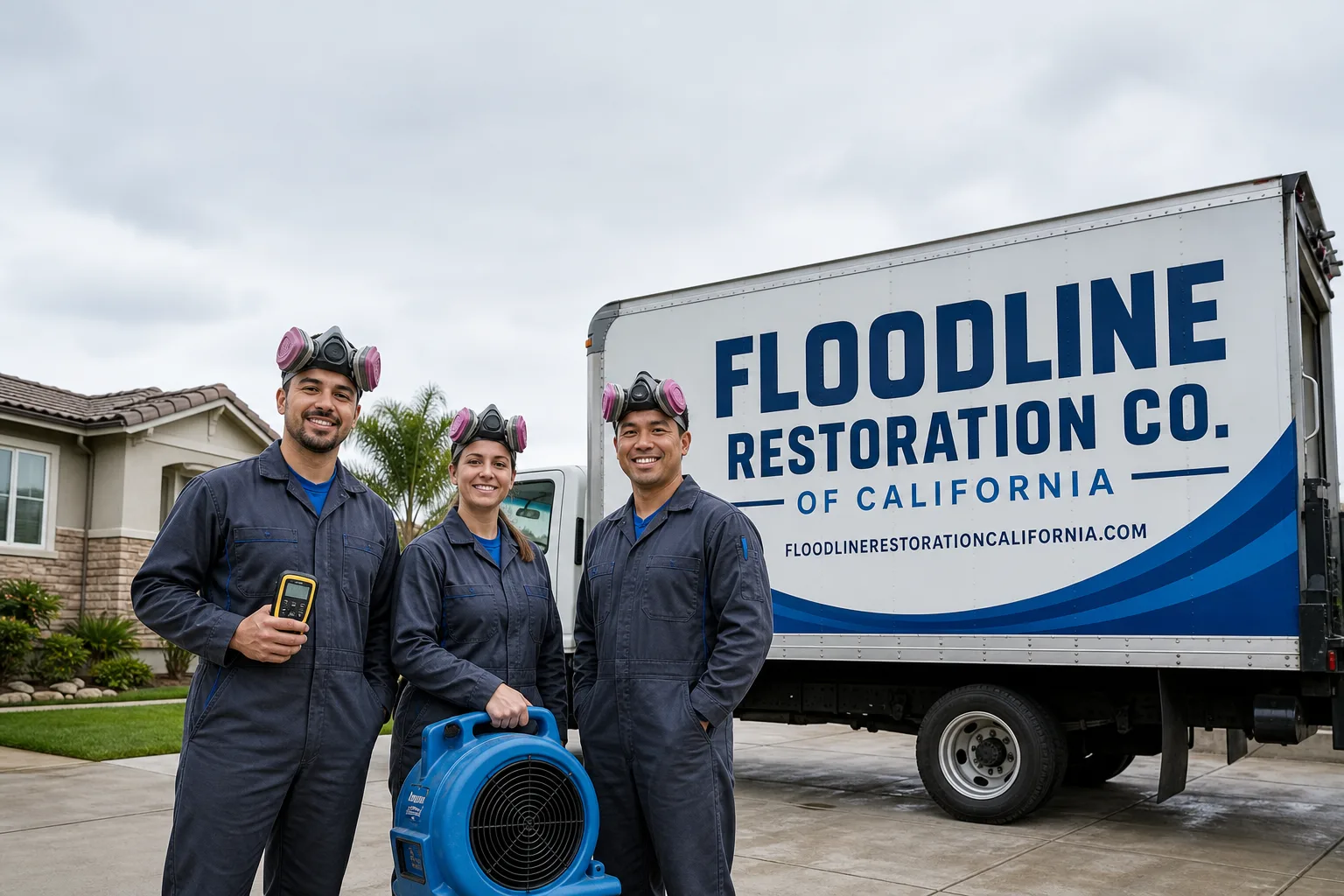
Fast, Reliable Storm & Disaster Restoration Across Antelope
Storm damage in Antelope hits differently than in older Sacramento neighborhoods. The 95843 housing stock went up fast during the late-1980s and mid-1990s, and now those original materials are failing together. When a February atmospheric river pushes through the Sacramento Valley, we get calls from homeowners on Antelope Road, Walerga Road, and throughout the subdivisions where water found its way under post-tension slabs or through failed original window seals. Our crews reach Antelope promptly from our Sacramento dispatch office, and a live person answers at (888) 737-2439 whenever you call. Extraction starts the same visit in most cases, and every job carries the 90-Day Done Right Promise in writing.
Why Floodline Restoration Co. of California Is Antelope’s Preferred Storm & Disaster Restoration Company
We have been answering storm calls in Antelope long enough to know the housing stock by heart. The tract homes between Elverta Road and Antelope Road share the same build era, the same stucco skins, and the same post-tension concrete slabs. That means our techs walk into a water intrusion with a map already forming in their heads. We know where the original caulk joints fail, where housewrap degraded first, and why moisture moves laterally under slabs instead of down through a crawlspace. Our Storm & Disaster Restoration crews carry GPR scanners to locate tensioning cables before any drilling, a step out-of-area contractors skip with alarming frequency.
Our Antelope customers mention the same things in reviews: the crew showed up in uniform, explained the moisture readings in plain English, and handed over a daily log without being asked. That is because Floodline Restoration Co. of California was built around a dispatch board, not a sales desk, by Curt Bowman in 2010. Every tech is background-checked and trained to IICRC, RIA, and IFA standards. When you call at 2 a.m. after a tree limb opens your roof, a person answers. Not a recording. A certified crew is on the way to Antelope that same night.
Our Storm & Disaster Restoration Services in Antelope
Flood Damage Restoration
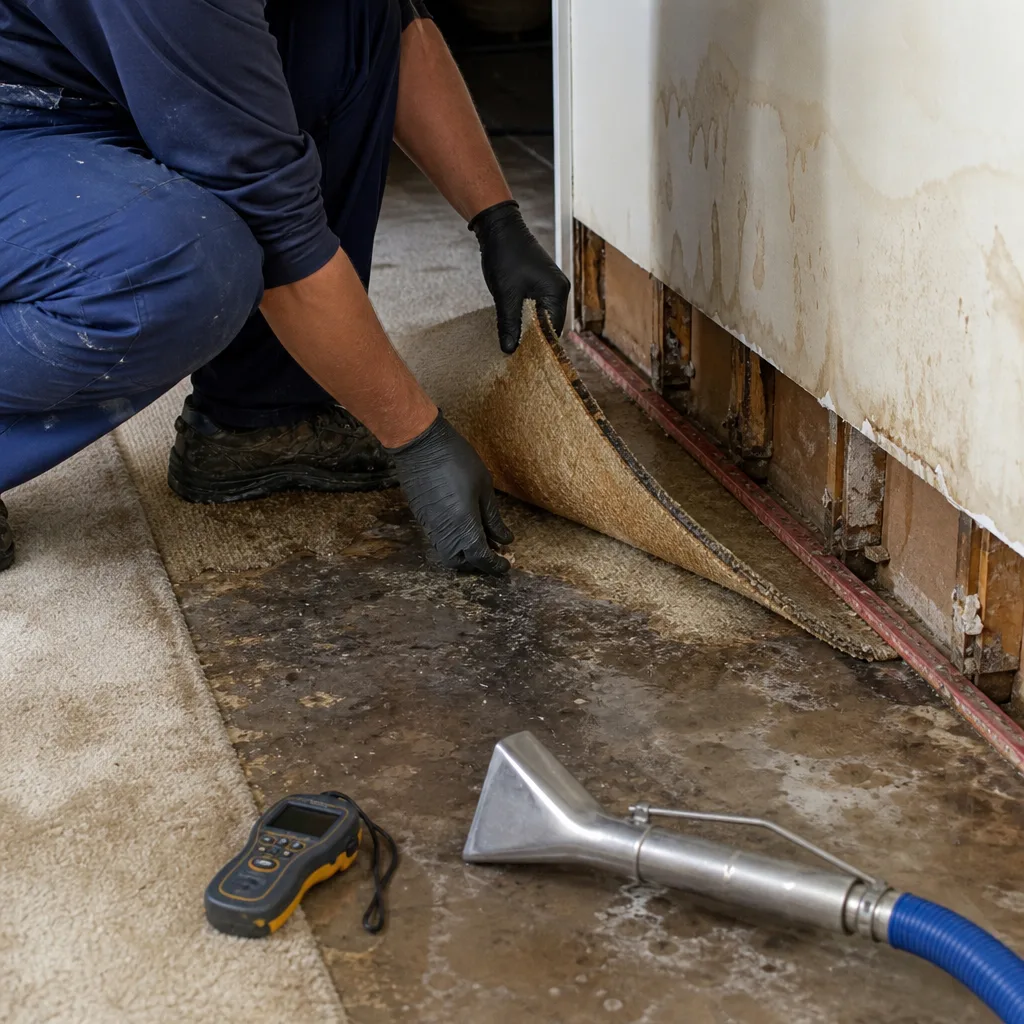
Flood damage in Antelope comes with a twist most contractors miss. These 1980s-90s homes sit on post-tension concrete slabs with no crawlspace, so water entering through failed stucco or a blown window seal does not drain downward. It travels laterally under the slab, then wicks up into drywall and baseboards weeks after the storm passes. That is why our extraction and drying plan starts with moisture mapping, not guesswork. We use Dri-Eaz dehumidifiers and Phoenix air movers inside containment, and we never drill into a slab without locating the tensioning cables first. Missing that step can rupture a cable and cause serious structural damage to your Antelope home.
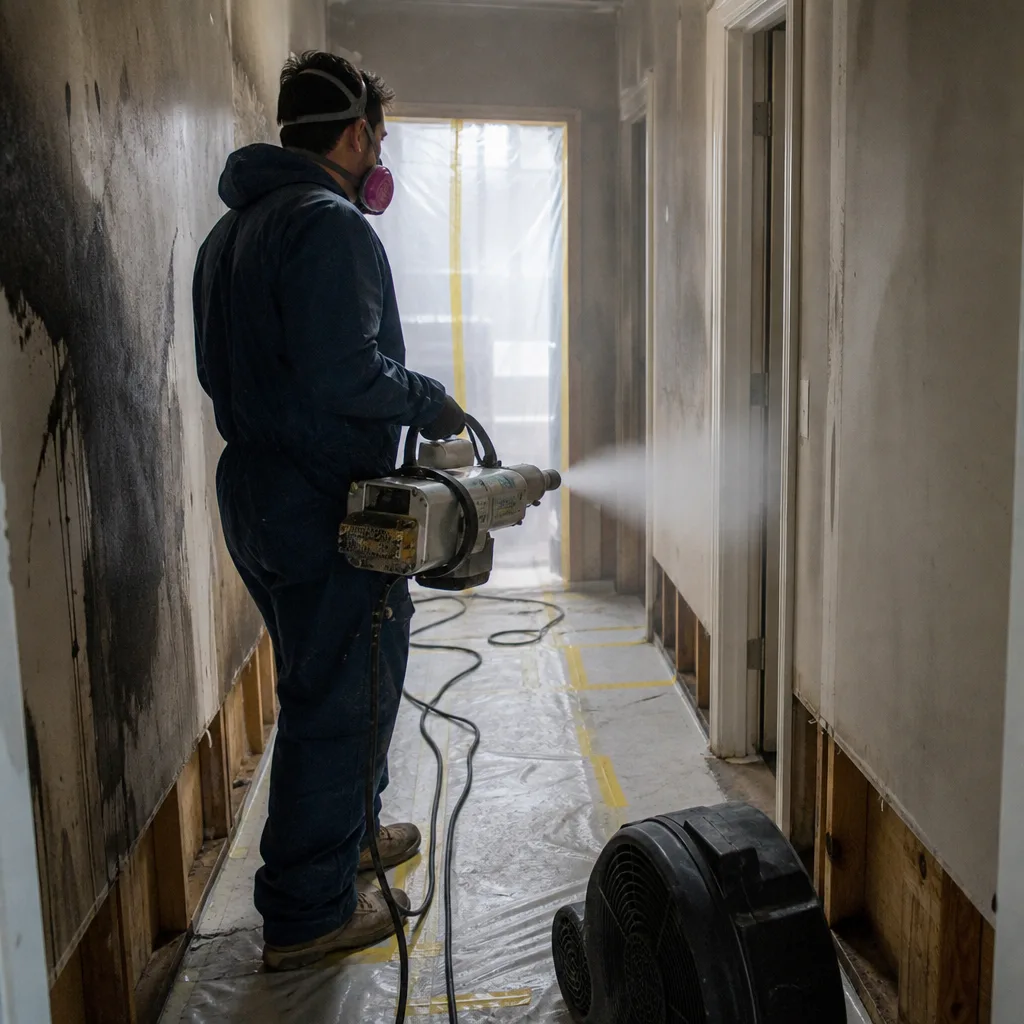
Storm Damage Cleanup
When wind-driven rain and debris tear through Antelope, the cleanup is rarely just about water. Shingles, tree limbs, and mud track across the same flat Sacramento Valley terrain that lets standing water pool against stucco foundations. Our storm damage cleanup crew removes debris, extracts standing water, and documents everything with photos before work proceeds. If your carrier needs evidence for a claim on your Antelope property, we coordinate directly with the adjuster. You never play messenger between us and the insurance company. A written scope is agreed before work starts, so there are no surprises on the bill.
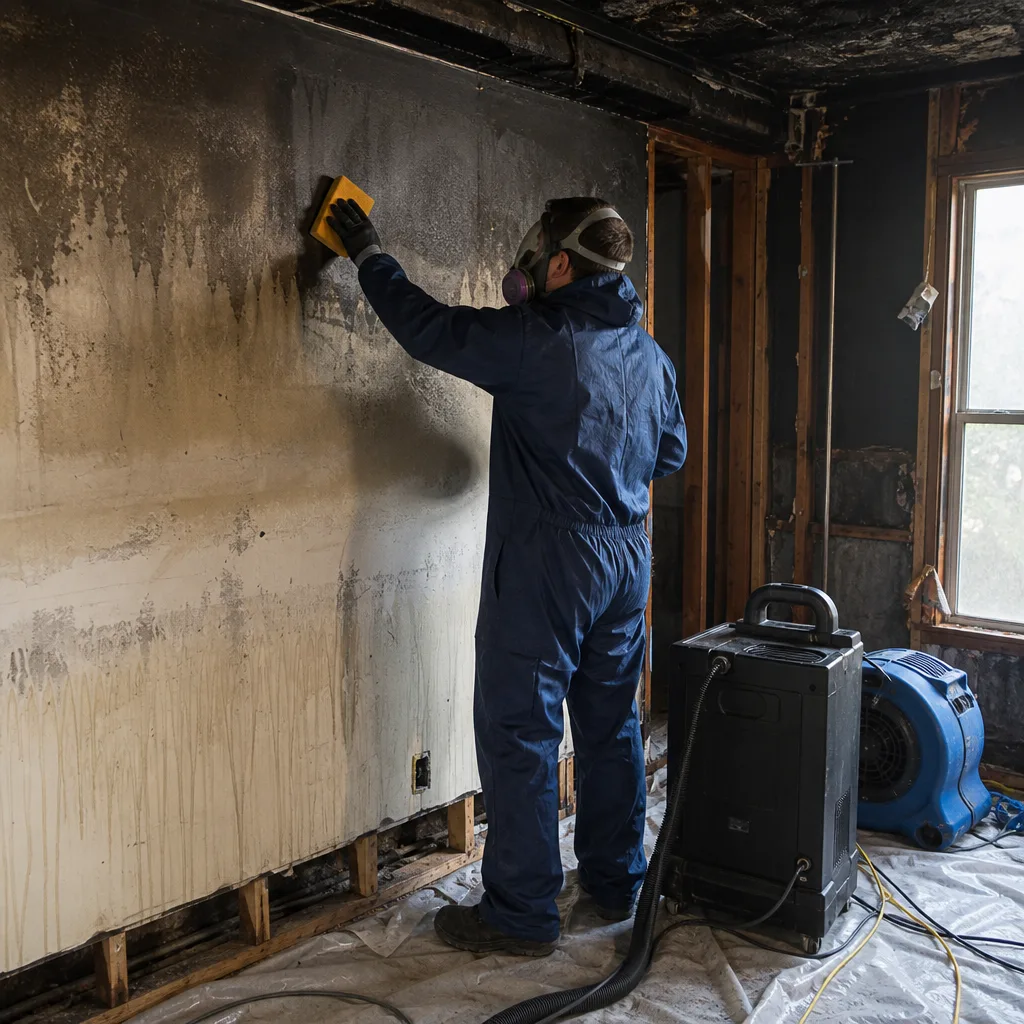
Emergency Board-Up
A broken window or torn-off roof section in Antelope cannot wait until morning. Sacramento County’s wet season sends rain in bursts, and an open penetration during an atmospheric river means water inside your drywall within hours. Our emergency board-up service stabilizes the opening with plywood and fasteners the same visit. We also tarp roofs over damaged decking so your Antelope home is protected until permanent repairs are scoped and scheduled. Done right, and backed in writing.
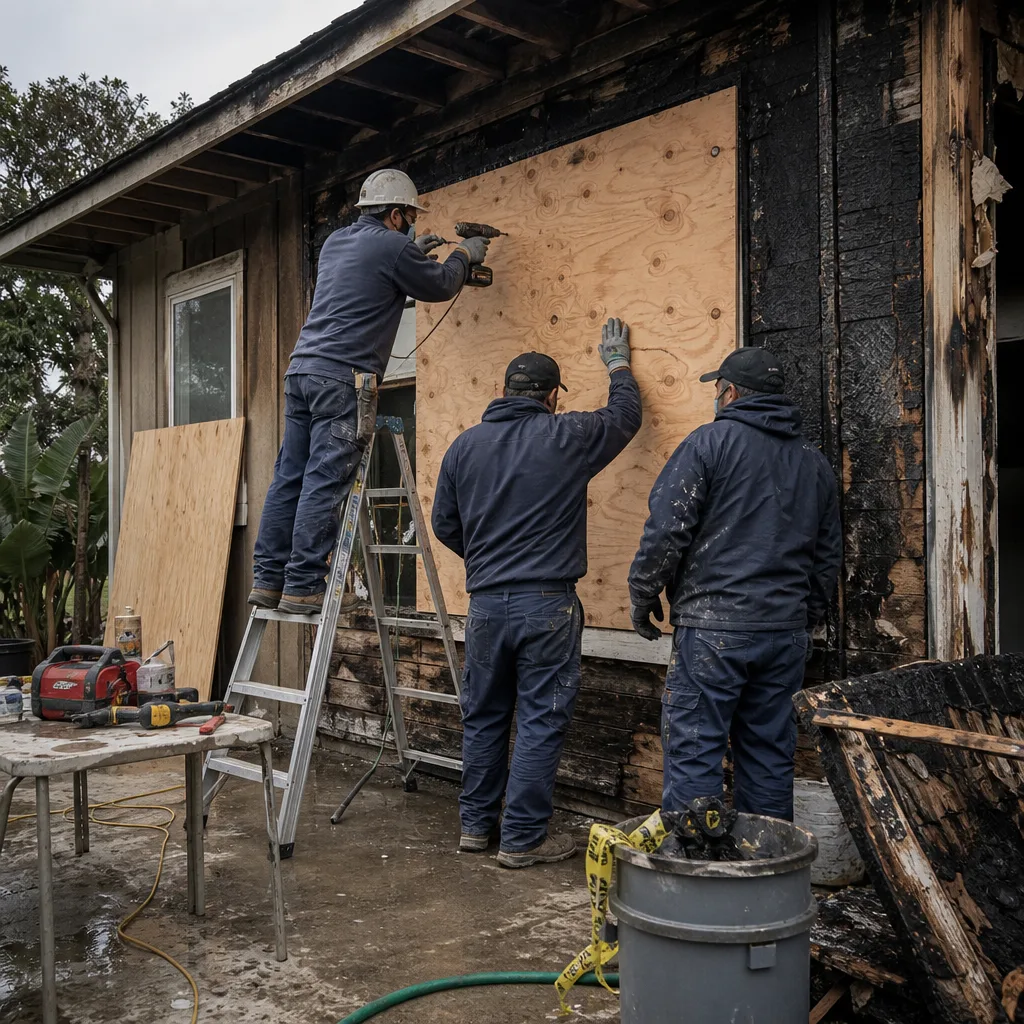
Roof Tarping
Roof tarping after wind damage in Antelope is a race against the next front. Original 1980s underlayment on these tract homes is brittle now, and once shingles lift, water gets under the field fast. Our crew secures heavy-gauge tarping over the affected area, sealing edges against wind uplift. We photograph the tarp and the underlying damage for your insurance file. This is mitigation, priced plainly and documented thoroughly. Call (888) 737-2439 and we will be there when we say.
What happens when you call
- 1
A real person answersNo phone trees - you reach a local pro.
- 2
You get an upfront price rangeHonest numbers before anyone is dispatched.
- 3
A background-checked tech heads outLicensed & insured, dispatched right away.
- 4
You approve before work beginsNothing starts until you say go.
Trusted Brands We Service in Antelope
Our Antelope jobs run on equipment we trust under hard conditions: Dri-Eaz dehumidifiers, Phoenix air movers, and XPOWER for targeted drying in tight slab-on-grade layouts. We stock the consumables and replacement parts our techs need to keep drying running without leaving your 95843 job site. That matters when the dry standard is close and you want the equipment out of your living room. Parts availability and trained techs mean most Antelope storm jobs are completed in a single visit cycle, not repeated rollouts.
Common Storm & Disaster Restoration Problems We See in Antelope Homes
- Post-tension slab moisture migration: Water moves laterally under Antelope’s 1990s slabs and resurfaces in adjacent rooms weeks later. Out-of-area crews treat these as surface-only events and miss the real path of travel entirely.
- Failed original caulk joints and degraded housewrap: Thirty-plus years of 100°F Sacramento Valley summers desiccate exterior seals on these stucco tract homes. When heavy rain arrives, multiple hidden entry points open at once, often behind siding where the leak is invisible from inside.
- Core-drilling without cable location: Contractors unfamiliar with Antelope’s post-tension construction drill drying holes without a GPR scan, risking cable rupture, slab compromise, and a repair bill that dwarfs the water damage itself.
- Delayed mold calls after the storm passes: Because slab moisture moves slowly through Antelope’s expansive clay soils, many homeowners in 95843 do not see evidence until the drywall stains and musty smell appear weeks after the rain event. By then, remediation is more involved and more costly.
Pricing for Storm & Disaster Restoration in Antelope, CA
Storm damage cleanup and flood extraction in Antelope typically runs $1,200 to $4,800 depending on square footage affected and how far moisture has traveled under the slab. Emergency board-up for a broken window or door opening generally costs $350 to $900, and roof tarping for wind-damaged sections lands between $500 and $1,500 for most Antelope homes. Full flood restoration with slab drying, drywall replacement, and rebuild work on a two-story stucco home in 95843 often falls from $5,000 to $18,000. The single biggest cost driver in Antelope is hidden: lateral moisture under post-tension slabs that was not mapped and dried the first time. We always provide a written scope before work starts, and we bill your carrier directly whenever coverage applies. Estimates are free. Call (888) 737-2439 for an exact number on your Antelope property.
Current standing offers apply to every Antelope job: $50 off any repair over $250, an $89 seasonal tune-up, and a 5% senior and veteran discount, always.
We Also Serve Cities Near Antelope
Our techs reach Antelope and the surrounding communities from the Sacramento dispatch office. In addition to Antelope, we run storm and disaster restoration calls in Foothill Farms, North Highlands, Citrus Heights, and Elverta. The same live dispatch, the same certified crews, and the same 90-Day Done Right Promise apply anywhere we work.
Serving Antelope, CA - Our Local Coverage Area
We’re based in the Antelope area and know this community well. Use the map below to see our service coverage - if you’re nearby, we can almost certainly help.
FAQs - Storm & Disaster Restoration in Antelope
Antelope’s 1980s-90s tract homes sit on post-tension concrete slabs, and those slabs contain steel cables under high tension. Drilling without first locating the cables with ground-penetrating radar can sever a cable, which snaps with explosive force and compromises the slab’s structural integrity. Any drying plan in 95843 must start with cable location before a single hole is cut. Our crew does this on every slab job, and it is a reason we carry GPR equipment on Antelope calls specifically. Call (888) 737-2439 if water has gone under your baseboards and you need an assessment.
Sacramento County’s expansive clay soils swell in wet winters and shrink in long dry summers, and that seasonal movement stresses Antelope’s post-tension slabs and foundation lines. The cycles create small pathways where water under a slab can migrate further than a simple surface reading suggests. Moisture can resurface two rooms away from the original intrusion point. We map moisture across the full slab, log daily readings, and dry to the standard before we consider the job done. If you are seeing stains appear weeks after a storm, call us and we will explain what the readings show.
Three things fail together in Antelope’s housing stock: original caulk joints around windows and penetrations, the housewrap behind the stucco, and the roof underlayment. After thirty to forty years of Sacramento Valley heat, those materials are brittle and degraded. A heavy atmospheric river exploits every gap at once. On a February call near Walerga Road, our crew found water migrating under the post-tension slab from a failed original window seal, wicking into drywall in rooms the homeowner had not even checked. We dried the home in four days using XPOWER air movers and a Dri-Eaz dehumidifier inside containment, after locating the tensioning cables first.
In many Antelope homes, yes. The approach depends on how far the moisture has migrated and what the flooring is. Vinyl plank and tile often allow us to dry from the surface using containment and targeted air movement, provided the slab is post-tension and we have mapped the cable locations. Hardwood is more often removed to dry underneath, but we will show you the moisture readings and the written scope before any flooring is pulled. The line the water left is where we start, and we explain every step before we take it.
Because moisture under Antelope’s post-tension slabs moves slowly through the clay soil and into drywall over time, the visible signs lag the storm by two to six weeks. Homeowners see stains, smell must, or notice baseboards darkening long after the rain stopped. By then, the affected area is larger than it would have been with same-week mitigation. That is why we log daily moisture readings and hand that log to you and your carrier. If you suspect hidden moisture from a past storm in your 95843 home, call (888) 737-2439. We will assess it with the same care we would bring to a fresh flood.
Written by Curt Bowman, Owner at Floodline Restoration Co. of California, serving Antelope and the surrounding Sacramento Valley communities since 2010.