
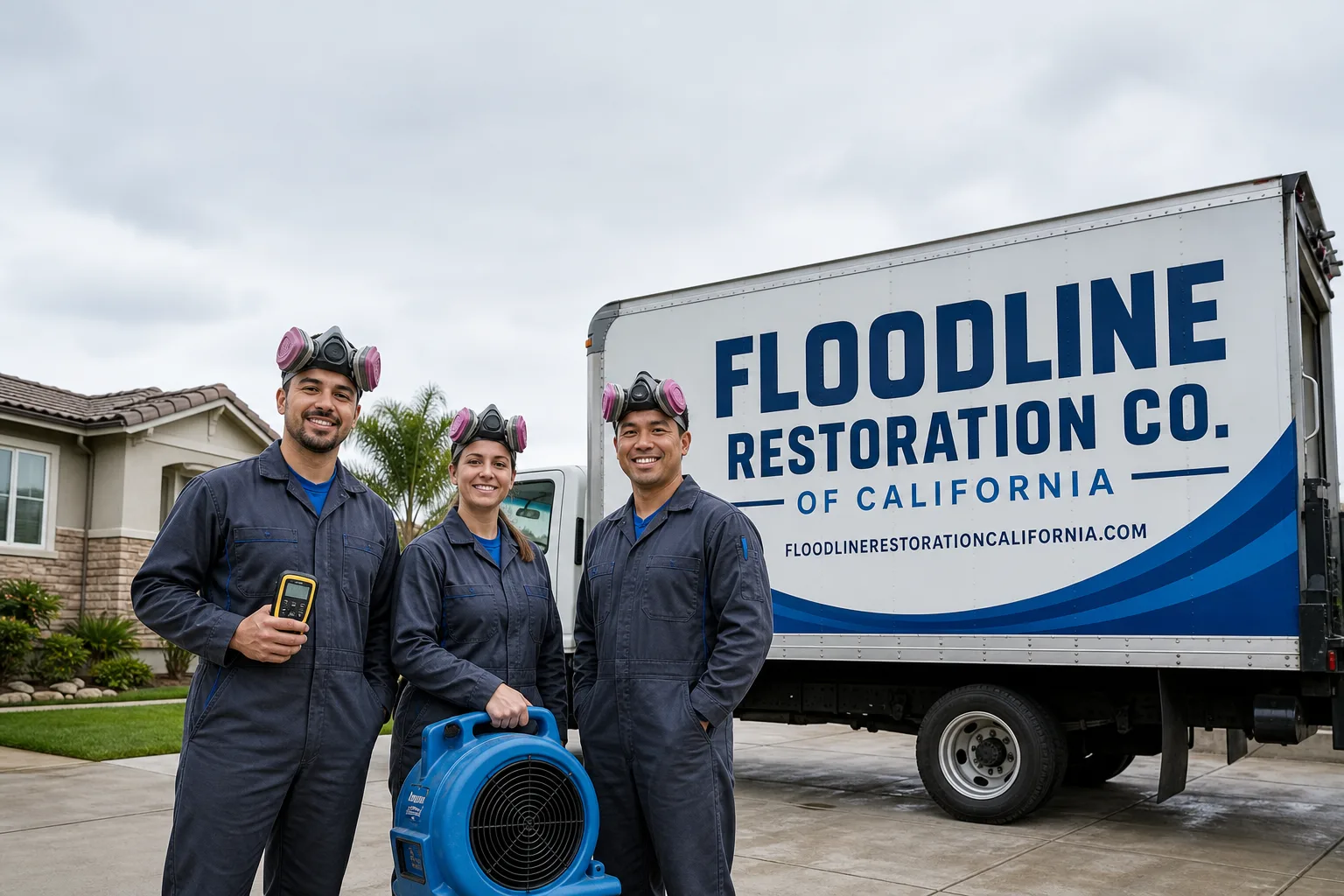
Fast, Reliable Reconstruction & Cleanup Across Rolling Hills Estates
Reconstruction & Cleanup in Rolling Hills Estates comes with a layer most flatland contractors never think about: the ground under your home moves. The Palos Verdes Peninsula’s clay-heavy soils expand and contract with every wet winter, which means a storm-damaged wall is rarely just a drywall job. It’s a structural question. We’ve worked this terrain long enough to know that before a single sheet of drywall comes out, the pre-existing cracks need to be mapped, photographed, and documented for your insurer. Call (888) 737-2439 and a live dispatcher answers, day or night.
Why Floodline Restoration Co. of California Is Rolling Hills Estates’s Preferred Reconstruction & Cleanup Company
Homeowners in Rolling Hills Estates tend to have been around long enough to know the difference between a crew that guesses and a crew that documents. The peninsula’s geology doesn’t forgive guesses. We arrive in uniformed, background-checked teams, most jobs handled in a single visit, and every phase of the work stays with our Reconstruction & Cleanup team from first extraction to final paint. No mid-job handoff to a subcontractor you’ve never met.
Our crews know Palos Verdes Drive East, the ridge-line roads above the canyons, the stretch south of Crest Road where the soil gets particularly reactive. We know that a split-level ranch built in 1963 on a raised foundation will behave differently after a water event than a single-story on slab. That’s not knowledge you get from a dispatch center in another county. It comes from standing in Rolling Hills Estates crawl spaces and watching how the marine layer curls over the hill at 5 p.m.
Every job carries the 90-Day Done Right Promise in writing. If it’s not done right, we make it right. No paperwork battles, no arguing. That’s the Keystone Standard, and it’s how we’ve kept homeowners who’ve spent twenty years in their houses calling us when the next thing goes wrong.
Our Reconstruction & Cleanup Services in Rolling Hills Estates
Full-Service Reconstruction
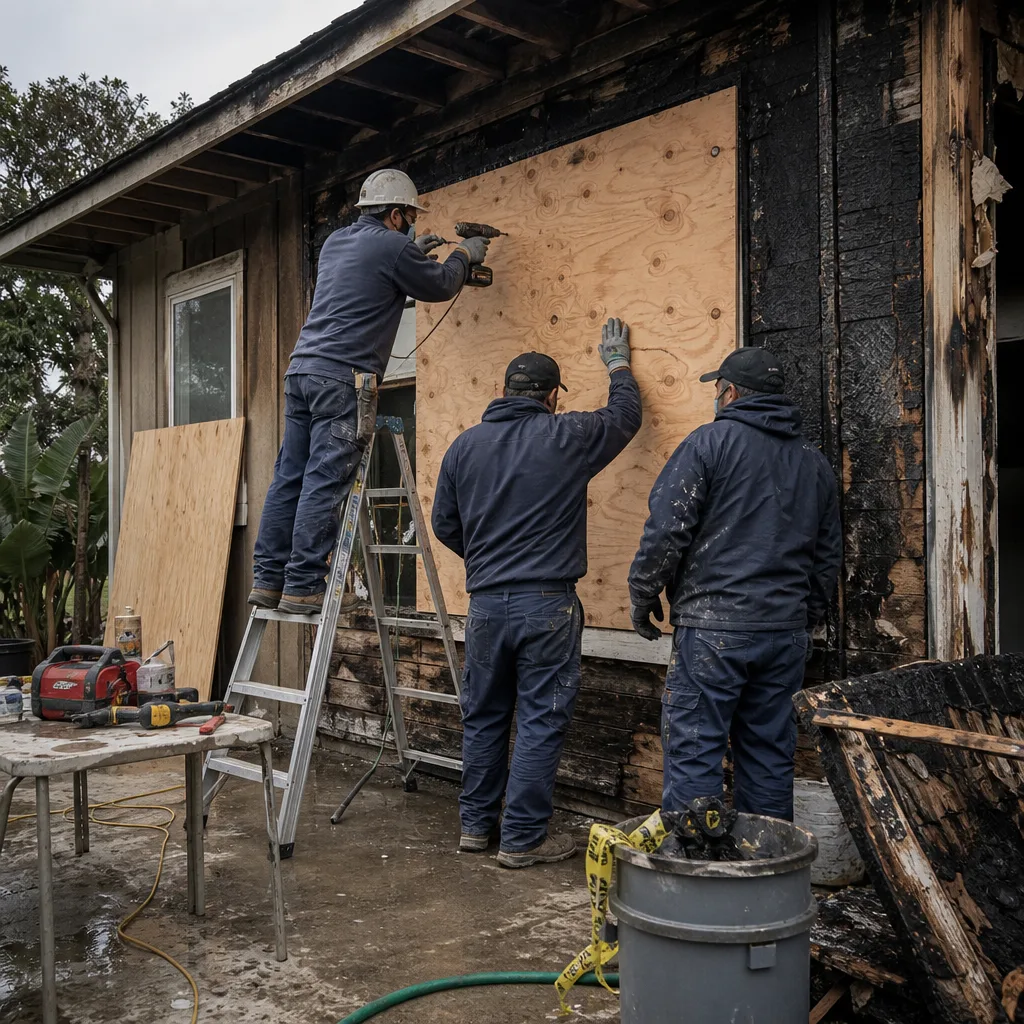
Most of what we rebuild here isn’t simple replacement. A storm-driven leak that soaked a wall off Rolling Hills Road often reveals more: a hairline crack running along the slab edge, a corner of the foundation that’s dropped a quarter inch since 1985. We rebuild to the peninsula’s realities. That means shear-rated paneling where the wall takes Santa Ana wind load, framing tied to a geotechnical engineer’s specification when soil creep is present, and materials selected for the year-round fog that hangs over Rolling Hills Estates. Full reconstruction from first nail to final walkthrough, handled by our crew, never handed off.
Drywall & Flooring Repair
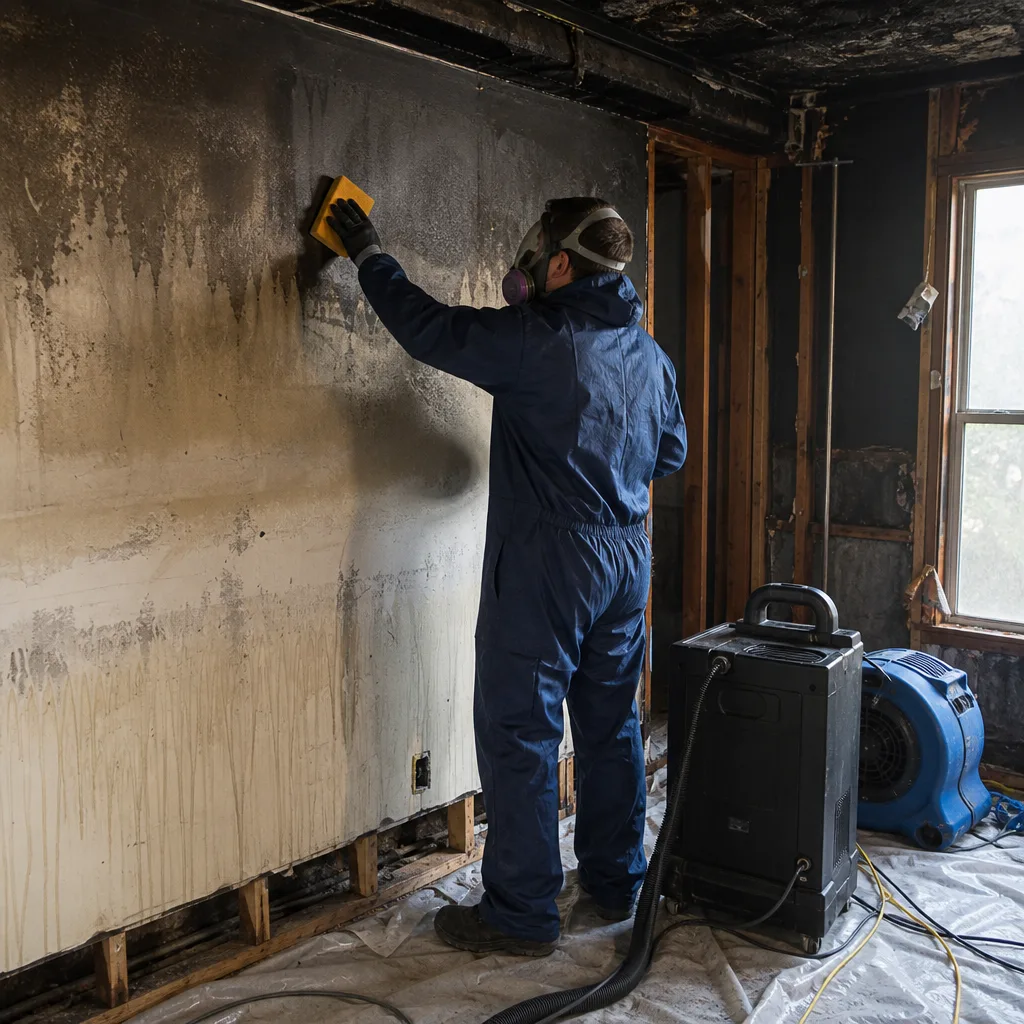
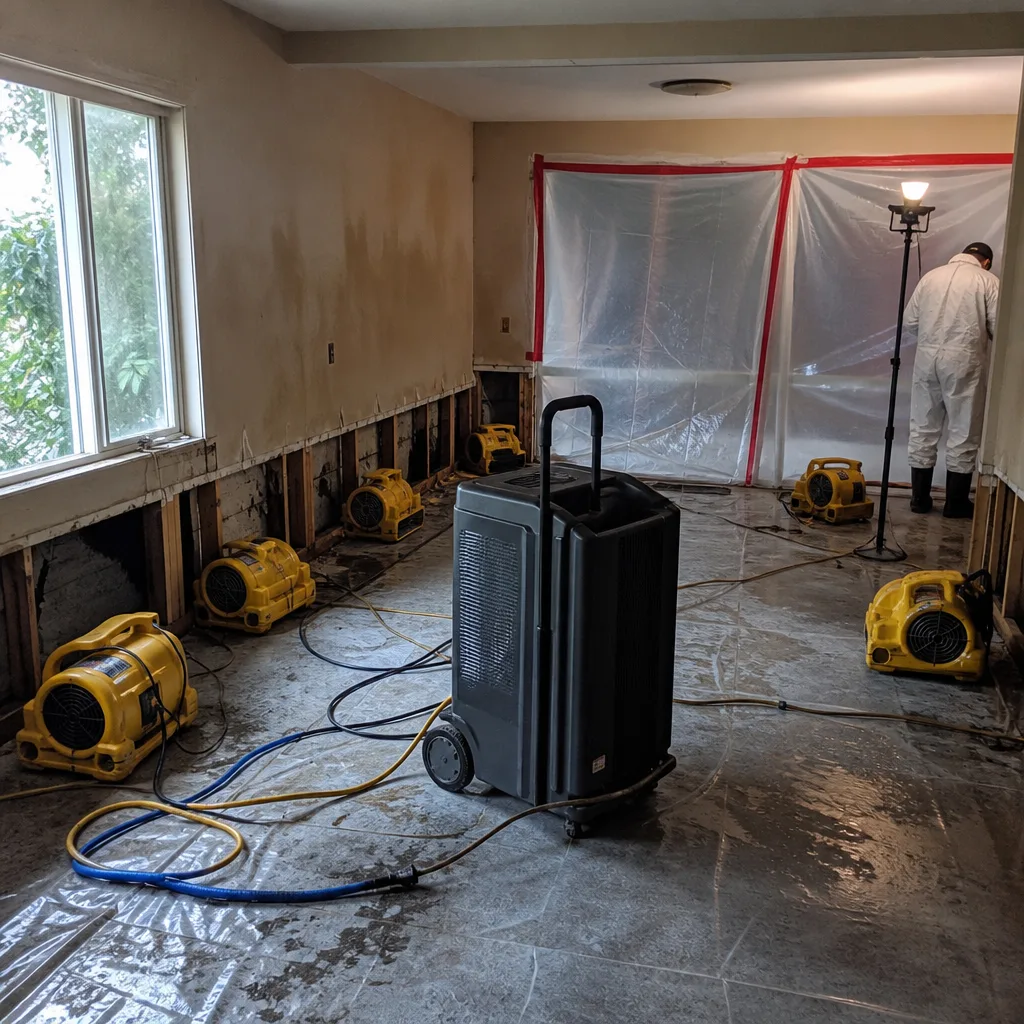
Drywall replacement in Rolling Hills Estates starts with knowing what’s behind it. Original lath-and-plaster is common in 1950s ranches. Some walls have been patched three times over the decades. When water gets in, the fog-influenced humidity in wall cavities can push moisture readings higher than you’d see in Torrance, so we don’t rush the dry-down. We take daily moisture readings with Dri-Eaz and XPOWER units running until the numbers prove the cavity is dry. Then we hang, tape, texture, and match. Flooring follows the slab: if there’s seasonal movement, we account for it in the underlayment and expansion joints so you’re not seeing separation cracks in February.
Contents Restoration & Pack-Out
Equestrian properties complicate a contents job. Rolling Hills Estates homes often hold tack rooms, barn storage, and decades of accumulated files, photos, and equipment that can’t be hastily boxed. We pack out methodically, inventory everything with photo documentation, and store it climate-controlled while the rebuild happens. When the original galvanized supply lines finally let go, the last thing you want is someone throwing wet saddle blankets into a bin. We treat contents the way the property deserves: catalogued, cleaned, and returned to where they belong.
Carpet & Upholstery Cleaning
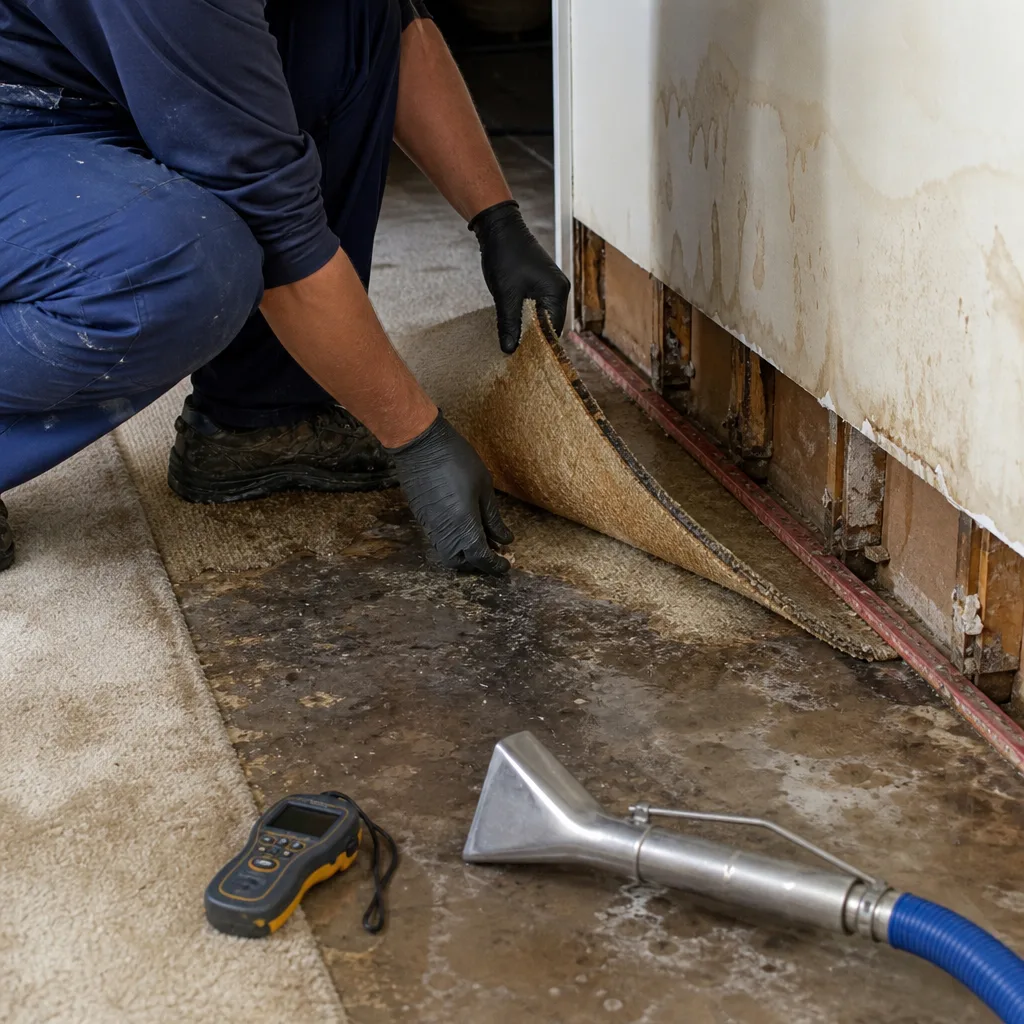
After a water event or post-construction dust, carpet and upholstery in Rolling Hills Estates face a specific enemy: persistent moisture. Homes up on the peninsula hold humidity through summer mornings, which means carpet that dries slowly doesn’t just stay damp. It incubates. We pull standing water fast with truck-mounted extraction, then dry with professional-grade equipment and clean with methods that leave the substrate dry, not just the surface. If the piece can be saved, we stand behind it. If it can’t, we tell you before you’ve paid for cleaning that won’t hold.
What happens when you call
- 1
A real person answersNo phone trees - you reach a local pro.
- 2
You get an upfront price rangeHonest numbers before anyone is dispatched.
- 3
A background-checked tech heads outLicensed & insured, dispatched right away.
- 4
You approve before work beginsNothing starts until you say go.
Trusted Brands We Service in Rolling Hills Estates
We stock or can get parts for most major systems found in Rolling Hills Estates homes. That includes replacement door skins, pre-hung frames, and hardware for the ranch and split-level layouts that dominate the area. Our technicians carry equipment from Injectidry for hard-to-dry wall cavities and flooring, and we’re certified to IICRC, RIA, and IFA standards, so the work follows recognized restoration protocols rather than whoever happens to be on the truck. This means faster turnaround on a door frame or floor patch when you’re mid-claim and the adjuster is asking for a completion date.
Common Reconstruction & Cleanup Problems We See in Rolling Hills Estates Homes
- Undocumented soil-creep cracks before demo. If we don’t photograph the pre-existing cracks before touching the affected area, your insurer can argue the new displacement was earth movement, not water. We document everything up front so the claim stands on evidence, not argument.
- Rebuilding walls without wind-rated shear panels. A wall that failed in a Santa Ana will fail again if it goes back as plain drywall on standard framing. We build up to the peninsula’s wind-load reality, not down to the cheapest passable permit.
- Marine-layer moisture slowing the dry-out. The fog in Rolling Hills Estates isn’t a coastal rumor. It keeps wall cavities and crawl spaces above normal humidity year-round, which means extraction alone won’t meet a dry standard. We run professional dehumidifiers and log daily readings until the numbers prove the cavity is dry.
- Trusting a wall separation as a simple leak. A crack that runs horizontally along a hillside home is often a soil-creep issue wearing a water-damage costume. We bring in a geotechnical engineer when the signs are there. New drywall over moving clay lasts about as long as you’d expect.
Pricing for Reconstruction & Cleanup in Rolling Hills Estates, CA
A straightforward drywall patch and paint in Rolling Hills Estates typically runs $450-$900, depending on the cavity. Carpet and upholstery cleaning after a water event usually lands between $300-$600 per room. Full-service reconstruction of a storm or water-damaged wall, including sheathing, insulation, drywall, texture, and paint, commonly falls in the $2,400-$5,800 range for a typical exterior wall section. Flooring replacement runs $6-$14 per square foot installed, depending on material and substrate prep. On the peninsula’s hillside lots, anything involving shoring, foundation reinforcement, or geotechnical consultation adds $1,500-$6,000 or more to the scope, because you’re building against moving earth, not just replacing what got wet. Call (888) 737-2439 for a free estimate, and remember we bill your carrier directly when a covered loss is involved. Current offers: $50 off any repair over $250, and a 5% senior and veteran discount, always.
We Also Serve Cities Near Rolling Hills Estates
When Rolling Hills Estates homeowners need help in neighboring communities, we’re there for Manhattan Beach, Torrance, Lomita, and Palos Verdes Estates. The traffic over the hill and down into the flatlands is something we plan around daily, so our response times don’t fall apart because of a 4 p.m. backup on Crenshaw. We serve Rolling Hills Estates directly, with dispatch coordinated from our Los Angeles office and crews working the peninsula daily.
Serving Rolling Hills Estates, CA - Our Local Coverage Area
We’re based in the Rolling Hills Estates area and know this community well. Use the map below to see our service coverage - if you’re nearby, we can almost certainly help.
FAQs - Reconstruction & Cleanup in Rolling Hills Estates
If we see horizontal cracking, stair-step patterns, wall separation, or a slab edge that’s moved, we recommend a geotechnical consult before we rebuild. Rolling Hills Estates sits on clay-heavy soils that shift measurably in wet winters, so a wall separation is sometimes the water loss sitting on top of an earth-movement problem. We won’t guess at it. Call (888) 737-2439 and we’ll tell you straight whether an engineer belongs in the scope.
Yes. We photograph and map every pre-existing crack and offset before touching any damaged material, because on the peninsula, insurers will dispute whether new displacement came from the loss or from seasonal soil creep. Our documentation gives your adjuster what they need to process the claim without the earth-movement exclusion getting thrown at you. This is standard practice for us in Rolling Hills Estates.
A replacement exterior door in Rolling Hills Estates should be impact-rated or wind-rated for the Santa Ana winds that hit the hillside properties, especially those exposed on the north and east slopes. A standard builder-grade door that met code in 1972 won’t hold the same load now. We’ll recommend a door and frame spec that matches your exposure and get it installed before the next wind event, because the next one always comes.
The marine layer keeps ambient humidity in Rolling Hills Estates higher than the flatland cities below, which means wet wall cavities and crawl spaces dry more slowly. We run Dri-Eaz and XPOWER dehumidifiers with daily moisture readings until the cavity hits its dry standard, not just until the surface feels dry. Rebuilding over a damp cavity is how you get mold blooming behind new drywall six weeks later.
Most of the time, yes. The ranches in Rolling Hills Estates built in the 1950s and 1960s often still have original galvanized lines that are corroding from the inside, and slab construction makes rerouting a bigger job than a crawl-space swap. If we’re already opening walls for reconstruction, replacing a section of old supply line while the wall is open is far cheaper than doing it later after a burst. We’ll flag it honestly, with a written scope before any work starts.
Written by Curt Bowman, Owner at Floodline Restoration Co. of California, the full-cycle restoration company that starts at the floodline and doesn’t hand the job off until the rebuild is done right.