
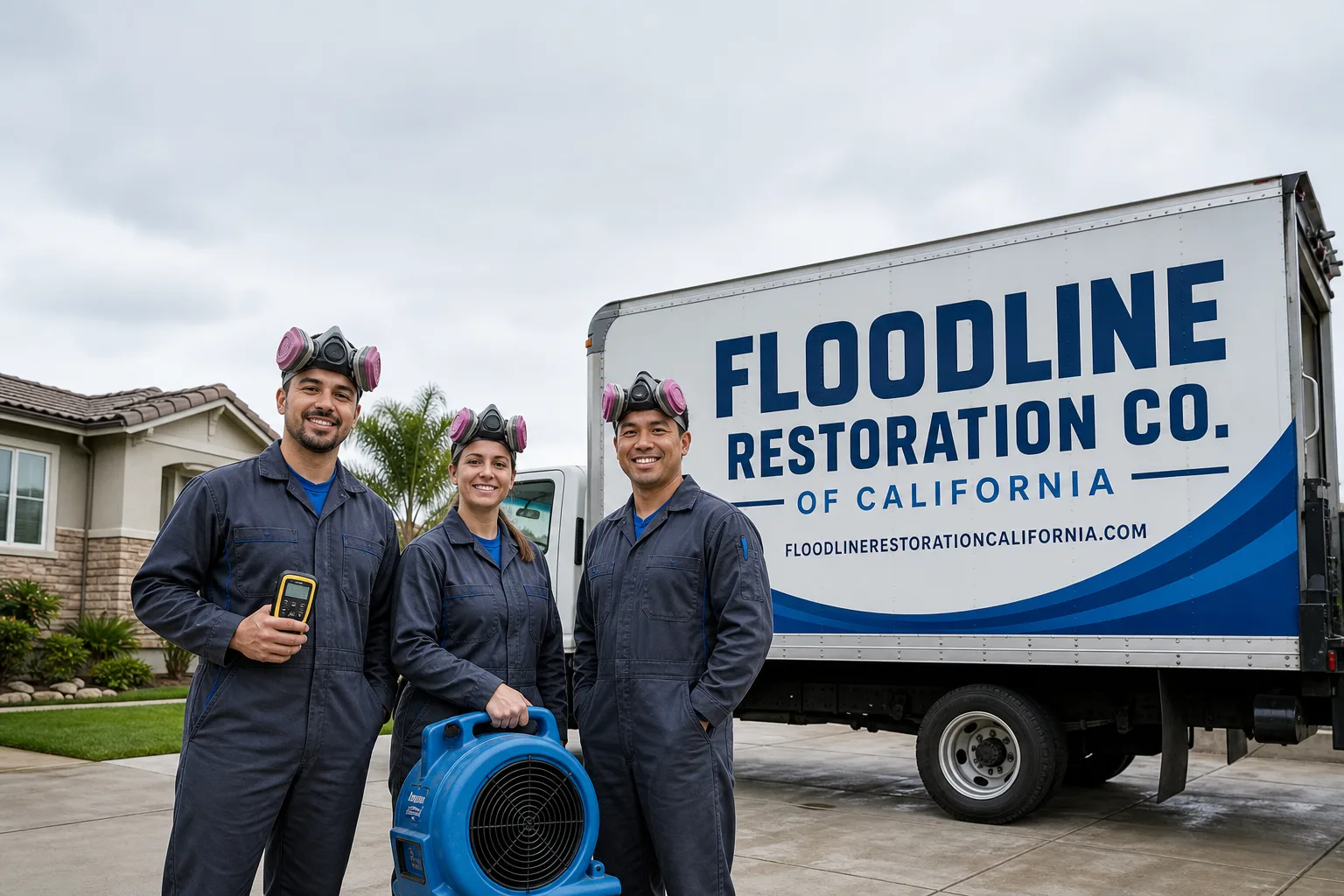
Fast, Reliable Mold Remediation Across West Hills
Mold remediation in West Hills typically runs $1,800-$6,500 depending on the square footage affected, whether crawl spaces or attics are involved, and how much of the original framing needs treatment. Most jobs we handle in the 91307 and 91308 zip codes are completed within three to five days, with drying equipment running around the clock from the first visit. Call (888) 737-2439 and a live dispatcher answers, day or night. We know West Hills homes, and we know what the western foothills do to them.
This page explains why mold remediation in West Hills isn’t just about scrubbing visible growth. It’s about stopping the fire-ash-plus-hose-water cycle that starts at the Simi Hills and works its way into the wall cavities of older tract homes, long after the flames are out.
Why Floodline Restoration Co. of California Is West Hills’s Preferred Mold Remediation Company
We’ve spent years working the streets that climb toward Woolsey Canyon Road and the homes tucked behind Valley Circle Boulevard. That local repetition matters. A crew that has dried out fifty post-war stucco tract homes in West Hills knows where the moisture hides: behind the original attic vents, under the raised foundations, inside the wall cavities that never quite dried after the Woolsey Fire. We read the moisture map on day one and we keep reading it daily until the dry standard is met.
Our reputation in West Hills is built on showing up when we say and not leaving until the job is done right. Homeowners here remember contractors who promised fast work and left behind damp framing. We don’t do that. Every technician is background-checked and uniformed, trained to IICRC standards, and every job is backed by the 90-Day Done Right Promise. If it’s not done right, we make it right. In writing. No arguing.
West Hills residents call us because they want a name they can hold accountable. Curt Bowman founded this company in 2010 around a dispatch board, not a sales desk. The person who answers the phone at 2 a.m. is a real dispatcher, and the crew that arrives is the same crew that finishes the job. No mid-job handoff to a subcontractor you’ve never met.
Our Mold Remediation Services in West Hills
Mold Inspection & Testing
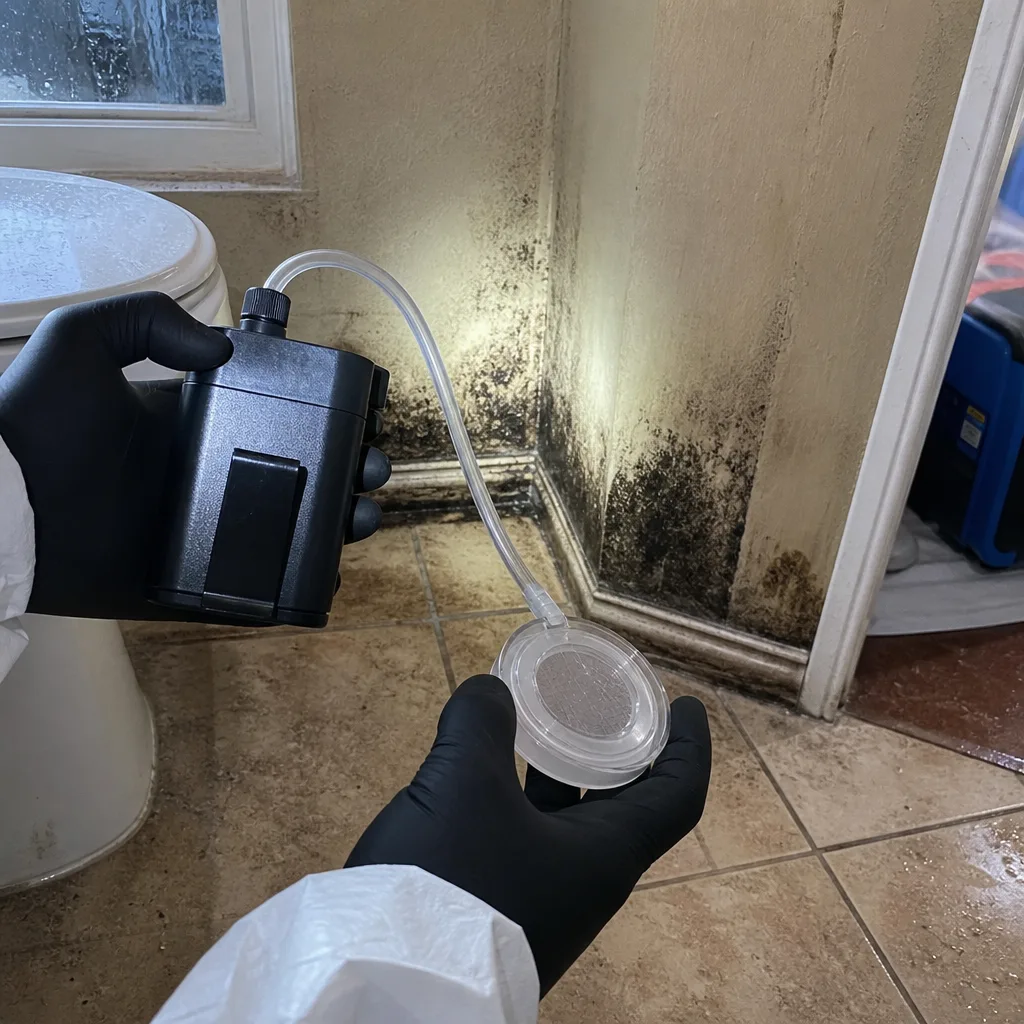
Because West Hills sits inside a Very High Fire Hazard Severity Zone, mold inspection here has to account for more than just a damp bathroom wall. We test for the fungal colonies that form behind stucco after firefighting water saturates wall cavities, often within 30 to 60 days of suppression. Our inspection includes moisture mapping with professional-grade Dri-Eaz meters, surface and air sampling, and a written scope of work before any remediation starts. In a West Hills tract home, that scope typically includes attic decontamination and crawl space evaluation, not just the visible stain.
Crawl Space Treatment
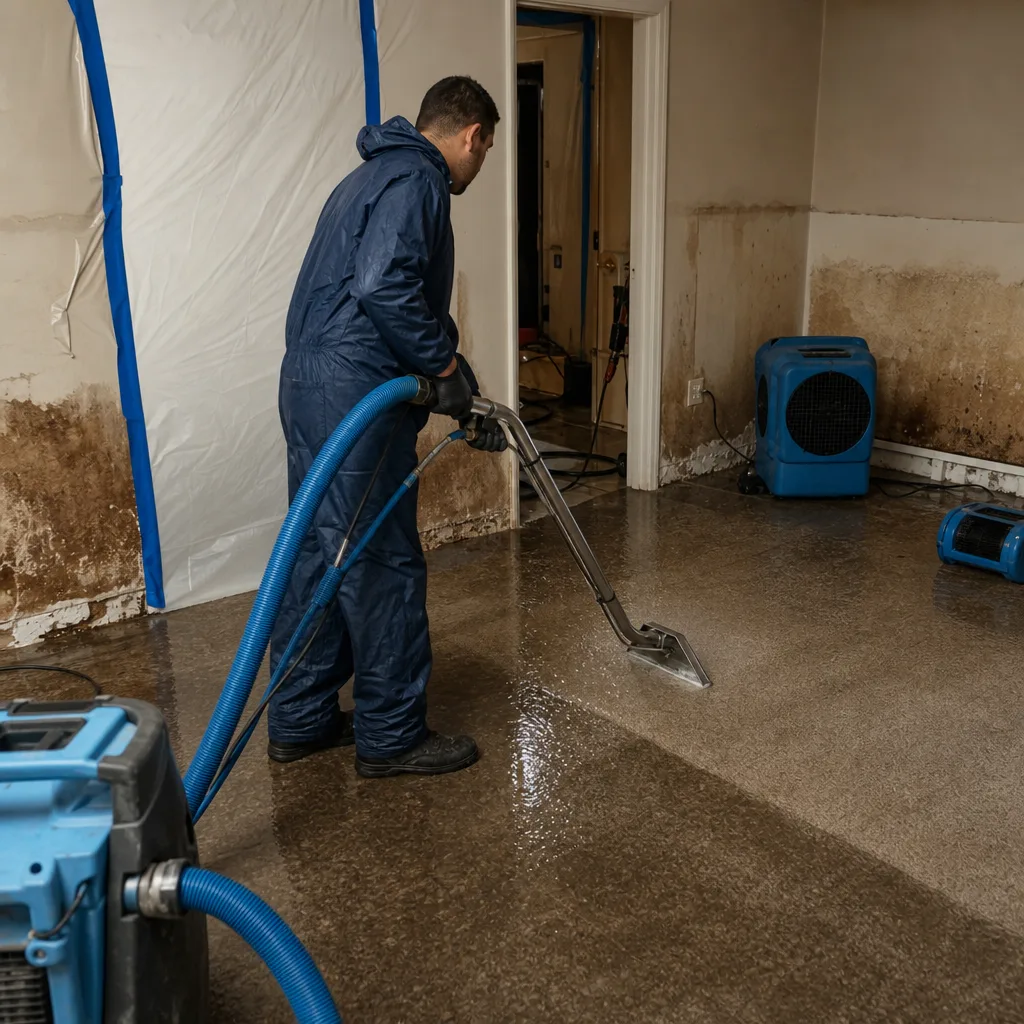
Older West Hills homes built on raised foundations collect runoff from the Simi Hills in ways that flat east Valley homes never do. Post-Woolsey runoff channels through soil that was hydrophobic for months after the fire, sending water under homes instead of absorbing it. We treat the crawl space as its own remediation zone: removing contaminated insulation, drying the subfloor with XPOWER air movers, and applying antimicrobial treatments to the joists. Skipping this step is why so many West Hills homeowners see mold return a year after a wall-only cleanup.
Moisture & Humidity Control
The original attic ventilation on 1950s through 1980s West Hills homes was designed for a different climate reality. Wind-driven rain from the Simi Hills gets pushed through those vents and into the attic, where it sits against insulation and framing. We install and calibrate humidity controls specific to this housing stock, and we log daily readings until the dry standard is reached. That moisture log goes to you and to your carrier, in plain English. No mystery numbers.
Black Mold Remediation
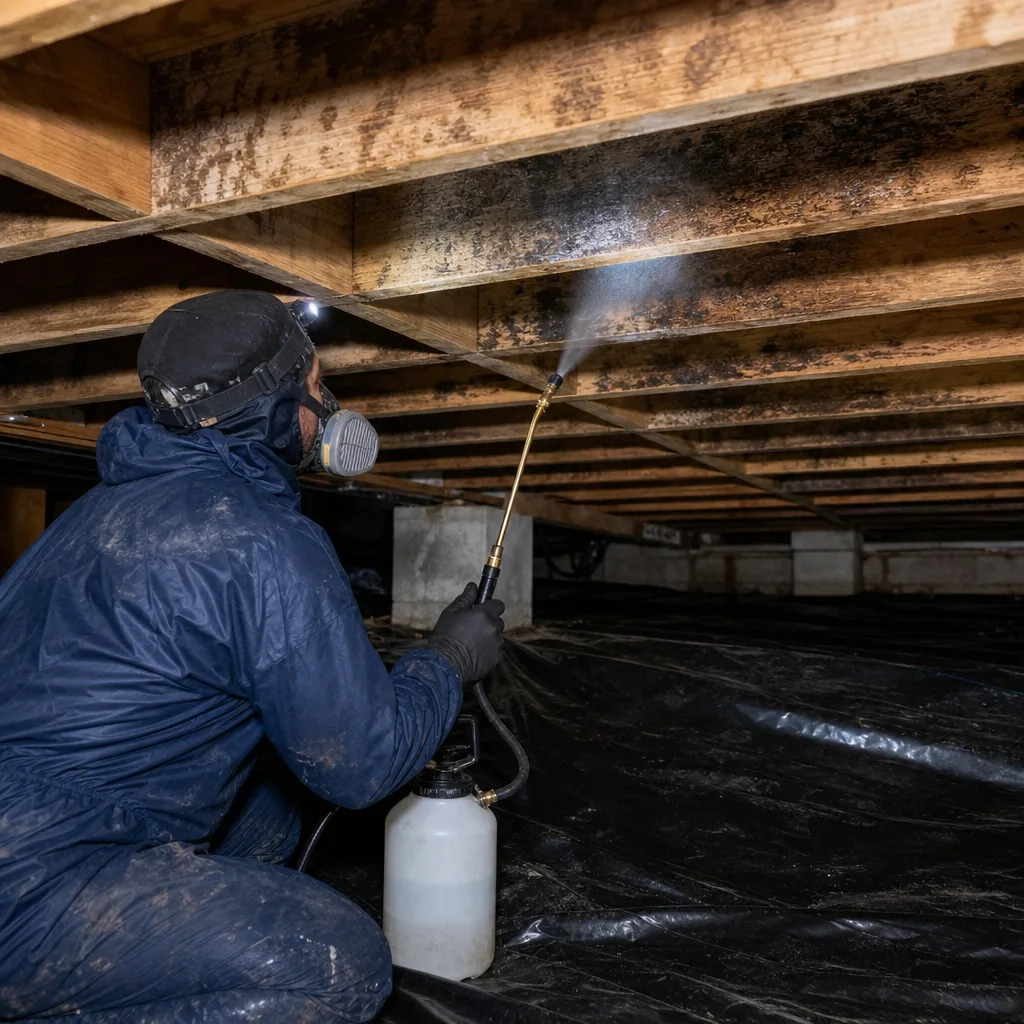
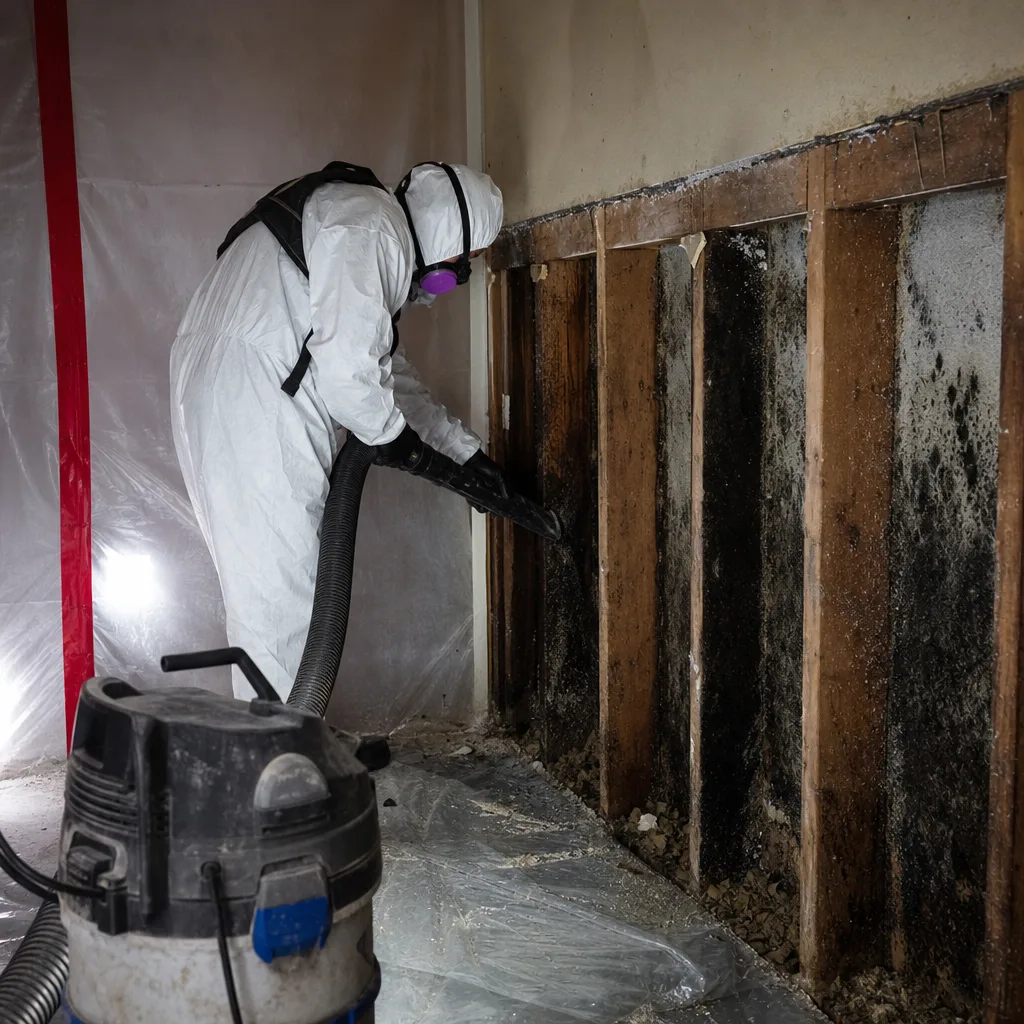
Black mold, or Stachybotrys, shows up in West Hills homes that have carried hidden moisture long enough for the colony to establish. The pattern is familiar to us: a slow leak behind a stucco wall, a roof lift during a Santa Ana event that went unnoticed for months, or a vent-intrusion point that kept feeding humidity into the attic. We contain the affected area, HEPA-vacuum the contaminants, remove the damaged material, and treat the framing behind it. The work is done with containment barriers and negative air pressure, because your family’s air quality is the point of the whole job.
For the full scope of what we do, see our Mold Remediation services.
What happens when you call
- 1
A real person answersNo phone trees - you reach a local pro.
- 2
You get an upfront price rangeHonest numbers before anyone is dispatched.
- 3
A background-checked tech heads outLicensed & insured, dispatched right away.
- 4
You approve before work beginsNothing starts until you say go.
Common Mold Remediation Problems We See in West Hills Homes
- Attic decontamination gets skipped after a brush fire. Ember ash and smoke residue settle into the insulation and sit there. The next rain or humidity cycle feeds that residue into the framing, and concealed mold pockets form where nobody looks until the smell gives it away.
- Post-Woolsey runoff collects under raised foundations. Visible wall stains get treated, but the crawl space below stays wet. Hidden fungal colonies grow under the house, and the spores rise into the living space through the floor system.
- Original attic vent design keeps re-triggering growth behind stucco. The same vent that let embers in during the 2018 fire now lets wind-driven rain from the Simi Hills push moisture into the wall cavity. Treat the mold without fixing the intake path, and the problem repeats itself every wet season.
- Insurance adjusters from outside the area underestimate the combined damage sequence. A West Hills hillside home that took ember ignition, hose-water saturation, and then mold behind stucco needs a larger scope than a standard mold claim. We document everything with photo evidence and write the scope in a way adjusters can act on. Direct billing to your carrier means you aren’t the one chasing paperwork.
Pricing for Mold Remediation in West Hills, CA
A typical mold inspection and testing in West Hills runs $350-$650, depending on how many air samples the home needs. Crawl space treatment for a standard 900-1,400 square foot raised foundation runs $1,500-$3,200, including insulation removal and antimicrobial application. Full mold removal in a single affected room runs $2,000-$4,500; a whole-home attic and wall cavity job tied to post-fire saturation can run $5,000-$11,000 when framing remediation and rebuild are included. Moisture and humidity control system installation runs $900-$2,400 depending on the attic footprint and whether new ventilation needs to be cut or retrofitted.
No surprises on the bill. We give you a written scope before work starts, not after. Call (888) 737-2439 for a free estimate from our West Hills team.
Why Fire-Ash-Plus-Hose-Water Changes Mold Remediation in West Hills
West Hills sits at the western mouth of the San Fernando Valley, where the Simi Hills funnel Santa Ana winds with enough force to lift roofing materials and drive rain sideways through original attic vents. The 2018 Woolsey Fire didn’t just burn through here. It changed how water behaves on these slopes and under these homes. The burn scar left soil that repelled water for months, directing runoff into the raised foundations of post-war tract homes instead of absorbing it. And the firefighting effort itself, necessary as it was, saturated wall cavities with thousands of gallons of water that never fully dried before mold began to colonize behind the stucco.
That sequence, ember intrusion in the attic, hose-water saturation in the walls, and mold growth behind stucco within 30 to 60 days, is largely unknown in flatter east Valley communities. It’s a West Hills restoration scope. Insurance adjusters who don’t work this corridor routinely underestimate it on the first estimate. We write the scope with the full sequence documented, because we’ve seen it play out on enough homes along Woolsey Canyon Road to know exactly what the first estimate misses.
We responded to a 1972 tract home off Valley Circle Boulevard after attic ember intrusion led to hose-water saturation of the wall cavities. Using our Dri-Eaz LGR 7000XLi dehumidifiers and XPOWER air movers, our crew dried the framing, performed HEPA vacuuming of the toxic ash residue, and applied an antimicrobial to the studs behind the original stucco before rebuilding. That stopped the mold bloom before it spread into the living space. The homeowner handed our moisture log to the adjuster, and the claim covered the full scope, not just the visible stain. That’s how the work should go.
The proximity of the former Rocketdyne Santa Susana Field Laboratory site adds another layer of caution. Ash that settled on West Hills properties after the Woolsey Fire carries a toxic profile that neighboring cities never had to consider. We treat that ash as a contaminant during mold remediation, not as dust. HEPA vacuuming and proper disposal matter here in a way they don’t in Canoga Park or Chatsworth.
We Also Serve Cities Near West Hills
Our crews regularly work in Canoga Park, Woodland Hills, Calabasas, and Chatsworth. The western foothills share the same wind patterns, the same post-fire runoff issues, and the same vintage of post-war tract housing. If you’re nearby and dealing with mold, the same written scope and direct insurance billing applies.
Serving West Hills, CA - Our Local Coverage Area
We’re based in the West Hills area and know this community well. Use the map below to see our service coverage - if you’re nearby, we can almost certainly help.
FAQs - Mold Remediation in West Hills
Because the Woolsey Fire deposited toxic ash across West Hills homes, and that ash settled into attics, wall cavities, and crawl spaces where it now feeds mold growth every time moisture returns. Remediation here means HEPA-vacuuming the ash residue, treating the contaminated framing, and then addressing the mold. You can’t clean one without cleaning the other. If your home near the former Rocketdyne site took fire exposure, ask us to include ash assessment in the inspection. Call (888) 737-2439 and we’ll walk through what that involves.
Yes, it’s one of the most common post-fire mold patterns we handle in 91307 and 91308. Firefighting water gets driven into the wall cavity, the stucco exterior holds that moisture against the framing, and the original vent design provides no drying path. Mold colonizes behind the stucco within 30 to 60 days. The home shows no visible stain on the exterior, and the interior drywall may still look fine. That’s why we moisture-map the framing itself, not just the drywall surface.
They need the vent design addressed, not just the mold. The original vents on 1950s through 1980s West Hills homes were built before Santa Ana-driven rain made side-entry wind intrusion a routine problem. If we remediate the mold but leave the vent path unchanged, the next wind event pushes more moisture into the same cavity. We include ventilation retrofitting in the remediation scope when the source is wind-driven intake. That’s the only way the treatment holds.
Most combined fire-and-water mold jobs in West Hills run three to seven days of active remediation, followed by one to two weeks of monitored drying, depending on how much framing was saturated. Homes with extensive attic decontamination and crawl space treatment can run longer. We set the drying equipment on the first visit, take daily readings, and hand you the log when the dry standard is met. No guessing about when it’s actually done. Estimates are free. Call (888) 737-2439.
Yes, and we do it regularly. The stucco on West Hills tract homes is often in good structural condition, and tearing it off to access wall cavities is rarely necessary. We work from the interior or through access points to treat the framing behind the stucco, dry the cavity, and treat the mold without touching the exterior. When stucco removal is truly needed, we’ll say so in the written scope and show you why. Either way, the work is documented and photographed for your carrier.
Written by Curt Bowman, Owner at Floodline Restoration Co. of California, serving West Hills and the western San Fernando Valley.