
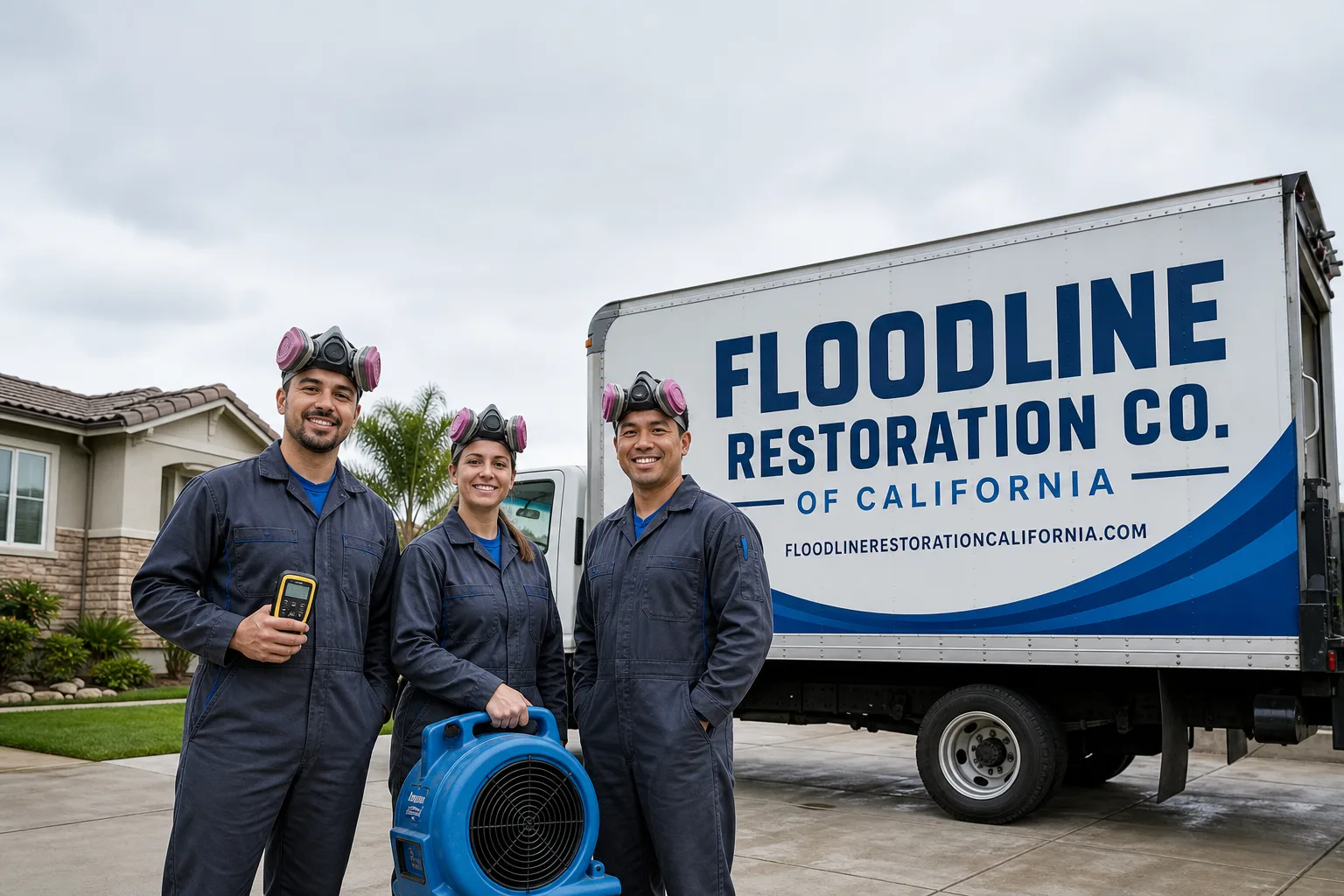
Fast, Reliable Mold Remediation Across South San Jose Hills
Mold remediation in South San Jose Hills typically runs $1,800 to $6,500 depending on how far the moisture has traveled through wall cavities, subfloors, and crawl spaces. We can usually get a certified crew to your door within 90 minutes of your call because we stage equipment locally for the 91792 ZIP. That speed matters here more than most places: South San Jose Hills sits against the Puente Hills, where the fire-then-flood cycle pushes ash and mud into homes in a sequence that flatland communities never deal with. Call (888) 737-2439 and a live dispatcher answers, day or night.
Why Floodline Restoration Co. of California Is South San Jose Hills’s Preferred Mold Remediation Company
We’ve worked the hillside lots and slab-on-grade ranches of South San Jose Hills long enough to know what the Puente Hills does to a house after a Santa Ana event. The wind pushes ember ash against stucco, into crawl-space vents, through garage door seals. Then the winter rain turns that ash into a moisture sponge inside wall cavities. Our crews know to check those spots first, because we’ve seen what happens when they’re missed. Homeowners in South San Jose Hills call us because we show up uniformed, background-checked, and we hand them a written scope before any work starts. That last part matters if you’ve been burned by a contractor before.
We answer the phone with a person at 2 a.m. Not a recording. That’s been true since Curt Bowman founded Floodline Restoration Co. in 2010, and it’s still true today. Every job we do in South San Jose Hills is backed by the 90-Day Done Right Promise. If it’s not done right, we make it right. In writing. No arguing. Dispatch and scheduling for South San Jose Hills is coordinated from our Los Angeles office, but the crews who show up know this terrain.
Our Mold Remediation Services in South San Jose Hills
Mold Inspection & Testing
Mold inspection in South San Jose Hills should start with moisture mapping, not just air samples. The slab-on-grade 1960s and 1970s ranch homes here hide water differently than raised-foundation houses in La Puente or West Covina. We use Dri-Eaz moisture meters to trace where water wicked through settlement cracks, then we sample both air and surface to identify what’s growing. If you smell must but can’t see anything, the issue is usually behind original stucco-over-wood framing or under low-clearance subfloors. We test so we treat the right thing the first time.
Mold Removal
Mold removal in South San Jose Hills means opening wall cavities carefully, not ripping drywall indiscriminately. The 1960s tract homes here often have paper-backed drywall over wood framing that holds moisture for months after surface areas feel dry. We contain the work area with negative air pressure, remove affected material to industry standard, and treat the framing with IICRC-approved antimicrobials. The goal is not just visible mold gone. It’s the moisture source eliminated and the cavity dry enough to rebuild.
Black Mold Remediation
Black mold in South San Jose Hills usually follows the Puente Hills cycle: ash infiltration in fall, trapped moisture in winter, Stachybotrys by spring. Homeowners on hillside-facing lots along streets like Mescal and Avenida Del Vista see this pattern more than anyone in the flatlands. We treat black mold with full containment, HEPA filtration, and targeted removal of affected materials, then we address the entry points that let the moisture in. Sealing crawl-space vents and garage door seals after treatment is not optional here. It’s the difference between a one-time job and a recurring problem.
Air Quality Restoration
After mold removal in South San Jose Hills, the air inside the house needs to be brought back to baseline. Ash from Puente Hills fires leaves fine particulate in HVAC ducts and filter returns, which then circulates mold spores even after remediation. We run HEPA air scrubbers during the job, replace contaminated filters, and clean duct interiors where the contamination spread. The air should smell neutral and test clean when we’re done. If someone in the house has respiratory issues, this step matters even more.
Crawl Space Treatment
Crawl space treatment in South San Jose Hills comes with a specific local challenge: low clearance. Many of these slab-on-grade homes have minimal access, which makes drying and treating the space more labor-intensive than in a raised foundation. We use low-profile drying equipment, seal vents on hillside-facing walls after the space is dry, and install moisture barriers where needed. A properly treated crawl space in this ZIP code is the single best defense against the next debris flow or heavy rain season.
Moisture & Humidity Control
Moisture control in South San Jose Hills has to account for the San Gabriel Valley’s inland heat and the way it traps humidity against the Puente Hills. Homes here run hotter and stickier in summer than coastal properties, especially on the west-facing slope side. We install and calibrate dehumidification systems, check weep screeds on stucco exteriors, and grade soil away from foundations where runoff has been pooling. Controlling moisture is the cheapest mold remediation you’ll ever buy.
What happens when you call
- 1
A real person answersNo phone trees - you reach a local pro.
- 2
You get an upfront price rangeHonest numbers before anyone is dispatched.
- 3
A background-checked tech heads outLicensed & insured, dispatched right away.
- 4
You approve before work beginsNothing starts until you say go.
Trusted Brands We Service in South San Jose Hills
Our technicians in South San Jose Hills work with Dri-Eaz, Phoenix, XPOWER, and Injectidry equipment every day. These are the professional-grade machines that move enough air and pull enough moisture to actually dry a wall cavity, not just its surface. We train our crews to IICRC, RIA, and IFA standards, and we keep parts and accessories stocked so we don’t lose a day waiting on a supply run to finish a job in the 91792 ZIP. When you hire us, the equipment that shows up is the same equipment we’d use on our own homes.
Common Mold Remediation Problems We See in South San Jose Hills Homes
- Unsealed crawl-space vents after a Puente Hills ash event. Ember ash drifts into vents and garage door seals during Santa Ana winds, then sits there. When winter rain arrives, that ash absorbs water and feeds mold inside wall cavities on hillside-facing walls. We check and seal these openings after every fire cycle.
- Slab-on-grade settlement cracks wicking runoff into subfloors. The 1960s through 1980s ranch houses in South San Jose Hills were built on graded hillside lots, and decades of seasonal movement have opened hairline cracks in slabs. After a debris flow or heavy rain, water follows those cracks into low-clearance subfloors and hidden Aspergillus takes hold.
- Moisture trapped behind original stucco-over-wood framing. You dry the drywall, you think the problem is done. But the wood framing behind paper-backed drywall in these older tract homes holds moisture for months and delaminates later. We use moisture meters to confirm the entire cavity is dry, not just the surface.
- HVAC systems circulating mold spores after regional fire events. Even homes that never had direct fire damage in South San Jose Hills accumulate soot and spore contamination in ductwork during Santa Ana smoke events. If remediation doesn’t address the HVAC system, spores recirculate and the mold problem returns.
Pricing for Mold Remediation in South San Jose Hills, CA
We Also Serve Cities Near South San Jose Hills
Our mold remediation crews work throughout the eastern San Gabriel Valley, including South San Jose Hills, Valinda, Walnut, West Covina, and Rowland Heights. If you’re in a neighboring community and dealing with the same Puente Hills fire-then-flood cycle, the approach is similar but the details of your foundation and drainage are different. We’ll assess what your home actually needs, not what a template says it needs.
Serving South San Jose Hills, CA - Our Local Coverage Area
We’re based in the South San Jose Hills area and know this community well. Use the map below to see our service coverage - if you’re nearby, we can almost certainly help.
FAQs - Mold Remediation in South San Jose Hills
Why does mold remediation take longer in South San Jose Hills slab-on-grade homes than in neighboring La Puente’s raised foundations?
Slab-on-grade homes in South San Jose Hills have low-clearance subfloors that hold moisture with nowhere to go. A raised foundation in La Puente gets airflow underneath, which speeds drying naturally. In a slab home, we’re running low-profile drying equipment through narrow access points, and the drying process takes several extra days. That’s not a delay. That’s the job being done correctly.
Do I need to worry about mold in my home if I only had ash smoke damage from a Puente Hills fire, not direct water?
Yes, and this is one of the most common surprises we find in South San Jose Hills. Ash from a Puente Hills fire works its way into crawl-space vents, garage door seals, and HVAC ducts. When winter rain arrives, that ash absorbs moisture and becomes a growing medium for mold inside wall cavities. Even if your home never took direct flame or water damage, trapped ash plus seasonal humidity is enough to start a hidden mold problem. Call (888) 737-2439 to schedule an inspection.
How soon after a Puente Hills debris flow hits my street should I schedule mold testing?
Within 72 hours if possible. The faster we can extract standing water, dry the affected cavities, and test for mold, the less remediation you’ll ultimately need. Waiting even a week on a slab-on-grade home in South San Jose Hills means moisture wicks deeper into the low-clearance subfloor and behind original stucco framing, and that’s when mold colonies become established.
Can I use the same mold remediation plan for my hillside-facing South San Jose Hills home and my cousin’s flat-lot house in West Covina?
No, and the difference comes down to drainage and wind exposure. A hillside-facing home in South San Jose Hills catches ember ash in fall and runoff in winter. A flat-lot West Covina house doesn’t face the same two-phase cycle. The hillside house needs crawl-space vent sealing, garage door seal replacement, and foundation drainage regraded. The flat-lot house may only need standard interior drying. The plan has to match the terrain.
What should I look for in my garage after the first winter rain following a Puente Hills burn?
Check around the garage door seals and any crawl-space access points for dark streaks or sooty residue that feels damp. That’s trapped ash absorbing moisture. Also look for water staining where the slab meets the garage wall, especially on the hillside-facing side of the house. If you see either, call us at (888) 737-2439 before spring. What starts as a small stain in December is often a full black mold colony by March.
Written by Curt Bowman, Owner at Floodline Restoration Co. of California, serving South San Jose Hills and the eastern San Gabriel Valley.