
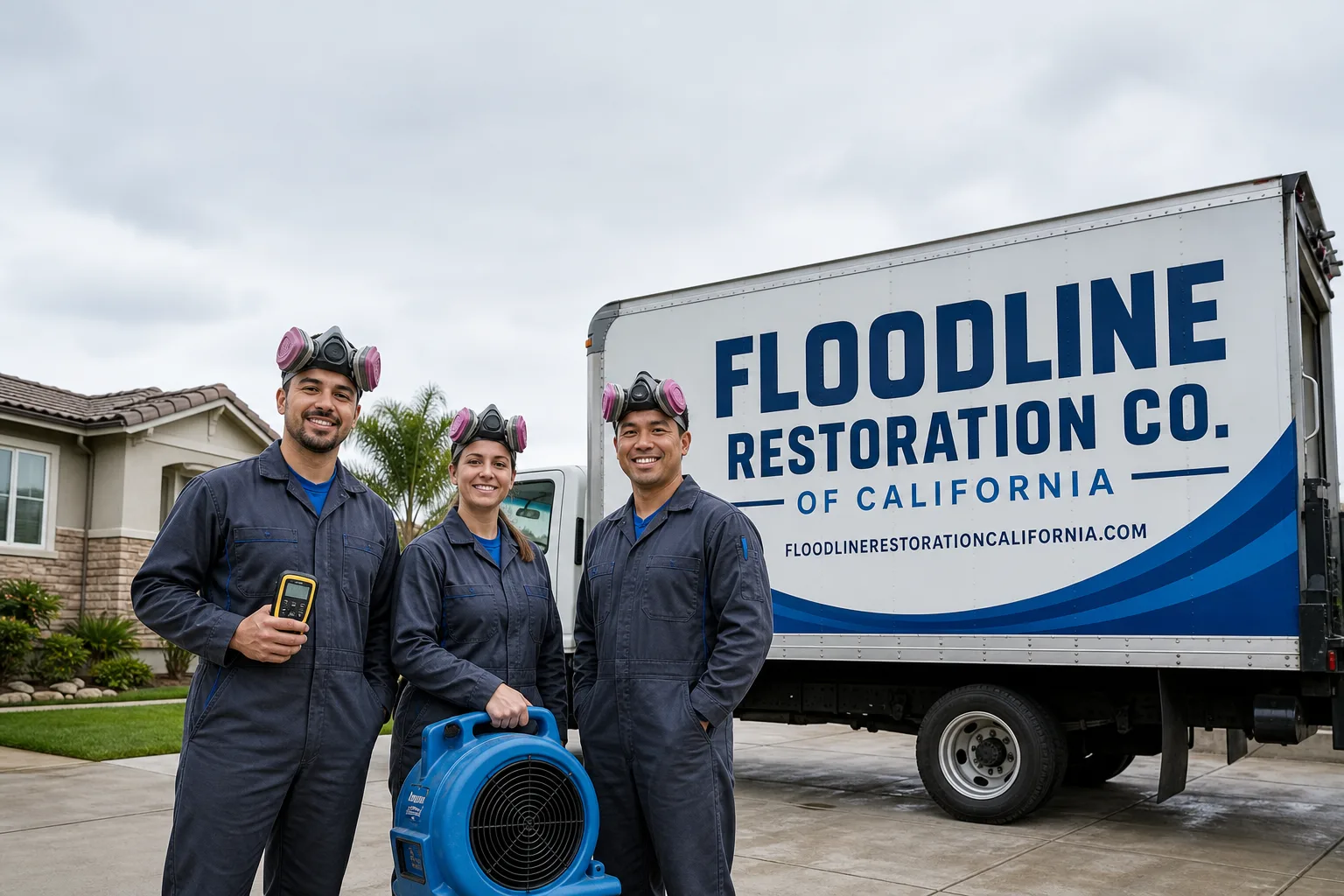
Fast, Reliable Mold Remediation Across Saint Helena
Mold remediation in Saint Helena typically costs $1,800-$6,500 depending on square footage, surface types, and whether the problem sits behind original plaster-and-lath walls or inside a converted wine cave. Most jobs in the 94574 ZIP are scoped, started, and dried within three to five days. If you’re smelling something musty in a Victorian off Spring Street or a stone winery building east of Highway 29, call (888) 737-2439 right now. A live dispatcher answers, and we’ll have a certified technician walking your property the same day.
We’ve worked enough Saint Helena homes and winery buildings to know one thing for certain: this town’s buildings hold moisture differently than anywhere else in the Napa Valley. The old balloon-frame construction, the plaster-and-lath, the stone walls that breathed for a century and then got sealed with modern paint. Mold hides in places a standard remediation crew from Santa Rosa would never think to look. That local knowledge changes everything about how fast and how completely the job gets done.
Why Floodline Restoration Co. of California Is Saint Helena’s Preferred Mold Remediation Company
You don’t get to be trusted in Saint Helena by rushing. Our founder, Curt Bowman, built this company in 2010 around a dispatch board, not a sales desk, and the difference shows in how we handle every job: we show up when we say, we document everything in writing, and we stand behind the result with our 90-Day Done Right Promise. No arguing. No paperwork battles. If it’s not done right, we make it right.
Homeowners in Saint Helena have called us for everything from hidden mold behind a Victorian’s wainscoting near Lyman Park to full crawl space treatments under Craftsman homes off Madrona Avenue. We know the difference between mold that started with a Sulphur Creek overflow and mold that started with a slow leak in original galvanized plumbing. Our technicians are background-checked, uniformed, and trained to IICRC, RIA, and IFA standards. They carry professional-grade Dri-Eaz and Phoenix equipment, run moisture maps on day one, and hand you the daily readings until the dry standard is met.
We also bill your insurance carrier directly. You never play messenger between us and the adjuster. We photograph everything, document scope in writing before work starts, and coordinate with your carrier so you’re not stuck explaining why a plaster-and-lath wall needs different treatment than drywall. That’s how Mold Remediation should work in a town where half the homes predate modern building codes.
Our Mold Remediation Services in Saint Helena
Mold Inspection & Testing
Before we touch a single wall in your Saint Helena home, we figure out exactly what we’re dealing with. A proper inspection means moisture mapping, air sampling where indicated, and a visual sweep of the places mold likes to hide in older construction: behind baseboards, inside plaster-and-lath cavities, under Victorian-era porches, and in crawl spaces that haven’t been opened since the Carter administration. In converted winery buildings and carriage houses, we test differently than we would in a standard home because non-standard materials and sealed stone surfaces change how moisture moves. You get a written report with lab results and a scope of work before any remediation begins.
Mold Removal
We remove mold, we don’t spray over it. In Saint Helena’s older homes, that often means carefully separating original trim and plaster from damaged lath, treating the underlying framing with HEPA-sanded biocide protocols, and drying everything in place before reconstruction. We run Dri-Eaz dehumidifiers and Phoenix air movers until moisture meters read under 15% wood moisture content. For stone winery buildings where ambient humidity from barrel storage never really drops, we set the dry standard to account for that environment. Otherwise you’re fighting a losing battle.
Black Mold Remediation
Stachybotrys, the black mold you’ve probably read about, shows up in Saint Helena more than most people expect. It loves the slow, hidden leaks common in aging cast-iron plumbing and the post-flood conditions we see along the Napa River corridor near Sulphur Creek. Black mold remediation requires full containment, negative air pressure, HEPA filtration, and careful disposal of contaminated materials. It’s not a job for a handyman with a bleach sprayer. We do it correctly, and we hand you the clearance testing results when it’s done.
Air Quality Restoration
Mold spores don’t stay put. They ride through your HVAC ducts, settle in your drapes, and linger in the cavity spaces behind original walls. After any mold remediation in Saint Helena, we address the air itself: HEPA air scrubbing, duct cleaning where needed, and post-remediation air sampling to confirm spore counts are back to normal outdoor levels for the 94574 area. For homes that went through the Glass Fire, we often layer in smoke-and-ash particulate treatment because mold and wildfire residue tend to compound each other.
What happens when you call
- 1
A real person answersNo phone trees - you reach a local pro.
- 2
You get an upfront price rangeHonest numbers before anyone is dispatched.
- 3
A background-checked tech heads outLicensed & insured, dispatched right away.
- 4
You approve before work beginsNothing starts until you say go.
Common Mold Remediation Problems We See in Saint Helena Homes
- Balloon-frame construction hiding mold in wall cavities. Late-19th-century homes in Saint Helena’s core often have continuous wall stud cavities from foundation to attic. Water travels, and mold follows. A small leak at the roofline can bloom behind plaster-and-lath three floors down, with no visible surface evidence until it’s advanced.
- Converted agricultural buildings with stone walls that never fully dry. Historic barns and carriage houses turned into living space or storage trap humidity against sealed stone. Standard drying targets that work in a modern Napa subdivision don’t work here. We set custom dry standards for non-standard structures.
- Post-wildfire smoke residue accelerating mold growth. The Glass Fire and Atlas Fire left fine particulate residue inside wall cavities, ducting, and crawl spaces throughout the hillsides flanking Saint Helena. That residue holds moisture and feeds microbial growth. Homes that were “cleaned” after the fire often show mold years later because the cleaning never addressed what sat inside the framing.
- Crawl spaces under older Victorian homes with no vapor barrier. Saint Helena’s wet winters push the water table up, and many older homes off Spring Street and along the river plain sit over dirt crawl spaces with zero encapsulation. Musty odors drift up through the floors, and you can’t fix the smell upstairs until you fix the moisture below.
Pricing for Mold Remediation in Saint Helena, CA
- Mold Inspection & Testing: $350-$750, including moisture mapping and lab analysis where indicated.
- Crawl Space Mold Remediation: $1,200-$3,800 depending on square footage and whether encapsulation or vapor barrier work is needed.
- Whole-Room Mold Removal (bathroom, laundry, under-sink): $1,800-$4,200 including containment, HEPA scrubbing, and clearance testing.
- Black Mold Remediation (large area or multi-room): $4,500-$8,500 when containment, material removal, and post-remediation verification are required.
- Wine Cave or Stone Winery Building Treatment: $6,000-$18,000 and up, depending on cave size, humidity conditions, and whether bonded inventory requires temporary relocation.
Older homes with plaster-and-lath always trend higher than a modern drywall job because the work is slower, more delicate, and produces more waste to properly dispose of. We give you a written scope and a fixed price before we start, not after. Call (888) 737-2439 for a free estimate, and ask about our Senior & Veteran 5% discount and $50 Off Any Repair Over $250.
Trusted Brands and Equipment We Use in Saint Helena
The equipment matters because the conditions in Saint Helena are not standard. We run Dri-Eaz dehumidifiers and Phoenix air movers on every job because they’re the tools that hold their drying rates in the cool, high-humidity conditions common in stone buildings and underground spaces around 94574. Our techs are trained to RIA and IFA standards, so the person reading your moisture meter actually understands what the number means in a 58°F wine cave versus a hot attic. That’s not a detail. It’s the difference between mold that stays gone and mold that comes back in eight months.
A Saint Helena Mold Problem You Won’t Read About Anywhere Else
There’s a mold scenario that keeps showing up in Saint Helena and almost nowhere else in the country. The underground wine caves cut into the volcanic tuff hillsides around town run a steady 58°F with high ambient humidity. After a wildfire event like the Glass Fire, smoke particulates get pulled into those caves through ventilation systems and settle into the tuff walls. The humidity does the rest. Mold colonies form inside the porous rock itself.
Standard remediation protocols don’t fit in a cave. You can’t run truck-mounted extraction equipment down a narrow tunnel. Ozone treatments can damage aging wine inventory and don’t reach mold rooted inside volcanic tuff. You need cave-specific plans: targeted dehumidification matched to the cave’s natural thermal profile, HEPA air exchange scaled for the cubic footage, and surface treatments that penetrate porous stone without contaminating bonded barrel storage. Before any of that, you need to understand the trapped moisture already inside the tuff from years of high-humidity storage.
We recently dealt with a variation of this on a smaller scale when we remediated a late-19th-century Craftsman near Sulphur Creek after a winter flood. The original plaster-and-lath walls had wicked water from a failed foundation vent, and hidden Stachybotrys was growing on the underlying studs. Our techs removed saturated lath sections in a controlled negative-air environment, treated the visible mold with a HEPA-sand and biocide protocol, and installed temporary Dri-Eaz dehumidification until moisture meters read under 15% wood moisture content. The historic trim stayed intact. The mold didn’t come back.
That’s what Mold Remediation in Saint Helena actually involves: adapting to buildings and environments that don’t behave like standard construction. We’ve spent years learning how this town’s housing stock and winery infrastructure respond to moisture, smoke, and time. If mold is in your home or your bonded storage space, call (888) 737-2439. We’ll be there when we say.
We Also Serve Cities Near Saint Helena
Our crews work throughout the upper Napa Valley and beyond. If you need mold remediation in Calistoga, Boyes Hot Springs, Santa Rosa, or Napa, the same certified technicians, the same Dri-Eaz equipment, and the same 90-Day Done Right Promise apply. Dispatch coordinates from our San Francisco Bay Area office, so the crew that arrives is already familiar with the conditions in wine country and the specific demands of older housing stock.
Serving Saint Helena, CA - Our Local Coverage Area
We’re based in the Saint Helena area and know this community well. Use the map below to see our service coverage - if you’re nearby, we can almost certainly help.
FAQs - Mold Remediation in Saint Helena
Why does mold grow faster in Saint Helena’s underground wine caves after a wildfire?
Because wildfire smoke drives fine particulate matter deep into naturally humid, 58°F cave environments, and those particulates hold moisture against porous volcanic tuff walls. The constant humidity inside a wine cave never drops low enough to naturally slow mold growth, so once spores establish in the tuff and the settled ash layer, colonies spread within weeks. Remediating a cave requires custom dehumidification and surface treatment matched to the cave’s thermal profile, not a standard residential protocol.
How do you handle mold in a historic Victorian home with original plaster-and-lath walls without destroying the historic fabric?
We work in controlled sections under negative air, carefully separating salvageable plaster from the lath behind it. Damaged lath sections are removed and replaced in kind. The underlying framing gets HEPA-sanded and treated with biocide, then dried to under 15% wood moisture content before reconstruction. Original trim, baseboards, and plaster details are preserved wherever physically possible. It’s slower than gutting to the studs, and that’s the point.
What should a winery do if they smell mold inside a bonded barrel storage room after the Glass Fire?
Call us before touching anything, and call insurance documentation during that call. Do not run ozone machines. Do not fog the room. Both can damage aging wine inventory and will not reach mold rooted inside porous stone or settled into barrel racks. We’ll inspect, map moisture and particulate levels, scope a cave-appropriate remediation plan, and coordinate directly with your carrier. The barrel storage room should be isolated from production areas until testing is complete.
Can mold remediation in our crawl space help with musty odors that have persisted since the Atlas Fire?
Yes, and it’s one of the most common fixes we do in Saint Helena. Atlas Fire smoke residue settled into crawl spaces throughout the hillside neighborhoods around 94574, and that residue plus normal winter groundwater moisture creates the perfect environment for odor-causing mold. We remediate the biological growth, install or repair vapor barriers, improve ventilation, and run HEPA air scrubbing. The musty smell usually clears once the crawl space is actually dry and encapsulated.
Why do we need special mold testing in a converted carriage house or stone winery building compared to a normal house?
Because standard air sampling and moisture meters don’t tell you the whole story in non-standard construction. Stone walls hold and release moisture differently than framed walls. Converted agricultural buildings often have sealed surfaces that trap humidity behind them. Bulk moisture readings from standard pins don’t penetrate stone meaningfully. When testing is incomplete, walls get cleared that aren’t actually dry, and the mold returns. We use material-appropriate testing protocols and set the dry standard for the actual construction you have, not what a normal house would require.
Call (888) 737-2439 for a free estimate. Estimates are free, the 90-Day Done Right Promise is in writing, and the dispatcher who answers at two in the morning is a real person. That’s a square deal.
Written by Curt Bowman, Owner at Floodline Restoration Co. of California, serving Saint Helena and the surrounding Napa Valley.