
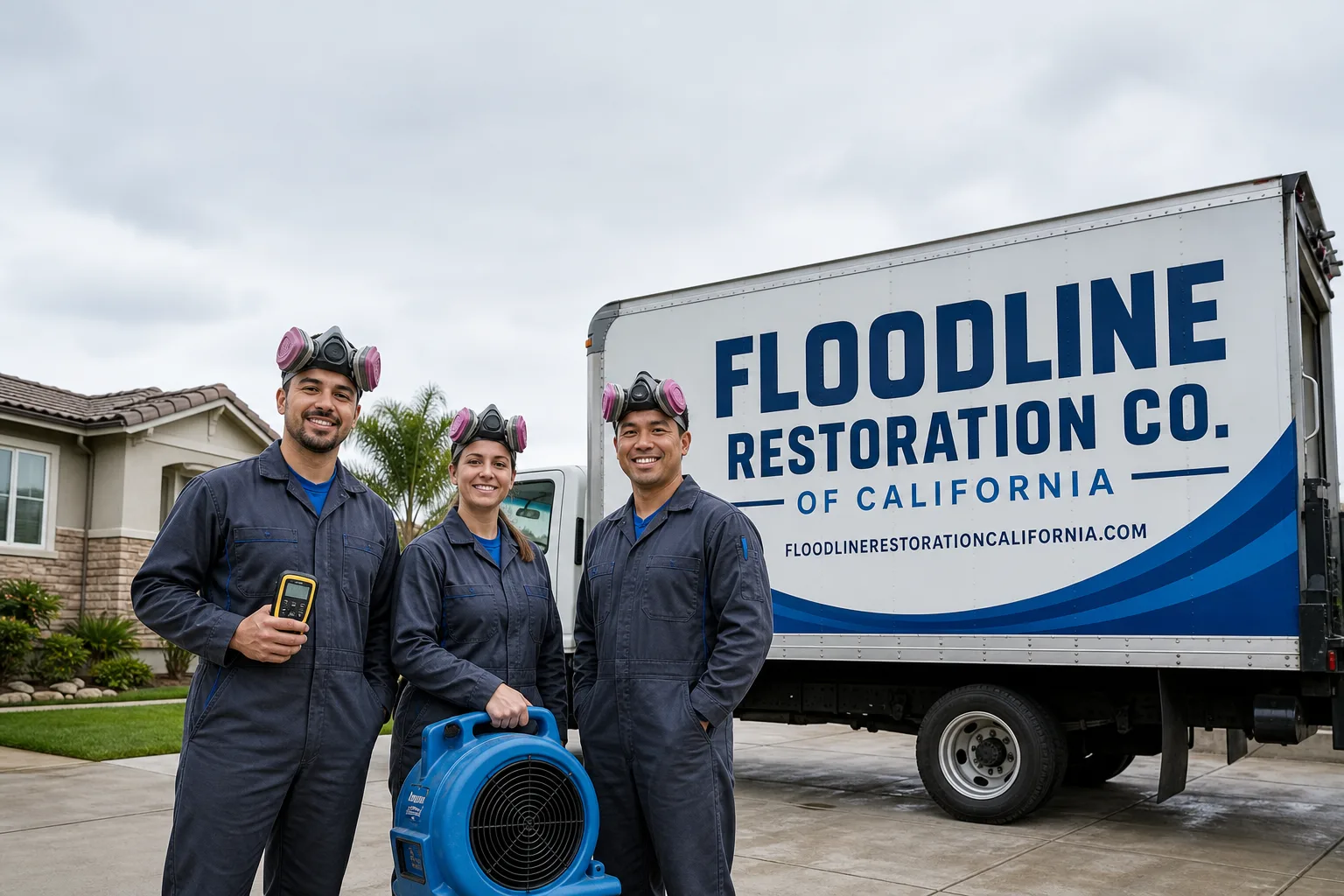
Fast, Reliable Mold Remediation Across Norwalk
Mold remediation in Norwalk, CA typically runs $1,800-$6,500 depending on how far moisture has traveled under a slab and how much drywall, flooring, or cabinetry is involved. Most jobs here start with a slab-leak investigation, not a crawl-space inspection, because nearly every home in Norwalk is built on concrete. That changes everything about how we find mold, how we dry the structure, and what the final bill looks like. Call (888) 737-2439 and a live dispatcher answers, 24 hours a day, every day.
We know Norwalk’s tract homes, we know Studebaker Road and the 90650 ZIP, and we know what happens when a galvanized supply line lets go under a 1950s ranch house. The crew that shows up at your door is background-checked, uniformed, and trained to IICRC, RIA, and IFA standards. The person on the phone at 2 a.m. is a real dispatcher who can have a certified crew rolling toward Norwalk that same night.
Why Floodline Restoration Co. of California Is Norwalk’s Preferred Mold Remediation Company
We’ve walked more Norwalk slab homes than most restoration companies in the LA Basin, and we’ve learned to read the signs that generic mold crews miss. When a Norwalk homeowner calls about a musty smell near the baseboards in a back bedroom, we don’t start by looking for a crawl space. There isn’t one. We start by asking when the water bill last spiked, then we map moisture across the slab and look for the migration pattern that tells us where a supply line is failing.
Founded in 2010 by Curt Bowman, Floodline Restoration Co. was built around a dispatch board, not a sales desk. That’s why a live person answers the phone at every hour. Our Norwalk customers are homeowners who’ve been in the same house twenty or thirty years. They remember what bad contractor work looks like. They don’t want a pitch; they want someone who shows up on time, documents the scope in writing, and doesn’t leave until the dry standard is met. Our Mold Remediation team operates with that exact standard on every job in Norwalk.
Every job is backed by the 90-Day Done Right Promise, our written no-argument guarantee. If it’s not done right, we make it right. That’s not a slogan at the bottom of an invoice. It’s the Keystone Standard, and we hand it to you in writing before work starts. Done right, and backed in writing.
Our Mold Remediation Services in Norwalk
Mold Inspection & Testing
In Norwalk, a mold inspection has to account for what’s under the slab, not just what’s growing on the drywall. We test air and surface samples, but we also trace moisture migration paths that point back to aging galvanized supply lines buried beneath the concrete. A standard inspection that ignores the slab will miss the source. Ours doesn’t. We use Dri-Eaz moisture meters and thermal imaging to map the full extent before we quote a dime.
Mold Removal
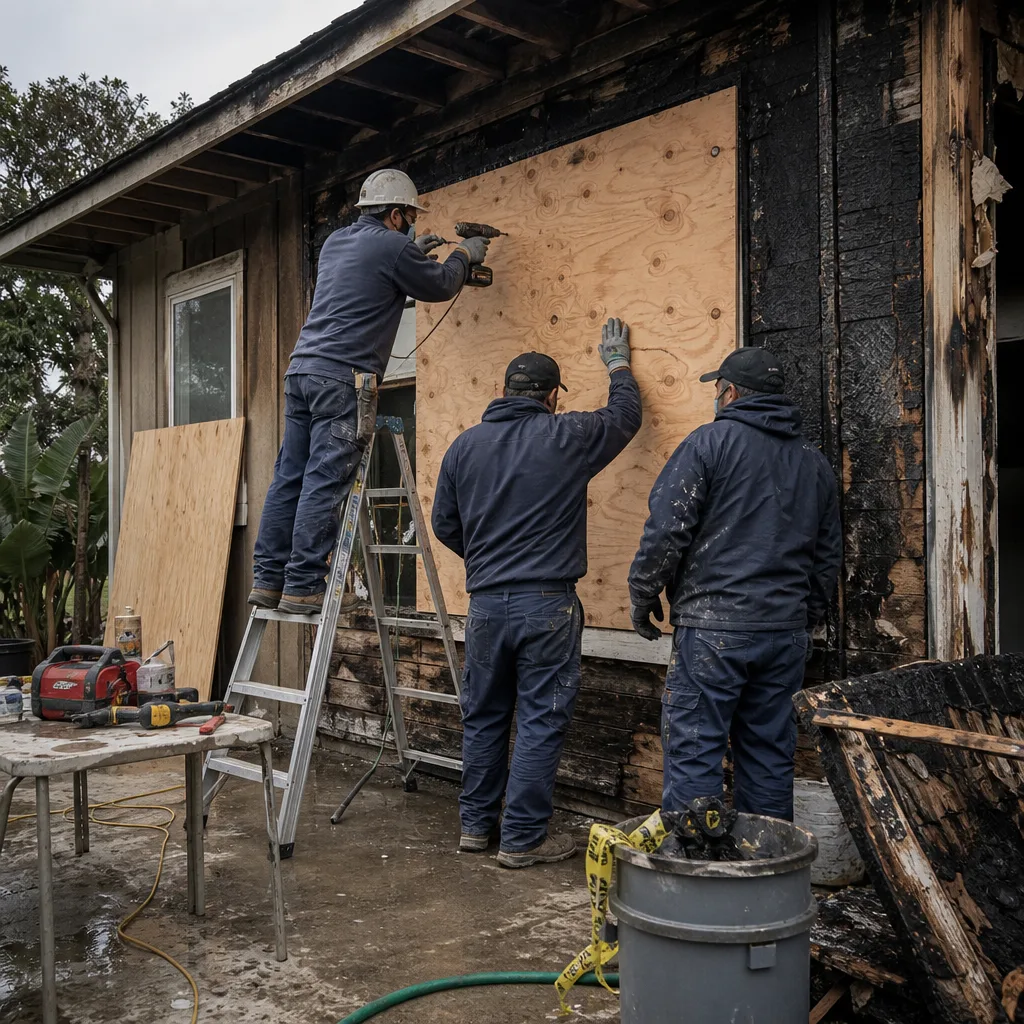
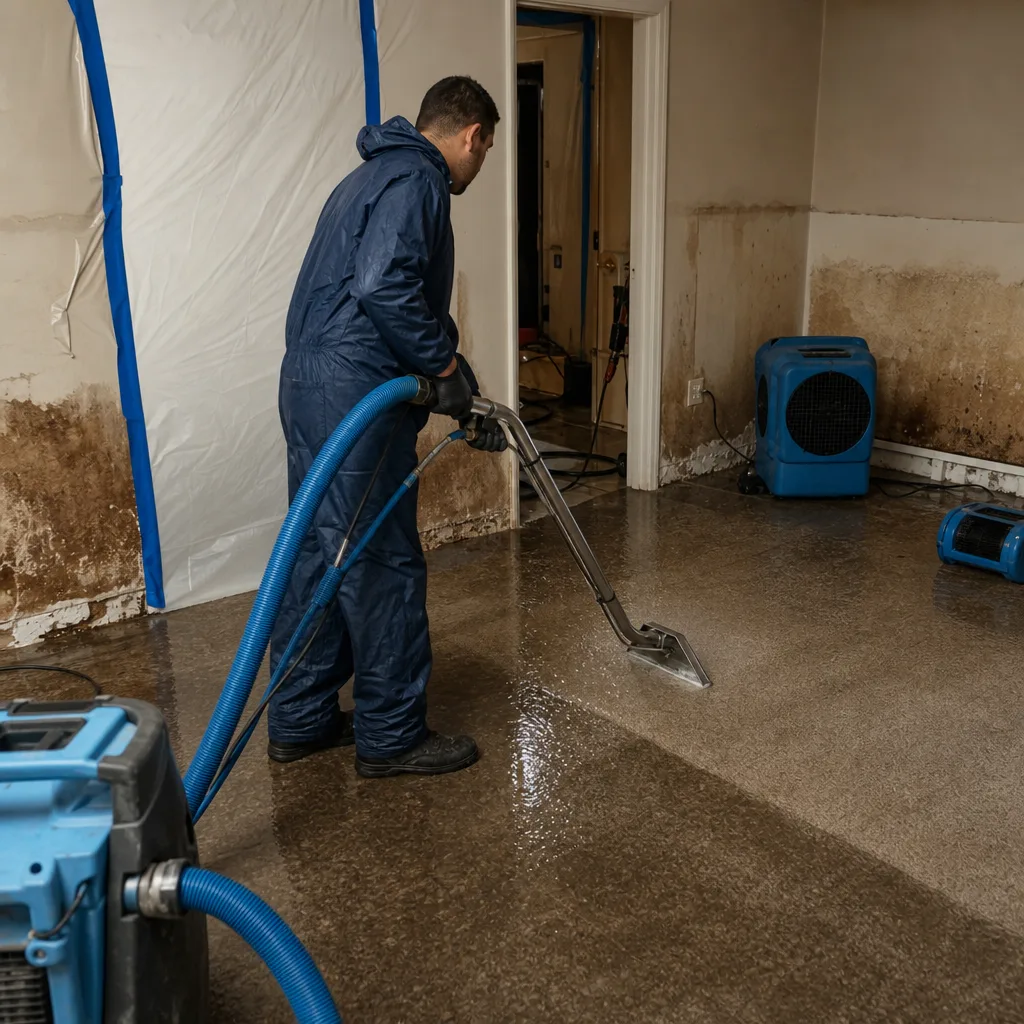
Removing mold in a Norwalk tract home usually means cutting out affected drywall along baseboard seams where moisture wicked up from the slab, treating the cavity with an EPA-registered antimicrobial, and then drying the structure to the dry standard before any rebuild happens. Most Norwalk jobs are completed in a single visit by the same crew that reads the moisture map on day one. That’s not an accident. It’s how we keep the job whole.
Black Mold Remediation
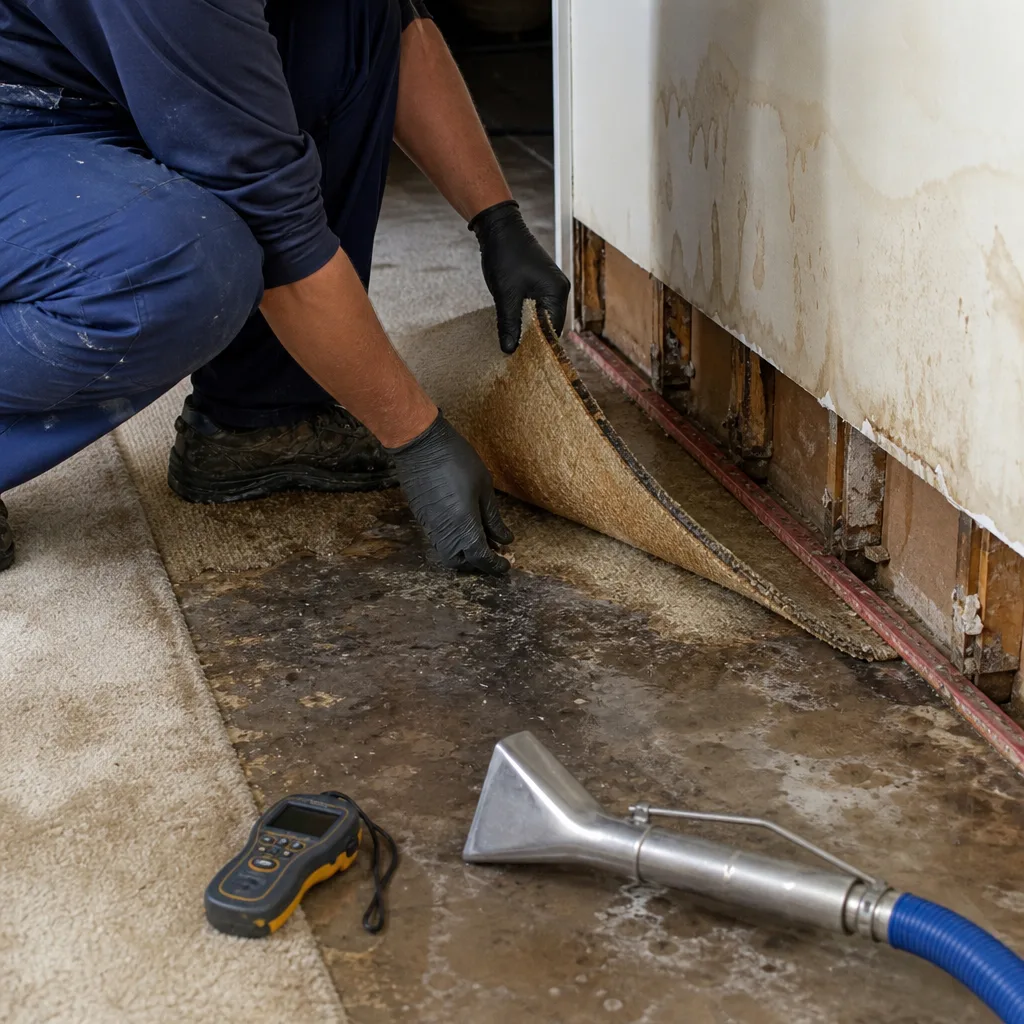
Black mold in Norwalk almost always traces back to water that sat hidden for weeks, not a visible leak. That’s what makes slab-on-grade construction so tricky. By the time you see staining on the baseboard or smell it in the room, the colony has usually been fed by moisture traveling under the floor for a long time. We contain the affected area, run negative air pressure, remove the contaminated material, and verify clearance with post-remediation air sampling. No shortcuts, no “it’s probably fine.”
Air Quality Restoration
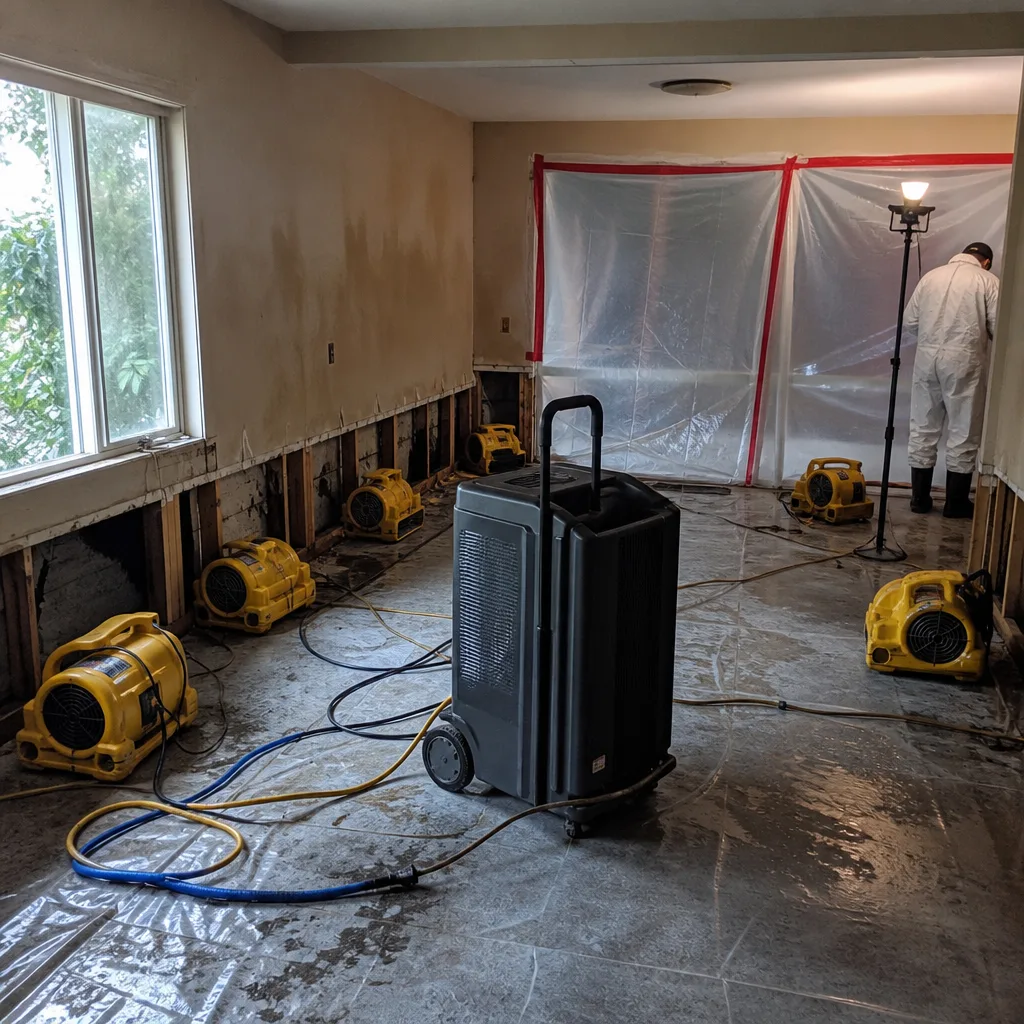
After a slab leak or flood event in Norwalk, mold spores settle into HVAC ductwork and recirculate through the house every time the furnace kicks on. We run HEPA-filtered air scrubbers during remediation, then verify that post-remediation indoor air quality meets the clearance standard before we pack up. For older homes near the San Gabriel River corridor where humidity runs higher in the summer, this step matters more than people realize.
What happens when you call
- 1
A real person answersNo phone trees - you reach a local pro.
- 2
You get an upfront price rangeHonest numbers before anyone is dispatched.
- 3
A background-checked tech heads outLicensed & insured, dispatched right away.
- 4
You approve before work beginsNothing starts until you say go.
Trusted Brands We Service in Norwalk
We don’t believe in sending a homeowner to hunt down specialty parts. Our Norwalk customers get the benefit of professional-grade equipment from Dri-Eaz, XPOWER, and Injectidry, plus technicians trained to IICRC and RIA standards. When a job calls for a specific drying configuration or clearance test protocol, we already have the equipment on the truck. No waiting for a rental, no second-trip delays, no need to explain to a homeowner why the job stalled.
Common Mold Remediation Problems We See in Norwalk Homes
- The crawl-space assumption. Most mold remediation companies start every job by looking for a crawl space. Norwalk doesn’t have them. Nearly every home in the 90650, 90651, and 90652 ZIP codes sits on a concrete slab, which means moisture hides under floors and behind baseboards far longer before anyone notices. If your remediation plan doesn’t start with slab moisture mapping, it starts wrong.
- Asbestos in 1950s-era finishes. Norwalk’s housing stock was mostly built between the late 1940s and early 1970s. That means acoustic ceiling texture and vinyl floor tile often contain asbestos. Disturbing those materials during mold removal without testing first is a health risk and a legal liability. We test before we cut, every time.
- Post-tension slab movement. The expansive clay soils under Norwalk shrink and swell with the seasons. That movement stresses post-tension cables and pipe joints in the slab. A mold remediation that doesn’t address the ongoing moisture source will come back within a season or two. We don’t just remove mold; we identify why the moisture was there in the first place.
- Flat-roof drainage failures. Many Norwalk ranch homes have flat or low-slope roof sections over additions and patios. When those drains clog during El Niño rains, water pools and finds its way into wall cavities. The mold that follows shows up months later as staining along the ceiling line. It’s a Norwalk pattern we’ve seen dozens of times.
Pricing for Mold Remediation in Norwalk, CA
A straight containment, removal, and clearance job in a single room in Norwalk typically runs $1,800-$3,200. A whole-home slab-leak mold event with baseboard removal in multiple rooms, cabinet pull, and air quality restoration runs $4,500-$6,500. Black mold remediation with containment and post-remediation verification adds roughly $800-$1,400 to the base scope. Moisture and humidity control work, including slab drying and drainage correction, runs $1,200-$2,800 depending on how far the water traveled.
We give you a written scope before work starts. No surprises on the bill. And we bill your insurance carrier directly when the loss is covered, which spares you from playing messenger. Current offers in Norwalk: $50 off any repair over $250, the $89 seasonal tune-up, and a 5% senior and veteran discount, always. Call (888) 737-2439 for a free estimate.
The Slab Leak Problem Most Norwalk Homeowners Miss
Here’s the uncomfortable truth about mold in Norwalk: nearly every home sits on a concrete slab, and the original galvanized supply lines under those slabs are at the end of their service life. When one corrodes through, water doesn’t pool in a crawl space where you’d notice it. It migrates silently under the slab for weeks, sometimes months, before it surfaces as a musty smell at the baseboard seam or a warm spot on the floor. By then, mold is already established. This is the single most common mold story in Norwalk, and it’s why generic mold remediation companies struggle here. They’re looking for water where water cannot pool. We look for it where it actually travels.
On a ranch-style tract home off Studebaker Road in the 90650 ZIP, our tech responded to a slab leak unseen for weeks. We used Dri-Eaz dehumidifiers and XPOWER air movers to dry the slab and wall cavities, then Xactimate-lined the moisture map. Testing confirmed mold at the baseboard seam where water had wicked upward. We cut out the affected drywall, treated with an EPA-registered antimicrobial, and dry-fit replacement before the drywall crew arrived, all in one trip. That’s the Norwalk pattern: one slab leak, one hidden mold colony, one trip to fix it when the scope is known ahead of time.
Why Norwalk’s Geography Changes the Mold Equation
Norwalk sits between two flood-control channels: the San Gabriel River on the eastern boundary and Coyote Creek to the southeast. Several residential neighborhoods in the low-lying eastern and southeastern sections fall within FEMA-mapped flood zones. When El Niño rains overwhelm those channels, homes flood. When homes flood, drywall wicks water upward, and mold follows. What makes Norwalk different from inland neighbors like Cerritos or Bellflower is the claims reality: many of those flood losses trigger NFIP federal flood claims, not standard homeowner policies. That changes how documentation, scope approval, and payment work. We handle direct insurance billing and adjuster coordination on every Norwalk job, including NFIP claims, so the homeowner isn’t stuck translating a moisture log for a carrier who may never have seen a slab-home flood before.
The 1987 Whittier Narrows earthquake, epicenter roughly eight miles north, cracked foundations and shifted slab homes throughout Norwalk. Many of those repairs were cosmetic patch jobs never pulled to permit. When we tear out flooring after a slab-leak mold loss, we routinely find hairline foundation fractures and displaced post-tension cables that redefine the scope of work mid-project. It’s a Norwalk-specific complication that a restoration company from outside the area wouldn’t expect, and it’s exactly the kind of thing that turns a straightforward claim into a denied one if the documentation isn’t airtight. We’ve handled enough of these to know what the adjuster needs to see. Mold Remediation in Norwalk is a different job than anywhere else.
We Also Serve Cities Near Norwalk
Floodline Restoration Co. covers Norwalk and the surrounding communities of Cerritos, Artesia, Bellflower, and Santa Fe Springs. If you’re in one of those cities and dealing with water damage, mold, or a restoration claim, the same live dispatcher, the same certified crews, and the same 90-Day Done Right Promise apply. Call (888) 737-2439 and we’ll get a crew headed your way.
Serving Norwalk, CA - Our Local Coverage Area
We’re based in the Norwalk area and know this community well. Use the map below to see our service coverage - if you’re nearby, we can almost certainly help.
FAQs - Mold Remediation in Norwalk
Because nearly every Norwalk home sits on a concrete slab, so moisture from a leaking supply line migrates horizontally and upward instead of pooling into an accessible crawl space. That means mold grows behind baseboards, under cabinets, and inside wall cavities for weeks before it’s detectable by smell or sight. Remediation here requires slab moisture mapping, not a crawl space inspection. Call (888) 737-2439 if you suspect a hidden leak; we’ll walk you through what to check before we even schedule the truck.
Yes. Homes in the low-lying eastern and southeastern neighborhoods of Norwalk fall in FEMA flood zones along those two channels, and when the engineered flood-control system is overwhelmed during heavy rain events, homes take on water. Floodwater wicking through drywall and insulation creates mold within 48 hours if the structure isn’t dried to standard. If your Norwalk home flooded, don’t wait to see if it dries on its own; call (888) 737-2439 and we’ll dispatch a crew with extraction and drying equipment the same day.
Yes. Post-tension cables run through the concrete slab, and when the expansive clay soil beneath Norwalk swells or shrinks, the slab moves. That movement cracks supply lines and creates new moisture paths. If you don’t address the slab movement or the broken line, the mold returns. We factor post-tension realities into every Norwalk scope of work, and we document everything for your carrier. Call (888) 737-2439 to schedule an inspection.
Check your water meter when no fixtures are running; if the dial is still moving, you have a hidden leak. Also check for warm spots on the floor, a musty smell near baseboards, or a slow rise in your water bill. These are the classic Norwalk slab leak signs. Then call (888) 737-2439. We’ll send a certified tech to map the moisture and confirm before any walls are opened.
It depends on the policy language, but many California homeowner policies cover mold remediation when it results from a covered water event, like a sudden slab leak. What matters is documentation: a moisture map, daily drying logs, and a written scope that ties the mold directly to the water loss. We provide all of it and coordinate directly with your adjuster, so you don’t have to. Call (888) 737-2439 if you’re unsure whether your Norwalk claim is covered; we’ll help you figure it out before you spend anything.
Call Floodline Restoration Co. of California in Norwalk
If you smell mold, see staining along the baseboards, or just got a water bill that doesn’t make sense, call (888) 737-2439. A live dispatcher answers, 24/7. We’ll send a background-checked, uniformed crew to your Norwalk home, map the moisture, give you a written scope, and start the work. The 90-Day Done Right Promise comes with every job, in writing. Done right, and backed in writing.
Written by Curt Bowman, Owner at Floodline Restoration Co. of California, serving Norwalk and surrounding Los Angeles Basin communities since 2010.