
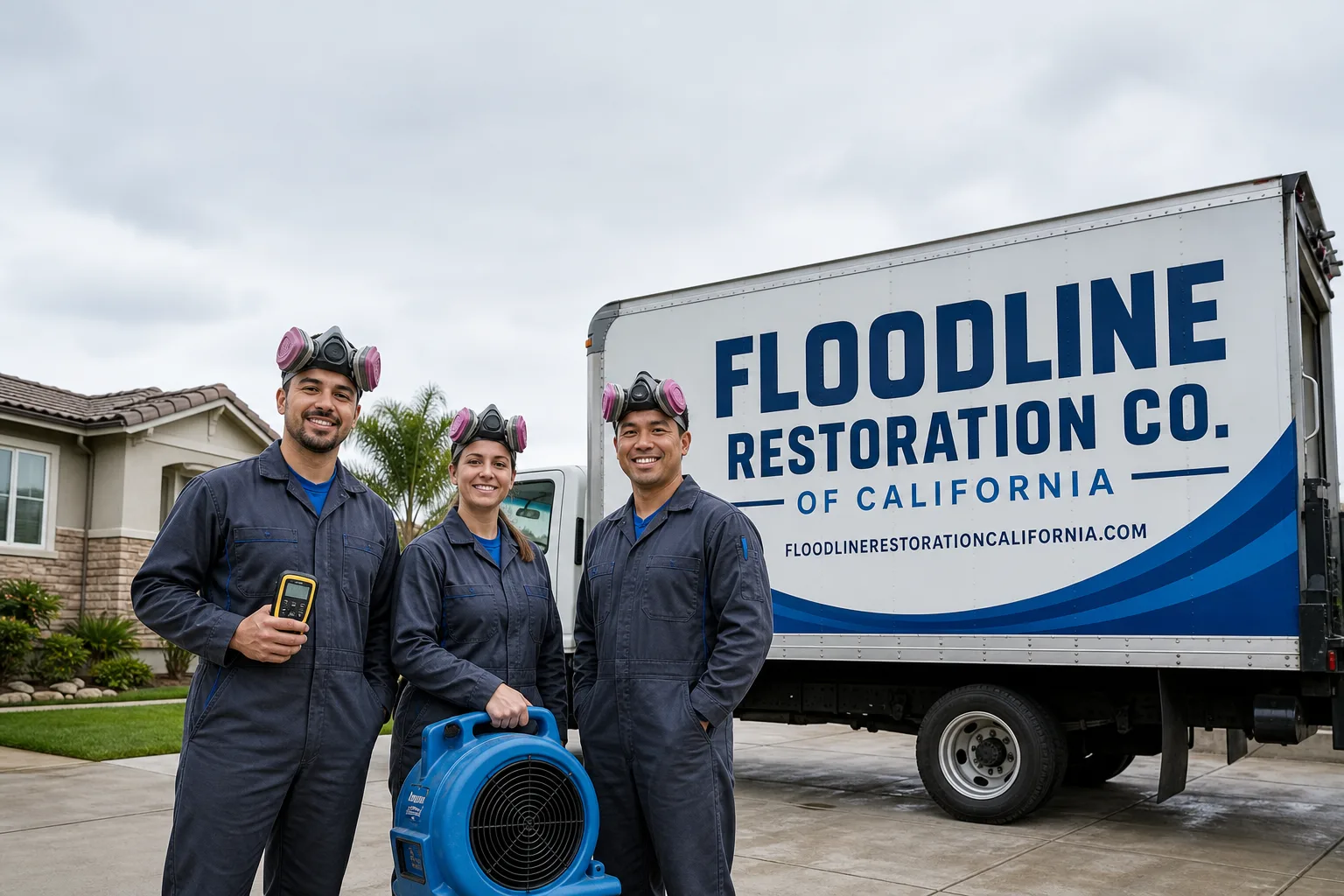
Fast, Reliable Mold Remediation Across Monrovia
Mold remediation in Monrovia typically runs $1,800-$6,500 depending on the size of the affected area and whether mud, ash, or crawl space contamination is involved. Most jobs we handle in Monrovia are completed within three to five working days, and we answer the phone live around the clock. If you’re standing in a house on Hillcrest or Canyon Boulevard with water staining spreading across a plaster wall, call (888) 737-2439 now. We’ll walk you through what you’re seeing and get a certified crew to your door the same day.
Floodline Restoration Co. of California has worked on homes throughout Monrovia’s older neighborhoods long enough to know exactly what this city’s housing stock does when it gets wet. The 1920s Craftsman bungalows off Myrtle Avenue, the Spanish Colonials near downtown, the mid-century homes climbing toward the foothills: each one holds moisture differently, and treating them all the same is how mold comes back. We don’t do that.
Why Floodline Restoration Co. of California Is Monrovia’s Preferred Mold Remediation Company
Monrovia homeowners tend to be careful about who they let into their houses, and they should be. Many have lived here twenty years or more, raised families in these homes, and plan to stay. They’ve heard stories about remediation crews that rip out drywall, kick up a cloud of spores, and vanish before the job’s actually dry. That’s not how we work.
Every technician we send into a Monrovia home is background-checked, uniformed, and certified to IICRC, RIA, and IFA standards. We document the job with photos from the first moisture-map reading to the final clearance test, and we hand that log to the homeowner and the insurance carrier. The 90-Day Done Right Promise backs every job in writing. If the mold comes back inside ninety days, we make it right. No arguing, no paperwork battles. That’s the Keystone Standard, and it’s tied to a values code we don’t bend: Krafted right, Every time, Your home first, Standing behind it.
Response time here matters because of where Monrovia sits. We dispatch from our Los Angeles office, and crews reach most of Monrovia within 45 to 75 minutes of your call. The faster water is extraction and drying starts, the less mold can establish. If you call at 2 a.m. from a house off Foothill Boulevard with water running out of the crawl space, a live dispatcher picks up and gets a team moving. Not a recording.
Our Mold Remediation Services in Monrovia
Mold Inspection & Testing
Before we touch anything, we map the moisture. In Monrovia’s prewar homes, that means checking not just walls but the lath-and-plaster assemblies behind them, the rim joists, and the crawl space that so many hillside and foothill properties have. Air sampling and surface testing tell us what species we’re dealing with and how far it’s spread. You get a written scope before work starts, so there’s no mystery about what we’re doing or why.
Mold Removal
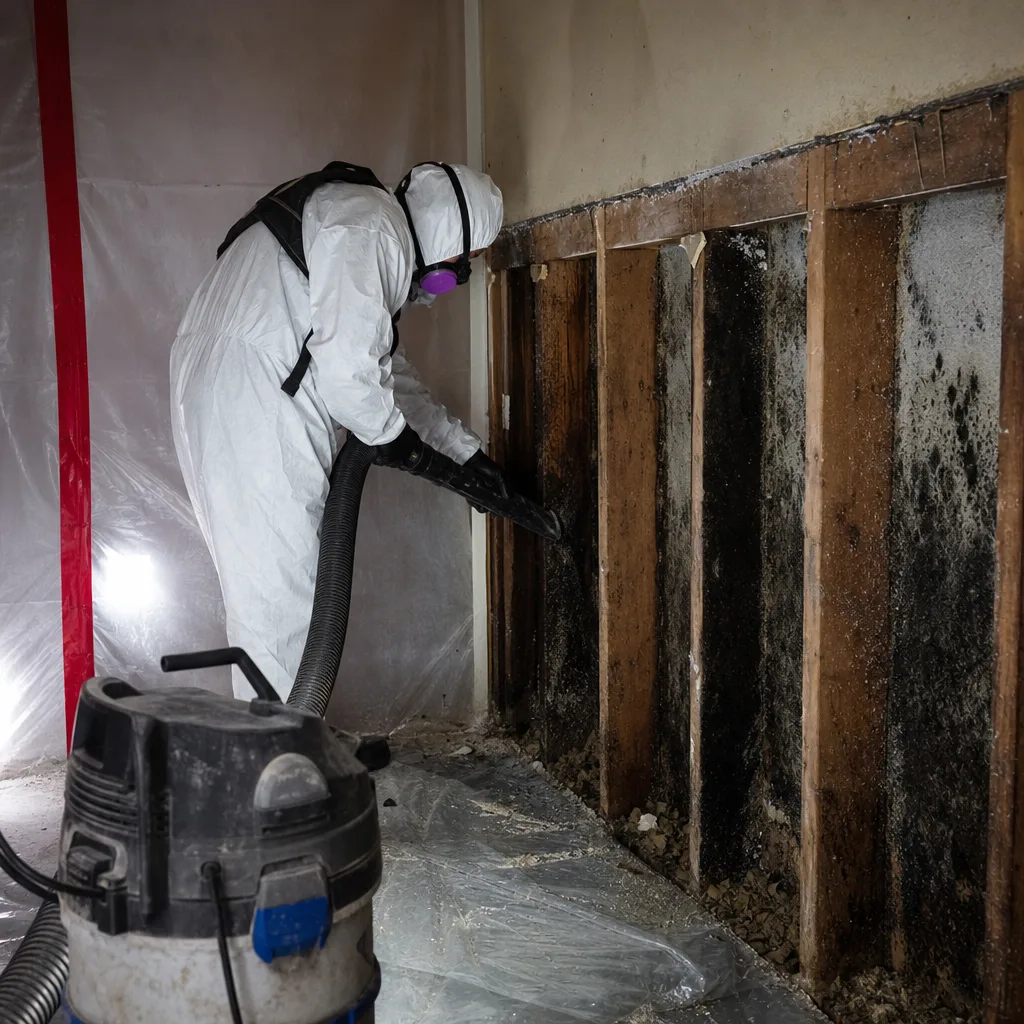
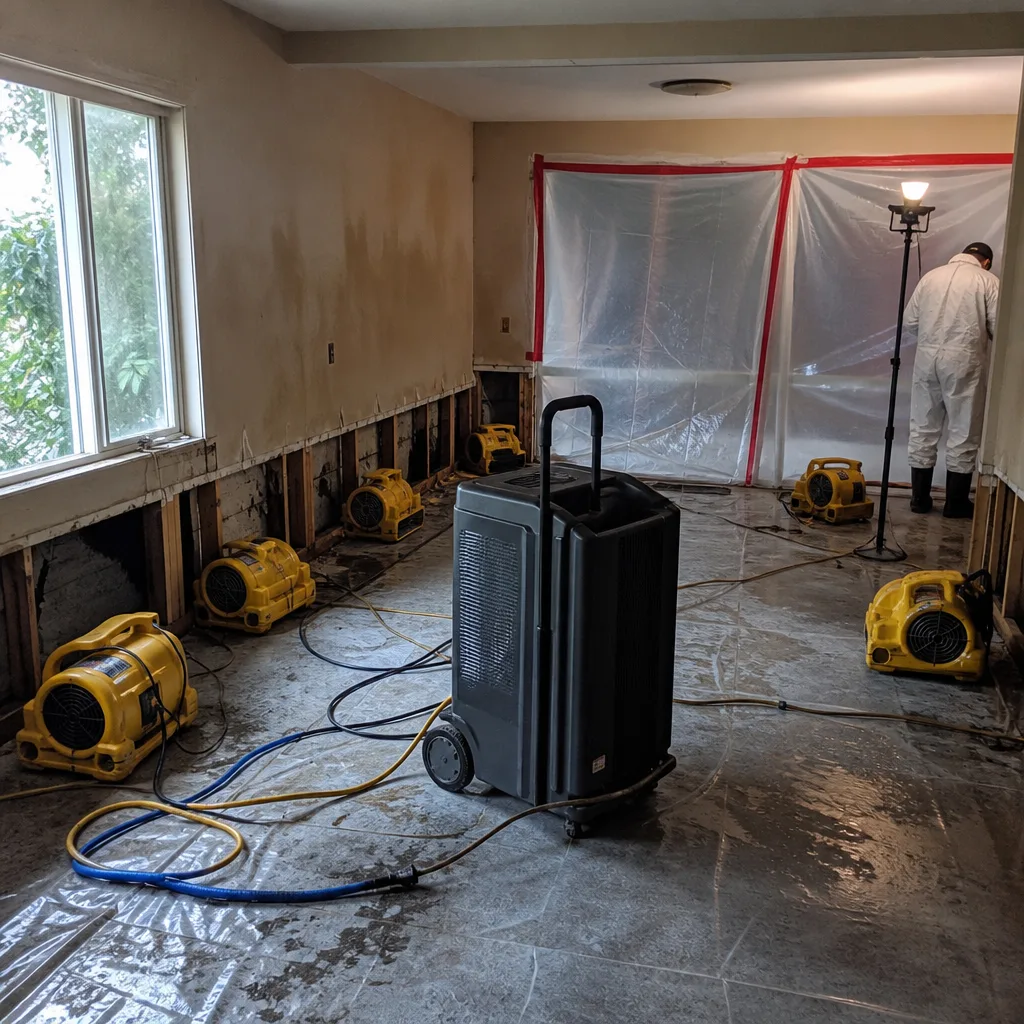
Mold removal in Monrovia often means working around original hardwood floors, old-growth framing, and plaster that’s been on the walls for ninety years. We contain the affected area, run HEPA air scrubbers, remove contaminated material carefully, and treat surfaces with professional-grade antimicrobials. The goal is to leave your home structurally intact and measurably clean, not to gut it to the studs because that’s faster.
Black Mold Remediation
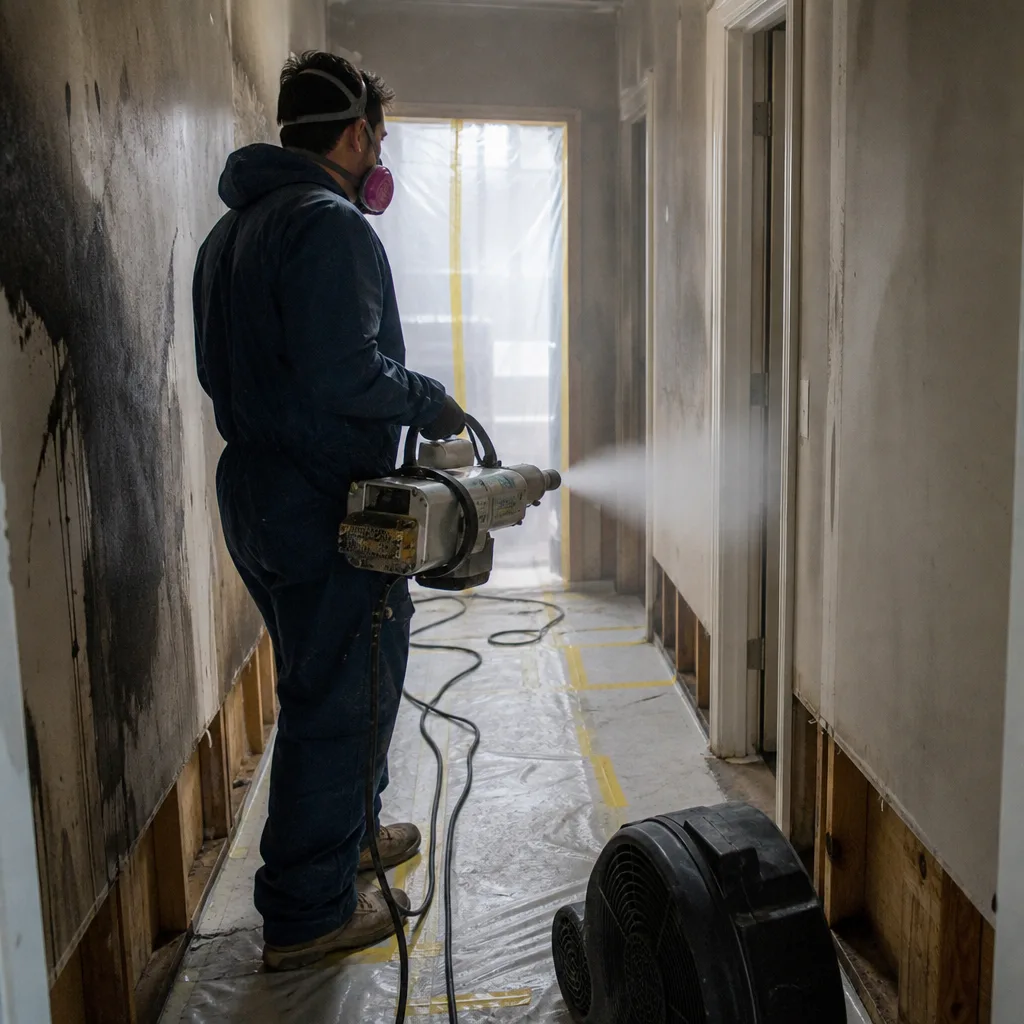
Black mold, most often Stachybotrys chartarum, shows up in Monrovia homes that have had slow leaks behind walls, under bathrooms, or in crawl spaces that never fully dried. It needs more than a cleaning. We isolate the area, create negative air pressure so spores don’t spread through the rest of the house, remove affected porous material, and treat framing before any rebuilding happens. If you suspect black mold, don’t scrub it yourself; that releases spores. Call (888) 737-2439 and let trained crews handle it.
Air Quality Restoration
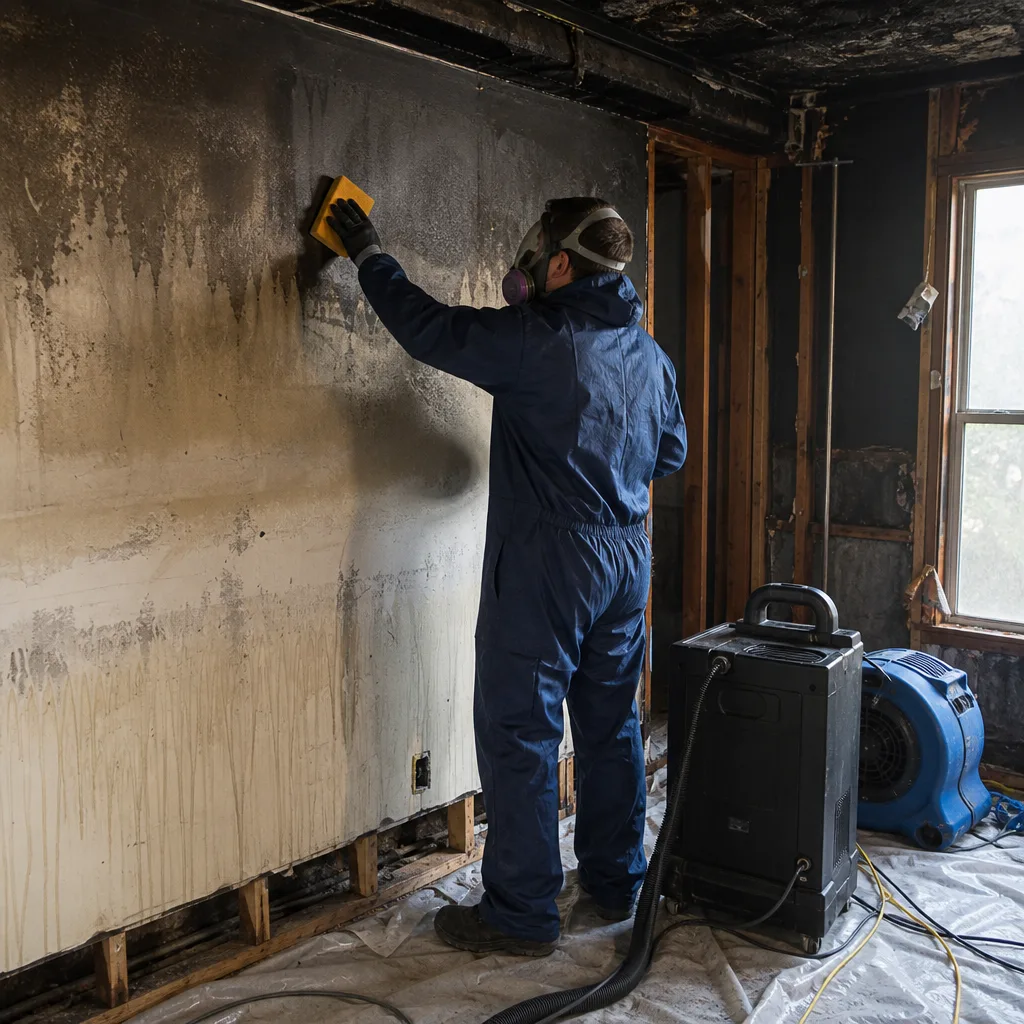
After structural mold removal, the air in your home still carries spores until it’s filtered and cleared. We run HEPA air scrubbers and, where needed, address the HVAC system that’s been circulating contaminated air through every room. In Monrovia homes near the San Gabriel Mountain front, this step matters even more, because post-wildfire ash and smoke residue can already be embedded in ductwork from past fire seasons. We test, filter, and document until the air reads clean.
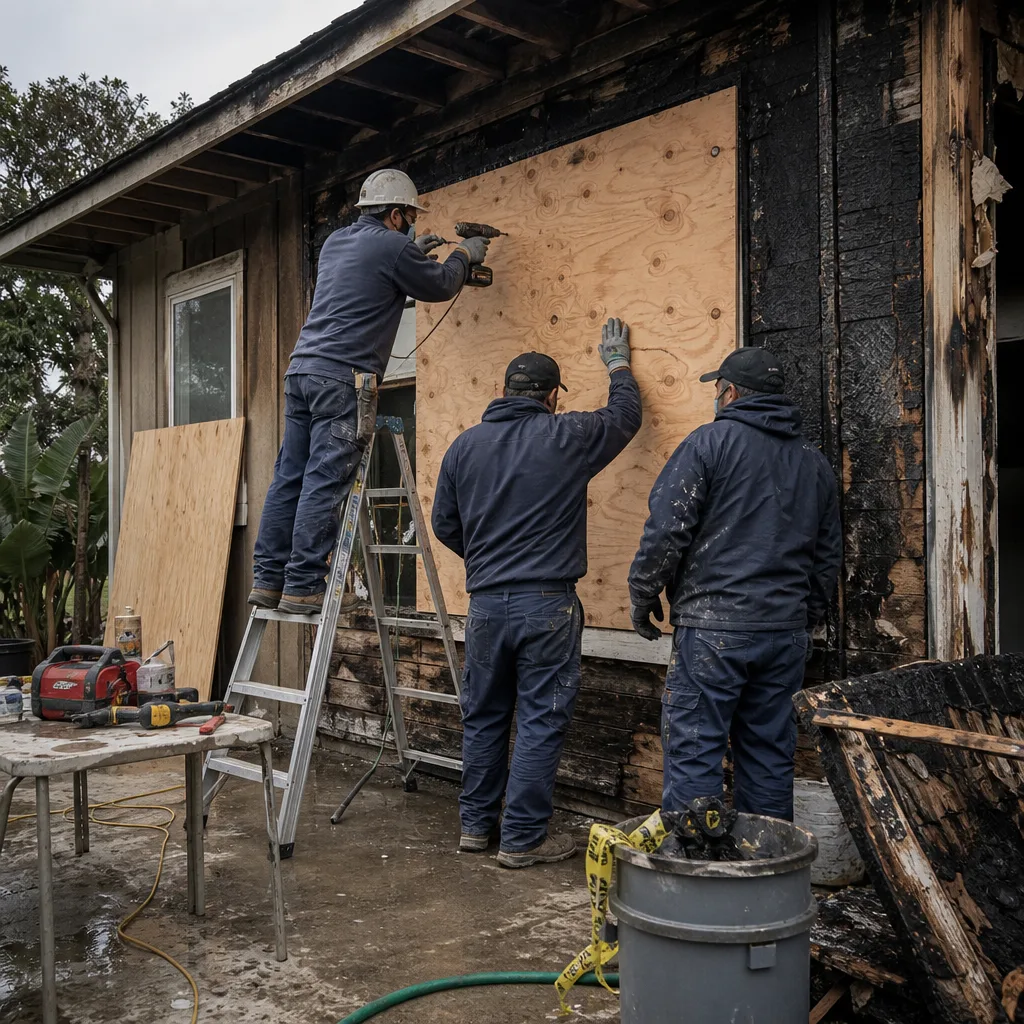
Crawl Space Treatment
This is a service we emphasize in Monrovia because of the debris-flow cycle the city’s mountain-front neighborhoods face. When mud and ash pour into a crawl space, that’s not a standard water loss. It’s a contamination event. Excavation and biohazard protocols come first, then drying and mold treatment. Our crews use professional-grade Dri-Eaz dehumidifiers and Injectidry systems to pull moisture from enclosed spaces, and we log daily readings until the dry standard is met. Skipping the excavation step is how mold ends up recurring months later.
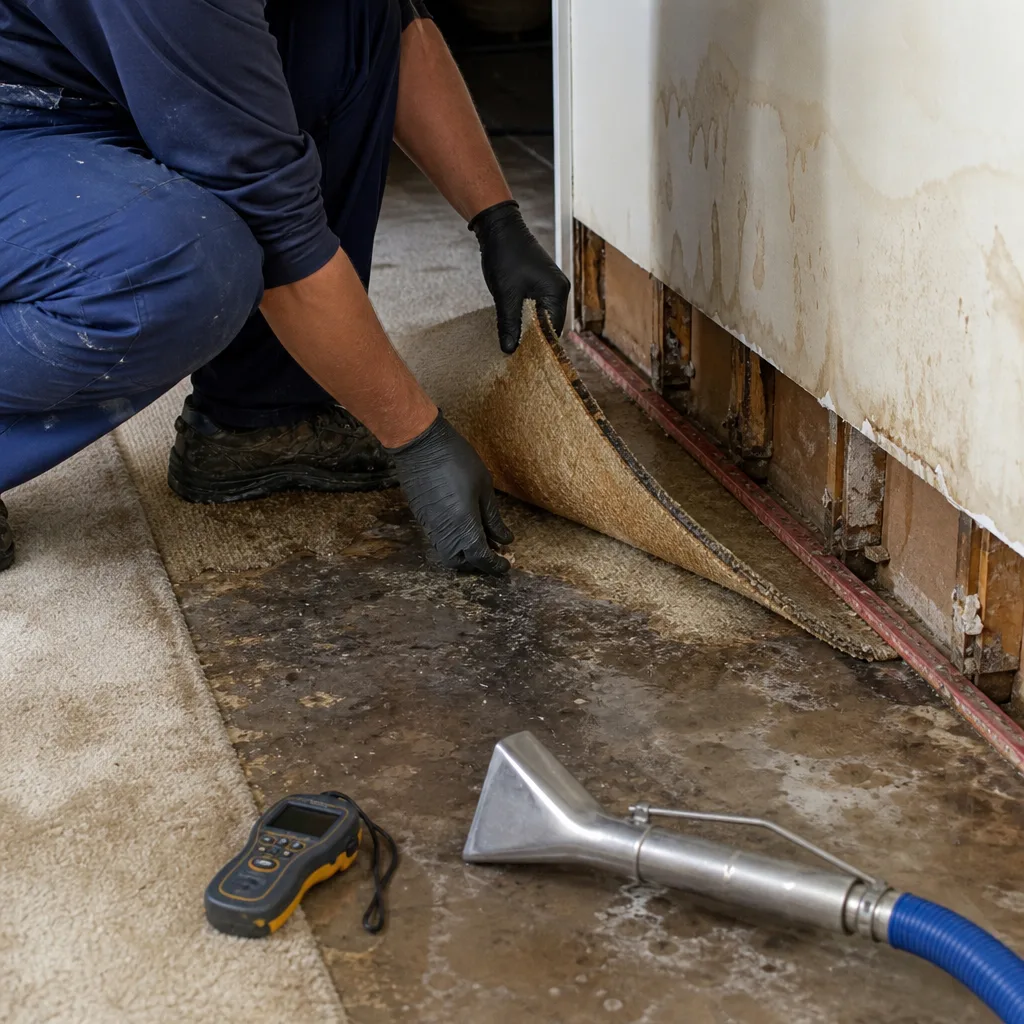
Moisture & Humidity Control
Monrovia’s older homes weren’t built with modern vapor barriers or sealed crawl spaces. Many sit on unventilated or poorly ventilated foundations, especially near the Sawpit Wash corridor where stormwater can back up into properties when debris basins above town hit capacity. We install and maintain crawl space encapsulation, dehumidification, and ventilation systems that keep relative humidity where mold can’t grow, usually below 55 percent. This is prevention, not just cleanup.
What happens when you call
- 1
A real person answersNo phone trees - you reach a local pro.
- 2
You get an upfront price rangeHonest numbers before anyone is dispatched.
- 3
A background-checked tech heads outLicensed & insured, dispatched right away.
- 4
You approve before work beginsNothing starts until you say go.
Trusted Brands We Service in Monrovia
We run professional-grade equipment from Dri-Eaz and Phoenix on Monrovia jobs, and our techs are trained to RIA and IFA standards. That means our drying systems move more liters of water per day than rental units, and our moisture maps tell us when a wall is actually dry behind the plaster, not just dry to the touch on the surface. We stock replacement filters, antimicrobial treatments, and dehumidifier parts locally, so a Monrovia job doesn’t stall waiting for equipment. You get the same crew from first reading to final clearance test.
Common Mold Remediation Problems We See in Monrovia Homes
- Mud intrusion treated as a standard water loss: Technicians from outside the area often don’t know that a mud event in a Monrovia crawl space is a biohazard situation. They skip excavation and leave spores and sediment behind. We’ve walked into homes near the base of the San Gabriels where a previous crew had dried the floorboards and called it done, while contaminated mud sat in the crawl space growing mold beneath the entire house.
- Plaster-and-lath walls declared dry too early: Plaster absorbs water slowly and releases it slowly. A moisture meter reading on the surface can look fine while the wood lath behind the plaster is still soaked. If the job ends there, mold grows behind the wall over the next several weeks. We use penetrating meters and daily readings until the whole assembly, not just the surface, meets the dry standard.
- Post-fire ash in the HVAC system recirculating spores: Monrovia’s position at the mountain front means past fire seasons can leave smoke and ash residue in attic insulation and ductwork. If mold remediation doesn’t address the HVAC, the system can keep blowing spores through the house after surfaces are clean. We inspect and clean the system as part of the job when testing shows it’s contaminated.
- Canyon wind drainage accelerating surface drying while hidden cavities stay wet: Monrovia’s wind exposure from canyon drainage can dry visible surfaces quickly, especially during Santa Ana events. That tricks people into thinking the job’s done. But inside wall cavities and under floorboards, moisture lingers. We track the real moisture map, not how the surface looks.
Pricing for Mold Remediation in Monrovia, CA
What you’ll pay depends on the size of the affected area, the contamination type, and whether mud or ash excavation is part of the job. Here are typical ranges for Monrovia work:
- Mold inspection and testing: $300-$700, depending on the number of samples and whether air quality testing is included.
- Small mold removal (under 10 sq ft, no structural damage): $800-$1,800.
- Full room or multiple-room mold remediation with containment and HEPA scrubbing: $2,500-$6,500.
- Crawl space treatment with mud excavation and biohazard protocols: $3,000-$9,000, depending on the size and depth of the sediment.
- HVAC cleaning after mold or ash contamination: $400-$1,200 per system.
Factors that push costs higher in Monrovia include older construction with multiple layers of material, access constraints in hillside homes, and the need to restore a structure, not just clean it. We give a written estimate before any work starts, with a scope that details what we’ll do and what it costs. The $50 Off Any Repair Over $250 and the Senior & Veteran 5% discount both apply. Call (888) 737-2439 for an exact quote. Estimates are free.
We Also Serve Cities Near Monrovia
Our Mold Remediation teams work throughout the San Gabriel Valley. If you live in Mayflower Village, Duarte, Arcadia, or Sierra Madre, we handle Mold Remediation in Monrovia and the surrounding communities with the same live dispatch, the same certified crews, and the same written guarantee. Call (888) 737-2439 and a real person answers.
Serving Monrovia, CA - Our Local Coverage Area
We’re based in the Monrovia area and know this community well. Use the map below to see our service coverage - if you’re nearby, we can almost certainly help.
FAQs - Mold Remediation in Monrovia
Yes. After fires strip vegetation from the San Gabriel Mountains above Monrovia, the next rainy season can send debris flows into the northern residential streets, filling crawl spaces and wall cavities with sediment, ash, and biological contaminants. That’s a layered contamination scenario: smoke and ash residue first, then mud and flood intrusion months later. Remediation here starts with debris excavation and biohazard protocols before standard structural drying can begin. A crew that treats it as a simple water loss leaves contaminants behind, and mold returns. Call (888) 737-2439 if you’re dealing with post-fire mud and suspect mold.
Plaster-and-lath walls dry much slower than modern drywall, and they hold water behind the surface long after the visible wall looks dry. That means we take more time with moisture mapping and daily readings on older Monrovia homes, and we don’t declare a job finished until the whole wall assembly hits the dry standard. The same applies to original hardwood floors and early galvanized plumbing. Slower drying is a feature of these homes, not a shortcut we take.
Yes. The north end of Monrovia, particularly streets approaching Hillcrest Boulevard near the mountain interface, sees the highest incidence of debris-flow intrusion. Homes near the Sawpit Wash corridor can also experience stormwater backup when debris basins above town reach capacity. Properties in those areas, especially older ones with vented crawl spaces, are more likely to develop mold after a rainy season event. If your home sits in that zone, it’s worth having the crawl space inspected even if you don’t see visible mold.
No. Test before cleanup if possible, or at least document the contamination with photos before disturbing it. Disturbing mold-contaminated mud spreads spores through the air and into other parts of the house. A professional assessment right after the event tells you what you’re dealing with before excavation starts, so the remediation plan addresses the full scope, not just the visible surface. If you’ve already cleaned up the mud and are now seeing mold, call (888) 737-2439 for an inspection.
Canyon drainage winds can dry visible surfaces quickly, especially during Santa Ana events, which can hide the fact that wall cavities and subfloor spaces are still wet. The surface looks dry, so people assume the problem’s resolved. But mold grows inside those hidden cavities. That’s why we use penetrating moisture meters and track readings over multiple days, not just a single visit. The wind may be doing the drying on the outside, but it’s not reaching the inside. Get an exact assessment by calling (888) 737-2439.
Mold doesn’t fix itself, and in Monrovia’s older homes against the mountain front, what you can’t see is usually worse than what you can. We’ll be there when we say, we’ll give you a written scope before work starts, and we’ll stand behind the result in writing. That’s the job. Call Floodline Restoration Co. of California at (888) 737-2439 for a free estimate today.
Written by Curt Bowman, Owner at Floodline Restoration Co. of California, serving Monrovia since 2010.