
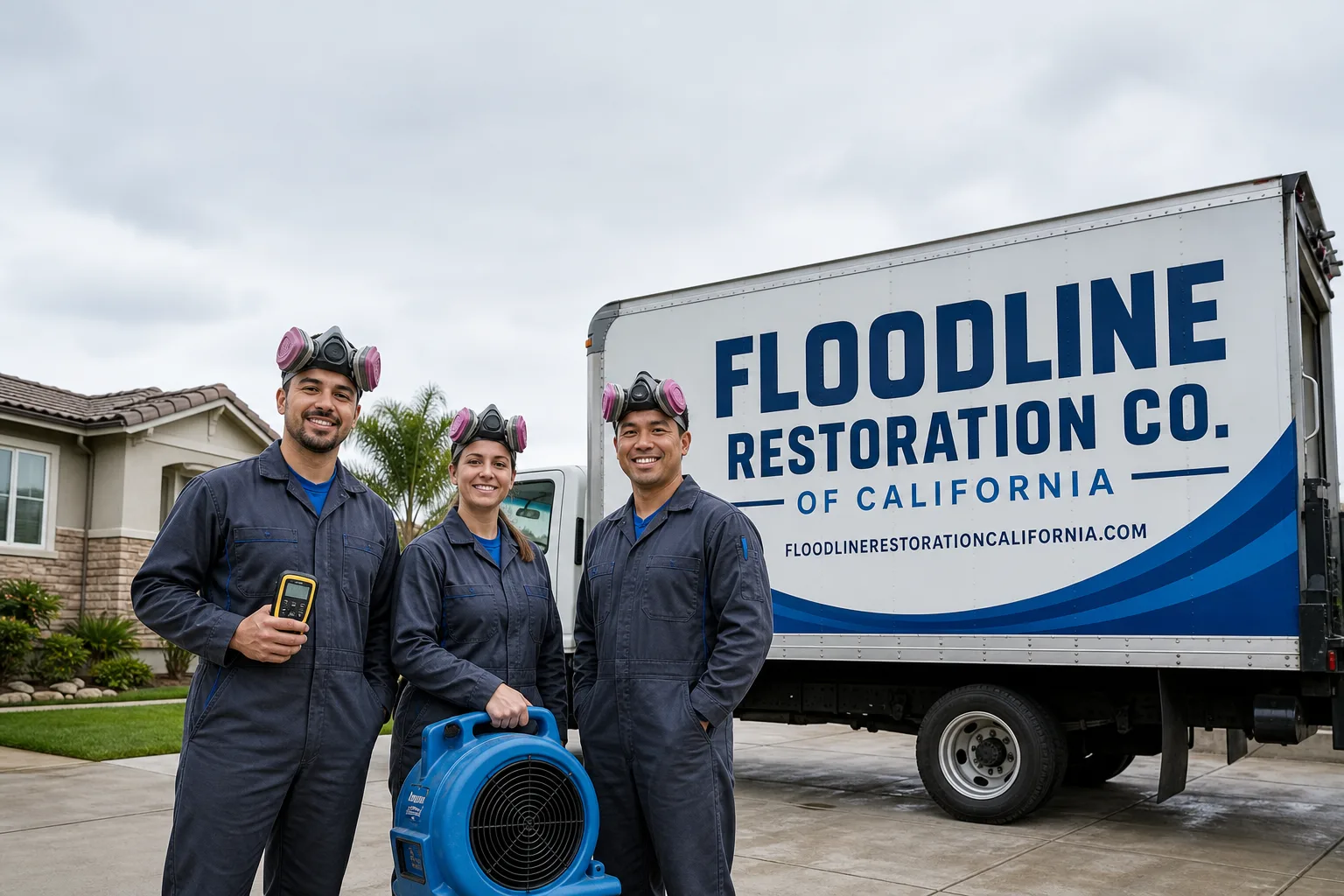
Fast, Reliable Mold Remediation Across Los Angeles
Mold remediation in Los Angeles typically costs between $1,200 and $4,500 for a single contained area, and a certified crew can usually begin work within 24 to 48 hours of your call. Our team at Floodline Restoration Co. of California covers every ZIP in the 90015 through 90018 corridor and beyond, from Koreatown courtyard apartments to 1920s bungalows in South LA. When you call (888) 737-2439, a live dispatcher picks up, not a recording, and a background-checked technician gets scheduled to assess the moisture source before any work begins.
Why Floodline Restoration Co. of California Is Los Angeles’s Preferred Mold Remediation Company
We have spent over a decade working inside Los Angeles housing stock that most national franchises do not understand: original plaster-on-lath walls in View Park-Windsor Hills, unreinforced masonry apartments in Pico-Union, and flat-roofed 1940s courtyard buildings in Koreatown. That matters because mold here does not behave the way it does in Dallas or Minneapolis. It hides behind plaster, follows seismic cracks through stem walls, and spreads fast in 60°F post-storm air. Our technicians are certified to IICRC, RIA, and IFA standards, and every job is backed by the 90-Day Done Right Promise in writing. If the mold comes back within 90 days, we come back. No arguing, no paperwork battles.
Curt Bowman founded Floodline Restoration Co. in 2010 around a dispatch board, not a sales desk. The result is what Los Angeles homeowners repeatedly tell us they want: a live person at two in the morning, a uniformed technician who shows up when promised, and a written scope before any work begins. We serve Los Angeles through our local office, with crews dispatched from within the metro area.
Our Mold Remediation Services in Los Angeles
Mold Inspection & Testing
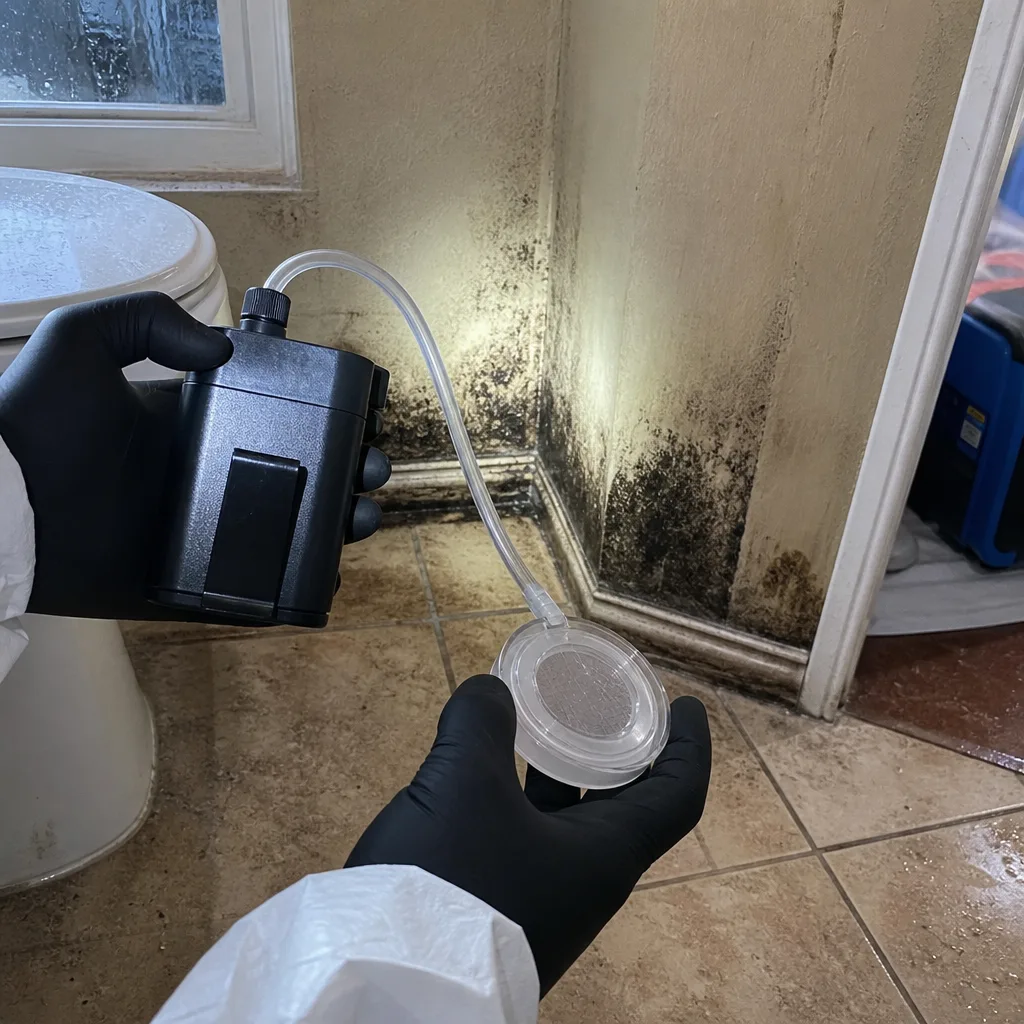
In Los Angeles, a proper mold inspection starts with the building, not the stain. That means checking flat-roof drains in Koreatown courtyard apartments before anyone looks at the ceiling below them. It means checking stem-wall cracks from past earthquakes in 1920s wood-frame bungalows. We do not just swab a patch of drywall and call it done. We trace moisture with professional-grade Dri-Eaz and Phoenix equipment, take air samples where needed, and give you a straight answer about what is alive and what is just staining.
Mold Removal
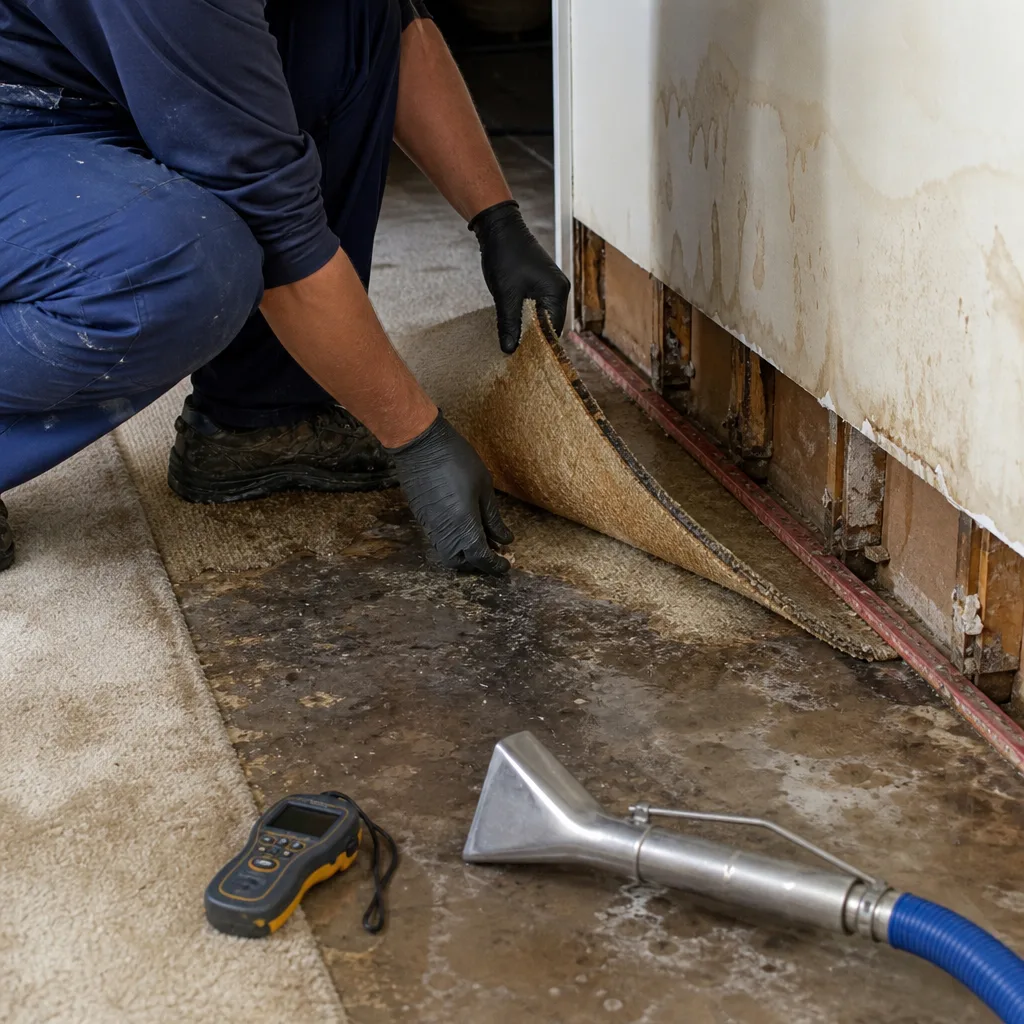
Mold removal in Los Angeles homes often means opening walls that have not been touched since the Roosevelt administration. Original plaster-on-lath holds moisture for weeks before anything becomes visible, especially in the dense 90001 to 90010 corridor. Our crew contains the affected area, removes contaminated material down to sound structure, and runs HEPA air scrubbers throughout the process. We do not treat mold as a surface problem because in this city, it rarely is one.
Black Mold Remediation
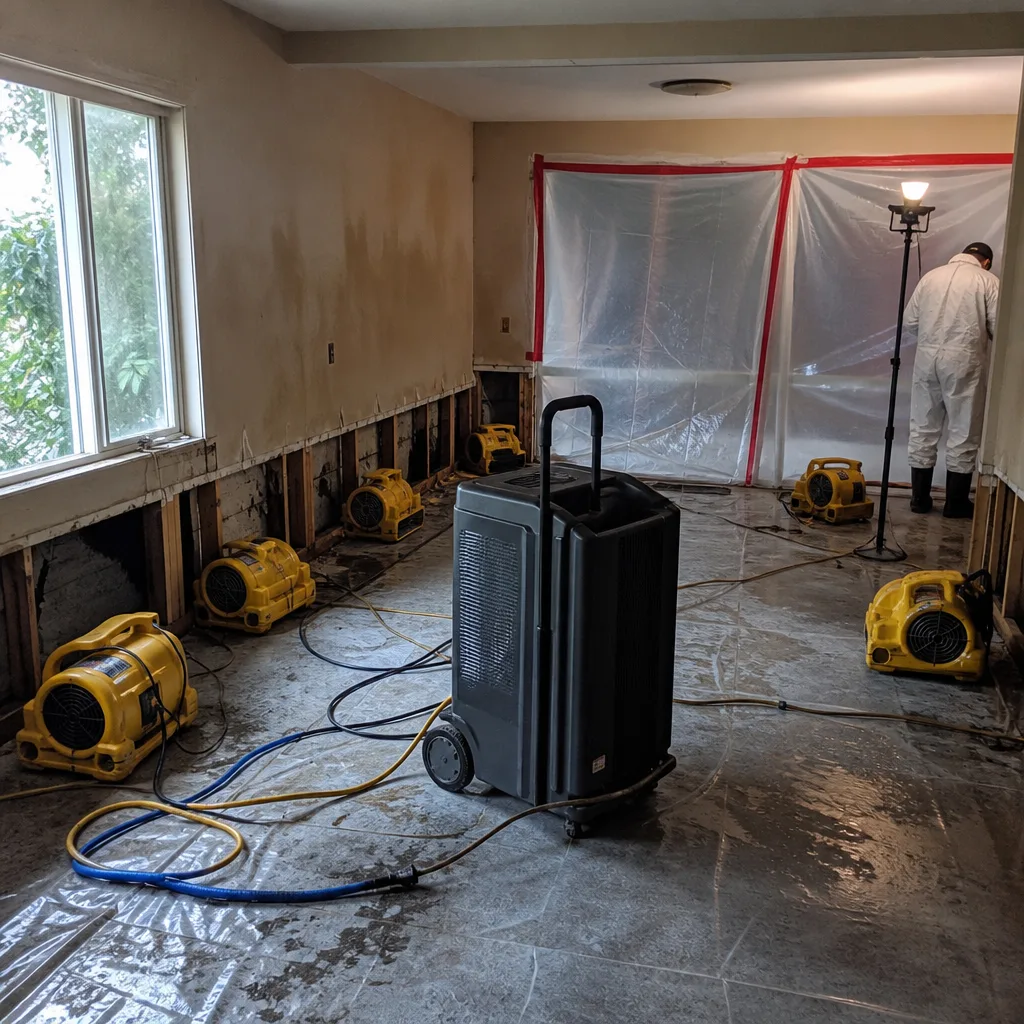
Black mold in Los Angeles apartment buildings and older homes often traces back to water that sat unnoticed: a slow roof-drain leak, a cracked plumbing stack, a seismic crack that let atmospheric river water wick into a wall. We remediate the source first, then the growth. Every black mold job includes air quality testing before we seal the containment area, so you know what the spore count was before and after. That is the only way to verify the job worked.
Air Quality Restoration
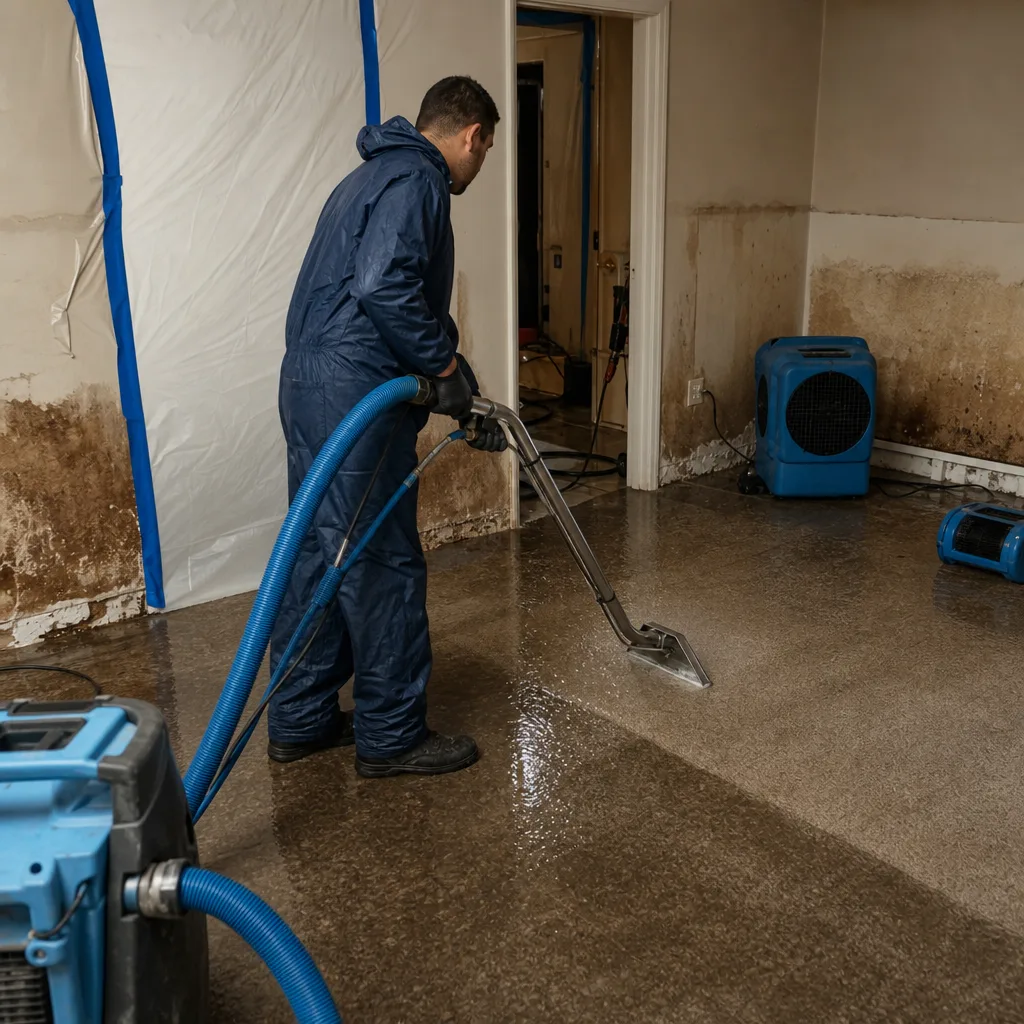
After mold is removed, the air in a Los Angeles home can still carry elevated spore counts for days or weeks. We run professional-grade air scrubbers and dry the structure to the dry standard, logging readings daily until conditions are stable. South LA and Koreatown homes with original plaster walls breathe differently than modern drywall construction, and our drying plans account for that. You get a moisture log and air quality documentation you can hand directly to your insurance carrier.
What happens when you call
- 1
A real person answersNo phone trees - you reach a local pro.
- 2
You get an upfront price rangeHonest numbers before anyone is dispatched.
- 3
A background-checked tech heads outLicensed & insured, dispatched right away.
- 4
You approve before work beginsNothing starts until you say go.
Trusted Brands We Service in Los Angeles
We run Dri-Eaz dehumidifiers, Phoenix axial air movers, and XPOWER air scrubbers on Los Angeles mold jobs, because this is a city where drying windows compress fast after a storm. Post-storm temperatures rarely fall below 60°F, meaning mold colonies establish visibly within 48 to 72 hours. You cannot wait three days for a rental unit to arrive. Our equipment is on our trucks, and our technicians are trained to RIA and IFA standards, so the dry-out starts the same visit, not the next day.
Common Mold Remediation Problems We See in Los Angeles Homes
- Flat-roof drain blockages in Koreatown and Pico-Union: Debris-clogged interior drains on 1940s courtyard buildings send water through multiple unit ceilings in one storm. We start every Koreatown assessment at the roof drain, because the water stain on the ceiling only tells you where the water ended up, not where it came from.
- Seismic cracks letting water in quietly: Past earthquake damage in stem walls and framing creates hidden pathways for atmospheric river water to wick into 1920s wood-frame bungalows. Mold grows behind plaster for weeks before anything shows on the paint.
- Moisture trapped behind original plaster-on-lath: In South LA’s dense older housing, water sits inside plaster walls and ceilings long after the surface feels dry. A mandatory habitability review often flags what the homeowner never saw.
- Waiting too long after a storm: Because Los Angeles remains above 60°F after January storms, mold colonies can become visible within 48 to 72 hours of water intrusion. The longer a homeowner waits, the larger the containment area becomes.
Pricing for Mold Remediation in Los Angeles, CA
A typical Mold Inspection & Air Quality Assessment in Los Angeles runs $350 to $650 depending on the number of samples and the building size. A single-room mold removal and containment job generally runs $1,200 to $2,800. A whole-wall or multi-room remediation with air scrubbers and dry-out typically runs $3,500 to $4,500, and severe jobs with extensive structural opening run higher. Koreatown URM buildings with multiple affected units and city habitability review requirements tend to run toward the upper end. Every quote includes a written scope before work begins, and Floodline Restoration Co. bills your insurance carrier directly, so you are not playing messenger. Call (888) 737-2439 for a free estimate.
We Also Serve Cities Near Los Angeles
Our Mold Remediation crews serve Koreatown, Echo Park, Silver Lake, and View Park-Windsor Hills, along with the full 90015, 90016, 90017, and 90018 ZIP codes. Since we dispatch from Los Angeles, you get a local crew that knows the difference between a 1920s bungalow problem and a 1960s courtyard apartment problem. Read more about our Mold Remediation in Los Angeles coverage and service area.
Serving Los Angeles, CA - Our Local Coverage Area
We’re based in the Los Angeles area and know this community well. Use the map below to see our service coverage - if you’re nearby, we can almost certainly help.
FAQs - Mold Remediation in Los Angeles
Because Los Angeles’s extended dry season bakes flat-roof membranes and caulk brittle, and the first atmospheric river of the season finds every crack at once. Post-storm air stays above 60°F, which lets mold colonies establish visibly within 48 to 72 hours. A building that leaked zero drops all summer can suddenly fail in a single 48-hour rain event. If you see staining after a storm, call (888) 737-2439 the same day.
Earthquake cracks in stem walls and framing create pathways for water to wick into wall cavities without ever pooling on a floor. In a 1920s wood-frame building, those cracks can carry atmospheric river moisture into plaster-on-lath walls where mold grows hidden for weeks. Before any remediation in Koreatown or Pico-Union, we trace framing and check for seismic damage, because treating the mold without sealing the pathway means the mold comes back.
Because in Pico-Union’s flat-roofed 1940s courtyard buildings, the water stain on your ceiling usually means a clogged roof drain sent water through multiple units at once. Our crews learn to start every assessment at the roof drain, not the stain. In Koreatown, our crew started at the roof drain on a 1940s courtyard apartment after a January atmospheric river. Clogged interior drains had sent water through ceilings of multiple units simultaneously. We used Dri-Eaz dehumidifiers and XPOWER air movers to dry plaster-on-lath walls within 72 hours, preventing a visible mold bloom in the 60°F post-storm air.
Yes. URM buildings in Koreatown and Pico-Union sustain parapet cracks and wall separations even in moderate seismic events, and those openings let water enter in non-obvious ways. Mandatory city habitability reviews may be required before restoration work can proceed, and moisture inside thick masonry walls takes longer to dry than wood-frame cavities. Our drying plans for URM buildings account for the longer drying time and the need for documented readings before remediation closes out.
You have roughly 48 to 72 hours after water intrusion before visible mold colonies establish, given Los Angeles’s post-storm temperatures. That means inspection should happen the same day the water appears, with dry-out beginning within 24 hours when possible. The faster the structure is dried, the smaller the remediation footprint. If you are inside that window now, call (888) 737-2439 and a live dispatcher will get a certified technician to your Los Angeles property.
Written by Curt Bowman, Owner at Floodline Restoration Co. of California, serving Los Angeles since 2010.