
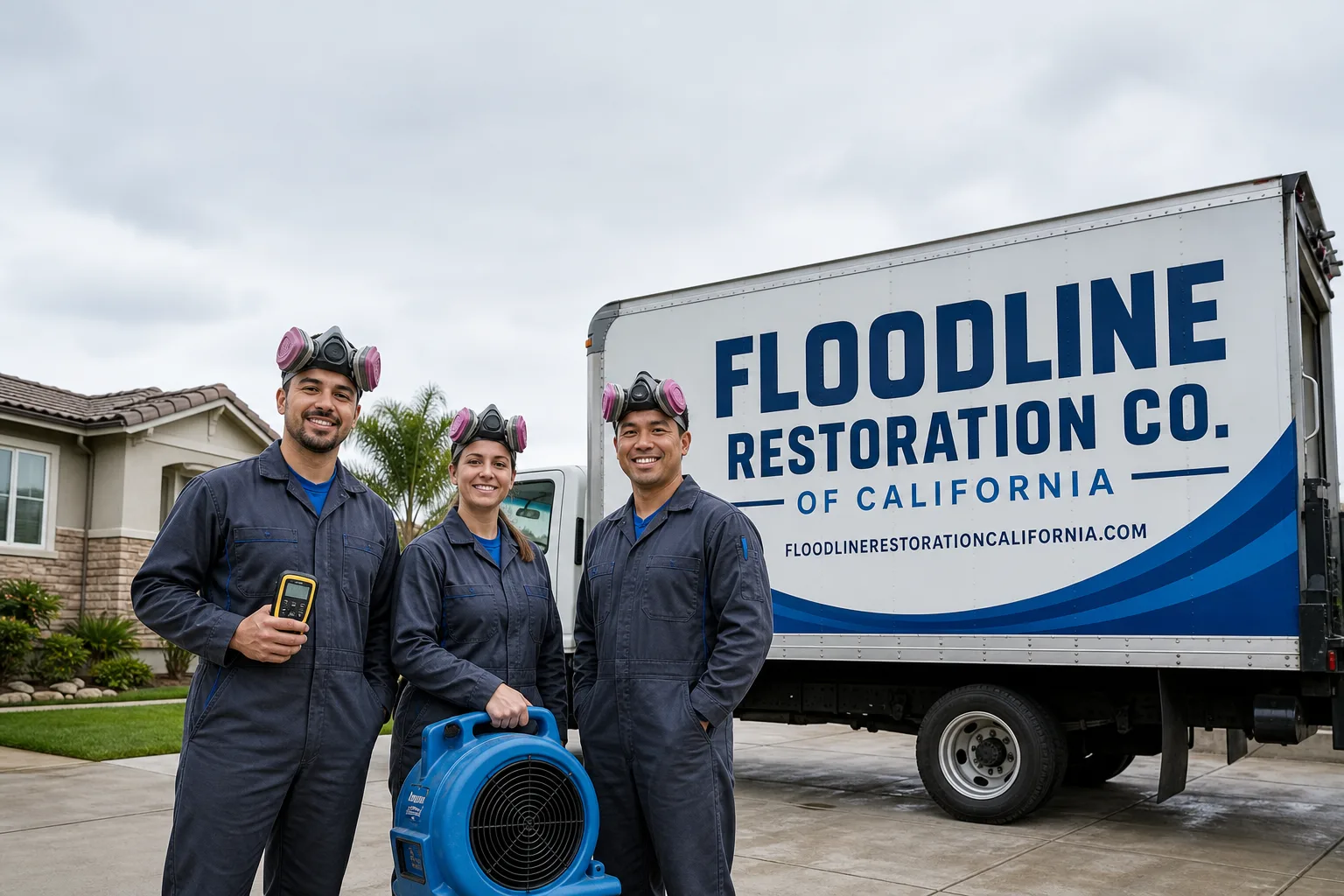
Fast, Reliable Mold Remediation Across Loomis
Mold remediation in Loomis typically costs $1,800-$6,500 depending on how far moisture has traveled through a crawl space or wall cavity, and most jobs our crews handle here are finished in two to five days. If you’re seeing black staining on drywall, smelling must in a hallway, or noticing condensation on crawl-space vents after a storm, call (888) 737-2439 and a live dispatcher will route a certified crew to your Loomis property the same day. We’ve worked the ranches and rural parcels between King Road, Horseshoe Bar Road, and Sierra College Boulevard long enough to know that the first visible stain is rarely the whole story.
Key Takeaways for Loomis Homeowners
- Mold in Loomis hides in crawl spaces: most homes here sit on unconditioned crawl-space foundations from the 1950s through 1980s, and that’s where black mold usually starts before you ever see it on drywall.
- Private septic systems change the risk picture: a failed leach field or backed-up line can push moisture into a crawl space silently, long before a smell reaches the living area.
- Pricing is transparent and specific: crawl space encapsulation runs $3,500-$9,000, containment and mold removal on a single room runs $1,200-$3,800, and air quality restoration after remediation is $400-$1,200. We write the scope before work starts and back it with the 90-Day Done Right Promise.
- Direct insurance billing is standard: we photograph every step, log daily moisture readings, and deal with your adjuster so you don’t have to relay messages.
Why Floodline Restoration Co. of California Is Loomis’s Preferred Mold Remediation Company
Floodline Restoration Co. has been answering calls from Loomis homeowners for over 42 years, and Curt Bowman built this company around a dispatch board, not a sales desk. When a homeowner on Fowler Road calls at 2 a.m. because a water heater let go and black mold is already blooming behind the drywall, a person picks up the phone. Not a recording. The same background-checked, uniformed technicians who read the moisture map on day one handle the daily readings, hand the log to you and your insurance carrier, and rebuild what needs rebuilding. We don’t hand the job off to a sub we’ve never met.
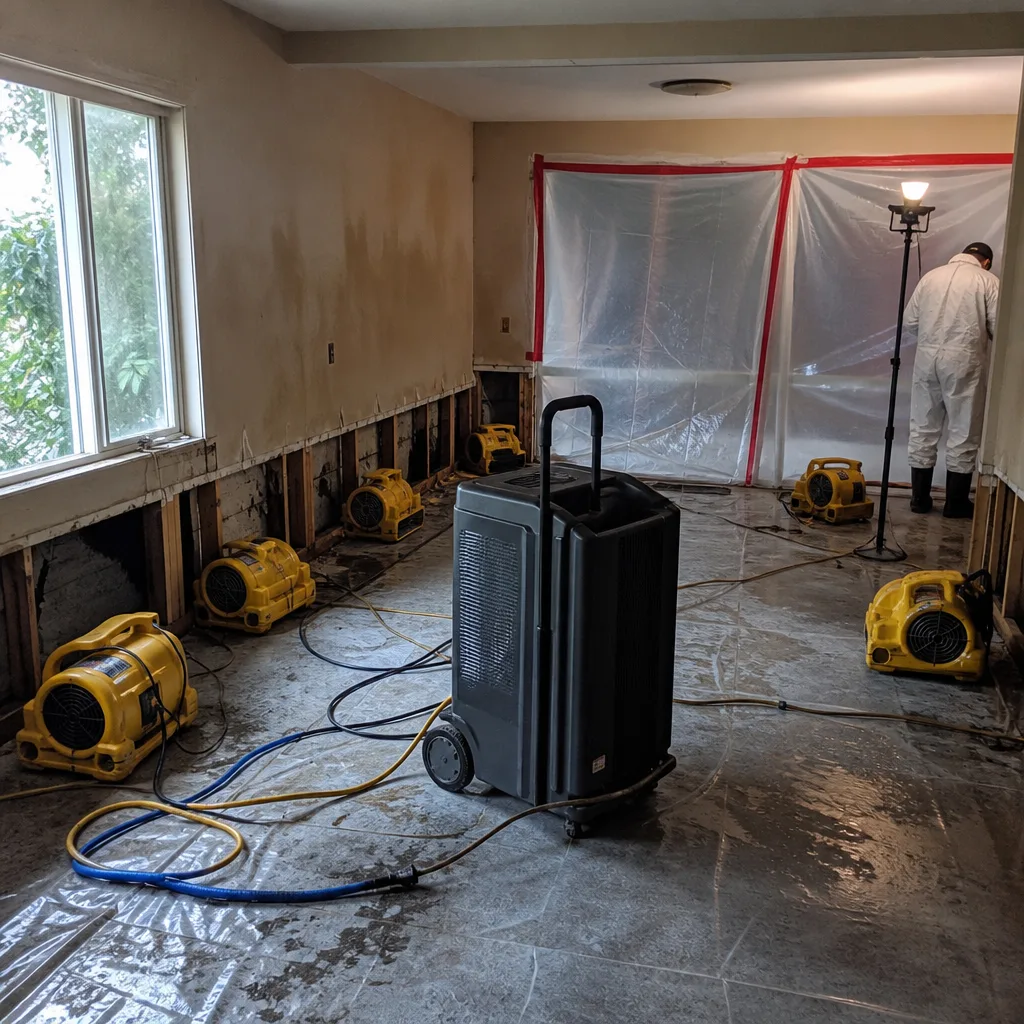
Our crews are trained to IICRC, RIA, and IFA standards and run Dri-Eaz, Phoenix, and XPOWER equipment on Loomis jobs every week. What that means on the ground: HEPA-filtered negative air machines running during containment, daily moisture readings logged until the dry standard is met, and a written scope agreed upon before any demo starts. We stand behind every job with the 90-Day Done Right Promise, in writing, no arguing. If it’s not done right, we make it right. Served by our Sacramento dispatch and scheduling office, crews live and work in the foothill corridor and reach Loomis properties at Wells Avenue, Val Verde Road, or along 95650 zip code roads without a long response delay.
Our Mold Remediation Services in Loomis
Mold Inspection & Testing
Before any containment goes up, our technicians inspect the full moisture chain: roof penetrations, wall cavities, crawl space, and the HVAC return path. In Loomis, that inspection is different from a flat suburban lot in Roseville. We’re looking at original 1970s fiberglass batt insulation in ceilings, unsealed plumbing penetrations between crawl space and living area, and the condition of roofing underlayment that has baked through decades of triple-digit summers. Testing includes spore-count sampling where needed, and the report goes to you and your carrier in plain language, with photo documentation.
Mold Removal
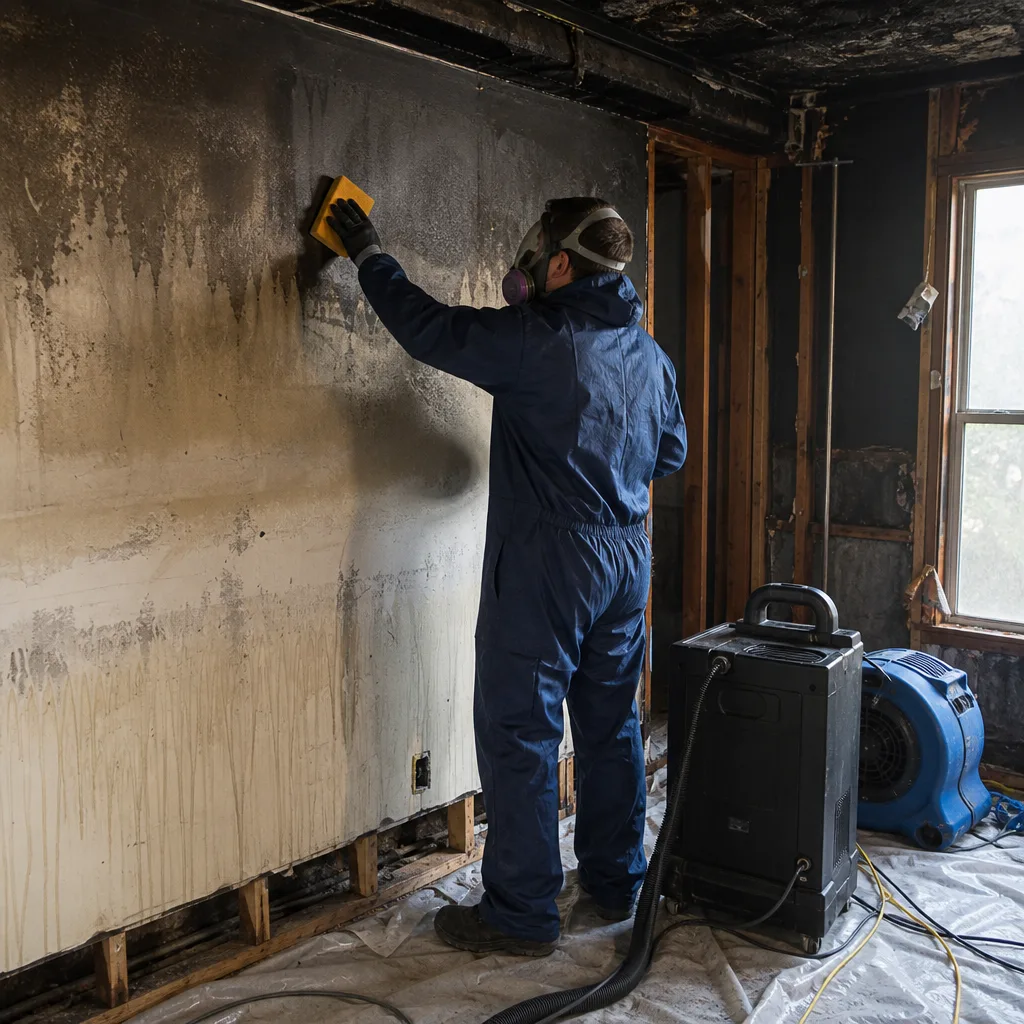
Surface spraying is not mold removal. In Loomis ranch homes, effective mold removal means cutting out saturated drywall, HEPA-vacuuming joists and framing, fogging cavities with an EPA-registered antimicrobial, and verifying with post-remediation air sampling that spore counts have dropped to acceptable levels. Our crews use Dri-Eaz HEPA units on every Loomis job, and we treat the framing, not just the paper backing on drywall that big-box biocides leave alive.
Black Mold Remediation
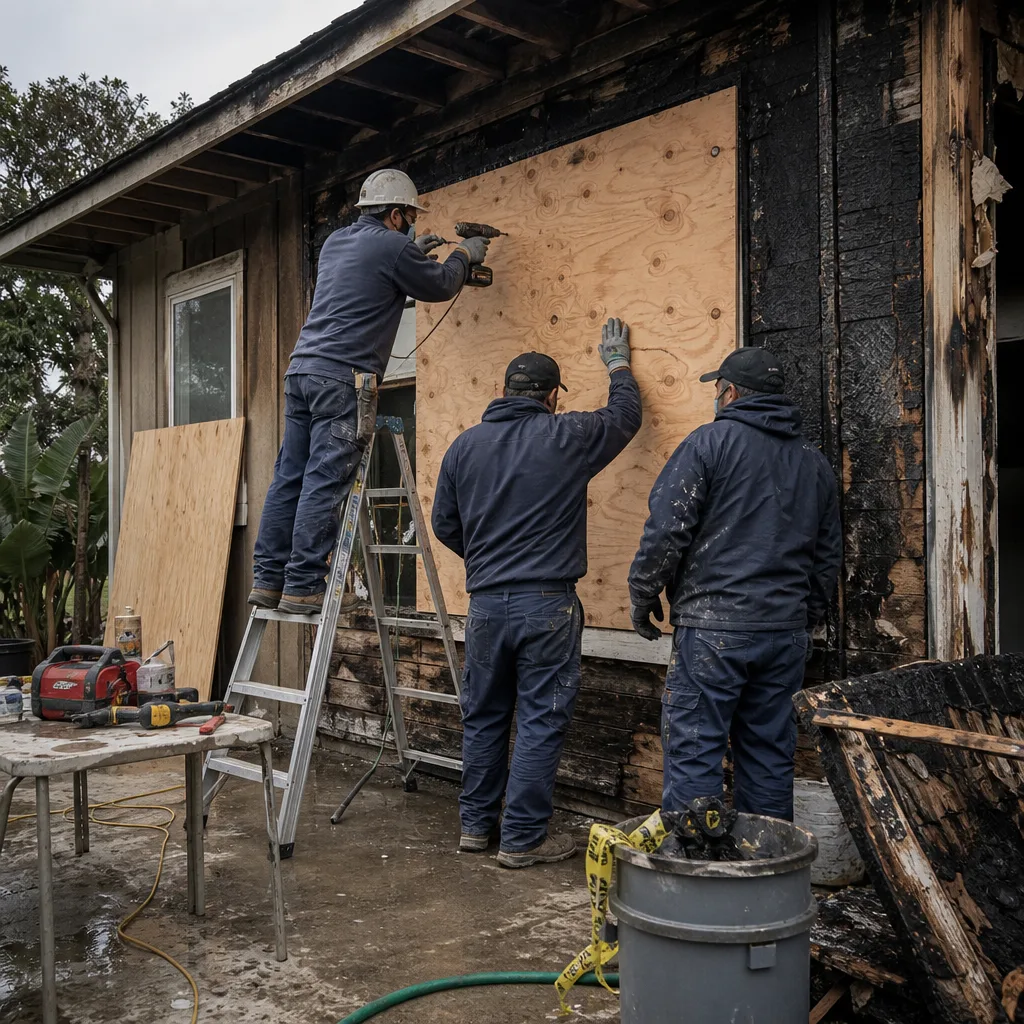
Black mold in Loomis usually announces itself through a crawl space or wall cavity, not a visible patch on living-area drywall. When moisture from a septic backup or a valley oak limb puncture wicks through insulation and sits above 60% relative humidity for a week, Stachybotrys can take hold on floor joists and behind baseboards. Full remediation for black mold requires containment with negative air pressure, removal of affected porous materials, fungicidal treatment of structural wood, and an air scrub running through the finish. We don’t do the shortcut version, and we’ll show you readings at the end that prove the dry standard was met.
Air Quality Restoration
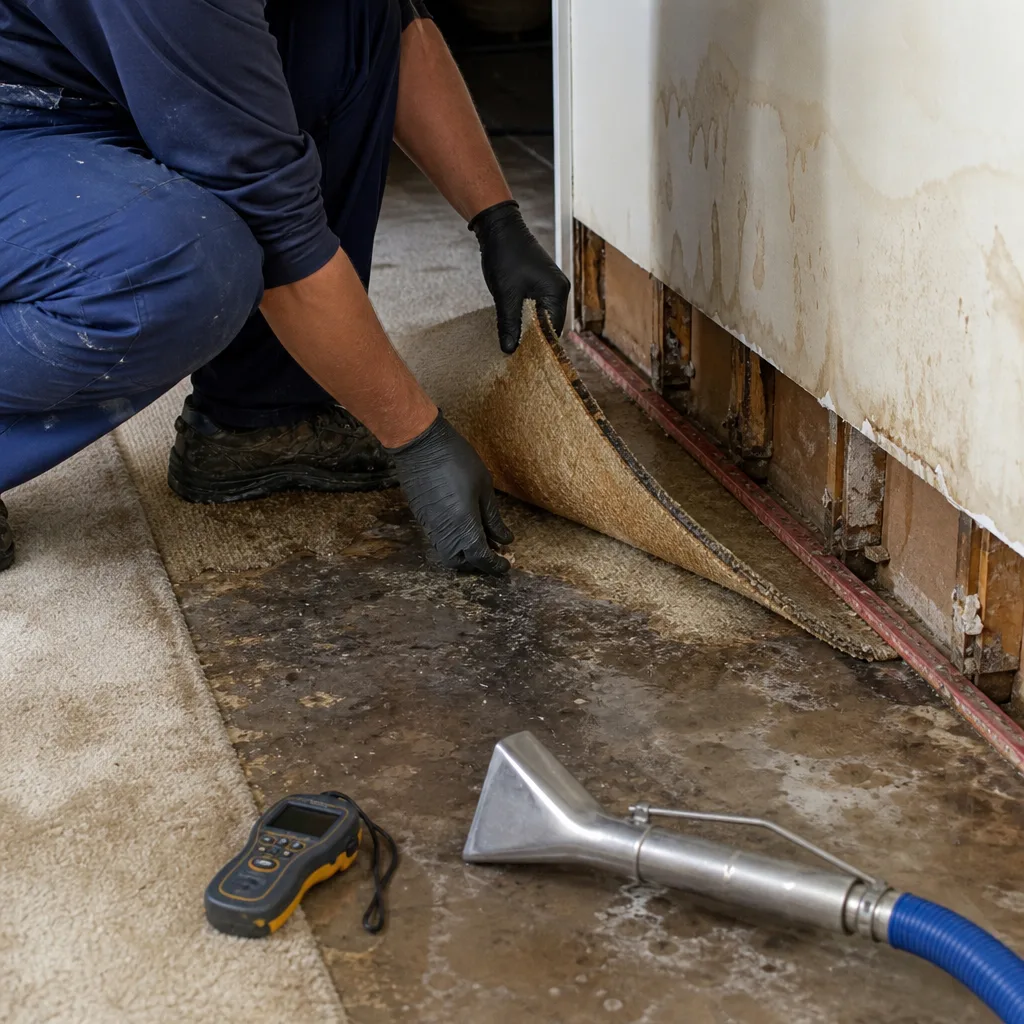
Indoor air in a Loomis home shares space with the crawl space through every plumbing penetration, wiring chase, and unsealed gap in original construction. After remediation, we run commercial air scrubbers to pull suspended spores and fine particulates from the living area, then verify with air sampling before the job closes. Air quality restoration is also the step that matters after a foothill wildfire leaves smoke residue in a home even when there was no fire damage to the structure. Soot and smoke particles hold onto moisture and organic material; combined with a muggy crawl space, they feed mold in ways a furnace filter can’t address.
What happens when you call
- 1
A real person answersNo phone trees - you reach a local pro.
- 2
You get an upfront price rangeHonest numbers before anyone is dispatched.
- 3
A background-checked tech heads outLicensed & insured, dispatched right away.
- 4
You approve before work beginsNothing starts until you say go.
Common Mold Remediation Problems We See in Loomis Homes
- Original 1970s crawl-space vents left open during winter storms. An atmospheric river rolls through, drops three inches of rain in a day, and open foundation vents let that moisture hover above 60% relative humidity for days. Mold starts on floor joists before anyone notices a smell in the hallway.
- The visible bathroom mold gets treated, but the crawl space gets skipped. Loomis homes on multi-acre parcels often have unconditioned crawl spaces that share air with the living area through unsealed plumbing penetrations. Treat the bathroom, skip the crawl space, and the mold comes back after the next wet season.
- A big-box biocide is sprayed on drywall instead of removing the panel. We see this shortcut often in Loomis. Live mold survives behind the paper backing, the panel stays in place, and after the first atmospheric river of the next winter, the stain returns, worse than before.
- A failed private septic leach field goes undetected. Loomis homes outside the municipal sewer district sit on their own systems. A backed-up line or saturated leach field pushes moisture into the crawl space slowly, creating a black mold bloom that needs full encapsulation and air scrubbing, not a wipe-down and a coat of paint.
How Loomis’s Septic and Well Setup Changes Mold Remediation
This is the part that separates a Loomis mold job from a Roseville or Rocklin mold job, and it’s not a small distinction. Homes on the flat suburban grid to the south tie into municipal sewer lines, and a sewage backup announces itself through a gurgling drain or a visible line break. Loomis is different. A significant share of the large-lot parcels between King Road, Humphrey Road, and the areas around the Loomis Basin rely on private septic systems. When a leach field fails, or a root-clogged line backs up, the moisture often moves laterally through soil and into the crawl space without ever showing itself as a puddle in the yard. By the time a homeowner notices a musty odor near the hallway return, black mold may already be established on floor joists and rim boards.
That changes the job. Remediation after a septic-related moisture event in Loomis typically includes removal of saturated insulation, antimicrobial treatment of structural wood, and installation of a sealed crawl-space liner with a dehumidifier to keep the space below 50% relative humidity going forward. The encapsulation isn’t an add-on in this scenario; it’s the difference between remediation and a recurring problem. We log daily moisture readings throughout the process and hand that log to you and your carrier.
What Wildfire Smoke Does to a Loomis Home’s Mold Risk
Loomis sits within Placer County’s Very High Fire Hazard Severity Zone, surrounded by dry oak woodland and grassland. That positioning means smoke and soot infiltration is a recurring event even for homes miles from any flame. Soot doesn’t just smell; it carries carbon, oils, and fine particulates that settle into carpet, insulation, and the porous surfaces of drywall. When winter rain follows fire season, those soot-laden surfaces absorb moisture from the air, and mold can take hold in places that never saw a leak. It’s a pattern restoration crews in the flat Sacramento suburbs don’t see at anywhere near the same frequency. If you had smoke drift through your Loomis home in the last fire season and you haven’t had the air and insulation professionally cleaned, the next wet winter is the window when hidden mold can start.
Why Crawl Space Treatment Matters More in Loomis Than Almost Anywhere Else
Most Loomis homes built in the 1950s through the 1980s sit on unconditioned crawl-space foundations. The original design assumed a dry foothill climate that gives the ground time to dry out. But when an atmospheric river dumps several inches of rain in 24 hours, the soil under those homes saturates, and the crawl space becomes a humid chamber. Add original fiberglass batt insulation that has been soaking up that moisture cycle for forty years, and the crawl space becomes a mold factory. Treating only the living area while leaving that crawl space untouched means the mold returns. Full crawl space treatment in Loomis typically includes removal of water-damaged insulation, HEPA vacuuming of joists and subfloor, application of an EPA-registered antimicrobial, installation of a vapor barrier, and placement of a dehumidifier sized for the square footage. It’s the most common mold job we do in the 95650 zip code, and it’s the one that delivers the longest relief.
Trusted Brands We Service in Loomis
Loomis homeowners tend to live with the materials their house came with, whether that’s original 1970s sheetrock, fiberglass batt insulation from the Nixon administration, or wood-framed outbuildings that absorbed decades of Sierra foothill weather. Our crews work with these materials daily, and we stock the consumables those older structures need: EPA-registered antimicrobials, vapor barrier materials in rolls sized for large crawl spaces, and replacement insulation suited to unconditioned spaces. We run Dri-Eaz HEPA-filtered negative air machines, Phoenix dehumidifiers, and XPOWER air movers on Loomis jobs. The combination matters because older framing, once exposed, dries at a different rate than newer engineered lumber, and the daily moisture log tells us when it’s actually dry, not when it looks dry.
Pricing for Mold Remediation in Loomis, CA
Here are honest numbers for the Loomis market. A contained mold removal on a single bathroom or closet runs $1,200-$3,800. Black mold remediation involving a crawl space, insulation removal, joist treatment, and encapsulation typically lands between $3,500 and $9,000, depending on square footage and how much insulation has to come out. Air quality restoration after remediation, including air scrubbing and post-remediation sampling, runs $400-$1,200. A full mold inspection with moisture mapping across the property typically runs $300-$600. These ranges reflect what our crews encounter on Loomis properties specifically: older construction, crawl-space moisture, and septic-related water events that require more equipment and containment than a standard drywall patch job. We write the scope in plain English, agree on the price before any demo starts, and we bill your carrier directly. Estimates are free. Call (888) 737-2439 and we’ll come out, map the moisture, and give you a number you can hold us to.
We Also Serve Cities Near Loomis
When a Loomis homeowner needs mold remediation, our crews often handle related jobs for family or neighbors in nearby foothill and valley communities. We regularly run Mold Remediation work in Rocklin, Granite Bay, Roseville, and North Auburn. If your property sits on the edge of the Loomis Basin, you’re still within our regular service area, and our Mold Remediation in Loomis team can coordinate a single visit for multiple properties. Call us if you’re not sure which area you fall into. The dispatcher will know.
Serving Loomis, CA - Our Local Coverage Area
We’re based in the Loomis area and know this community well. Use the map below to see our service coverage - if you’re nearby, we can almost certainly help.
FAQs - Mold Remediation in Loomis
A sewage backup in a Loomis home on a private septic system often means moisture entered the crawl space through soil saturation or a line failure without ever surfacing in the yard. The remediation has to account for that hidden path: we remove saturated insulation, treat the structural wood with an antimicrobial, encapsulate the crawl space, and run dehumidification until the dry standard is met. A surface cleaning won’t address what happened below the floor line. If you suspect a leach field failure or have noticed a persistent musty odor near the base of a hallway, call (888) 737-2439 and we’ll map the moisture before the mold spreads further.
Yes. Soot and smoke particles settle into porous surfaces like drywall, carpet, and insulation, and those particles hold onto moisture when the rainy season arrives. In a Loomis home with an unconditioned crawl space already running above 60% relative humidity, that soot-laden dust becomes a food source for mold, even if no water ever breached the walls. Post-fire air quality restoration that removes soot from surfaces and insulation before winter is a direct prevention step. If your home was smoked in during the last fire season, we can assess the risk and give you a written scope.
In our experience with Loomis ranch homes, original fiberglass batt insulation that has been through decades of wet-dry cycles is usually compromised and should come out. Fiberglass holds organic dust, mouse droppings, and moisture, and even after fogging with an antimicrobial, the material often re-contaminates because the paper backing stays wet in the fibers. Removing it, treating the joists, and installing a sealed vapor barrier with a dehumidifier is the fix that lasts. We’ll show you the moisture readings before we recommend pulling it. The goal is to not be back in your crawl space next winter.
The first sign is usually a persistent musty or earthy smell near floor registers, baseboards, or the hallway return, especially within a week or two after a heavy atmospheric river. That odor means mold is active somewhere in the air path between the crawl space and the living area. Other early signs: condensation on foundation vents, warped baseboards near exterior walls, or a sudden uptick in allergy symptoms indoors. If you notice any of these, call (888) 737-2439 for an inspection. The earlier we map the moisture, the smaller the containment area and the lower the total cost.
Mold remediation in Placer County generally doesn’t require a permit, but some Loomis properties carry conditions tied to septic systems, well setbacks, or outbuilding proximity that affect where we place containment and how we handle water disposal. On larger parcels, we also coordinate with the homeowner’s septic contractor when the moisture source tracks back to a leach field or tank, because fixing the mold without fixing the source would mean a repeat visit. Our team has worked Loomis properties long enough to know which questions to ask before we start, and we’ll flag any item that needs a county or district sign-off before it becomes a surprise.
Call for a Free Estimate in Loomis
If you’re seeing mold in a Loomis bathroom, smelling must in a hallway, or wondering what the crawl space looks like after the last storm, call (888) 737-2439. A live dispatcher answers, any hour, any day. We’ll schedule a free estimate, walk the property with a moisture meter, and hand you a written scope with a price you can hold us to. The 90-Day Done Right Promise covers the work, in writing. No argument, no runaround. If it’s not done right, we make it right. We’ll be there when we say.
Written by Curt Bowman, Owner at Floodline Restoration Co. of California, serving Loomis and the surrounding foothill communities.