
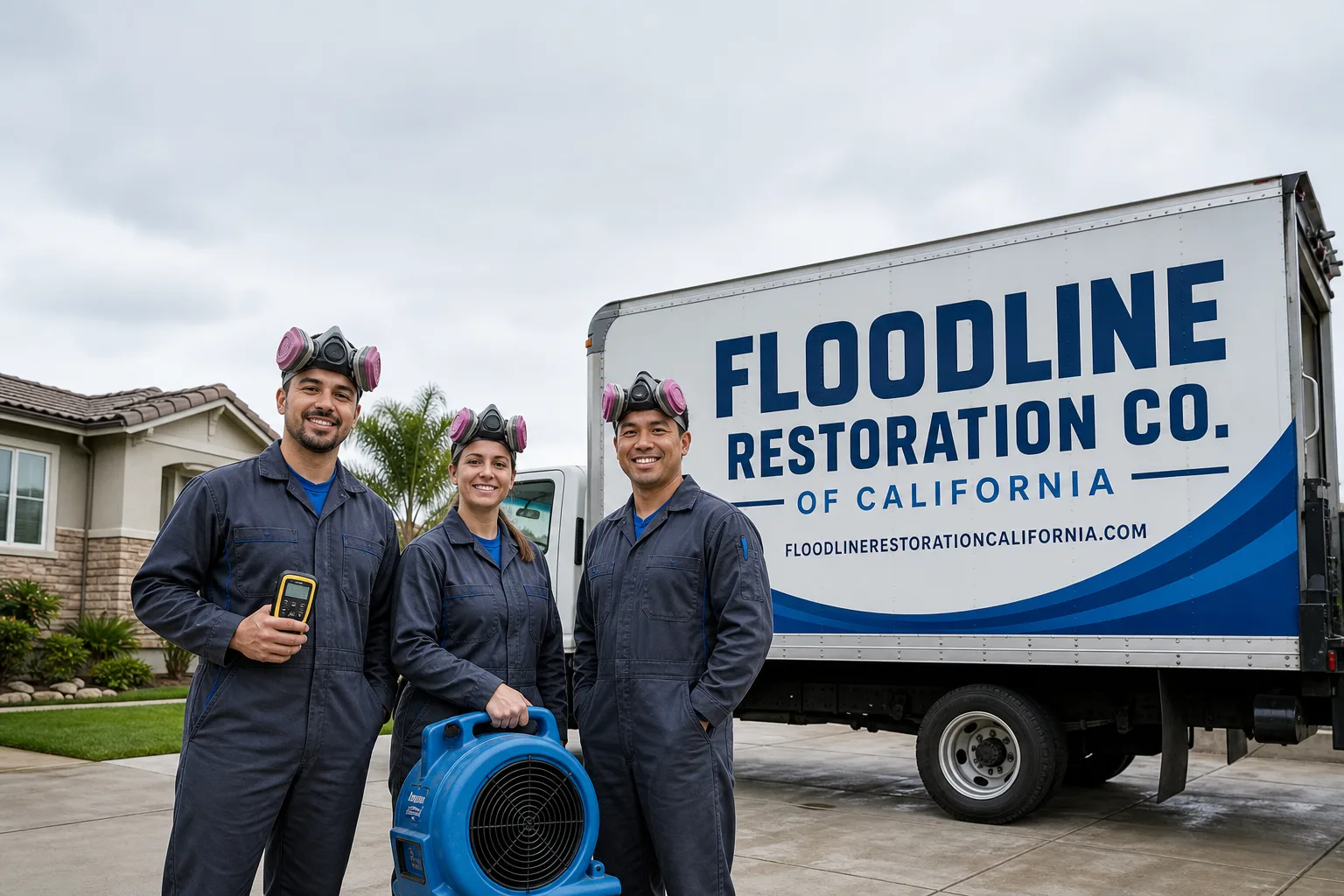
Fast, Reliable Mold Remediation Across Lake Forest
Mold remediation in Lake Forest typically runs $1,800-$6,500 depending on the size of the affected area and whether ductwork or crawl spaces are involved. Most jobs are completed within three to five days, with air scrubbers running around the clock until post-remediation testing clears the home. If you’re seeing dark patches on drywall, smelling musty air near return vents, or living with unexplained respiratory irritation, call us at (888) 737-2439. A live person answers, and we’ll schedule an inspection that tells you exactly what you’re dealing with.
We know Lake Forest’s neighborhoods well: the 1970s El Toro core off Lake Forest Drive, the newer planned communities in Foothill Ranch, the ridgeline homes off Portola Parkway that back directly onto Whiting Ranch. This matters because mold here doesn’t behave the way it does in coastal Orange County. More on that below. First, understand that Mold Remediation done right requires a moisture map, a containment plan, and daily readings until the structure hits the dry standard. That’s the job. We do it without handing you off to anyone else.
Key Takeaways for Lake Forest Homeowners
- Mold inspection and testing in Lake Forest: $250-$550 for a full visual assessment plus air or surface sampling.
- Full mold remediation in Lake Forest: $1,800-$6,500 for most residential jobs; crawl space treatment adds $900-$2,400.
- Lake Forest’s fire-adjacent geography means smoke-driven moisture and ash infiltration create mold conditions that coastal cities rarely see.
- We bill your insurance carrier directly and document everything with photo evidence and a written moisture log.
- The 90-Day Done Right Promise applies to every job in Lake Forest, in writing, with no argument.
Why Floodline Restoration Co. of California Is Lake Forest’s Preferred Mold Remediation Company
Curt Bowman founded this company in 2010 around a dispatch board, not a sales desk. We’ve spent the years since building crews that stay on a job from the first moisture reading to the finished rebuild, because that’s the only way a guarantee means anything. Lake Forest homeowners tend to call us after a previous contractor cut corners or after an insurance adjuster told them to wait and see. By the time we arrive, they want straight answers. That’s what we give.
Our technicians are background-checked, uniformed, and certified to IICRC, RIA, and IFA standards. They show up with Dri-Eaz and Phoenix drying equipment, XPOWER air movers, and B-Air air scrubbers, and they set containment before opening a single wall cavity. In Lake Forest specifically, we’ve handled everything from widespread Stachybotrys in a Foothill Ranch second-story bedroom to hidden Aspergillus blooming inside the wall cavities of a 1978 El Toro tract home. The same crew that does the tear-out does the daily readings and hands you the log when it’s done.
Calls are answered by a live person, 24/7. If you call at two in the morning because a pipe let go and you’re watching mold bloom behind baseboards, you’ll reach a dispatcher who can route a certified crew to Lake Forest that same visit. No recording. No callback line.
Our Mold Remediation Services in Lake Forest
Mold Inspection & Testing
An inspection in Lake Forest should address what your home sits next to, not just what’s inside it. Homes backing onto Whiting Ranch or Limestone Canyon deal with Santa Ana-driven ash and smoke infiltration that settles into insulation and ducts. We start with a visual assessment of attic spaces, HVAC return-air plenums, and crawl spaces, then pull air and surface samples where contamination is suspected. Lab results from an independent third-party laboratory come back in 48-72 hours, and you get a written scope of work tied to the findings. A Lake Forest inspection runs $350-$550.
Mold Removal
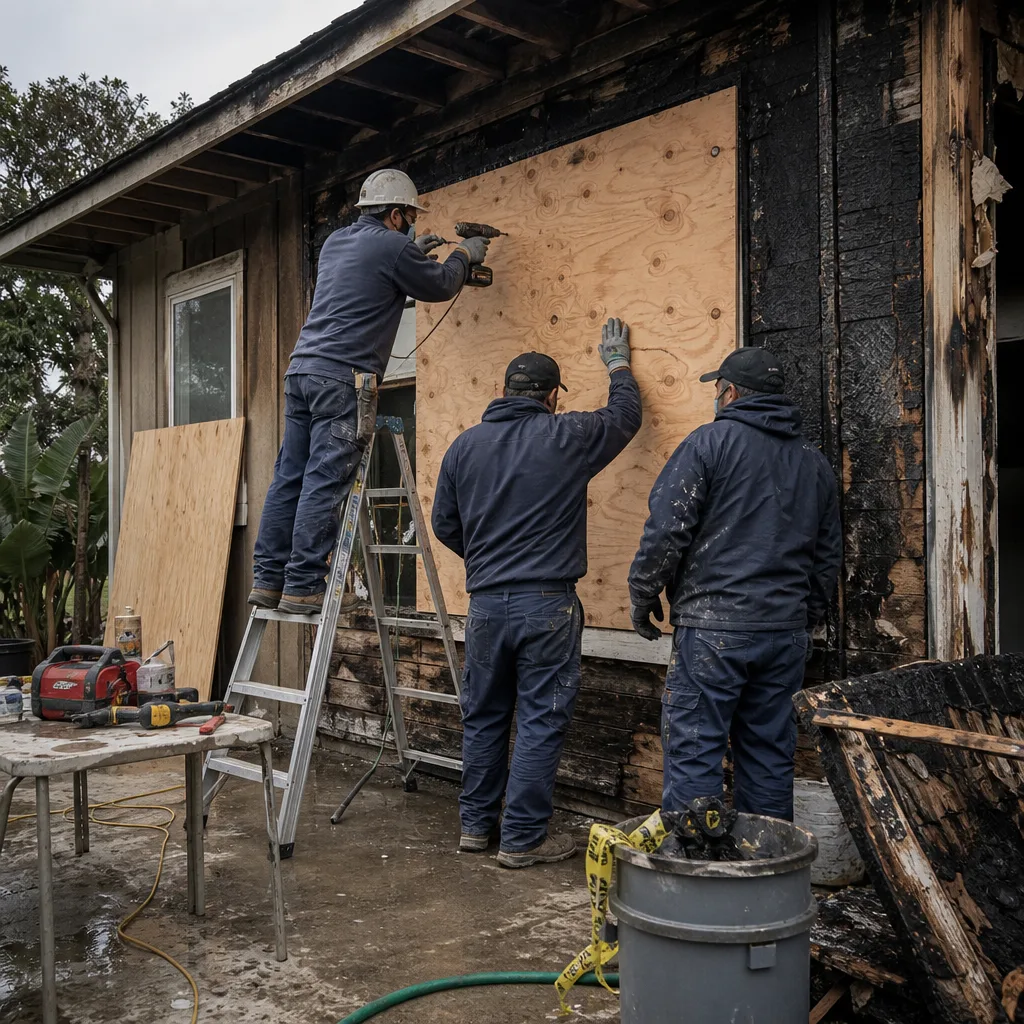
Removal means more than spraying a biocide and wiping surfaces. We contain the affected area under negative pressure, run HEPA filtration constantly, and physically remove contaminated drywall, insulation, carpet pad, or cabinetry where mold has penetrated porous material. In Lake Forest’s older El Toro homes, we regularly find mold behind original 1970s drywall that looks clean from the outside: moisture wicks up from slab foundations and feeds concealed growth for years. Removing it correctly means opening the wall, treating the cavity, and confirming the wood is dry before closing back up.
Black Mold Remediation
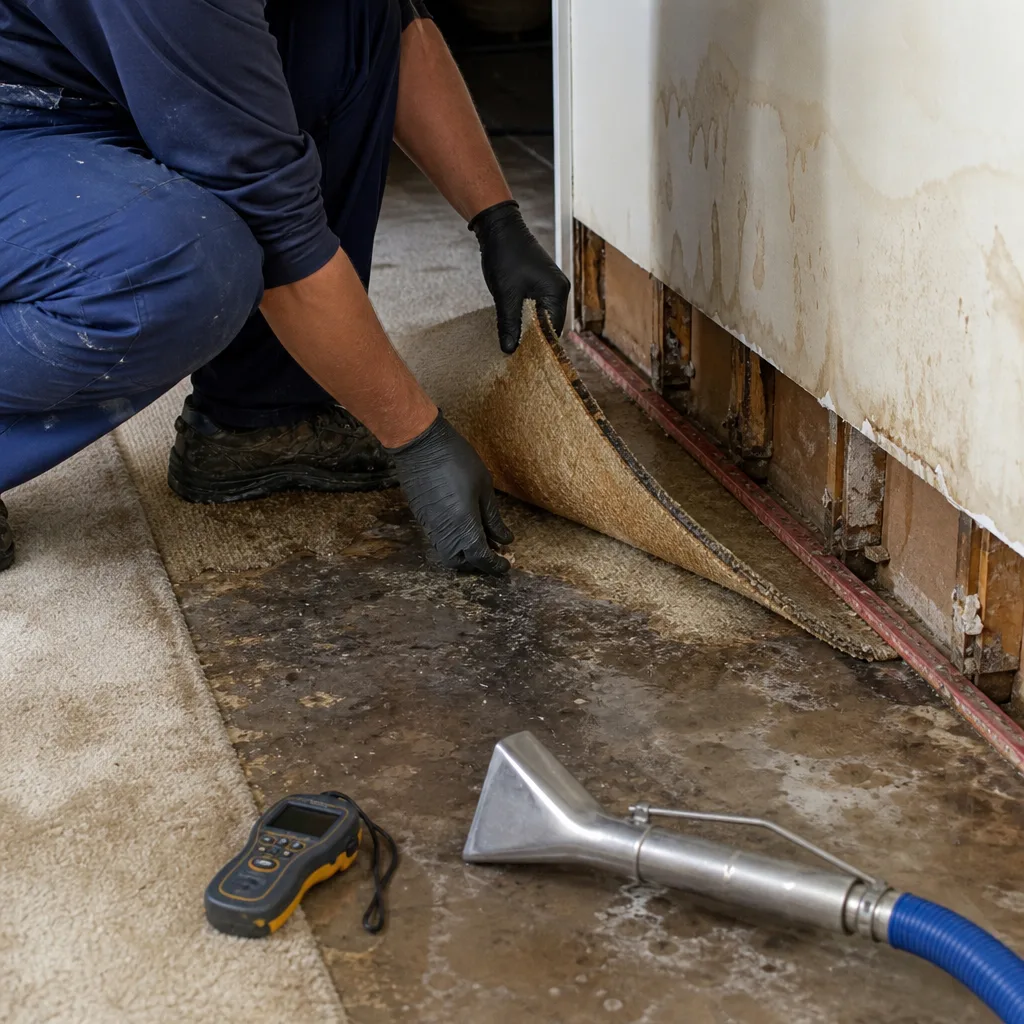
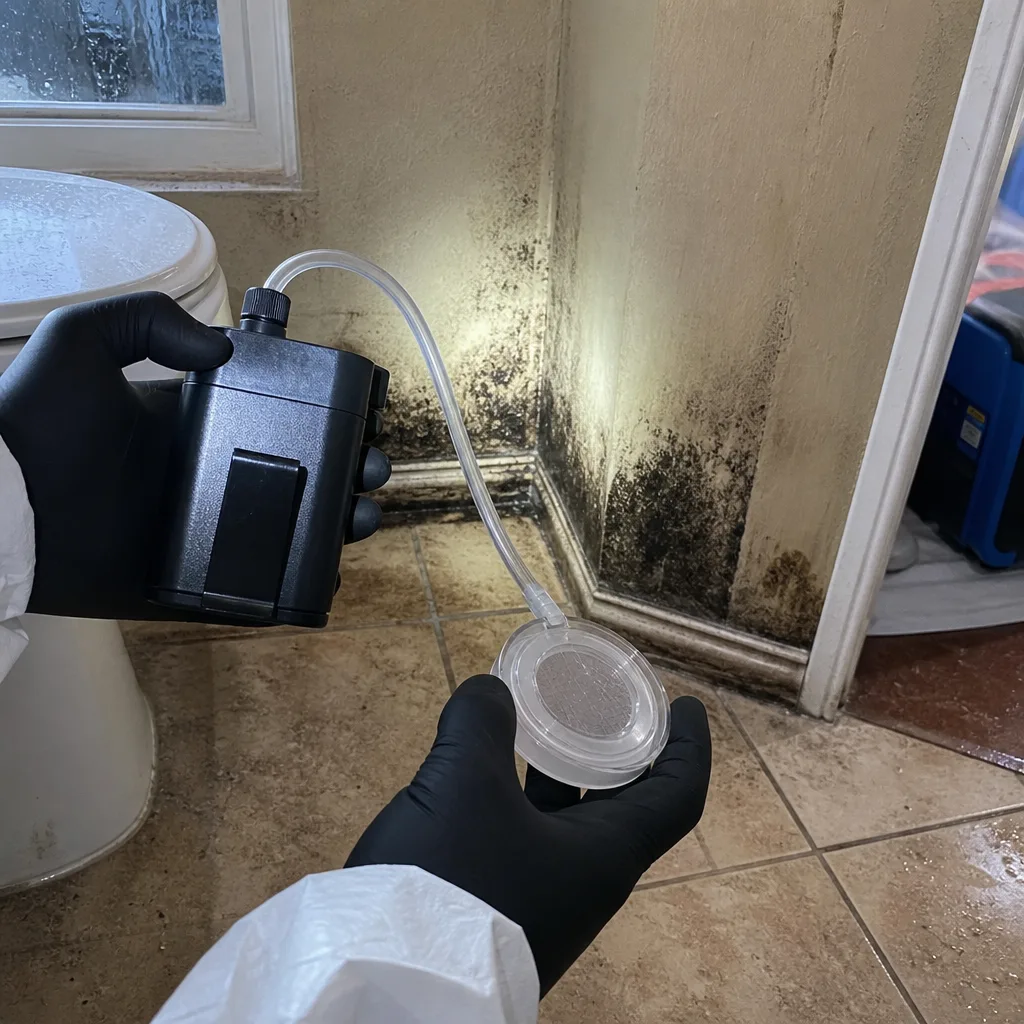
Stachybotrys chartarum, commonly called black mold, requires a higher containment standard. We see it most often in Lake Forest homes with slow, undetected plumbing leaks: a toilet wax ring failing over years, an ice-maker line dripping behind a cabinet, a water heater pan that rusted through. The growth pattern is usually dark, slimy, and concentrated where moisture never fully dries. We treat this as a serious job: full containment, HEPA air scrubbing, careful bagging and removal of contaminated material, and post-remediation clearance testing before we call it done.
Air Quality Restoration
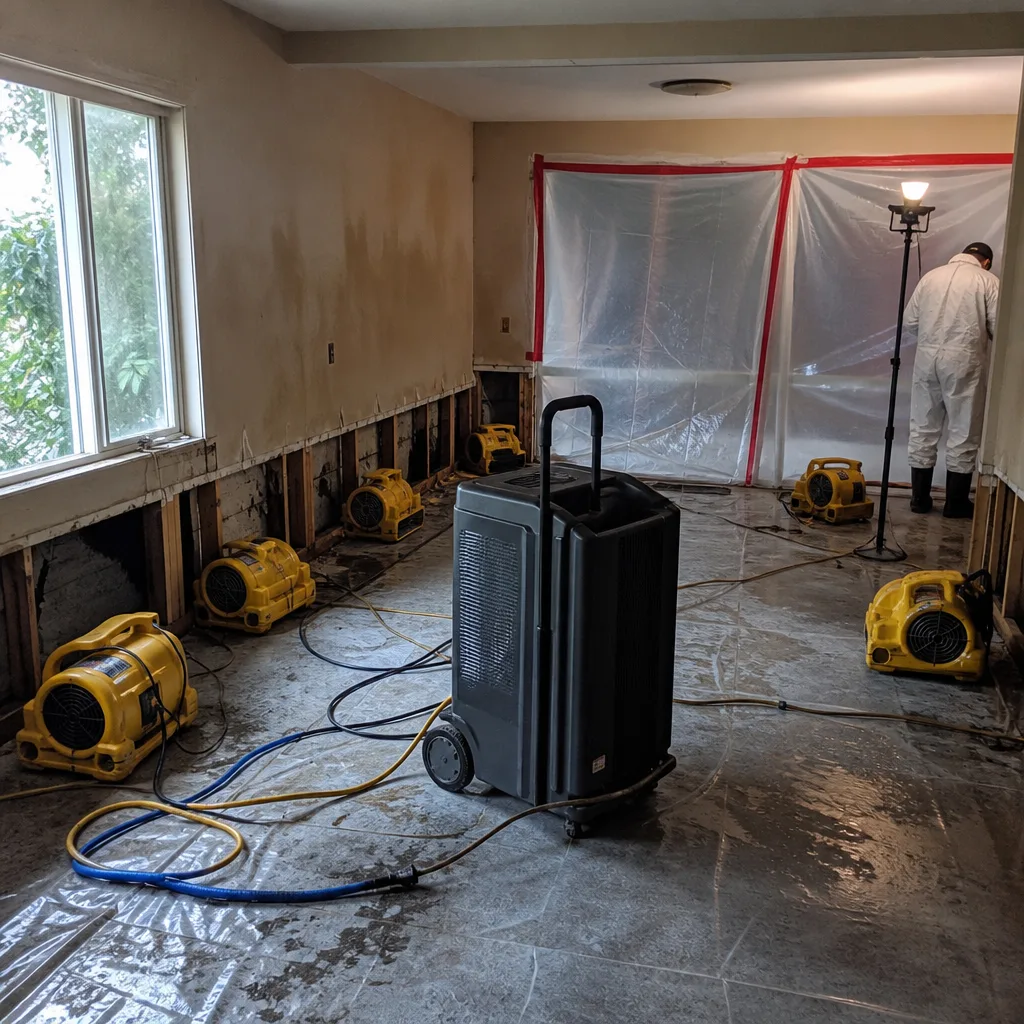
After the source is removed, the air inside your Lake Forest home still needs to be cleaned. We run professional-grade air scrubbers and HEPA filtration units for the duration of the job, then take post-remediation air samples to verify spore counts have returned to normal background levels for this area. Given Lake Forest’s wildfire-season smoke events, we also inspect your HVAC filter type and recommend upgrade options if your system is pulling in fine particulate from outside. Air quality restoration is not a finishing touch; it’s the part that keeps mold from returning.
Crawl Space Treatment
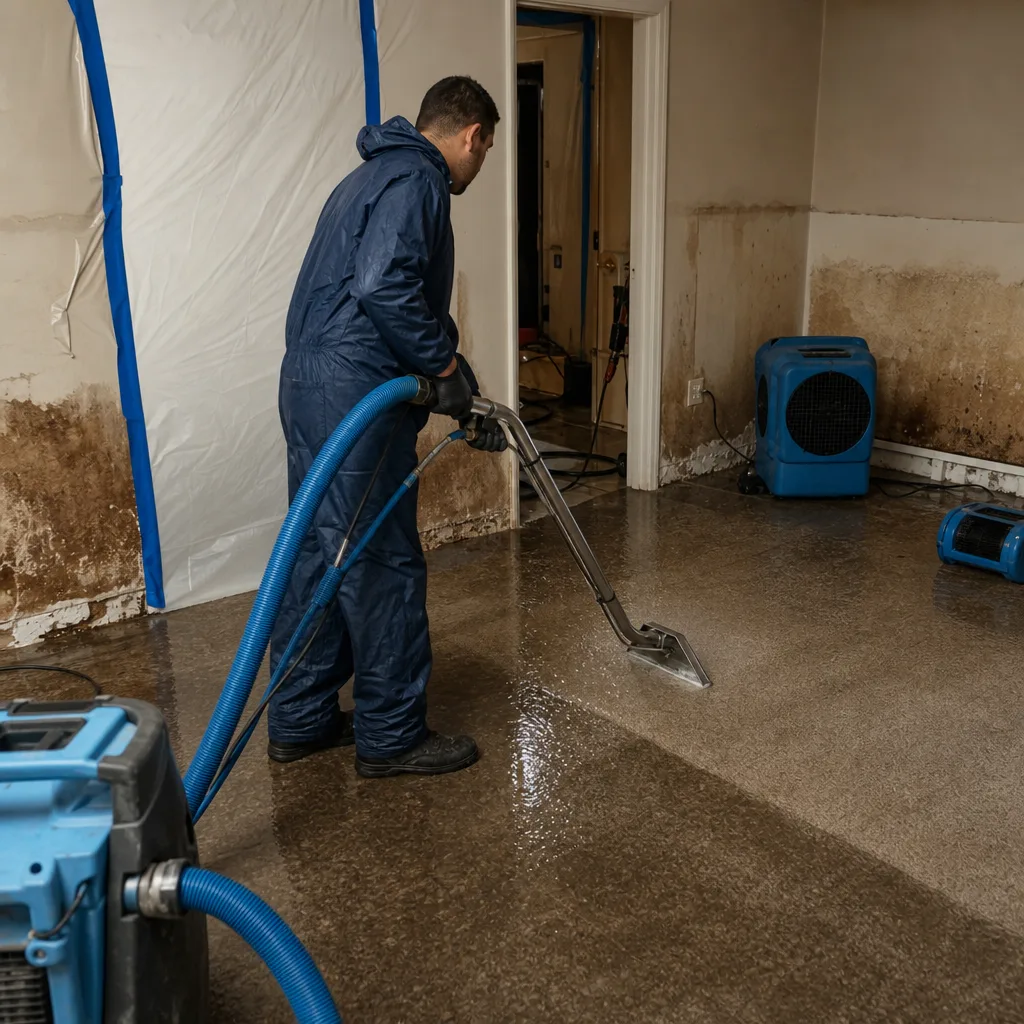
Lake Forest’s older slab-on-grade homes in the El Toro core often have a shallow crawl space that traps humidity from irrigation runoff. In those spaces, we find rim joists with visible fungal growth and standing water against the foundation. Treatment involves removing contaminated insulation, drying the space to the dry standard, applying an anti-microbial encapsulant to exposed framing, and advising on vapor barrier installation if the space lacks one. For a standard 1980s Lake Forest crawl space, this runs $900-$2,400 depending on square footage and access.
What happens when you call
- 1
A real person answersNo phone trees - you reach a local pro.
- 2
You get an upfront price rangeHonest numbers before anyone is dispatched.
- 3
A background-checked tech heads outLicensed & insured, dispatched right away.
- 4
You approve before work beginsNothing starts until you say go.
Common Mold Problems We See in Lake Forest Homes
- Smoke-driven attic contamination. Santa Ana winds push fine ash and combustion gases through passive attic vents in homes along the Whiting Ranch and Limestone Canyon edges. That ash settles into insulation, holds moisture, and feeds mold growth that starts above the ceiling and spreads downward. We inspect attic insulation on every fire-adjacent call, even when the house exterior looks untouched.
- Original 1970s-80s slab-on-grade foundations. El Toro tract homes frequently lack proper perimeter drainage. Irrigation water from landscaped yards runs against the slab, and moisture wicks into wall cavities through unsealed gaps. By the time homeowners notice a musty smell, mold has usually been growing behind baseboards for months.
- HVAC ductwork pulling smoke and spores into living spaces. Many Lake Forest homes still run original flex ductwork from the 1980s or early 2000s. During fire season, passive return-air systems pull smoke-contaminated air deep into the ducts. If condensation forms inside those ducts, you get a mold problem that keeps circulating spores every time the AC cycles on.
- Post-firefighting water intrusion. When firefighters wet down rooflines and exterior walls to protect homes burning nearby, water soaks into stucco and seeps behind siding. Homeowners return to houses that look fine outside but are already wet inside the wall cavities. We’ve pulled mold-covered insulation from walls that showed zero visible damage from the street.
Pricing for Mold Remediation in Lake Forest, CA
You deserve real numbers, so here they are. A visual mold inspection in Lake Forest with air sampling runs $350-$550. Remediation of a contained area, like a bathroom ceiling or a single closet, starts around $1,800 and goes up with square footage. A full attic mold job including insulation removal and replacement typically lands between $3,500 and $6,500. Crawl space treatment adds $900-$2,400. If both attic and crawl space are involved, expect $5,000-$9,000 as a realistic range.
What moves the price: how much drywall or insulation comes out, whether ductwork needs replacement, and whether post-remediation clearance testing is required by your insurer. We bill your carrier directly and provide a written scope before any work begins. Estimates are free. Call (888) 737-2439 and we’ll walk the property and put numbers on paper.
Three standing offers apply to every Lake Forest job: $50 off any repair over $250, the $89 seasonal tune-up, and a 5% senior and veteran discount, always.
Trusted Brands We Service in Lake Forest
We work with equipment and materials from brands our techs trust: Dri-Eaz and Phoenix for drying, XPOWER for air movement, B-Air for HEPA air scrubbing, and Injectidry for targeted extraction. On Lake Forest jobs, we stage what’s needed before the crew rolls out, so there’s no waiting on a supplier run from across the county. That matters when a Foothill Ranch homeowner calls about a ceiling stain that’s spreading. Our crews carry the consumables, containment materials, and testing supplies to start work the same day in most cases.
We Also Serve Cities Near Lake Forest
In addition to our work throughout Lake Forest, we run crews into Foothill Ranch, Portola Hills, Mission Viejo, and Laguna Woods. Many of our Lake Forest customers have adult children living nearby in those communities, and we’re glad to coordinate multi-property work when a family needs help at more than one address.
Serving Lake Forest, CA - Our Local Coverage Area
We’re based in the Lake Forest area and know this community well. Use the map below to see our service coverage - if you’re nearby, we can almost certainly help.
FAQs - Mold Remediation in Lake Forest
Homes bordering Whiting Ranch or Limestone Canyon face a combination of canyon-driven Santa Ana winds, wildfire smoke infiltration, and higher ambient humidity near the preserved open space than homes in central Lake Forest. Those conditions push fine ash and combustion gases into attic vents and HVAC returns, where they settle into insulation and create a moisture-holding layer that supports mold growth even without a visible leak. We inspect attic insulation, duct interiors, and return-air plenums on every inspection in these neighborhoods, because that’s where the problem starts.
A 1970s El Toro home sits on a slab foundation with perimeter drainage that was often undersized by modern standards, so we test for moisture wicking up through the slab and into wall cavities. A 2000s Foothill Ranch build more often has attic and HVAC issues: original flex ductwork, passive gable vents, and insulation that holds ash from fire season. Testing protocols differ because the failure points differ. A thorough inspection addresses the house you have, not a generic checklist.
Yes. When Santa Ana winds push smoke, ash, and fine combustion particulates into your attic and ductwork, those materials settle into porous insulation and hold moisture from humidity and temperature swings. Over weeks or months, that trapped moisture supports mold growth, usually in the attic first, then spreading into wall cavities. We’ve documented this pattern repeatedly in Lake Forest homes that never had a leak or a flood. It’s a defining characteristic of this city’s fire-adjacent geography.
Yes, especially if you live east of El Toro Road or north of Portola Parkway. Smoke drives fine particulate deep into HVAC systems and attic insulation, and the moisture carried by smoke-saturated materials creates conditions for mold within weeks. We regularly find elevated spore counts in air samples from Lake Forest homes months after a fire event, even with no visible growth on ceilings or walls. Testing costs a few hundred dollars; missing it can cost thousands and compromise indoor air quality for a year or more. Call (888) 737-2439 to schedule a post-fire mold check, and we’ll coordinate directly with your carrier on documentation.
It starts with a thorough inspection of the crawl space access, rim joists, and subfloor from below. We remove any mold-contaminated insulation, treat exposed framing with an anti-microbial encapsulant, dry the space to the dry standard using professional-grade dehumidifiers, and document every reading in a written moisture log. If the crawl space lacks a vapor barrier, we’ll price one as a separate line item. The goal is to leave that space too dry for mold to return. Typical cost in Lake Forest runs $900-$2,400. Call (888) 737-2439 for a written quote.
Done Right, and Backed in Writing
We don’t do partial jobs. We don’t hand your home off to a subcontractor who’s never worked in Lake Forest. We don’t leave you to argue with an adjuster over whether the third day of drying was necessary. The crew that reads the moisture map on day one handles daily readings, keeps the log, talks to your carrier, and rebuilds what needs rebuilding. The 90-Day Done Right Promise is in writing: if it’s not done right, we make it right. No paperwork battles. No arguing.
If you’re seeing mold, smelling it, or just worried about what’s behind a wall in your Lake Forest home, call (888) 737-2439. Curt Bowman built this company to answer the phone with a person who knows the work. You’ll get one.
Written by Curt Bowman, Owner of Floodline Restoration Co. of California, serving Lake Forest since 2010.