
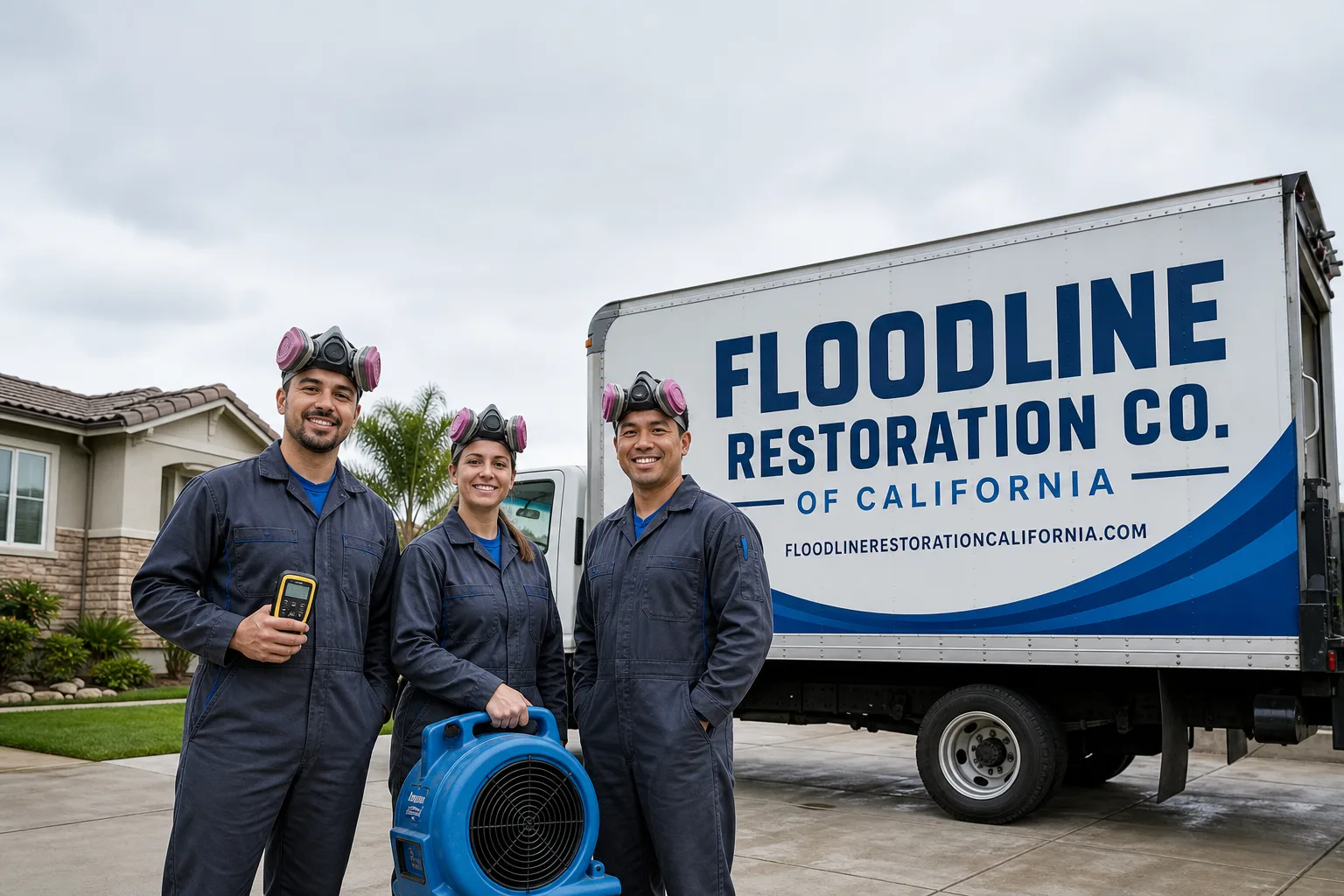
Fast, Reliable Fire & Smoke Damage Restoration Across Stanford
Fire and smoke damage restoration in Stanford typically costs between $2,800 and $7,500 for a standard kitchen fire, and $8,000 to $25,000+ when structural repair and full contents restoration are required. Our crews reach Stanford homes within 45 to 90 minutes of your call, because we dispatch from local staging points and know the campus roads, gates, and access protocols. Call (888) 737-2439 any hour, day or night. A live dispatcher answers, not a recording, and the same certified crew that arrives for extraction handles every phase through final rebuild.
Why Floodline Restoration Co. of California Is Stanford’s Preferred Fire & Smoke Damage Restoration Company
Stanford is not like any other restoration market in the Bay Area. The university owns the land, the housing stock spans a century of construction methods, and the approval process runs through two separate bureaucracies at once. We learned that fifteen years ago and built our Stanford workflow around it. Homeowners on Mayfield Avenue, along Campus Drive, and in the faculty enclaves west of Junipero Serra Boulevard call us because we already know what Stanford Real Estate & Facilities Management needs to see before the first air scrubber gets plugged in. Curt Bowman, who founded Floodline in 2010, built the company around a dispatch board and a written guarantee rather than a sales desk. That’s why the Fire & Smoke Damage Restoration work we do in Stanford comes with the 90-Day Done Right Promise in writing. If it’s not done right, we make it right. No arguing.
Every technician who steps onto a Stanford property is background-checked, uniformed, and trained to IICRC, RIA, and IFA standards. We carry professional-grade Dri-Eaz and Phoenix equipment as standard, not as an upgrade. And we answer the phone with a live person at 2 a.m. because fires don’t wait for business hours. Stanford homeowners who’ve been through a fire once don’t want a national franchise with a call center in another state. They want a crew that knows the difference between a 1940s faculty cottage and a 1970s townhouse on the east campus, and knows exactly which county desk handles which permit. That’s what we bring.
Our Fire & Smoke Damage Restoration Services in Stanford
Fire Damage Cleanup
After the fire is out, the real work begins. We remove charred building materials, stabilize what remains, and map moisture from fire suppression with the same rigor we use on flood jobs. In Stanford’s mid-century faculty housing, that often means dealing with lath-and-plaster walls that hold water differently than modern drywall, and hardwood floors that were milled when Eugene O’Neill was still walking the Quad. We don’t tear out what can be saved. We document everything photographically, write the scope before work starts, and bill your carrier directly so you’re never playing messenger between us and the insurance company.
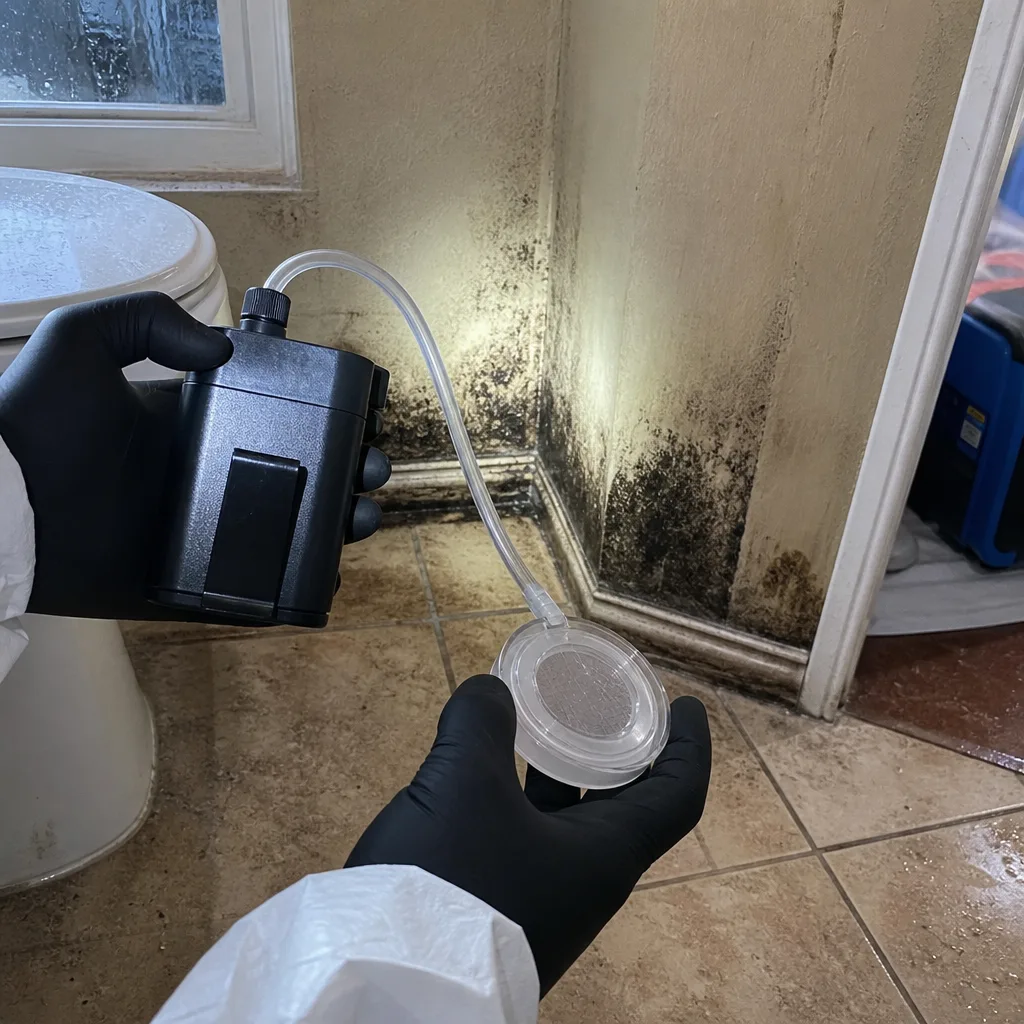
Smoke & Soot Removal
Smoke soot is not just dark residue. It’s acidic, oily, and it migrates through wall cavities and ductwork within hours. Stanford’s older housing stock makes this especially tricky. Original redwood paneling, custom wood casement windows, and unprotected sandstone accents react badly to the standard alkaline soot sponges that out-of-town crews reach for by default. We instead use dry sponge cleaning on porous historic materials, HEPA-filtered air scrubbers to keep particulates from resettling, and Dri-Eaz hydroxyl generators to break down the odor molecules rather than mask them. The dual-track approval process we mentioned earlier: county permits plus Stanford Capital Planning review. We handle both before work begins, so nothing gets halted mid-job by campus security.
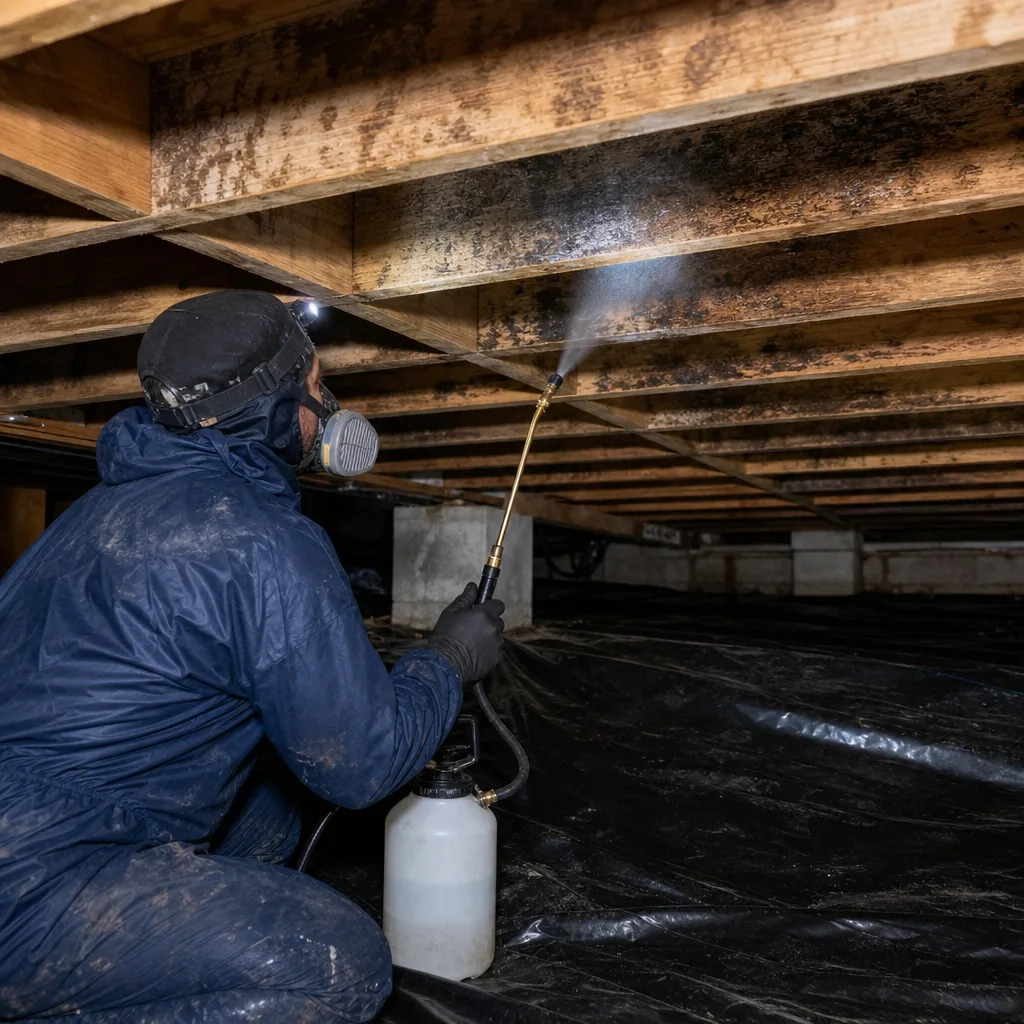
Odor Removal & Deodorization
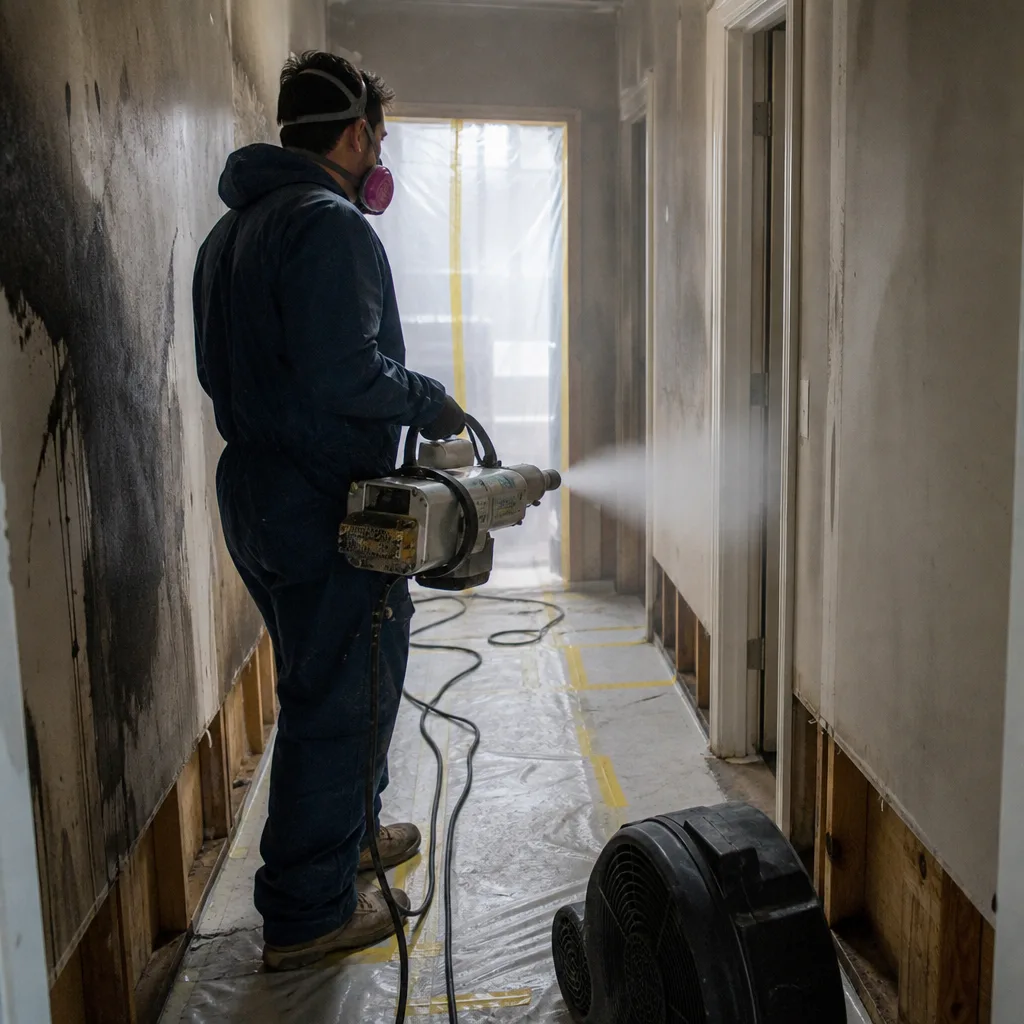
Smoke odor lives in every soft surface, every painted wall, every inch of HVAC duct. In Stanford’s tightly built faculty residences, where closed windows and forced-air systems recirculate the same air through the dry season, odor removal is not a cosmetic step. It’s the difference between a home that smells clean and a home that sells for 15% less because the smoke smell never left. We use thermal fogging, ozone treatment in unoccupied spaces, and hydroxyl generation for occupied homes. No masking agents. We guarantee the odor is gone at the end of the job, and that guarantee is in the 90-Day Done Right Promise.
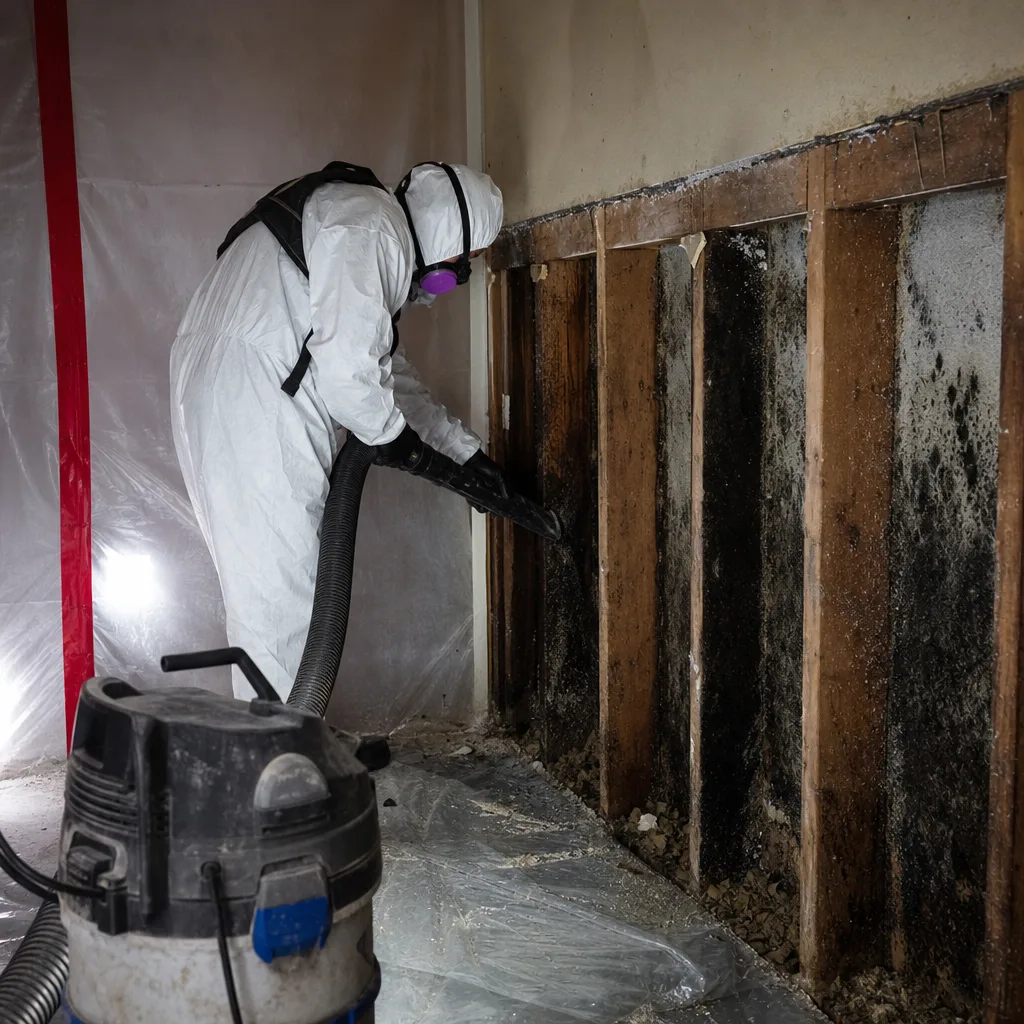
Contents Cleaning & Pack-Out
When fire and smoke damage hits a Stanford home, the contents usually sustain as much damage as the structure. Books from a faculty library, research materials, original artwork, upholstered furniture, wool rugs. We offer full contents pack-out and cleaning through our Stanford restoration services, with an itemized inventory, on-site or off-site cleaning, and climate-controlled storage until the home is ready for move-back. For Stanford homeowners and university housing managers, we coordinate contents restoration with whatever the insurance carrier requires, and we provide the documentation your adjuster needs without you having to chase us for it. Pack-out is not an upsell with us. It’s a standard part of a complete fire restoration when the scope calls for it.
What happens when you call
- 1
A real person answersNo phone trees - you reach a local pro.
- 2
You get an upfront price rangeHonest numbers before anyone is dispatched.
- 3
A background-checked tech heads outLicensed & insured, dispatched right away.
- 4
You approve before work beginsNothing starts until you say go.
Trusted Brands We Service in Stanford
Stanford homes contain some of the finest building materials and finishes on the Peninsula, and a careless restoration can do more damage than the fire itself. Our crews are certified to RIA and IFA standards, and we run Dri-Eaz and Phoenix air movers, dehumidifiers, and scrubbers because these brands hold calibration under daily commercial use far better than the rental-counter equipment some contractors bring in. That matters when you’re trying to hit a dry standard on a 1940s redwood floor or pull smoke odor from wool carpet in a Jasper Ridge-adjacent faculty home. We keep a deep inventory of consumables and parts staged for Stanford jobs, so restorations don’t stall waiting for a filter or a fan. Same crew, same equipment, day one through final inspection.
Common Fire & Smoke Damage Restoration Problems We See in Stanford Homes
- Bypassing Stanford Facilities Management pre-approval: We’ve seen out-of-town crews start emergency board-up on a leased faculty residence, only to have campus security stop the job mid-swing. Pre-approval through Stanford Real Estate & Facilities Management is not optional. We handle it before anyone touches the structure.
- Etching historic materials with the wrong soot sponges: Standard alkaline sponges will ruin unprotected sandstone and red-tile surfaces in a single pass. Stanford’s core campus structures and many older faculty homes contain these materials. Our crews carry pH-neutral alternatives for exactly this reason.
- Missing the county permit layer: Stanford is unincorporated Santa Clara County, so fire restoration permits go through the county building department. But core campus structures also require Stanford Capital Planning review. Miss either one and re-occupancy gets delayed by weeks. We file both tracks in parallel.
- Underestimating wildland-urban interface fire patterns: Homes near Jasper Ridge and the wooded western periphery face a different fire signature than flatland Palo Alto homes. More ember intrusion, more duct contamination, deeper soot penetration in roof assemblies. Our restoration scopes account for it.
Pricing for Fire & Smoke Damage Restoration in Stanford, CA
Here’s what actual restoration work costs in Stanford’s market. Emergency board-up and tarping runs $500 to $1,800 depending on openings and access. Smoke and soot removal on a single-room fire typically lands between $1,200 and $3,500. Odor removal and deodorization for a whole home, including duct cleaning and hydroxyl treatment, ranges from $2,000 to $6,000. Contents cleaning and pack-out runs $1,500 to $8,000 based on volume and material type. Structural fire repair, where framing, electrical, and finishes are involved, starts around $8,000 and goes up from there. Every job gets a written scope before work starts. No surprises on the bill. We bill insurance directly, and we carry the documentation your adjuster needs. Call (888) 737-2439 for a free estimate. The number is live 24 hours a day. A dispatcher answers, not a phone tree. And $50 off any repair over $250 applies, along with a 5% senior and veteran discount, every day.
We Also Serve Cities Near Stanford
Our crew covers the wider Midpeninsula fire restoration market, including Palo Alto, Atherton, East Palo Alto, and Los Altos Hills. If you’re in one of those cities, the same certified team and the same 90-Day Done Right Promise apply. One call to (888) 737-2439 connects you with the dispatcher who can route a crew to your door.
Serving Stanford, CA - Our Local Coverage Area
We’re based in the Stanford area and know this community well. Use the map below to see our service coverage - if you’re nearby, we can almost certainly help.
FAQs - Fire & Smoke Damage Restoration in Stanford
Yes. Any restoration work on Stanford-owned property, including leased faculty and staff residences, requires pre-approval through Stanford Real Estate & Facilities Management before work begins. We handle that approval process for you. Attempting to bypass it risks having your restoration shut down mid-job by campus security. Call (888) 737-2439 and we’ll start the approval work the same day.
Stanford is unincorporated Santa Clara County, so building permits for fire damage restoration run through the Santa Clara County building department. But structures on the core campus also trigger a parallel review by Stanford’s own Capital Planning office. Both approvals are required. We file them in parallel, so one doesn’t hold up the other. Out-of-town contractors routinely miss the second track, and the re-occupancy delay that follows can stretch for weeks. We don’t miss it.
Yes. We’ve restored original redwood paneling and custom wood casement windows on mid-century faculty homes across Stanford, including a kitchen fire job off Mayfield Avenue where soot had covered raw redwood and casement frames. We used HEPA-filtered air scrubbers, Dri-Eaz hydroxyl generators, and dry sponge cleaning on the wood, then stabilized the finish with methods approved by Stanford Real Estate & Facilities Management. The paneling stayed original. No paint, no replacement. Call (888) 737-2439 for an assessment.
Pack-out means we inventory, photograph, pack, and transport your contents to our cleaning facility, where each item is cleaned, deodorized, and stored in climate-controlled space until your home is ready. For Stanford faculty homes, that often includes books, research materials, original artwork, and electronics. We provide the full itemized inventory to your insurance carrier so the claim moves without you chasing paperwork. We also offer off-site contents cleaning for items that can’t be cleaned in place. Call (888) 737-2439 for a free contents assessment.
Yes. Homes near Jasper Ridge and the wooded western periphery of Stanford sit in a genuine wildland-urban interface zone, where dry-season Diablo wind events drive ember intrusion and deep soot penetration into roof assemblies and ductwork. Restoration scopes for these homes must account for heavier contamination of insulation, attic spaces, and HVAC systems than you’d see in flatland Palo Alto. We inspect and test those areas as standard on every Stanford job. Call (888) 737-2439 and ask for the Stanford fire-scope inspection.
Written by Curt Bowman, Owner at Floodline Restoration Co. of California, serving Stanford since 2010.
Contact Floodline Restoration Co. of California in Stanford
A fire never waits for office hours, and neither do we. If you’ve had a fire in Stanford, call (888) 737-2439 right now. A live dispatcher answers, a crew gets routed to your home, and the 90-Day Done Right Promise goes in writing before the first piece of equipment comes off the truck. Done right, and backed in writing. That’s the Keystone Standard.