
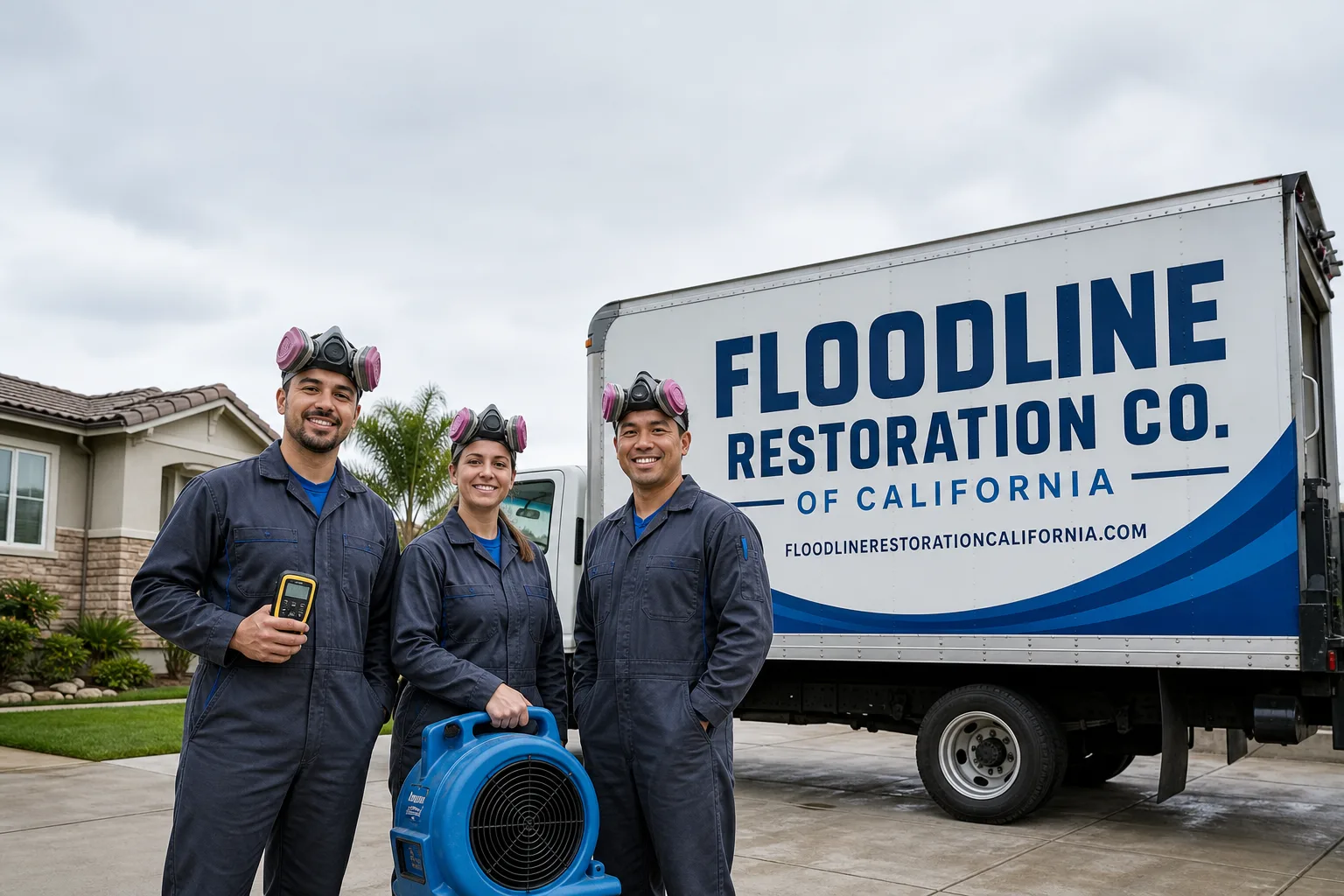
Fast, Reliable Fire & Smoke Damage Restoration Across Rodeo
Fire and smoke damage in Rodeo moves fast, and so do we. A typical fire damage cleanup in Rodeo runs $2,800 to $7,500, while smoke and soot removal alone usually lands between $900 and $2,400 depending on square footage and how far the particulate traveled. Our crews reach Rodeo homes within hours, not days, because we know the streets off Parker Avenue, the blocks near Viewpoint Boulevard, and the refinery-facing neighborhoods where smoke behaves differently than anywhere else in Contra Costa County. Call (888) 737-2439 and a live dispatcher answers, 24 hours a day, every day. We’re Floodline Restoration Co. of California, and our Fire & Smoke Damage Restoration team has handled the specific kind of damage Rodeo homes face.
Why Floodline Restoration Co. of California Is Rodeo’s Preferred Fire & Smoke Damage Restoration Company
Rodeo isn’t like Pinole or El Sobrante. It sits on the Carquinez Strait with the Phillips 66 refinery at its edge, and that changes what fire restoration actually requires. Our technicians know that soot in a Rodeo attic isn’t always from a kitchen fire. Sometimes it’s from a flaring event that pushed oily particulate into roof vents and HVAC intakes. That knowledge comes from working this specific town, not from a training manual.
Curt Bowman founded Floodline in 2010 around a dispatch board, not a sales desk. The result is a company that still answers the phone with a live person at 2 a.m. and sends background-checked, uniformed technicians certified to IICRC, RIA, and IFA standards. When we finish a job in Rodeo, you get our 90-Day Done Right Promise in writing. If something isn’t right, we come back and make it right. No paperwork battles. No arguing. That’s the Keystone Standard, and it applies to every fire and smoke job we do in the 94572 ZIP code.
Our Fire & Smoke Damage Restoration Services in Rodeo
Fire Damage Cleanup
Fire damage cleanup in Rodeo often starts with an asbestos question. Many homes here were built between the 1940s and 1970s for refinery workers, and original materials like asbestos floor tiles and pipe insulation are common. When fire reaches those areas, abatement protocols kick in before structural repair can proceed. We coordinate that testing and abatement, then handle debris removal, structural drying, and full reconstruction. One crew, one plan, no mid-job handoff.
Smoke & Soot Removal
Salt-laden air from the Carquinez Strait changes how soot behaves. Dry-chem soot sponges that work fine in Hercules leave a black, oily residue on Rodeo surfaces because the particulate often carries refinery hydrocarbon content. We use solvent-based degreasers and HEPA vacuuming to lift what standard sponges smear. Soot from a Phillips 66 flare event requires chemical-specific solvents and documentation for industrial-event liability claims, which most residential restorers never touch. We do.
Odor Removal & Deodorization
Smoke odor in Rodeo homes lingers longer than it should. The persistent marine fog that funnels through the strait keeps humidity high, and humid air holds smoke molecules in drywall, insulation, and fabric. Add the industrial air pollutants already present near the refinery, and you get an acrid smell that returns weeks after a fire if the source wasn’t fully neutralized. We use thermal fogging, ozone treatment, and hydroxyl generators sized to the home, then verify with air sampling in the 94572 area.
Contents Cleaning & Pack-Out
When a Rodeo home needs contents cleaning, we pack out items to our climate-controlled facility, clean them with appropriate solvents, and store them until reconstruction finishes. For homes near the refinery-facing edges of town, that cleaning often includes removing a fine oily or sulfurous film from furniture, clothing, and electronics. We photo-document everything for insurance claims and work directly with your adjuster so you never play messenger between Floodline and your carrier.
What happens when you call
- 1
A real person answersNo phone trees - you reach a local pro.
- 2
You get an upfront price rangeHonest numbers before anyone is dispatched.
- 3
A background-checked tech heads outLicensed & insured, dispatched right away.
- 4
You approve before work beginsNothing starts until you say go.
Trusted Brands We Service in Rodeo
We don’t service fire and smoke damage with rented equipment from a big-box store. We use professional-grade Dri-Eaz and Phoenix air movers and dehumidifiers, XPOWER air scrubbers, and Injectidry drying systems. For Rodeo homeowners, that means faster moisture removal after fire suppression, which reduces secondary damage and keeps mold from getting a foothold in the strait’s humid air. Our technicians train to IICRC, RIA, and IFA standards, so the equipment is only half the equation. The other half is knowing how to read a moisture map in a 1950s ranch with original lath-and-plaster walls and make the right call. You get daily readings logged until the dry standard is met, and that log goes to you and your insurance carrier.
Common Fire & Smoke Damage Restoration Problems We See in Rodeo Homes
- Salt-air corrosion accelerates fire-damaged hardware failure. Garage door springs near the Carquinez Strait fracture two to three times faster than inland homes, often failing within 5-7 years instead of the typical 10-15. After a fire, we inspect and replace these with marine-grade or galvanized springs.
- Refinery flaring deposits oily soot that standard sponges won’t lift. Homes on the refinery-facing side of Rodeo periodically receive a fine sulfurous particulate that settles into attic insulation, HVAC filters, and exterior finishes. Removing it requires solvent-based degreasers and documentation for industrial-event insurance claims.
- Mid-century asbestos materials complicate fire restoration. Homes built for refinery workers between the 1940s and 1970s often have asbestos-wrapped ductwork near fire-damaged areas. Testing and abatement must happen before restoration can proceed, adding time and cost that inland restorers rarely account for.
- Persistent strait humidity traps smoke odor. The same marine-air corridor that fogs Rodeo mornings keeps wall cavities damp enough to hold smoke molecules for weeks. Without proper dehumidification and odor neutralization, a small kitchen fire can smell like it happened yesterday months later.
Pricing for Fire & Smoke Damage Restoration in Rodeo, CA
We Also Serve Cities Near Rodeo
Our crews work throughout the region around Rodeo, including Hercules, Pinole, Tara Hills, and El Sobrante. If you’re in one of those communities and need fire or smoke damage restoration, the same live dispatch, certified technicians, and 90-Day Done Right Promise apply.
Serving Rodeo, CA - Our Local Coverage Area
We’re based in the Rodeo area and know this community well. Use the map below to see our service coverage - if you’re nearby, we can almost certainly help.
FAQs - Fire & Smoke Damage Restoration in Rodeo
How does Rodeo’s salt air from the Carquinez Strait affect fire-damaged garage hardware?
Salt air corrodes garage door springs, hinges, rollers, tracks, and opener chains years faster than inland locations. In Rodeo, springs that should last 10-15 years often fail within 5-7. After a fire, we inspect all garage hardware for corrosion and replace compromised parts with galvanized or stainless components so the door doesn’t fail during the emergency response or after restoration. Call (888) 737-2439 if your garage door is showing rust or failing after fire exposure.
What’s different about cleaning soot after a Phillips 66 refinery flare near Rodeo?
Refinery flare soot carries oily, sulfurous hydrocarbons that standard dry-chem soot sponges smear rather than lift. It requires solvent-based degreasers, HEPA vacuuming, and air-quality testing to confirm particulate is gone. We also document every step for industrial-event liability claims, because this is not standard smoke restoration. If your home received soot deposits from a flare event, call (888) 737-2439 for an assessment.
Do I need asbestos testing before fire restoration in my 1950s Rodeo home?
Yes, if original materials were disturbed by fire. Many Rodeo homes built for refinery workers contain asbestos floor tiles, pipe insulation, or wrapped ductwork. Fire damage to these areas triggers mandatory abatement before structural repairs can begin. We coordinate testing with certified labs and schedule abatement so restoration proceeds safely and legally. Call (888) 737-2439 to have your home assessed.
Can salt-air corrosion cause a garage door to fail during a fire response?
Yes, and it happens more often than homeowners expect. Corroded springs snap under the extra stress of emergency access, and rusted tracks can bind. That’s why our crews check garage hardware on every fire restoration job in Rodeo. Replacing corroded springs and rollers before they fail prevents a secondary emergency during an already difficult day.
Why does smoke odor linger longer in homes near the refinery, even after a small fire?
The marine air that moves through the Carquinez Strait keeps Rodeo homes humid, and humid building materials hold smoke molecules. Combine that with the industrial particulates already present near the refinery, and you get an odor that standard airing-out never resolves. We use thermal fogging and hydroxyl generators to neutralize odor at the molecular level, then verify with air sampling before we call the job done. Call (888) 737-2439 for an odor assessment.
Call Floodline Restoration Co. of California in Rodeo
Fire and smoke damage in Rodeo doesn’t wait, and neither should you. A live dispatcher answers at (888) 737-2439 any hour, any day. We’ll send a certified crew to your Rodeo home, assess the damage, and give you a written scope before work begins. The 90-Day Done Right Promise backs every job. Senior and veteran discounts always apply, and current offers include $50 off any repair over $250 and the $89 seasonal tune-up. Call now for a free estimate.
Written by Curt Bowman, Owner at Floodline Restoration Co. of California, serving Rodeo and the surrounding Contra Costa County communities.